
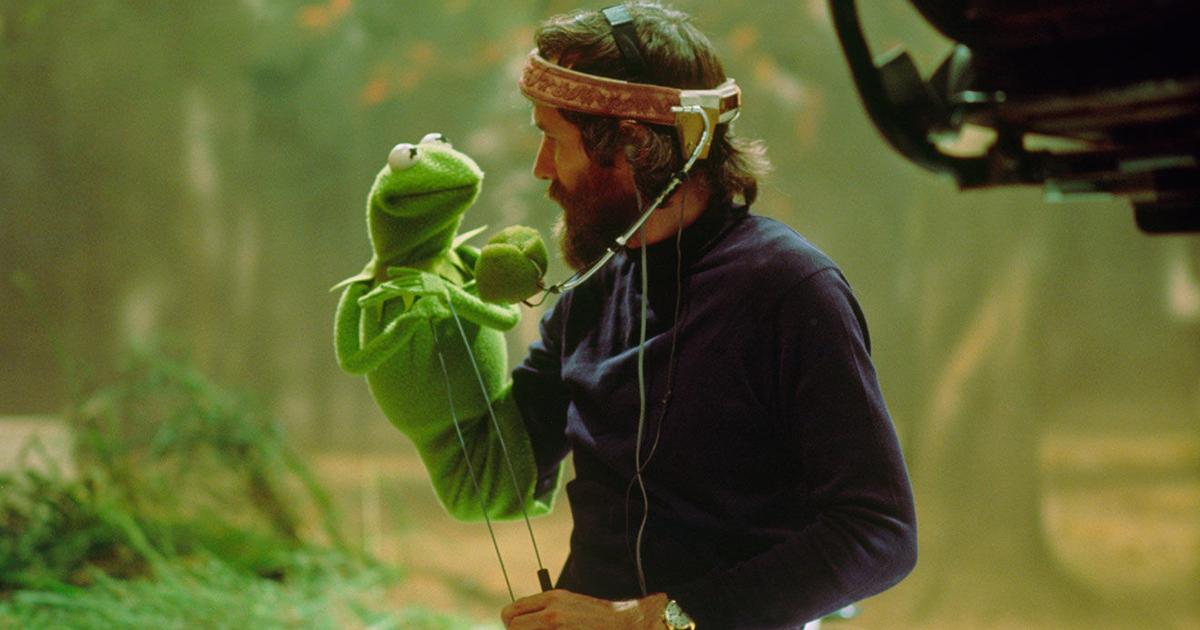
Two years after Jim Henson died in 1990, his family drove north through New Mexico searching for a spot he had once pointed out from the car — the pyramid-shaped hills near Taos where he’d said, according to Henson biographer Brian Jay Jones, “I really feel like that’s the place I’m supposed to be.”
Henson had left no clear instructions for his remains. Only that he didn’t want to be buried, and the decision fell to his son John, whom Jones calls “the spiritual Henson.”
Jane Henson stopped first. “This is far enough,” she said, as Jones recalls from his research, scattering part of his ashes. The others continued until they found a ridge covered in dark, glassy rock. “This is it,” John said. They released the rest into the wind.
There is no plaque, no marker. Just Jim Henson’s ashes, now part of the Sangre de Cristo foothills, somewhere between Santa Fe and Taos.
Fifty years after The Muppet Show (1976-1981) first aired, and on the heels of a revival special that premiered in February on Disney+, one thread of his story remains largely unknown: Henson’s lifelong connection to New Mexico.
Long before that final trip north, the state had become a recurring presence in both his personal life and his creative work. It was a place he returned to regularly, where he bought land, filmed in, and, ultimately, chose as his resting place.
Henson, who would’ve turned 90 on September 24, first saw New Mexico in the summer of 1957, as a 20-year-old college student driving cross-country.
“He took a road trip with his best friend from college, Joe Irwin, to Albuquerque, the Grand Canyon, and Taos,” says Karen Falk, archivist for The Jim Henson Company. “We have photos and sketches from that trip. The landscape is so different from the East Coast. I’m sure it captured his imagination. He liked the desert.”
In his sketchbook are pencil drawings of Taos, simple lines capturing a landscape he couldn’t have known would draw him back repeatedly over the next three decades. When Henson’s father retired to Albuquerque in the early 1970s, New Mexico shifted from a youthful memory to a regular destination.
“Throughout his journals in the 1970s and ’80s, after his parents moved to New Mexico, he went there every year, often twice a year,” says Falk. Jones adds, “He loved horseback riding through arroyos, and he loved Santa Fe. People talked about how free he felt here.”
Jones, who grew up in Albuquerque’s Northeast Heights, didn’t realize how closely his own childhood overlapped with Henson’s family until decades later, while researching for his 2013 book, Jim Henson: The Biography.
He came across a cassette tape recorded by Henson on New Year’s Eve in 1972. On it, Henson interviews his parents at their home. At the end, he says, “We’re here in Albuquerque at my parents’ family home on Doña Rowena.” Then-12-year-old Lisa Henson can be heard asking why that mattered. Henson replied, “Someday someone may care that we were here and want to know what we were doing.”
Jones still remembers his reaction. “That was the moment I went, ‘Oh my God — he was here, and I grew up right down the street.’”
Late in life, Henson deepened his ties to the state when he purchased 313 acres near Santa Fe.
“He bought some land in that part of New Mexico, but he never developed it,” Falk says. “My understanding is that the family still owns it. Maybe one of his daughters. It’s just a beautiful property, not a ranch or anything, and I don’t think it even has a building on it.”
Listing agent David Woodard, who met Henson through a mutual friend, recalled in a 1993 Los Angeles Times story: “Jim was an incredibly creative person, and he could envision this property, with its views and valleys, as a private resort or a retreat for three or four homes or compounds, which nobody could see because of the topography.” Henson died before he could develop the property.
New Mexico was not just a personal refuge for the artist. In 1975, Sesame Street filmed six episodes in Northern New Mexico, following Luis (Emilio Delgado) as he returned to his hometown. The arc included Big Bird helping to build an adobe home at Taos Pueblo.
Three years later, Henson returned to film The Muppet Movie (1979) in the Albuquerque desert. Production photos show puppeteers buried under planks, performing Kermit’s campfire scene. It’s the same terrain where Henson rode horseback along arroyos during his family visits.
Jim Henson’s storyboard panel depicts the opening title sequence of The Great Muppet Caper, with Fozzie Bear, Gonzo, and Kermit in a hot air balloon descending over downtown Albuquerque.
On February 1, 1981, the opening sequence for The Great Muppet Caper (1981) was also filmed in Albuquerque. The scene features Kermit, Fozzie, and Gonzo in a hot air balloon descending over downtown. If you pause the scene, Second Street is visible. Compare the scene with the street on Google Maps, and you will see the buildings remain largely unchanged.
In the 2017 documentary Muppet Guys Talking, Frank Oz recalled how the iconic balloon scene was created using a radio-controlled scale model.
It was a complicated and risky shoot: While Jim Henson (Kermit), Oz (Fozzie), and Dave Goelz (Gonzo) operated their characters from a helicopter using remote-controlled waldoes (electronic devices that mirrored the puppeteer’s hand movements), another helicopter carried a cameraman suspended 30 feet below in a harness. CBS News Sunday Morning captured the remarkable shoot.
“We were just 1,000 feet off the ground,” Oz remembered. “I kept thinking, we’re going to crash in that damn helicopter.”
Henson’s fascination with ballooning stretched well beyond film work. He once took his family ballooning across the French Alps, making Albuquerque, a city celebrated for its International Balloon Fiesta, a fitting location for The Great Muppet Caper sequence.
“Jim came to New Mexico to breathe,” says Jones. “He loved the Sandias, the rainstorms. He was in touch with nature, and there’s no better place for that than here.”
Henson’s creative spirit is honored in many places, but most notably at the Museum of the Moving Image in Queens, New York, adjacent to Kaufman Astoria Studios, where he often worked. There, The Jim Henson Exhibition chronicles his lifelong collaborations and groundbreaking innovations.
“For The Jim Henson Exhibition, we wanted to convey the breadth of his contribution,” says Barbara Miller, deputy director for curatorial affairs at MoMI. “Jim was a natural collaborator who loved working with builders, designers, performers, songwriters, and, of course, his wife and partner, Jane.”


Jim Henson and Kathryn Mullen watch the monitor while performing the puppets Jen and Kira on the set of The Dark Crystal in 1981.
Another one of those collaborators is puppeteer Michael McCormick, who was discovered during Santa Fe’s Fiesta in 1979 while performing a Punch and Judy show. Later, he was invited to London to help design for The Dark Crystal (1982). McCormick still lives in Albuquerque.
MoMI hosts birthday celebrations for Henson every September. “It’s not just something sitting in a gallery,” Miller says. “When we celebrate Jim’s birthday, people come from around the world with handmade puppets, dressing up, and watching films. It’s become part of the Henson story itself.”
Yet in New Mexico, there is no monument to the puppeteer, even though his story, for all its global reach, keeps circling back to New Mexico. Falk believes the landscape spoke directly to Henson’s creativity. “The desert light and vastness were something Jim responded to,” she says. “He had this way of seeing the world that matched that environment: expansive and full of possibility.”
That expansiveness found its most famous expression in Paul Williams’ and Kenneth Ascher’s Oscar-nominated song “The Rainbow Connection” for The Muppet Movie. A gentle tune about longing, belief, and what might be waiting on the other side, it captures something fundamental about Henson’s worldview.
There is a quiet arc in all of this: the young artist sketching Taos in 1957, the middle-aged filmmaker buying land near Santa Fe, and the family returning his ashes to the hills he loved.
“There’s a serendipity in it,” Jones says. “Jim was the kind who’d say, ‘If you believe it’s serendipity, perhaps it is.’ He believed in something bigger in the universe.”
That something bigger, for Henson, looked a lot like New Mexico. A place where summer monsoons burst into double rainbows so bright they seem animated, with arcs of light stretching over the Sangre de Cristo and Sandia mountains.
A place he was always meant to be. ◀
Joshua Encinias writes about entertainment, travel, and culture. His work frequently appears in MovieMaker Magazine, LOST iN travel guides, and Brooklyn Magazine. Based in New York City, he comes from a long line of New Mexican Enciniases. You can follow him on X @joshencinias.
Source link
-

-
-

-

-


