

Sign up for the Slatest to get the most insightful analysis, criticism, and advice out there, delivered to your inbox daily.
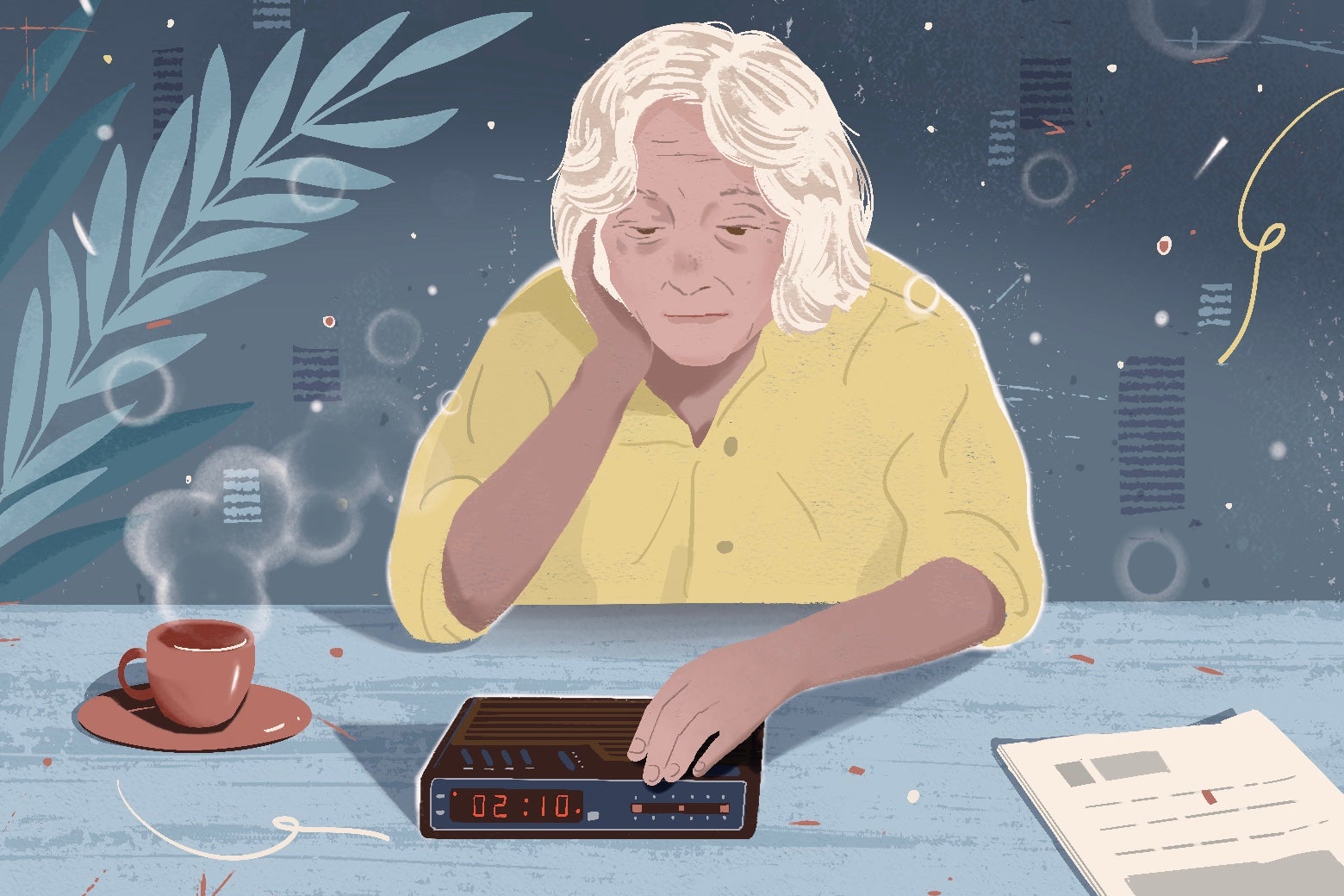
Just about every morning, right after I curse my alarm clock’s existence, my thoughts turn from anger to something like admiration. As a feat of design, the clock radio has got to be one of the 20th century’s indisputable triumphs: I can never get over how brilliant it is that the broad, easily accessible snooze button was made with half-asleep fumbling in mind, how it literalizes a trade-off you’re making for a little more shut-eye. “It is the phrase ‘just a few more minutes’ rendered in plastic”: That’s how the website the Verge put it when snooze was its “button of the month” a few years ago. Compare the low lift of hitting snooze to the fully awake effort and finger dexterity it takes to switch off an alarm. These are the kind of tactile realities that have kept me loyal to my early-2000s Sony Dream Machine, even as most people seem to have abandoned the humble clock radio. Snoozing on a smartphone, some of which have a default setting of allowing only three snoozes, just isn’t the same.
I’m a born snoozer. I snooze at levels most people couldn’t dream of (because they’re awake, unlike me). After 20 or so years of use, some back-of-the-envelope math tells me that I’ve probably hit my alarm clock’s snooze button somewhere on the order of 10,000 times.
More often than I’d like to admit, I’m hitting that button more than once or twice, sometimes a lot more. Though I’ve always known my sleep habits could stand to be healthier, I never considered it a real problem until recently, because of the confluence of a few factors: For a lot of people like me with work-from-home-friendly jobs, the pandemic and the rise of remote work made it possible to push our sleep schedules ever later by enabling us to get out of bed mere minutes before the start of the workday. This started to become especially untenable a couple of years ago when I moved in with my now-fiancé. Though he claims not to be bothered by my obnoxious snoozing habits, I know that if I lived with someone like me, I would consider it torture, and I figure I ought to put some daylight between our mornings and anything that requires parsing how the Geneva Convention defines cruel and unusual.
Is it possible the problem isn’t snoozing but … judging myself for snoozing?
I’ve long had the vague sense that snoozing was bad for me, too, but I had never gone beyond that or dug into why. I decided to start there. And indeed, that snoozing is “bad for you” does seem to be a common refrain among people who study sleep.
Snoozing is thought to disrupt REM sleep, which is the sleep you need to be well-rested. Even though it feels like you’re getting more rest if you fall back asleep, post-snooze sleep tends to be lower quality and leave you groggy and in a worse mood. There is widespread agreement that instead of snoozing, the best thing to do is to set your alarm for when you actually need to wake up.
This is all well and good, but to me, this advice feels akin to telling someone that the best financial move is to make a lot of money. Well, duh. Of course you should get a full night’s sleep. Of course you should, instead of snoozing in the morning, get out of bed and be a productive member of society. This advice fails to address why most people snooze. What it makes me think of is the show The Bear, specifically a line Ebon Moss-Bachrach’s Richie once used to explain his difficult personality: “I’m not like this because I’m in Van Halen. I’m in Van Halen because I’m like this.” I’m not like this because I snooze. I snooze because I’m like this.
Short of a full personality transplant, I don’t see myself giving up all the bad habits I’ve cultivated over the years that go hand in hand with snoozing. But maybe that’s just what someone who’s constantly fiending for a few more minutes of sleep would say. Apparently, we’re legion. A 2025 analysis of data from the app Sleep Cycle by researchers at Mass General Brigham looked at the habits of 21,000 users, and it was summarized like this:
Of the 3 million sleep sessions studied, 56% ended with a person using snoozing the alarm in the morning. The snooze button was pressed on average two and a half times, and people spent an average of 11 minutes snoozing between alarms, the authors note.
Hitting snooze 2.5 times, for a total of 11 minutes? That doesn’t even make sense until you realize that Sleep Cycle’s default snooze time is an absurd five minutes. The standard length of a snooze is usually more like nine minutes, which is an amount of time that is thought to have its origins in the earliest snooze buttons back in the 1950s, which “had to be worked in around the existing gearing of a small alarm clock,” and therefore had to be less than 10 minutes. Nine minutes remains what Mashable once called a “nostalgic artificial standard.”
Other studies, like a 2017 one from the consumer electronics company Withings, have found that about 35 percent of people hit the snooze button once or twice, 15 percent hit snooze three-plus times, and the rest claim not to snooze at all. I am most interested in that 15 percent of people who own up to being snooze abusers like myself. Some studies classify these people as “heavy snoozers,” though it wasn’t hard to earn this distinction in the 2025 study, which classified the 45 percent of people who snooze 80 percent of the time this way.
To my relief, I discovered there’s another side to all of this, a side that argues maybe snoozing isn’t actually so bad. A widely covered 2023 study from Stockholm University went so far as to say snoozing might actually be good for you, because it allows for a more gentle transition from sleep to waking. Some researchers think this mode of getting up might be especially beneficial to people who are natural night owls, a group in which I would certainly include myself.
It all reminds me of the constant, confusing stream of headlines about whether drinking alcohol is actually bad for you, a topic that Tim Requarth wrote about extensively in a 2023 Slate article. His conclusion was that while alcohol might not be that bad in moderation, it was pretty hard to make the wishful-thinking argument that it was good. It feels like a similar common-sense paradigm might apply with snoozing.
When I finally spoke to someone directly about this, I was pleased to see that she didn’t automatically take a hard-line stance against snoozing. “Generally speaking, we recommend getting all of the sleep you need in one uninterrupted period,” said Anita Shelgikar, the president of the American Academy of Sleep Medicine and a professor of sleep medicine and neurology at the University of Michigan. “That being said, many people snooze, and for some people, they may find it a way to kind of ramp up to being fully awake and not feeling groggy when they get out of bed.” (Since Shelgikar is an expert in the field, I was curious about her personal snoozing habits, and she told me she tries not to snooze but ends up doing it occasionally, especially when she has to deviate from her usual schedule.)
I admitted to her how guilty I often feel about my excessive snoozing. “I find your use of the word ashamed to be really interesting,” she said. “You know, people have so much expectation around what their sleep is supposed to be, what it should be, maybe perceived judgment, either from themselves or from other people about whether their habits are good or bad. I wouldn’t admonish somebody for snoozing once or three times, but more, I think it’s important to explore the why behind it, and what are the factors leading to that routine.” Is it possible the problem isn’t snoozing but … judging myself for snoozing?
Since I started working on this piece, I’ve been trying to reform my relationship with my alarm clock. That included simply trying not to snooze for a week, which went semi-disastrously. Who would have predicted that if you’re still tired when you wake up and you’re used to snoozing, turning your alarm off right when you wake up might lead to falling straight back to sleep and dozing through the beginning of your first obligation of the day?
I’m still working on it. When I told Shelgikar that sometimes I simply don’t want to go to sleep at night, she said she actually hears that a lot. “I think you are not alone in that at all. I think there are plenty of adults who do that. It’s pretty astonishing, the number of people who do snooze and the number of people I encounter who feel like they just have to squeeze so much into their day.” I may be no closer to quitting or even snoozing less, but I’ll be thinking about all of us, this whole weary mass of humanity, next time I request nine more minutes of rest from the sleep gods. And then in all likelihood again nine minutes later, when I hit it for the second time.

Source link
