In an evolving health landscape, emerging research continues to highlight concerns that could impact everyday wellbeing. Here’s the key update you should know about:
By linking gut barrier dysfunction, inflammation, and microbial metabolites to insulin resistance, this review examines whether Traditional Chinese Medicine could offer microbiome-targeted strategies for managing PCOS and why stronger clinical evidence remains urgently needed.
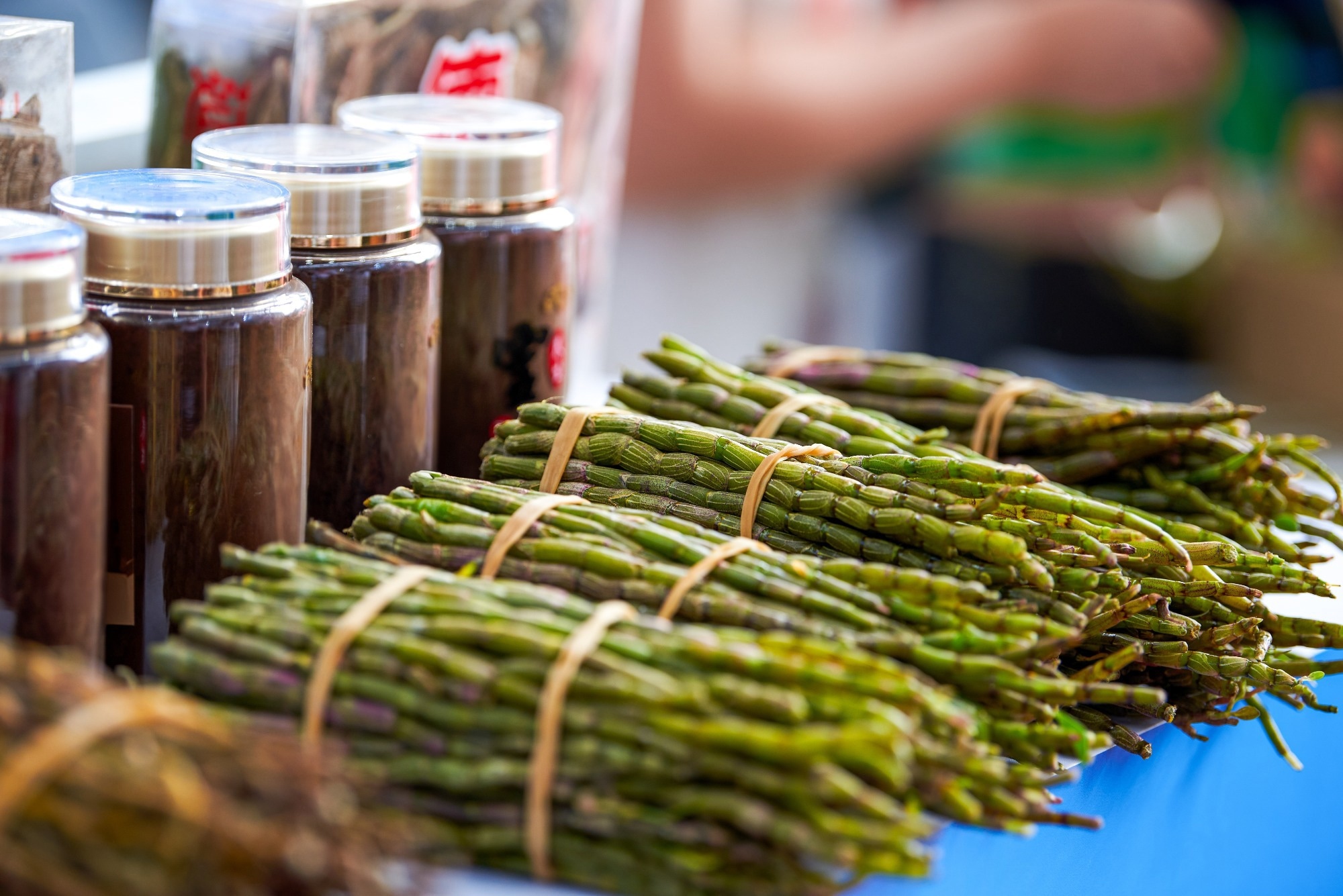
Dendrobium officinale. Image Credit: HiTecherZ / Shutterstock – Study: The role of traditional Chinese medicine in modulating gut microbiota to alleviating insulin resistance in polycystic ovary syndrome
In a recent review published in the journal Frontiers in Nutrition, a group of authors summarized how Traditional Chinese Medicine (TCM) may modulate the gut microbiota (GM) to alleviate insulin resistance (IR) in polycystic ovary syndrome (PCOS) and outlined potential, but as yet unvalidated, translational paths for clinical care.
Background
PCOS affects 5–20% of women of childbearing age and is often associated with IR, weight gain, infrequent or absent menstrual cycles, and challenges with conceiving. Current pharmacological treatments can be limited by side effects, cost, and long-term safety concerns, alongside concerns about future risk of developing type 2 diabetes and heart disease based on these risk factors.
Recent research has shown a connection between our GM and the regulation of metabolism and hormones, as GM imbalance can affect intestinal permeability, trigger inflammation, and increase IR.
TCM is widely used as a complementary and alternative therapy and is incorporated as an adjunct approach in some regional clinical guidelines. Future studies are needed to elucidate mechanisms of action and to develop standardized, safe, and effective TCM protocols.
Why the Gut Matters in PCOS
PCOS is a metabolic, reproductive disorder that involves hyperandrogenism (HA), anovulation, and IR. IR leads to hyperinsulinemia (HI), which causes the ovaries to produce increased levels of androgens, reduces sex hormone-binding globulin (SHBG) in the liver, and alters the neuroendocrine network toward increased production of gonadotropin-releasing hormone (GnRH) and luteinizing hormone (LH).
Additionally, the hypothalamic–pituitary–adrenal (HPA) axis can increase adrenal androgen production via adrenocorticotropic hormone (ACTH). Collectively, these systems exacerbate metabolic and reproductive dysfunction associated with PCOS.
Emerging evidence suggests that GM may contribute by showing reduced diversity and fewer short-chain fatty acid (SCFA)-producing strains, alongside increased endotoxin-rich organisms, in women with both PCOS and IR.
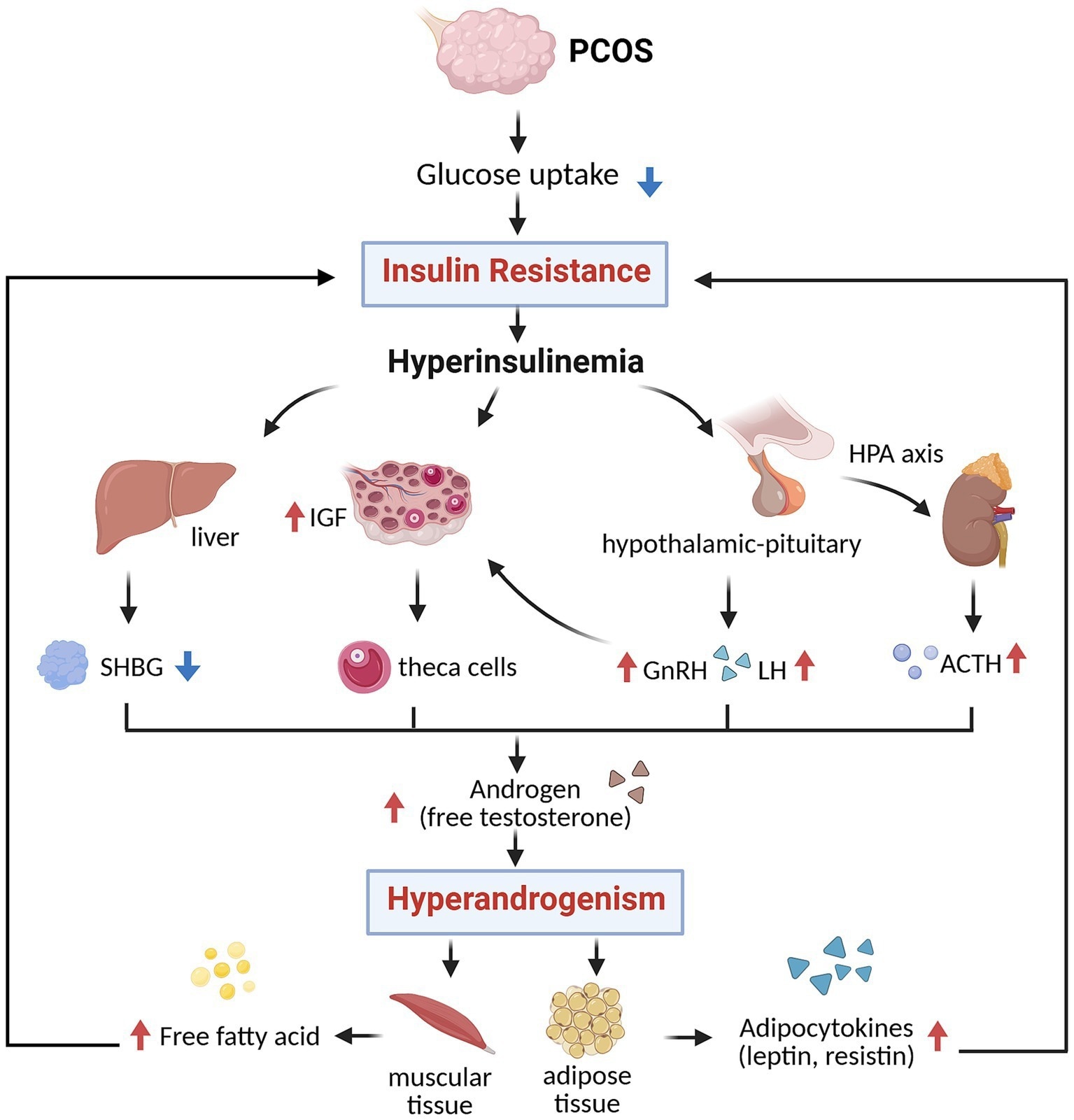

The relationship of IR and HA (created with biorender.com). SHBG, sex hormone-binding globulin; IGF, insulin-like growth factor; GnRH, gonadotropin-releasing hormone; LH, luteinizing hormone; ACTH, adrenocorticotropic hormone.
Barrier Breakdown and Microbial Metabolites in PCOS
A healthy intestinal barrier relies on tight junction proteins such as occludin and zonula occludens-1 (ZO-1) to prevent microbial products from entering the bloodstream. In dysbiosis, permeability increases, “leaky gut,” allowing lipopolysaccharide (LPS) to activate the Cluster of Differentiation 14 (CD14), toll-like receptor 4 (TLR4) complex, triggering myeloid differentiation primary response 88 (MyD88) and nuclear factor kappa B (NF-κB). This drives tumor necrosis factor alpha (TNF-α), interleukin 1 beta (IL-1β), and interleukin 6 (IL-6), which impair insulin receptor signaling via suppressor of cytokine signaling 3 (SOCS-3) and insulin receptor substrate 1 (IRS-1), worsening IR. SCFAs and secondary bile acids typically support glucagon-like peptide 1 (GLP-1) secretion and metabolic control, but are often reduced in PCOS.
Traditional Chinese Medicine Routes Linking the Gut and Host Metabolism
TCM is proposed to promote gut-host interactions through five mechanisms rather than established clinical pathways. First, multi-herb formulas, in preclinical and small clinical studies, remodel GM, enhance gut barrier integrity, and inhibit LPS, TLR4, and NF-κB signaling, thereby promoting SCFA-producing bacteria, estrous cyclicity, and reduced inflammation.
Second, targeted phytochemicals and polysaccharides, including berberine, naringenin, Dendrobium officinale, Cordyceps, Astragalus spp., mangiferin, and curcumin, have been shown, primarily in animal and limited human studies, to decrease IR and increase occludin and ZO-1 expression.
Third, dietary therapy, for example, quinoa and flaxseed oil, has been reported in experimental models to promote populations of Lactobacillus, Bifidobacterium, and Faecalibacterium, suggesting potential benefits for women with PCOS.
Fourth, probiotics, prebiotics, and synbiotics may aid in regulating either LH or follicle-stimulating hormone (FSH) ratios or inflammatory cytokine levels, with Bifidobacterium spp. linked to hormonal modulation and inulin associated with reductions in inflammation and IR.
Fifth, electroacupuncture has demonstrated improvements in visceral adiposity and glucose tolerance in animal models. Clinical trials suggest acupuncture combined with clomiphene may improve hormonal and metabolic outcomes compared with clomiphene alone. Acupuncture has also been reported to cause fewer gastrointestinal side effects than metformin in some studies.
Real-World Relevance and Safety Gaps
Patients with PCOS require management strategies that are adaptable, long-term, and individualized. Microbiome-informed TCM approaches have been proposed to include increased dietary fiber intake, targeted prebiotics or synbiotics, and formula-based interventions under clinical supervision. Yet evidence quality remains uneven.
Many clinical trials are small or short in duration, formulations vary substantially, and long-term safety, standardization, batch-to-batch consistency, and identification of active constituents remain limited.
The next step is multicenter randomized trials with harmonized diagnostic criteria, validated microbial endpoints, and omics-guided mechanistic studies to identify who benefits, from which intervention, and at what dose.
Conclusions
This review illustrates that the GM may be an adjustable factor affecting IR and symptom severity in PCOS.
By repairing the intestinal barrier, reducing inflammation and LPS activity, restoring SCFA production, and engaging bile acid signaling pathways, TCM has shown potential to improve metabolic and reproductive outcomes through a combination of approaches, including herbal formulas, bioactive compounds, dietary therapies, prebiotics, synbiotics, probiotics, and acupuncture.
However, to move TCM toward practical application in clinical care, larger clinical studies, standardized herbal products, rigorous quality-control frameworks, robust dose-response assessments, and ongoing safety evaluations are required.
Accordingly, microbiome-based evidence for TCM must be strengthened and carefully translated into accessible, equitable, and reliable care for individuals diagnosed with PCOS.
Journal reference:
- Lin, Y., Yang, W., Xie, Q., Xu, J., Lan, Y., & Wu, J. (2025). The role of traditional Chinese medicine in modulating gut microbiota to alleviating insulin resistance in polycystic ovary syndrome. Frontiers in Nutrition, 12. DOI: 10.3389/fnut.2025.1700612, https://www.frontiersin.org/journals/nutrition/articles/10.3389/fnut.2025.1700612/full