
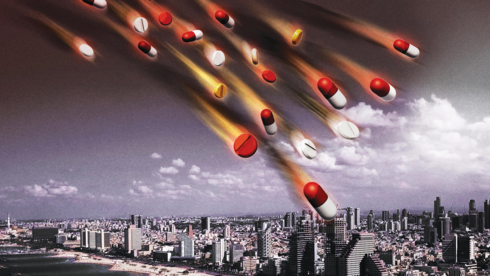
It took exactly a few seconds on Telegram to reach a channel called “The Good Doctor.”
Hi, Good Doctor, how are you? I’d like to order 🙂 Klonex.
“Sure. Where to? One package for NIS 300 ($96), two for NIS 550 ($175).”
“Of course. 2 mg, 30 pills, valid, sealed box.”
What else do you have for sleep and calming?
“Everything. What do you like?”
I’ve never taken anything, just can’t sleep now with everything going on. I guess there are many like me.
“Yes. Klonex is good. Zodorm is good, Bondormin, Lorivan, Assival.”
What are the prices? For Zodorm and Assival.
“NIS 600 ($191) including delivery in central Israel.”
Got it. These sirens are killing me at night.
“The Good Doctor”: “All of us :(.”
“The Good Doctor” is far from alone. Alongside it operate Telegram channels such as “The Health Channel,” “Dr. Dobi,” “The Central Pharmacist” and many others. Most of them, within just a few clicks and a process known as “verification,” in which the customer is required to send a photo of their ID along with a selfie or video, will immediately supply, via courier or pickup, almost any prescription drug imaginable: from sedatives and sleeping pills, through ADHD medications, to heavy opioids.
The black market for prescription drugs in Israel is not new, but it is thriving, and during wartime, even more so.
3 View gallery
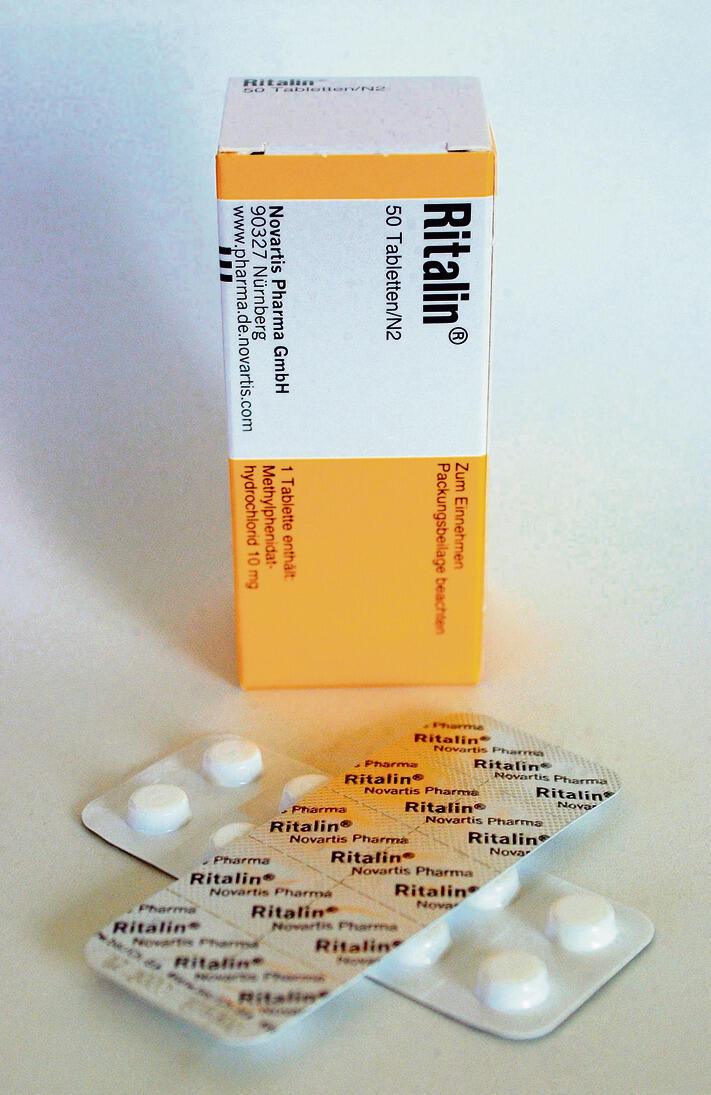

(Phoot: ullstein bild via Getty Images)
“This is a market that generates a huge amount of money,” says Dr. Roni Berkowitz, head of enforcement and supervision at the Health Ministry. “In one of our recent seizures, together with the Lev Tel Aviv police station, we found thousands of drugs worth hundreds of thousands of shekels, and that’s just one seizure.”
Do you know the scale?
“Most of it we don’t catch.”
Two and a half years of war, followed by nearly a full month of pressure and sleepless nights in shelters and safe rooms, are significantly fueling the phenomenon.
“After two and a half years of very high alertness and stress levels, it’s only natural that people will look for some way to calm down,” says Prof. Shauli Lev-Ran, psychiatrist and founder and academic director of ICA, the Israeli Center on Addiction and Mental Health. “It starts with what’s available at kiosks, like alcohol or other substances, and moves to prescription drugs. Some use medications as prescribed, others don’t have prescriptions but obtain drugs from their parents’ medicine cabinets or similar sources. And some turn to Telegram.”
Some of those users eventually reach treatment.
“In the past two years, we’ve seen a doubling in opioid use,” he says. “It’s an increase we started seeing a few months after the war began, and it hasn’t gone down. Even in periods when stress levels dropped, the heightened and dangerous use of opioids remained high. That means that once someone develops the habit, they keep it even after the fighting ends.”
This week, we dove into the black market for prescription drugs during wartime. We spoke with Telegram dealers, who were more than happy to offer their goods and even provided pharmacological tips, and with experts and researchers who warn: this dangerous wave is not going anywhere, even long after the war is over.
Prescription drugs on the black market fall into four main groups.
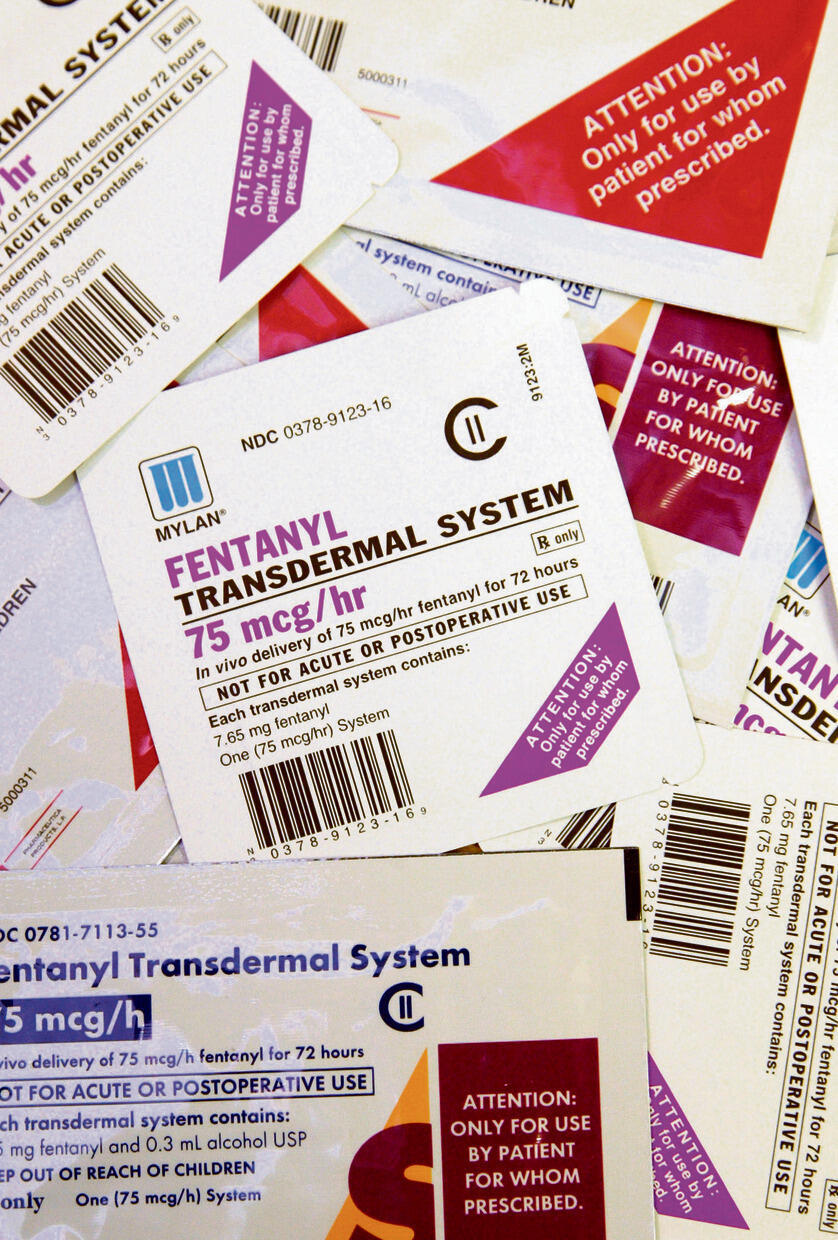
The leading category, and also the most dangerous, is opioids: painkillers such as oxycodone, Percocet and above all fentanyl patches, known as “Penta.” Dr. Berkowitz calls it “the prince,” “because it’s the bomb, the strongest of them all.” It is intended for treating severe pain, including in cancer patients, and is up to 100 times stronger than morphine.
“In the past two years, we’ve seized these in enormous quantities on the black market.”
The second group is stimulants, drugs intended to improve concentration for those with attention disorders, and which can boost performance and a sense of alertness. These include Vyvanse and Attent. Berkowitz reports a sharp rise in their use as well. These, like opioids, are classified in Israel as dangerous drugs, and illegal trade in them is considered a drug offense “just like trafficking heroin or cocaine,” he emphasizes.
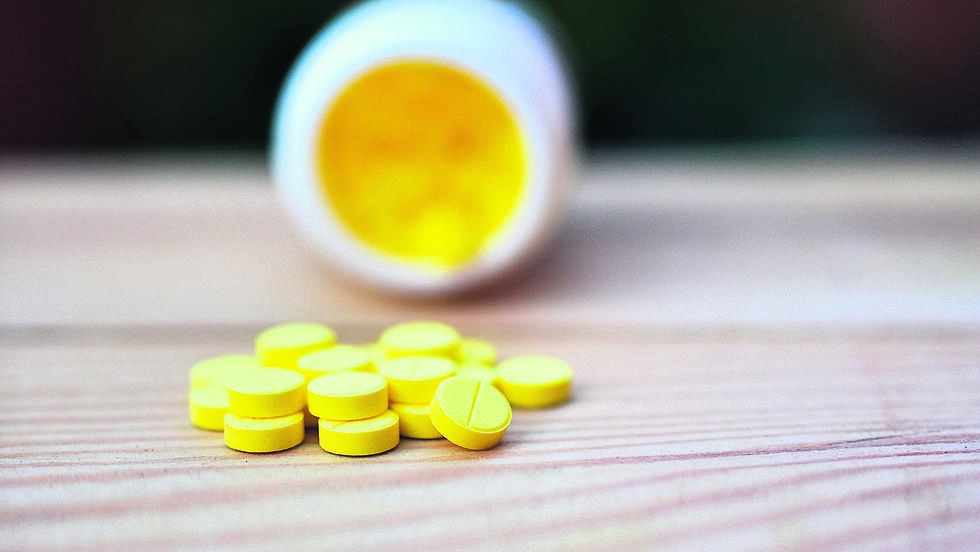
The third group is depressants, drugs that calm the nervous system and are intended for anxiety and insomnia, such as Klonex, Assival and Xanax. Their story is slightly different, as they are widely accessible, relatively cheap and often prescribed easily by family doctors. Despite this, they are still highly popular on Telegram.
The fourth group is lifestyle drugs, mainly erectile dysfunction medications such as Viagra and Cialis. Many users would not qualify for a prescription, and even those who might are sometimes deterred by embarrassment. The latest trend in this group is weight-loss injections such as Ozempic, Wegovy and Mounjaro, for which access through health funds is restricted by strict criteria such as BMI thresholds or blood sugar levels.
From what we could gather, there has not been a significant wartime increase in this category. Sleeping in shared shelters and eating late-night carbohydrates does not appear to drive demand for Viagra or Ozempic.
3 View gallery

The price gap between pharmacy drugs and Telegram prices can exceed 1,000% for high-demand products, making the trade highly profitable. The estimated size of the black market is hundreds of millions of NIS annually.
A pack of sleeping pills like Bondormin or Assival, which costs about NIS 17 ($5) in pharmacies, sells on Telegram for NIS 150–400 ($48–$127). A pack of five fentanyl patches costs NIS 145 ($46) in pharmacies, while a single patch on Telegram costs NIS 200–350 ($64–$111). A pack of Lyrica 150 mg costs about NIS 170 ($54) in pharmacies and about NIS 400 ($127) on the black market.
“Fentanyl has an immediate high that lasts over time,” says Tali Yogev. “It’s essentially a substitute for heroin for those who can afford it. And even normal people, who received painkillers after surgery or because they broke a bone, can within two weeks find themselves looking for more and more. That’s how you get a thriving black market.”
But during wartime, price matters less. More people buy, and more become addicted.
“If in 2022 about 3.8% of the population were in use or at increased risk of prescription drug misuse, now we’re above 10%,” Yogev says. “And when there is an overflow of demand in the legitimate system, there will always be leakage into the black market.”
The highest demand on Telegram, it seems, is for opioids.
Hi, I’d like to place an order.
“What’s up, sweetheart, what do you need?”
Do you have fentanyl patches?
“Of course. What dosage?”
“NIS 350 ($111) for pickup. Delivery extra.”
For a pack or a single patch?
“Whenever you want, sweetheart. Are you coming to pick it up? Need verification: a selfie video with cash, saying ‘order manager,’ date and time, ID photo, screenshot of social media, phone number.”
These personal details are meant to protect dealers from police sting operations. In the past, lists of police officers, including personal details, have leaked from various organizations. These lists, some of which include ID numbers, are sold on the dark web. Criminal groups compare the number sent by the customer for “verification” with those lists to ensure the buyer is not a police officer.
In theory, this is not an obstacle law enforcement cannot overcome, but it seems these channels are not high on police priorities. One reason may be that Telegram drug trade includes many small-scale operators, not just major criminal organizations. According to Berkowitz, these are often local offenders, and sometimes even patients who have found an additional source of income by selling surplus medication prescribed to them or people close to them.
“And yes,” he says, “in the past year we’ve also caught huge quantities of forged prescriptions.”
Lev-Ran explains why opioid use rises during war:
“At its core, escapism shifts attention away from what is happening here and now. If stimulants increase dopamine and excitement, then painkillers have significant side effects of sedation and blurring, which make coping with reality easier, even if only temporarily. And we must remember that pain is pain, whether physical or emotional.”
The trade in opioids is thriving during the war.
Prof. Shauli Lev-Ran: “Painkillers have significant side effects of sedation and blurring that ease, even if temporarily, coping with reality. And we must remember that pain is pain, whether physical or emotional.”
Tali Yogev adds: “Fentanyl has an immediate high that lasts over time. It’s essentially a substitute for heroin for those who can afford it. And even normal people, what most often pulls them into addiction is painkillers. Some people who received painkillers after surgery or because they broke a leg can, within two weeks, reach a point where they are looking for more and more.
3 View gallery

But doctors are responsible, and they won’t just hand out fentanyl in large quantities. So that person will try to get prescriptions from different doctors, and then go to the emergency room claiming they are going crazy from pain and need medication immediately. And later they will look for other, less legitimate channels to obtain the drug. Add to that the ongoing state of fight-or-flight we are in, and the high prevalence of people dealing with post-trauma who are looking for immediate relief, and you get a thriving black market.”
Another popular category on Telegram, as mentioned, is ADHD medications. Here is a conversation we had this week with a channel called “The Pharmacist”:
“What mg do you need?”
“Come pick it up for NIS 750 ($239), bro. Party. Petah Tikva area.”
Really? I’ve never bought on Telegram.
“I’ll be your first and your last.”
What do you need to proceed?
“Screenshot of Facebook. Photo of ID. Video of you saying: ‘Pharmacist, I’d like to place an order,’ and saying your phone number.”
In peacetime, peaks in demand for ADHD medications on Telegram are usually tied to exam periods in academia and major licensing tests.
“Some people think it will turn them into Superman,” says Hagai Shor, CEO of the Shor Tabachnik pharmacy chain. “They think that if they take the drug, they won’t sleep for three or four days and will study with maximum focus. But that’s not true. If you don’t have attention issues, it won’t turn you into Superman. It might not do anything for you at all, except cause side effects.”
But now there is war, no exams, no academic calendar, and still ADHD medications remain highly popular on Telegram.
The reason lies in the nature of the current round of fighting, which is concentrated at night.
“People who don’t sleep properly at night need something to wake them up during the day,” says Yogev, referring especially to parents who are critically short on sleep but must continue working and caring for children throughout the day. “Then they can’t fall asleep at night, so they take sleeping pills. It becomes a vicious cycle. This is a phenomenon well known among people dealing with post-trauma, where using pills gives them a sense of control over the situation and their emotions. As if through medication they control their thoughts and feelings, and not the other way around. But it’s not real, it’s an illusion that creates detachment. Such a mechanism can lead to worsening post-traumatic symptoms and eventually to addiction.”
Another group, probably much smaller, of buyers of ADHD drugs on Telegram are adults who do suffer from attention disorders but have not gone through the long, and often expensive, diagnostic process required to obtain a prescription.
“They don’t have the patience or endurance to go through the procedures needed to get the medication,” Shor explains, “so they look for shortcuts.”
But ADHD medications are also popular among less “normative” users: addicts who, under current conditions, use Ritalin and similar drugs as substitutes for cocaine, which has become harder to obtain during wartime.
“Ritalin is definitely not cocaine,” Shor says, “but someone who is addicted and currently has no supply of drugs might take Ritalin to ease withdrawal.”
Surprisingly, the group of sedatives and sleeping pills raises many questions.
As noted, most of these drugs are widely available, easily prescribed by doctors, usually without the need for tests or specialist appointments, and generally very cheap. Some health funds even offer free delivery of medications, so there is no need to leave the protected room.
Yet despite this, sleeping pills and sedatives remain highly popular on Telegram during the war.
How simple is it? Here is a conversation we had this week with a Telegram channel called “Health World”:
“Hi, how can I help?”
I need Stilnox for the northern Dead Sea / Ma’ale Adumim area. Is that possible?
“Ma’ale Adumim, yes.”
“Sealed box, 14 pills. It will cost you NIS 500 ($159), including delivery.”
Stilnox is a popular sleep aid. The same box we were offered for NIS 500 ($159) costs about NIS 14 ($4.5) at Maccabi pharmacies.
So why take the risk and order via Telegram?
First, the war, especially the current one, is severely affecting Israelis’ sleep.
As early as December 2023, Prof. Shoham Choshen-Hillel, a decision-making researcher at the Hebrew University Business School, began studying the issue. Together with her husband, sleep researcher Prof. Alex Gileles-Hillel, and researcher Dr. Hadar Naftalovich, she conducted an ongoing sleep study on a representative sample of the population.
“No one had previously studied the impact of war on sleep on the home front,” she says. “The only thing we found was a paper from England describing people who couldn’t sleep in train stations during World War II. We discovered that war has a massive effect on civilian sleep.”
The study compared Central Bureau of Statistics data showing about 7% clinical insomnia before the war with survey results from December 2023. The result: more than a threefold increase. About 25% of respondents were above the clinical threshold for insomnia.
In June of last year, during another military operation, insomnia reached 41% of the population, “the highest ever,” according to Choshen-Hillel. And few would be surprised if that record has already been broken in recent weeks.
What about sleeping pills?
“In December 2023, 11% reported using sleeping pills, which is a lot. In routine times it’s around 4%.”
Indeed, Israelis are flocking to pharmacies to stock up on sleep and calming medications. According to David Papo, chairman of the Pharmacists Association, consumption of over-the-counter drugs in this category has risen by about 30% in recent weeks.
“Whenever there is security tension, there is an increase in medication use,” he says.
But Israelis already knew how to obtain drugs via Telegram before the war. When the war came, they simply expanded their shopping list.
“These illegal Telegram channels have been peaking for years during exam periods,” Papo says. “Every exam season there is a rise in consumption of amphetamines, Ritalin and similar drugs. We see it during law exams, medical licensing exams and other major certification tests.”
So, is it possible that people who entered these channels for exam drugs now return when they cannot sleep and don’t have a prescription?
“More than that. Someone who gets a legal prescription for 60 pills might use 20 and sell the rest. And everyone already knows who to turn to.”
Is it common for people to buy outside pharmacies?
“Yes. From conversations with patients, it’s very common. But usually not for sleep or calming drugs, which are easily available. It’s more common with weight-loss injections, where those who can’t get a prescription turn to these channels.”
The question remains: why are easily available drugs still so popular on the black market?
There are, of course, “normative” consumers who haven’t slept for several nights and want immediate relief, regardless of price, without going through a doctor.
But there is also another group: addicts, who during wartime often face shortages in street drugs.
“In the black market, we’ve found that these drugs are often sold as single pills, each for dozens of shekels,” says Berkowitz.
What do they do with them?
“Heavy users and drug addicts crush the pills, which reduces liver absorption, and mix them with orthopedic pain medications like Lyrica, or with opioids like OxyContin or fentanyl, and with stimulants like Ritalin, Vyvanse and Attent. They mix all of this with alcohol, which greatly intensifies the effect.”
Consumers in the Telegram drug market take significant risks.
Even if the seller claims the product is “original,” there is no way to verify whether it is counterfeit, potentially life-threatening, or improperly stored. Weight-loss injections, for example, must be kept refrigerated at all times. Who guarantees that the anonymous Telegram seller maintained proper conditions?
Dosages may also be inaccurate.
“But people who use these channels don’t complain,” Papo says. “They don’t go to the police or the Health Ministry, so it stays under the radar.”
The greatest danger, of course, is addiction.
When drugs are prescribed by a doctor, patients are monitored. On Telegram, no one tells them to stop.
“Benzodiazepines,” explains Prof. Gileles-Hillel, “are drugs with very strong effects that can cause respiratory depression, even death.”
Even supposedly safer drugs can have serious side effects.
“People who misuse these drugs can experience confusion during the day, excessive drowsiness, blurring and dissociative states.”
Lev-Ran highlights another risk: the gateway effect.
“A person sometimes goes to the supermarket to buy tomatoes and ends up buying bread and eggs as well,” he says. “Someone who wanted a sleeping pill sees Ritalin on sale and thinks, maybe this will help me finish a project. And next time, it’s even easier to add more.”
Beyond enforcement, Yogev says the state can improve monitoring of prescriptions: shorten the window for using manual prescriptions, update pharmacy systems in real time to prevent duplicate use, and more.
“But in the end,” she says, “we must remember that prescription drugs are often only first aid, meant to reduce symptoms, not a long-term solution. The medical system must always offer emotional and psychological support. Pills alone will not solve the problem.”
Nor will they solve the next war.


