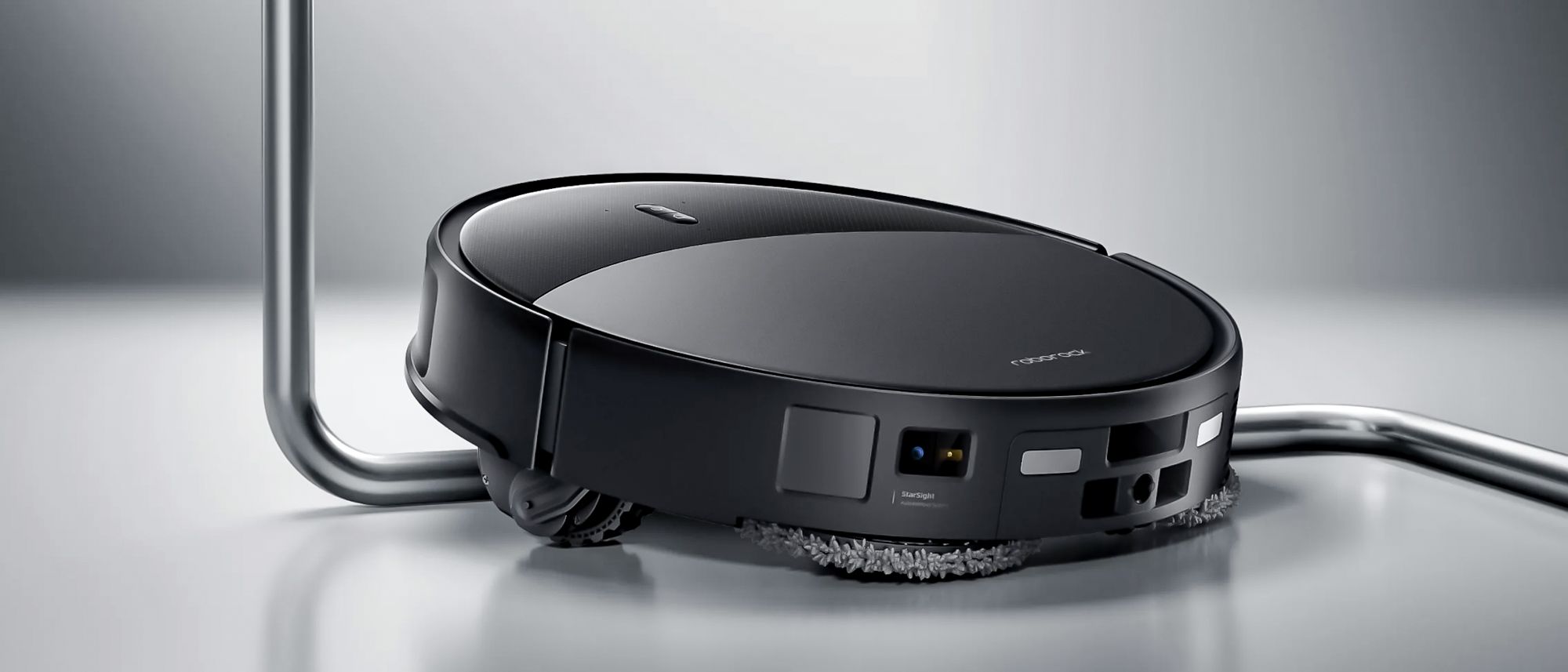
Roborock Saros 20: Specs
Charge time: 2.5 hours
Self-emptying dock: Yes
Suction power: 36,000 Pa
Size: 15 x 18 x 19 inches
Weight: 11 pounds (robot), 23 pounds (dock)
Smart home compatibility: Alexa, Siri, Google Home
Bin capacity: 0.66 gallons
As a parent and a pet owner, I’m used to vacuuming several times a week. Once I discovered the magic of owning one of the best robot vacuums, I was hooked. Gone were the days of manual vacuuming to remove pet hair, human hair, and crumbs from my floors. If you haven’t made the switch yet, now’s the time — but with so many options on the market, how do you know which one is best for your home?
The Roborock Saros 20 is one of the latest offerings from the robot vacuum giant, and a premium model. After testing it in my home for several weeks, I can confidently say it’s worth the money for the vacuum function alone.
The Saros 20’s mega suction power easily cleans even the dirtiest floors, though the mop function left my floors a little streaky and patchy. If you’re considering upgrading your robot vacuum and mop — or buying one for the first time — the Saros 20 is a decent pick. Read on to see how it performed in testing and why it’s one of the best robot vacuums for pet hair out there.
Roborock Saros 20 review: Price and availability
The Roborock Saros 20 will be released in the U.S. on March 23, 2026, with an MSRP of $1,599.99 on the Roborock website, but was released in the EU in early 2026, with an MSRP of €1,499.
Roborock Saros 20 review: Design
At first glance, the Roborock Saros 20 has a sleek, streamlined design. It’s a dark gray-black color, which works well in my home. Because I received a pre-release model, it arrived in a plain box with no owner’s manual.
The Saros 20 has several unique features that justify its relatively high price tag:
- AdaptiLift Chassis: This feature combines main and auxiliary wheels to help the Saros 20 more easily cross double-layer thresholds of up to 1.77 and 1.57 inches. If you’ve ever had to rescue a stuck robot vacuum, you’ll appreciate this feature.
- StarSight Autonomous System: The robot’s navigation system can identify more than 200 objects for better obstacle avoidance.
- Hyperforce suction: The Saros 20 has up to 36,000 Pa of suction, resulting in a more thorough clean. I especially appreciated this during dog shedding season.
- Dual-tangle approach for hair: The robot uses a main brush and a side brush to sweep up hair, preventing it from tangling or wrapping around the vacuum brush. If you have long hair, this could be a game-changer.
Roborock Saros 20 review: Set-up and app
The Roborock app is available on the Apple App Store and Google Play. It’s simple to set up: just download the app, create an account, and choose your vacuum. You can do this by either scanning a QR code on the robot or by manually searching for the make and model.
The app will then provide a QR code, which you’ll hold in front of the robot to scan. Then, you’ll connect it to your Wi-Fi by entering the security password. Once you’ve connected your robot to the app, you’re ready to get started.
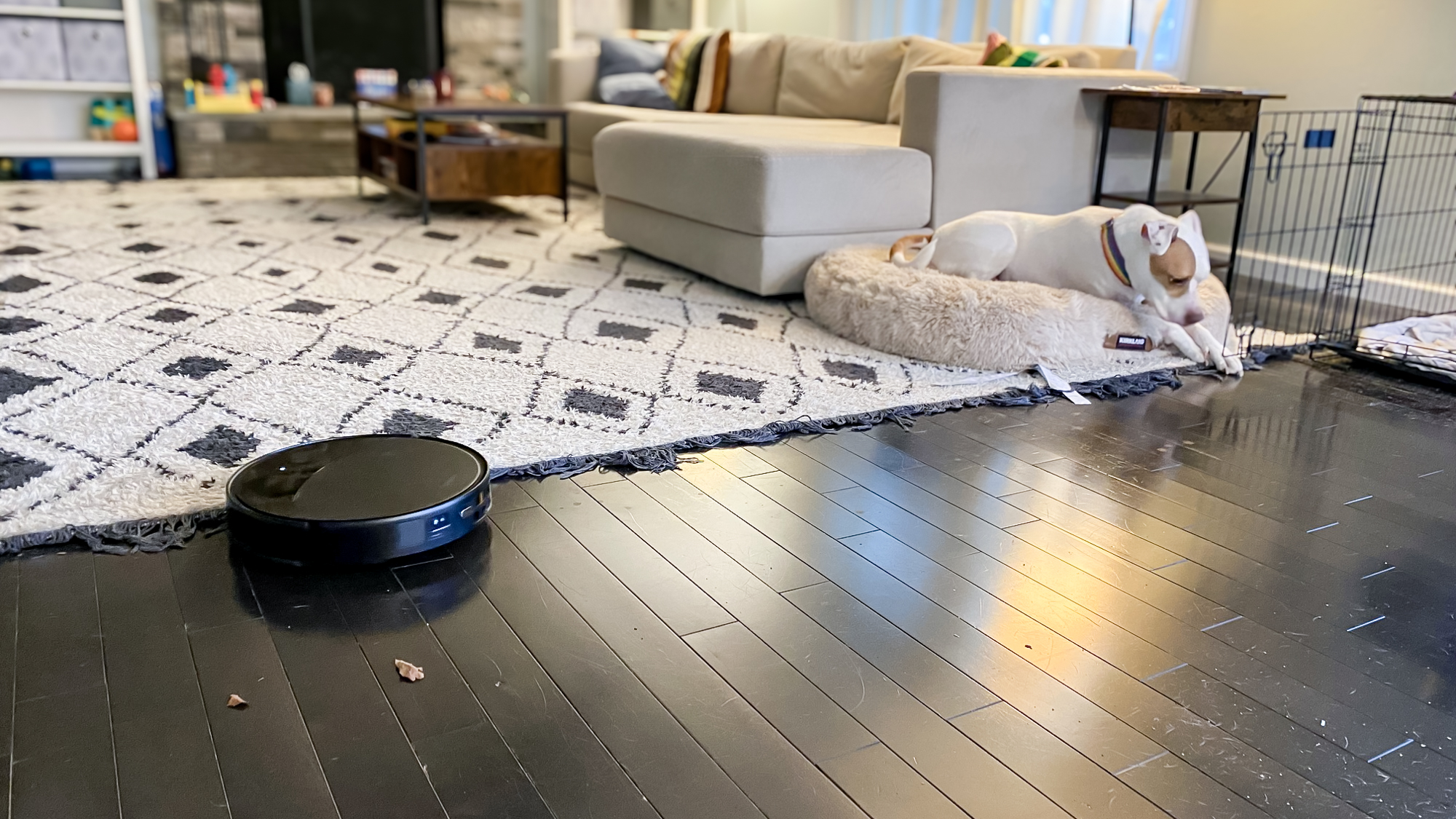

The first thing I did was have the robot map my house. The process was fast, taking just over two minutes. The robot noted key obstacles, such as furniture and my dog’s crate, and identified each room’s purpose. Once my home was mapped, the app prompted me to check it and make any changes. It looked good to me, so I accepted the map and got started testing out the robot.
Filling and emptying the water tanks is easy enough — they just lift out of the top of the dock and slot back in. There’s no max water line on the clean water tank, though, so I had to guess at how much water to add. I noticed that the Saros 20 uses much less water than previous robot mops I’ve tested, so this turned out not to be a huge deal.
Roborock Saros 20 review: Performance
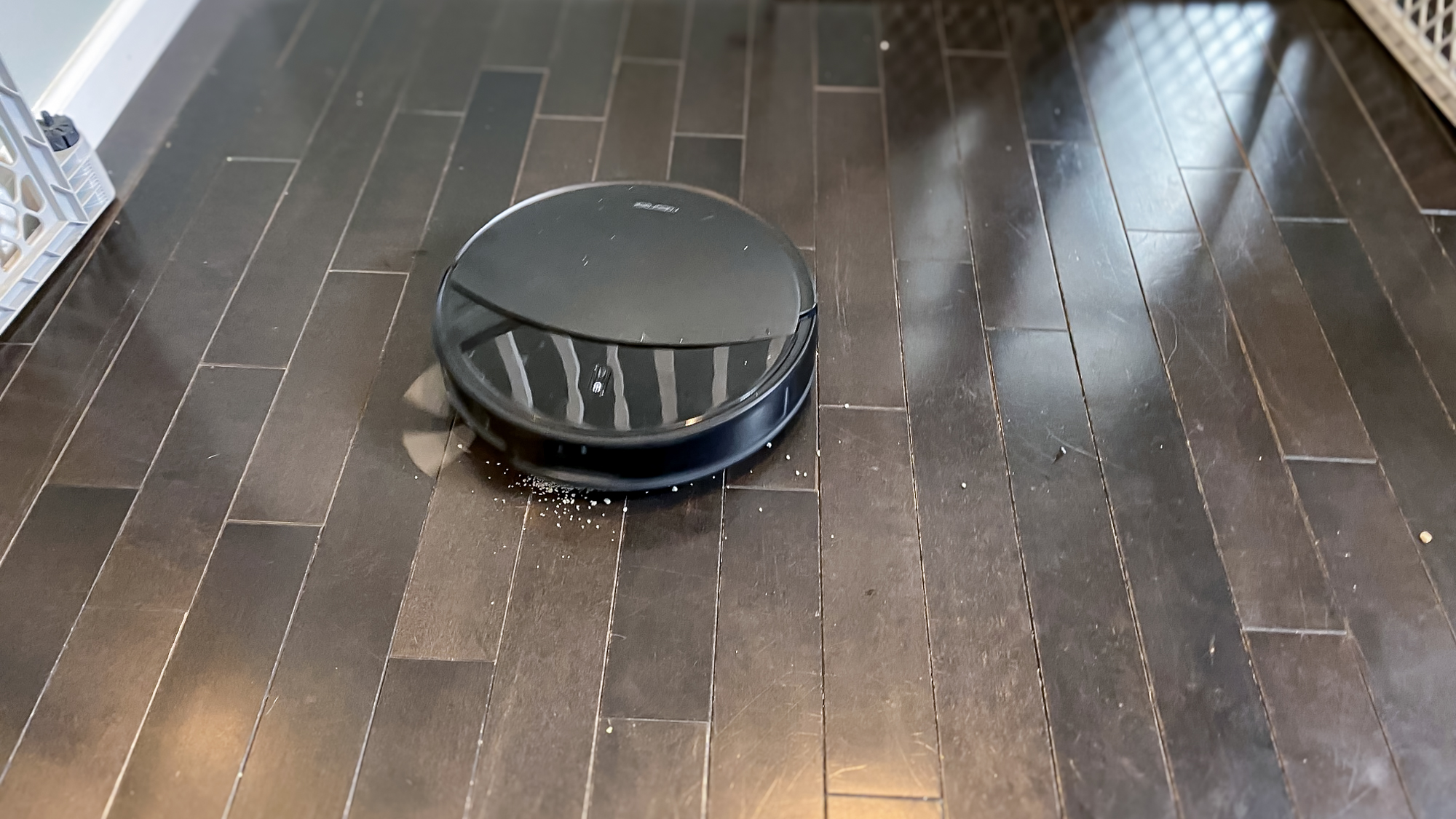
My first use of the Roborock Saros 20 was a full vacuum/mop cycle of my house’s main floor, which is mostly hardwood with a couple of rugs. My floors were quite dirty, so I figured this would be a good initial test.
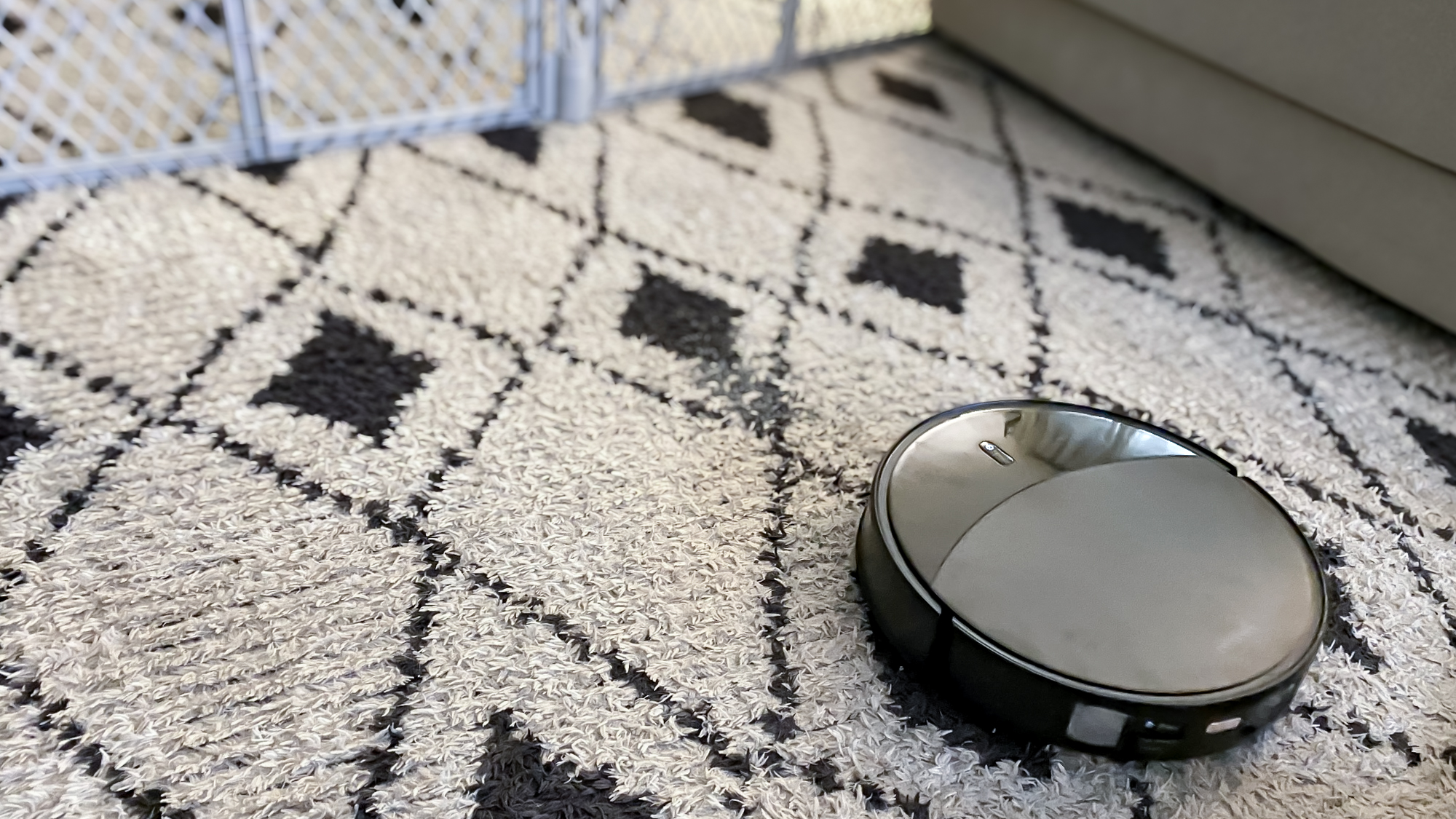
The cycle took 85 minutes to clean just over 710 square feet. During the cycle, the robot returned to the dock for three mop washes and one dustbin emptying.
I noted that the Saros 20 excelled at avoiding obstacles and cleaning along the edges of rooms. I was also pleased that I didn’t need to rescue the robot from under my coffee table or from a nest of cables, as I have had to with previous robots I’ve tested. That’s because the Saros 20 features low-clearance navigation down to 7.95 cm to lessen the likelihood of the machine getting stuck.
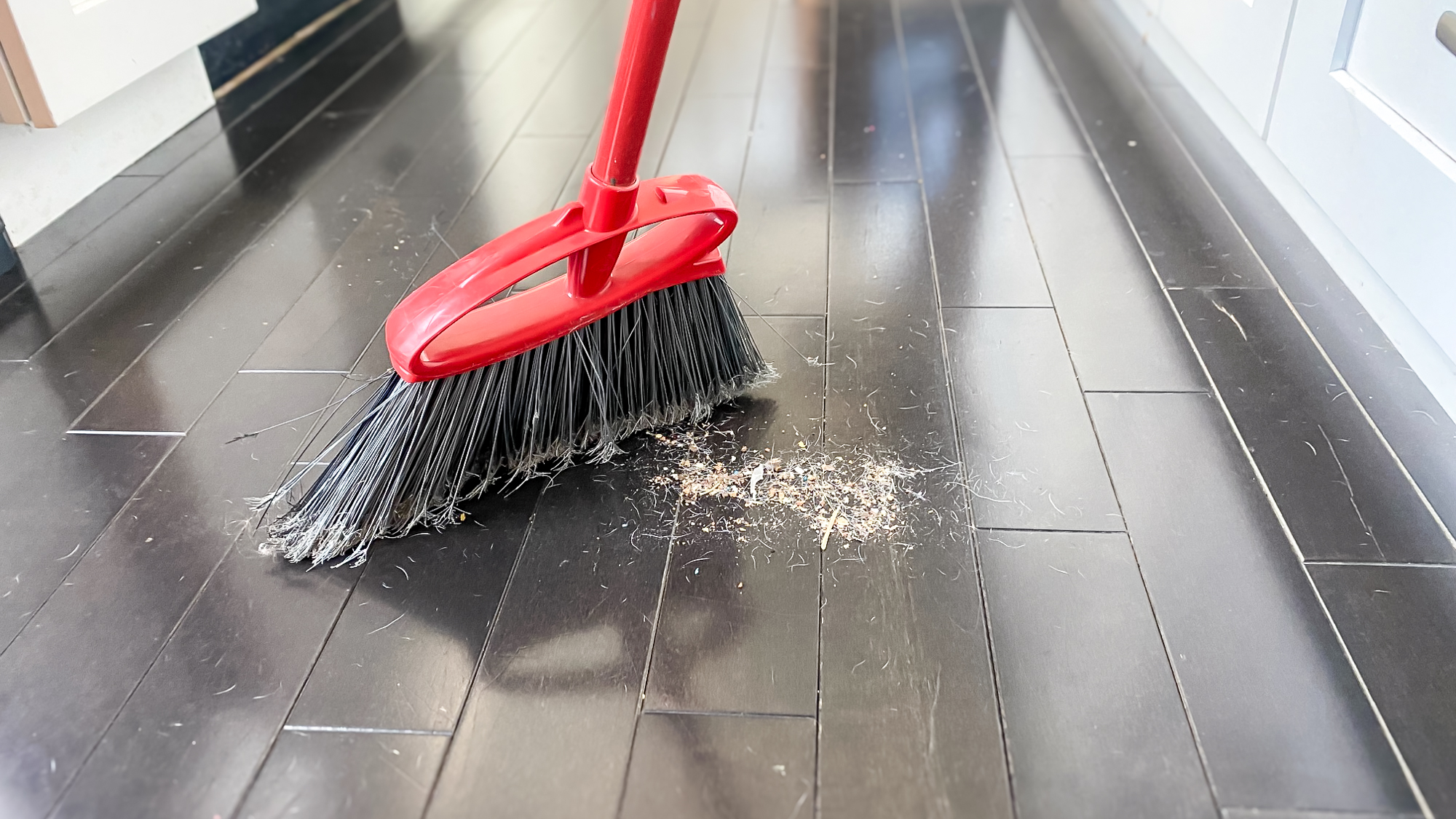
Once the cycle was complete, my floors looked much better, though I did notice quite a bit of debris left in my kitchen that I had to sweep up afterward. This didn’t happen on subsequent uses, so I chalked it up to a one-time thing.
What is it like on carpet?
To test the robot on carpet, I sectioned off a small space on my living room rug. I placed the robot in the area, sprinkled Cheerios, then kitty litter, and finally pet hair on the rug before running a vacuum-only cycle. For each test, I weighed the dustbin before cleaning when it was empty, then weighed it again afterward to measure how much debris the vacuum picked up. Here’s how the Saros 20 performed in these tests.
| Row 0 – Cell 0 |
Dustbin weight before |
Dustbin weight after |
Percentage of debris picked up |
|
20g Cheerios |
143g |
163g |
100% |
|
20g kitty litter |
143g |
163g |
100% |
|
20g pet hair |
143g |
150g |
70% |
I thought the Saros 20 did a great job on my rugs and picked up more debris than my previous robot vacuum did. It didn’t snag and moved easily from hard flooring to carpeting thanks to the AdaptiLift Chassis feature. I was surprised by how well it picked up cat litter during my testing, though it left quite a bit of pet hair behind, which I had to re-vacuum after the cycle ended. I don’t know if I would use the Saros 20 as my only vacuum for carpet, but it will definitely be added to my weekly cleaning to prevent too much gunk from building up.
What is it like on a hard floor?
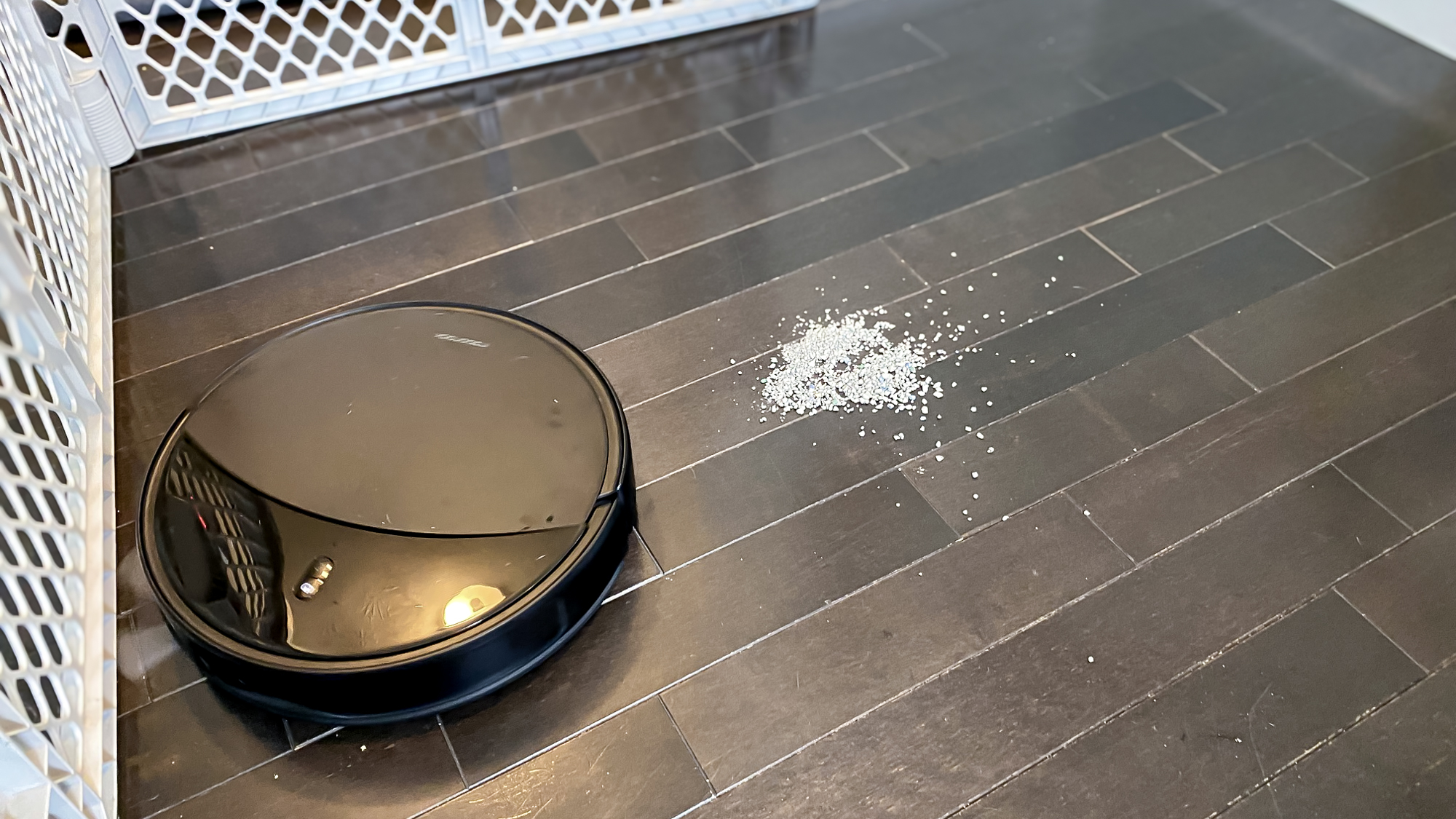
I performed the same three tests on a sectioned-off area on my hardwood floor to determine the Saros 20’s performance. Here’s what I found:
| Row 0 – Cell 0 |
Dustbin weight before |
Dustbin weight after |
Percentage of debris picked up |
|
20g Cheerios |
143g |
161g |
90% |
|
20g kitty litter |
143g |
163g |
100% |
|
20g pet hair |
143g |
152g |
90% |
| Row 4 – Cell 0 | Row 4 – Cell 1 | Row 4 – Cell 2 | Row 4 – Cell 3 |
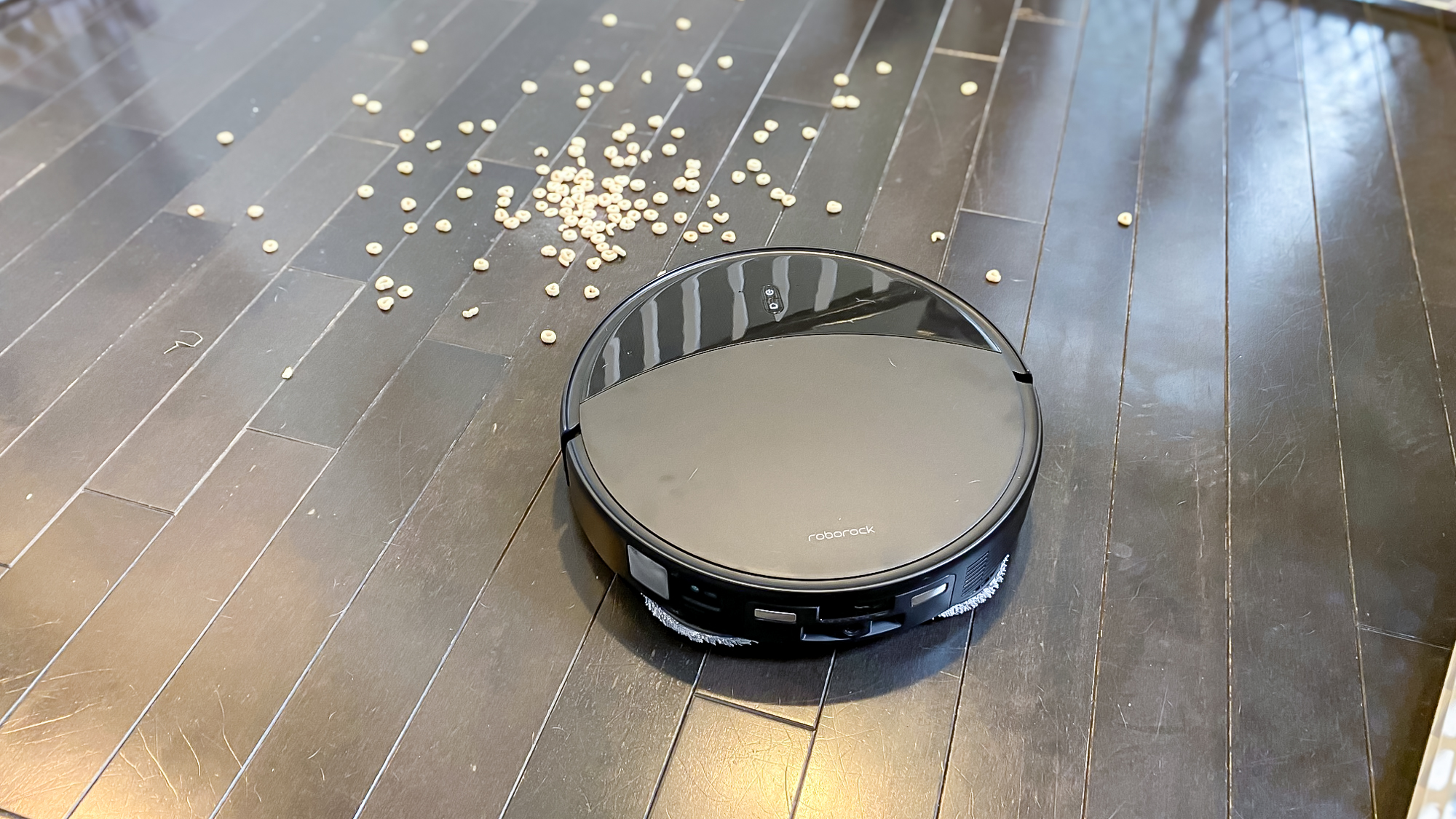
Overall, the Saros 20 did decently on my hardwood floors. It picked up most of the debris and mopped decently. I had an issue a couple of times when the mop heads fell off as the robot went over a cable while cleaning, so I had to rescue it and reattach the mop heads before the cleaning cycle could resume. I was surprised that the robot didn’t recognize the cable nest under my desk and skipped it while mopping.
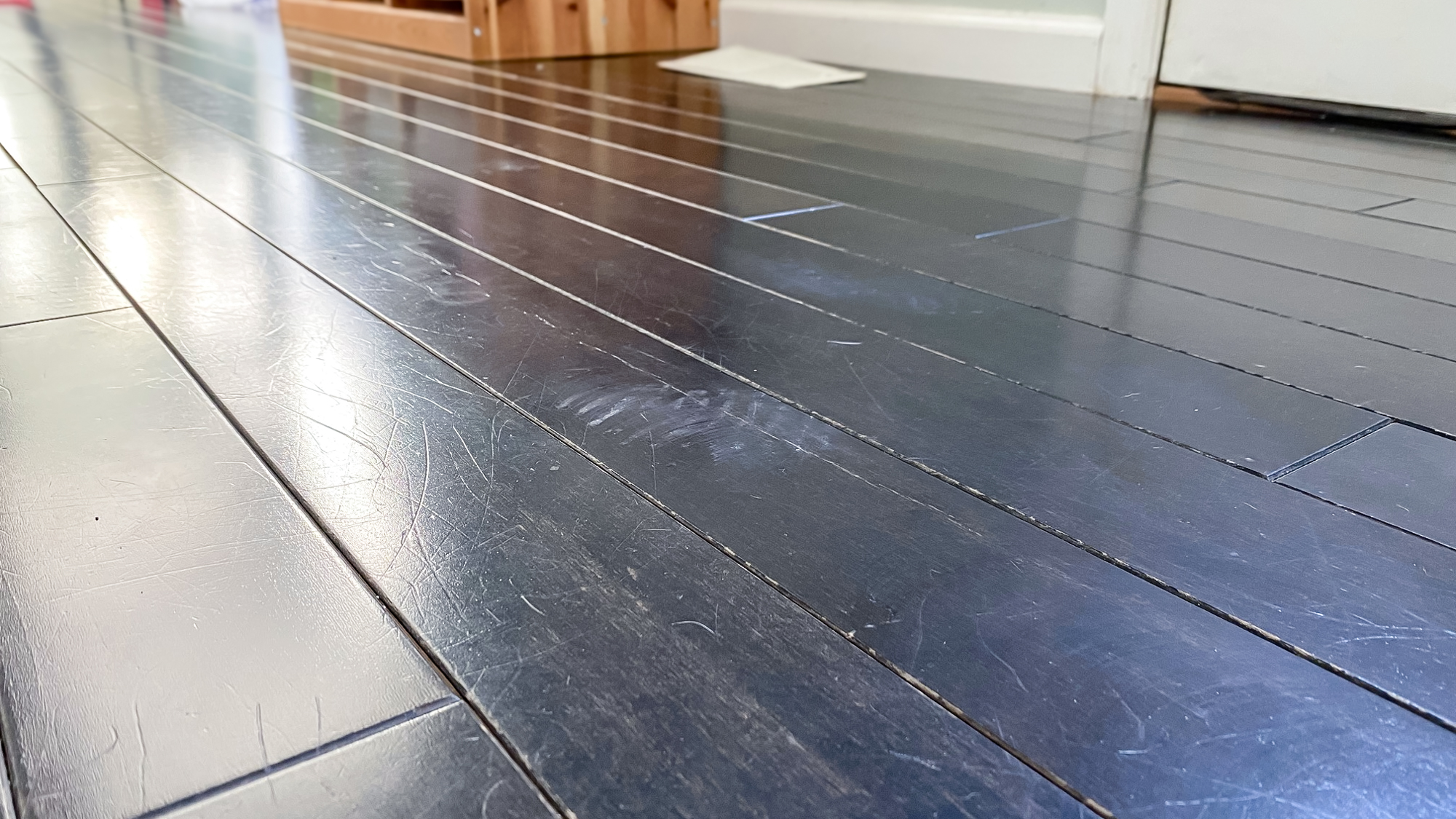
During mopping, I noticed that the Saros 20 missed several spots on my floors, leaving them streakier and patchier than I’d like. The robot returns to the dock for a refill infrequently, and it almost seems like the mop heads aren’t saturated enough while mopping for a thorough clean. However, given the price, I would expect this model to mop better.
Noise:
I measured the decibel level of the Saros during different functions. Overall, the robot was fairly quiet and didn’t disturb me while it was running. Here’s what I found:
|
Function |
Decibel level |
|
Vacuuming |
60 dB |
|
Dustbin emptying |
70 dB |
|
Mop washing |
60 dB |
For reference, a normal conversation ranges from 60 to 70 decibels, while a traditional vacuum cleaner is around 5 decibels.
Roborock Saros 20 review: Ease of cleaning
The Roborock Saros 20 has a removable dust canister that self-empties into the dock when the robot returns after the cycle is complete. This makes upkeep super simple: you just need to keep an eye on the bag within the dock to see when it needs to be swapped out. The model I received had a bag already installed, plus five spares, and after several uses and tests, the initial bag wasn’t even half full. Roborock says you can go up to 65 days between bag changes, but ultimately it depends on the dirt level of your floors and how often you use the machine.
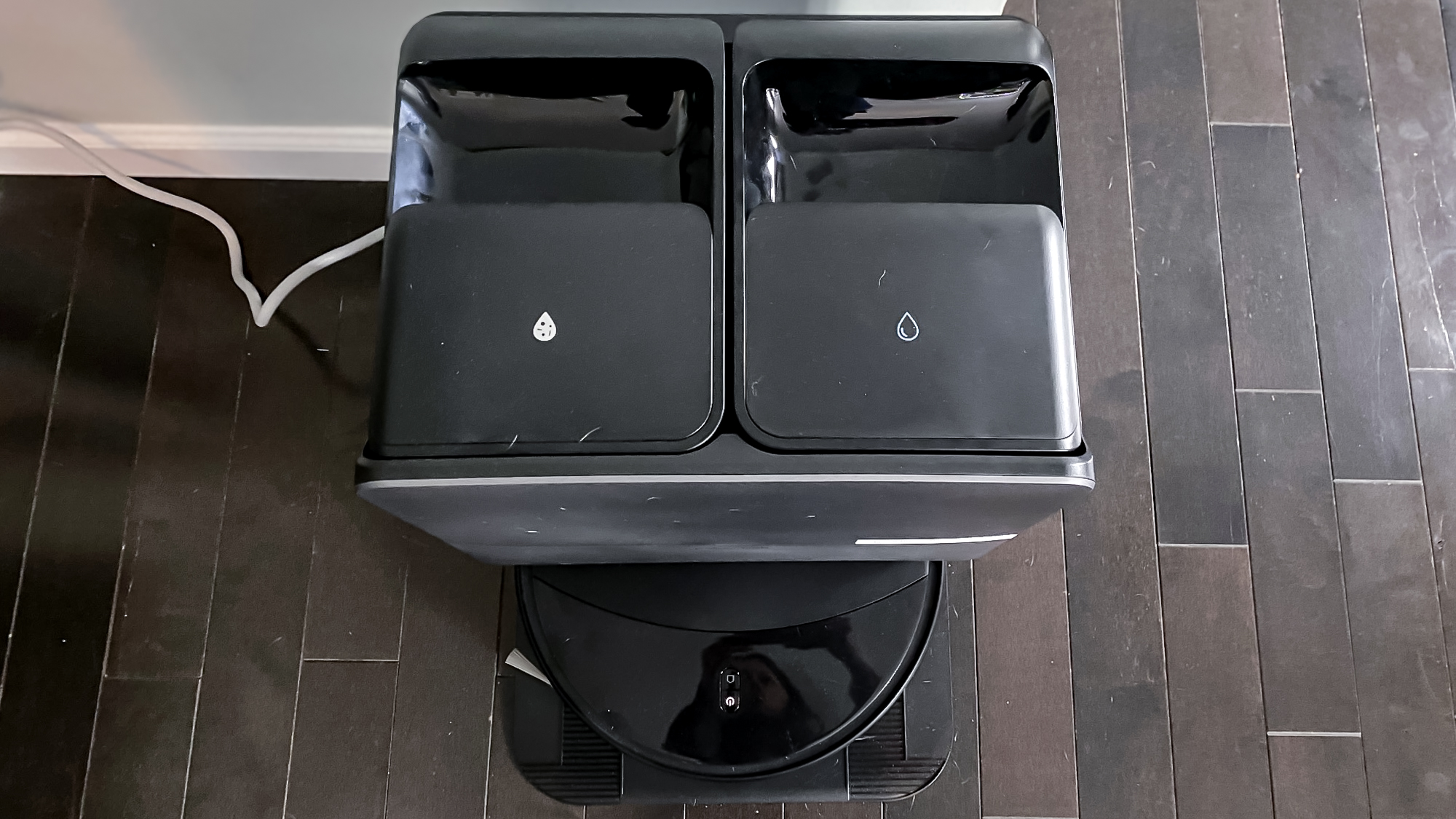
The dust canister itself has a filter that you can shake out to keep it clean and functioning well. Roborock provided me with three spare filters so I can replace them when needed. I also received six spare mop heads, so I can replace them when the originals are worn or dirty. However, the dock also washes the mop heads during and after cleaning with hot water at 212 degrees Fahrenheit, so regular replacement isn’t a major concern.
I didn’t have any issues with the robot cleaning brush roll tangling, which has been an issue with previous vacuums since my daughter and I both have long, thick hair. Overall, the Roborock Saros 20 seems very easy to keep clean.
Roborock Saros 20 review: Storage and maintenance
The dock itself is quite large at 15 inches wide by 18.7 inches deep by 19.2 inches tall. However, I thought it blended in decently with my home decor, thanks to its dark color and rectangular shape. You’ll definitely need to measure your space before purchasing, though, because the Saros 20’s dock could become a focal point if you need to place it in a high-traffic area.
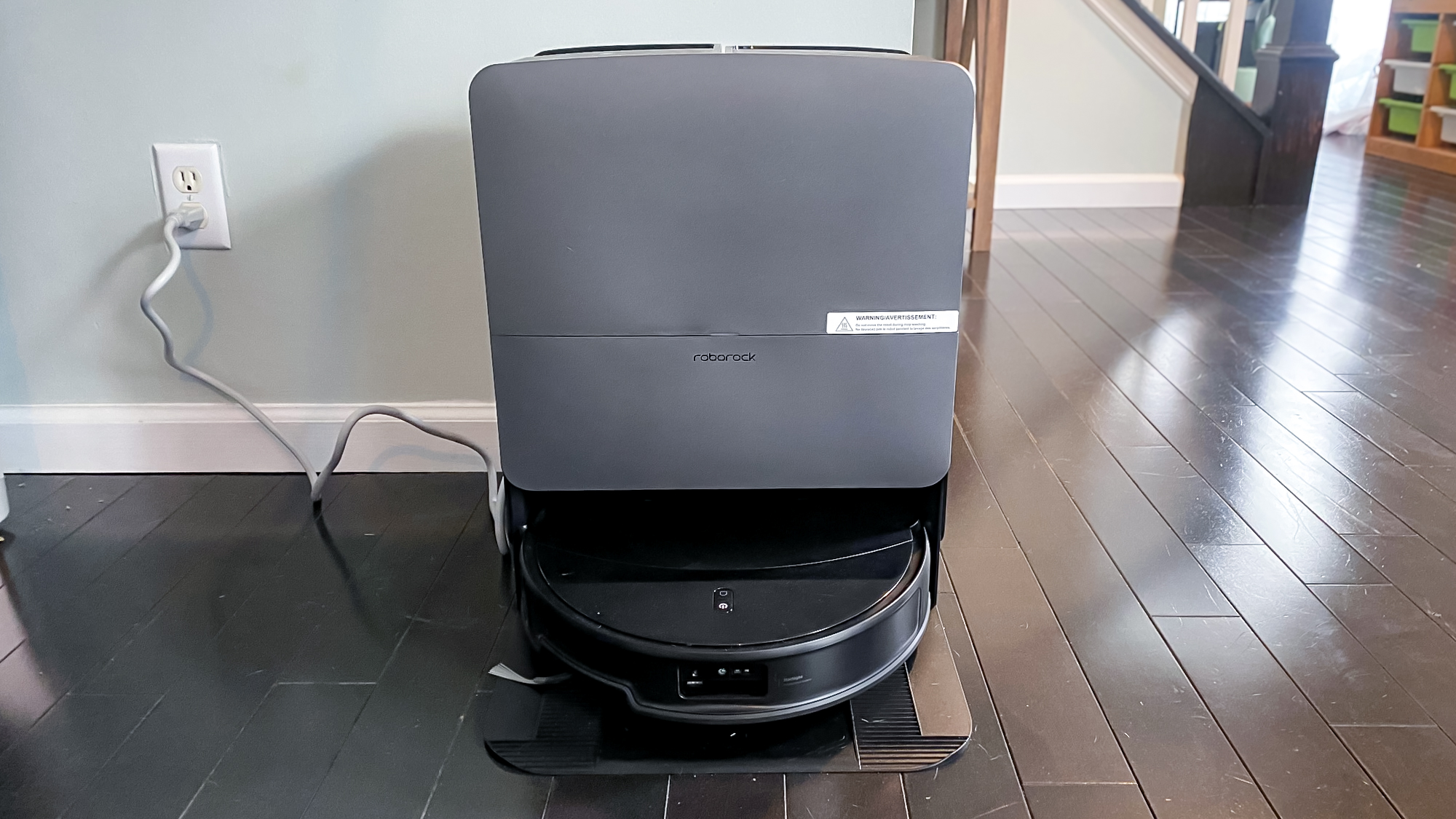
Maintenance is super simple. The Saros 20 pretty much does everything itself. All you need to do is check the debris bag at the dock periodically and replace it as needed. I gave the robot a quick wipe-down after use because it picked up some stray dog hairs on top, but otherwise the machine seems maintenance-free.
Roborock Saros 20 review: Competition
The Roborock Saros 20 is a brand-new model that builds on the already popular Saros line. One of its predecessors, the Saros 10R, retails for the same price as the Saros 20 ($1,599 at the time of writing). But the Saros 20’s suction power blows the Saros 10R’s out of the water — the 20 has a powerful 36,000 pa, while the 10R only has 22,000 pa. That makes the Saros 20 much more capable of picking up pet hair and kid crumbs (both of which my household has in abundance).
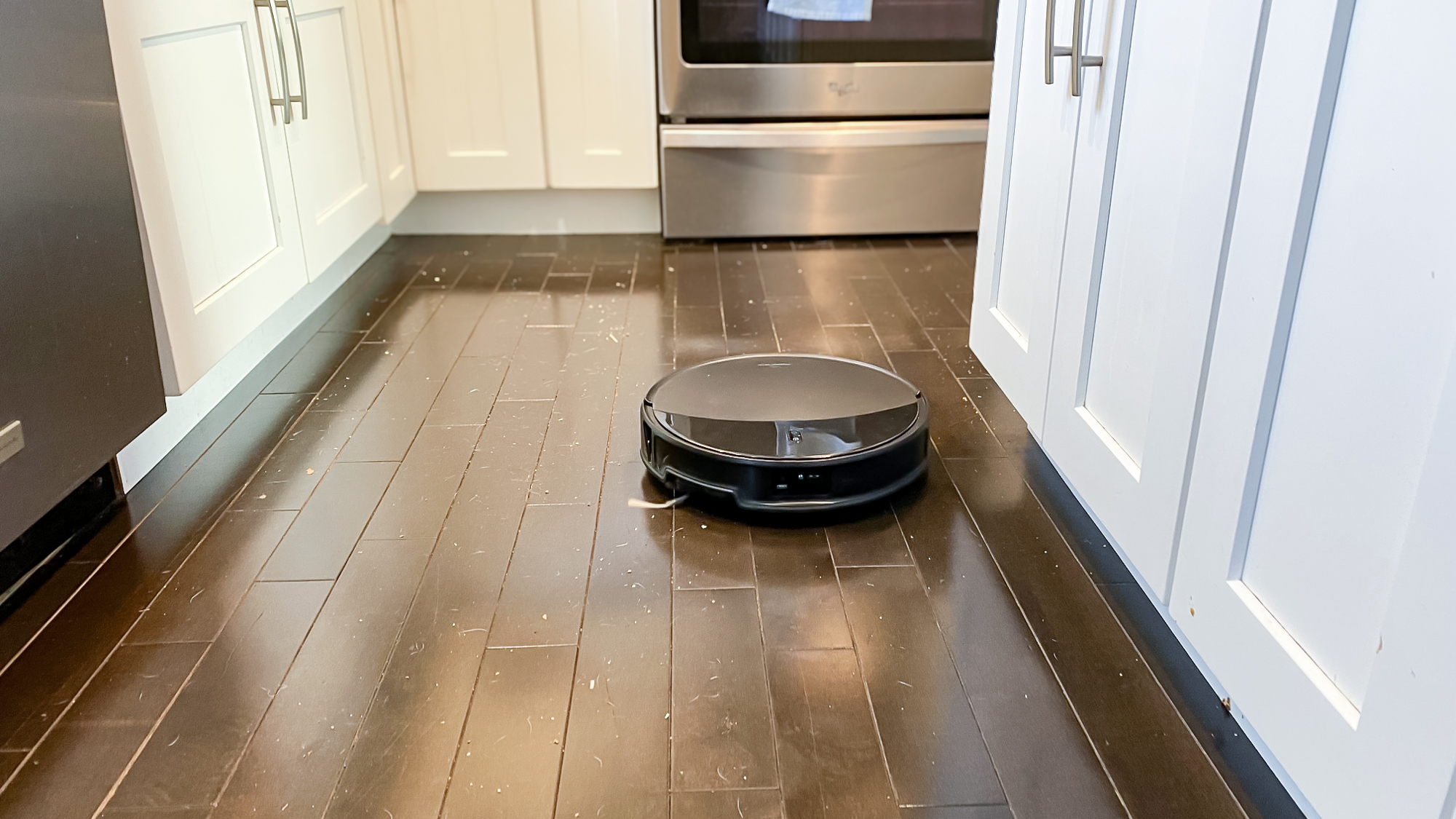
The Roborock Q7 M5 is a good budget-friendly option. At $229.99 at the time of writing, it costs a fraction of the Saros 10R and Saros 20. But its suction power is much lower at 10,000 pa, while the water tank is just 270 ml. For a smaller home, the Q7 M5 might be perfect, but larger homes with multiple pets or kids would be better suited to one of the Saros models, if budget allows.
Roborock Saros 20 review: Verdict
The Roborock Saros 20 lives up to its name — and it’s been a rockstar at removing pet hair, dust, crumbs, and other debris from my home. At $1,599, it’s an investment, and there are certainly cheaper options out there. But if you’re looking for a workhorse vacuum/mop combo that can keep up with your active household, you can’t do much better than the Saros 20.
Source link
-

-

-

-

-