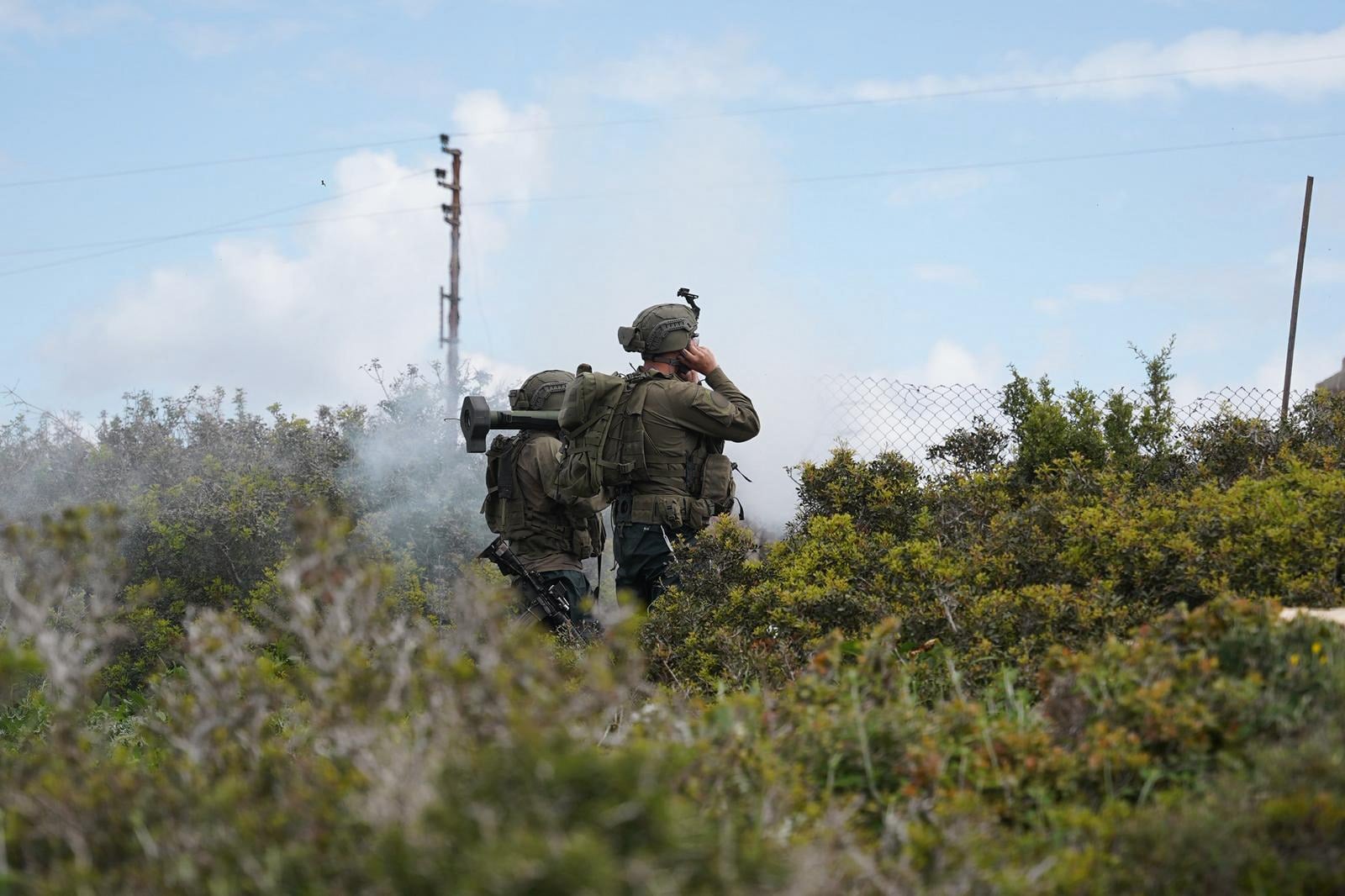
A senior military official said Friday that while the Israel Defense Forces aims to significantly weaken Hezbollah and remove the threat the terror group poses to residents of northern Israel, the prospect of fully disarming the group was unrealistic and not a “required goal” of the army’s ongoing ground offensive.
The remarks came as the military said it was set to present to the political leadership its plan to establish a “security zone” in southern Lebanon, which would involve demolishing Lebanese villages near the border and setting up army posts several kilometers inside the country.
“Disarming the organization is not a required goal at the end of this campaign,” the military official said, despite previous statements by IDF Chief of Staff Lt. Gen. Eyal Zamir and Defense Minister Katz saying that Israel would not give up on disarming Hezbollah.
The official said that to fully disarm the terror group, it would require the IDF to conquer all of Lebanon, something that is not planned.
As a result, the military does not expect to completely halt Hezbollah rocket fire, as most launches originate north of the Litani River. However, short-range projectiles — of which Hezbollah has thousands — are now largely directed at Israeli forces in southern Lebanon rather than civilian communities.
The military later clarified in a statement that it was still committed to a “long-term objective” of disarming the terror group.
“We clarify that, as the chief of staff has said in the past, the IDF is committed to a long-term objective of disarming Hezbollah. This objective includes a wide range of efforts that will continue over time,” the IDF said.
“The current campaign is causing blows to Hezbollah and weakening it, and will advance the achievement of this objective over time,” the army added.
Katz also insisted that Israel remains committed to disarming Hezbollah.
“Israel’s policy in Lebanon has been and remains clear: The top objective is the disarmament of Hezbollah through military and political means, regardless of the Iran issue,” he said following an assessment with military officials.
The IDF said its buffer zone plan was being coordinated with legal authorities and would soon be presented to the political leadership for approval.
Katz has said the IDF would raze all buildings in the first line of villages, and civilians would not be allowed to return south of the Litani River until the Hezbollah threat is removed.
On Friday, Katz said the IDF was completing its ground offensive in southern Lebanon up to the line from which Hezbollah can launch anti-tank missiles at Israeli communities. “Homes in villages near the border in Lebanon, which serve in every respect as Hezbollah outposts, will be demolished in accordance with the Rafah and Khan Younis model in Gaza, to remove the threat to Israeli communities,” he said.
Katz said the IDF would “retain security control” in southern Lebanon, up to the Litani River, “and the return of 600,000 residents of southern Lebanon who evacuated northward… will not be allowed, until the security of northern residents is ensured.”
“The IDF will continue to target Hezbollah leaders and operatives throughout Lebanon, in addition to the 1,000 terrorists who have already been eliminated since the beginning of the current campaign,” he vowed.
Katz also said the IDF will “act forcefully” against Hezbollah rocket fire on Israel. “We promised security for the northern communities, and that is exactly what we will do,” he added.

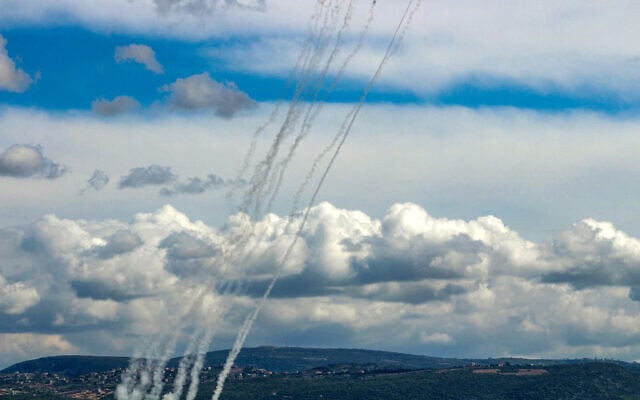
The military’s buffer zone plan involves clearing all villages within a few kilometers of the border, except for several Christian communities.
The area, up to around four kilometers from the border, would be cleared of Hezbollah infrastructure, and the IDF would establish forward army positions at strategic locations.
The IDF said most of those villages were cleared during the last ground offensive in late 2024. However, troops have continued to find weapons and Hezbollah infrastructure in some areas during the current offensive. According to the military, some of it predates the war, while other elements were established during the 2024–2026 ceasefire.
Military officials also said Hezbollah was “deeply troubled” by Israel’s intention to continue its offensive against the terror group even after the war in Iran ends.
The war in Iran remains the IDF’s primary focus, with Lebanon a secondary front. However, in the event of a ceasefire with Iran, the military is expected to shift most of its attention to Lebanon.
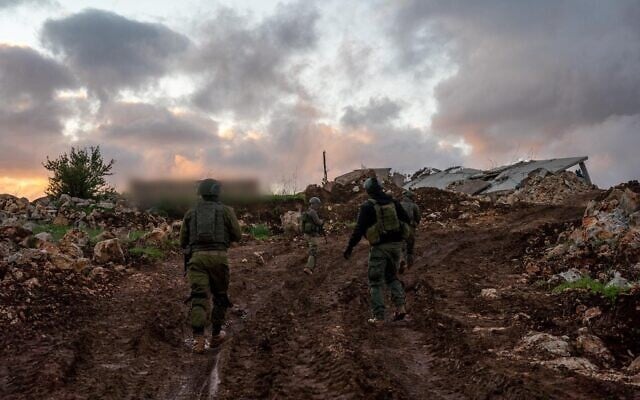
On Friday, the IDF said it killed 15 Hezbollah operatives in a recent airstrike in southern Lebanon, amid the ground operations.
In the western sector of southern Lebanon, troops of the 146th Division identified the 15 operatives in their area of operations. A short while later, the Israeli Air Force struck and killed them, according to the military.
In another incident, the IDF said, the division’s 213th Artillery Regiment identified a cell of Hezbollah operatives who were preparing to fire anti-tank missiles at Israel. An IAF fighter jet then struck and killed the operatives, the military says.
The IDF also published footage showing an airstrike on another cell of Hezbollah gunmen in southern Lebanon.
According to the military, the Hezbollah operatives were identified by troops of the Givati Brigade on Wednesday. A short while later, the Israeli Air Force struck and killed them, the IDF said.
The IDF said the Givati troops also located numerous weapons and military equipment belonging to Hezbollah in the area.
צפו בתיעוד: לוחמי גבעתי חיסלו מחבלי חיזבאללה חמושים שהתקרבו לכוחות בדרום לבנון
לכל הפרטים:https://t.co/f7I3D2gr0d pic.twitter.com/e2YZcViSMN
— צבא ההגנה לישראל (@idfonline) April 3, 2026
Five IDF divisions are currently operating in southern Lebanon: the 146th and 162nd divisions in the western sector; the 91st and 36th conducting raids in the eastern sector; and the 210th stationed in the Mount Dov area.
Hezbollah has been firing hundreds of rockets per day, according to the IDF. However, the vast majority of the daily rocket fire has been directed at the Israeli forces operating in southern Lebanon, with only a few dozen projectiles crossing the border into Israel.
Ten IDF soldiers have been killed in southern Lebanon amid fighting against Hezbollah, two civilians were killed by Hezbollah rockets, and an Israeli civilian was mistakenly killed in the north by Israeli artillery shelling.
The Israeli military has said that it has killed some 1,000 Hezbollah operatives, including hundreds of members of the terror group’s elite Radwan Force, since hostilities escalated amid the war with Iran.
More than 3,500 Hezbollah targets in Lebanon have also been struck, including hundreds of command centers, weapon depots, and rocket and missile launchers, according to the IDF.
-

-

-
-
-