

IDF strikes Lebanon’s Beqaa Valley for first time in 3 weeks as some towns in north cancel school
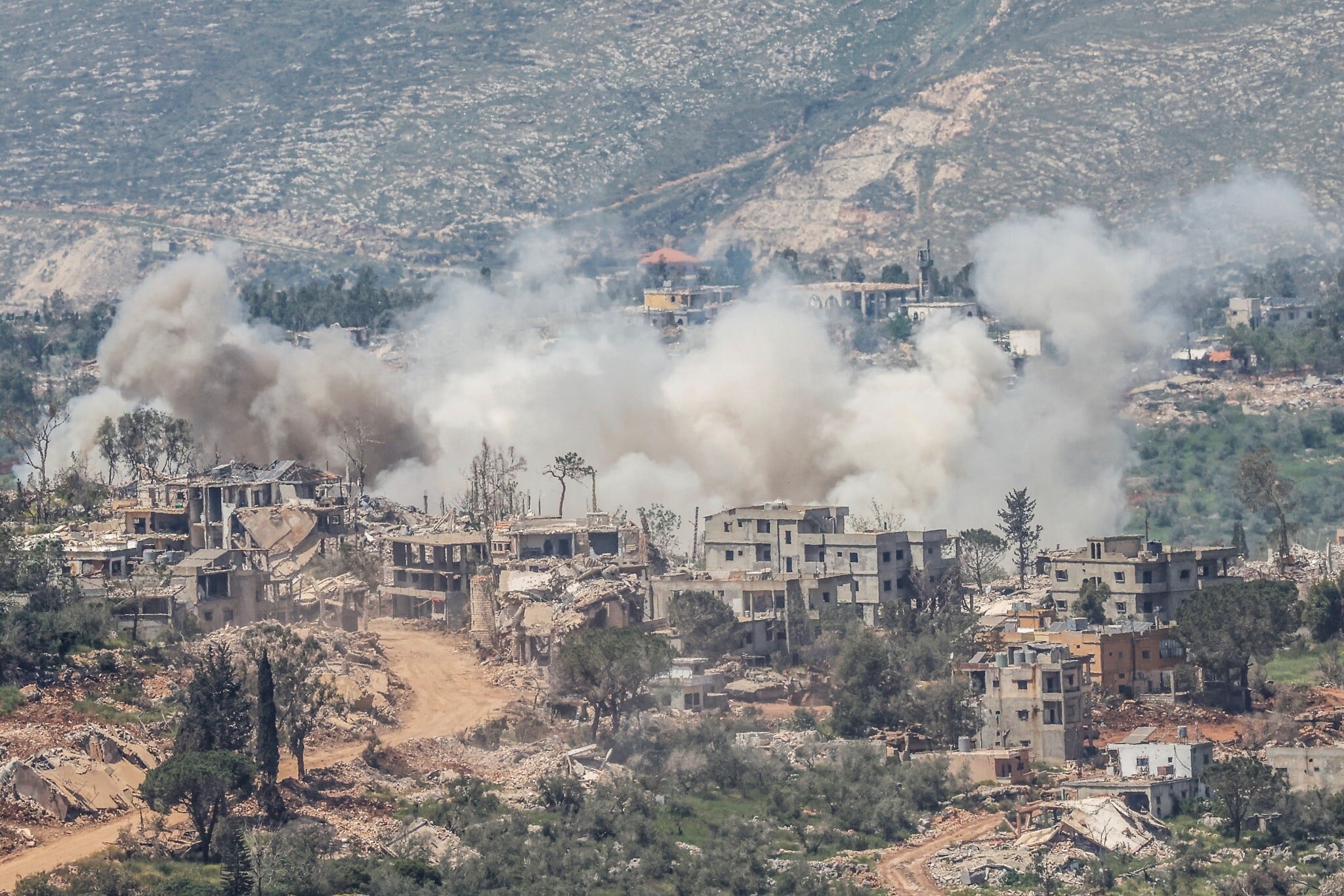
The IDF said it launched a wave of airstrikes Monday against Hezbollah infrastructure in the Beqaa Valley and several areas of southern Lebanon as a fragile ceasefire appeared to be rapidly unraveling just days after it was extended.
The strikes came following repeated recent attacks by the Iran-backed terror group on IDF troops and Israel during the truce, including a deadly drone attack in Lebanon the previous day that killed an IDF soldier and wounded six.
Lebanon’s president, whose government is holding historic direct talks with Israel amid the ceasefire, condemned Hezbollah for the strikes.
No further details were immediately given by the IDF on the strikes.
Later the military said that IDF troops captured a cache of Hezbollah weapons in southern Lebanon, including first-person view (FPV) drones, anti-tank explosive devices and remote detonation systems, explosive-laden drones, RPGs, firearms and other weapons.
Hezbollah has made frequent use of small FPV drones in its attacks on Israeli troops in recent weeks, including in a deadly attack Sunday.
Amid the ongoing violence, some local government leaders in northern Israel announced that schools would be canceled for at least one day, part of a range of security measures that were not coordinated with the national government.
Israel has not struck in Lebanon’s eastern Beqaa Valley, which lies about 80 kilometers (50 miles) north of the border, in some three weeks, before the ceasefire began on April 17.
Security sources told Reuters strikes had hit near the town of Nabi Chit, near Lebanon’s eastern border with Syria, with no immediate reports of casualties.
Lebanon’s state media agency reported several strikes across the south that left at least three people wounded.
The US-mediated ceasefire has seen ongoing conflict between Israel and Hezbollah but was extended on April 24 for an additional three weeks, US President Donald Trump announced during direct talks in Washington between Israel and Lebanon.
Under the terms of the truce, Israel reserves the right to respond to “planned, imminent or ongoing attacks.” Trump has also said Israel can open fire in self-defense.
Lebanon’s Aoun slams Hezbollah for serving ‘foreign interests’
The talks have been held despite opposition from Hezbollah, which began attacking Israel in support of its sponsor Iran after the US-Israel war with the Islamic Republic began at the end of February. A fragile ceasefire was reached between the US and Iran earlier this month.
Lebanon’s President Joseph Aoun told a delegation from villages in southern Lebanon on Monday that negotiating with Israel “is not betrayal,” as Beirut and Jerusalem continued talks aimed at reaching a settlement and potential peace deal.
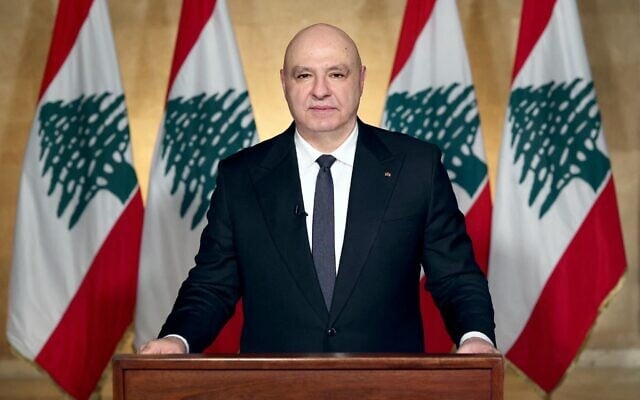
“Betrayal is carried out by those who take their country to war to serve foreign interests,” he added, in reference to Hezbollah and Iran.
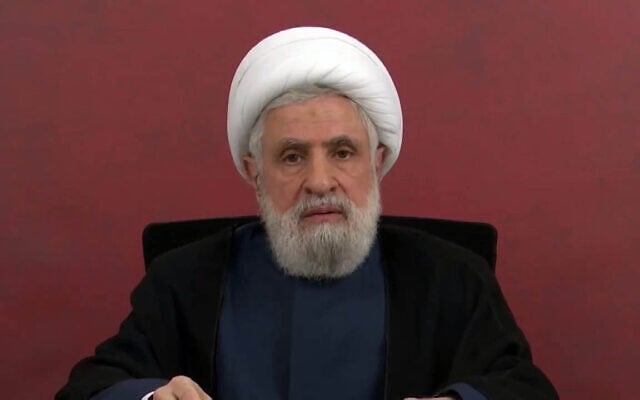
His remarks were published shortly after Hezbollah leader Naim Qassem, whose group is committed to Israel’s destruction, issued a statement reiterating that the group would not give up its weapons and calling the negotiations with Israel a “grave sin.” He asserted that some in Lebanon “reap gains at the expense of the destruction” of the country.
Under a previous truce between Israel and Lebanon that ended a bout of fighting in 2024, Lebanese authorities committed to disarming Hezbollah so that it could no longer launch attacks on Israel.
Aoun said: “How long will the people of the south continue to pay the price for the wars of others on our land? If the war were for Lebanon, we would support it — but when its purpose is to serve the interests of others, I reject the war entirely.”
Later Monday, Lebanese lawmaker Fouad Makhzoumi argued during a podcast that the country’s military chief should be removed from his position if he is unable to disarm Hezbollah.
Appearing on the “Decision Points” podcast of Washington Institute for Near East Policy fellow David Makovsky, Makhzoumi said that Haykal reports to the Lebanese president and the cabinet: “At the end of the day, we are asking them to deliver. If he doesn’t, yes, he has to be removed.”
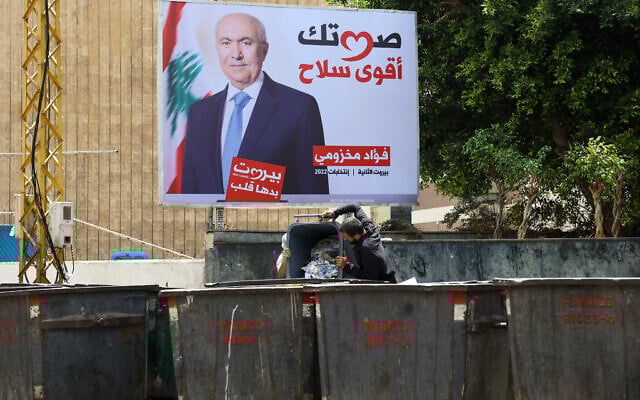
Makhzoumi represents a one-man secular party in the Lebanese parliament, so it wa unclear how widespread his views are, but calls for Haykal’s ouster — in the event that he fails to deliver — are rare.
Haykal presented a five-phase roadmap for disarming Hezbollah last year, but he has faced criticism for the plan’s lack of clear timeline. Moreover, he announced earlier this year that the LAF had succeeded in disarming Hezbollah south of the Litani River, 20 to 30 kilometers from the border with Israel.
That declaration proved to be wildly overstated in recent months, given Hezbollah’s repeated firing at Israel from the south of the country during the Iran war.
Haykal’s defenders note that he has been given a highly difficult task, given the degree to which Hezbollah has embedded itself in the fabric of Lebanese society. They argue that a rushed disarmament process could spark another civil war in Lebanon.
Hezbollah reportedly threatens suicide bombings
Earlier, Qassem had said in a statement, “We categorically reject direct negotiations with Israel, and those in power should know that their actions will not benefit Lebanon or themselves.”
He said the negotiations were “putting Lebanon in a spiral of instability.”
“These direct negotiations and their outcomes are as if they do not exist for us, and they do not concern us in the slightest,” the terror chief added, saying “we will continue our defensive resistance for Lebanon and its people.”
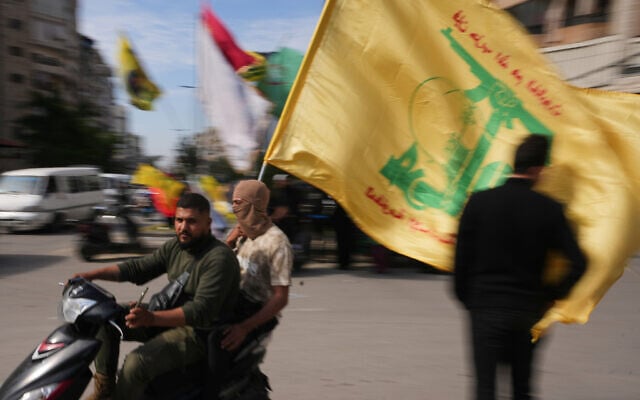
He said: “There are those who advocate surrender. They reap gains at the expense of the destruction of their brothers and families in Lebanon and the occupation of parts of Lebanon.”
However, he cautioned, “No matter how much the enemy threatens, we will not back down, we will not bow down, and we will not be defeated.”
A Hezbollah source told the Qatar-based al-Jazeera outlet that the group will return to using suicide bombers in attacks against IDF troops, as it did when Israel previously held a buffer zone in southern Lebanon during the 1980s and 1990s.
“Large groups of suicide bombers are deployed in the occupied territory according to pre-prepared plans,” said the unnamed source, referring to southern Lebanon.
Netanyahu holds security consultations on Hezbollah attacks
Hezbollah kept up drone attacks throughout Monday, launching an explosive-laden drone at troops stationed in southern Lebanon, the IDF said.
The military said the drone exploded near the forces, but did not cause any injuries.
In another incident, the military said it intercepted another Hezbollah drone that was launched at troops in southern Lebanon.
A similar drone attack killed an Israeli soldier and injured six others the day before.
“These are further violations of the ceasefire understandings by the Hezbollah terror organization,” the army added.
The drone attacks also riled communities in northern Israel, with a suspected Hezbollah drone triggering sirens in the Western Galilee.
The IDF said it lost contact with the “suspicious aerial target,” indicating it crashed somewhere.
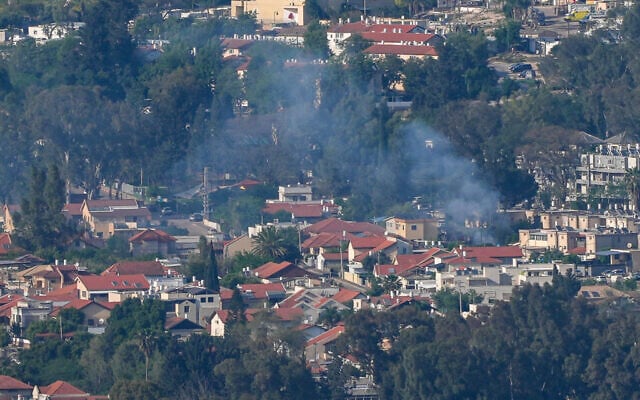
A siren that sounded in the town of Arab al-Aramshe, warning of rocket fire, was activated due to fears of falling fragments following attempts to intercept the drone, according to the military.
Additional sirens warning of a drone attack in the Western Galilee that were activated several minutes later were false alarms, the IDF noted.
The terror group has made frequent use of small first-person view (FPV) drones in its attacks on Israeli troops. Some of the drones are guided using a spool of fiber-optic cable, which makes them immune to efforts to electronically jam their signal.
Prime Minister Benjamin Netanyahu held a security meeting regarding the Hezbollah fire, leading to the cancellation of his testimony in his criminal trial, according to multiple reports.
Hebrew media reported consultations were taking place on Monday over Hezbollah’s repeated attacks on Israel’s troops and territory amid the truce.
Meanwhile, Foreign Minister Gideon Sa’ar told UN Special Coordinator for Lebanon, Jeanine Hennis-Plasschaert, that Hezbollah continues to violate the US-brokered ceasefire in Lebanon and is exploiting the presence of UN peacekeeping forces,, who was visiting Israel in efforts to facilitate the truce.
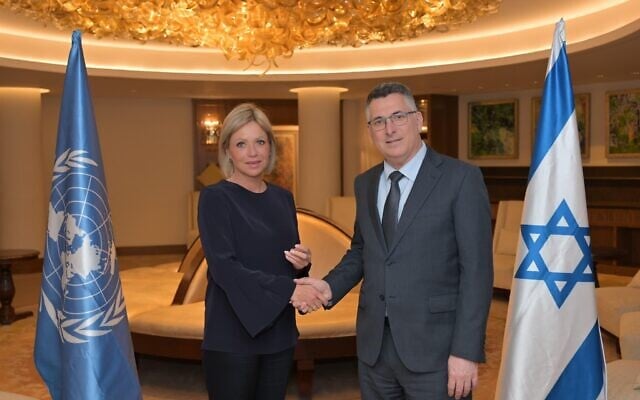
These violations “undermine” Beirut’s interests, Sa’ar said on Monday, according to a readout from his office, adding that since the start of the US-Israeli campaign against Iran last month, the terror group has launched approximately 10,000 missiles, rockets, and drones at Israel.
He added that many of these attacks were carried out near outposts of the United Nations Interim Force in Lebanon, saying “Hezbollah systematically places its operatives and military assets in close proximity to UNIFIL positions and exploits UNIFIL’s presence for hostile activity.”
Sa’ar urged “action against these patterns of behavior,” including for the Lebanese government to target Hezbollah through economic measures.
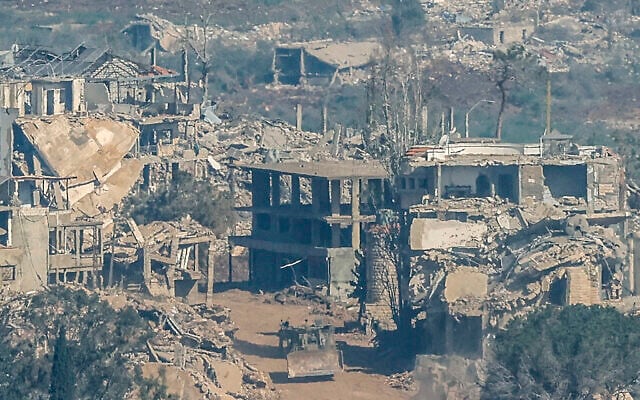
The IDF also gave updates on clashes the day before in southern Lebanon that came after the attack in which an Israeli soldier, Idan Fooks, was killed and six others were wounded by a Hezbollah drone strike.
A drone launched by Hezbollah at troops of the Golani Brigade stationed in the region was successfully intercepted. In another incident, three Hezbollah operatives who were identified near troops were killed in airstrikes, the military said.
Additionally, the military said it struck several buildings used by Hezbollah, including one that served as the terror group’s “headquarters in the Bint Jbeil sector.”
“Following the strikes, secondary explosions were identified, indicating the presence of weapons in the structures,” the army said.
כוחות צה”ל ממשיכים להשמיד תשתיות טרור ולחסל מחבלי חיזבאללה בדרום לבנון
אתמול, כוחות אוגדה 98 זיהו שלושה מחבלים סמוך לקו ההגנה הקדמי במרחב בו פועלים כוחות צה”ל, באופן שהיווה איום ממשי. מיד לאחר הזיהוי ובסגירת מעגל מהירה, חיל האוויר תקף וחיסל את המחבלים להסרת האיום.
בנוסף, הכוחות… pic.twitter.com/y3conJXOef
— צבא ההגנה לישראל (@idfonline) April 27, 2026
Northern leaders defy Home Front Command, halt studies over Hezbollah attacks
Northern community leaders announced that they will halt school and impose independent security restrictions, defying Home Front Command guidelines, amid the persistent Hezbollah attacks.
Speaking at a press conference in the northern border community of Shtula, the officials said that starting Tuesday, studies will be suspended across all border communities for at least 24 hours, after which the decision will be reassessed. They also declared that communities adjacent to the border would be classified as “orange,” while others would be designated “yellow,” mirroring the Home Front Command model – but implemented independently and without state backing.
Under the military’s color-coded system introduced during the war, “yellow” zones allow in-person schooling and limited gatherings if shelters are accessible, while “orange” zones prohibit educational activities and restrict gatherings, even when protected spaces are available.
The move came after Israel reimposed some restrictions in the north on Sunday, including canceling the mass Lag B’Omer pilgrimage set for next week, amid continued Hezbollah attacks despite the truce.
“We will not wait for a disaster before making life-saving decisions,” said Moshe Davidovich, head of the Forum of Front-Line Communities. “We will not abandon our children or gamble with their lives.”
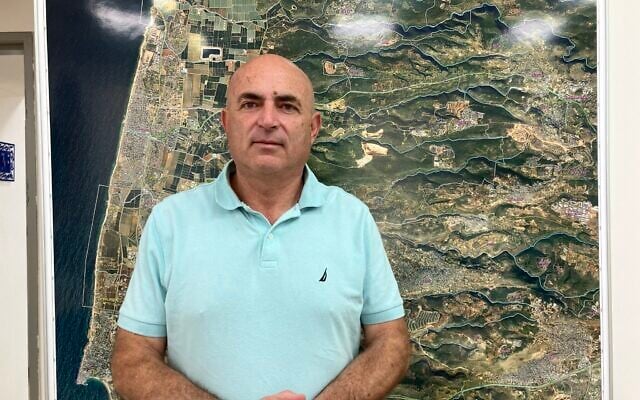
Davidovich blasted the government’s classification of the area as “green” – which allows normal schooling – calling it “neglect” in light of ongoing threats.
“When the area is burning and UAVs are circling overhead, defining the region as ‘green’ is not policy – it is neglect,” he said. “We are taking responsibility for our children’s lives and moving the area to an ‘orange’ designation.”
He said that municipalities are demanding immediate fortification of all homes within nine kilometers (5.6 miles) of the border, “here and now, not to wait for the next war,” along with compensation for businesses and farmers who were affected by the fighting.
Footage circulating online showed children in northern communities taking cover in shelters during a suspected Hezbollah drone attack earlier in the day.
רק לשמוע את הקול של האמא מלחיץ !
כך נראים החיים של ילדי הצפון pic.twitter.com/rOayXCCxuT
— כל החדשות בזמן אמת (@Saher_News_24_7) April 27, 2026
“הפסקת אש” בצפון:
האזעקות בצהריים בשל חדירת שלושה כטבמים
לגליל המערבי, תפסו תלמידים בבתי ספר בעיצומם של הלימודים. נותר להם לשכב ולשים ידיים על הראש.
זו השיגרה כאן מאז שהוכרזה הפסקת האש בלבנון: ירי רקטות וכטבמים, פיצוצים, מטוסי קרב וכל מה שלא נופל תחת ההגדרה של הפסקת אש. pic.twitter.com/OGXYlfOh0n— Rubi Hammerschlag | רובי המרשלג (@rubih67) April 26, 2026
Since Hezbollah began firing at Israel again on March 2, two Israeli civilians have been killed in the attacks and 16 IDF soldiers have died fighting in Lebanon.
Lebanon’s health ministry says that more than 2,500 people have been killed in Israeli strikes during the same period, a figure that does not distinguish between civilians and combatants. The IDF has said that it has killed some 1,700 Hezbollah operatives since hostilities escalated.
