
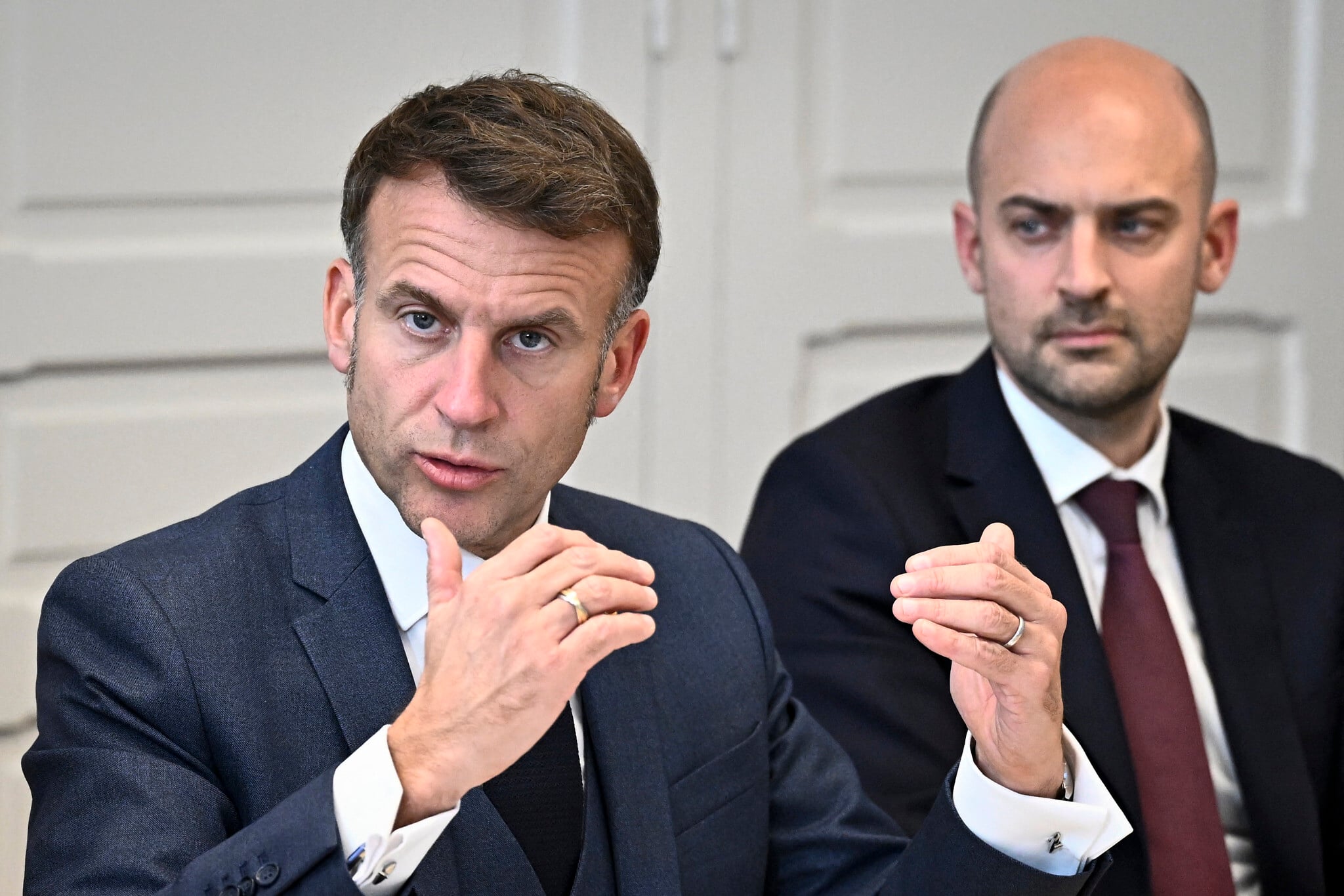
Already strained by over two years of regional conflict, Israel’s ties with France have sunk to new depths in recent weeks over the fighting in Iran and Lebanon, fraying the countries’ once-robust defense and diplomatic relationships.
In the weeks leading up to the fragile April 8 ceasefire halting the war in Iran, French President Emmanuel Macron openly condemned the scale of the US-Israeli campaign against the Islamic Republic, urging a diplomatic solution to the conflict and a halt to fighting in Lebanon against the Iran-backed Hezbollah terror group.
Israel and the US claimed that France refused both countries the use of its airspace for military purposes during the war.
Israel has reacted forcefully to France’s opposition, including a decision last month to halt all defense procurement from the country. The Defense Ministry said the move was in response to “an ongoing pattern” of French measures that have “harmed Israel’s security,” a criticism rejected by Paris.
And despite French interest in mediating the newly launched direct talks between Israel and Lebanon in Washington, Israeli officials stressed to The Times of Israel that the French are uninvolved, with one deeming Paris “irrelevant” to the negotiations.
Israel’s ambassador to Washington Yechiel Leiter, who represented Israel at the negotiations in Washington, put it more bluntly, telling reporters after Tuesday’s talks, “We’d like to keep the French as far away as possible from pretty much everything, but particularly when it comes to peace negotiations.”
The two countries are still talking to each other at the military and diplomatic levels, according to a French official.
But the Defense Ministry decision “is a clear sign that the bilateral relations are not good,” the official said. And while Paris downplayed the Lebanon snub, Jerusalem’s posture on the matter underlines the degree to which Israel no longer sees France as a critical multilateral partner.
Both Israeli and French officials declined to speak about the relationship on the record, but offered comment on condition of anonymity due to the sensitivity of the subject matter.
Spokespeople for Israel’s Foreign Ministry also refused to comment on the state of relations with France and Israel’s ambassador in Paris was not given permission to be interviewed on the subject.
‘Unnecessary’
France’s exclusion from the Israel-Lebanon talks is notable given its longstanding ties to Lebanon, dating back to the French mandate following World War I.
Paris helped broker the indirect talks that led to the 2024 Israel-Hezbollah ceasefire, and was given a seat alongside the US on the mechanism overseeing its implementation.
French absence is not for lack of interest. Macron offered last month for Paris to host direct talks between Jerusalem and Beirut, and told President Isaac Herzog over the phone that “France is working to promote this goal.”

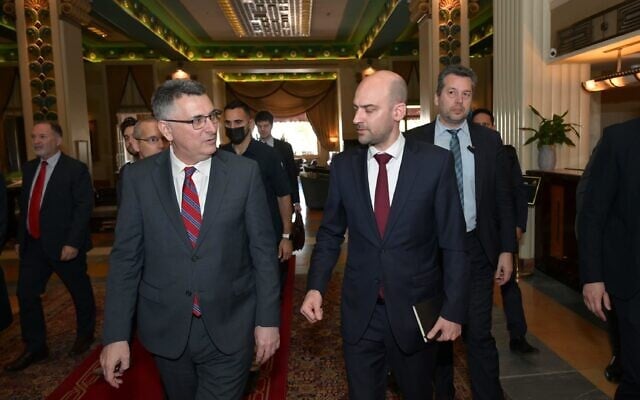
However, officials in Jerusalem described French involvement as unwanted and unneeded.
While it remains unclear whether France formally requested a presence at the US-hosted talks, one official told The Times of Israel on Monday that “there is no French involvement whatsoever” in the negotiations, stressing that “they are unnecessary.”
Leiter echoed this in his Tuesday remarks, declaring, “They’re not needed. They’re not a positive influence, particularly not on Lebanon.”
A second Israeli official told The Times of Israel that while there had been “some discussion” with the US regarding French involvement, Israel “from the outset saw the French as not relevant” to reaching an agreement with Lebanon.
Responding to the officials’ remarks, a French diplomat told The Times of Israel on Monday that “what we are hoping for is not a ticket to the meeting, but that Israel stops its offensive on Lebanon.”
‘Total BS’
US President Donald Trump lashed out at France and other European allies last month for not doing enough to support the war effort and accused Paris of denying planes carrying military supplies to Israel the right to fly over French territory.
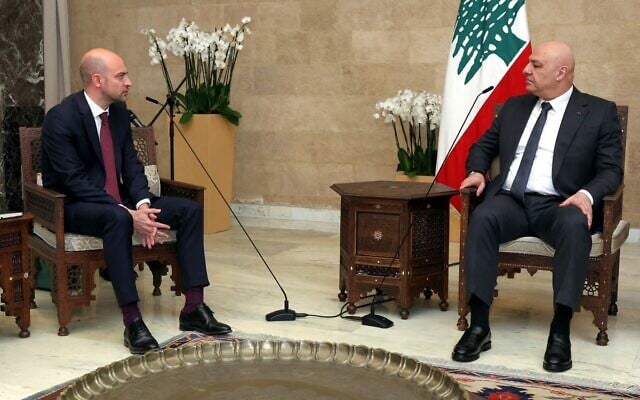
Days later, Israel’s Defense Ministry confirmed it had halted all defense procurement from France in response to an “ongoing pattern” of French measures that have “harmed Israel’s security and the operational capabilities of its defense industry,” most recently the “prohibition on Israeli aircraft carrying munitions intended for operations against Iran from overflying French airspace.”
“The French prohibition was imposed despite prior coordination, despite clear explanations that the munitions were intended solely for Iran, and despite the understanding that this effort is critical for European security as well,” the ministry added.
Citing additional grievances behind the decision, the Defense Ministry pointed to measures carried out by France in recent years in protest of Israel’s conduct during its war with Hamas in Gaza.
These included France’s prevention of “dozens” of Israeli defense companies from exhibiting at the 2024 Eurosatory defense show in Paris and the 2025 Paris Air Show, the freezing of export licenses to Israel, and leading a United Nations initiative last year during which Paris and other European nations recognized a Palestinian state.
The French official dismissed the Defense Ministry’s claim that French decisions in recent years have harmed Israel’s security as “total BS.”
“We showed several times… that we care about Israel’s security,” the official said, adding that Israel “forgot to mention” that France contributed to Israeli defense during its war the June war with Iran.
“If disagreeing with Israel means… not caring about [Israel’s] security interests, it’s a bit short for an argument,” the official said.
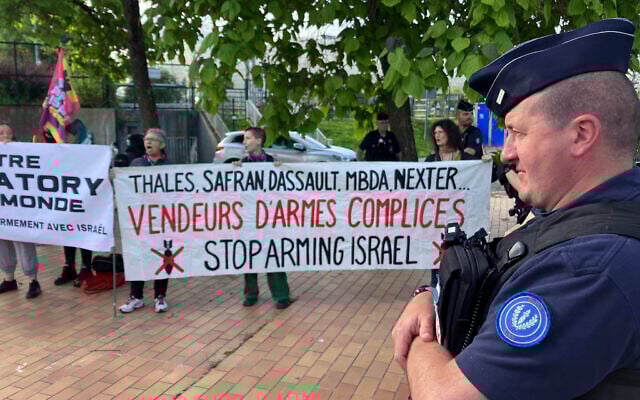
Israeli sources said the move had been coordinated between the Foreign and Defense ministries.
France has been among the most outspoken critics of Israel, but it is not alone among Israel’s European allies in taking punitive diplomatic and defense measures over humanitarian concerns in recent years. Israel’s Defense Ministry indicated that similar steps could be taken against other countries deemed unfriendly.
It said it would replace French sales with domestic procurement or purchases from “allied countries” as part of a broader strategy “to build full defense autonomy, without relying on unreliable countries.”
Poor communication
The decision is more significant politically than it is militarily or economically, with Israel and France already doing relatively little trade in arms.
Between 2020 and 2024, France made no major exports of military goods to Israel, selling only limited components mainly for defensive systems or re-export, amounting to tens of millions of euros annually, according to the Stockholm International Peace Research Institute.
Jean-Dominique Merchet, an expert on French defense, said the move would have a limited material impact on France’s defense industry.

“Israel is not a [significant] client for the French industry,” he said, estimating that arms sales to Israel made up less than 1 percent of France’s annual defense sales.
Nonetheless, Merchet said the decision marked “a real crisis” in bilateral relations, describing France’s blocking of Israeli defense industry participation in major exhibitions as a “very serious” turning point for the relationship.
The expert also surmised that the rift could extend beyond trade to intelligence cooperation on Iran, which he said had been “near perfect” as of three years ago.
“I hope that we continue to talk on the [Iranian] ballistic [missile] and nuclear subject,” he said. “But I’m not sure we are.”
The French official declined to confirm to The Times of Israel whether France had indeed refused the use of its airspace during the war, but claimed that even if such restrictions were in place, they would not have made a meaningful difference, as “there are alternative routes” available to Israel for these flights.
The official said that Israel and the US had been “very pushy” about Europe’s participation in the campaign against Iran, but that France’s position on refraining from offensive participation — shared by virtually all of Europe — remained the same.
The official added that France “still hasn’t been directly notified” of the ministry’s decision to halt arms purchases and that officials “discovered it in the news,” describing this as part of a trend of poor communication by Israel.
The Defense Ministry declined to comment on the alleged lack of communication, instead reiterating earlier remarks that it had informed French Defense Minister Catherine Vautrin that “there will be no new professional engagement with the French military.”
Despite the rise in tensions, dialogue between Israel and France is ongoing, the French official said, noting “we still continue to have discussions” on both diplomatic and military levels.
-

-

-
-

-


