photo by: Contributed
Michael Hageman’s lab at the University of Kansas. He is the Valentino J. Stella distinguished professor of pharmaceutical chemistry at the University of Kansas and director of the Biopharmaceutical Innovation & Optimization Center.
Before Yezan Salamoun was a University of Kansas PhD student working to advance a daily oral testosterone therapy, he was a pharmacist.
Salamoun’s desire to help others took a new direction when he chose to tackle a complex challenge: creating a method to boost testosterone levels without relying on injections or daily creams. These traditional options can be inconvenient for many patients — whether due to discomfort with needles or inconsistent absorption of testosterone through the skin.
“Although I valued patient care, maybe my skills would be a little bit more impactful to the community at large if I – as I like to tell the joke – stopped selling drugs and started inventing and creating new medicines,” Salamoun said.
In developing the idea of creating a drug where testosterone can be taken orally, Salamoun’s also been working to turn the opportunity into a startup company, SteroCore, which is currently in its infancy stages as a pharmaceutical company. However, he’s hoping to advance the company with help from KU Innovation Park.
“It’s a long journey out there,” Salamoun said. “For people not familiar with drug development, it takes anywhere from 10 to 15 years to get a drug on the market.”
KU Innovation Park – a nonprofit business incubator and economic development organization in Lawrence – offers bioscience and technology companies labs, offices and collaborative spaces to foster innovation and accelerate the commercialization of the companies’ research.
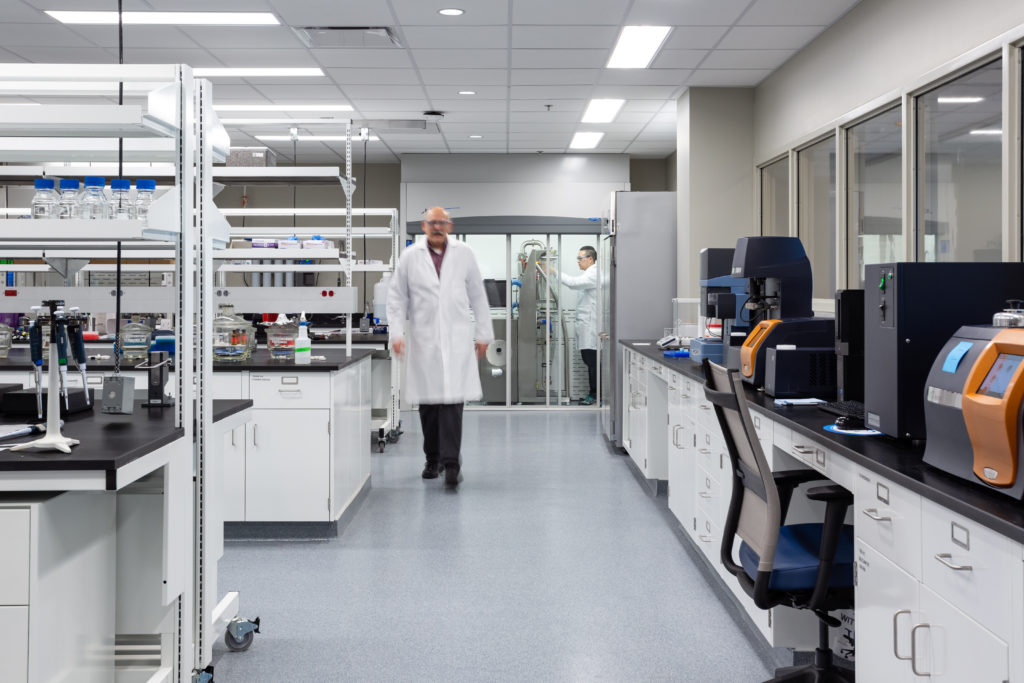
photo by: Contributed
Michael Hageman’s lab at the University of Kansas. He is the Valentino J. Stella distinguished professor of pharmaceutical chemistry at the University of Kansas and director of the Biopharmaceutical Innovation & Optimization Center.
The organization has awarded 16 companies across Kansas funding through its ACCEL-KS program – SteroCore being one of them. The program provides each company with $25,000 in grant funding, technical assistance, entrepreneurship education and ecosystem support to help advance the companies’ ideas to market. The Kansas Department of Commerce selected KU Innovation Park as one of two organizations to award these grants.
This year’s cohort of companies includes those specializing in AI and software, health and life sciences, manufacturing, education and community infrastructure. All of the companies will have access to office hours, subject-matter experts, and ongoing professional support.
“ACCEL-KS is built to reduce the gap between a strong idea and a viable company,” Chris Rehkamp, director of business services at KU Innovation Park, said in a press release. “These companies are tackling real, market-driven challenges across the state. ACCEL-KS is designed to meet founders where they are and provide proof-of-concept support that helps promising ideas from Kansas innovators move faster toward commercialization and impact.”
Salamoun said for most pharmaceutical companies, the goal is to at least be acquired either right before or at the beginning of human trials for the drug, and that’s when companies will look for larger companies with money and the resources to help get the drug on the market.
“You would either partner or get bought outright by those companies,” Salamoun said. “So that’s the finish line for us.”
Salamoun is a PhD candidate in the lab of Michael Hageman, the Valentino J. Stella distinguished professor of pharmaceutical chemistry at the University of Kansas and director of the Biopharmaceutical Innovation & Optimization Center. Hageman said KU has been working with various programs to facilitate entrepreneurship interest.
“It’s been very comforting to get the kind of support that the Innovation Center provides, and now even through this ACCEL grant, these sort of things keep us going,” Hageman said, adding that these opportunities help bring their product to the next phase in order to be successful and gain further support.
“Never does the support come all at once, so I think KU and the State of Kansas have been very good about setting that up for us and trying to help us do that,” Hageman said.
…
Another company receiving ACCEL funding from KU Innovation Park is VOISS, which uses a virtual reality program to help adolescents practice and learn social skills. While many immediately think a headset is required for virtual reality programs, the program can also be used on a 2D tablet, iPad or Chromebook and be downloaded from the app store and utilized with a login administered by VOISS.

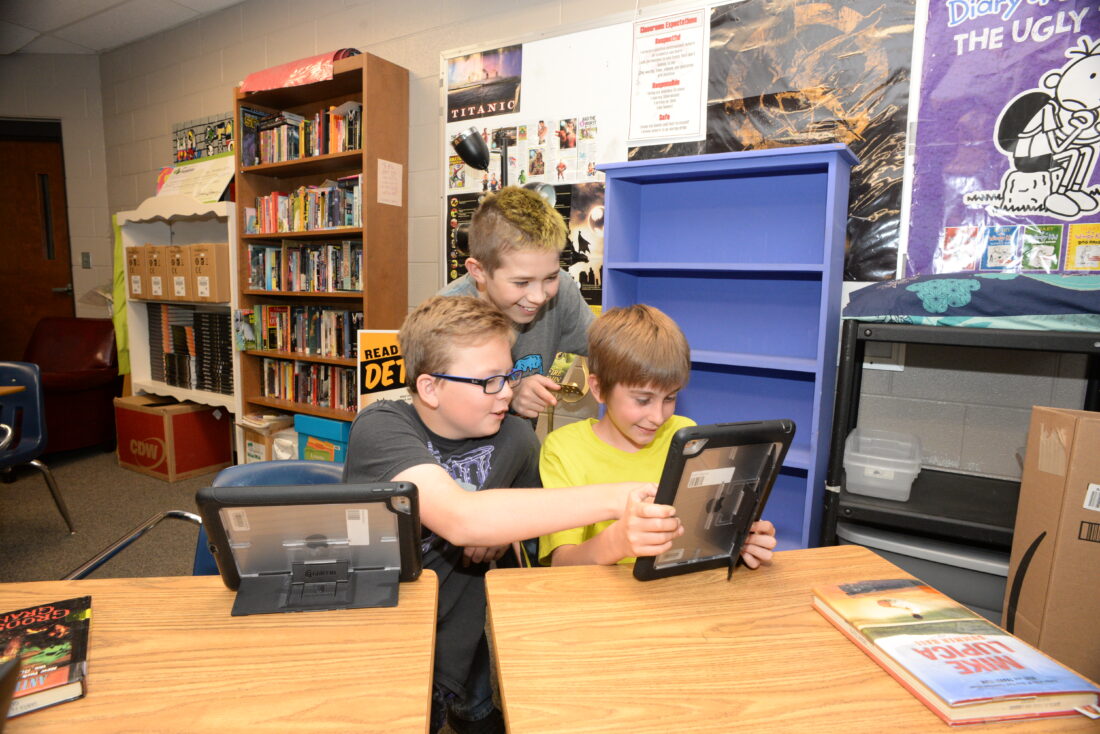
photo by: Contributed
Students in Olathe, Kansas using the VOISS platform, which uses a virtual reality program to help adolescents practice and learn social skills.
Amber Rowland, co-principal investigator at VOISS, said the app can simulate real-life situations, such as a student walking into a gym and asking to join a basketball game. If the student is accepted into the game, the other players might pass them the ball for a shot, providing positive reinforcement for successfully initiating and joining the activity.
“The cool thing about the game is that you can go in and you can practice as many times as you want,” Rowland said. “You can do it wrong as many times as you need to in order to feel confident and comfortable with the ideal way forward to get what you wanted from the situation.”

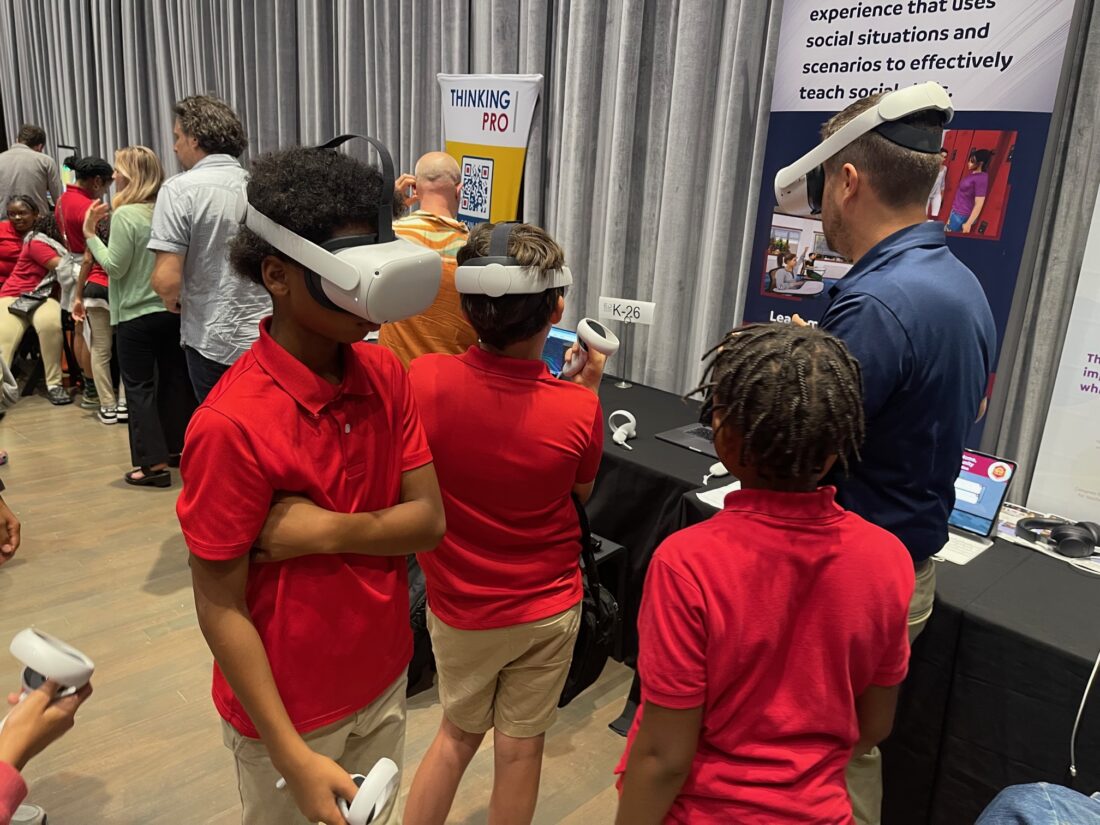
photo by: Contributed
Middle school students using the VOISS platform, which uses a virtual reality program to help adolescents practice and learn social skills.
Paul Epp, an entrepreneur and producer, has been working with VOISS to help bring it from the lab to the marketplace, so it can be purchased by schools, behavioral therapy offices, parents and anyone who is trying to help youth learn these skills. He said virtual reality is much closer to reality than people might think.
“It’s just closer to real life, and the whole purpose of VOISS is to prepare these young people for real life,” Epp said.
As far as next steps for the company and how VOISS will be taking advantage of KU Innovation Park opportunities, Rowland said the company will be looking to expand its offerings to help middle and high school students think about the social skills that are required in the job market.
“We know with artificial intelligence coming more and more into our society, humans bring social skills as one of their greatest strengths, and a lot of corporations are telling us that kids do not have the social skills they need in order to be collaborative team members who can communicate their ideas and bring them to fruition in a group,” Rowland said. “And so part of what we want to begin to teach is some of those workforce development parts.”
While the students have buttons with responses they can select from while going through a specific scenario, Rowland said, VOISS wants to begin figuring out how students can use their own voices and speak directly to avatars back and forth.
Epp said he wants to get the program into the hands of every kid that needs it.
“It’s especially useful for kids with autism … however, all of us have social skill deficits in some respect, and we really see VOISS being a tool that anyone can use to prepare for any sort of social situation.”
…
The company Myndset has also recently been awarded funding by KU Innovation Park. Myndset is a mental health strength training platform that trains athletes to perform their best while experiencing big pressure moments. While founder Craig Mason said he’s been active in the tech space most of his career, he also cared about mental health.
Mason said the idea began to come together last summer, and he said life really boils down to the story people tell themselves, and if people are critics versus champions of themselves, it’s going to play out in their hardest moment.
“This really becomes a training and operating system that we can deploy to athletic departments and to schools to reduce that volatility and performance and help their people learn the skills to be the best version of themselves despite the moment that’s in front of them,” Mason said.
Mason said Myndset is intended to become a part of an athlete’s regular routine, like getting to the gym, nutrition, and the like. Athletes can utilize the program for five to 10 minutes to work through a mental strength training activity.

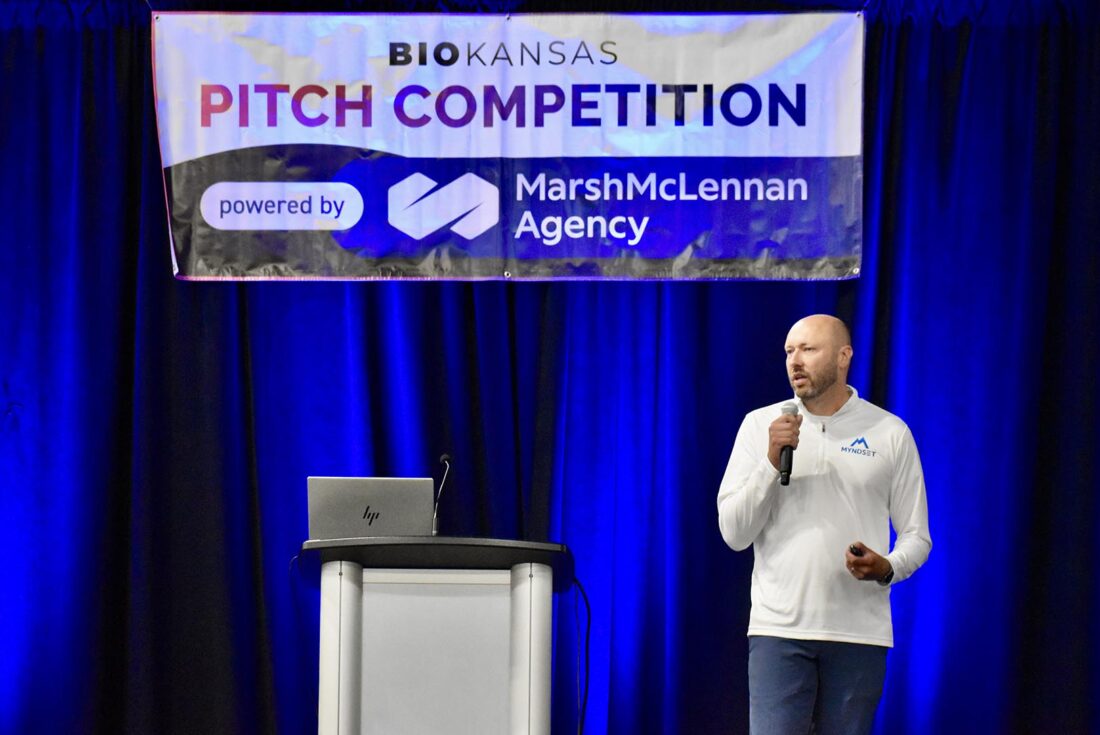
photo by: Contributed
Craig Mason, founder of Myndset
“Think of this as the personal trainer for your mind to help work on skills like confidence, energy, management, resilience, those core skills that matter in hard moments,” Mason said. “So that they train those each and every day to build those skills over time.”
Mason said the funding from KU Innovation Park and working with them will help Myndset continue strengthening the app and then continue measuring the behavior and performance of athletes so it can gather some early traction and be deployed to other parts of the region and the country.
“Having the backing through the KU Innovation Park, which is where we’re housed, is a vote of confidence that we’re building something that matters in Kansas,” Mason said.
…
State leaders say the latest ACCEL-KS cohort is more than just a collection of promising startups, it represents a broader commitment to strengthening entrepreneurship and accelerating economic growth across Kansas.
“These companies reflect the depth and momentum of innovation happening across the state,” Romaine Redman, the chief innovation and strategy officer at the Kansas Department of Commerce, said in the release. “ACCEL-KS is helping founders turn strong ideas into real solutions, and this cohort shows what is possible when talent, research and early support come together to shape the future of Kansas’ economy.”
news/ku/2026/feb/14/lawrence-startups-win-grants-to-help-get-their-health-and-tech-innovations-to-market/”>Source link