
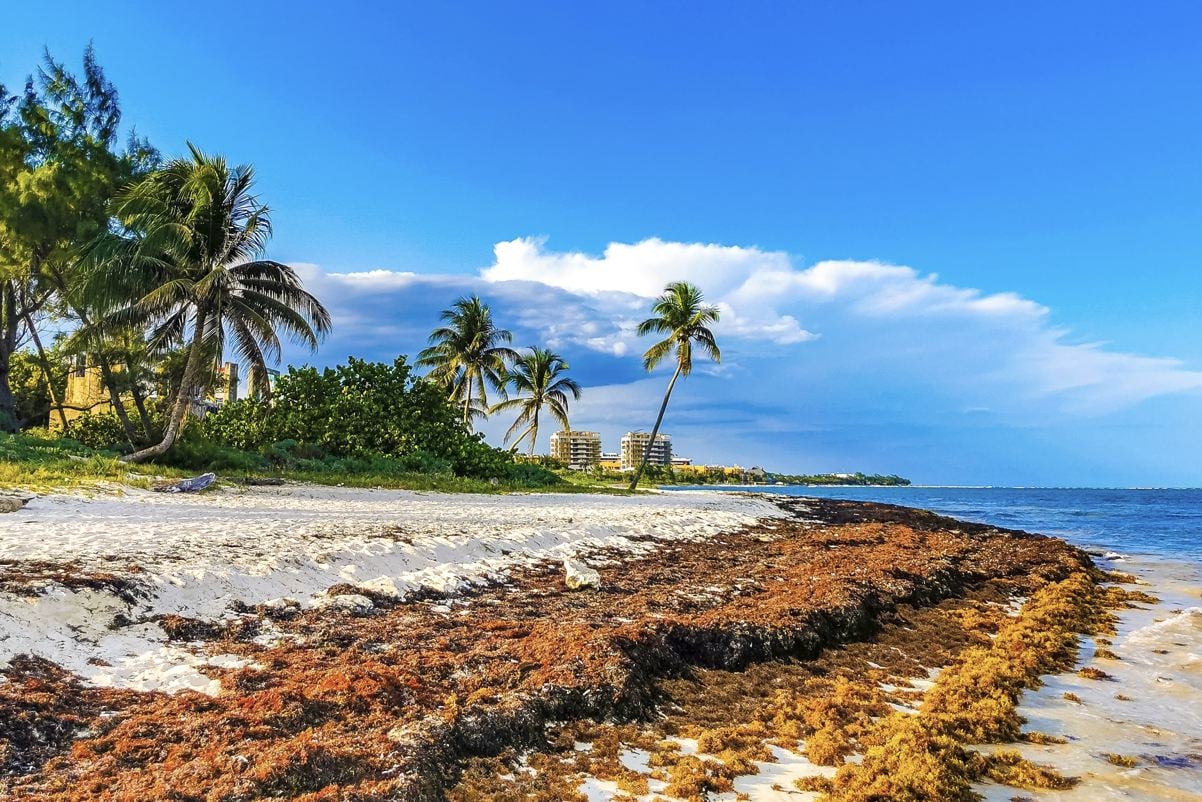
For years, the unspoken deal between travelers and the Caribbean was simple: You pay double (or triple) the price to visit in January, and in exchange, you get perfect, pristine, electric-blue water. You pay the premium to avoid seaweed.
That deal just got broken.

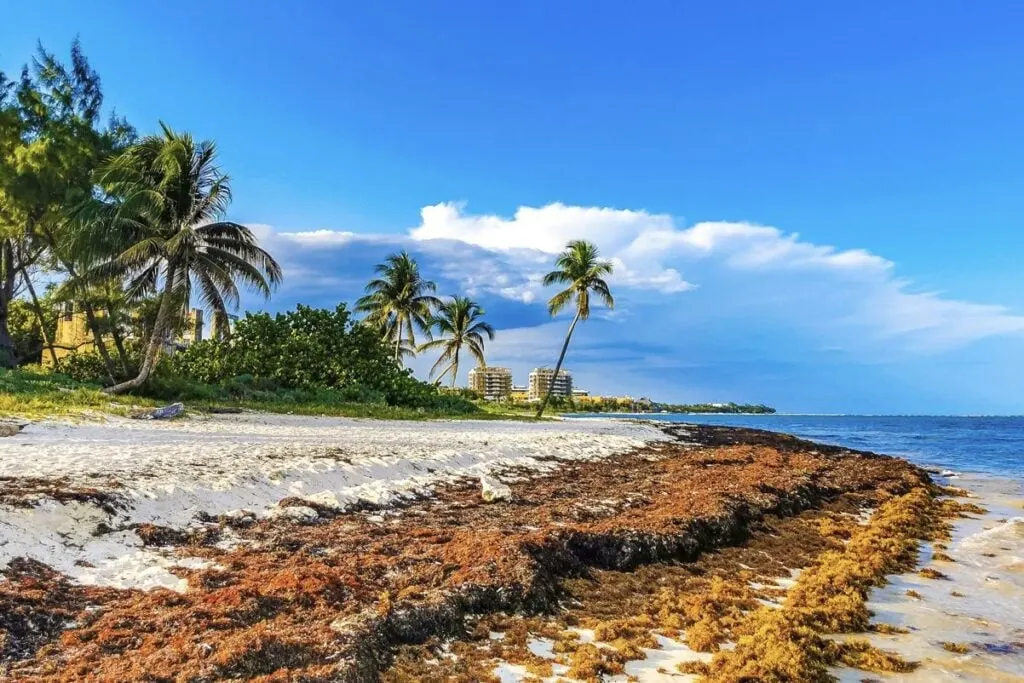
In a rare and alarming weather anomaly, a massive invasion of Sargassum has slammed into the Mexican Caribbean this week, shattering the myth that winter is the “safe season.”
If you are heading to the Riviera Maya thinking you paid for guaranteed crystal-clear water, you could be in for a surprise this winter.
The “Impossible” January Surge
Usually, Sargassum—the smelly, brown macro-algae that plagues tropical beaches—is a summer problem. It ramps up in April and dies off by October. January is supposed to be the “Holy Grail” of clear water.
Not this year.


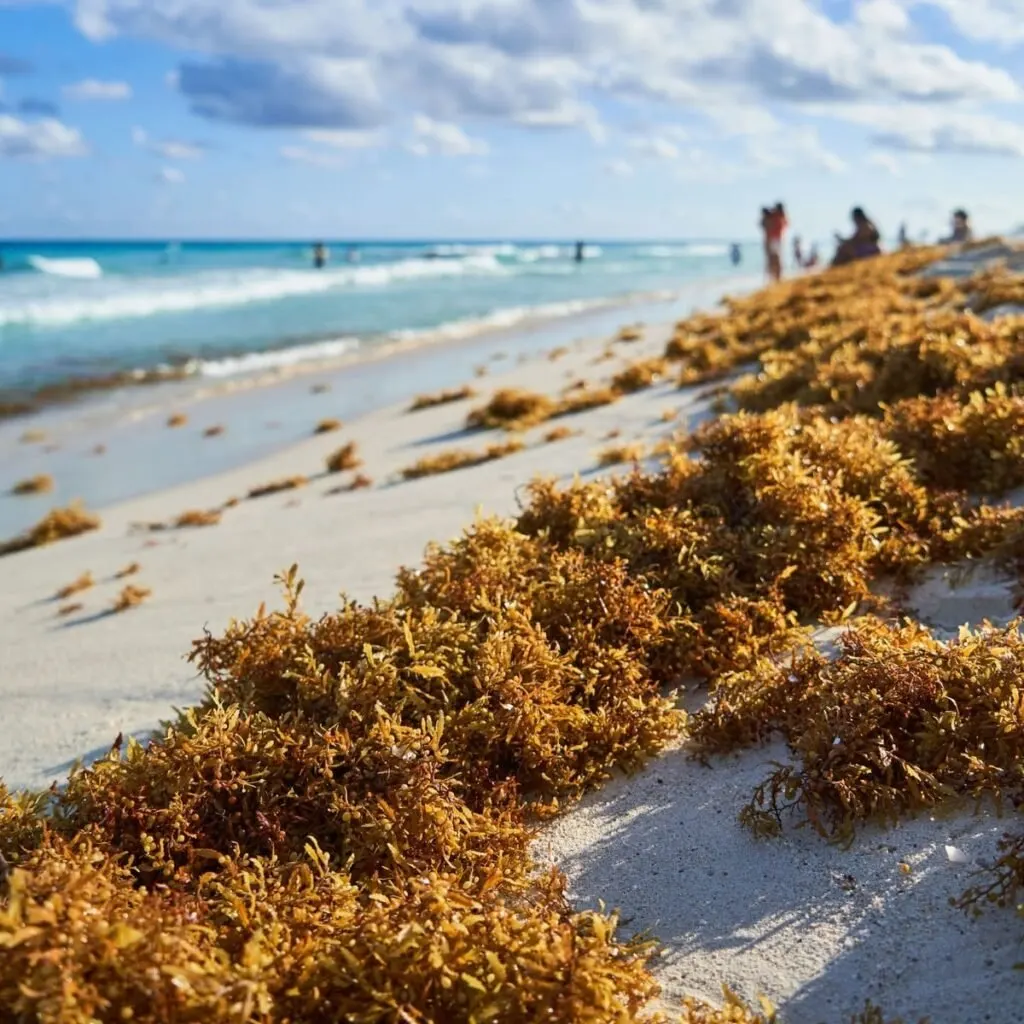
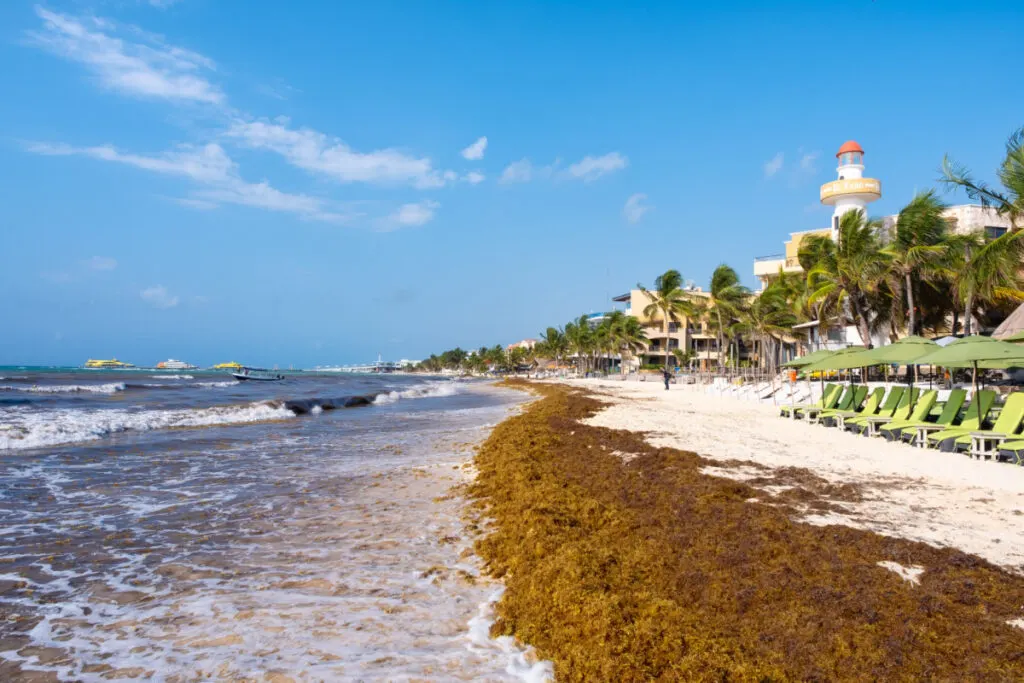
On Thursday, January 8, a shockwave hit Playa del Carmen. In a matter of hours, a massive “atypical surge” dumped roughly 25 tons of seaweed onto Playa Mamitas, the most famous party beach in Playa del Carmen.
This wasn’t just a few stray strands washing up on the sand. This was a 25-ton blanket of brown sludge that required heavy machinery and emergency cleanup crews (Zofemat) to tackle.
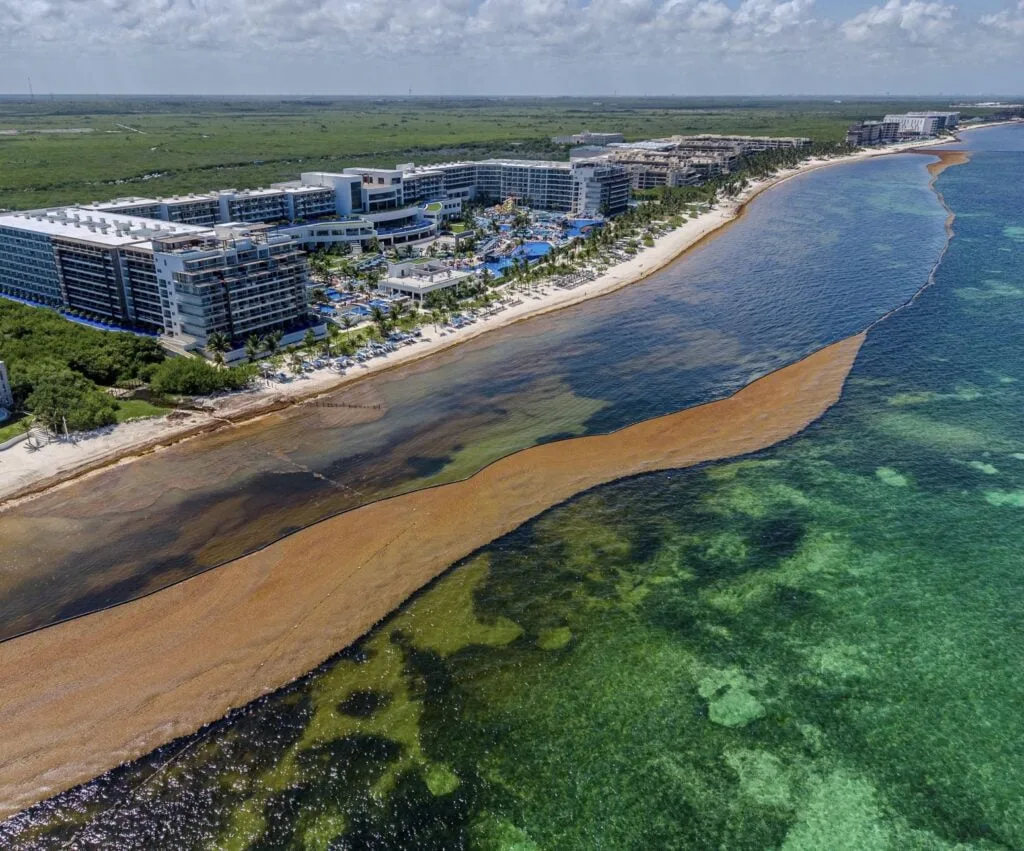
Reports from Tulum on the same day confirmed fresh arrivals hitting the coastline there as well. While Cancun is currently facing “moderate” levels, the currents are pushing these massive mats northward, putting the entire Hotel Zone on high alert.
This Isn’t A Rumor: Check The Live Webcam Below
See the unfiltered reality for yourself in this live feed from Playa del Carmen.

Punta Cana On Alert
If you are reading this from the Dominican Republic thinking, “Glad I’m not in Mexico,” think again.
While the physical mountains of seaweed hit Mexico first this week, Punta Cana is officially on “High Alert.”
- The Situation: A massive sargassum mat has been detected in the Central Atlantic, moving westward toward the Dominican Republic.
- The Risk: Punta Cana’s most popular beaches (Bavaro, Cabeza de Toro) face East, meaning they catch everything the Atlantic throws at them. The forecast for 2026 warns of “major blooms” arriving months earlier than usual.
- The Verdict: While you might not see 25 tons today, the “safe window” of January is rapidly closing. The exact same mass of algae hitting Mexico is effectively knocking on Punta Cana’s door right now.


What Is This Brown Stuff? (A Quick Refresher)
If you are new to the Caribbean, you might be thinking, “It’s just seaweed, right?”
Wrong. This isn’t the cute little green kelp you see in California.
Sargassum is a floating brown algae that travels in massive island-sized mats across the Atlantic. Out in the open ocean, it’s actually a vital habitat for sea turtles and fish. But when it hits the shore, it becomes a nightmare.
- The Smell: As soon as it lands and starts to rot in the sun, it releases hydrogen sulfide. That is the same gas that smells like rotten eggs. It ruins the breeze, ruins your appetite, and can even tarnish silver jewelry.
- The Bugs: The rotting piles attract sea lice and sand fleas. Walking through it isn’t just gross; it’s itchy.
- The Water: It turns that famous turquoise water into a murky, tea-brown soup called “Sargassum Brown Tide.”


Why This Is Happening
Travelers are rightly asking: How is this even possible in January?
The answer lies in the Atlantic, and the outlook for 2026 is grim. According to the University of South Florida (USF)—the leading authority on Sargassum tracking—this isn’t a fluke. It’s a trend.
Normally, the massive “seed population” of seaweed floating in the Atlantic dies off during the cooler winter months. But in late 2025, that die-off didn’t happen. The bloom remained historically strong, surviving and continuing to grow.
The result? The “season” didn’t end; it just paused. And now, that massive surplus of seaweed is arriving months ahead of schedule.


Is The “Safe Season” Gone Forever?
This is the question that should worry every fan of the Caribbean.
If 25-ton waves can hit in the first week of January, does the “Sargassum Free” season even exist anymore? Scientists warn that we may be entering a new era where Sargassum is a year-round reality rather than a seasonal annoyance.
- The Trend: 2026 is predicted to be a “major” Sargassum year.
- The Future: As ocean temperatures rise and nutrient runoff increases, the algae is blooming faster and surviving longer.
- The Traveler’s Dilemma: If January is no longer safe, travelers have zero leverage. You are paying peak prices for what is effectively a gamble.


The Comfort Factor: Smell & Skin
Beyond the fact that it messes up your photos, Sargassum can be physically unpleasant to be around. It’s not necessarily dangerous for the average traveler, but it is definitely annoying.
The Fix: If you do take a dip in the brown stuff, just hit the outdoor freshwater shower immediately after. It solves the problem instantly.
The Smell: As the seaweed dries in the sun, it releases a sulfuric gas. In open spaces, it’s mostly just a nuisance—smelling like rotten eggs rather than fresh ocean breeze. It won’t ruin your trip, but it might ruin your appetite for a beachfront lunch.
The “Itch”: Swimming in the brown water isn’t just sticky; it can be itchy. The mats often trap tiny sea organisms (like sea lice) that can cause mild skin irritation.

If you are booked for the Riviera Maya or Punta Cana this month, do not cancel your flight.
Yes, the surge is real, but so is the infrastructure to fight it. You can still have an incredible trip if you pivot your strategy. Here is the playbook:
1. Embrace The “Pool Day” Let’s be honest: You probably booked a resort with a sprawling, multi-level pool complex for a reason. Use it. When the seaweed rolls in, the pool is your sanctuary. It’s 85 degrees, there is a swim-up bar, and there is zero chance of itchy sea lice. If the ocean is acting up, let the pool save the day. That is what you paid the resort fee for.
2. Trust The Cleanup Crews (They Are Fast) Cancun and the Riviera Maya are the world experts in fighting Sargassum. They have armies of cleaners (Zofemat) and heavy machinery working before sunrise.
- The Reality: Just because the beach is covered at 6:00 AM doesn’t mean it will be covered at noon. These crews move tons of algae in hours. Give them time to work their magic before you write off the beach for the day.


3. The “Cenote” Escape If the “Brown Tide” is relentless, rent a car or book a tour and head inland. The Yucatan jungle is filled with thousands of Cenotes (freshwater sinkholes).
- Why it works: They are crystal clear, 75 degrees year-round, and 100% seaweed-free. It’s the ultimate backup plan. Swap the salty seaweed for fresh jungle water and you won’t even miss the beach.
4. Check Live Cams, Not Instagram Stop looking at influencers posting “Throwback” photos from three months ago. Look at live beach cams specifically for your hotel right now. The situation changes hourly. One day Playa Mamitas is buried; two days later, the currents shift and it’s clear. Don’t doom-scroll; just check the cam.
The Bottom Line: The rules have changed. The “Peak Season” guarantee is shaky, but Mother Nature moves fast. If you are traveling in 2026, stay agile, enjoy the pool, and have a Cenote day in your back pocket just in case.
The Travel Off Path Advantage: Your Travel Toolkit
Subscribe To Our Latest Posts
Enter your email address to subscribe to Travel Off Path’s latest breaking travel news, straight to your inbox.
-
-

-

-

-


