
Sunday, Jan. 25, 2026 | 2 a.m.
Editor’s note: Este artículo está traducido al español.
Nevada’s mental health and recovery network reeled after a federal funding fiasco wiped out — then abruptly restored — millions in crucial grants earlier this month, upending programs and leaving providers unsure if their money will vanish again.
At Las Vegas’ PACT Coalition, which focuses on preventing substance misuse and promoting recovery, the panic was immediate. The group nearly lost three grants totaling more than half a million dollars before officials rescinded the cancellation a day later. Similar whiplash rippled through nonprofits and university clinics from Reno to rural Humboldt County, where a UNLV telehealth counseling project for teens had already started winding down.
The Trump administration’s 24-hour reversal did little to calm fears among local and statewide providers. With Nevada ranking last in the nation for mental health care access and overdose deaths still rising, advocates warn even brief funding chaos could cost lives.
The confusion followed weeks of broader shake-ups inside the Department of Health and Human Services, where sweeping budget cuts and staffing overhauls have shuttered programs and sidelined key grants nationwide.
In Nevada, that instability has magnified an already fragile mental health system — one where clinics are short-staffed, rural counties rely on temporary telehealth programs and nonprofits fill gaps that state funding can’t.
Leaders warn that each federal misstep erodes trust and forces them to spend precious resources planning for the next crisis instead of helping patients.
Nevada remains one of the hardest places in the country to find mental health care. Nearly 1 in 4 adults reported having a mental illness in 2024, and the state ranks last in the nation for overall mental health, according to Mental Health America. Substance use disorders follow the same pattern, with roughly 23% of Nevadans reporting struggles in the past year.
Even as overdose deaths have dropped nationally, Nevada’s numbers continue to climb — rising by more than 3% in 2024, according to the Centers for Disease Control and Prevention. Providers say that uptick reflects the limits of an already stretched system, one that relies heavily on stopgap federal grants now caught in political crossfire.
The Trump administration sent termination letters to hundreds of organizations earlier this month, canceling some 2,000 federal grants worth almost $2 billion for mental health and substance abuse services, according to The Associated Press.
In the termination letter, the federal Substance Abuse and Mental Health Services Administration said the grants “no longer effectuate the program goals or agency priorities,” which include preventing substance abuse and addressing serious mental illness. Grant recipients said they weren’t given specific reasons why their projects supposedly didn’t align with those priorities.
SAMHSA rescinded the cancellations a day later, but the damage already was done. Organizations across the nation had begun planning to sunset programs and lay off staff.
Jamie Ross, CEO of the PACT Coalition, disagreed with SAMHSA’s stated contention, saying “the goal of our grants is entirely in line with the priorities listed in that letter.”
Daniel Gillison Jr., CEO of the National Alliance on Mental Illness, said in a statement that “addressing our mental health and substance use crises in this country has never been political, which is why it continues to have bipartisan support in Congress.”
“These abrupt and unjustified cuts will immediately disrupt suicide prevention efforts, family and peer recovery support, overdose prevention and treatment, and mental health awareness and education programming, along with so many more essential services, putting an unknown number of lives at stake,” Gillison said. “These aren’t just numbers on paper. These are decisions that have real and harmful consequences for millions of people and communities around the country.”
Liz Morris, executive director of NAMI Southern Nevada, the local affiliate of the National Alliance on Mental Illness, said her organization hadn’t been notified of any direct funding cuts but noted that more community members would likely rely on NAMI’s services across the region, state and nation because they might not be able to access mental health care elsewhere.
Proposals at the federal level that would slash some mental health and related programs by as much as 40% have added to those concerns, she said, pointing to a series of personnel cuts and grant cancellations at HHS since Robert F. Kennedy Jr. became secretary in February.
Cuts to mental health programs in 2025 also were felt at UNLV.
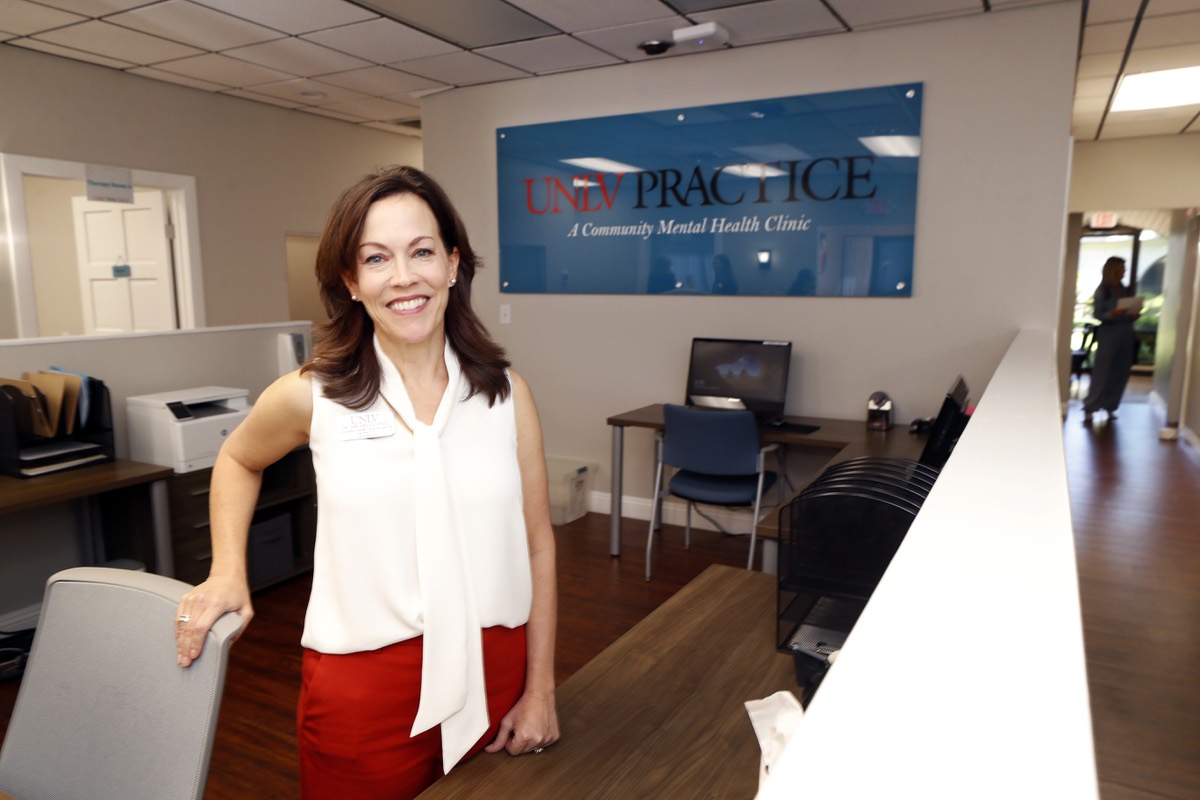
Michelle Paul, assistant vice president of mental and behavioral health, said UNLV’s Charge Up program was discontinued as a result of funding changes.
Housed in UNLV’s PRACTICE Clinic, the Collaborative Healthcare Advancing Resilience, Growth, and Empowerment to Unlock Potential program targeted people ages 12 to 25 who were at high risk for developing psychosis and provided them with various clinical treatments and services based on their unique needs.
Paul added that a partner program created with Communities in Schools to provide virtual mental health counseling to middle- and high school students in rural Humboldt County — an area that already experiences a deficit of health professionals — has ended because of funding losses.
Humboldt County was able to expand access to those services through a SAMHSA grant, which also supported clinical supervision from UNLV faculty and the hiring of four graduate assistants.
U.S. Rep. Susie Lee, D-Nev., after hearing of the funding changes, signed a letter urging HHS to rescind the grant terminations. Though she was grateful that officials reinstated the grants, she stressed that “critical funding for lifesaving services should never have been cut in the first place.”
“We have seen time and time again how these chaotic moves result in unnecessary stress for organizations and the patients who rely on them,” Lee said in a statement to the Sun. “We’ve seen far too many Southern Nevadans struggle with addiction and substance abuse. Our community needs increased funding and resources, like my TREAT Youth Act, not a dismantling of key programs. I’ve reached out to hear from our organizations on the ground who were impacted by these cuts and will continue working to ensure Southern Nevadans have the support they need to beat addiction.”
Lee’s TREAT Youth Act — short for Treatment, Recovery, Education, Awareness, and Training for Youth — was signed into law by Trump on Dec. 2, 2024, as part of the larger SUPPORT for Patients and Communities Reauthorization Act of 2025, which cleared the House in a 366-57 vote with strong bipartisan support. A companion bill in the Senate passed unanimously.
The law provides $64 million through 2030 to combat substance abuse among youths and replaces funding that lapsed in 2023 from a similar program.
Local programs supporting health initiatives also have been defunded under the Trump administration.
The LGBTQ+ Center of Las Vegas, which connects the LGBTQ+ community with different resources across the region, lost around $800,000 per year previously earmarked for HIV testing when the Elon Musk-led Department of Government Efficiency began cutting grants in early 2025.
Without this funding, local programs are left relying on community donations and having to tighten their belts through various means, whether through eliminating programs or staff layoffs.
“While the Center is thriving thanks to tremendous community support, such cuts make providing lifesaving services even more challenging,” John Waldron, CEO of the Center, said in an email to the Sun. “The Center urges continued bipartisan leadership to ensure stable, predictable funding for evidence-based mental health and addiction programs. Lives depend on it.”
[email protected] / 702-948-7854 / @gracedarocha
news/2026/jan/25/mental-health-funding-mess-leaves-nevada-providers/”>Source link
-

-

-

-

-


