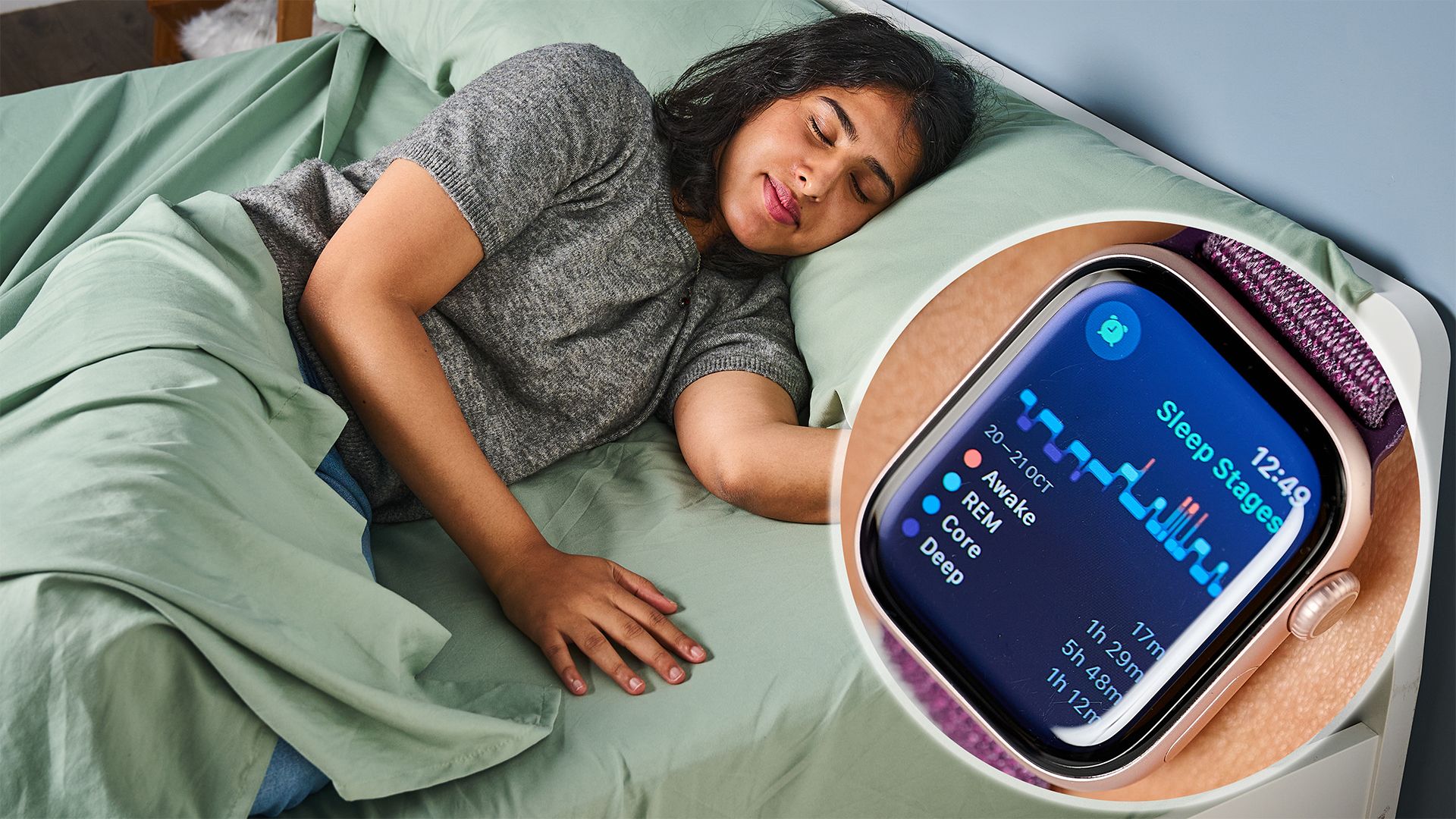
I check my Apple Watch every morning to help me understand my sleep and one metric always stands out as worryingly low. Despite regularly clocking up over eight hours of happy snoozing, deep sleep makes up only around 90 minutes of my night.
The best sleep trackers don’t just note the hours in bed, they also observe how long you spent in each sleep stage. My hours of light sleep, or Core Sleep on the Apple Watch, far outnumber my hours spent in deep sleep.
Dr. Jade Wu, board-certified sleep psychologist and Mattress Firm sleep advisor, and Dr. Chris Allen, Sleep Science Advisor at Aeroflow Sleep, explained to me just what deep sleep is and why we need it — and the real number you should be looking for on your Apple Watch.
My Apple Watch sleep scores
The Apple Watch’s sleep settings track four sleep stages: Awake, Core Sleep, REM Sleep and Deep Sleep.
I spend most of the night in Core Sleep (Apple’s term for light sleep, chosen to offset the potential negative implications of ‘light’ sleep.) I frequently clock up five hours of core sleep in a night.
In comparison, I often spend between just one to two hours in the deep sleep phase.
That seemed like a significant, and worrying, difference. But was I just misunderstanding the data?
What do my Apple Watch Deep Sleep scores mean?
Deep sleep is a restorative stage of sleep, so I was concerned at how little of it I appeared to get each night. However, speaking to the experts has reassured me that I don’t need as much deep sleep as I assumed.
Dr. Allen notes that for someone sleeping the recommended seven to nine hours per night, only around one to two of those hours will be spent in deep sleep.
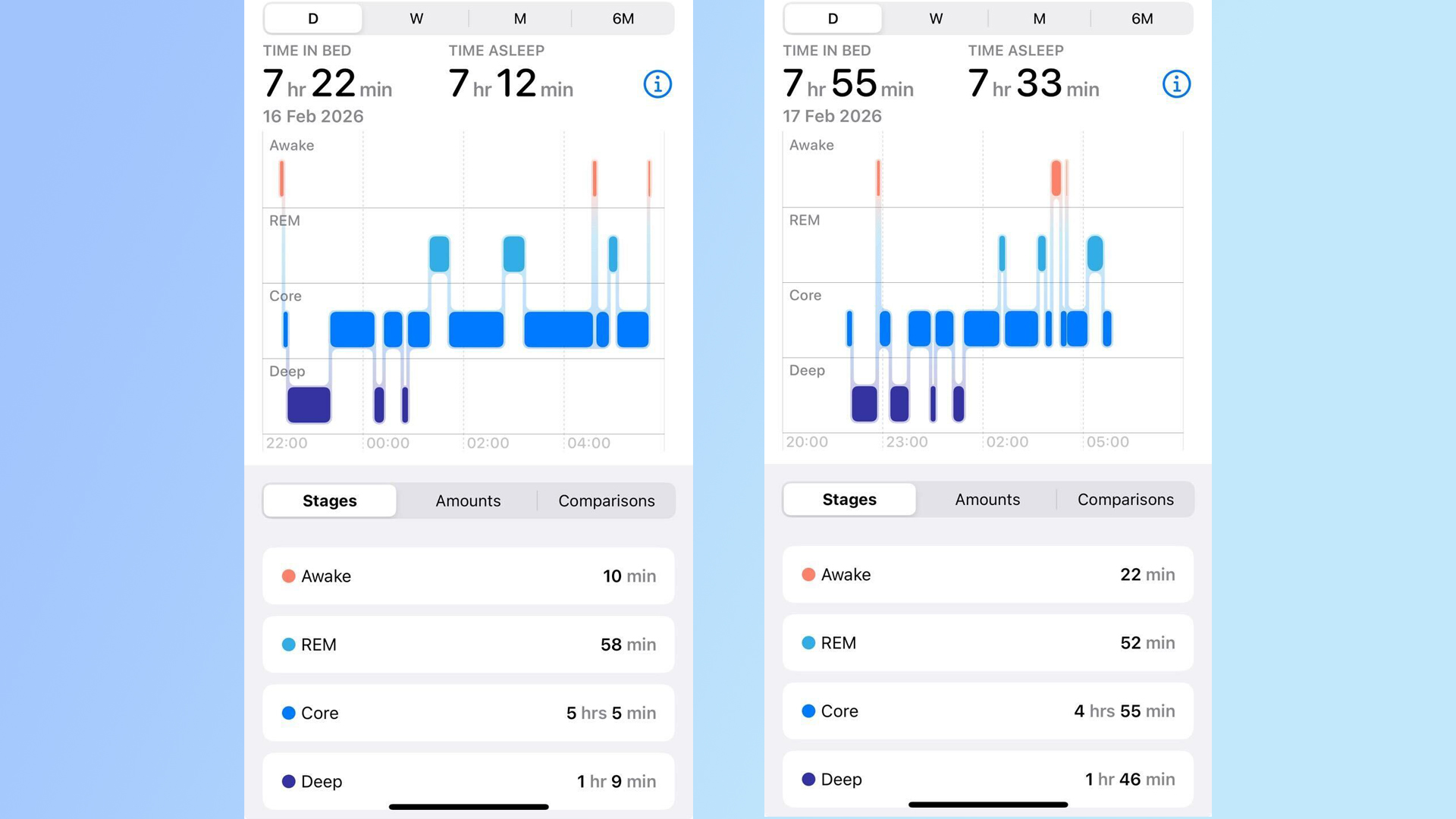
That aligns with my Apple Watch sleep scores, as I’m consistently hitting at least an hour spent in deep sleep.
Dr. Wu also points out that if I feel like I’m missing out on deep sleep, it’s likely related to my overall sleep cycle.
“If you feel like you’re ‘lacking’ deep sleep, the best approach isn’t trying to force more of a specific stage,” says Dr. Wu. “Your brain naturally adjusts sleep stages based on what it needs. Instead, focus on protecting overall sleep quality.”
What is deep sleep?
Deep sleep is one of the key stages in your sleep cycle, alongside light sleep and REM sleep.
“Deep sleep is the stage of sleep known as slow-wave sleep (also called N3/N4, delta sleep, or slow wave sleep),” says Dr. Wu. “It’s the deepest stage of non-REM sleep, when the brain’s activity slows into large, slow waves and the body is doing a lot of its physical recovery work.”
Dr. Allen agrees that it’s the most physically restorative stage of the sleep cycle. “This is when growth hormone is released, tissues are repaired, muscles recover, and the immune system strengthens,” he notes.
As well as physical restoration, Dr. Wu points out that during deep sleep the brain is able to “consolidate and organize information from the day,” helping us learn and remember.
“Deep sleep is not just ‘nice to have’, it’s foundational to long-term health,” says Dr. Allen, a board-certified Sleep Medicine Physician.
How much deep sleep do we need and why?
As deep sleep is such an important period for recovery, I assumed I needed a lot of it to keep my brain and body in top condition.
For most healthy adults, deep sleep typically makes up about 15–25% of total sleep time
Dr. Allen
However, a good night’s sleep cycles through many sleep stages and as the experts explain, I don’t need to spend the majority of the night in deep sleep to feel its benefits.
“For most healthy adults, deep sleep typically makes up about 15–25% of total sleep time,” says Dr. Allen, a statistic Dr. Wu agrees with.
That averages at one to two hours of deep sleep every night, or roughly 90 minutes.
Dr. Wu also notes that with a regular sleep schedule, you body will intrinsically allow the most necessary stages of sleep to take priority.
“The brain automatically adjusts how much of each stage of sleep we get depending on our needs of the moment,” says Dr. Wu. “As long as you are generally sleeping in safe and non-disruptive environment, keep a regular sleep schedule, and have enough opportunity to sleep, your body should get enough of each type of sleep and will adapt to the types of sleeps most needed.”
Does the amount of deep sleep we need change with age?
Our sleep changes with age and as a result, our deep sleep needs also adapt.
“The amount of deep sleep naturally declines as we age,” says Dr. Allen. “Children and teenagers spend significantly more time in deep sleep because their bodies and brains are still developing.”
Post-childhood, deep sleep needs remain steady though most of adulthood, although the exact requirements will vary from person to person and as a result of circumstances — you might find at certain points in adulthood you require more deep sleep than others.
As we age, our deep sleep needs once again adjust.
“By middle adulthood, deep sleep begins to decrease, and in older adults, it can become quite limited,” says Dr. Allen. However, he notes that while the amount of deep sleep we get decreases, the need for it doesn’t change.
Be flexible to changes in sleep duration and timing as you age
Dr. Wu
“While the biological need for restorative sleep remains, aging changes sleep architecture, making it harder to achieve long stretches of deep sleep,” he explains. “That’s why older adults often report lighter, more fragmented sleep.”
Dr. Wu agrees. She notes that your sleep architecture — the sequence of sleep stages during the night — stays “fairly consistent across the lifespan,” but we get less “slow-wave sleep” with age.
As a result, one to two hours of deep sleep is still preferred in older adults but you might find you need to spend more hours in bed to reach this goal.
“Maintain a stable sleep-wake rhythm,” advises Dr. Wu, “but be flexible to changes in sleep duration and timing as you age.”
What happens if we don’t get enough deep sleep?
If your Apple Watch is regularly tracking less than one hour of deep sleep each night, you’re lacking a vital sleep stage for restoration and you’re likely to feel the impact the next day.
“Without enough deep sleep, the body doesn’t fully repair itself. This can lead to increased inflammation, reduced muscle recovery, impaired learning, and overall fatigue,” says Dr. Allen.

These are common symptoms of long-term sleep deprivation and as a result the solution is to target better sleep hygiene overall, such as going to bed around the same time every night or as ditching screens before bed.
“Getting enough deep sleep means getting enough overall sleep, being in a sleep environment that’s quiet and dark and comfortable, and keeping a consistent schedule,” Dr. Wu advises.
Deep sleep tracking on the Apple Watch — how does it work?
Apple uses a complex algorithm to determine which sleep stage you’re in during the night.
The Apple Watch features 3-axis accelerometer signals that observe motion, including small movements generated by breathing.
Every 30 seconds, the Apple Watch feeds this data to an algorithm which uses these signals to determine which of four stages you’re in: deep sleep, REM sleep, core (light) sleep, or awake.
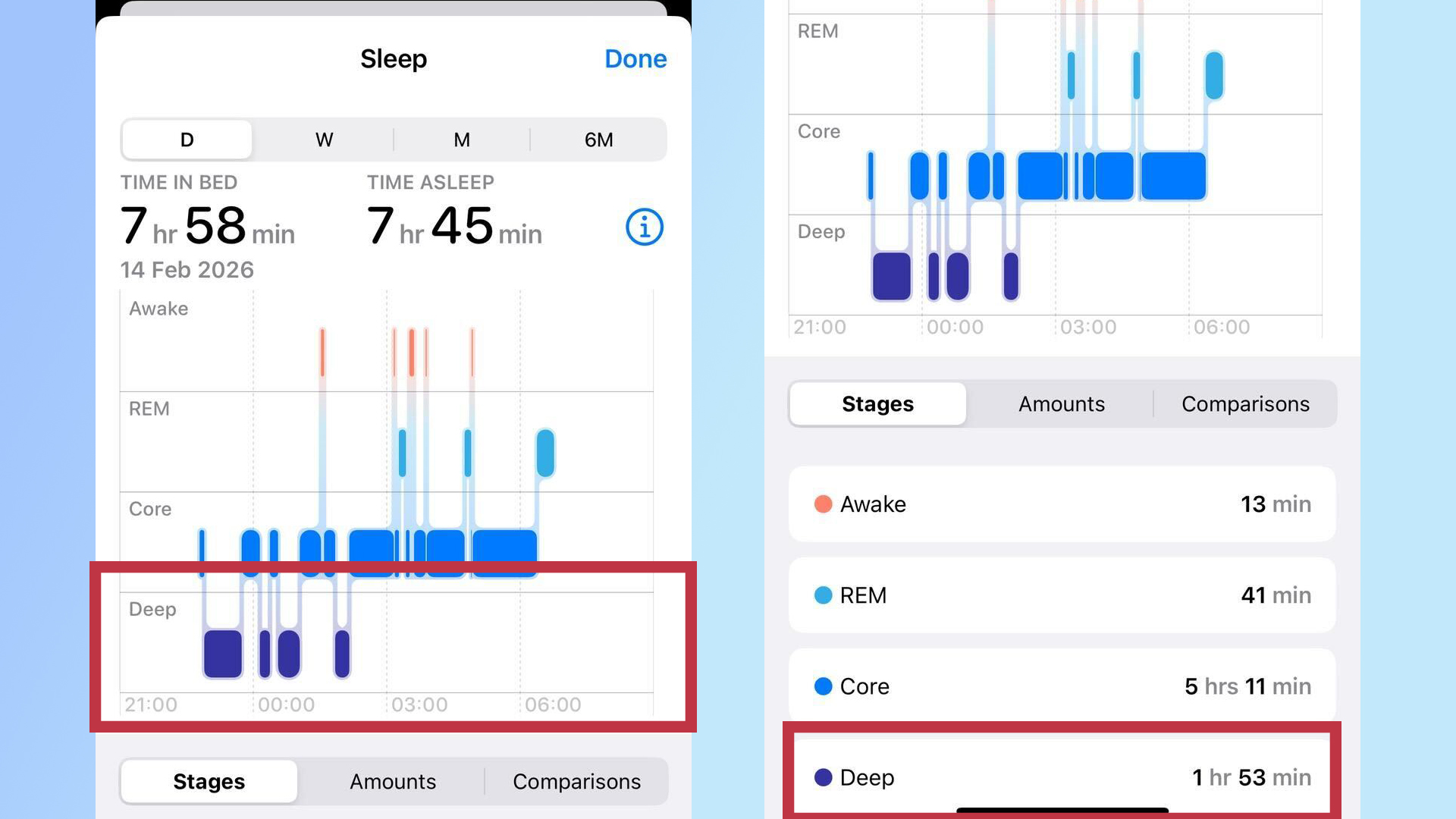
However, it’s still only an estimation and your Apple Watch doesn’t always get the sleep stages right. It’s best to view your Apple Watch sleep results as guidelines, rather than exact mapping.
Sleep trackers can help you understand your rest and find areas of improvement but if you’re regularly failing to meet your sleep goals, we recommend speaking to a healthcare professional for targeted advice.
“If you’re frequently struggling to stay asleep, feel unusually sleepy during the day, or have red flags like loud snoring, high blood pressure, morning headaches/jaw aches, or dry mouth, consider getting screened for a sleep disorder like obstructive sleep apnea,” advises Dr. Wu.


Follow Digitpatrox on Google News and add us as a preferred source to get our up-to-date news, analysis, and reviews in your feeds.
Source link
-

-

-
-

-