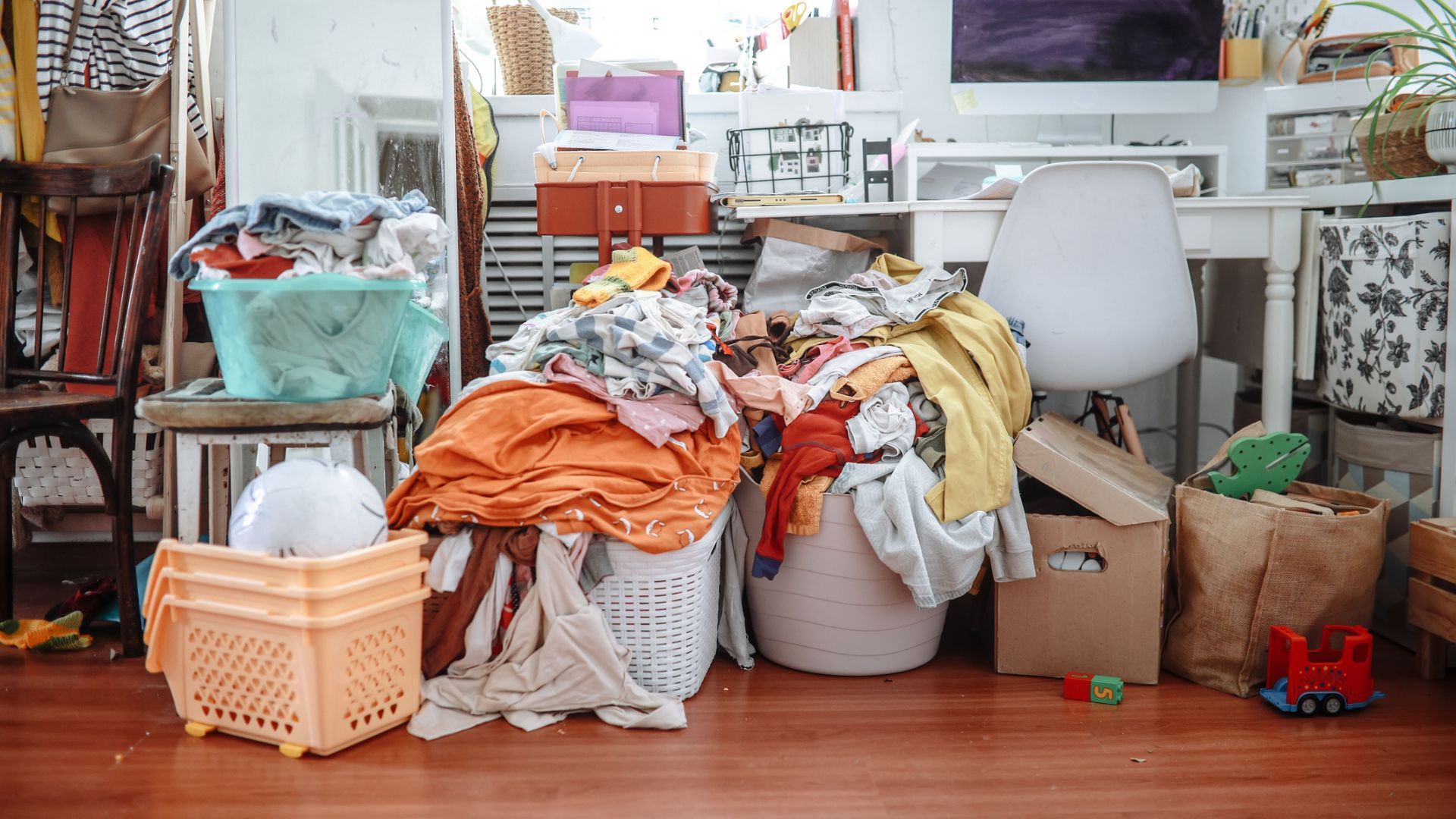
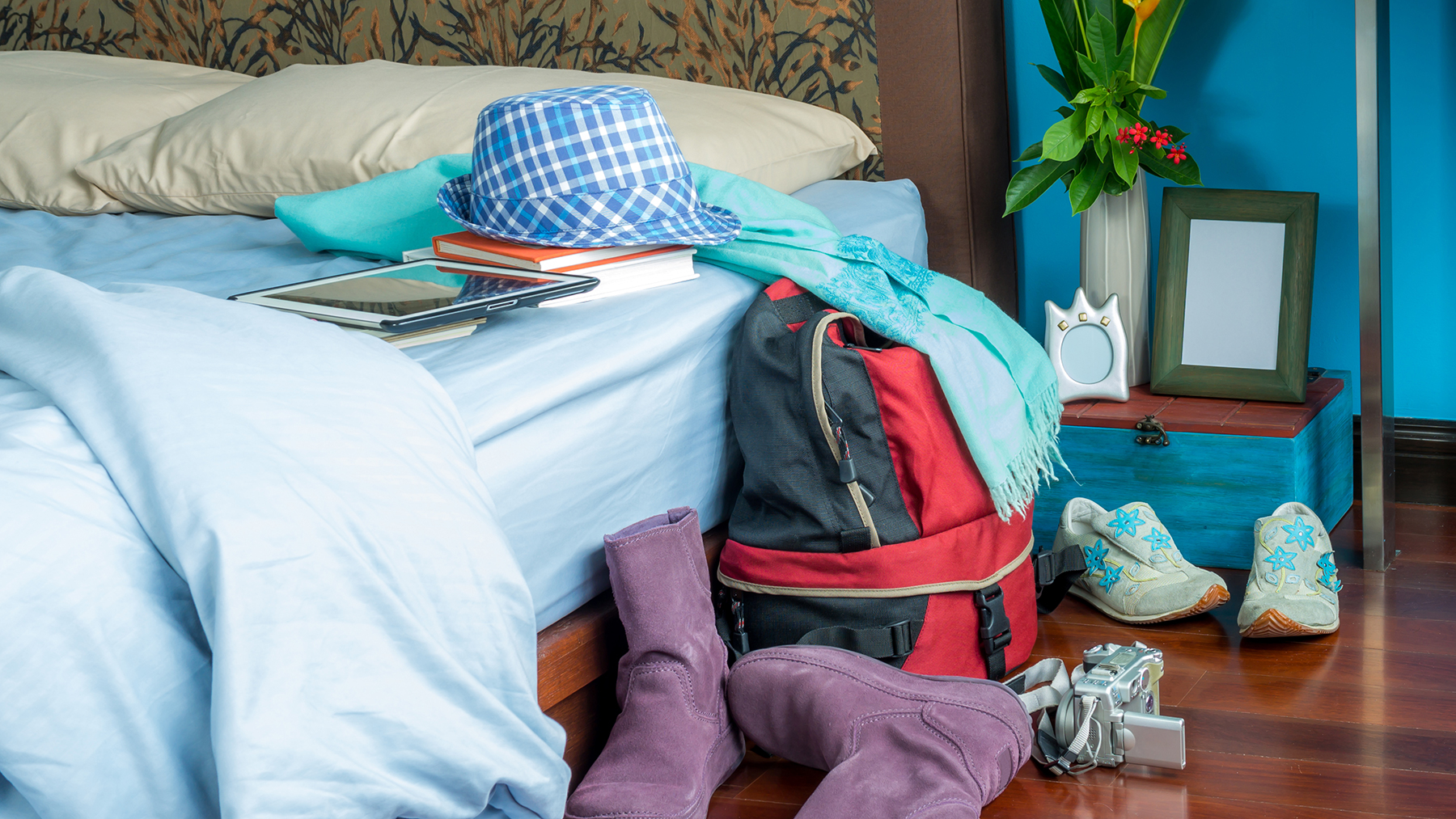
New year, same old messy bedroom. Surely I’m not the only person wading through piles of clothes on the floor, discarded paperwork and unwrapped Christmas gifts just to get into bed?
If, like me, your bedroom has become a dumping ground in order to keep the rest of your house tidy, you might be wondering what that has to do with sleep. Plenty, says Dr Nona Kocher, MDH, MD, a board certified psychiatrist at quintessence psychiatry.
“Mess can make your body feel anxious even when your mind is not actively thinking about it,” she explains. “Your eyes are scanning, your brain is subconsciously clocking what is out of place, and that constant input is wearing on the nervous system.”
Here, a professional organizer shares her tips to decluttering your bedroom today for better sleep hygiene…
Meet the experts
Dr. Nona Kocher
Dr. Nona Kocher, MPH, MD, is a board-certified psychiatrist at quintessence psychiatry, serving patients in Florida and New York through virtual telepsychiatry. She is dedicated to helping people understand their mental health, feel supported and move toward a healthier, more balanced life.


Meghan Cocchiaro
Meghan Cocchiaro is a Certified Professional Organizer ® and founder of Organized by Meg, a full service professional home organizing company based in Denver, Colorado, specializing in helping ambitious women and families create simply organized homes that are easily maintainable with busy lifestyles.
What is the link between clutter and sleep quality?
Before we get to the nitty gritty of actually tidying up, let’s first remind ourselves of why we’re doing it — the impact clutter can have on our sleep quality.
“The bedroom should be the one place where your nervous system is allowed to let down,” explains Dr Kocher.
Clutter promotes a low-grade state of alertness
Dr. Nona Kocher, a board certified psychiatrist
“However, when it’s scattered with piles of clothes, stacks of papers, half-finished projects or visual chaos, the brain doesn’t interpret that as ‘resting.’ It interprets that as ‘unfinished business,” she continues. “Clutter promotes a low-grade state of alertness.”
If you think you can simply step over your ‘floordrobe’ and brush paperwork aside before crawling into bed and falling into a deep and restful sleep, think again. Clutter in your bedroom can make it difficult to both fall and stay asleep, says Dr Kocher.
“Even if you’re not consciously thinking about the clothes, or the bills, or the emails, your mind is keeping score of what needs to be done,” explains the psychiatrist.
“And that background chatter keeps your cortisol a little bit higher than it needs to be for sleep, which means it’s harder to fall asleep, and easier to wake at night.”
OK, consider me motivated to tidy up my bedroom. Where do I start?
5 steps to decluttering your bedroom for better sleep
If clutter and mess has built up over a long period of time, decluttering can feel like an insurmountable task. But start small, start simple… just start.
“The method I follow to decluttering and organizing is to keep it REAL simple,” explains Meghan Cocchiaro, a Certified Professional Organizer.. In this instance, REAL is an acronym for:
Remove the items (while sorting)
Edit them (decide if you are keeping it)
Assign a home for them (within your bedroom or elsewhere in your home)
Label the bins or shelves where the items you decide to keep will ultimately live
“The entire goal of organizing is to always first declutter so you are only keeping and then storing items you actually need, want or love so that the junk that you don’t want isn’t getting in the way of what you do need to access,” she explains.
And with that, grab yourself a trash can because here are Meghan’s 5 steps to decluttering your bedroom.
Step 1: Gather the trash
As we have established, starting is hard. So let’s kick off with an easy win — the trash.
“Have a trash bin ready in the room with you as you will find obvious trash while sorting,” advises Meghan.
“Crumpled receipts, clothing tags, random broken pieces and empty packaging to food or personal hygiene products (like a nearly empty tube of lotion).”
Once you start to see the progress of clearing out the trash, you’ll (hopefully) feel motivated to continue.
Step 2: Gather the items that don’t belong
“My advice to anyone starting to tackle a bedroom decluttering project, is to start by gathering all of the things that are ‘out’ and visible in the bedroom and sort them into piles,” says Meghan.
This means things you see on countertops, dressers and nightstands, as well as the floor. Basically, zone in on the items that are out of place in your bedroom.

Step 3. Sort into categories
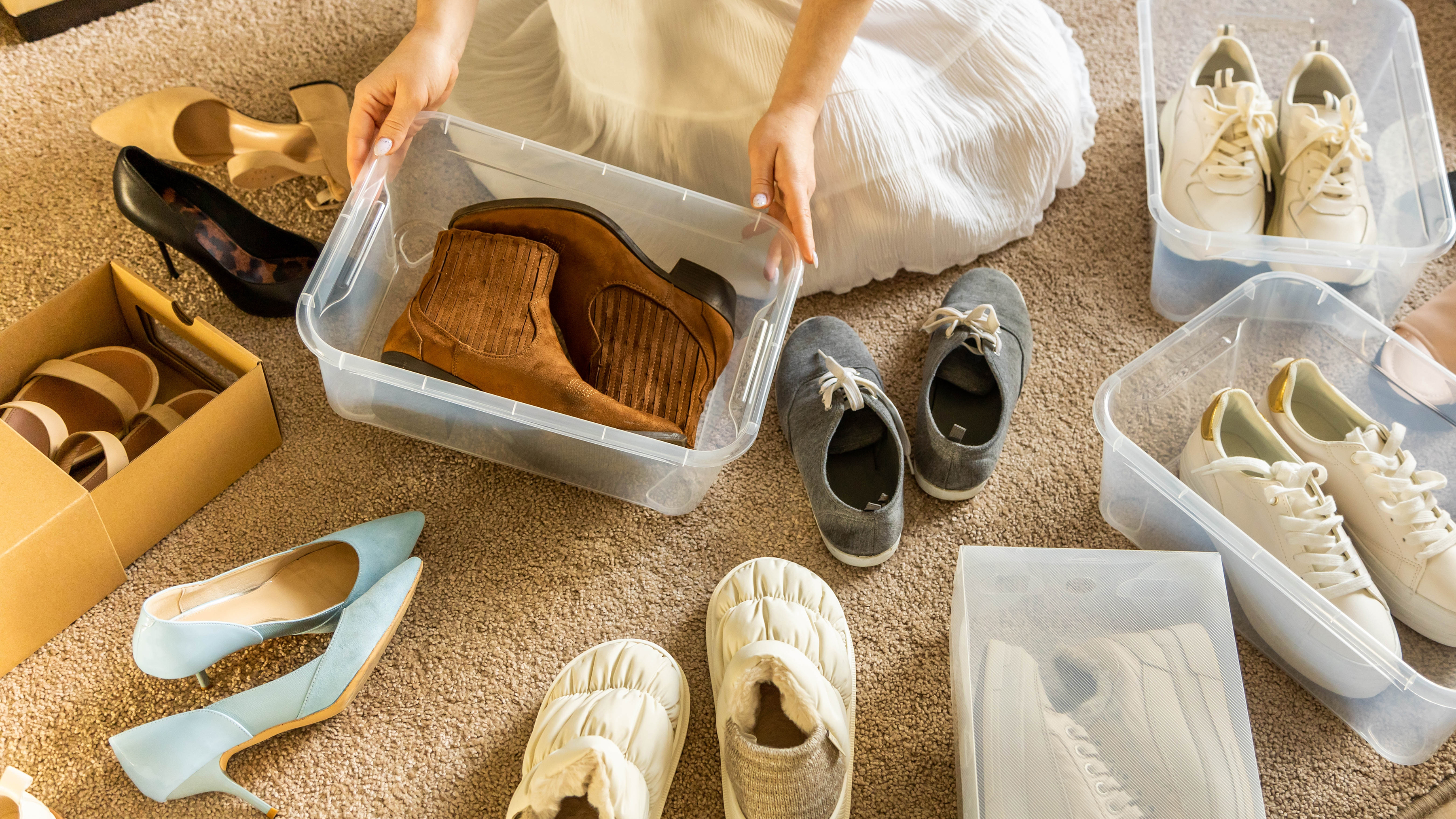
Now that you’ve identified the alien items in your bedroom, it’s time to start placing them into piles of the same category, using empty boxes or baskets if you have any handy. It’s worth having a bag or box available for items that you would like to donate.
“You want to group ‘like with like’, which means gathering clothing together, jewelry, eyeglasses and accessories, bedding items, books and journals, paperwork, candles and scents, personal hygiene products and so on,” says Meghan.
Step 4. Address the sorted piles
Now that you have your categories of items, it’s time to put them where they belong.
“After you have sorted into these piles, go through each pile and put it away if it has a home in your bedroom,” says Meghan.
For example, the closet for clothes and shoes, drawers for more clothes or linens and the bathroom for towels and products.
If the items don’t belong in your bedroom at all, remove them. “Move dirty clothes to the hamper. Move any kitchenware like used mugs or a forgotten plate from a late night snack right to the kitchen sink,” says the professional organizer.

Step 5. Repeat the process in storage areas
As you’ve started with the items in your bedroom that were ‘out’, it should be looking in pretty good shape. Now it’s time to look at what you’ve got tucked away in storage areas, such as dressers and nightstands, and repeat the process.
“Empty them one by one, sort them into ‘like’ categories, and downsize or move them out of the room if necessary,” says Meghan. “Then you can move into your closet, and your bathroom, each done separately following the same process, keeping it REAL simple.”
Remember, you don’t have to sort through all of your storage in one hit — everything you do is progress.
Tips for bedroom decluttering success
- Tackle your clothes separately. “If you have clothing that you no longer wear or want, donate it,” says Meghan. “If you’re unsure of clothing, save clothing for a category to declutter all by itself.”
- Address the big things first “Paperwork and memories take a lot of time, so you want to tackle the bigger physical stuff first before getting stuck on the nitty gritty detailed stuff,” says Meghan.
- Take it slow if you need to. “Mess causes stress and stress makes it harder to take action, so the cycle keeps spinning,” explains Dr Kocher. “The solution isn’t usually some big overhaul but contained, small resets. One drawer. One surface. Enough order to reassure your nervous system that things can feel manageable.”
- Change your daily habits. It takes a change in your daily habits to keep your bedroom tidy after a big declutter, acknowledges Meghan. Making your bed every day, keeping your bedside table clear, and addressing dirty and clean laundry piles will help keep your bedroom optimal for sleeping.


Follow Digitpatrox on Google News and add us as a preferred source to get our up-to-date news, analysis, and reviews in your feeds.
Source link
-

-

-

-

-