

There was a time when we saw movies as pure entertainment. That’s why we have ended up with a large collection of comfort movies or popcorn flicks. What we like about them is that we can (or rather, are expected to) turn our brains off, lean back, and enjoy. We are allowed to get distracted, because “pure entertainment,” by definition, is meant to be enjoyed, not studied. It’s a tini-tiny vacation. Why disconnect from life, right?
Wrong. At least, when it comes to certain filmmakers—the Kants, the Hegels, and the Nietzsches of the cinematic world. They are not opposed to you enjoying the film, as long as your enjoyment is cerebral. They are like, “Oh, I took great efforts to make this movie. I ain’t gonna let you relax. You, too, gotta work for it. Nothing is free, bro.”
And then they give us nonlinear narratives, logic-defying structure, multiple realities, time loops, and thematic complexities. Forget the easy-breezy bubblegum entertainment; you feel like you are prepping for a Mensa IQ test.
But to be honest (and of course, if you are willing to put in some active brainwork), these movies are a fun watch on another level. You gotta have the right mindset for it, though—openness to new experiences, tolerance for ambiguity, appreciation of nuance, curiosity about the abstract, lateral thinking, willingness to introspect and analyze, resilience to uncertainty, and such. If you can check at least two of these, I say, grab a bowl of nuts and berries and settle down for a nice mind-bender. And here are some suggestions.
8 Most Complicated Films
1. Last Year at Marienbad (1961)
Written by: Alain Robbe-Grillet | Directed by: Alain Resnais
‘Last Year at Marienbad’ (1961)Credit: Cocinor
The film’s setting is a plush, baroque hotel for the wealthy. One of the guests, the man (Giorgio Albertazzi), tries to convince the woman (Delphine Seyrig) that they had an affair when they met at another resort in Marienbad in Czechia. They decided to elope, but she insisted on waiting for a year. The woman, however, has no recollection of it whatsoever.
There is no point in looking for continuity in this film. It’s just not there. Details randomly change within a scene, characters change clothes or positions within a single conversation, and dialogue repeats with altered meaning. The narrative blurs the line between the present and the past so much that you cannot tell a memory from a lie. In fact, you will have a difficult time knowing simply what’s happening in the hotel.
2. 2001: A Space Odyssey (1968)
Written by: Stanley Kubrick, Arthur C. Clarke | Directed by: Stanley Kubrick
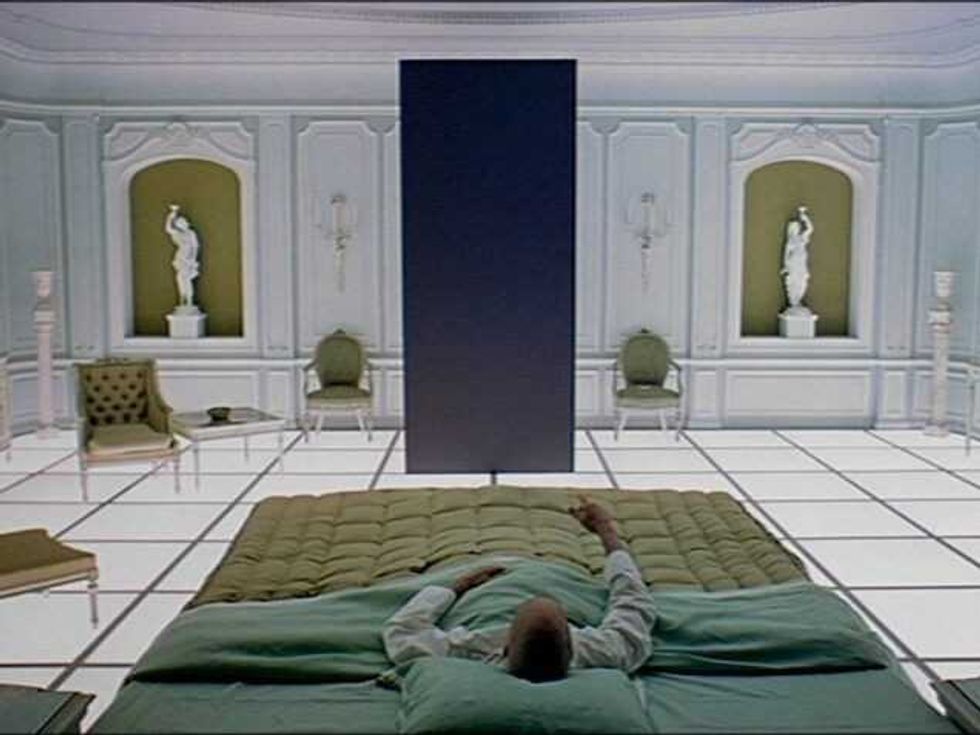

After discovering a mysterious monolith, humanity sends an ambitious mission of scientists and astronauts to Jupiter. However, their advanced AI supercomputer, HAL 9000 (voiced by Douglas Rain), begins to malfunction with lethal consequences.
Inarguably Kubrick’s magnum opus, this film becomes complex because its structure jumps from prehistoric apes to a futuristic star child without much explanation. As that’s not enough, it often replaces dialogue with visual cues. The movie’s comprehension depends a lot on the audience’s ability to interpret abstract symbols and metaphysical concepts. This has made its climax a topic of debate for over half a century.
3. Memento (2000)
Written by: Christopher Nolan | Directed by: Christopher Nolan
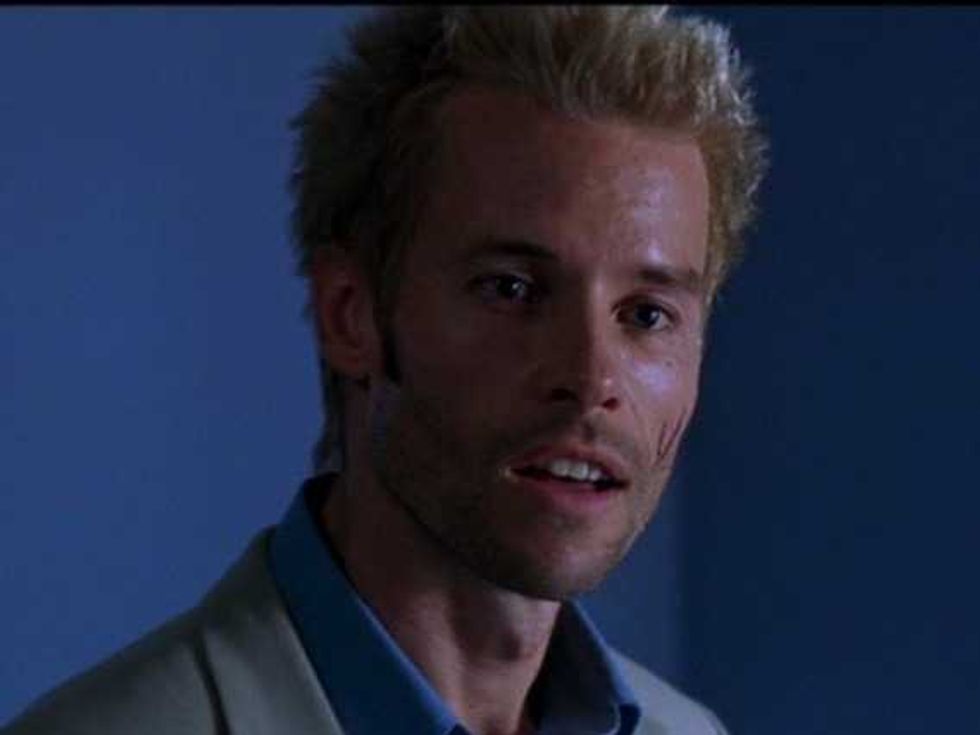

Someone has killed Leonard’s (Guy Pearce) wife, and he wants to take revenge. The only problem is that Leonard suffers from anterograde amnesia (short-term memory loss), and his only cues are some Polaroids and the clues he tattoos on himself whenever he gets them. He gets some help from Natalie (Carrie-Ann Moss) and Teddy (Joe Pantoliano), but again, he can’t remember who they are.
The movie is famous for its reverse narrative and dual-timeline structure, in the sense that the color sequences run backward and black-and-white sequences run forward. This creates a lot of disorientation for the audience, which actually mirrors Leonard’s dazed state of mind. You are constantly trying to figure out how exactly the current scene started, which, again, reflects Leonard’s frustrating medical condition. And all this mind-bending, simply through the magic of editing!
4. Eternal Sunshine of the Spotless Mind (2004)
Written by: Charlie Kaufman | Directed by: Michel Gondry


Joel (Jim Carrey) breaks up with his girlfriend, Clementine (Kate Winslet), and, to relieve the painful experience, undergoes a procedure to erase all memories of her. After the procedure begins, he realizes he still loves her too much and doesn’t want to forget her. So he starts to hide her memories in deep, unrelated corners of his mind.
The plot description gives a glimpse into what’s in store, doesn’t it? The actual movie exceeds the confusion. The movie is complicated because it constantly breaks down time and emotional causality. Keeping in sync with the collapse of Joel’s subconscious, scenes bleed into one another. You must keep tracking Joel’s nonlinear internal journey, because based on his fleeting thoughts, the settings also keep changing. Simply put, the movie turns the geography of the mind into a literal, shifting battlefield.
5. Synecdoche, New York (2008)
Written by: Charlie Kaufman | Directed by: Charlie Kaufman
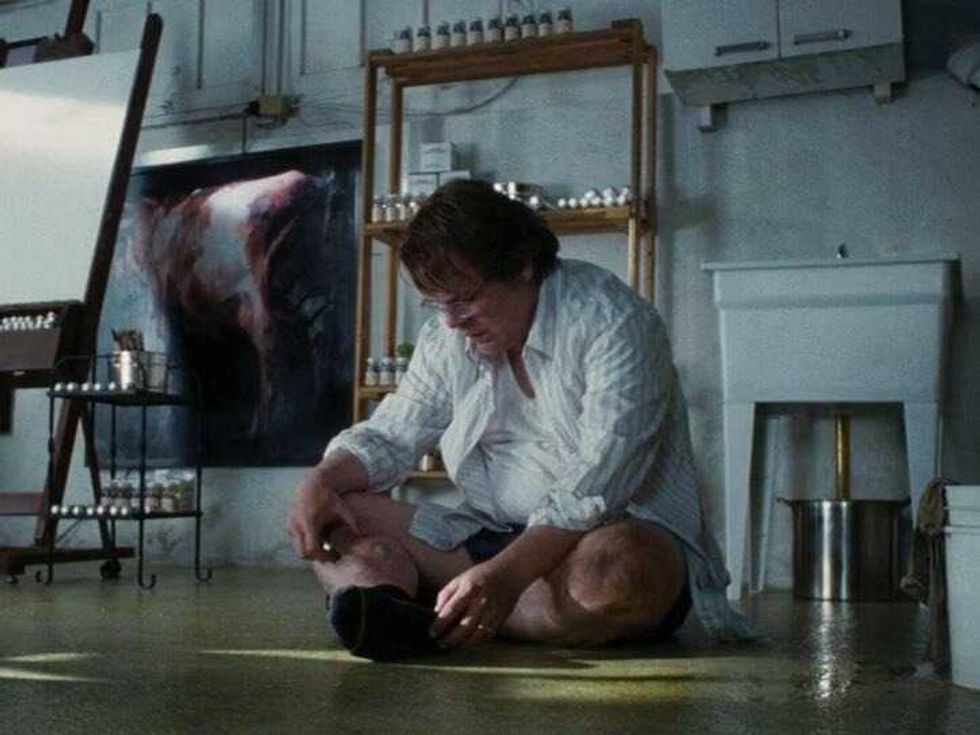

Caden Cotard (Philip Seymour Hoffman), a theater director, receives a MacArthur grant and decides to take on a massive, realistic play. Radically committed to realism in his play, he even casts actors to play himself. Meanwhile, his relationships start to deteriorate.
This is a story-within-a-story, which eventually swallows itself. After he builds a life-sized replica of New York inside a warehouse and spends all of his time in it, the line between reality and fiction (his life and the play) starts to fade. What’s more, the recursive loop becomes so dense that characters end up playing people (actors) who are playing them, and vice versa. Trust me, it’s a major, dizzying existential spiral.
6. Inception (2010)
Written by: Christopher Nolan | Directed by: Christopher Nolan
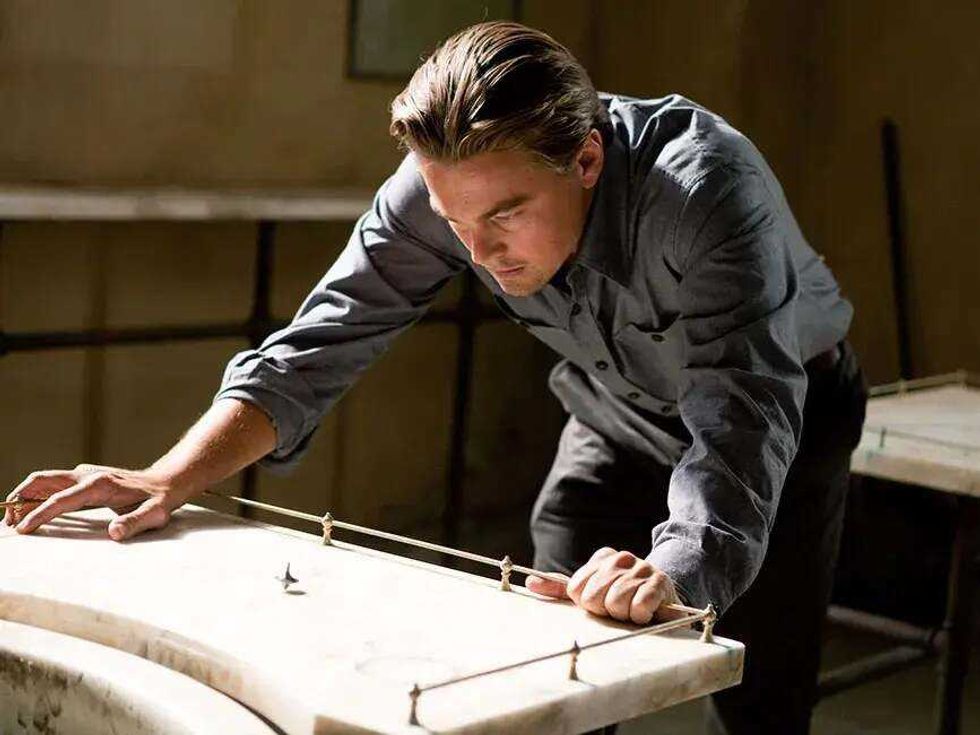

Dom Cobb (Leonardo DiCaprio) is a thief, but not your regular one; he steals secrets from dreams. He and his team also plant ideas in your head by invading your dreams. Meanwhile, his life is in turmoil. To win it back, he must perform an “inception” on a businessman, Robert Fischer (Cillian Murphy), by planting an idea.
There are story-within-a-story narratives, and then there is this, “dream within a dream.” What’s more, each dream has its own physics and time dilation. So, what you need is to be able to track four different plot threads happening at the same time, but at different speeds. It’s a mathematical approach to filmmaking. Here, each level’s logic must be perfectly maintained, or else the story will collapse.
7. Tenet (2020)
Written by: Christopher Nolan | Directed by: Christopher Nolan
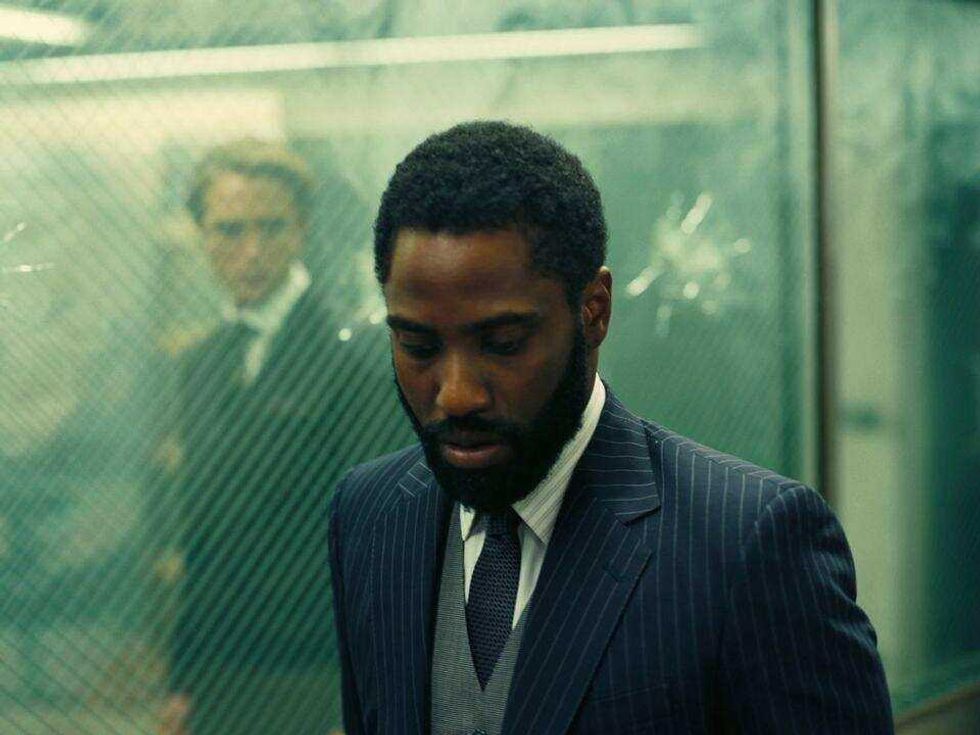

The protagonist (John David Washington) joins a secret organization to prevent World War III from happening. Aided by Neil (Robert Pattinson), he learns to manipulate “inverted” objects and people that can move backward through time, while everyone else is still moving forward.
The film is a legit riddle, and that’s mainly because of its “temporal pincer movements.” Meaning, you see the beginning and the end of a battle at the same time. Objects fall “up,” and characters fight their own future selves. The simultaneous forward and backward flow of cause and effect makes it perhaps the most mechanically dense film ever made.
8. Everything Everywhere All at Once (2022)
Written by: Daniel Kwan, Daniel Scheinert | Directed by: Daniel Kwan, Daniel Scheinert


Evelyn Wang (Michelle Yeoh), a Chinese immigrant and a laundromat owner, gets swept into a multiverse adventure. To stop a chaotic force, she must tap into her own alternate realities and learn the essential skills from them. All this while, she also has to deal with a husband who wants attention, her increasingly irritable father, a depressed daughter, and a particularly relentless and jaded IRS agent.
The verse-jumping in the film happens on the same plane as a game of rapid-fire. The film shuffles through dozens of realities in seconds. It essentially needs you to be able to process massive amounts of visual data in a short frame of time. If you think I am joking about this high-speed exercise in multitasking, imagine this: you will be tracking the emotional stakes while the screen flips between hot-dog fingers and sentient rocks. Go figure.
Source link
-

-

-

-

-


