

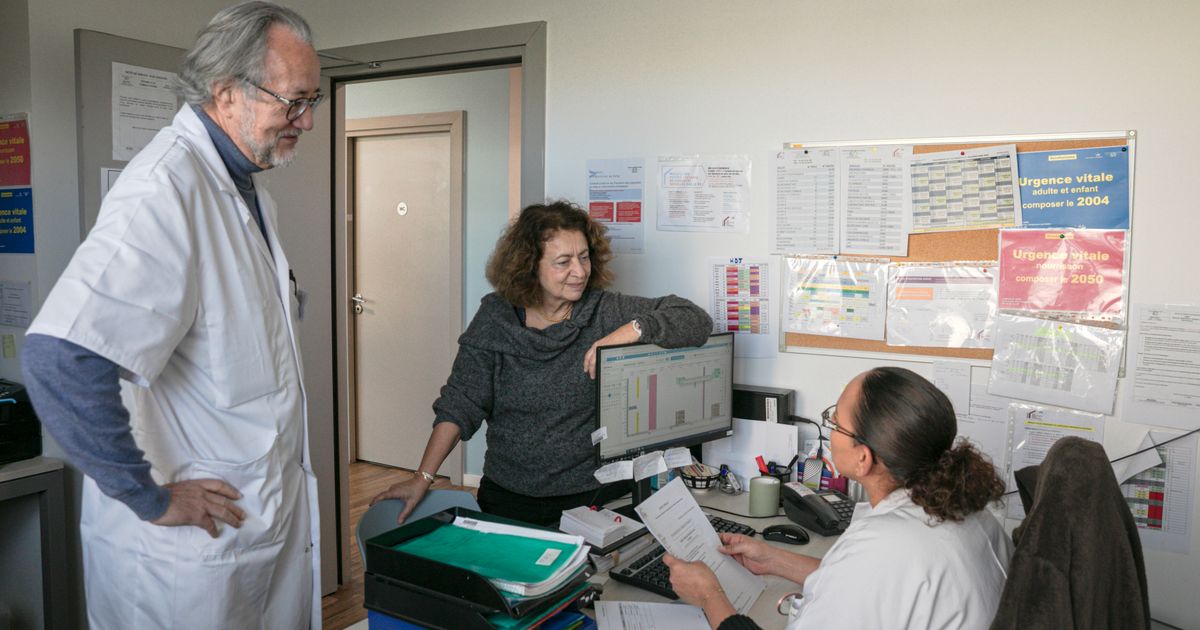
North Carolina is short thousands of nurses and doctors. It’s a problem that’s particularly pronounced in rural parts of the state, health care officials told state lawmakers Tuesday, as they discussed what could be done to solve it.
But at the same time, rural hospitals themselves face bigger problems due to shrinking populations and impending cuts to Medicaid, the government-run health care program that insures more than 3 million North Carolinians, disproportionately in rural areas.
The concerns over the possibility of rural hospital closures, staffing shortages and other issues were the key focus of the first of two hearings held at the state legislature Tuesday; one later in the day focused on Medicaid stability and state spending on autism therapies.
They come as state lawmakers seek to come to an accord over state spending in the short legislative session that is scheduled to begin this month. Gov. Josh Stein wants lawmakers to approve more than $300 million to fully fund Medicaid — which risks running out of money in the coming months — but lawmakers say the state would have more money if it did a better job of managing and protecting already-approved funds.
On Tuesday lawmakers grilled DHHS officials, as well as the chief executives of several health care companies, on what’s being done to keep costs low and prevent fraud in a particular type of autism therapy called ABA therapy.
In recent years health care companies have ramped up what they bill the government for those therapy sessions, through Medicaid, by hundreds of millions of dollars.
Lawmakers have previously said they suspect fraud is driving at least some of that, and they repeated those concerns Tuesday. “When it goes up almost 350% in a couple of years, somebody’s not watching the back door,” said Rep. Larry Potts, R-Davidson.
Sen. Benton Sawrey, R-Johnston, said he doesn’t believe the state’s Medicaid division was paying attention to those rising costs, or looking into potential fraud, until he and other lawmakers started raising concerns.
“That’s frustrating to me, that we are seeing this exponential growth in the service, and nobody seemed to be asking questions until we started doing so, during these oversight committees,” Sawrey said Tuesday while he was chairing a meeting of the Joint Legislative Oversight Committee on Medicaid.
Dev Sangvai, who serves as the head of the Department of Health and Human Services under Gov. Josh Stein, sought to assuage lawmakers’ concerns and assure them that the state is proactively seeking to stop fraud before it can happen, or to catch any that does happen.
“We have federal oversight, state audits, internal audits, county reviews, managed care plans and law enforcement all working together to ensure accountability at every level,” he said. “Our beneficiary eligibility accuracy is among the best in the nation … and on the provider side, we use rigorous screening, background checks, site visits” and other strategies.
He added: “We have strong systems in place, and we aim to strengthen them.”
Rural health concerns
During the earlier morning hearing of the Joint Legislative Oversight Committee on Health and Human Services, multiple presentations from state health officials, academics and health industry leaders focused on the struggles facing health care in rural parts of North Carolina.
Katherine Martin, the vice president of health affairs for the UNC System, told lawmakers that in any given year, only 1% to 3% of doctors who graduate from local medical schools end up practicing in rural parts of the state.
“The physician population that’s actually practicing in rural areas, it’s very low,” she said. She also told lawmakers the state is facing a nursing shortage that numbers in the thousands.
In an effort to boost those numbers, Martin said, the state is putting money toward hiring more nursing professors, creating new grants for rural residency programs for doctors, repaying medical school loans for doctors who agree to practice in rural areas and more.
Rep. Tim Reeder, R-Pitt, is one of the few doctors serving in the legislature. He said East Carolina University, where he works in emergency medicine, recently completed a rural residency training program for new doctors. It had six graduates, and five of them stayed local in eastern North Carolina.
“That is a testament [that] when you select and train people, they put roots down,” he said. “And so my real question is: What more can we, or should we, be doing and thinking about as we go forward? Not just for medicine and nursing, but for all the health professions that we desperately need in new areas.”
Federal cuts, grants
Sangvai, who presented to both committees Tuesday, kicked off the earlier hearing with a presentation on the Rural Health Transformation Project.
North Carolina received $213 million from that project to help bolster rural health access and care. Sangvai said DHHS will oversee the work, but that it will be largely decentralized with local leaders having wide latitude to decide what they need. Some areas may need more attention on mental health care, while others may need more OBGYNs or primary care doctors.
“As you know, every rural community in North Carolina is different,” Sangvai told lawmakers. “What works in the mountains is not the same for folks on the coast. At the same time, NC DHHS will be working to make sure efforts are not duplicated or redundant.”
The federal program was created as a way to funnel money to rural health care providers, in response to the massive cuts to Medicaid that President Donald Trump and fellow Republicans in Congress passed into law last year. Rural people disproportionately rely on Medicaid, which provides health care for low-income families.
The cuts are expected to drain billions of dollars out of North Carolina’s health care economy, according to hospital industry leaders. The $213 million from the new project would cover a small portion of those expected losses.
Many rural hospitals in North Carolina and nationwide have already shut down in recent years, and many that remain open have cut back on services or staffing. Stein has warned that Trump’s new cuts to Medicaid could lead to additional hospital closures around the state.
Other than U.S. Sen. Thom Tillis — who opposed Trump’s plan and then announced he wouldn’t seek reelection this year — all of North Carolina’s Republican members of Congress backed the plan, saying the Medicaid cuts were needed to pay for new tax cuts.
Many rural hospitals in North Carolina and nationwide have already shut down in recent years, and many that remain open have cut back on services or staffing.
Amy Graham, a strategy executive at FirstHealth of the Carolinas — which operates hospitals in rural areas including Chatham, Lee, Moore and Hoke counties — told lawmakers Tuesday the large majority of patients they serve are on Medicaid or Medicare. The risk of more rural hospitals shutting down, she said, would hurt those communities not just by removing access to care but also through the loss of hundreds of jobs.
“It’s an economic, public health and community sustainability issue,” she said. “Hospitals are often the largest employers in rural counties. And when rural healthcare weakens, communities experience the loss of access. You have longer travel times to receive care, economic decline because of the loss of jobs, and worse health outcomes.”
news/nccapitol/rural-health-care-hospital-north-carolina-doctor-nurse-shortage-march-2026/”>Source link
