
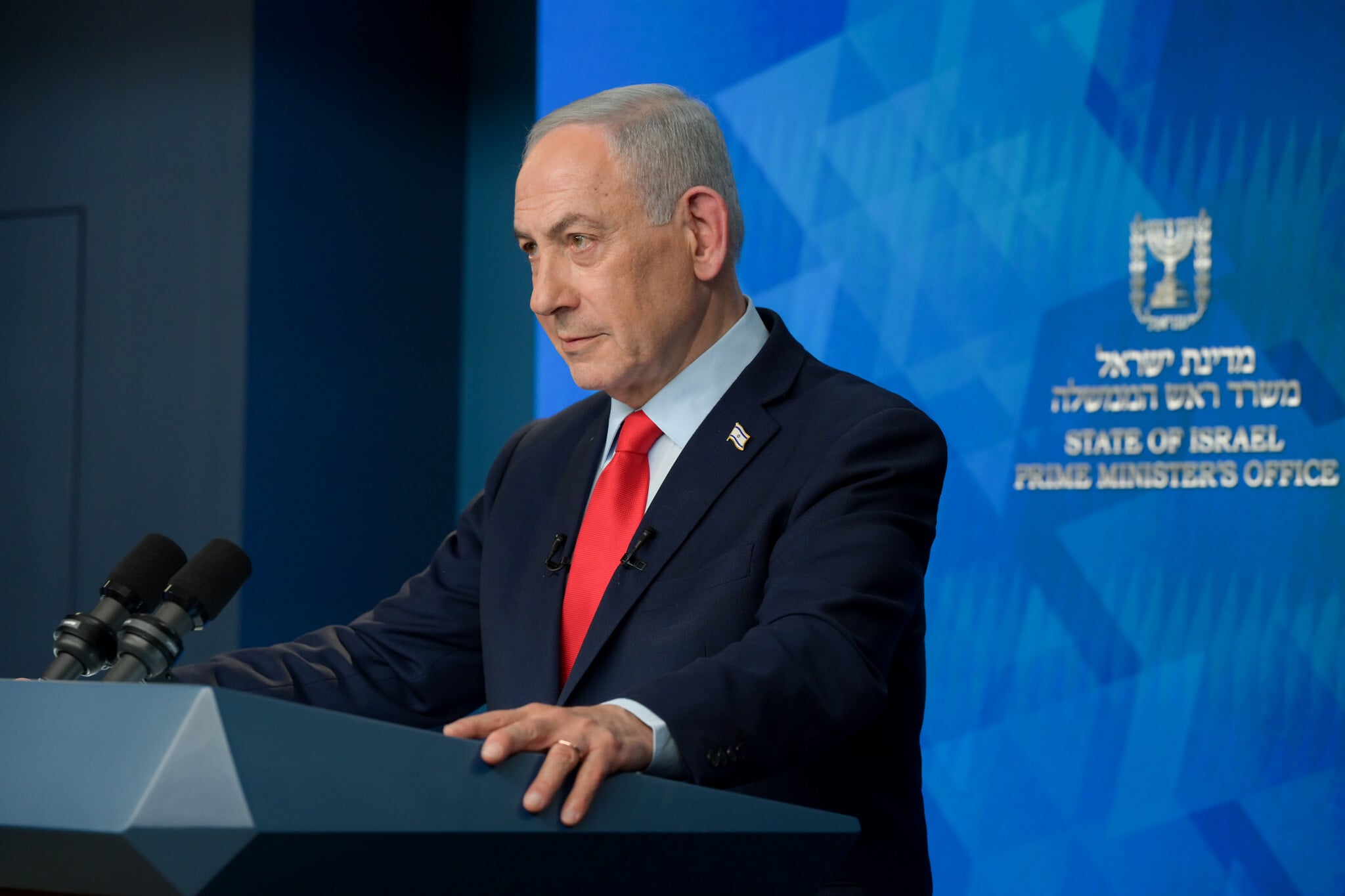
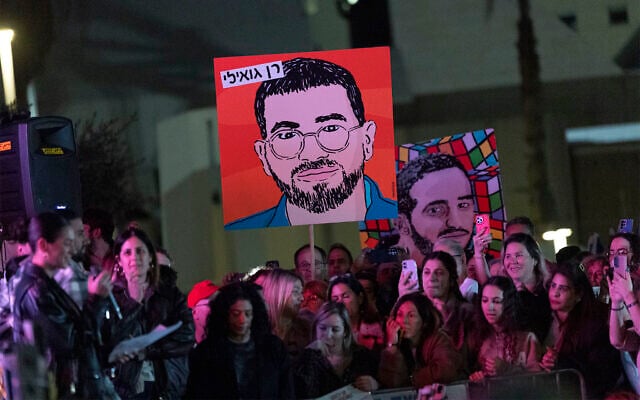
Prime Minister Benjamin Netanyahu repeated his assertion that Israel will not allow Gaza’s reconstruction before terror groups in the Strip disarm, and said Israel would maintain security control over Gaza and the West Bank, in a wide-ranging press conference called Tuesday evening following the return to Israel of the final slain hostage, Ran Gvili.
“Now we are focusing on completing the two remaining missions: dismantling Hamas’s weapons and demilitarizing Gaza of arms and tunnels,” the premier said.
He also claimed vindication in having returned all of the hostages held in the Gaza Strip. He reiterated a warning that Israel will respond with force if attacked by Iran.
He discouraged Israel from holding early elections, in the face of a crisis that threatens to collapse his coalition. He slammed the criminal investigations probing the conduct of his close aides. And, as in the past, he avoided acknowledging direct responsibility for the failures surrounding the Hamas invasion and massacre on October 7, 2023.
In bombshell comments, he also blamed the deaths of Israeli soldiers in Gaza on limitations on arms from the administration of former US president Joe Biden. And he insinuated that Saudi Arabia should not align itself with Qatar and Turkey if it hopes to normalize relations with Israel.
Netanyahu’s presser occurred at a time of simultaneous relief and tension for Israel. The country’s long-running hostage crisis is over now that Gvili’s body has been returned from Gaza. But it is on tenterhooks as a US strike on Iran — and Iranian retaliation against Israel — remains possible.
The return of Gvili’s body marks the end of the first phase of the ceasefire in Gaza. US President Donald Trump inaugurated the second phase last week, which is meant to see longer-term governance frameworks in the Strip as well as its reconstruction.
But Netanyahu warned, as he did Monday, that the next mission is to disarm Hamas, before moving on to rebuilding Gaza. Trump’s plan for Gaza mandates the terror group’s disarmament but there is widespread skepticism in Israel that Hamas will agree to lay down its weapons.
Further Israeli troop withdrawals from Gaza are tied to the disarmament of Hamas and the demilitarization of the enclave under the plan. Netanyahu asserted that Israel’s political and security interests will be met and that reconstruction can only happen after demilitarization.
“As I agreed with President Trump… there are only two possibilities: either this will be done the easy way, or it will be done the hard way, but in any case, it will happen,” Netanyahu said of disarmament. “I am already hearing the statements that we will allow Gaza’s reconstruction before demilitarization. That will not happen.”
Netanyahu confirmed that the Rafah Border Crossing between Gaza and Egypt “will be open in both directions” when it finally resumes operations soon. He said he doesn’t know the exact number of pedestrians who will be allowed into Gaza every day, but estimated it at “50 people plus family members coming in.”
“We are not going to prevent anyone from leaving,” he added.
Netanyahu added that “there will be no open access — it is not going to be opened for goods. … People go out, people come in — but they are checked, thoroughly checked [by Israel].”
He said the opening of the crossing was agreed to by Israel in Trump’s 20-point Gaza plan, but was conditional on Hamas meeting its obligations in the first phase of the plan, which has now been achieved with return of Gvili. And he asserted that Israel will continue to maintain overall security control at Rafah.
PM: Israeli security control to extend ‘from Jordan River to sea’
Netanyahu also emphasized that a Palestinian state in Gaza “will not happen,” and touted his efforts to “repeatedly” stop the establishment of a one.
“Israel will maintain security control over the entire area from the Jordan River to the sea, and that applies to the Gaza Strip as well,” he said.
He also repeated his assertion that Qatar and Turkey would not have boots on the ground in Gaza, following those countries getting seats on a body meant to oversee Gaza’s postwar governance.
“I am hearing that we will bring Turkish soldiers and Qatari soldiers into Gaza. That too will not happen,” he added.
He said that neither Hamas nor the West Bank-based Palestinian Authority are happy with the makeup of the Palestinian technocratic committee tasked with the day-to-day governance of Gaza.

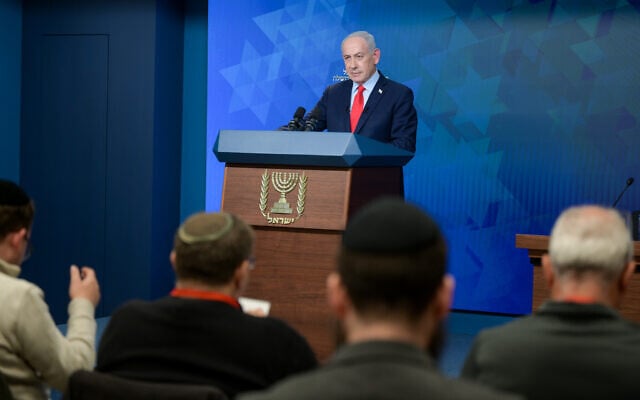
While charging it was difficult to find individuals not tied to either the terror group or the PA to manage Gaza, he stressed that Israel is vetting officials to make sure those from Hamas’s military wing aren’t included.
“There’s a simple truth in Gaza,” said Netanyahu. “They either worked for Hamas, or they worked for the PA. If you try to look for a water engineer who wasn’t in either, you won’t find one.”
He added, “The important thing is, who will pay their salaries, and the most important thing is to take apart Hamas and not let the PA enter.”
Netanyahu: I withstood pressures to bring hostages home
Netanyahu insisted that he had believed all the hostages could be returned home from Gaza, “even in the face of pressures from both inside and out,” and thanked the IDF, the Shin Bet, the Israel Police, Trump, and members of his government for their assistance.
“I believed that through the combination of military pressure and diplomatic pressure we could — and would — bring all of our hostages home,” he said.
Netanyahu told the press he is in discussions about turning the recommendations of the 2008 Shamgar Committee — which recommended drastically limiting the price Israel pays for hostages — into law, but said it is a “very complex question.”
His government needed to decide what limitations they want to place on Israel for future hostage deals, he continued.
“My immediate instinct is to say yes, but I want to think about its various aspects, in a very realistic and responsible way,” he said.
Israel released some 4,000 jailed Palestinian terrorists, security prisoners, Gazan terror suspects detained during the war, along with the bodies of Palestinian terrorists, in exchange for the Israeli hostages returned by Hamas. In 2011, a Netanyahu-led government freed 1,027 Palestinian security prisoners, including Yahya Sinwar, the architect of the October 7, 2023, Hamas invasion, in exchange for kidnapped IDF soldier Gilad Shalit.
Reacting to the press conference, Opposition Leader Yair Lapid slammed Netanyahu for “taking credit” for the return of the last of 251 hostages who were taken to Gaza in the Hamas-led attack on October 7, 2023.
“Anyone who wants to take credit for the hostages who returned must also take responsibility for the dead, the murdered, and for the greatest disaster to befall the Jewish people since the Holocaust,” Lapid added, in reference to the Hamas-led attack.
PM warns Iran against making ‘grave mistake’ of hitting Israel
In the shadow of a potential US strike on Iran, Netanyahu repeated the warning he issued to Tehran last week that if it attacks Israel, Jerusalem will respond harshly. Iran has threatened to attack Israel if struck by the US.
“Now, it is true — the Iranian axis is trying to recover — but we will not allow it to do so. If Iran makes the grave mistake of attacking Israel, we will respond with a force Iran has never seen before,” he said.
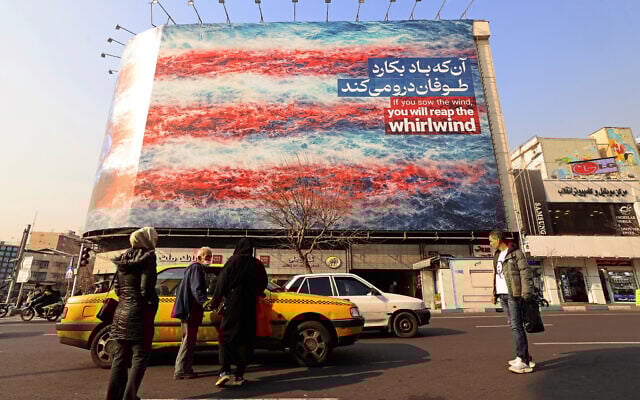
The two countries fought a 12-day air war in June 2025 that saw the US strike Iran’s nuclear program. Netanyahu declined to comment directly on reports that the US is in indirect contact with Iran through Arab mediators about finding a diplomatic solution to the program.
“The US is in constant contact with us,” he said. “I don’t want to determine for President Trump what he does or doesn’t do. Whether he speaks or doesn’t speak. Those are his decisions.”
“We are fully updated,” said the prime minister.
PM: Urich ‘did not speak a single word to me about Qatar’
Netanyahu asserted his innocence while addressing suspicions surrounding his adviser Jonatan Urich in the so-called Qatargate affair.
Asked why he has not disavowed Urich in light of accusations that he took Qatari money to spearhead a public relations campaign for Doha while working in the Prime Minister’s Office, Netanyahu claimed that “Jonatan Urich did not speak a single word to me about Qatar — not even a syllable.”
He added, “But I spoke about Qatar. I criticized Qatar — not once and not twice — during the war. I attacked it verbally because I had harsh criticism.”
“And, you know, I actually attacked in Qatari territory,” he added, referring to the failed strike on Hamas leaders in Doha in September.
“I don’t know what happened with Jonatan Urich, [but] I do know what the judge said,” the premier continued, declaring that Judge Menachem Mizrahi of the Rishon Lezion Magistrate’s Court — who has repeatedly ruled in favor of the premier’s aides, only to be overturned by a higher court – “said there are flying camels here. There is nothing here.”
While Mizrahi did recently rule that there was “no evidentiary” justification for continued restrictive conditions on Urich, he said so in the context of the Bild-leaked documents investigation, not the Qatargate investigation. And Lod-District Court Judge Yaakov Spasser overturned Mizrahi’s ruling on appeal, extended the restrictions on Urich, and said there was “reasonable suspicion, at a substantive level, that justifies the request.”
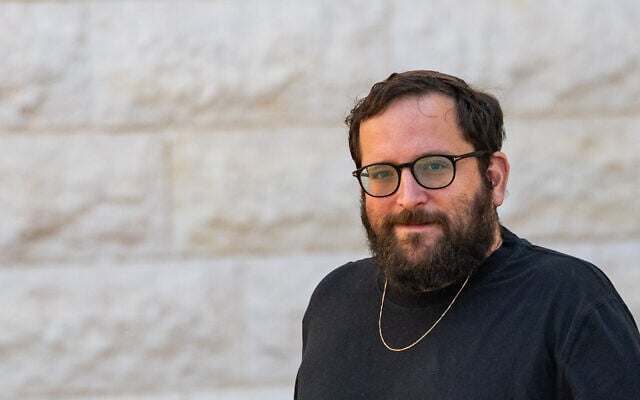
Netanyahu also decried suspicions of illegal activity surrounding his chief of staff, Tzachi Braverman, as “one gigantic fake,” in response to a question about the investigation of wrongdoing in an alleged meeting between Braverman and Netanyahu’s former spokesman, Eli Feldstein.
He charged that the investigation is part of a broader trend, where “time after time after time they did this to senior figures in the state. And in the end it came out completely baseless,” apparently referring to the judicial system. Netanyahu, who is himself on trial for corruption charges, decried the proceedings as a “terrible witchhunt.”
Premier urges against early elections
Asked whether he believes the state budget, and the bill exempting yeshiva students from the draft, will pass in their second and third readings, and whether this year’s election will be held on schedule, Netanyahu replied: “That is both my aspiration and my hope. And I think everyone knows what a sensitive and unusual situation we are in. The last thing Israel needs in this situation is an election.”
By law, an election must be held by the end of October. If the budget fails to pass or the Knesset disperses, an election will be held earlier. Parties in Netanyahu’s government have recently threatened to bring down the government over disagreements surrounding the budget and the draft exemption bill.
Alluding to the ultra-Orthodox parties, he claimed those from his bloc who might consider partnering with his opponents, led by former prime ministers Naftali Bennett and Lapid, would in effect be joining forces with the Muslim Brotherhood and the Islamic Movement, referencing the Ra’am party led by Mansour Abbas, a partner in the 2021-22 Bennett-Lapid coalition.
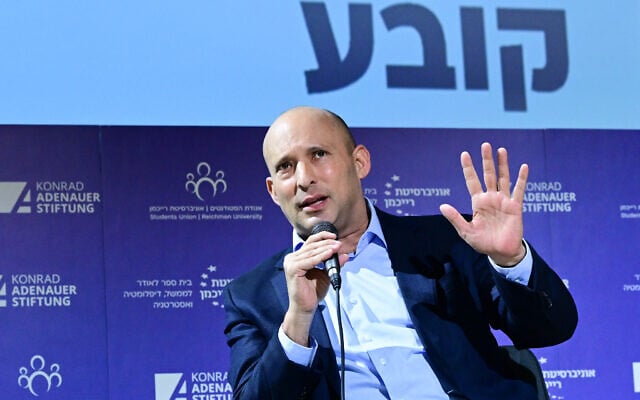
In response, Bennett described the prime minister’s comments as a “panicked attack.”
“Netanyahu chooses to continue to split and divide. A good leader glorifies his people, not just himself,” said Bennett, the premier’s main rival in polls.
Asked about taking responsibility for the October 7, 2023, failures, Netanyahu said “everyone will bear their responsibility” once “the truth” is credibly established.
He said there would be a “real commission of inquiry” to assign responsibility to Israel’s leaders over the Hamas-led October 7, 2023, invasion and massacre.“Everyone will bear their share of responsibility. And we will define that after there is a real commission of inquiry that will reveal to you – to everyone – the truth of what really happened. What responsibility rests on each of us,” he says in response to a question asking when he would accept responsibility for October 7. “I will be the first to appear before [the commission]. And then you can ask me that question.”
Rather than a powerhouse state commission of inquiry, which a majority of Israelis have consistently told pollsters they believe is required, the prime minister again advanced his preferred inquiry panel, appointed by government and opposition, citing the US inquiry into the 9/11 terrorist attacks as a precedent. The opposition has dismissed the idea, but the coalition is nonetheless advancing legislation to that effect.
-

-
-
-

-


