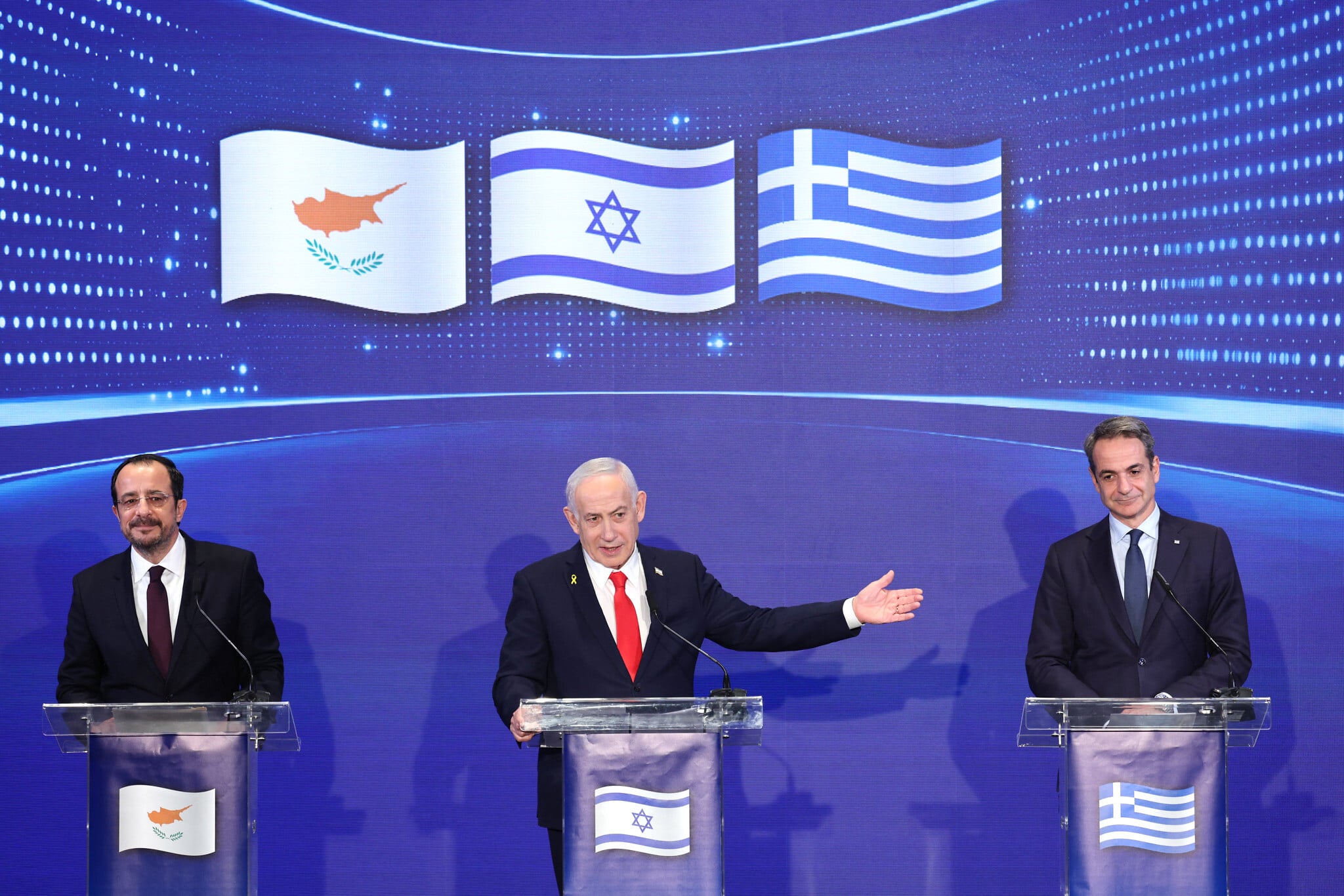
The leaders of Turkey’s rival countries in the eastern Mediterranean convened in Jerusalem on Monday, with Prime Minister Benjamin Netanyahu using the opportunity to send a message of defiance to one of Jerusalem’s leading critics on the international stage.
Standing alongside Greek Prime Minister Kyriakos Mitsotakis and Cypriot President Nikos Christodoulides, Netanyahu said in a thinly veiled reference to Turkey that “those who fantasize they can reestablish their empires and their dominion over our lands” should “forget it.”
The Ottoman Empire ruled much of the Middle East and parts of Europe for more than 500 years before collapsing in World War I and turning into the modern Turkish state.
“It is true that all of our countries were conquered in the past by a succession of empires,” said Netanyahu.
“But through courage and sacrifice, we achieved our independence in modern times,” he continued. “To those who fantasize they can reestablish their empires and their dominion over our lands, I say: Forget it. It’s not going to happen. Don’t even think about it.”
“We are committed and able to defend ourselves and our cooperation further enhances that capability,” Netanyahu said.
Relations between Israel and Turkey — formerly close allies — collapsed during the war that began with Hamas’s invasion of Israel on October 7, 2023, as Turkish President Recep Tayyip Erdogan praised the Hamas terror group and accused Israel of committing genocide.
Turkey suspended its trade with Israel, said it closed its airspace to Israeli planes and issued arrest warrants for 37 Israeli officials, including Netanyahu.
A close ally of US President Donald Trump, Erdogan has been angling for inclusion in a US-backed international peacekeeping force for Gaza, but Israel has sought to block the idea.
Greece’s long-troubled relations with its much larger eastern neighbor remain strained over historical grievances, sea boundaries, energy resources and the airspace over the eastern Mediterranean. The northern part of Cyprus, a majority-Greek island, has been occupied by Turkey since 1974.

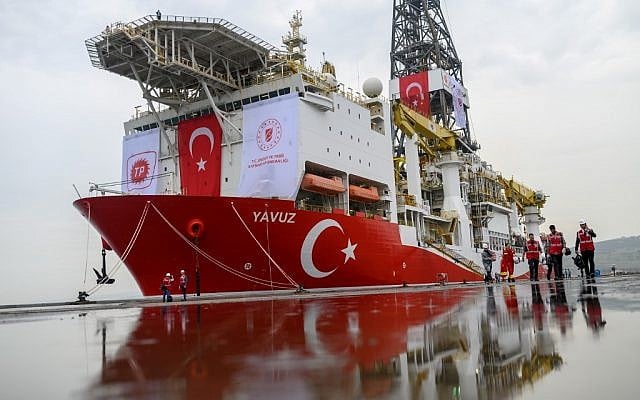
Turkey has used its control over part of Cyprus to drill for natural gas in Cypriot waters, and has alarmed regional states by pursuing aggressive claims to gas fields across the eastern Mediterranean.
Monday’s trilateral summit in Jerusalem, the tenth such gathering between the countries, followed reports that Greece, Cyprus and Israel are exploring the creation of a rapid-response military force in the eastern Mediterranean, in light of growing concern in Athens over Turkey’s military posture.
A joint declaration
The three leaders signed a joint declaration after their summit, in which they agreed to “reinforce our ongoing trilateral cooperation on security, defense and military matters.”
The declaration also underscored “the importance of maritime security and pledged to deepen collaboration in safeguarding sea lanes and critical infrastructure against emerging threats.”
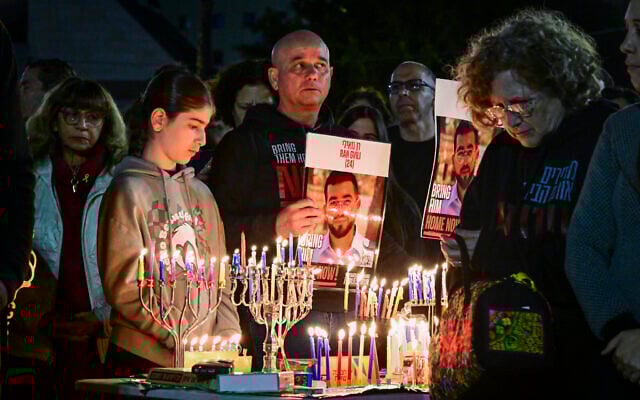
The three leaders expressed support for Trump’s 20-point peace plan for Gaza, and called for the immediate return of the remaining slain Israeli hostage Master Sgt. Ran Gvili, and for the disarmament of Hamas.
They also welcomed in the joint statement recent direct dialogue between Israel and Lebanon, another eastern Mediterranean state.
“We support the sovereignty, territorial integrity and independence of Lebanon,” the three leaders wrote, “and the importance of ensuring the monopoly of the use of force under legitimate state institutions, in accordance with the decision of the Lebanese Government, UN Security Council resolutions, and the November 2024 understandings agreed to by Israel and Lebanon through US mediation, which could open the path towards normalization between Lebanon and Israel.”
Israeli and Lebanese officials met directly in Lebanon for the second time on Friday, as the two enemy states look to maintain the year-old ceasefire in the war with Hezbollah, amid fears that conflict with the Iran-backed terror group could soon erupt again.
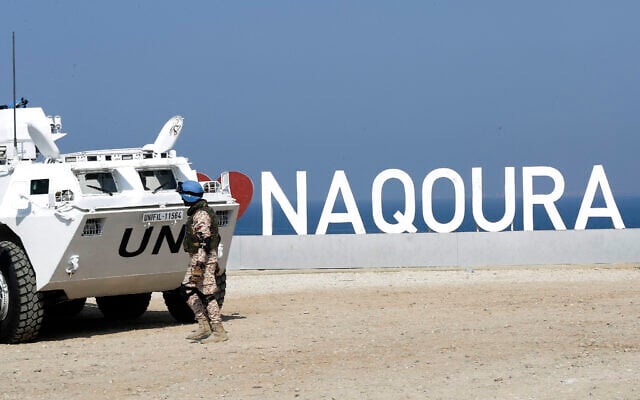
The three countries in their statements pledged to work together on connecting electric grids and natural gas development “based on international law, including the law of the sea and the respect of all states to exercise their rights in their respective EEZ/Continental Shelf,” another reference to Turkey’s gas claims.
While recalling the inherent and deep historical bonds of the Jewish people to its historical homeland,” the statement included a commitment “to preserving the Status Quo at the Holy Sites of Jerusalem and stress our strong interest in upholding the presence and heritage of the Christian Churches.”
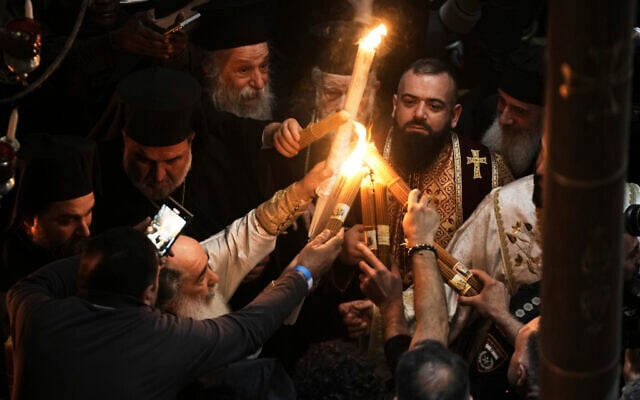
Greece, as the backer of the Greek Orthodox church, keeps a close eye on tensions between Christian sects at Jerusalem holy sites, and on Israel’s policies toward clergy and local Christian communities.
Iran warning
Ahead of a trip to the US to meet Trump, Netanyahu took the opportunity at the joint press conference to confirm reports that Israel is aware Iran has been conducting “exercises” recently, adding that Tehran’s nuclear activities will be discussed with Trump.

“We are following this and doing all the necessary preparations,” Netanyahu said.
“I want to convey this clearly to Iran: Any action against Israel will be met with a very severe response.”
Israel reportedly warned the Trump administration that Iran’s Islamic Revolutionary Guard Corps may be using an ongoing military exercise focusing on missiles as cover to launch an attack on Israel, amid fears that Jerusalem and Tehran are readying for another confrontation.
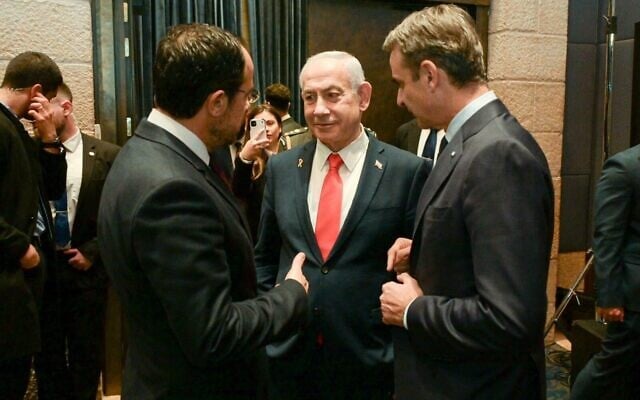
Ahead of the trilateral meeting, Netanyahu met separately with Mitsotakis and with Christodoulides, first privately and then in expanded meetings with officials from both sides, the PMO said.
Foreign Minister Gideon Sa’ar also held diplomatic meetings with Greek Foreign Minister Giorgos Gerapetritis and Cypriot Foreign Minister Constantinos Kombos before the meetings chaired by Netanyahu, Sa’ar’s office said, adding that the ministers will also hold a trilateral meeting this evening.

Separately on Monday, President Isaac Herzog met with Christodoulides at the President’s Residence, writing on X that they “discussed how to deepen our cooperation, including through the trilateral alliance between Israel, Cyprus, and Greece, and the importance of the Israel-Egypt gas export deal” that Netanyahu announced last week.
Herzog and Mitsotakis visited the house of Greek citizen Jonas Chrosis, a 26-year-old architecture student who was murdered by terrorists in an attack in Jaffa late last year, along with six other victims. Hamas later claimed responsibility for the murders.
“Ionas’s assassination was a tragic event which reminds us of the necessity to fight terrorism in all its forms,” Mitsotakis said in a statement from Herzog’s office.
-

-

-
-
-