
Refresh
That appears to be it
A strange recap is playing now with robots and an animated Jensen sitting around a campfire playing a country song about the keynote.
The song is probably AI-generated.
Robotic AI models
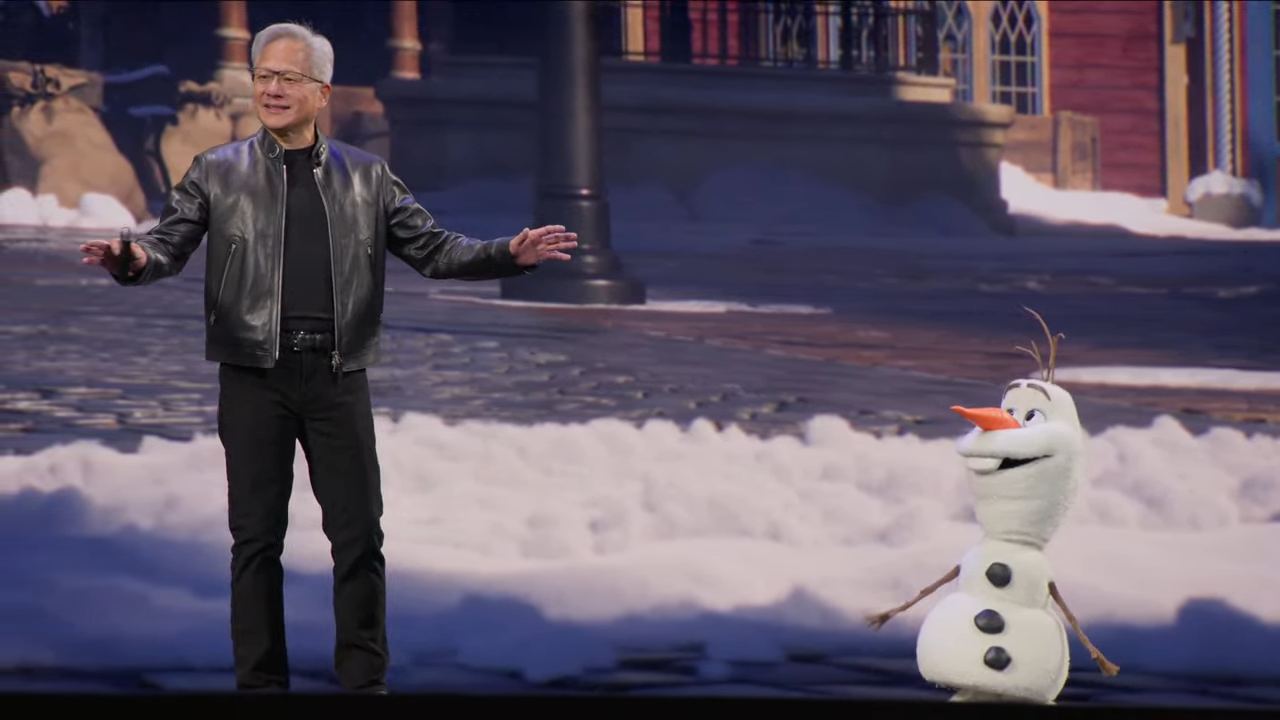

Nvidia is promoting its physical AI models for robotics including Groot, Kamino and Isaac labs.
The big reveal is how Disney uses the platforms for its characters in animation and imagineering. With the reveal of an Olaf robot from the movie Frozen.
Self-driving cars
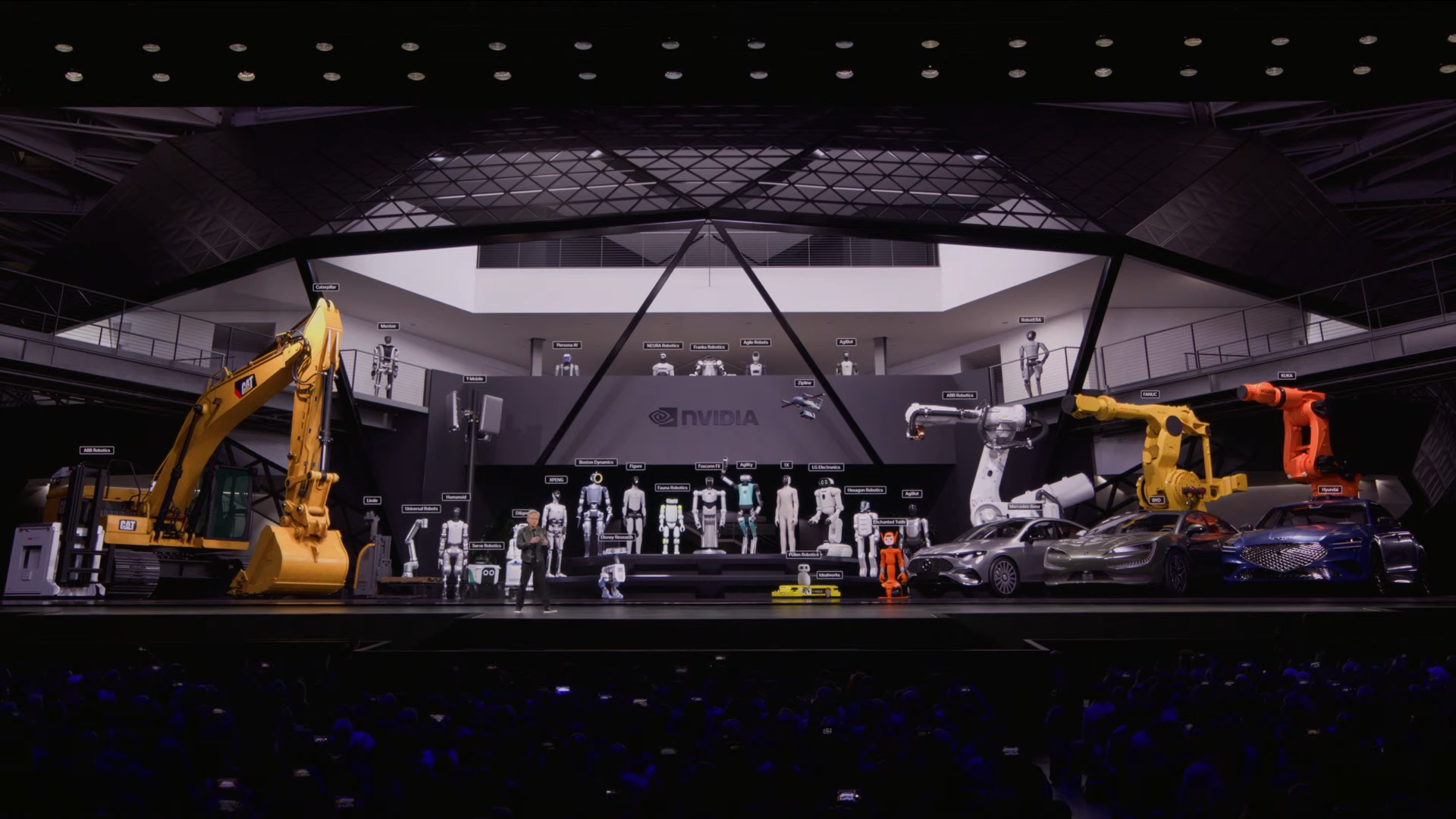

Speaking of Voltron, Nvidia is partnering with car manufacturers like Nissan, BYD, and more to add them to Nvidia’s Robotaxi platform.
Plus, other “physical AI models” that are being deployed in robots from T-Mobile, Caterpillar, and others.
Nemotron Coalition
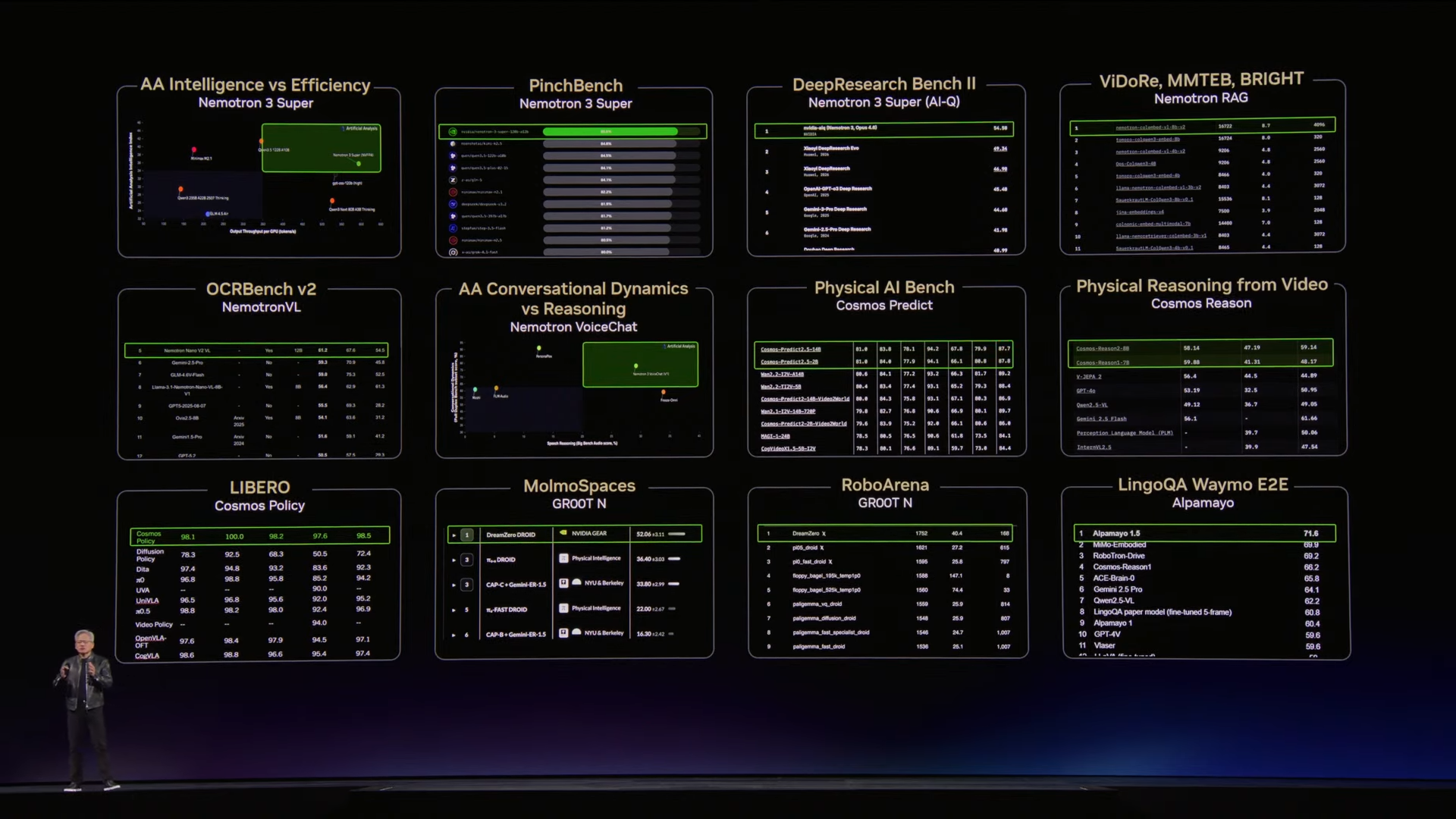
On a practical level, this is a coalition to create AI models across the globe from enterprise to sovereign agents.
The coalition is made up of companies like Mistral, Perplexity, and Cursor. Several companies like Adobe and IBM are integrating earlier versions of Nemotron.
The name makes it sounds like they’re trying to build Voltron.
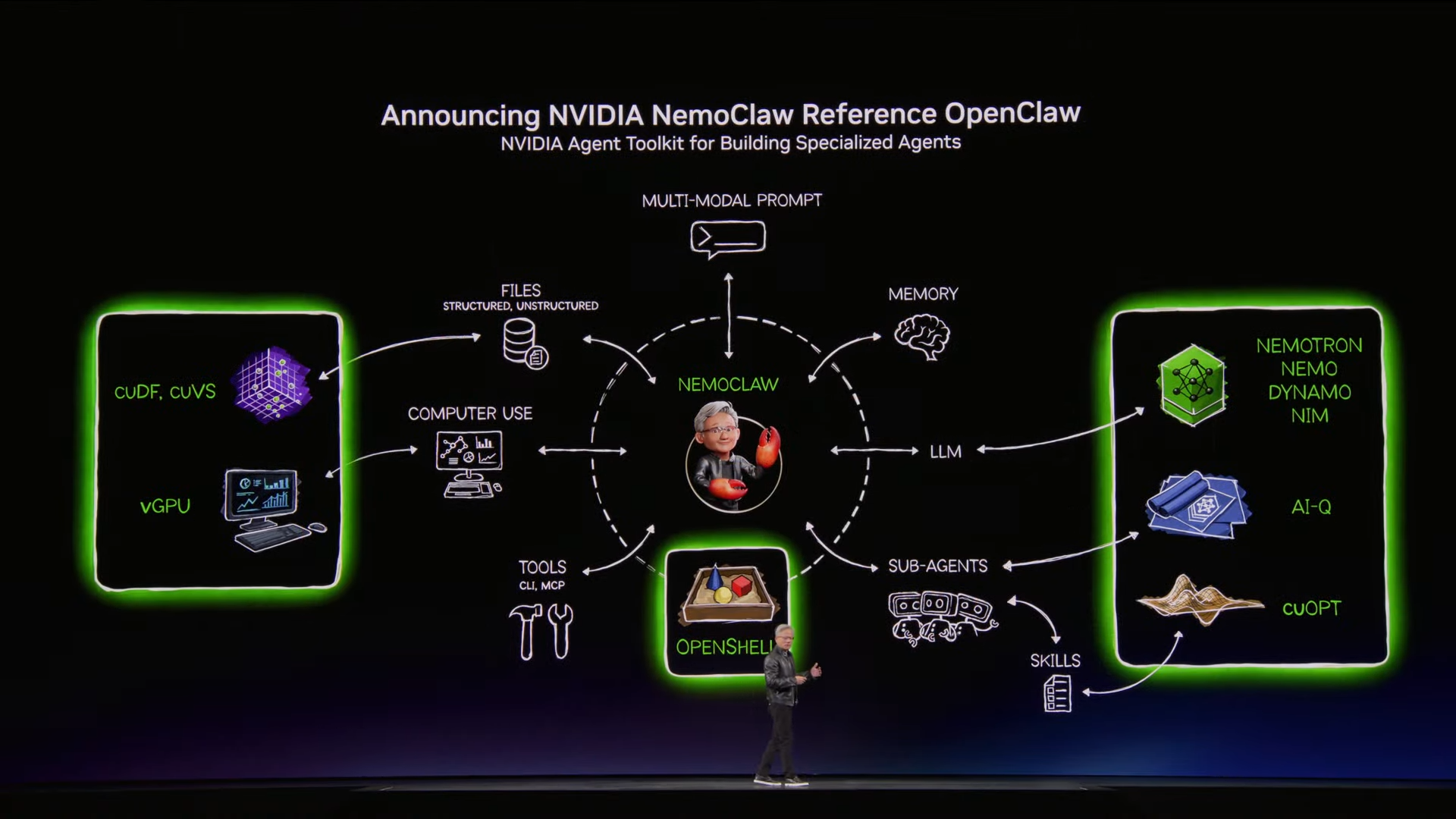
Nvidia makes OpenClaw more secure for enterprise. It’s not clear how that would actually reflect for customers. It mostly makes it safer for businesses to use.
Through OpenClaw, Nvidia is making open models for specialized AI models including Groot, Earth 2, deep learning and more.
They’re calling it NemoClaw.
“The implication is incredible”
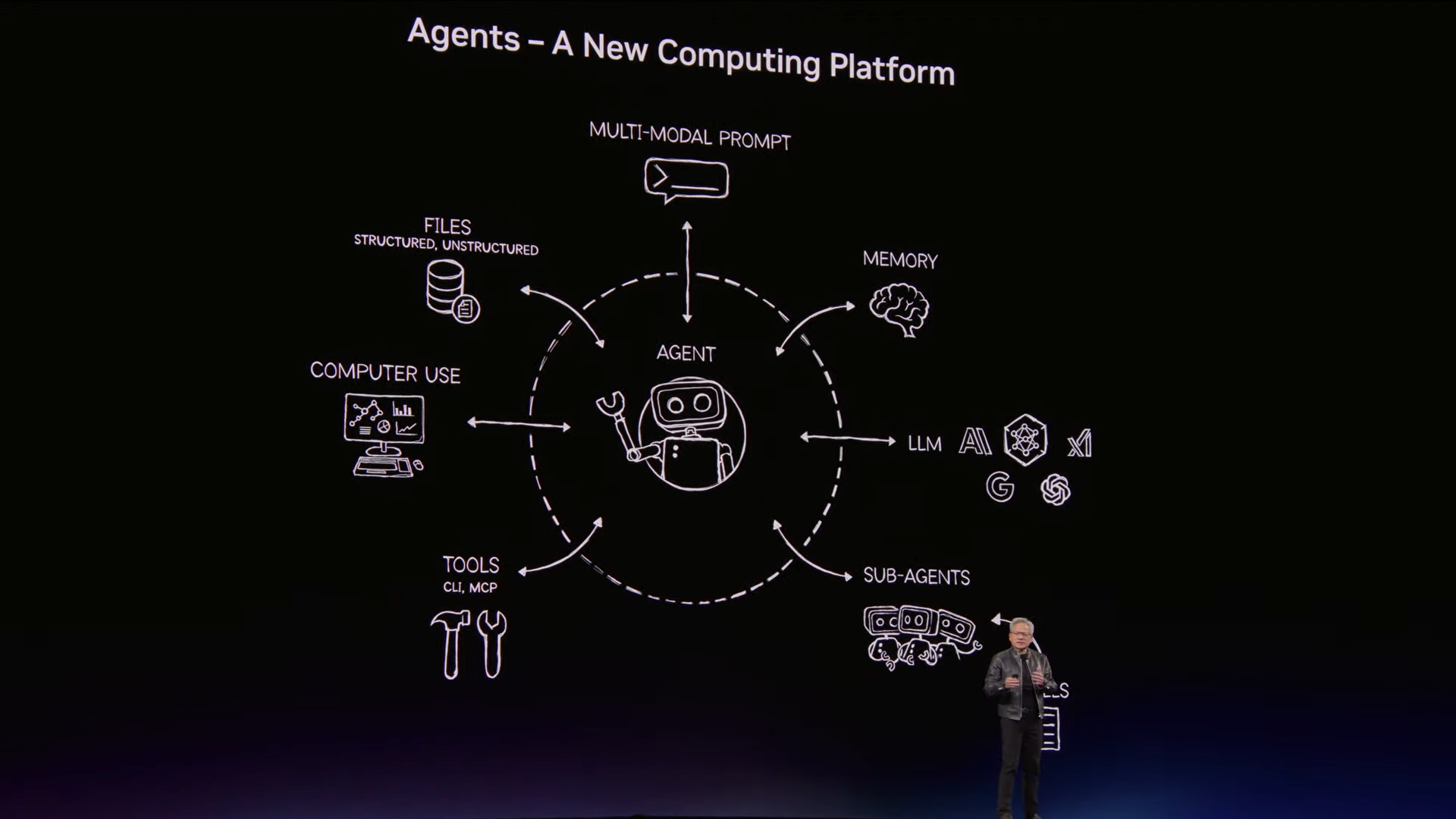
Every company in the world needs to have an OpenClaw strategy, Huang insists. Similar to a Linux focus or an HTTP/HTML focus.
OpenClaw is shows the future of personal AI agents, he says. Post-OpenClaw will turn IT from SaaS into GaaS with AI acting as service.
Nvidia and OpenClaw partnership
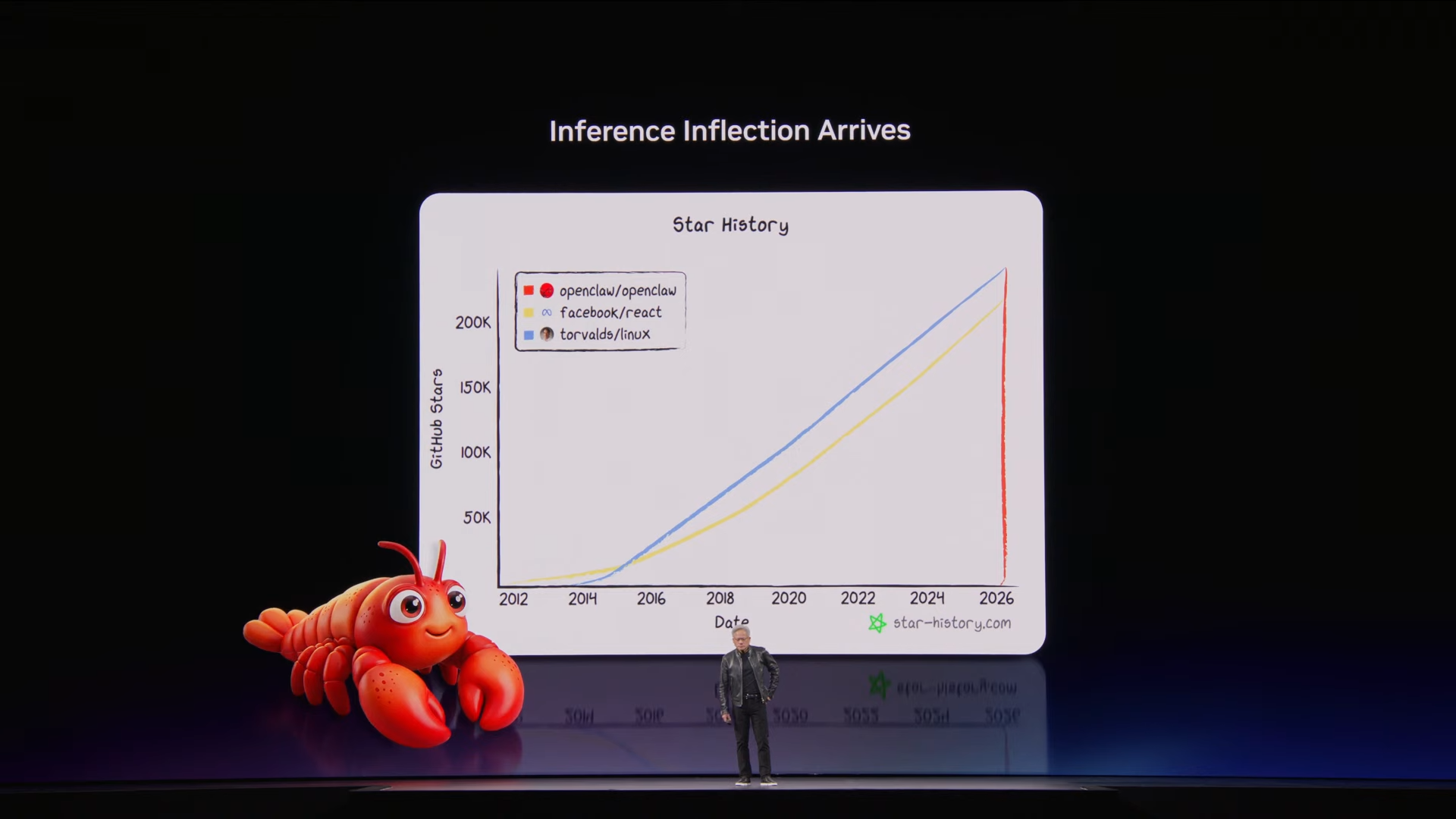
OpenClaw has taken the AI world by storm in the last few weeks. And now, the developer has entered a partnership with Nvidia.
Huang calls it an operating system. “It opensourced the operating system of agentic computers.”
Nvidia going to space?
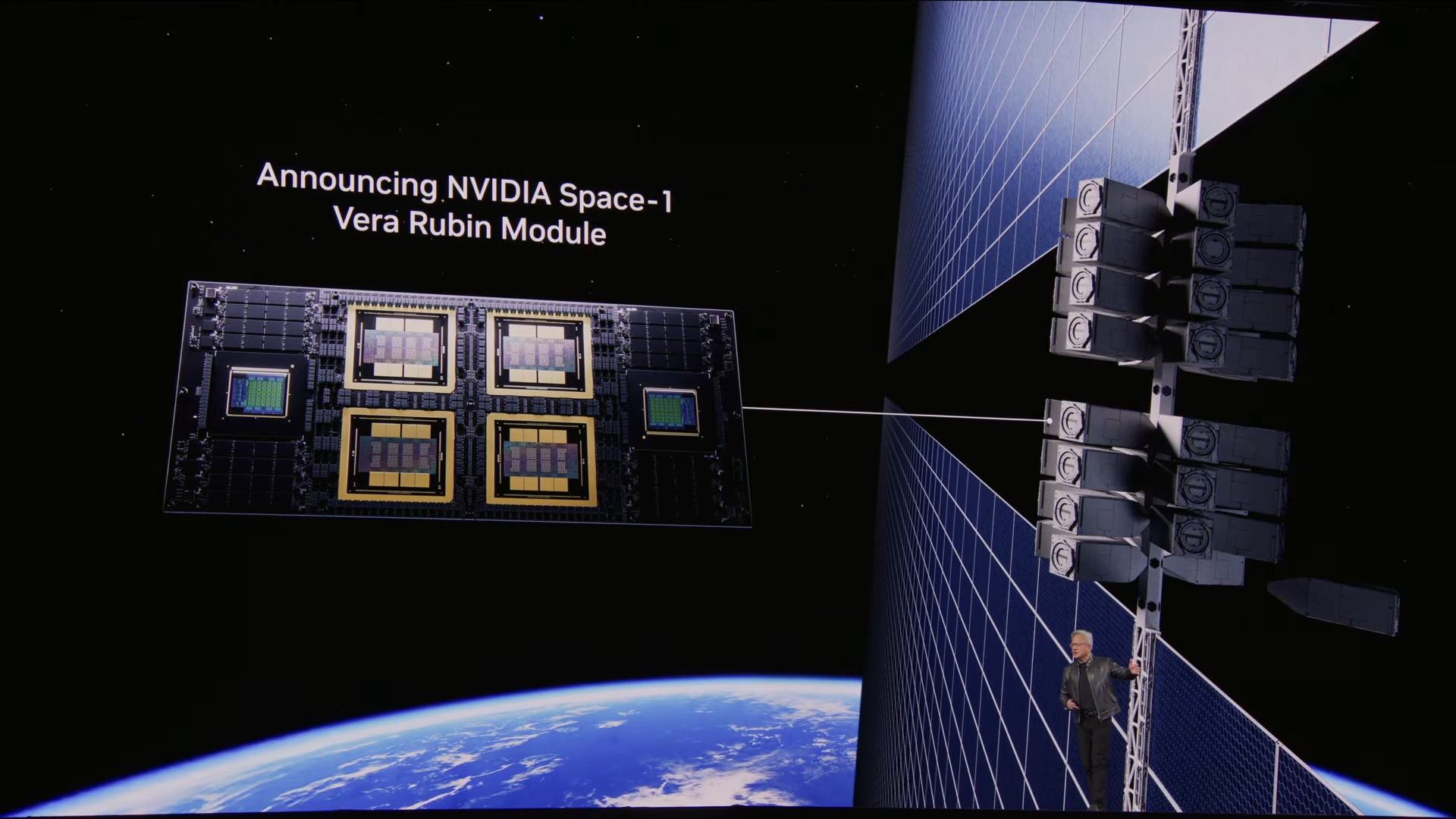
Apparently, Huang plans to start data centers in space and already has a Vera Rubin system being design for space.
What about N1X or gaming?
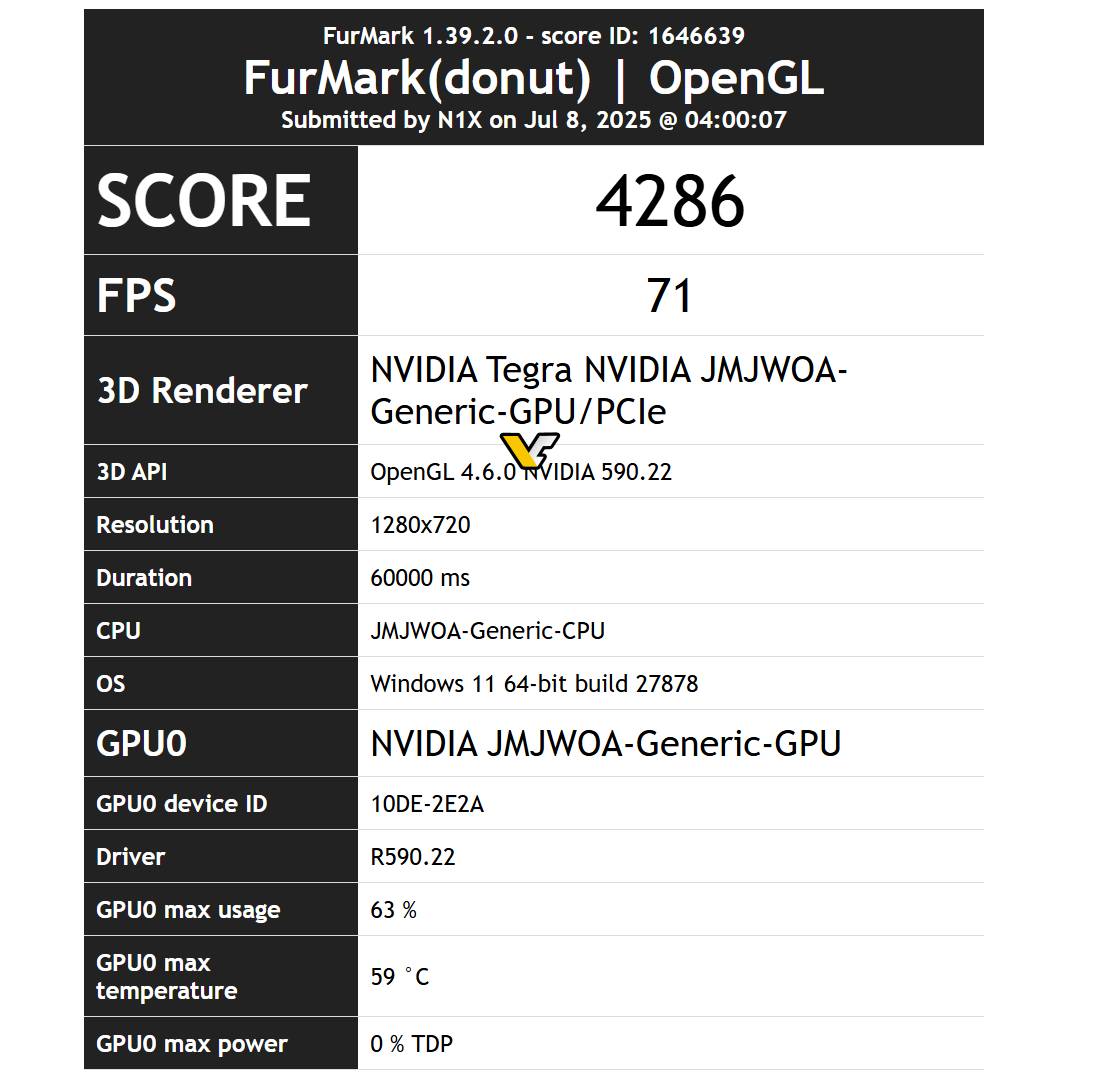

While Jensen goes on about AI factories and Nvidia’s architecture. Yes, as he mentioned, AI is 60% of Nvidia’s business these days, which is worrisome if you believe we are facing a bubble that will pop.
My question is, will we see anything about the N1X chip or gaming GPUs? What is left for the everyday consumer?
Increased tokens
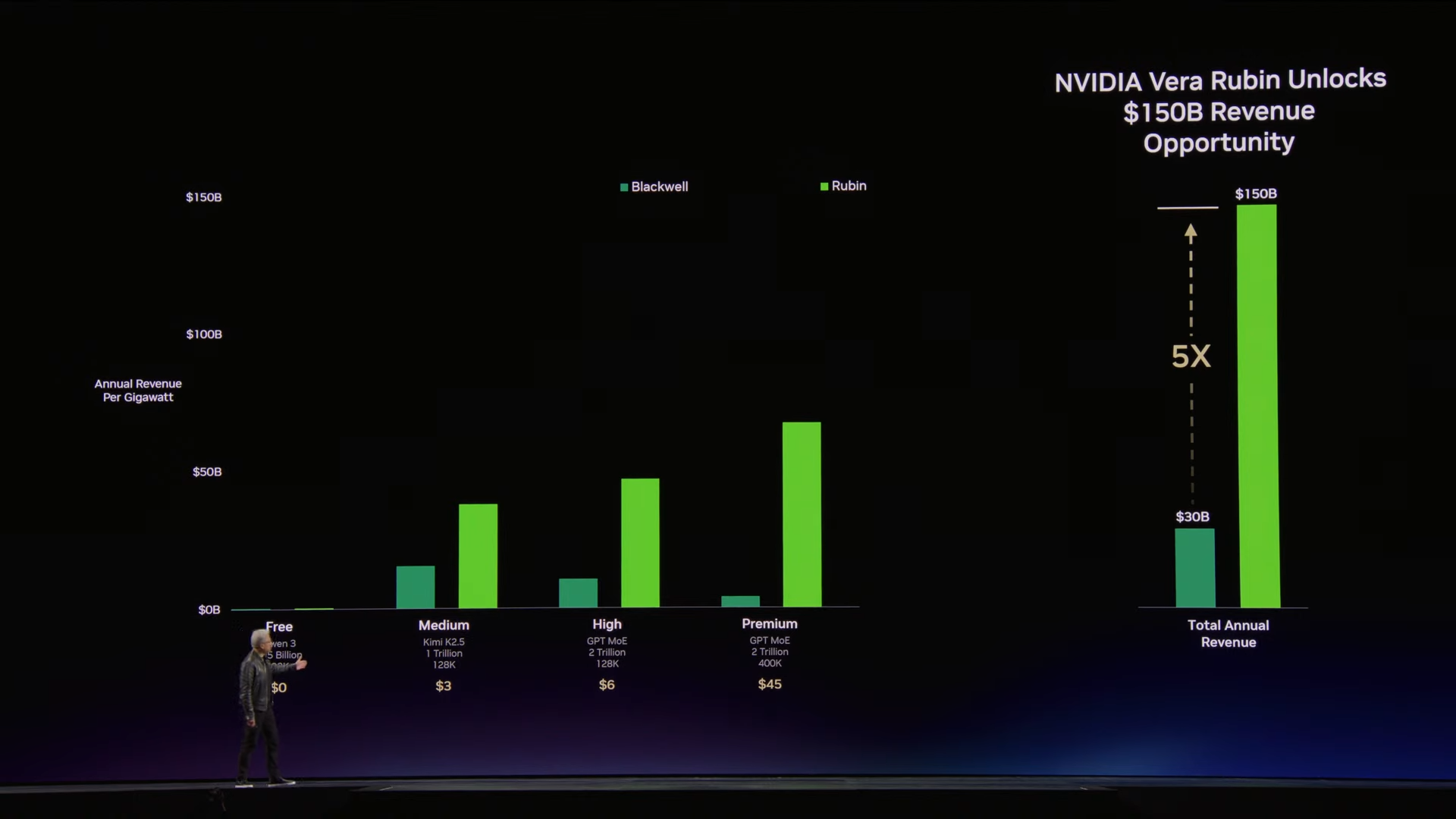
I can extrapolate that the expansion of the ability for AI datacenters to provide more tokens and data processing will increase thanks to the new Rubin GPU, but that may not actually solidify until next year as the new system gets installed and running for AI platforms.
For now, Huang is selling Nvidia’s latest system.
Rubin Ultra
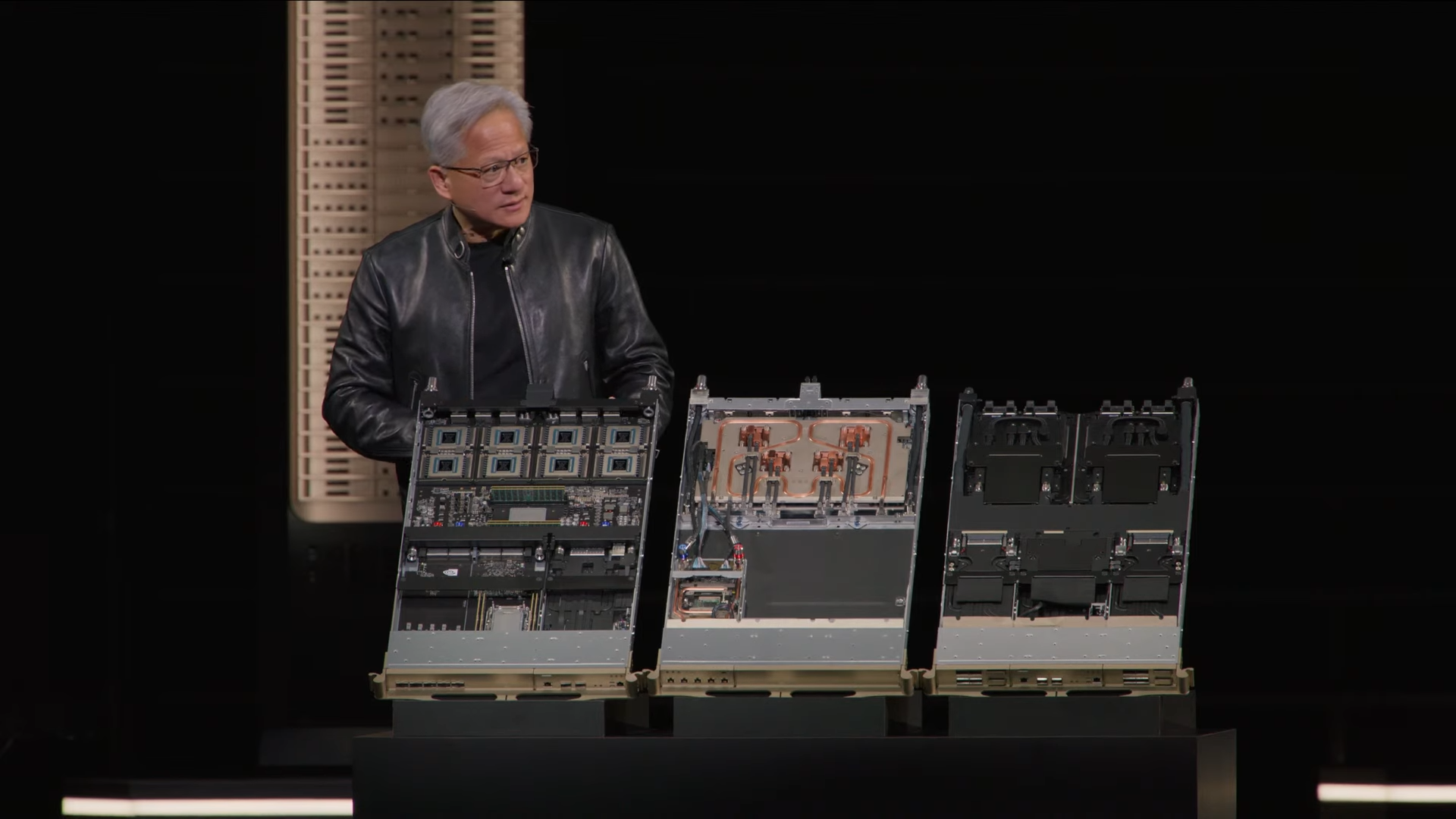
Another system designed for data centers. Rubin Ultra can connect up to 144 GPUs.
New Vera Rubin program
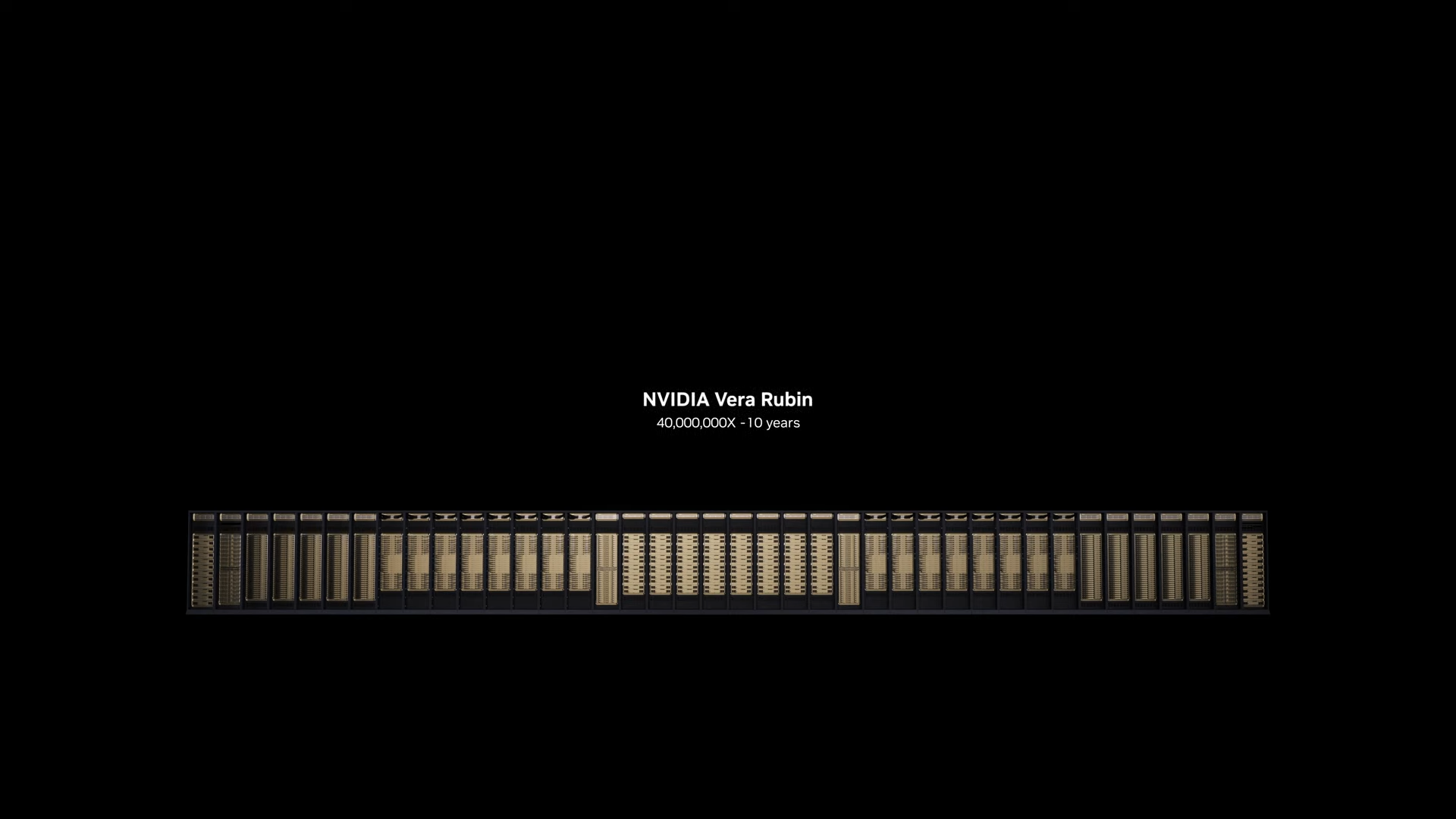
The Vera Rubin platform is Nvidia’s latest AI platform for AI data centers that is “vertically integrated completely with software.” It’s designed for AI agent systems.
It will affect how AI platforms function going forward.
Cooled by 45 degree water, which supposedly takes the pressure of the data center. However, rather than reducing water usage it just shifts it to the Rubin architecture. Not exactly eo-friendly.
Tokens per watt
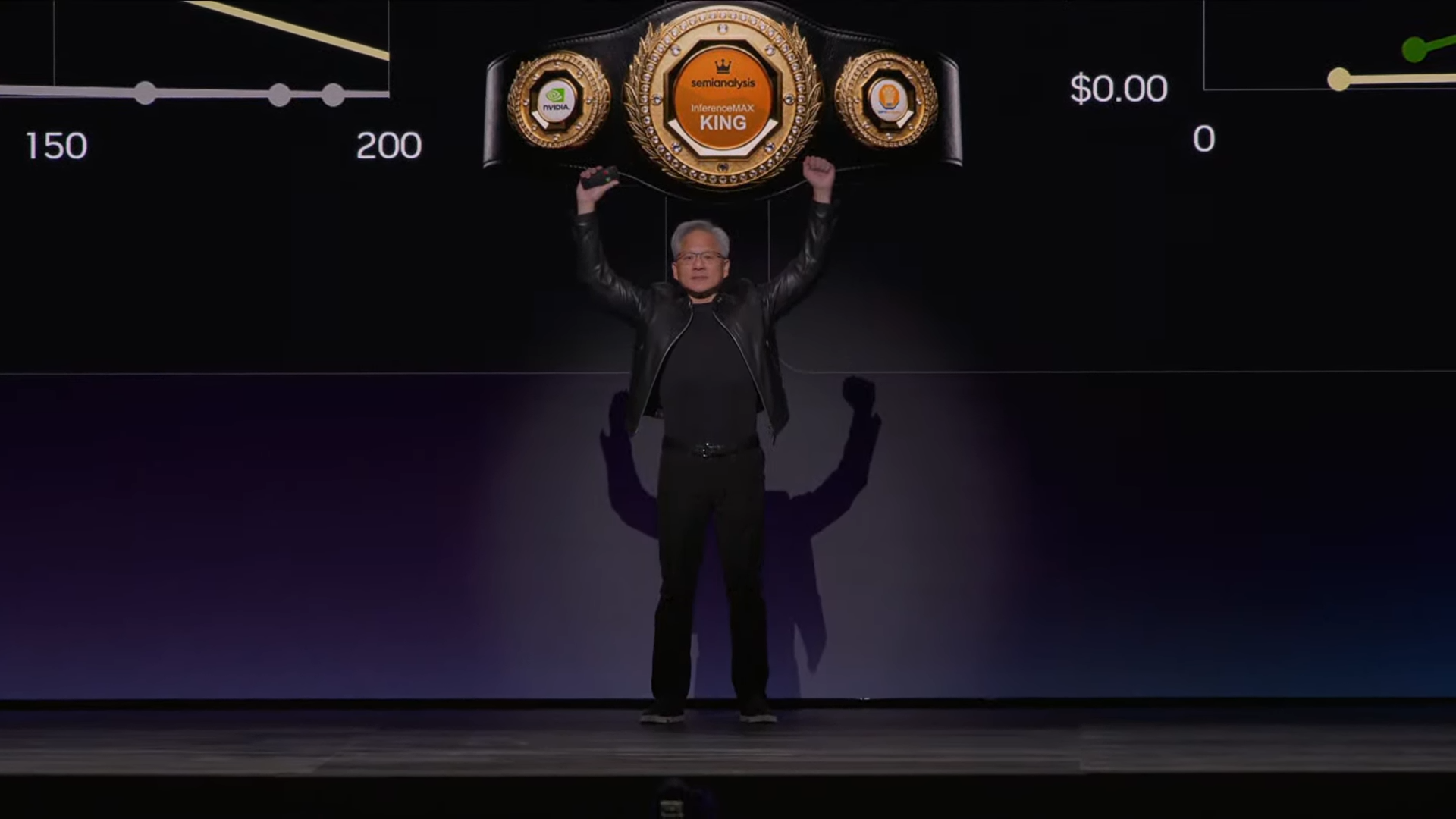
Data centers are constrained by power and power consumption.
Huang is promoting Nvidia AI GPUs that can quickly get through more tokens than the competition.
“This is your revenue,” Huang tells companies. “Our cost per token is the lowest in the world,” he claims.
Nvidia is the token king, Huang implies.
“We are now computing platform that runs all of AI”
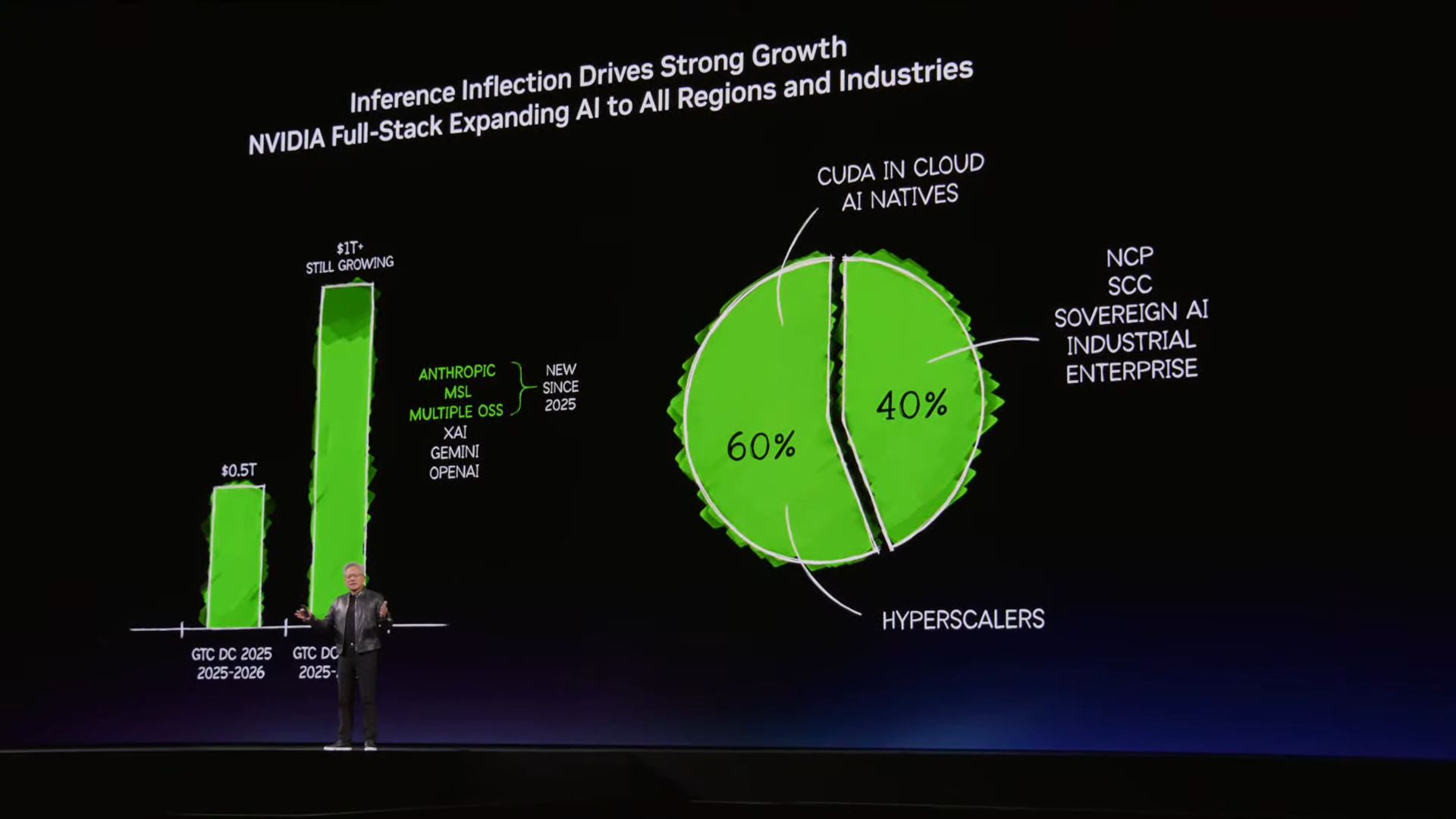
60% of Nvidia’s business are hyperscalers. That’s everyone building data centers requiring AI GPUs.
40% is everything else, clouds, enterprise, robotics, gaming, supercomputing, etc.
“Computing demand has increased by 1 million times in the last 2 years”
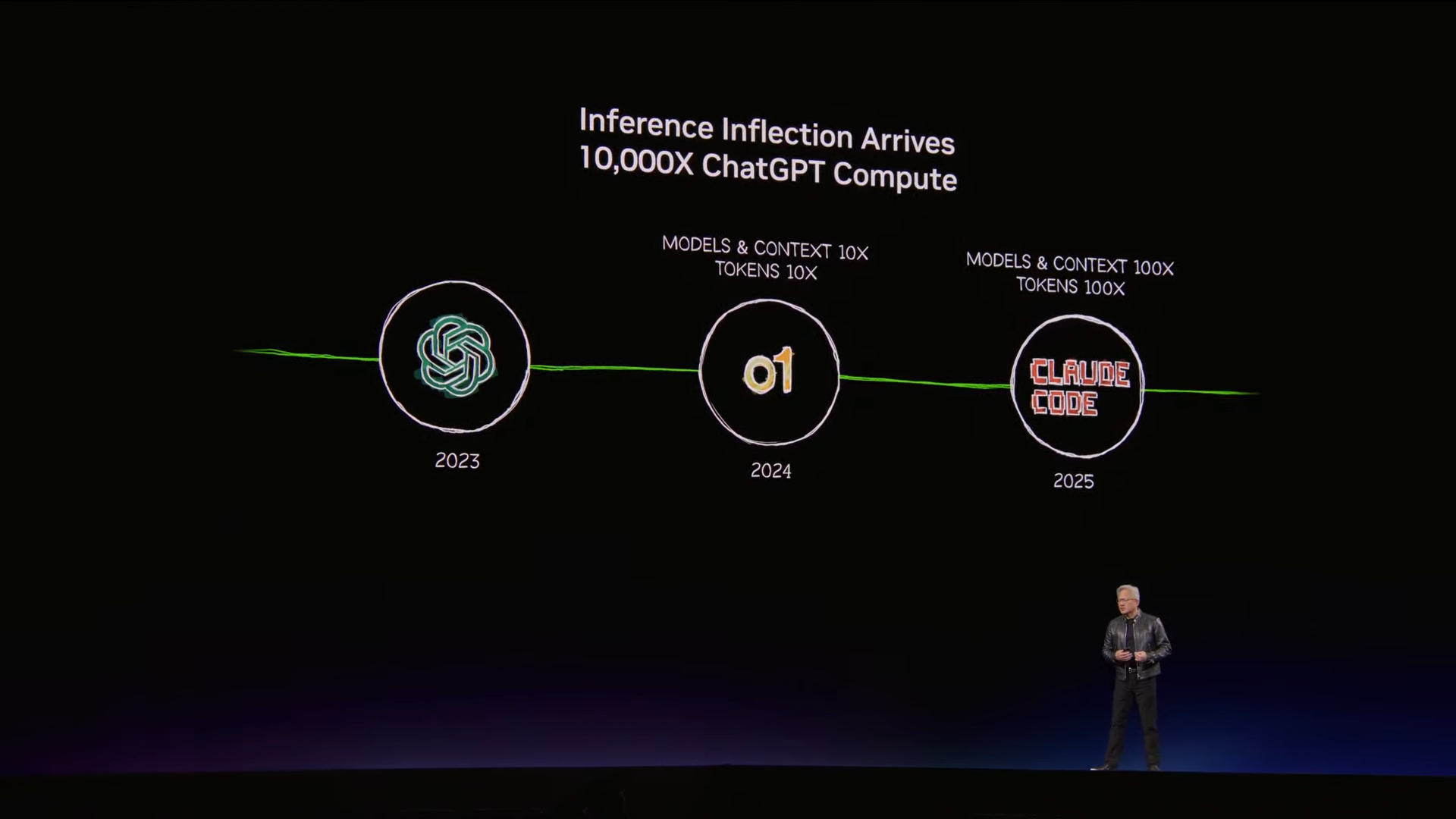
Here’s a hint at the AI greed that created the current RAM shortage. Huang believes that AI usage and computing has exploded since 2023.
OpenAI and other companies are saying they need the compute power to deal with the massively increased usage and data processing.
Computing demand will be higher than $1 trillion dollars in growth, Huang says.
“Everyone should use ChatGPT”
Huang says everyone should be using ChatGPT every day andthat he used it this morning.
AI natives
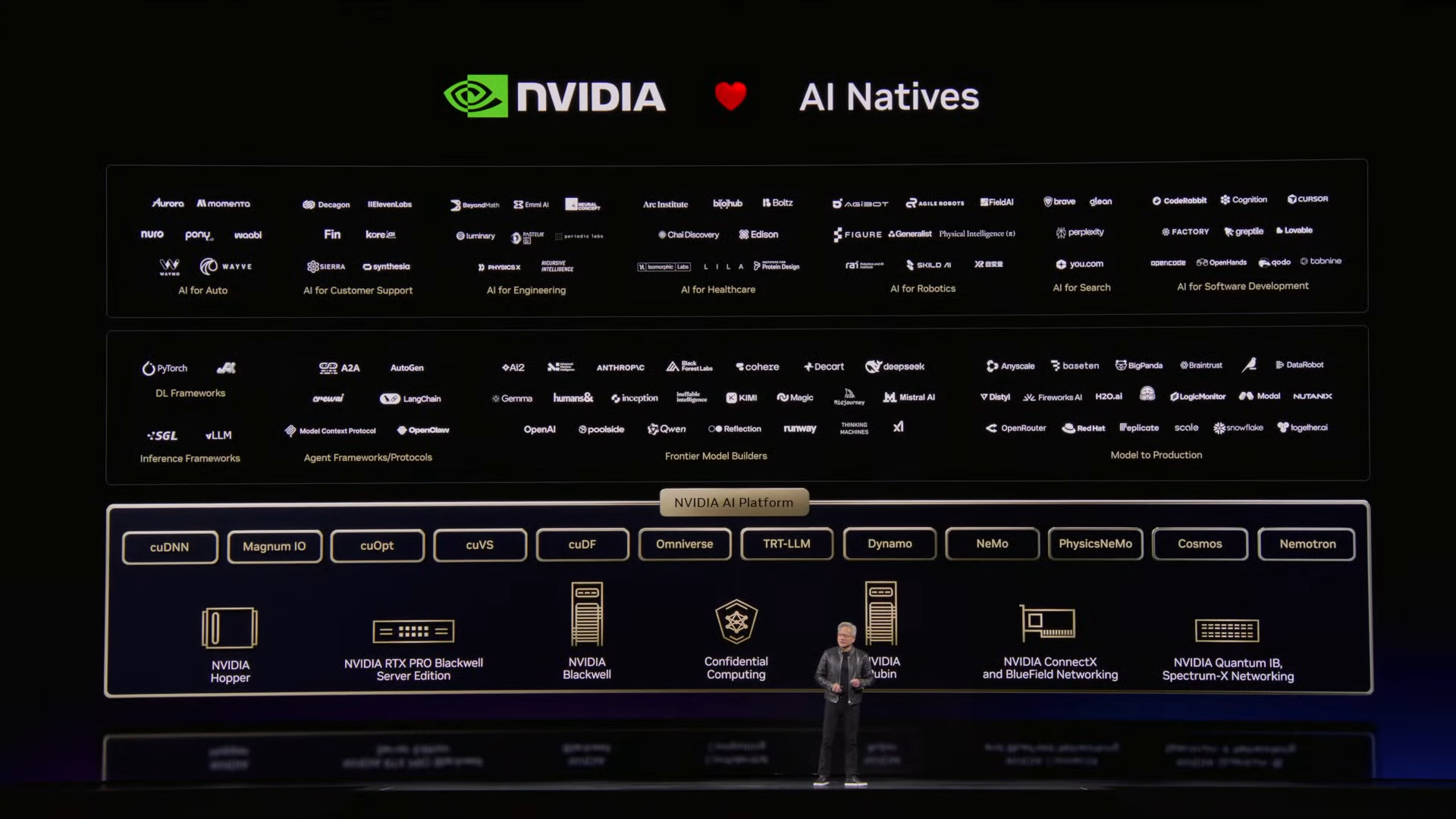
Huang is discussing small companies that are built solely in AI or utilize AI to tackle different things.
Consequential companies will arise from this “platform shift,” he says. The “Big Bang of AI.”
Tokens and the generation of “accelerated” AI in the last two years has increased exponentially.
It will change “what is the meaning of computing altogether.”
Simulation of a robotic future
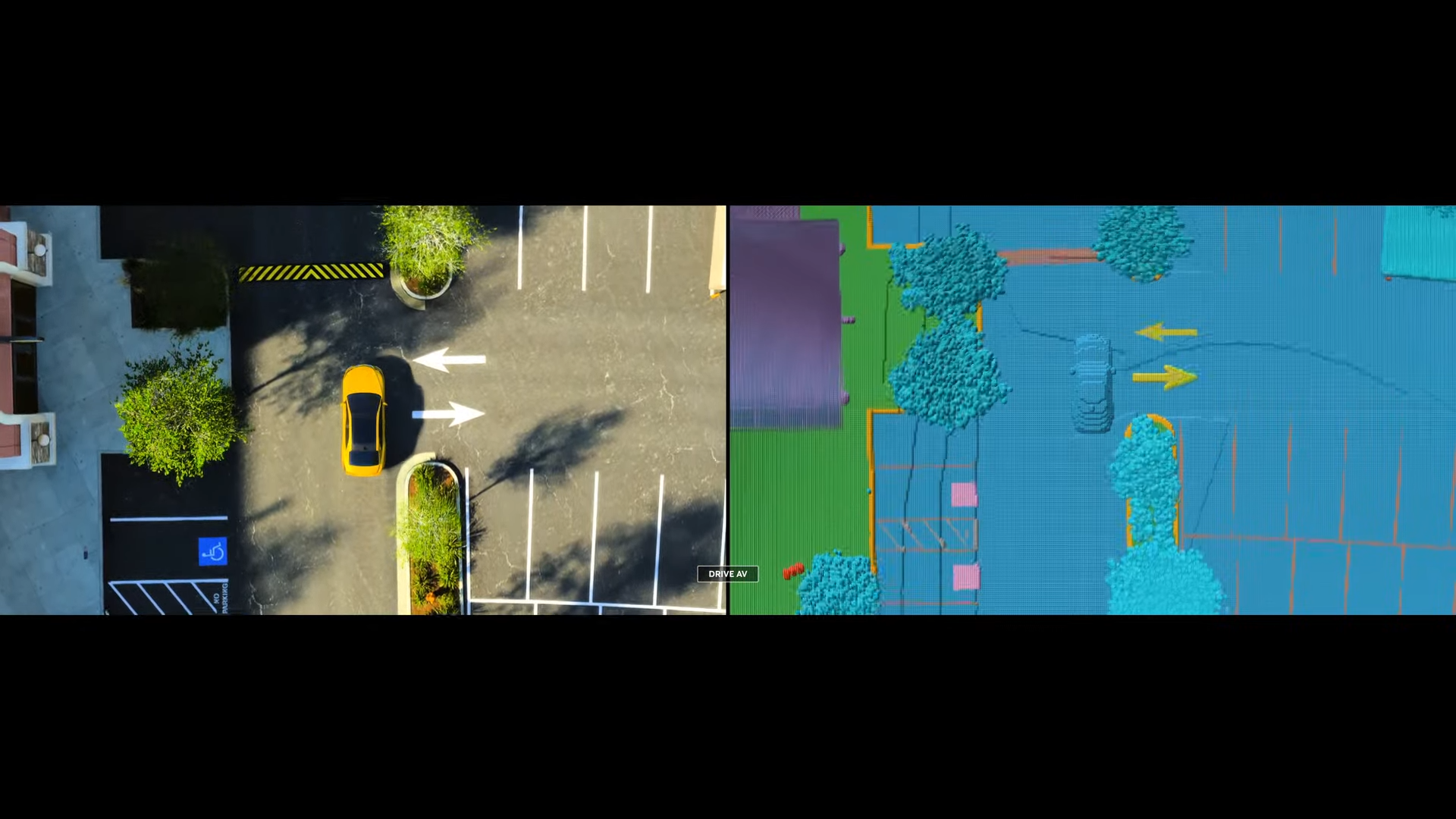
Nvidia is showing off a simulation where robots and AI control everything from warehouse infrastructure to medical labs and manufacturing.
In other cases, AI models the world for autonomous driving, weather mapping and understanding elements like fire and aerodynamics.
The platform is called CudaX.
AI and the world
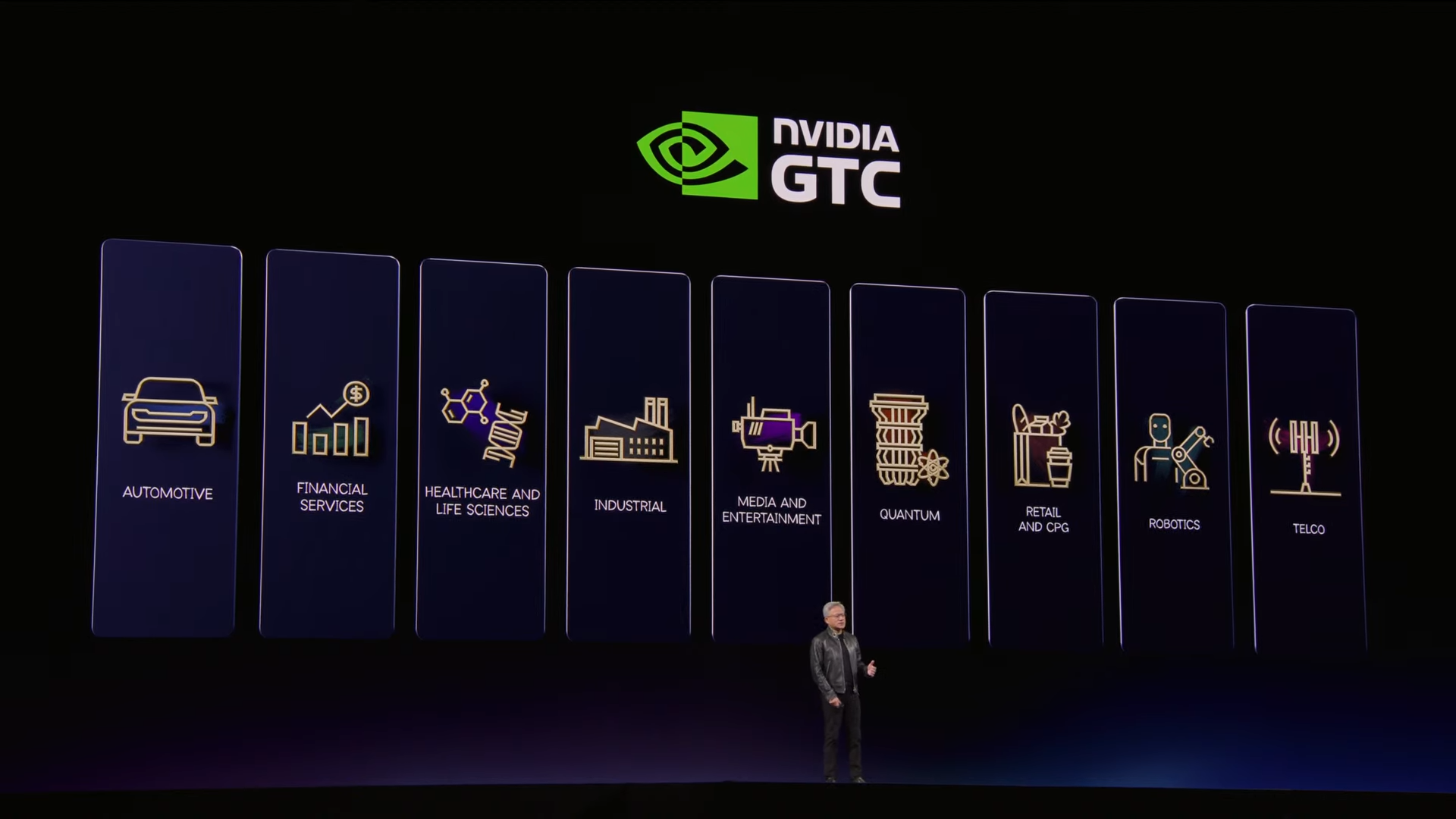
As you can see, Nvidia and Huang view its platforms as integral to multiple areas of the world.
From automotive and healthcare to quantum computing and robotics.
These include autonomous vehicles and AI physics and AI biology for “drug discovery.” Healthcare is going through its “ChatGPT moment.”
For gaming and media that means translation support, live games and live media.
Retail means AI agents would take over customer service. Robotics of course is robotic systems.
Telco systems, Huang says, that AI will completely reinvent telecommunications infrastructures.
“We integrate into the world’s cloud services”
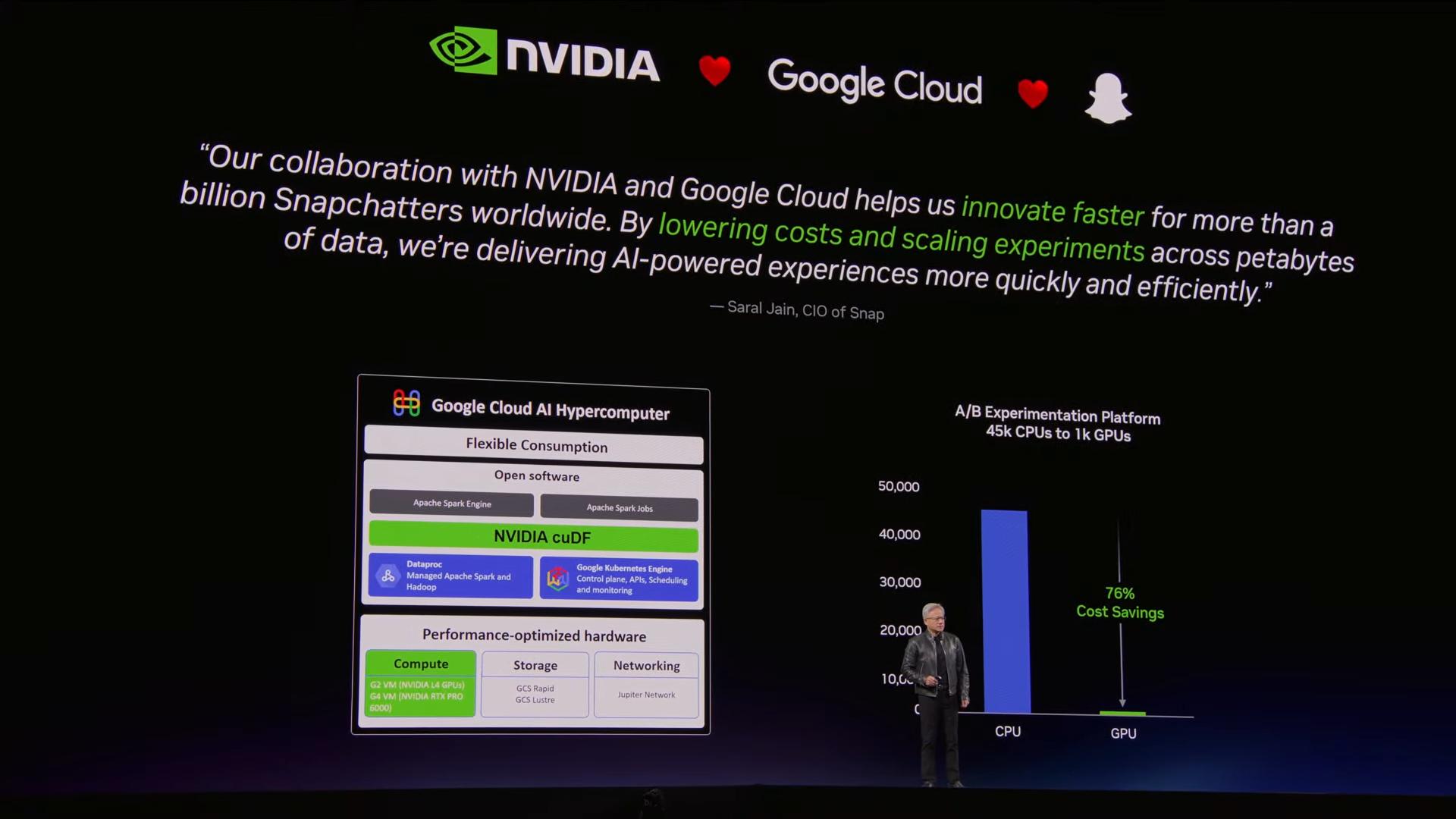
Jensen Huang says that Nvidia is an algorithm platform company, which helps it bolster platforms like Google Cloud, Azure and AWS.
He says it will expand the compute at AWS and through them, OpenAI.
Currently, the speech is directed at enterprise customers. However, as Nvidia undergirds cloud platforms, that means that systems you use that are cloud-based will be shifted through Nvidia platforms.
IBM Watson X and Nvidia
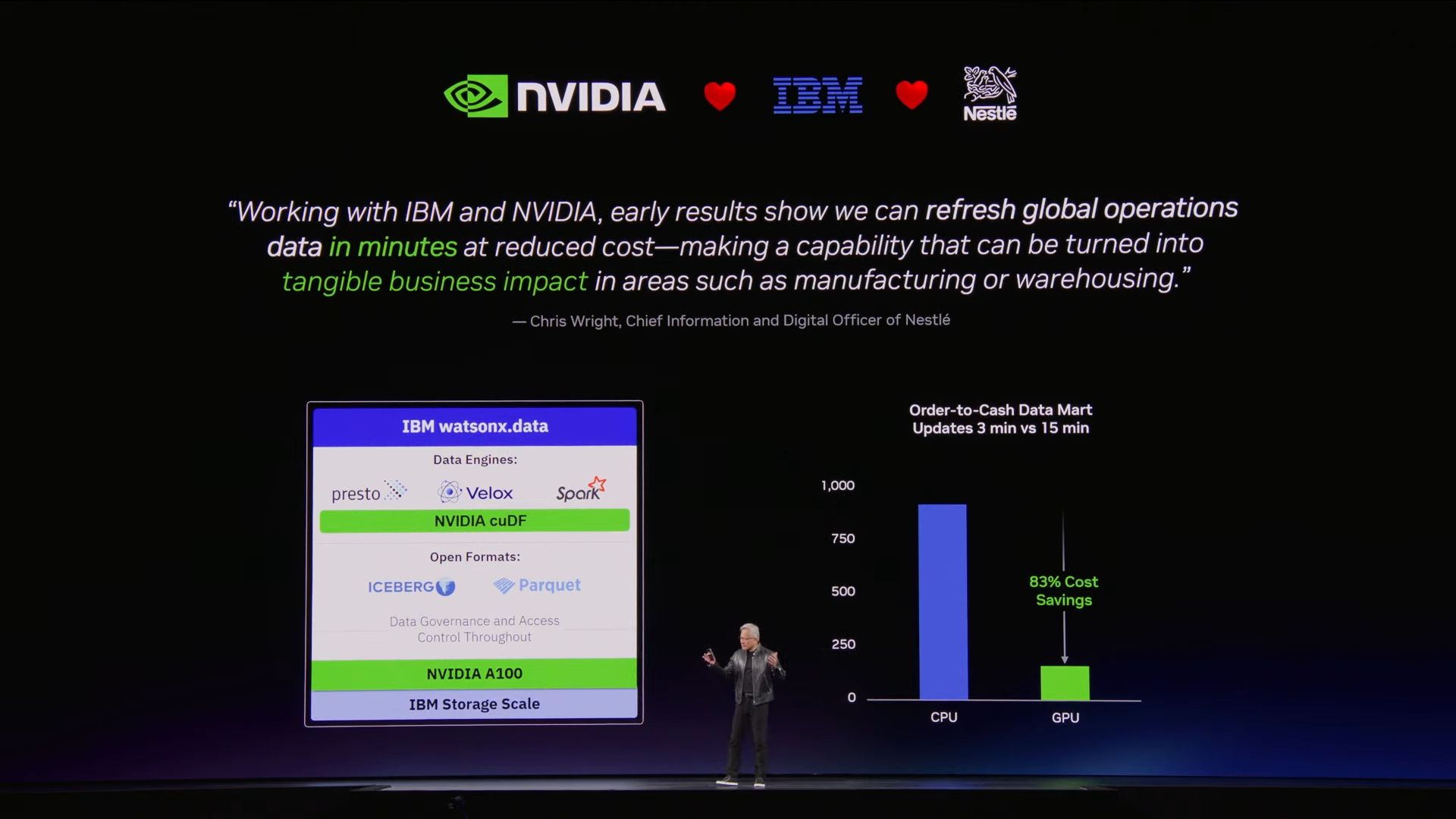
Nvidia and IBM are partnering to bolster IBM’s Watson X AI platform that allegedly lets companies refresh their data multiple times a day at 83% lower costs.
The goal is to reduce the cost of computing by accelerating data processing.
Structured Data is the Ground Truth of AI
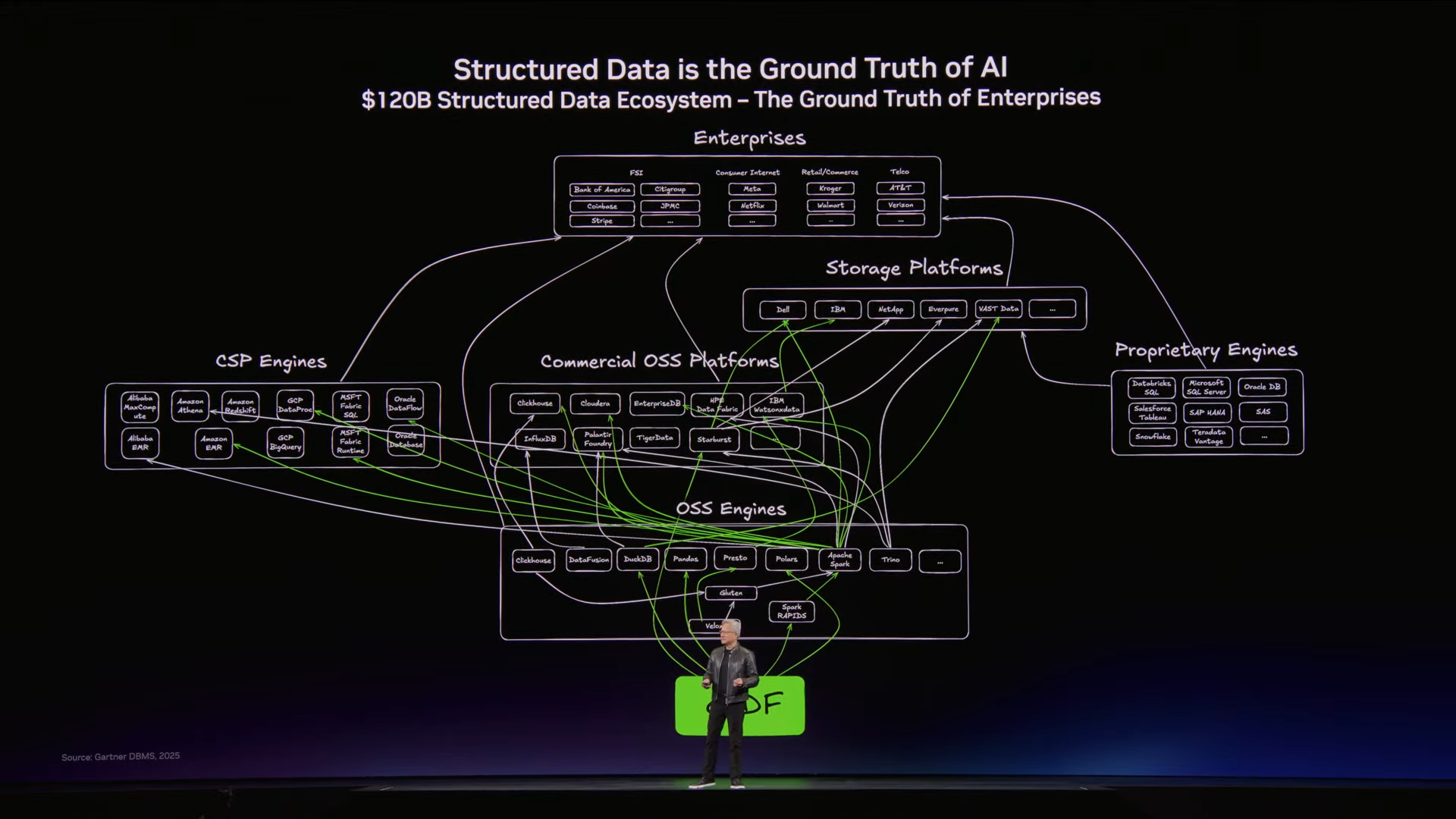
Huang is noting that structured data will be the future of AI as platforms turn AI into actionable structures.
DLSS 5 altered games
Image 1 of 4

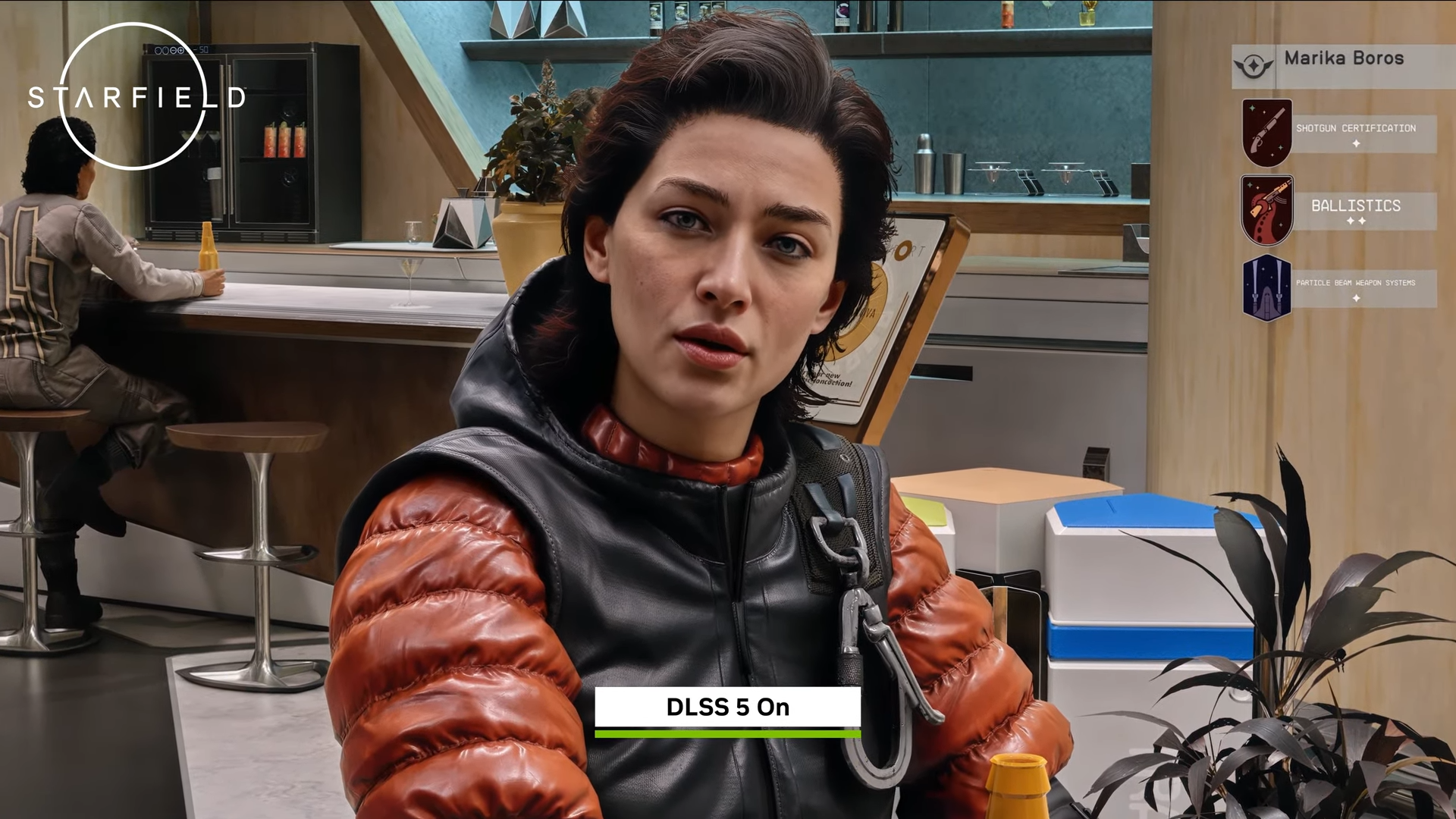
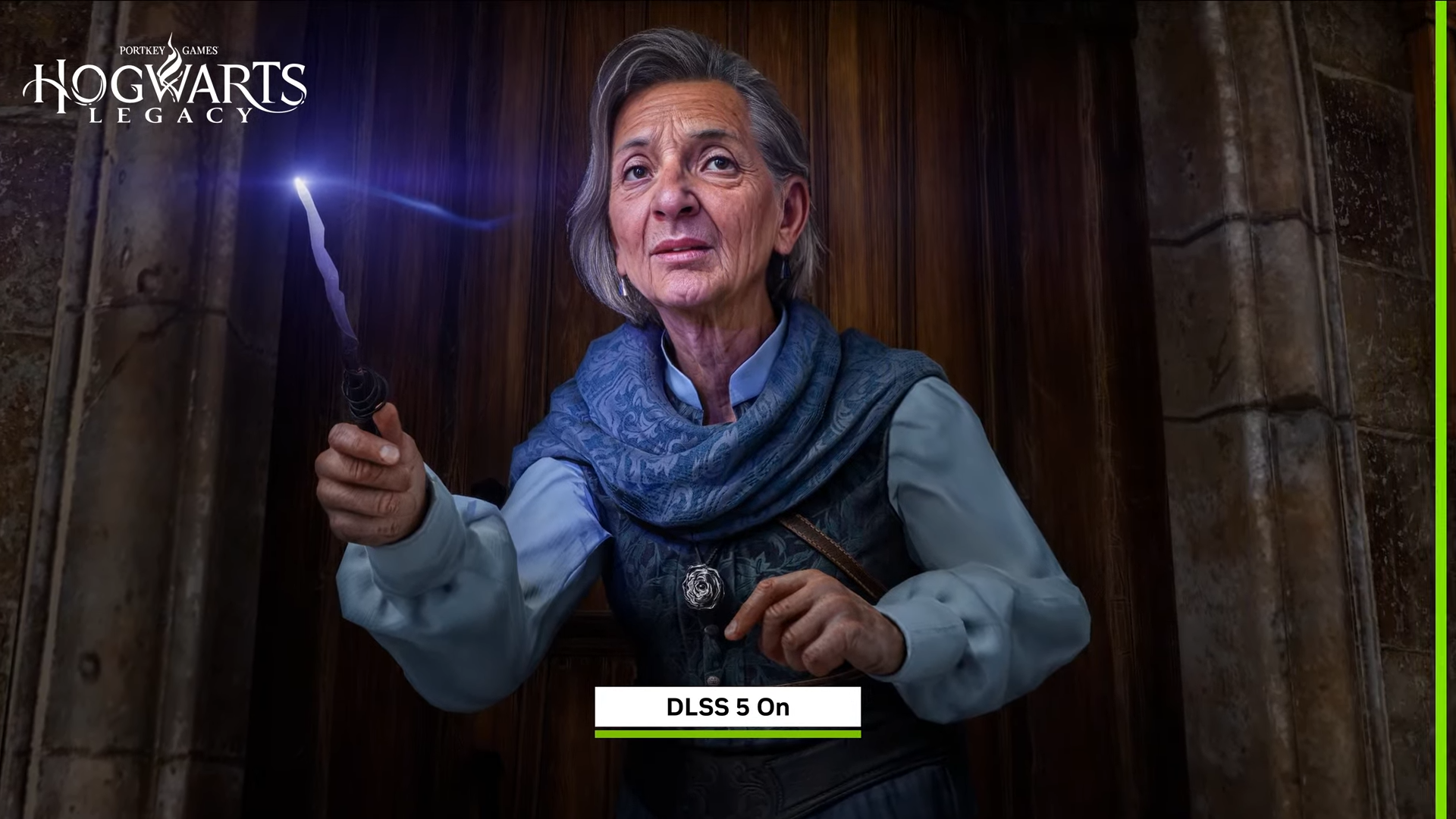
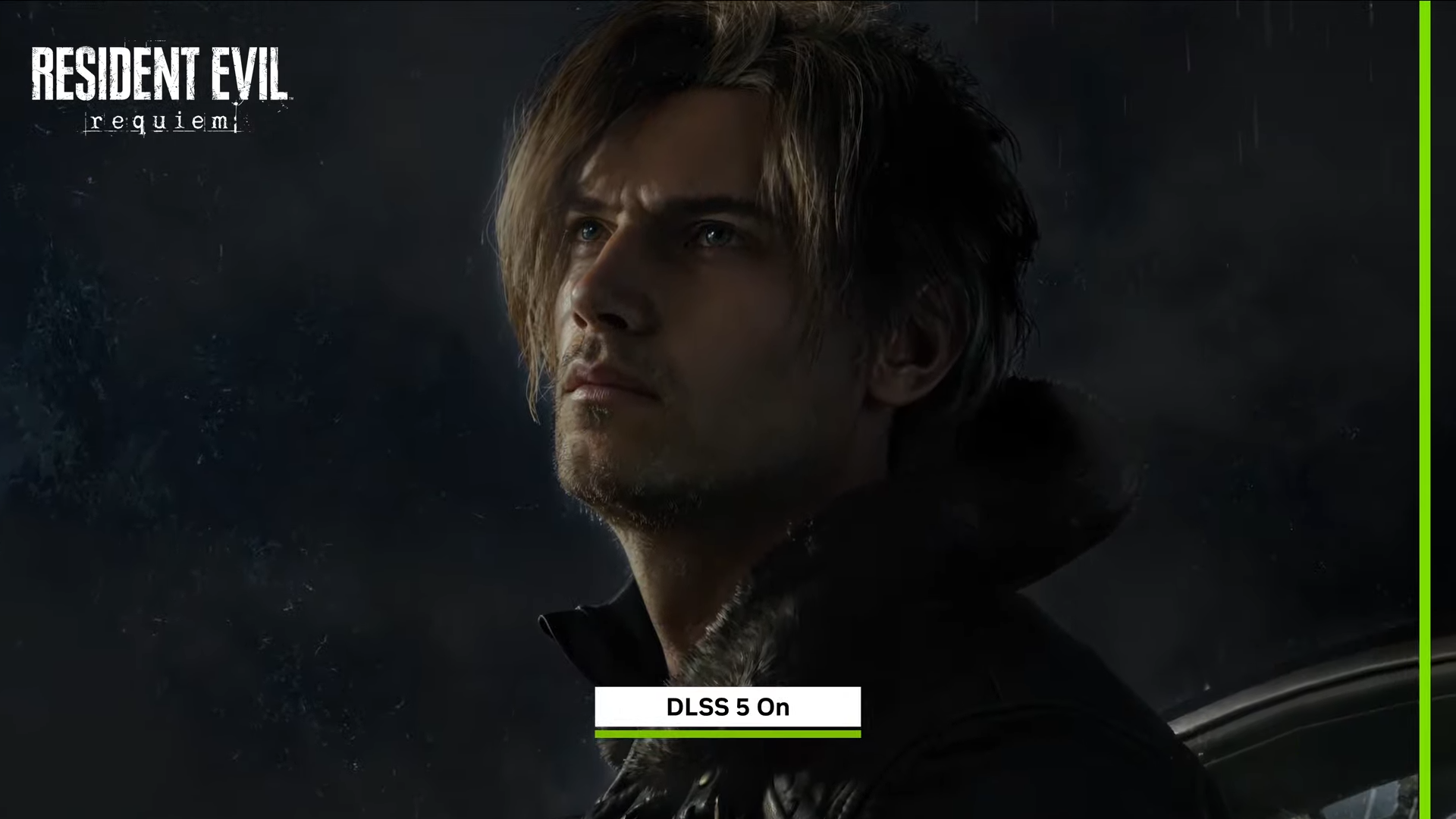
Here’s how several games look after being hit with DLSS 5.
It’s one we’ll have to see in action once we’re able.
DLSS 5!
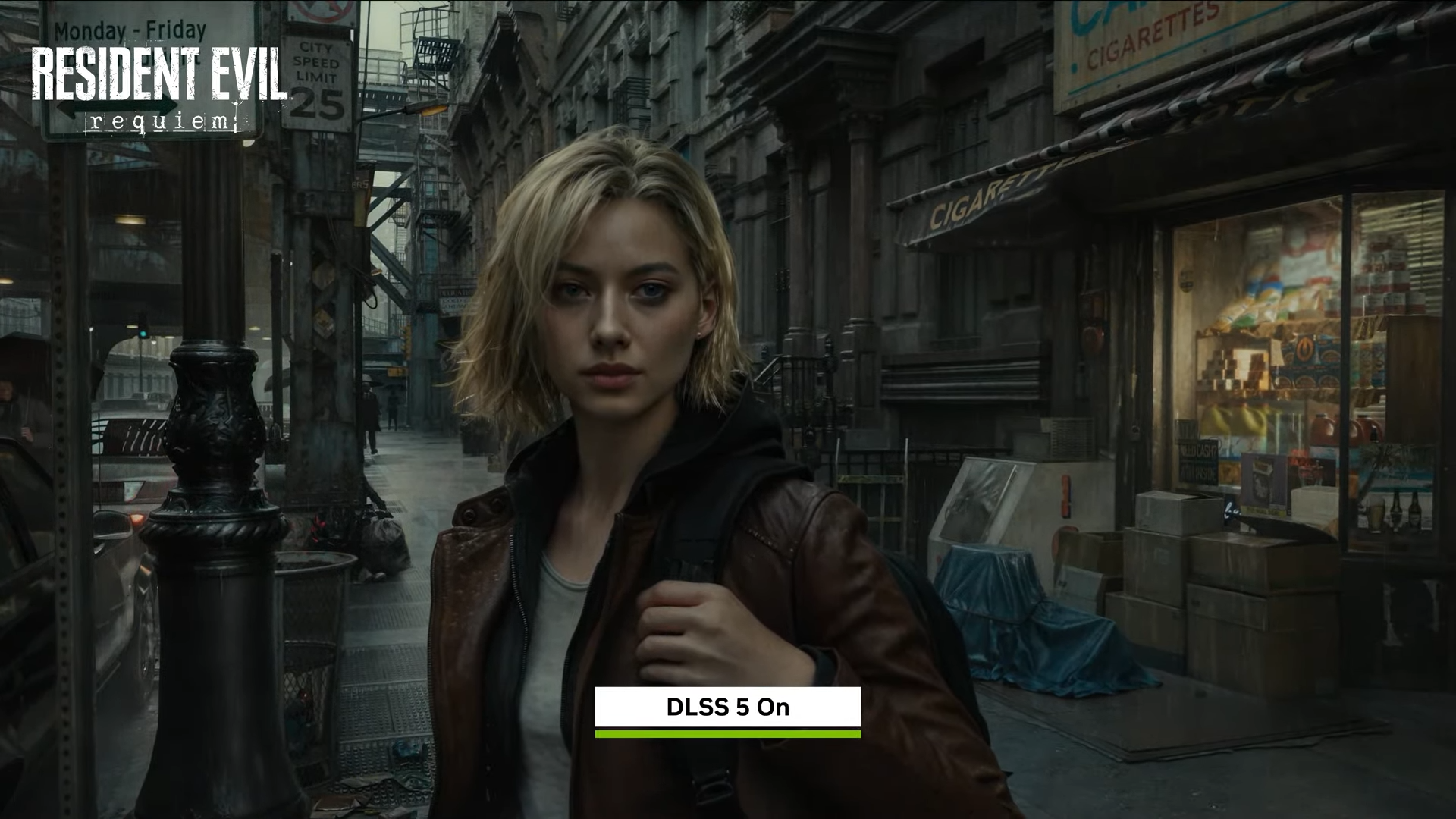
First look at DLSS 5! Fusion of structured graphics and generative AI.
A trailer shows off DLSS 5 over games like Resident Evil Requiem, FC 26, Starfield and more.
What do you think? Some games looked better, while I thought a few looked more cartoon-y, which was worse than the previous look.
“This is the house that GeForce made”
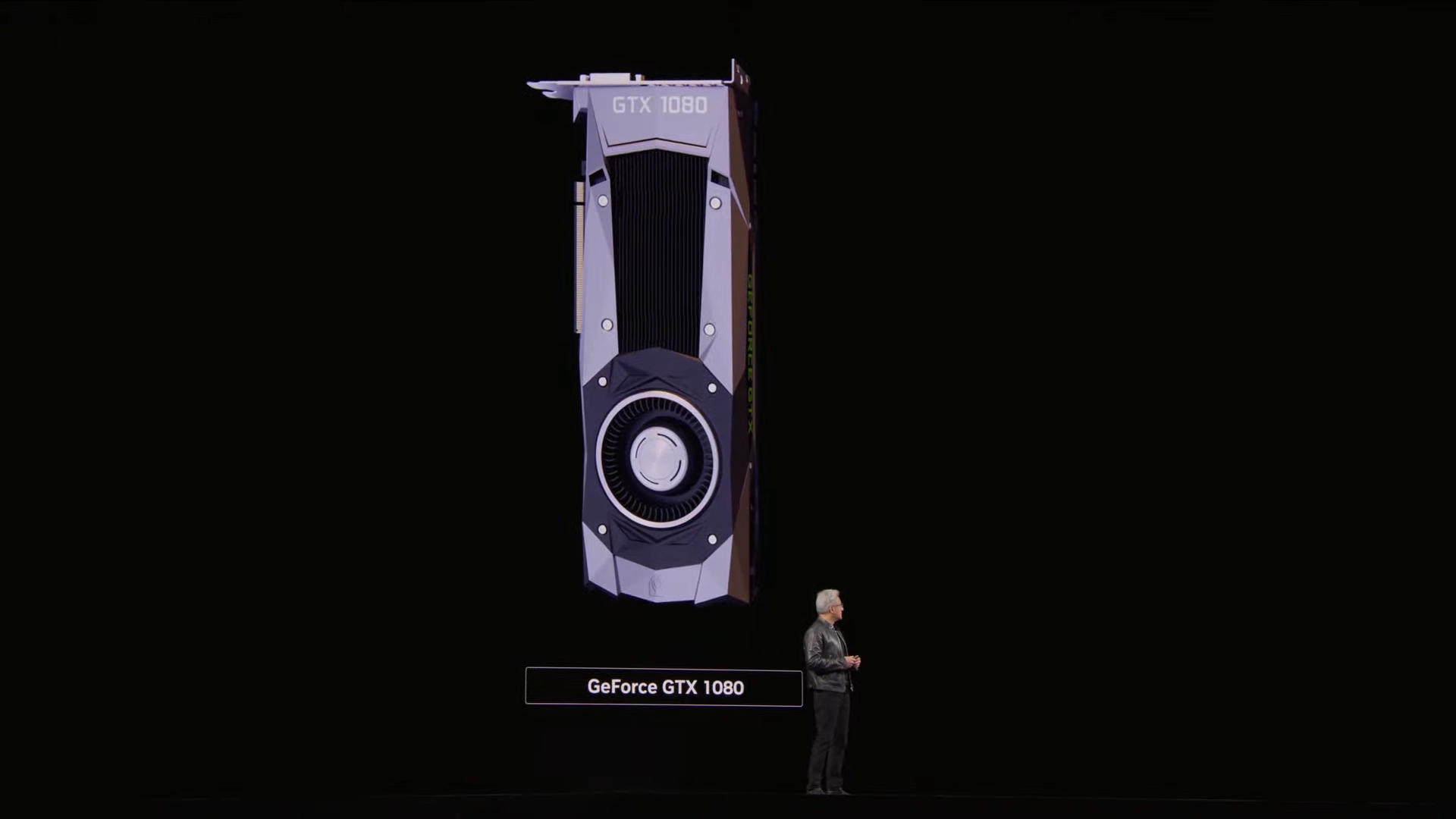
25 years ago we invented the programmable shader, Huang says.
Let the company explore further and led to CUDA. 13 generations has CUDA installed “everywhere.”
10 years ago, introduced RTX, complete redesign of the architecture. GeForce enabled acceleration of deep learning.
Lifecycle is incredibly long
CUDA is accelerating, the downloads of Nvidia libraries is speeding up.
Enables infrastructures to have “extraordinary useful life.” We support every phase of the AI lifeycle, Huang says.
Every Nvidia GPU is architecturally compatible, Huang asserts. Lets it expand its reach and growth while driving down computing costs.
20 years of CUDA
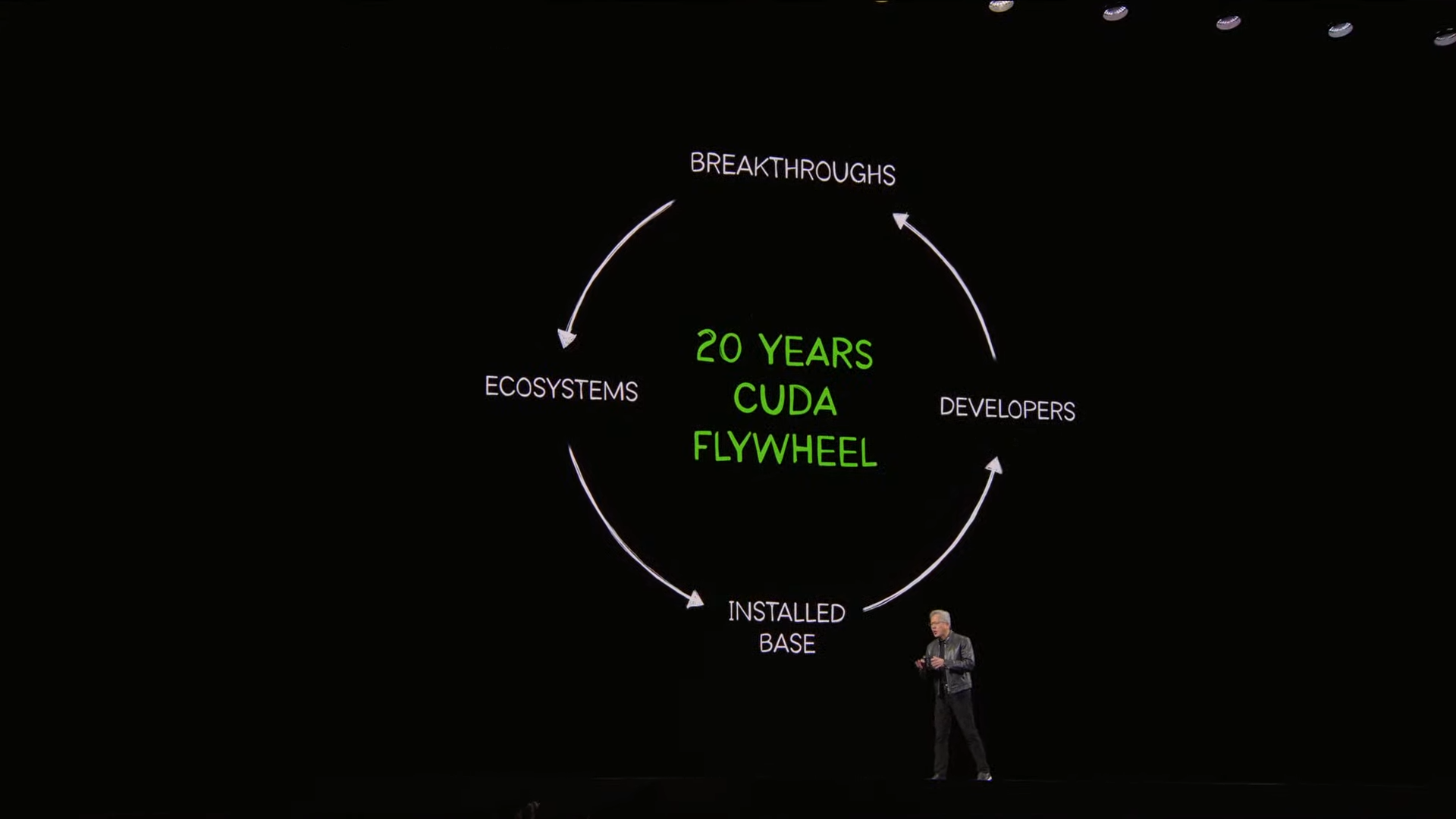
GTC covers the “5 layer cake” of AI. Infrastructure, chips, platforms, models and applications.
20 years of CUDA from ecosystems to developers and customers. The chart describes “100% of Nvidia’s strategies.”
It’s taken 20 years to build up millions of GPUs that serve just about every industry.
Jensen Huang is on stage now
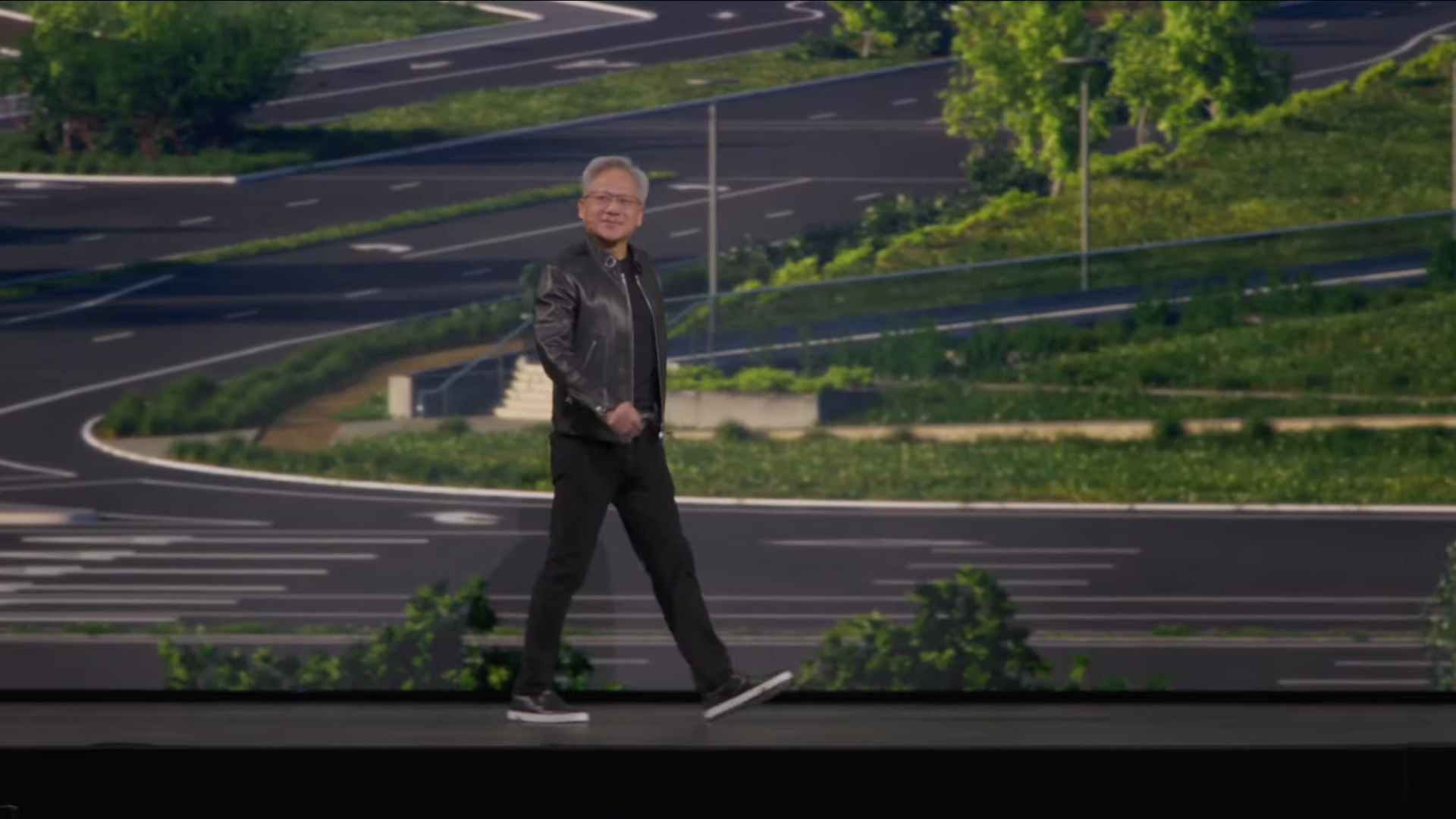
Jensen is on stage. He notes they will be discussing AI factories, CUDA, and thanks the pre-show panels.
Tokens in everything
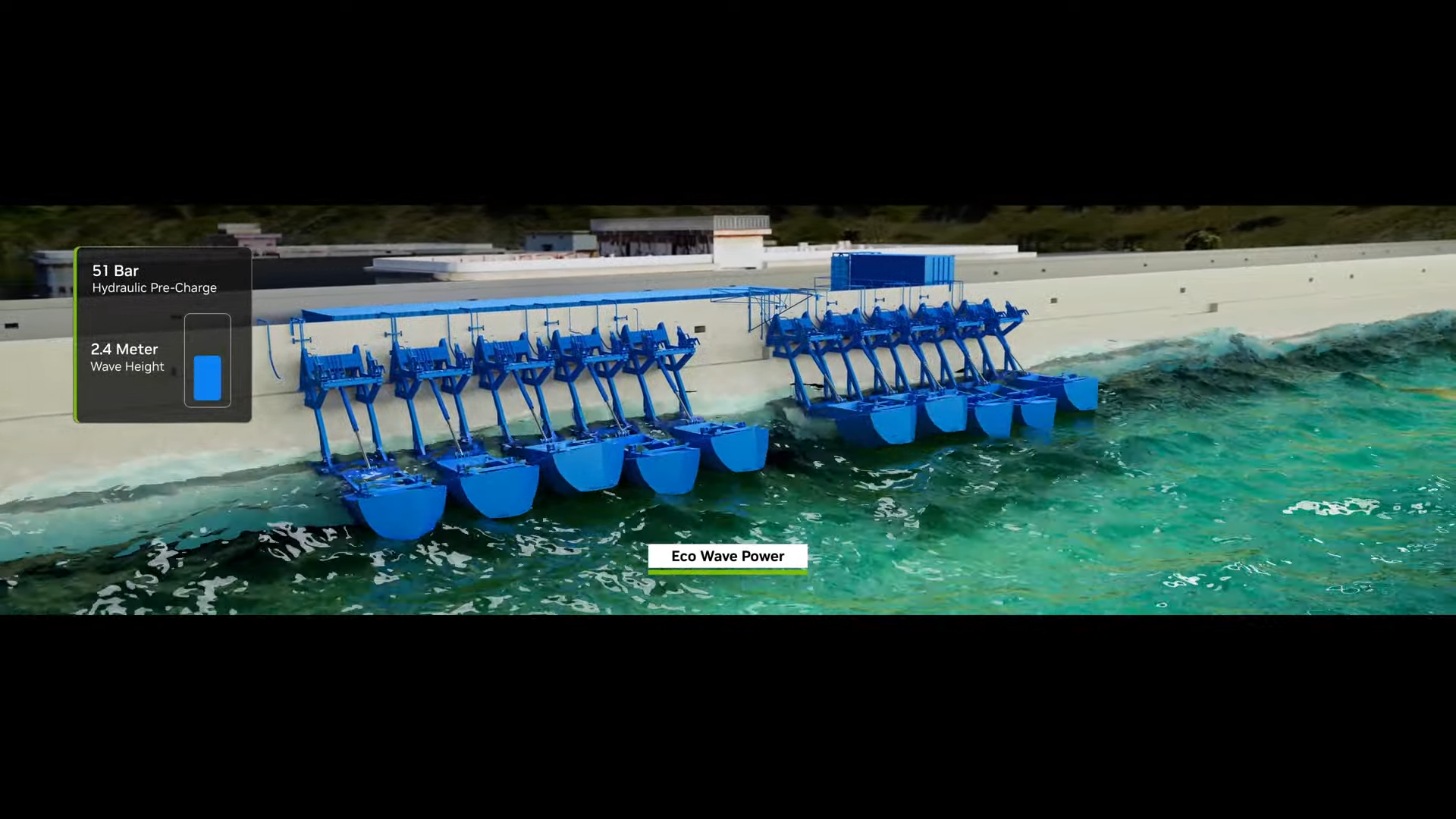
The show is starting with a video about tokens and how they’re impacting science, medicine, agriculture, space travel, robotics and more. But also how producing tokens is more “eco friendly.”
And it starts with Nvidia, of course.
Honestly, the wait screen makes a great wallpaper
Image 1 of 2

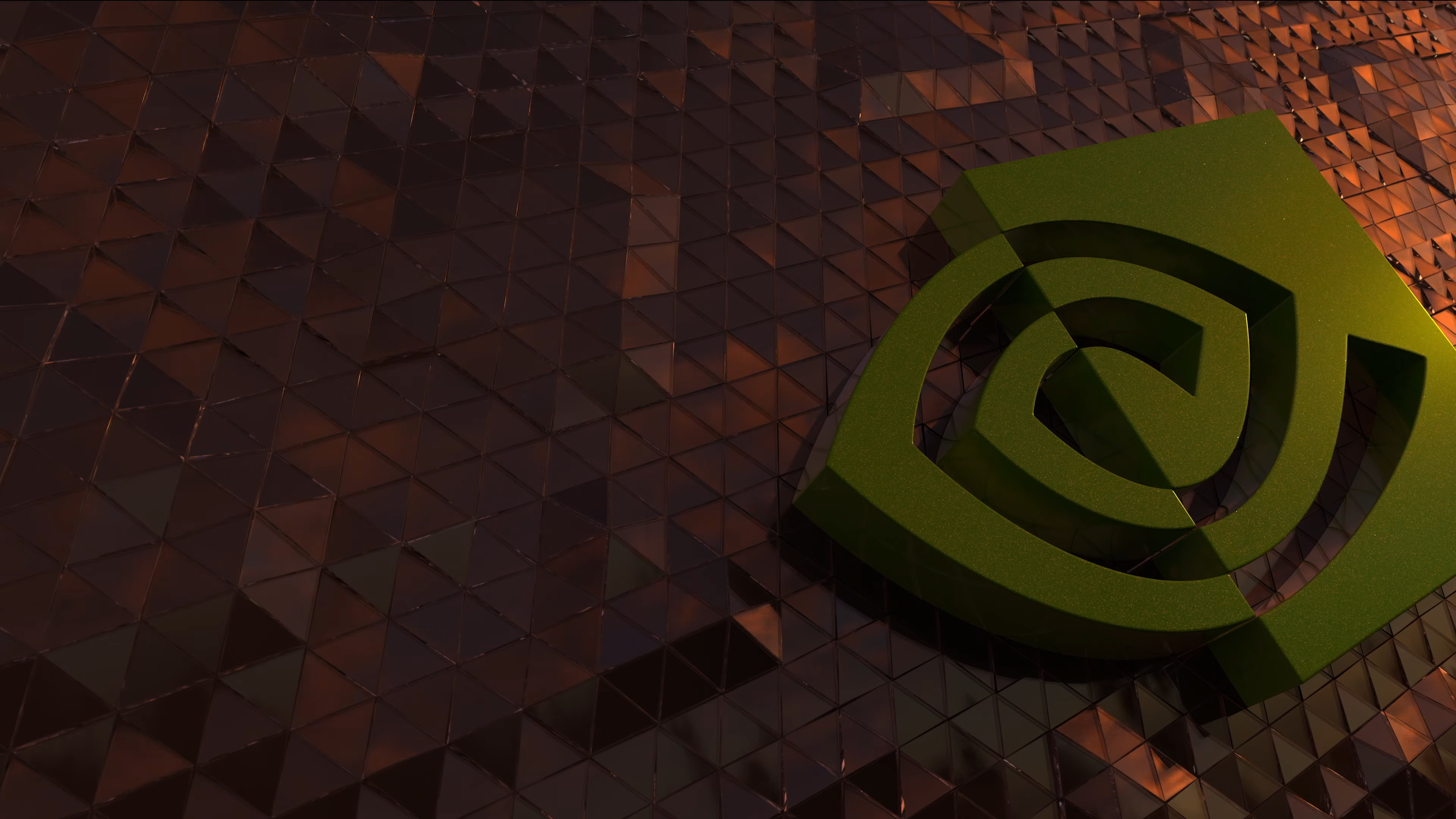
If you’re looking for something to refresh your PC wallpaper, maybe check out the light mode and dark mode versions of the wait screen on Nvidia’s keynote.
It does look pretty slick.
These are 4K versions, if you decided to save them.
Enjoying the music?

While we wait for Huang to make his appearance, are we enjoying the music?
It kind of sounds like AI-generated pop, which says more about the pop industry than AI, I suppose.
Meanwhile, I’m in, as my son says, my “sadboy guitar” era, so enjoy some new Noah Kahan while we wait.
Starting soon
As a reminder, you can follow along with the keynote on YouTube, linked above and here.
5 minute countdown
We are entering the final countdown to Jensen Huang’s keynote.
What are you interested in seeing today? Let us know in the comments or shoot me an email at scott.younker@futurenet.com.
The memory crisis is partly Nvidia’s fault: will it be acknowledged?
At the end of February, Nvidia execs admitted during an earnings call that GPU supply could be constrained specifically because of AI data centers.
Nvidia has been a major part of the push toward AI and AI data centers, propping up companies like OpenAI through heavy investment.
That boom has created a global RAM shortage with downstream effects on everything from phones and laptops to the availability of helium and aluminum.
It’ll be interesting to see if Jensen acknowledges this today, skirts around it, or ignores the RAM crisis completely.
Viture announces partnership with Nvidia and Stanford Labs
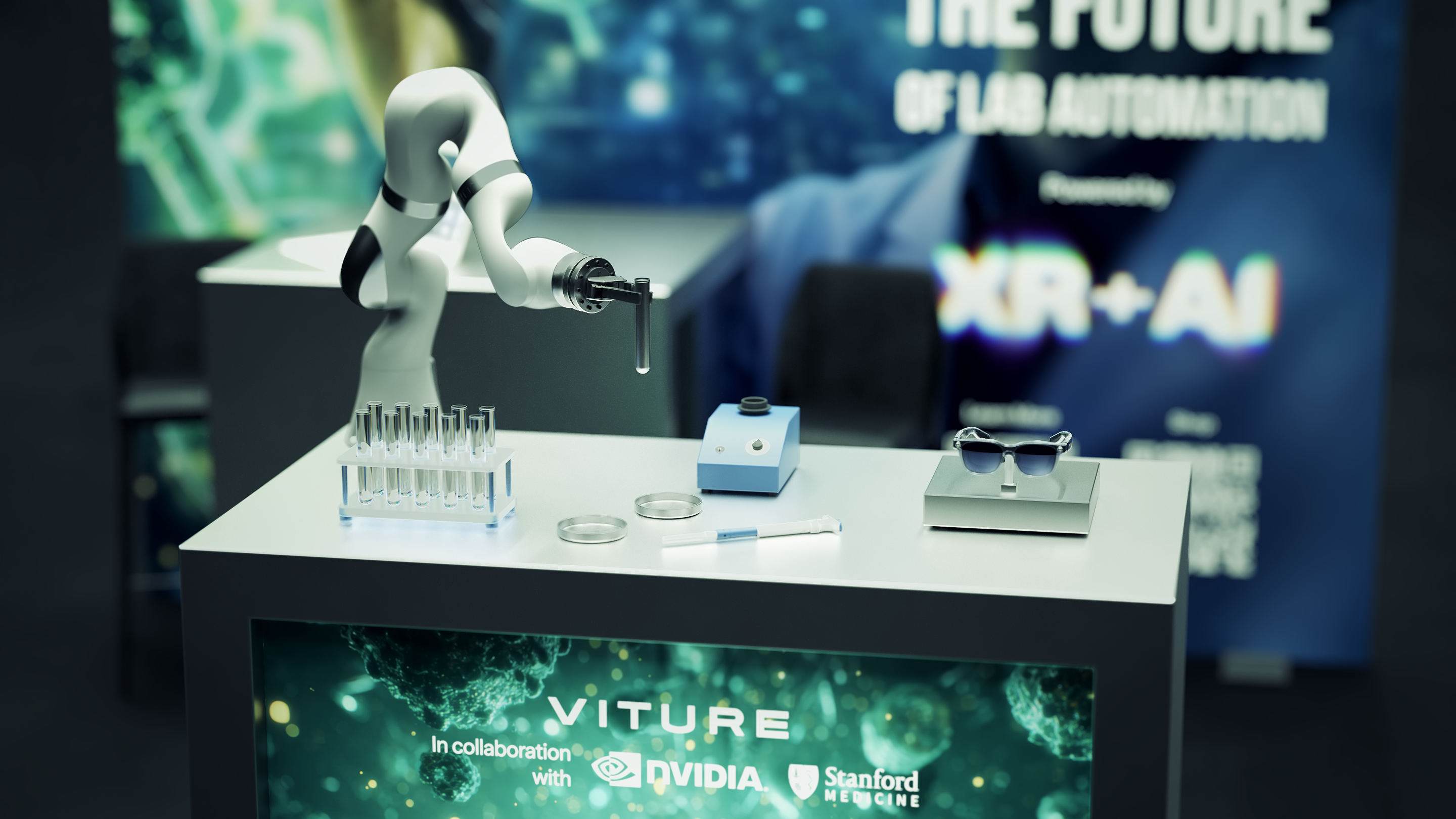

As part of GTC 2026, Viture announced a partnership with Nvidia and the Stanford School of Medicine.
The “solution” combines Viture’s Luma Ultra glasses, an upgraded version of the Luma Pro, in combination with LabOS that brings “hands-free clinical guidance and experimental workflows into real-world research and medical environments.”
LabOS lets researchers use XR smart glassses to interpret experiments and workflows and provide guidance. Nvidia comes into play via GeForce NOW, letting them use the cloud gaming service as an immersive screen to experience 2D content in 3D and help identify spatial relationships.
30 minute countdown
DLSS 4.5 might get some shine
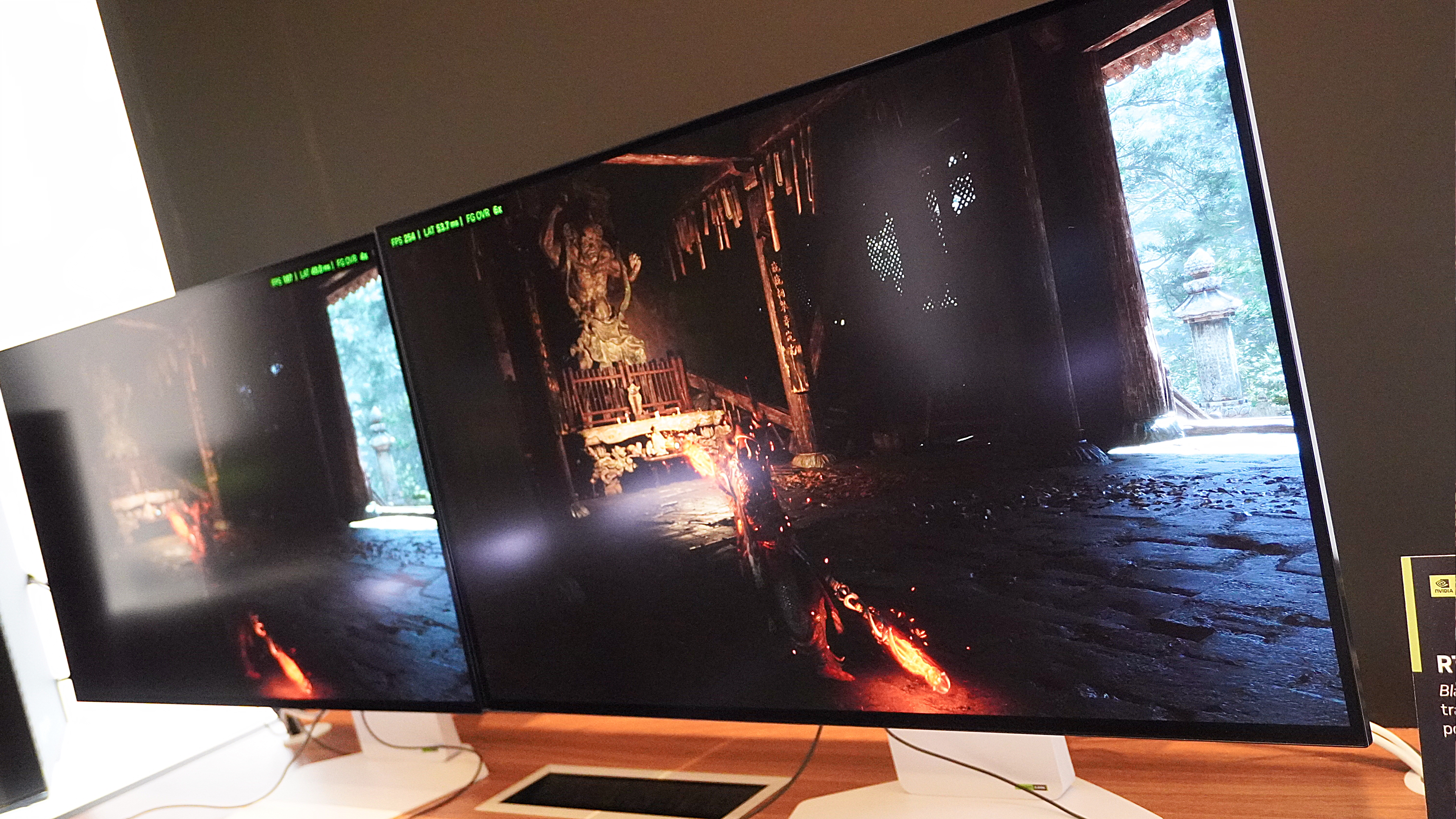
Nvidia launched DLSS 4.5 in January, but it’s been missing Dynamic Multi-Frame Generation. That should launch in beta on March 31.
I’m not expecting Nvidia to spend much time on the frame gen evolution, but I wouldn’t be surprised if it gets touched on during today’s presentation.
Once it’s actually available, you should see a massive leap in frame rate generation and graphical power.
A-minus agentic intelligence
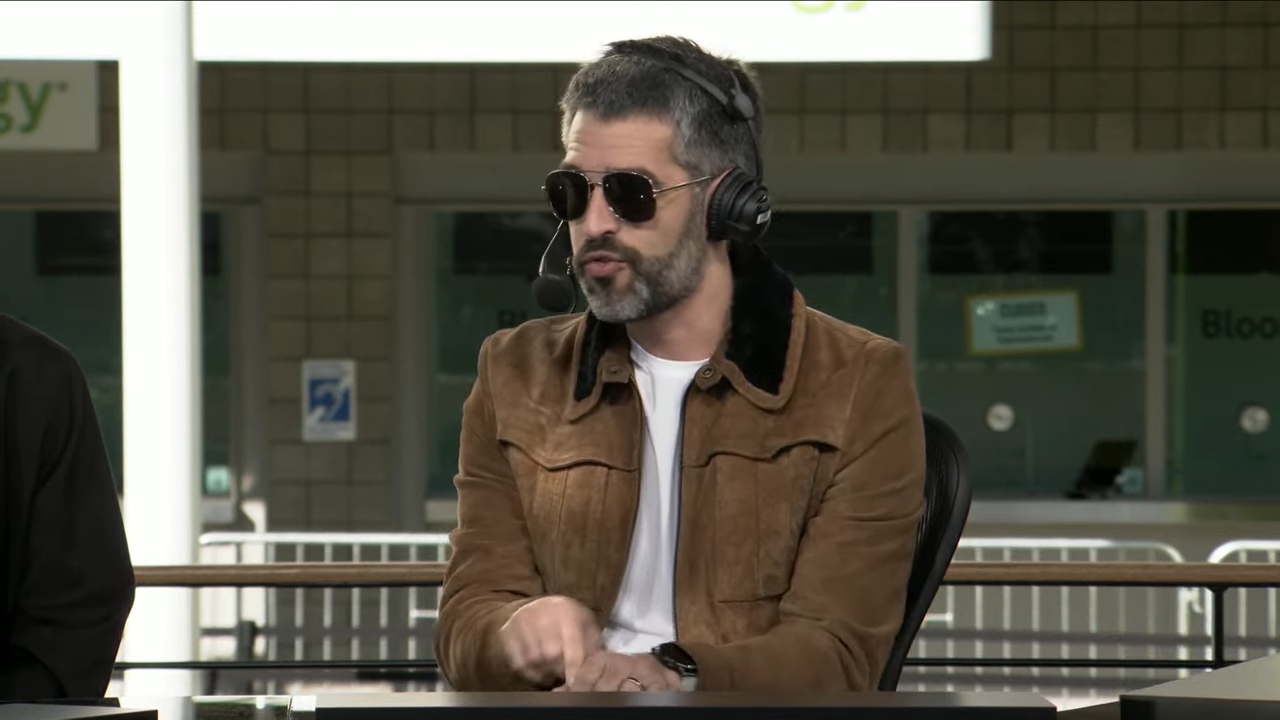
In the pre-show, the Top Gun crew are discussing AI agents at scale and the level of intelligence they are possibly close to achieving.
Right now, Sam Rodriques predicted that they’re at an A-minus grade-wise while they’re looking for A-plus grades. Specifically, this is in reference to scientific studies and medicinal studies.
Expect Agentic AI to be the biggest talking point

Nvidia itself says “you can expect 10 million digital workers” to work alongside humans in the future — calling it a revolutionary technology. And the OpenClaw revolution has hit GTC too — Peter Steinberger is here in appropriate attire and talking to Nvidia’s CEO!
Watch the jacket…
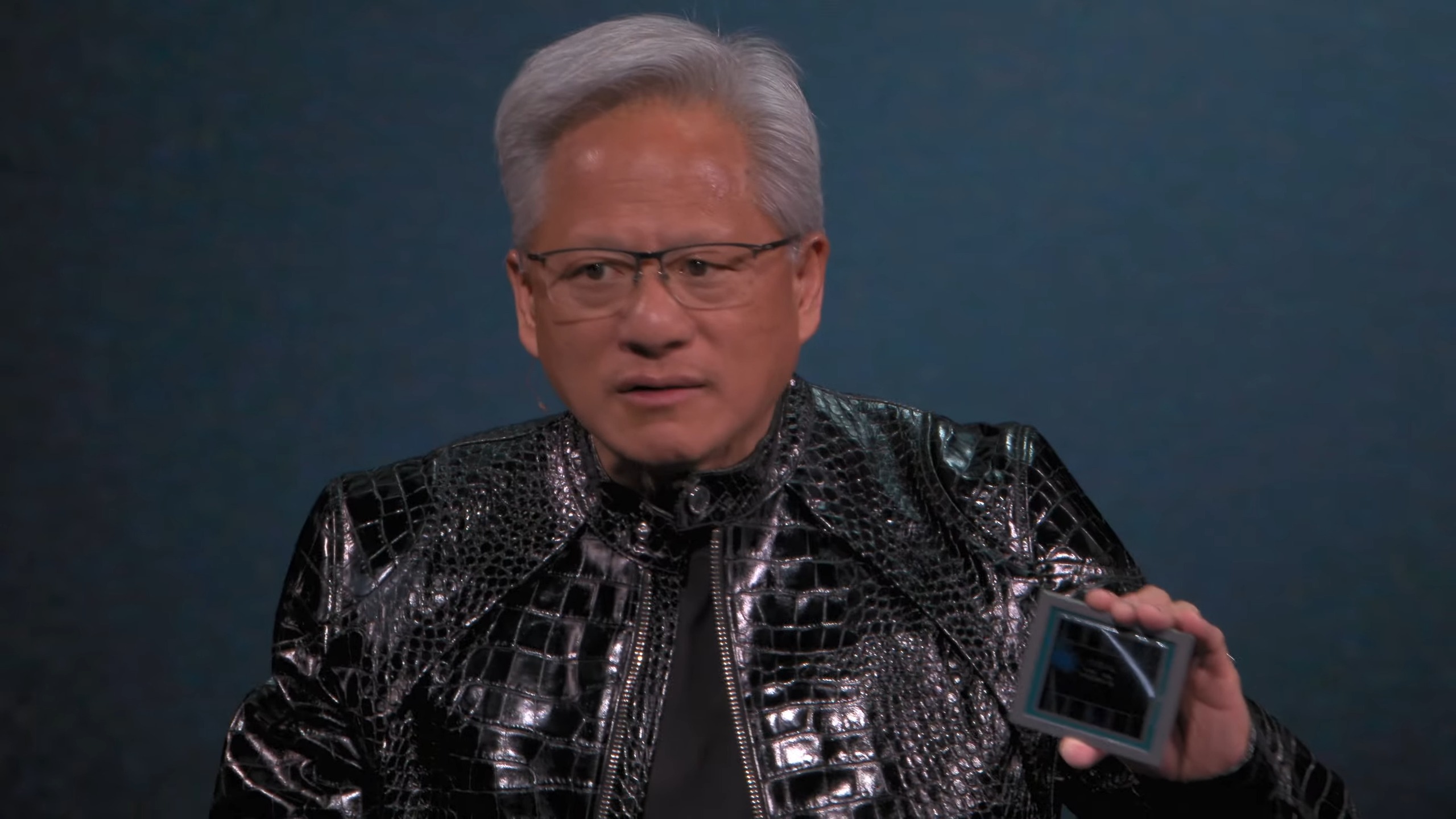

I have a theory — the shinier Jensen’s jacket is, the more significant the announcements are. There have been more muted leather jackets that have brought smaller announcements with it. But this shiny number came out at CES for Vera Rubin!
If we ever end up with rhinestones, expect AGI (or RTX 60-series).
Stock price check!
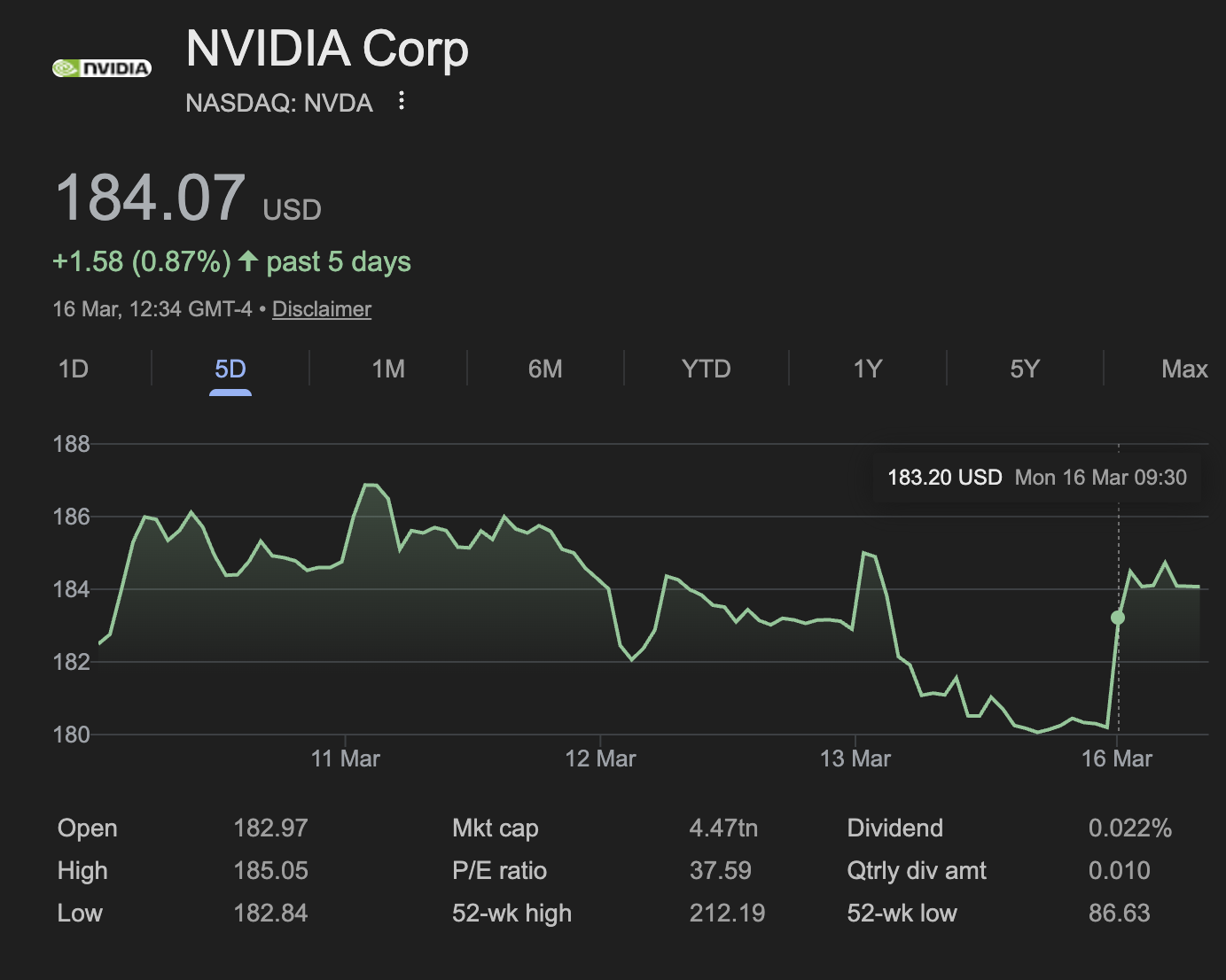

A quick glance suggests it may not happen this year. Stock did take a bounce this morning when markets opened, but we’ll see what happens when the keynote starts!
Will this year’s GTC buck an unfortunate trend?
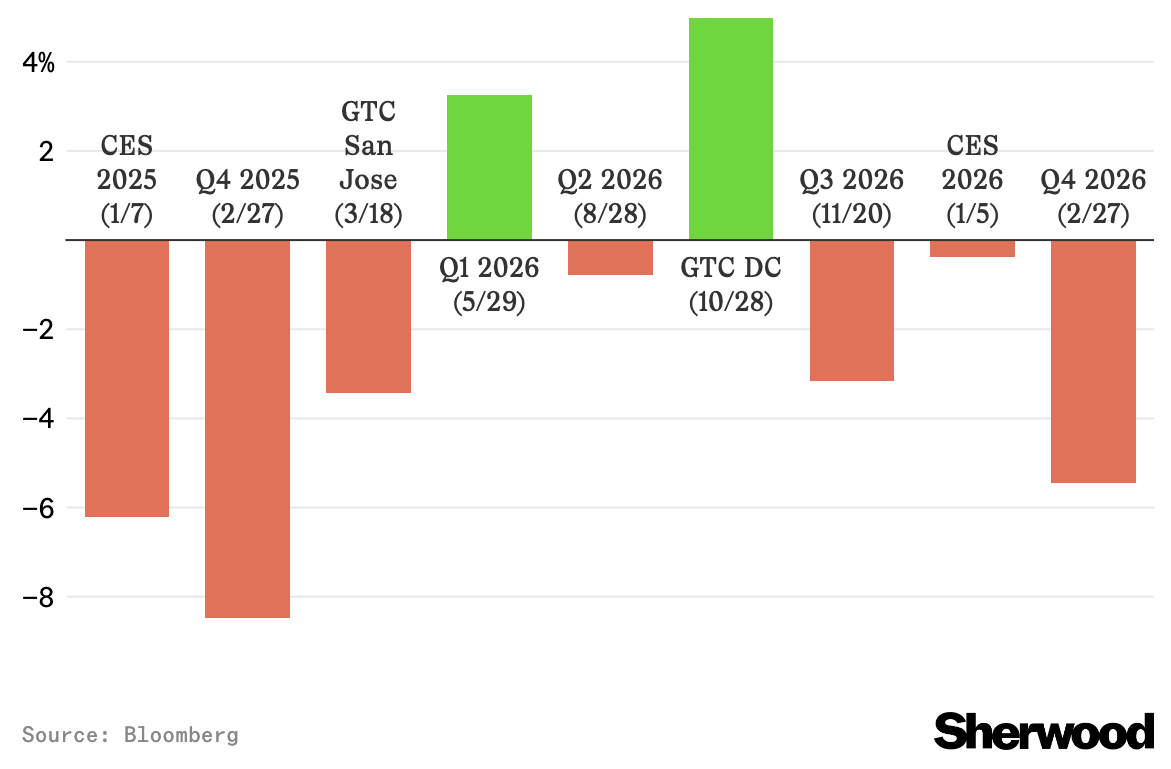

Sherwood has found something interesting. Whenever Jensen Huang speaks at a keynote, the stock price goes down. To clarify, this is probably because of the sky-high expectations people have heading into events like this, rather than the show being disappointing.
There were 4 sunglass’d CEOs sitting in a row
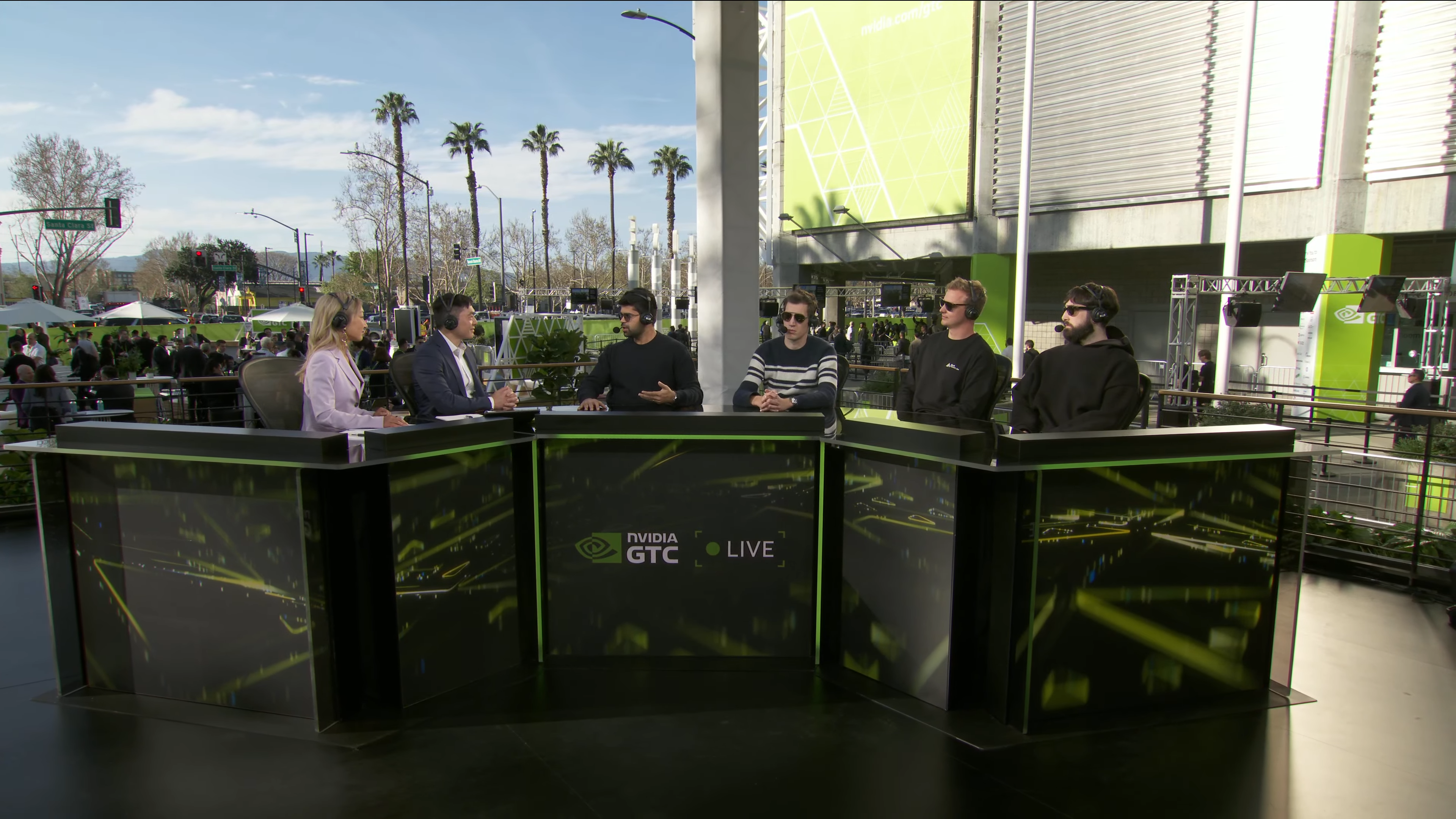
Perplexity, Mistral, Black Forest Labs and Cohere all here to talk new features… But the shades, guys. Did you all talk backstage about the look you all wanted??
What is the mystery chip Jensen will ‘surprise the world’ with?
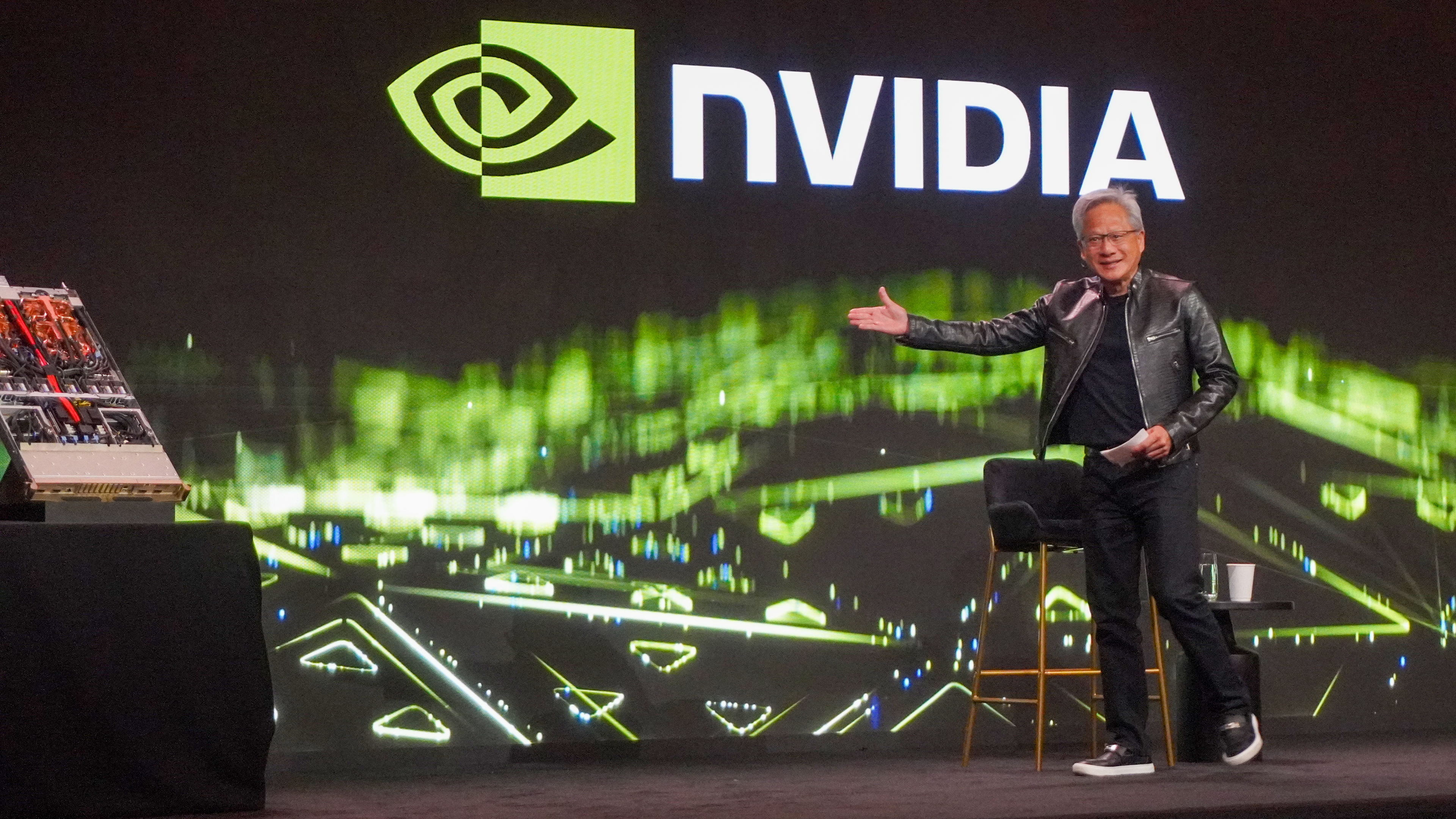
So back in February, CEO Jensen Huang started hyping up the conference by saying we will see “several new chips the world has never seen before.” What are these going to be?
Well, we have seen the Vera CPU and Rubin GPU that will drive 5x more performance through AI data centers (and probably coming to RTX 60-series) — announced at CES 2026. But we’re anticipating that Nvidia could be throwing us a curveball by revealing its Feynam architecture for next-gen GPUs.
This (if ever it came to a consumer GPU) would be way further down the line at RTX 70 or RTX 80-series. The specs are crazy on it — built on a 1.6 nanometer process (smallest at the moment is 3nm), so this would be a real trailblazer in bringing some serious speed boosts.
“AI is creating better, safer jobs”
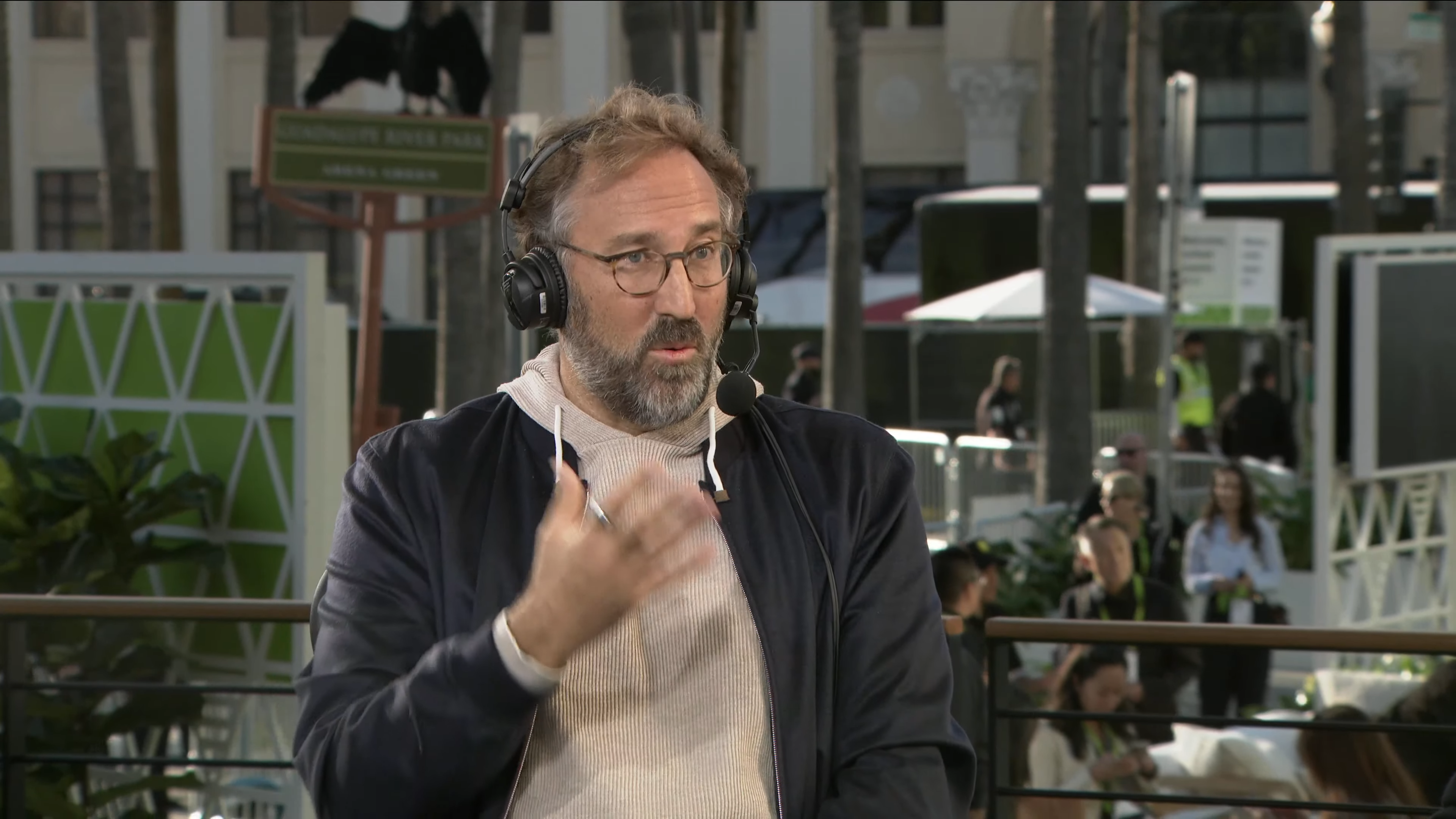
In speaking with an exec at CAT about autonomy in the machinery space, this quote just came out of one of the presenters… Tell that to the 45,000 people who have lost their jobs in the tech space so far in early 2026.
Current lowest prices on Nvidia RTX 50-series GPUs
While we’re watching the pre-amble and interviews with key AI and infrastructure companies that rely on Nvidia, let’s bring this back to you. As you may know, the RAM price crisis has sent costs spiraling.
On top of that, Nvidia did confirm that stocking consumer GPUs was going to be a struggle this year, as the focus goes on data center rollout. That has sent prices a little out of control (to say the least).
If you’re committed to getting one, here are the cheapest prices we’ve found! The UK isn’t as hard hit (especially at the mid-range). But prices have gone up across the board.
|
GPU |
MSRP (US) |
Lowest price (US) |
RRP (UK) |
Lowest price (UK) |
|---|---|---|---|---|
|
Nvidia GeForce RTX 5090 |
$1,999 |
£1,799 |
||
|
Nvidia GeForce RTX 5080 |
$999 |
£979 |
||
|
Nvidia GeForce RTX 5070 Ti |
$749 |
£729 |
||
|
Nvidia GeForce RTX 5070 |
$549 |
£539 |
||
|
Nvidia GeForce RTX 5060 Ti (16GB) |
$429 |
£399 |
Nvidia is bringing a killer app to Apple Vision Pro!
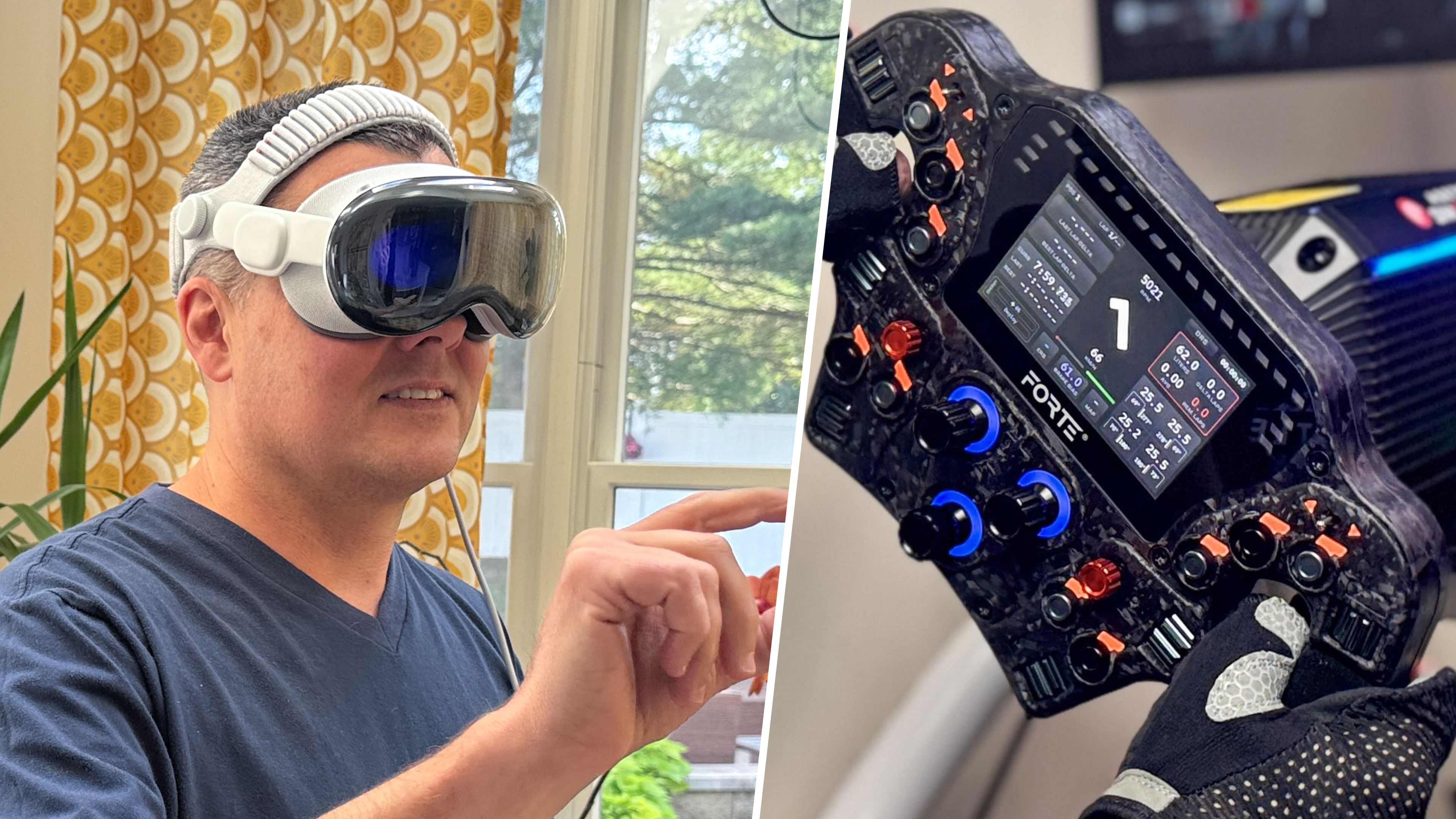
I’m a sim racer, and race often in VR. One of the obstacles has always been the mess of cables for high quality wired VR racing, or the lower picture quality when going wireless.
But now, Nvidia’s CloudXR software is compatible with Apple Vision Pro, and iRacing (and a flying sim game) are going to be fully playable wirelessly at 4K 120FPS!
This is a significant development, and a huge step forward for PC VR (and it’s tempting me to burn $3,500 on an AVP!)
Why Path Tracing is important
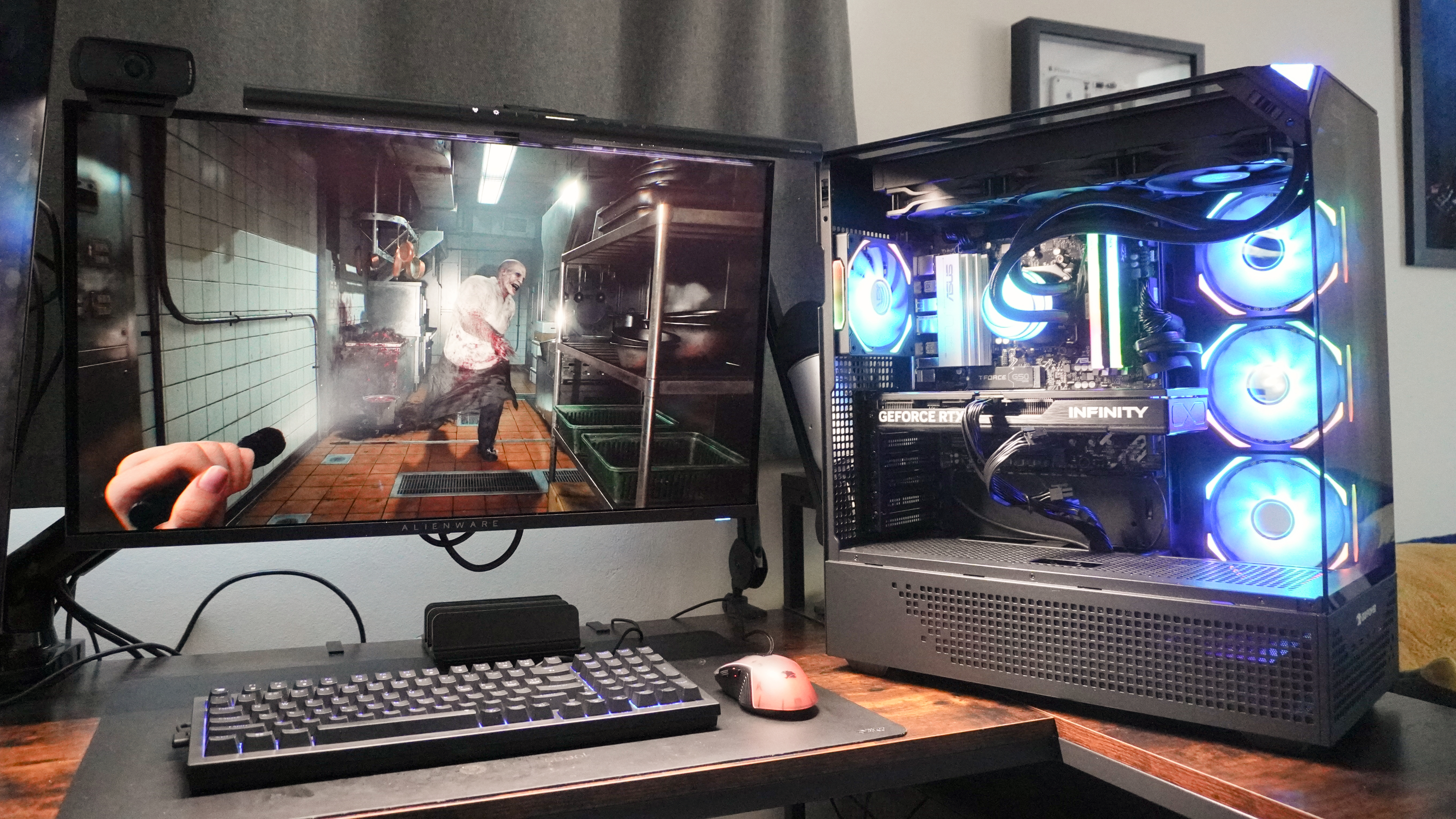
Path tracing is all about physical accuracy. It’s not just a reflection in a puddle, it’s how light from a neon sign bounces off a wet pavement, hits a character’s chrome jacket and subtly tints their skin red. It’s not just the ray traced shiny surfaces of old; path tracing calculates how light interacts with literally everything in a scene in a realistic way.
This can be super testing to do entirely through calculations on the GPU itself, but with a neural network trained on billions of surfaces and light sources, it’s more efficient to do through AI, as you can see from our numbers.
Ready to pre-game?
No, I’m not talking about the kind that involves beer, but rather conversations about “accelerated computing beyond AI.” We’ll be watching with you, so jump in for talks about “one of teh largest infrastructure build-outs in history.”
Will we see Nvidia N1/N1X?
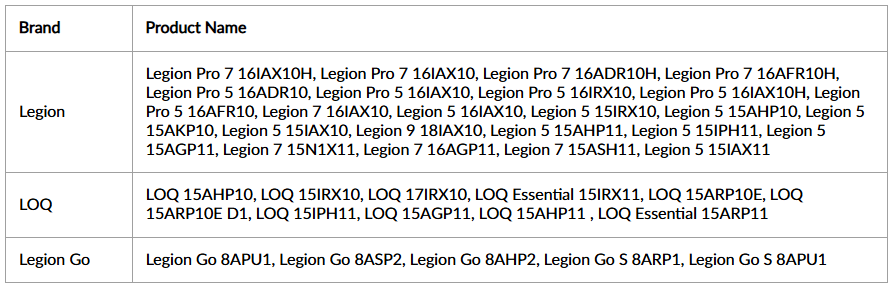

These chips keep appearing in random spec sheets here and there, so why am I only saying it’s a “maybe?”
Well, the answer comes down to two things. First, I’m not hearing much about it after the swell of reports last month. And second, this show’s always been very AI-centric. Of course, we’re getting that gaming preview on the keynote stage, which is definitely a change from the norm.
So it’s anyone’s guess really, but I hope we do get something here!
More vera rubin?

We got a whole lot of info on Vera Rubin at CES 2026, including stats on just how much more powerful this is than the Blackwell GPU tech you see in the RTX 50-series. Namely, 5x more powerful to drive the AI data centers of the future.
While speaking about data centers can be kinda dull, the main thing to look at is the architecture and what it’s capable of from a GPU perspective, because it’s looking very likely that the RTX 60-series will tout the Rubin stylings on the die.
Previously at GTC (and CES)

Each GTC follows a pretty reliable playbook for the year — with March being the event where all the big new stuff is announced. This is what happened last March.
- Nvidia Isaac Groot N1: A new model for robotics, Groot N1 is set to be “the world’s first open Humanoid Robot foundation model.”
- “Blue,” Robotics and AI collaboration: Powered by a new physics engine to simulate robotic movements, Newton was introduced, showcasing a little robot named Blue. It’s a collaborative robotics project with Disney Research and Google DeepMind. An open-source model of Newton will arrive later in 2025.
- Blackwell Ultra AI chips: New chips to be released later this year, aimed at meeting the growing demand for computational power in AI.
- Vera Rubin Architecture: The next step beyond Blackwell, Vera Rubin will increase bandwidth and perform even faster. It’s set for release in late 2026, with Vera Rubin Ultra expected in 2027.
- Nvidia Dynamo: Nvidia’s new open-source software system designed to scale AI models effectively, and it’s able to customize a data center far more effectively.
- Self-driving cars: Nvidia is teaming up with GM to create autonomous cars, developing custom AI systems for autonomous vehicles and putting “AI in the car.”
And you saw these evolve over the year, including Groot N1 making it into more robotics, an Uber partnership for self-driving AI, and Vera Rubin showed in much more detail at CES 2026.
Welcome back!
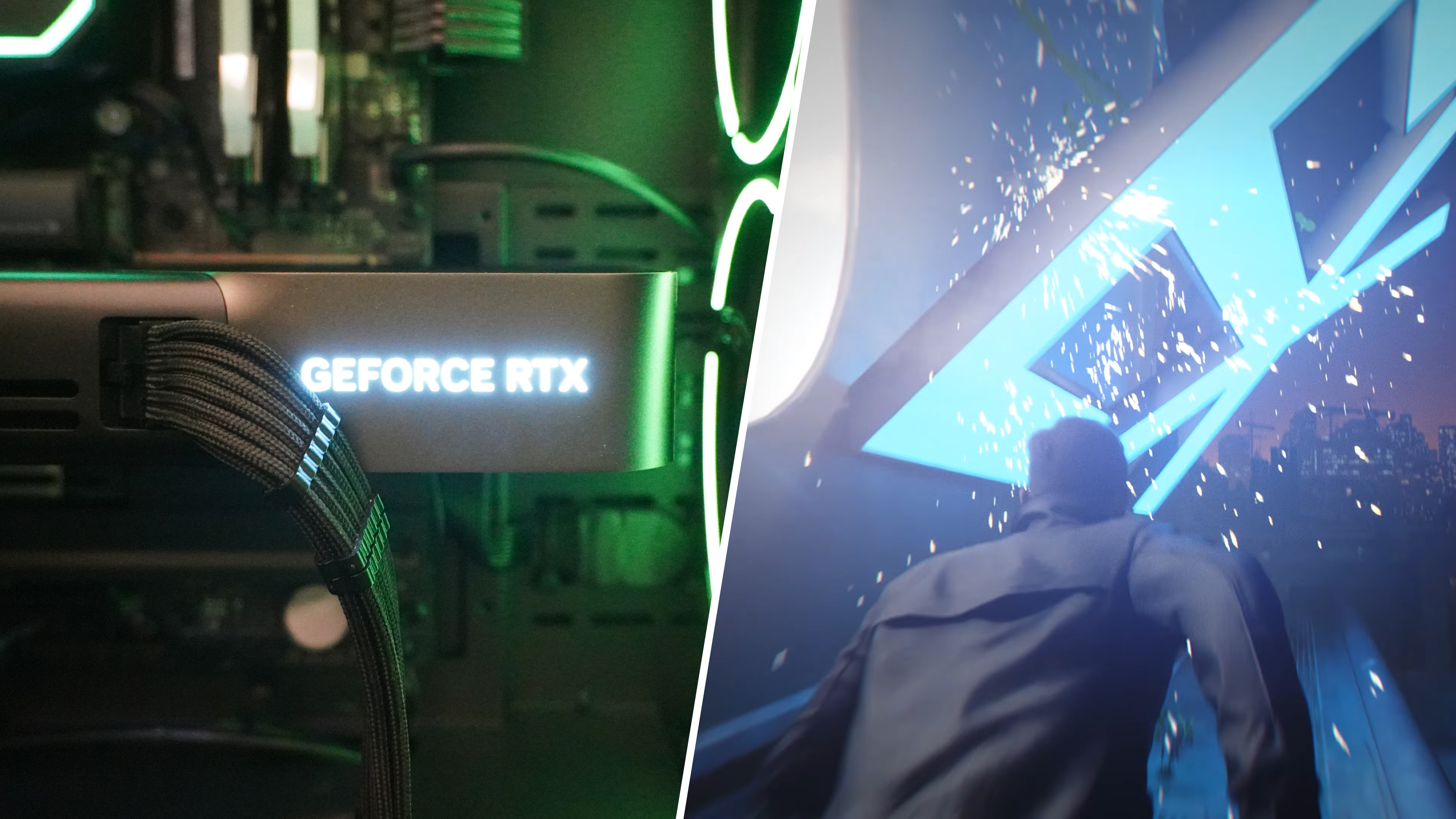
It’s been a while since the last GTC event back in October of last year (and the CES 2026 keynote in January). But Nvidia is back and this looks set to be a big one — with CEO Jensen Huang looking set to lay out the next few years of hardware and AI breakthroughs.
But one thing we’re particularly excited about is a glimpse at “the future of real-time rendering” for PC gaming. These events are usually super focused on the AI factories of the future, and given the lofty promises made by Team Green back at GDC 2026, we may be seeing a preview of a generation of neural rendering that exceeds even what DLSS is capable of.
You must confirm your public display name before commenting
Please logout and then login again, you will then be prompted to enter your display name.
Source link
-

-
-

-

-

