Nvidia RTX 60-series graphics cards won’t be making an appearance this year but Team Green is returning to its PC hardware roots, just not in the way you’d expect.
At a time when the ongoing memory and storage crisis or RAMageddon has made PC building just as or even more expensive than it was during the crypto mining craze, there now appears to be some light at the end of the tunnel. While we aren’t getting new GPUs anytime soon and building a PC still costs a small fortune, Nvidia is giving PC gamers another option: vastly improved integrated graphics.
Just like we saw with the release of Intel’s new Panther Lake chips, Team Green is also planning to give integrated graphics a major boost while simultaneously giving the best gaming laptops a run for their money. The company’s upcoming N1 and N1X chips may be Arm-based but if the latest rumours are to be believed, they could pack the same CUDA core count as an RTX 5070 GPU.
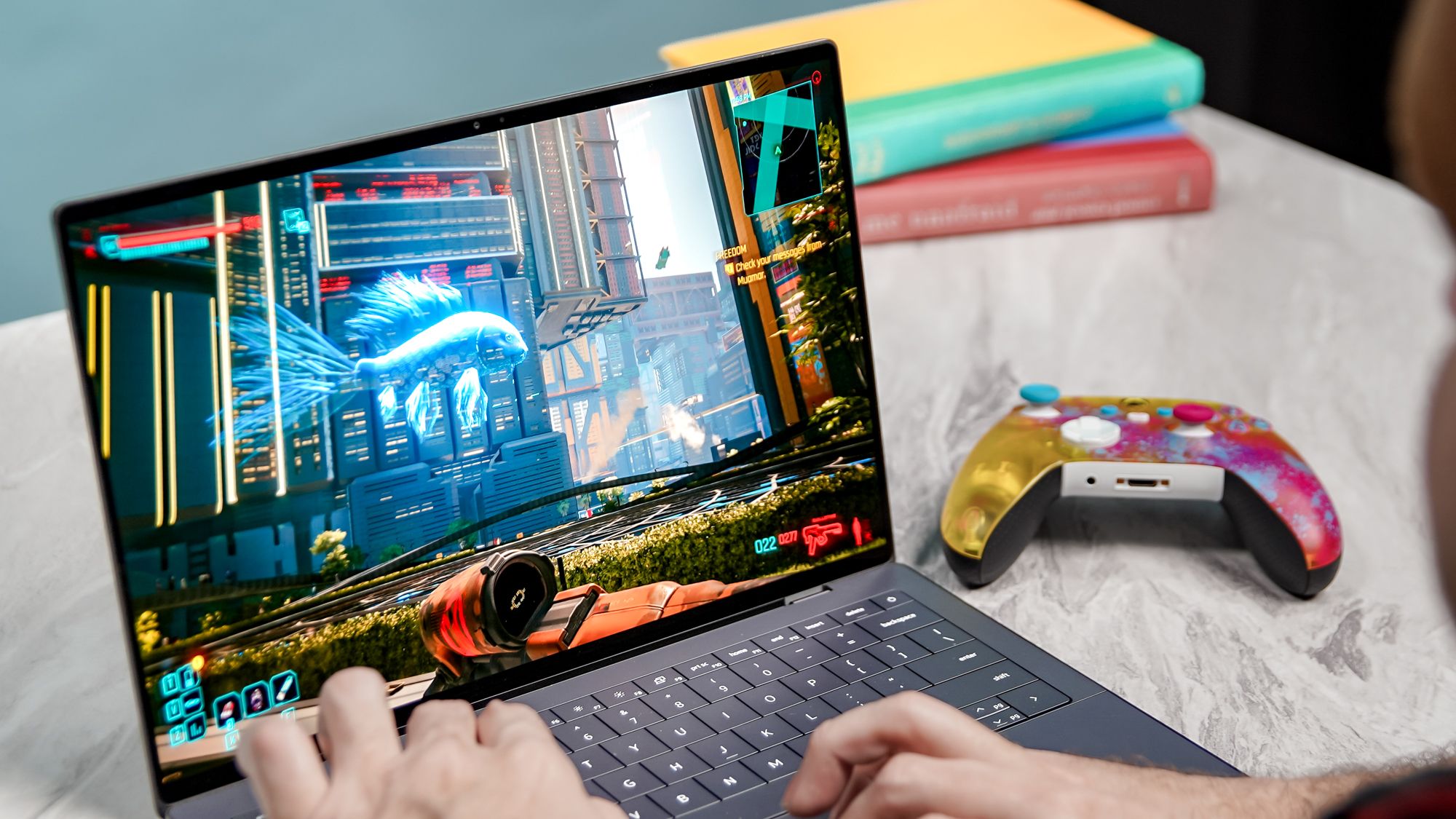
If you’ve been following our Panther Lake coverage, you’ll know that the days of integrated graphics being a joke compared to a discrete GPU are over. Sure, you’re not getting dedicated graphics level performance but being able to play Cyberpunk 2077 at close 60 fps at 1080p on a device like the new Dell XPS 14 (2026) is incredibly impressive. Now imagine that same experience but on a chip designed by Nvidia.
We already know that laptops featuring Nvidia’s new N1 and N1X chips are in the works from both Lenovo and Dell. However, could this mean you might soon be able to leave your bulky gaming laptop at home and get some serious playtime in with a device that’s significantly lighter and much easier to slip into a bag?
Personally, I’m optimistic but first Nvidia will have to overcome the hurdles that come with gaming on an Arm-based CPU. Here’s how Team Green might just be able to pull off this impressive feat.
No VRAM, no problem
Even with a top-of-the-line gaming laptop, there’s one obstacle that will always hold back its performance and that’s VRAM. Dedicated laptop graphics chips like those found on the Asus ROG Zephyrus G14 and the Razer Blade 16 will always be limited by the amount of VRAM they have. Fortunately with the N1X though, Nvidia may have found an answer to this problem.
Just like Apple’s M-series chips in the best MacBooks, the N1X won’t use separate RAM and VRAM for memory. Instead, it will use a unified memory pool where memory is shared between the CPU, GPU and NPU. Not having dedicated memory just for graphics might seem like a downside at first but in this scenario, it’s actually an advantage.
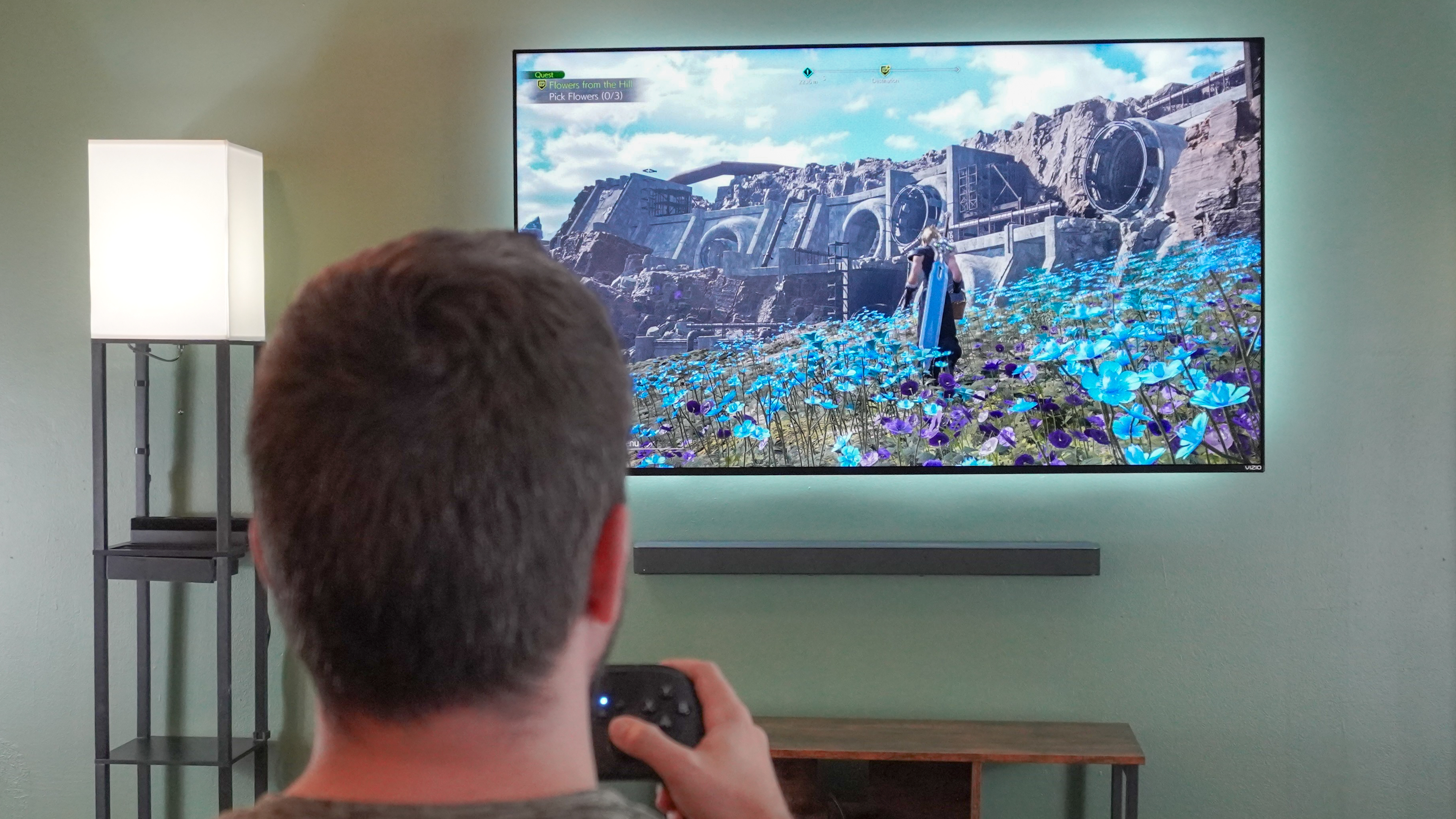

In my time testing the best mini PCs, I’ve reviewed gaming-focused ones with dedicated graphics like the AtomMan G7 Ti but more recently, I had a chance to check out the Framework Desktop. It too uses unified memory and while my review unit came with 64GB of LPDDR5x, I wasn’t stuck just using all that memory for the CPU. When it was time to play games, I allocated a full 32GB of RAM just to its built-in Radeon 8060S graphics which really made a difference while playing through Final Fantasy 7 Rebirth.
Based on leaks and die shots, we know that Nvidia’s N1X chip is a consumer-tuned version of its GB10 Superchip which powers its DGX Spark AI workstations. With 6,144 CUDA cores on board, this is identical to the core count of a desktop RTX 5070.
More importantly, the N1X reportedly features a massive 256-bit memory bus — the kind of “firehose” bandwidth usually reserved for high-end dedicated cards — allowing those thousands of cores to pull data from the system RAM at over 300 GB/s. Now combine that with the fact that like the GB10 Superchip, Nvidia’s upcoming N1X chip will also have unified memory and you’ve got a perfect recipe for supercharged integrated graphics.
Like on my Framework Desktop, you’ll be able to allocate a certain amount of its unified memory just to playing games. If RAM prices do come down — we’ve seen signs they might be starting to — and you get a new laptop with an Nvidia chip on board and 32GB of RAM, you could then set aside up to 16GB of memory for gaming.
This is due to the fact that by default, Windows 11 on Arm usually allows an integrated GPU to access up to 50% of system memory on its own with no intervention on your part. With a 256-bit bus, that 16GB of memory doesn’t just sit there; it acts with the speed and responsiveness of a dedicated card.
Speaking of Arm, that’s the final piece of the puzzle Nvidia will need to crack if it wants to make thin and light laptops that can also deliver significantly improved gaming performance.
From emulated to native graphics
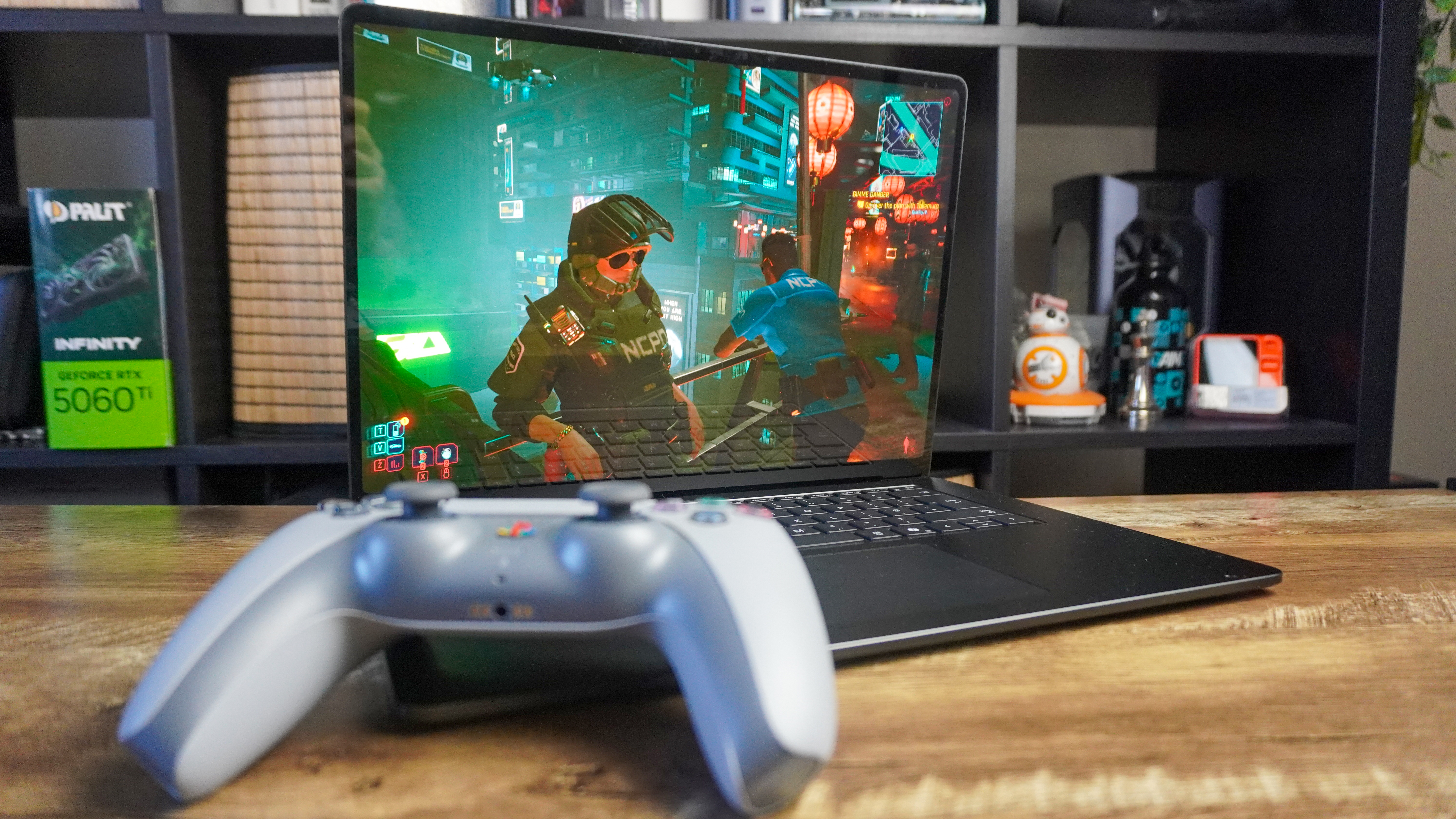

As it stands now, when you want to play the best PC games on a Windows laptop running an Arm-based chip, you need to do so using Prism. The reason for this is that most games are written for x86 (which Intel and AMD both use) and first need to be translated so that they can run on Arm.
Back in December, Microsoft updated Prism and this is what allows demanding games like Cyberpunk 2077 to run on Arm-based devices. However, since your device is translating the game from x86, you lose about 10 to 20% of the power from your laptop’s CPU.
With its new N1X chips, Nvidia will reportedly bypass Prism altogether with a full ARM64 version of its GeForce Game Ready Driver. This driver works hand-in-hand with the new Windows 11 version 26H1 (codenamed “Bromine”), which launched earlier this month.
Unlike the standard version of Windows, 26H1 features a specialized “Arm-first” scheduler designed specifically to help chips like the N1X prioritize gaming performance without the usual emulation stutters.


Nvidia is taking things a step further by utilizing the N1X’s NPU (or Neural Processing Unit) to add its DLSS frame-gen tech to the mix. DLSS 5.0 will run entirely on the N1X’s NPU and if you’ve tried frame-gen tech on a less capable device before, you know how much of a difference it can make. In this case though, when games running on Arm are slowed down because they need to be translated first, DLSS can help make up for that performance loss and bring their frame rates back up.
While you’ll still be able to use Prism for older games, when playing newer titles on N1X laptops, you won’t have to thanks to the combination of Nvidia’s ARM64 driver and Microsoft’s new Windows architecture. Of course, we’ll have to test this out for ourselves once laptops with N1X chips are released but what I’ve heard so far is almost enough to convert me from an Arm skeptic into a believer, especially when it comes to gaming.
Hurry up and wait for your next laptop
Between the ongoing RAM crisis and a slew of newer, powerful laptops on the horizon, playing the waiting game is likely your best move right now. If you can hold off on upgrading from your current laptop, then you’ll likely be in for a big surprise when you do so later this year.
Imagine being someone who bought a new Intel-based Mac right before Apple released its M1 chip. With Nvidia entering the laptop market in a big way with its own chips, I think we could be in a similar situation right now.
By playing the waiting game just a bit longer, you could get a whole lot more bang for your buck. In fact, instead of getting a laptop for work and one of the best handheld gaming PCs to satisfy that gaming on the go itch, you could effectively get both devices in one.
There are even whispers that some of these N1X laptops will feature “detachable” designs similar to the ROG Flow, allowing them to transform from a productivity machine into a high-powered gaming tablet.
Although Intel got a head start with its new Panther Lake chips, the future of integrated graphics has never looked more promising now that Nvidia has thrown its hat into the ring. If the N1X can truly deliver RTX 5070-level performance without the bulk of a dedicated GPU, the “gaming laptop” as we know it is about to change forever.


Follow Digitpatrox on Google News and add us as a preferred source to get our up-to-date news, analysis, and reviews in your feeds.
More from Digitpatrox
Source link
-

-

-
-

-