
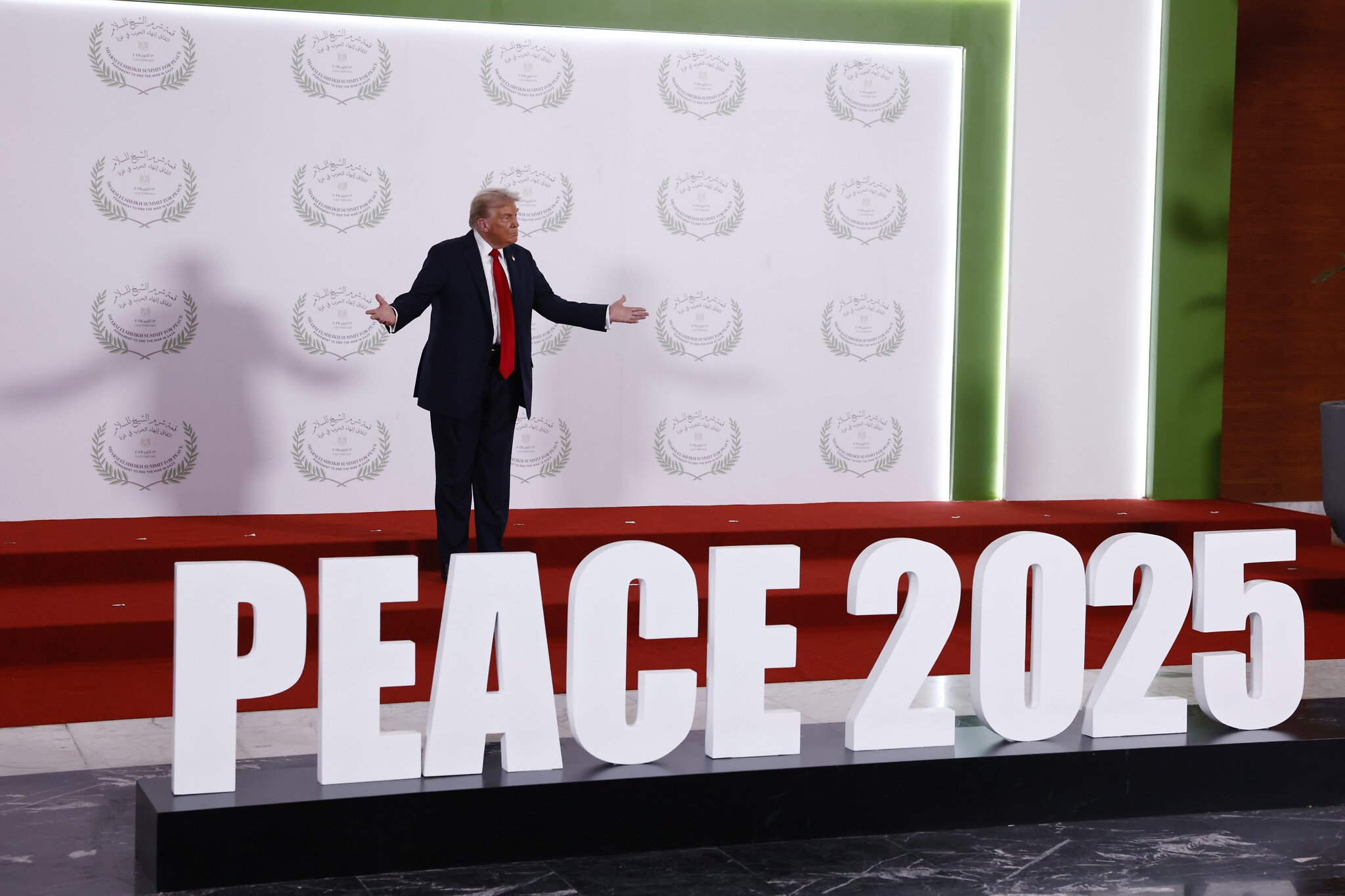
US President Donald Trump’s administration on Wednesday announced the commencement of phase two of its plan for ending the Gaza war, which envisions the establishment of a series of panels tasked with governing the Strip in place of Hamas.
Many of the new bodies have similar names, and some of them will play more symbolic roles than others, but here is what we know about each of them.
Board of Peace
The Board of Peace is the umbrella body that was mandated by the UN Security Council to oversee the postwar management of Gaza until the end of 2027.
The Board of Peace is chaired by Trump, and will largely be made up of heads of state from around the world.
Formal invitations to the Board of Peace were sent out on Friday, and by Saturday the leaders of Turkey, Egypt, Canada and Argentina confirmed having received the offer — an indication that they will likely accept.
While this is the most prominent of all the panels established, the Board of Peace will play a more symbolic role and be more relevant during the fundraising stage, a senior Arab diplomat told The Times of Israel.
The Board of Peace mandate obtained by The Times of Israel makes no mention of Gaza, bolstering reporting from earlier this month that Washington envisions the Board of Peace usurping the United Nations by getting involved in resolving other conflicts around the world.
However, the mandate of the board approved in November by the Security Council is limited to Gaza.
The US is aiming to hold the first Board of Peace meeting on the sidelines of the World Economic Forum in Davos, Switzerland, on Wednesday, officials familiar with the matter have told The Times of Israel.
Gaza Executive Board
The Gaza Executive Board is the operational arm of the Board of Peace and the body that will actually oversee the postwar management of Gaza.
Sitting on the Executive Board are Turkish Foreign Minister Hakan Fidan, senior Qatari diplomat Ali Thawadi, Egyptian intelligence chief Hassan Rashad, UAE Minister of International Cooperation Reem Al-Hashimy, former UK prime minister Tony Blair, US special envoy Steve Witkoff, top Trump aide Jared Kushner, Apollo Global Management CEO Marc Rowan, Israeli-Cypriot businessman Yakir Gabay, former UN humanitarian coordinator Sigrid Kaag, and former UN envoy to the Mideast Nickolay Mladenov.
Mladenov has also been named high representative for Gaza and will be the executive board’s on-the-ground liaison to the new Palestinian technocratic government.

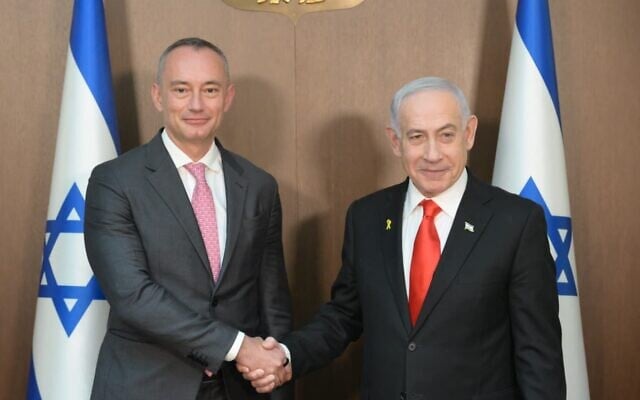
Israel has expressed its opposition to the makeup of the Executive Board, apparently taking issue with the inclusion of representatives from Turkey and Qatar, who were heavily critical of its prosecution of the war in Gaza.
However, the inclusion of both countries demonstrates their perceived utility to Trump, who has touted his personal relationships with the leaders of Turkey and Qatar as well as their success in pressuring Hamas to accept a ceasefire deal in October.
Founding Executive Board
In addition to inexplicably sharing nearly the same name as the Gaza Executive Board, the Founding Executive Board also consists of many of the same members.
Joining Witkoff, Kushner, Blair and Rowan on this additional board are US Secretary of State Marco Rubio, World Bank president Ajay Banga and Trump’s former deputy national security adviser Robert Gabriel.
The White House said that each member of the Founding Executive Board “will oversee a defined portfolio critical to Gaza’s stabilization and long-term success, including, but not limited to, governance capacity-building, regional relations, reconstruction, investment attraction, large-scale funding, and capital mobilization.”
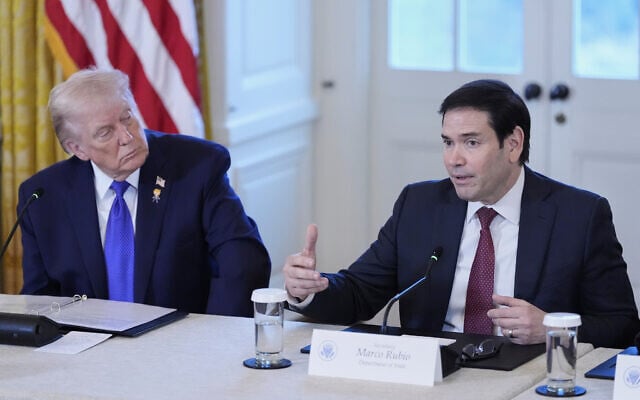
A source familiar with the matter said that this additional committee will not play a critical role in decision-making, and The Times of Israel’s reporting has focused more on the Gaza Executive Board.
However, the White House said Friday that additional members of both committees would be announced in the coming weeks.
National Committee for the Administration of Gaza (NCAG)
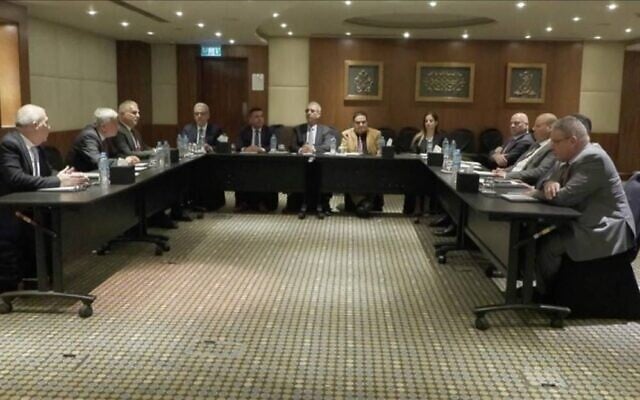
The National Committee for the Administration of Gaza is the committee of Palestinian technocrats that will be tasked with running daily affairs on the ground and providing services for Gazans in place of Hamas.
While Egypt, in announcing the new panel, claimed it consists of 15 members, the actual figure is 12, and they are headed by former Palestinian Authority deputy planning minister Ali Shaath.
Today, as my first official act, I adopted and signed the NCAG Mission Statement, affirming our governing mandate and operating principles:
Authorized by the UN Security Council Resolution 2803 and President Donald J. Trump’s 20-Point Peace Plan, the National Committee for the… pic.twitter.com/WJJZLtW356
— Dr. Ali Shaath (@AliShaathNCAG) January 17, 2026
Shaath is an engineer by trade and has proposed pushing the vast amounts of Gaza rubble into the adjacent Mediterranean Sea to expand the Strip’s territory amid a dire housing crisis for a population that has been overwhelmingly displaced by the war.
Each of the other panel members was given a portfolio covering the fields in which they are experts.
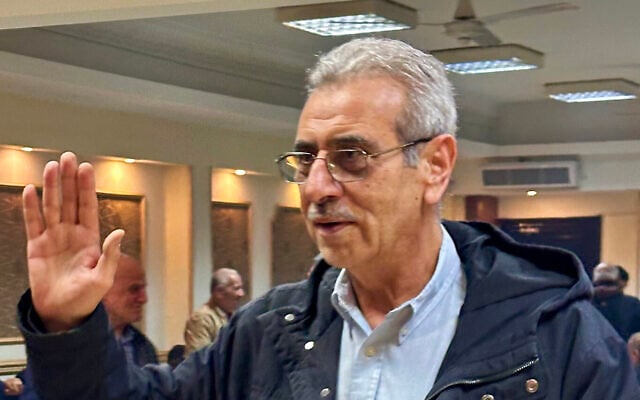
Abdul Karim Ashour, who heads an agricultural non-profit, will serve as agriculture commissioner.
Aed Yaghi, who currently heads the Palestinian Medical Relief Society, will serve as health commissioner.
Osama Sa’adawi, who previously headed the Palestinian Housing Council nonprofit, will serve as housing commissioner.
Adnan Abu Warda, a former PA Supreme Constitutional Court judge, will serve as justice commissioner.
Maj. Gen. Sami Nassman, who has served in the PA’s General Intelligence Service and is seen as a strong opponent of Hamas, will serve as internal security and police commissioner.
Ali Barhoum, who was in charge of waste management and once served as director general of the Rafah municipality, will serve as water and municipal affairs commissioner.
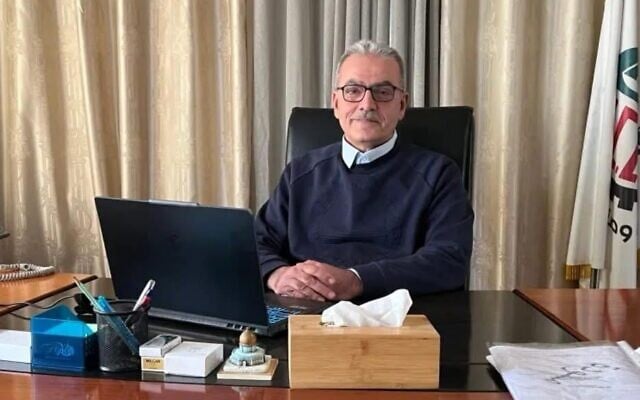
Bashir al-Rais, a businessman who also consults on business and financial affairs, will serve as finance commissioner.
Hanaa Tarzi, a Christian lawyer and human rights group director, will serve as social affairs commissioner.
Jabr al-Daour, the president of Palestine University in Gaza City, where he also teaches accounting, will serve as education commissioner.
Omar Shamali, the former director of Palestine Telecommunications Company (Paltel), will serve as communications commissioner.
Ayed Abu Ramadan, who chairs the Gaza Chamber of Commerce, will serve as economy and trade commissioner.
International Stabilization Force (ISF)
The International Stabilization Force is tasked with providing security for the Strip, while gradually phasing out the IDF, which currently remains in control of 53% of the enclave.
While the US has said the ISF will support efforts to disarm Hamas, officials familiar with the matter said the multinational force won’t be expected to engage in kinetic activity to seize weapons from the terror group that has pledged not to give them up.
Instead, they will support the disarmament process once an agreement is reached, with mediators optimistic that Hamas will agree to a gradual process that starts with the return of heavy weapons, Arab and US officials have said.
It’s unclear, however, whether Israel will accept an agreement that differentiates between heavy and light weapons.
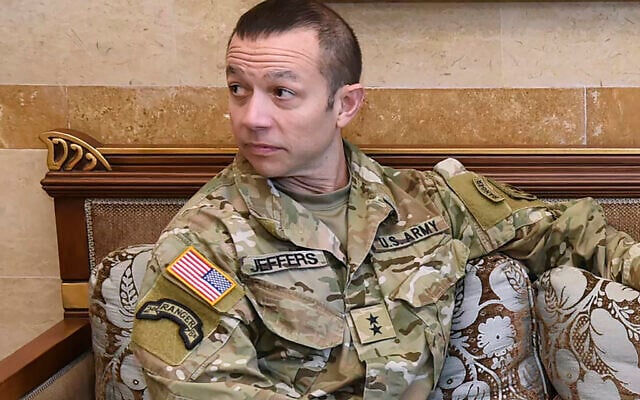
The White House announced Friday that Central Command Special Operations Commander Maj. Gen. Jasper Jeffers has been appointed commander of the ISF, “where he will lead security operations, support comprehensive demilitarization, and enable the safe delivery of humanitarian aid and reconstruction materials.”
Jeffers previously was a co-chairman of the Cessation of Hostilities Implementation Mechanism, which has been monitoring the Israel-Hezbollah ceasefire in Lebanon reached in November 2024.
The US had struggled to convince countries to contribute troops to the ISF board amid heavy skepticism that Hamas will disarm and that the IDF will withdraw further from Gaza. One of the two countries Washington had publicly touted, Azerbaijan, announced earlier this month that it would not be participating.
US officials briefing reporters last week insisted that they now have enough countries offering troops and that an announcement can be expected in about two weeks.
Moreover, one of the officials appeared to confirm The Times of Israel’s reporting on the shrinking of the ISF mandate to more limited tasks such as securing borders and humanitarian aid, rather than kinetic activity to disarm Hamas.
“A lot of the work inside Gaza will be done by the local Palestinian police forces, which we think is the most important element of this plan, so we’ve been putting a lot of time into that,” the US official said.
-

-

-
-
-


