In an evolving health landscape, emerging research continues to highlight concerns that could impact everyday wellbeing. Here’s the key update you should know about:
An 8-week community-based intervention suggests that pairing resistance training with whole-food protein and nutrition education may strengthen bones and improve physical performance in older adults. Milk, paired with carbohydrates, delivered a measurable advantage over soy for grip strength.
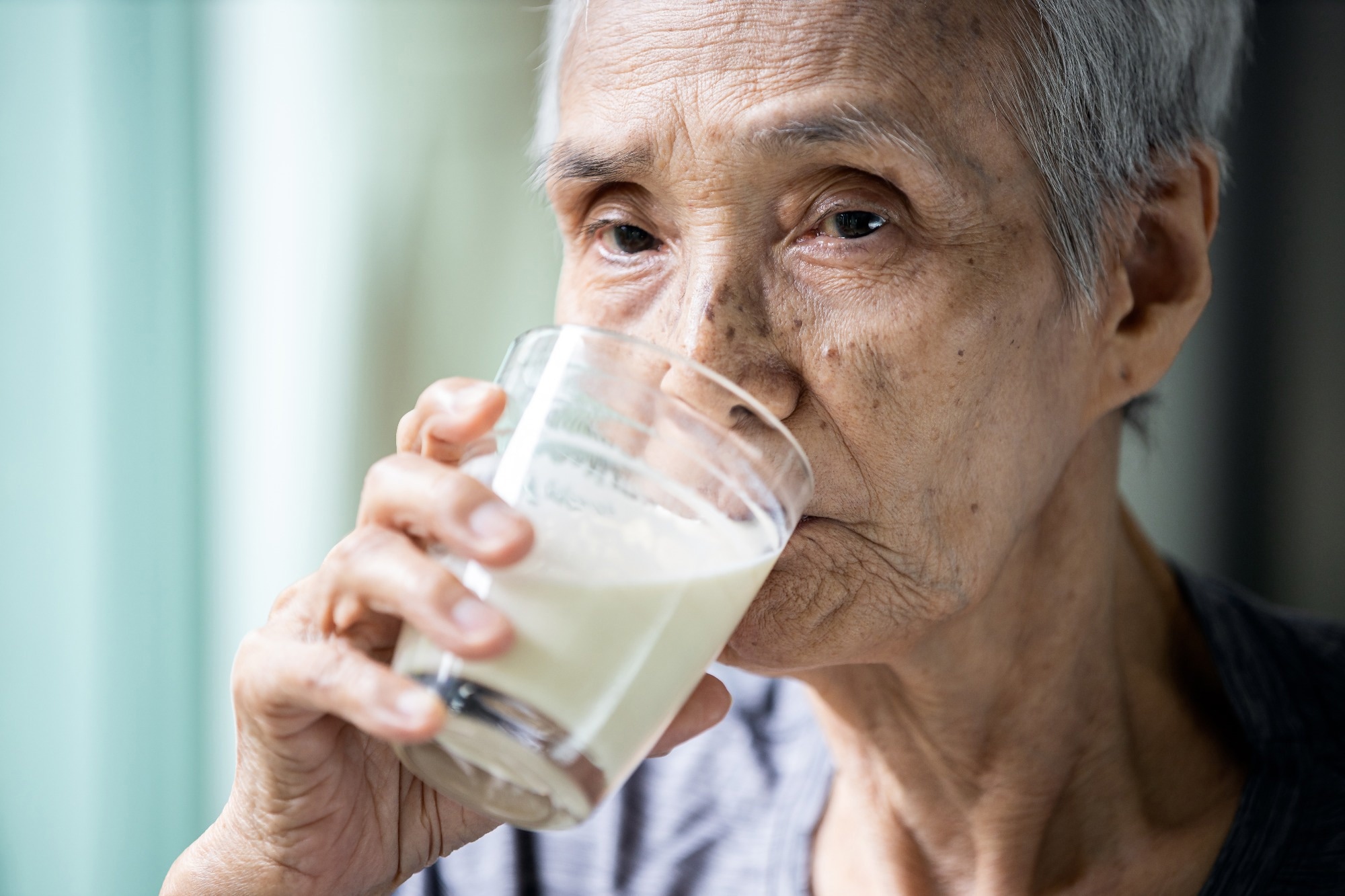
Study: Muscle performance and bone density following a multi-intervention program with milk or soy milk supplementation in older adults: quasi-experimental study. Image credit: CGN089/Shutterstock.com
A recent study in the Journal of Nutrition, Health and Aging investigated the musculoskeletal outcomes of a combined intervention comprising food-based protein supplementation, nutrition education (NE), and resistance exercise in older adults. This study compared milk and soy milk as protein sources.
The Challenge of Musculoskeletal Decline and the Role of Nutrition and Exercise in Aging
As the global population ages, maintaining muscle mass and bone mineral density (BMD) has become a major health challenge. These physiological changes increase the risk of sarcopenia and osteoporosis, leading to osteosarcopenia. Simultaneous loss of muscle and bone accelerates physical decline and enhances the risk of falls, disability, depression, malnutrition, and death. With increasing life expectancy, supporting musculoskeletal health is more important than ever before.
Engaging in physical activity, particularly resistance exercise, and implementing dietary interventions that increase protein intake are essential for preventing both sarcopenia and osteoporosis. Age-related declines in appetite and digestion limit the intake of suitable protein. Consuming protein in several smaller meals throughout the day can help maximize digestion and absorption.
Given that many older adults experience difficulty chewing and dry mouth, liquid protein sources such as milk and soy milk are often more appealing and easier to consume. Although both milk and soy milk are widely consumed, not many studies have directly compared their effects on older adults’ health.
Multiple studies have highlighted NE‘s role in fostering healthy eating habits and increasing protein intake. NE can help older adults make better dietary choices, enhance their nutritional well-being, and lower their risk of nutrition-related illnesses. It is important to understand whether combining these approaches with exercise creates additional benefits for muscle and bone health in older adults.
The Impact of Protein Supplementation and NE in Older Adults’ Musculoskeletal Wellness
For this study, soy protein was selected as the plant-based protein for its high branched-chain amino acid content and sustainability. Both soy milk and milk proteins have high digestibility and efficiency, making them suitable for older adults and selected for comparison in the study.
A total of 82 community-dwelling adults aged 60 or older were recruited from five centers. None of the participants had any history of conditions or were under medications that would limit protein intake. All participants completed a standardized 8-week exercise program comprising 24 sessions (3 times per week) of resistance and balance training.
Selected participants were assigned to four groups: exercise alone, exercise and NE, exercise and NE with milk supplementation, and exercise and NE with soy milk supplementation. Group 1 and Group 2 received no additional dietary intervention. Group 3 received 240 mL of low-fat milk, and Group 4 received 230 mL of soy milk, each providing 7–8 g protein per session, consumed within 30–60 minutes post-exercise.
In addition, both Groups 3 and 4 received 60 g of steamed sweet potato after each session to provide a standardized carbohydrate-to-protein ratio. Groups 2–4 attended weekly NE sessions for 8 weeks, focusing on healthy eating, adequate energy and protein intake, improving food texture, disability prevention, protein intake, sarcopenia prevention, injury prevention, and oral health.
Improving Muscle and Bone Health in Older Adults with Diet, Education, and Exercise
Baseline demographic and clinical characteristics were comparable among all groups, with no significant differences in age, sex, body mass index (BMI), nutritional status, or muscle parameters. The only exception was a higher spinal BMD in Group 2 than in Group 1.
Walking Speed Improvements Across All Groups
All groups demonstrated statistically significant improvements in walking speed post-intervention. These findings indicate consistent enhancements in mobility and functional performance regardless of group assignment.
Neuromuscular Function Gains in Group 1
Group 1 showed significant improvement in handgrip strength and sit-to-stand performance, indicating enhanced neuromuscular function and lower-limb strength. These results suggest targeted functional benefits within this intervention arm.
Comprehensive Muscle Performance in Group 3
Group 3 demonstrated improvements in handgrip strength, chair stand time, and Short Physical Performance Battery (SPPB) scores. These combined gains reflect broader enhancements in muscle strength, physical performance, and functional capacity.
No Significant Increase in Muscle Mass
No intervention group experienced a statistically significant increase in muscle mass during the study period. This absence of measurable hypertrophy may be attributable to the relatively short 8-week intervention duration.
Bone Mineral Density Changes by Group
Group 1 experienced declines in bone mineral density at certain skeletal sites, indicating potential bone loss during the intervention. In contrast, Group 3 showed an increase in T-score, suggesting improved bone health.
Groups 2–4 demonstrated greater increases in upper-limb BMD compared with Group 1, supporting the potential skeletal benefits of nutrition education and protein supplementation.
Additionally, Group 3 showed a borderline significant improvement in total body BMD compared with Group 1, suggesting a possible benefit of milk supplementation for overall skeletal health.
Handgrip Strength Differences Between Groups
Group 2 exhibited a greater reduction in handgrip strength than Group 1, suggesting a potential adverse effect on muscle function. Apart from this finding, no other statistically significant intergroup differences in muscle function were observed when compared with Group 1.
Group 3 improved handgrip strength more than Group 2, and milk supplementation was associated with greater improvements in handgrip strength compared with soy milk. No significant differences in muscle function were observed between Groups 2 and 4.
Nutrition Education and Dietary Intake Outcomes
Participants in Group 2 demonstrated the greatest improvement in nutrition knowledge, attributable to the structured educational intervention. Group 4 showed a significantly greater increase in soy product intake compared with Groups 1 and 2, consistent with their supplementation protocol.
However, no significant intergroup differences were detected in overall nutritional status or dairy product intake at study completion.
Conclusions
Resistance exercise coupled with immediate post-exercise consumption of protein-rich whole foods, especially milk, and carbohydrate may be associated with improvements in bone health and physical function in community-dwelling older adults.
However, given the quasi-experimental design, cluster-based group allocation, modest sample size, and potential center-level confounding, further large-scale randomized controlled trials are warranted to validate these outcomes and establish causality.
Journal reference:
- Liao, T. et al. (2026) Muscle performance and bone density following a multi-intervention program with milk or soy milk supplementation in older adults: Quasi-experimental study. The Journal of Nutrition, Health and Aging. 30(3), 100784. DOI: https://doi.org/10.1016/j.jnha.2026.100784. https://pmc.ncbi.nlm.nih.gov/articles/PMC12861217/
-

-

-

-

-