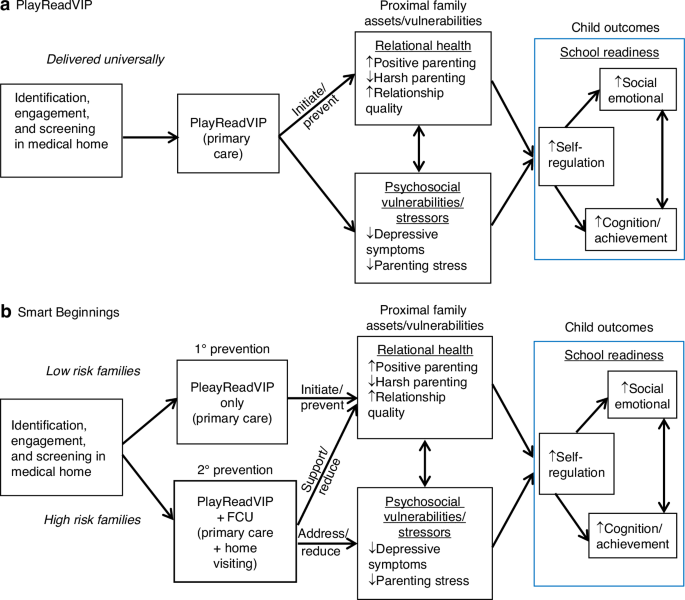
Willis, D. W. & Eddy, J. M. Early relational health: innovations in child health for promotion, screening, and research. Infant Ment. Health J. 43, 361–372 (2022).
Google Scholar
Thomas, K. Early relational health—a promising approach for equitable systems change in pediatrics: A commentary. Infant Ment. Health J. 43, 507–514 (2022).
Google Scholar
Garner, A. & Yogman, M. Preventing childhood toxic stress: partnering with families and communities to promote relational health. Pediatrics 148, e2021052582–e2021052582 (2021).
Google Scholar
Williams, R. C. From ACEs to early relational health: implications for clinical practice. Paediatr. Child Health 28, 377–384 (2023).
Google Scholar
Jeung, J. et al. A caregiver-child intervention for mitigating toxic stress (“The Resiliency Clinic”): a pilot study. Matern. Child Health J. 26, 1959–1966 (2022).
Google Scholar
Roby, E. et al. Pediatric primary care and partnerships across sectors to promote early child development. Acad. Pediatr. https://doi.org/10.1016/j.acap.2020.12.002 (2021).
Bell, A. & Agnihotri, R. Early relational health care. Can. Fam. Physician 70, 298–302 (2024).
Google Scholar
Rosenblum, K. L., Riggs, J., Freeman, S., Shah, P. E. & Muzik, M. In-the-moment ratings on the Early Relational Health Screen: a pilot study of application in home visiting and primary care. Infant Ment. Health J. 43, 410–423 (2022).
Google Scholar
Shaw, D. S., Mendelsohn, A. L. & Morris, P. A. Reducing poverty-related disparities in child development and school readiness: the smart beginnings tiered prevention strategy that combines pediatric primary care with home visiting. Clin. Child Fam. Psychol. Rev. 24, 669–683 (2021).
Google Scholar
Cates, C. B. et al. Enhancing parent talk, reading, and play in primary care: sustained impacts of the video interaction project. J. Pediatr. 199, 49–56.e1 (2018).
Google Scholar
Mendelsohn, A. L. et al. Reading aloud, play, and social-emotional development. Pediatrics 141, e20173393 (2018).
Google Scholar
Roby, E. et al. Improving parent-child interactions in pediatric health care: a two-site randomized controlled trial. Pediatrics 147, e20201799 (2021).
Shaw, D. S., Dishion, T. J., Supplee, L., Gardner, F. & Arnds, K. Randomized trial of a family-centered approach to the prevention of early conduct problems: 2-year effects of the family check-up in early childhood. J. Consult Clin. Psychol. 74, 1–9 (2006).
Google Scholar
Gill A. M., Shaw D. S. The Family Check-Up. In: Handbook of Research on Emotional and Behavioral Disorders 111–124 (Routledge, 2020).
Peacock-Chambers, E., Ivy, K. & Bair-Merritt, M. Primary care interventions for early childhood development: a systematic review. Pediatrics 140, https://doi.org/10.1542/peds.2017-1661 (2017).
Alves, C. R. L., Seibel, B. L., Gaspardo, C. M., Altafim, E. R. P. & Linhares, M. B. M. Home-visiting parenting programs to improve mother-infant interactions at early ages: a systematic review. Psychosoc. Interv. 33, 117–132 (2024).
Google Scholar
Miller, E. B. et al. Promoting cognitive stimulation in parents across infancy and toddlerhood: a randomized clinical trial. J. Pediatr. 255, 159–165 (2023).
Google Scholar
Cates, C. B. et al. Leveraging healthcare to promote responsive parenting: impacts of the video interaction project on parenting stress. J. Child Fam. Stud. 25, 827–835 (2016).
Google Scholar
Miller, E. B. et al. Enhancing early language and literacy skills for racial/ethnic minority children with low incomes through a randomized clinical trial: The mediating role of cognitively stimulating parent–child interactions. Child Dev. 95, 1172–1185 (2024).
Google Scholar
Lundgren, J. S., Ryding, J., Ghaderi, A. & Bernhardsson, S. Swedish parents’ satisfaction and experience of facilitators and barriers with Family Check-up: a mixed methods study. Scand. J. Psychol. 64, 618–631 (2023).
Google Scholar
Czeisler, M. É Mental health, substance use, and suicidal ideation during the COVID-19 pandemic—United States, June 24–30, 2020. Morb. Mortal. Wkly Rep. 69, 1049–1057 (2020).
Google Scholar
Gadermann, A. C. et al. Examining the impacts of the COVID-19 pandemic on family mental health in Canada: findings from a national cross-sectional study. BMJ Open 11, e042871 (2021).
Google Scholar
Brown, S. M., Doom, J. R., Lechuga-Peña, S., Watamura, S. E. & Koppels, T. Stress and parenting during the global COVID-19 pandemic. Child Abus. Negl. 110, 104699 (2020).
Google Scholar
Adegboye, D. et al. Understanding why the COVID-19 pandemic-related lockdown increases mental health difficulties in vulnerable young children. JCPP Adv. 1, https://doi.org/10.1111/jcv2.12005 (2021).
Egan, S. M., Pope, J., Moloney, M., Hoyne, C. & Beatty, C. Missing early education and care during the pandemic: the socio-emotional impact of the COVID-19 crisis on young children. Early Child Educ. J. 49, 925–934 (2021).
Google Scholar
Pejovic, J., Severino, C., Vigário, M. & Frota, S. Prolonged COVID-19 related effects on early language development: a longitudinal study. Early Hum. Dev. 195, 106081 (2024).
Google Scholar
Tong, A., Sainsbury, P. & Craig, J. Consolidated criteria for reporting qualitative research (COREQ): a 32-item checklist for interviews and focus groups. Int. J. Qual. Health Care 19, 349–357 (2007).
Google Scholar
Kolb, S. M. Grounded theory and the constant comparative method: valid research strategies for educators. J. Emerg. Trends Educ. Res. Policy Stud. 3, 83–86 (2012).
Salmona, M., Kaczynski, D. & Grummert, S. E. Qualitative and mixed methods data analysis usingDedoose®: a practical approach for research across the social sciences. (Sage publications, 2026).
Meins, E. et al. Pathways to understanding mind: construct validity and predictive validity of maternal mind-mindedness. Child Dev. 74, 1194–1211 (2003).
Google Scholar
Roby, E. & Scott, R. M. The relationship between parental mental-state language and 2.5-year-olds’ performance on a nontraditional false-belief task. Cognition 180, https://doi.org/10.1016/j.cognition.2018.06.017 (2018).
Taumoepeau, M. & Ruffman, T. Stepping stones to others’ minds: maternal talk relates to child mental state language and emotion understanding at 15, 24, and 33 months. Child Dev. 79, 284–302 (2008).
Google Scholar
Drummond, J., Paul E. F., Waugh, W. E., Hammond, S. I., & Brownell, C. A. Here, there and everywhere: emotion and mental state talk in different social contexts predicts empathic helping in toddlers. Front. Psychol. 5, https://doi.org/10.3389/fpsyg.2014.00361 (2014).
Fang, Y., Boelens, M., Windhorst, D. A., Raat, H. & van Grieken, A. Factors associated with parenting self-efficacy: a systematic review. J. Adv. Nurs. 77, 2641–2661 (2021).
Google Scholar
Jones, T. L. & Prinz, R. J. Potential roles of parental self-efficacy in parent and child adjustment: a review. Clin. Psychol. Rev. 25, 341–363 (2005).
Google Scholar
Dewi, R. K. & Sumarni, S. Parenting style and family empowerment for children’s growth and development: a systematic review. J. Public Health Afr. 14, 8 (2023).
Google Scholar
Armstrong, M. I., Birnie-Lefcovitch, S. & Ungar, M. T. Pathways between social support, family well being, quality of parenting, and child resilience: what we know. J. Child Fam. Stud. 14, 269–281 (2005).
Google Scholar
Masten, S. J., Davies, S. H. & Mcelmurry, S. P. Flint water crisis: what happened and why? J. Am. Water Works Assoc. 108, 22–34 (2016).
Google Scholar
Hanna-Attisha, M., LaChance, J., Sadler, R. C. & Champney Schnepp, A. Elevated blood lead levels in children associated with the flint drinking water crisis: a spatial analysis of risk and public health response. Am. J. Public Health 106, 283–290 (2016).
Google Scholar
Shonkoff, J. P. Rethinking the definition of evidence-based interventions to promote early childhood development. Pediatrics 140, https://doi.org/10.1542/peds.2017-3136 (2017).
Erickson, E. et al. Clinician experiences with reach out and read: an exploratory qualitative analysis. Acad. Pediatr. 21, 961–967 (2021).
Google Scholar
Miller, E. B. et al. The Children, Caregivers, and Community (C3) study of together growing strong: a protocol for an observational, place-based initiative in Sunset Park, Brooklyn. Plos one 18, e0290985 (2023).
National Academies of Sciences E and M. Early Relational Health (eds Willis, D., Backes, E. P.). https://doi.org/10.17226/29234 (National Academies Press, 2025).
Jimenez, M. E. et al. Maximizing the impact of reach out and read literacy promotion: anticipatory guidance and modeling. Pediatr. Res. 95, 1644–1648 (2024).
Minkovitz, C. S. et al. Healthy steps for young children: sustained results at 5.5 years. Pediatrics 120, https://doi.org/10.1542/peds.2006-1205 (2007).
Martin, A. et al. The creation of an online curriculum to promote parenting behaviors that foster early childhood development. Clin. Pediatr. 64, 1400–1407 (2025).
Google Scholar
Thomas, R., Abell, B., Webb, H. J., Avdagic, E. & Zimmer-Gembeck, M. J. Parent-child interaction therapy: a meta-analysis. Pediatrics 140, https://doi.org/10.1542/peds.2017-0352 (2017).
Krug, C. W., Mendelsohn, A. L., Wuerth, J., Roby, E. & Shaw, D. S. The Pittsburgh Study: a tiered model to support parents during early childhood. J. Pediatr. 277, 114396 (2025).
Google Scholar
Roby, E. et al. Supporting early social-emotional competencies through reading and play: findings from an RCT of the tiered smart beginnings program. Soc. Dev. 34. https://doi.org/10.1111/sode.70024 (2025).
Miller, E. B. et al. Early parenting support on child development through age 6: the smart beginnings model. Pediatrics 157, https://doi.org/10.1542/peds.2025-072542 (2026).
Hill, C., Davis, R. & Undestad, M. Implementation of the Ready for School, Ready for Life Initiative in 2023: Program Partners’ Views About Benefits, Challenges, and Opportunities (MDRC, 2024).
da Silva Ciochetta, F. et al. Enhancing cognitive stimulation at home: PlayReadVIP for Brazilian families. Early Child Dev. Care 195, 480–492 (2025).
Google Scholar
Roby, E., Mills-Koonce, R. & Mendelsohn, A. Preventing rural inequities through support of early relational health in pediatric primary care: a narrative review. Acad. Pediatr. 103192. https://doi.org/10.1016/j.acap.2025.103192 (2025).
Source link
-

-
-

-

-