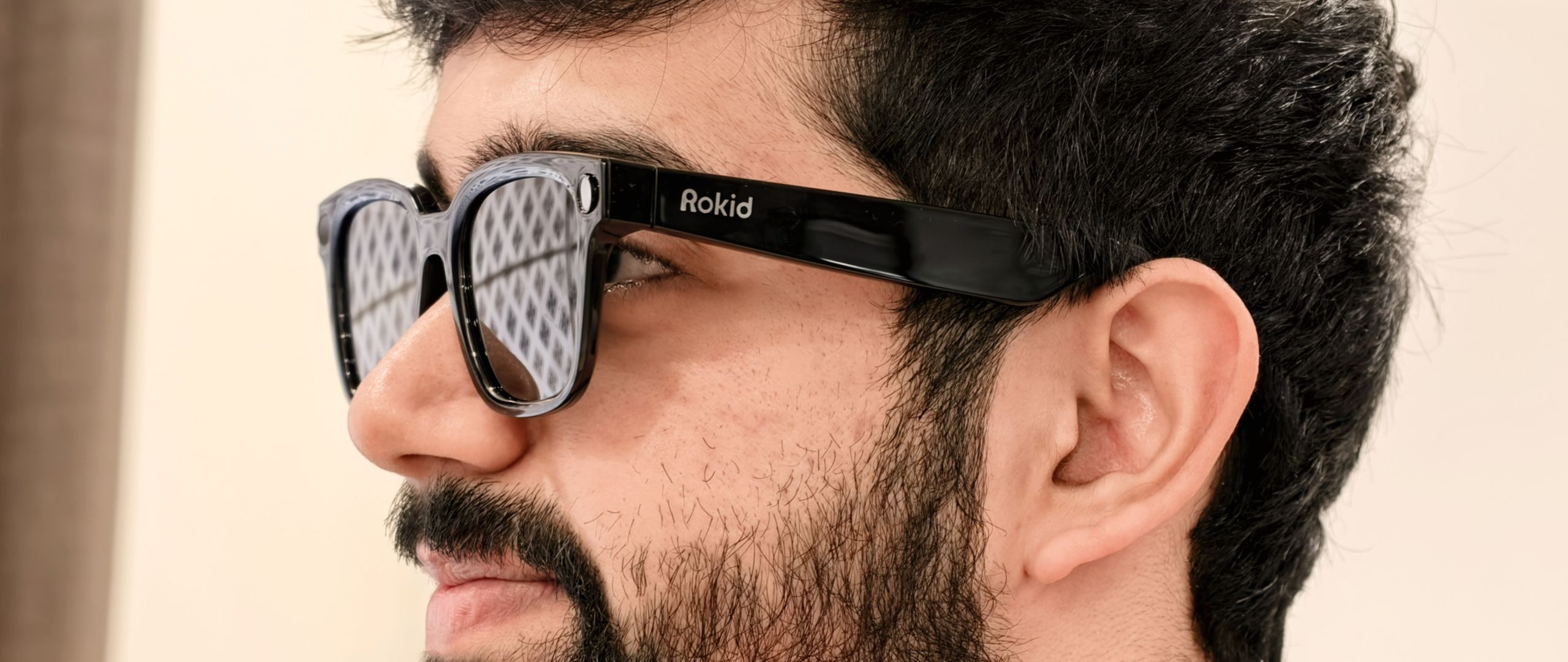
2026 is shaping up to be the year of smart glasses. While display-based glasses still feel like they’re finding their footing, the display-free form factor continues to dominate. After the success of the Meta Ray-Bans, it’s clear every brand wants a piece of the action, and that’s exactly what Rokid is doing with the AI Glasses Style.
After showcasing its Rokid Glasses that bring AR and AI together at IFA last year, Rokid is back with a device clearly meant to rival the Ray-Ban Meta Smart Glasses (Gen 2). The Rokid AI Glasses Style promises a similar core experience, and after spending time with them, it feels like the company might actually be onto something.
Rokid AI Glasses Style: Cheat Sheet
- What is it? These are display-free smart glasses with a built-in camera, speakers, and microphones.
- Who is it for? Creators and users who want to record videos and take photos from their PoV, listen to music, and answer calls hands-free, without paying Meta Ray-Ban prices.
- What does it cost? The Rokid AI Glasses Style costs $299, lenses and accessories cost extra.
- What do we like? They are ultra-lightweight compared to most smart glasses we’ve used and comfortable enough to wear all day. You can record videos in multiple aspect ratios, ChatGPT integration lets you ask questions on the go, and battery life is genuinely impressive.
- What don’t we like? The build feels slightly flimsy, and the charging setup isn’t as seamless as other smart glasses. Also, there is no video calling support like the Meta Ray-Ban glasses, and the default dark tint can feel too aggressive indoors.
Rokid AI Glasses Style: Specs
|
Price |
$299 |
|
Display |
— |
|
Audio |
Open-ear audio |
|
Camera |
12MP Sony sensor, 4K recording in 9:16, 4:3, and 3:4 aspect ratios |
|
Chip |
Qualcomm Snapdragon AR1 Gen 1 |
|
Connectivity |
Bluetooth 5.3, Wi-Fi 6 |
|
Software/AI |
Hands-free ChatGPT integration, Hi Rokid companion app |
|
Storage |
32GB |
|
Weight |
38.5g |
Rokid AI Glasses Style: The ups
Barring a few drawbacks, which we’ll get to in a bit, there are plenty of reasons I can see people choosing these smart glasses over the Meta Ray-Bans.
The ultra-lightweight design is great
One common concern potential smart glasses buyers have is how chunky they will look on their face and how heavy they might feel. And that concern is fair, as many smart glasses we’ve seen so far tend to look a little goofy.
However, the first thing you notice about the Rokid AI Glasses Style when you take them out of the box is how light they are. As a long-time first-gen Meta Ray-Ban user, the difference in weight is noticeable immediately.
The Rokid AI Glasses Style weigh just 38.5 grams, which is significantly less than the Meta Ray-Bans that usually come in around 50 grams. Rokid has also added nose pads that improve overall comfort during long wear, as these smart glasses don’t get slippery or cause fatigue on your nose.
|
Smart Glasses |
Dimensions |
Weight |
|---|---|---|
|
Rokid AI Glasses Style |
– Hinge to hinge: 149 mm |
38.5g |
|
Ray-Ban Meta glasses (Gen 2) |
– Hinge to hinge: Up to 137mm (Large) |
48g – 53g |
They are also fairly large in size, coming in a standard 142 mm hinge-to-hinge fit, while the Meta Ray-Bans are available in smaller sizes, around 131 mm and 137 mm. Compared to those, the Rokid glasses feel wider, which actually works well for me, given my (unusually) larger head.
One issue I had with the Meta Ray-Bans was discomfort behind my ears after long use, which isn’t the case here thanks to the wider fit and lighter weight.
The camera is surprisingly good
Image 1 of 5

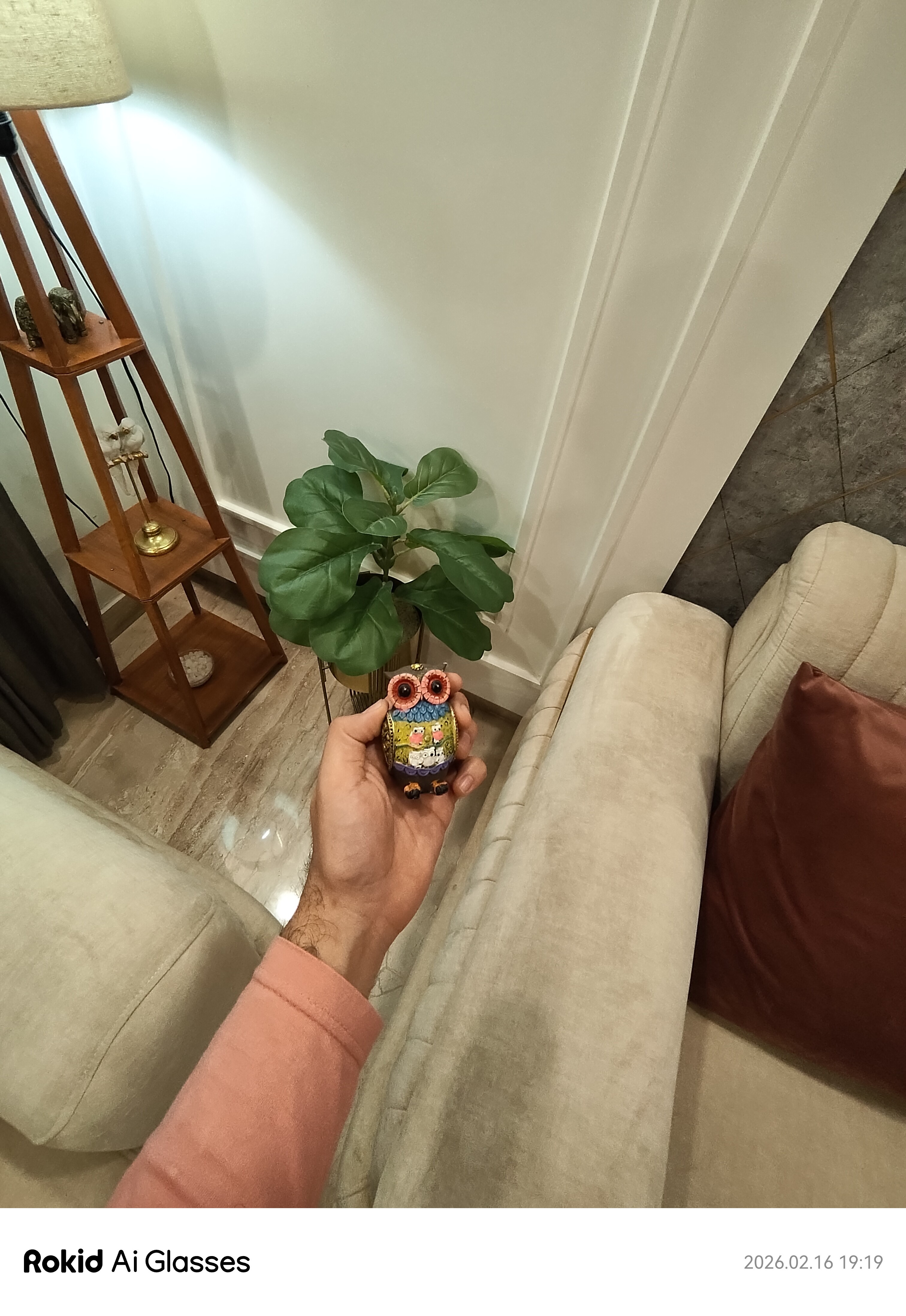

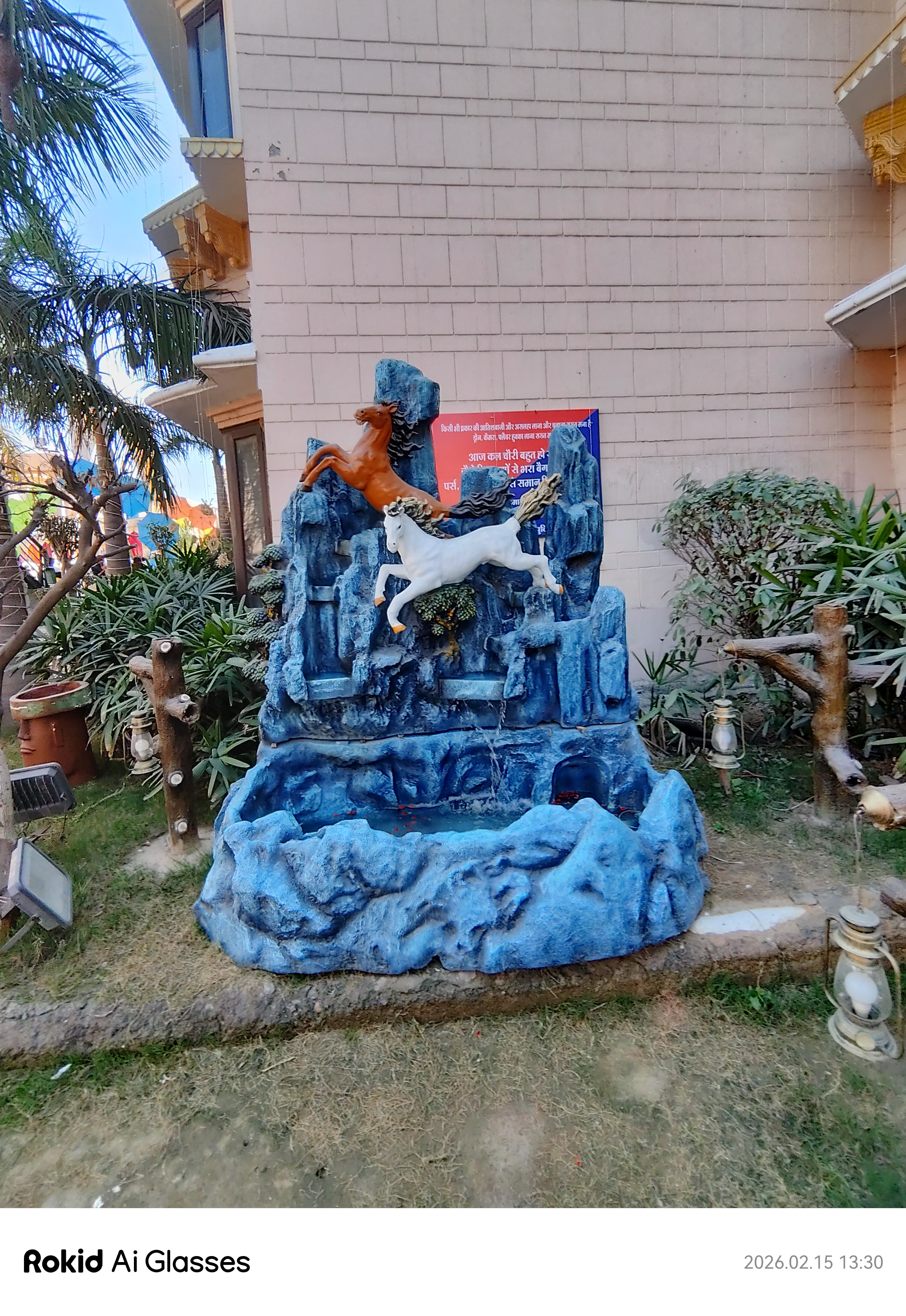
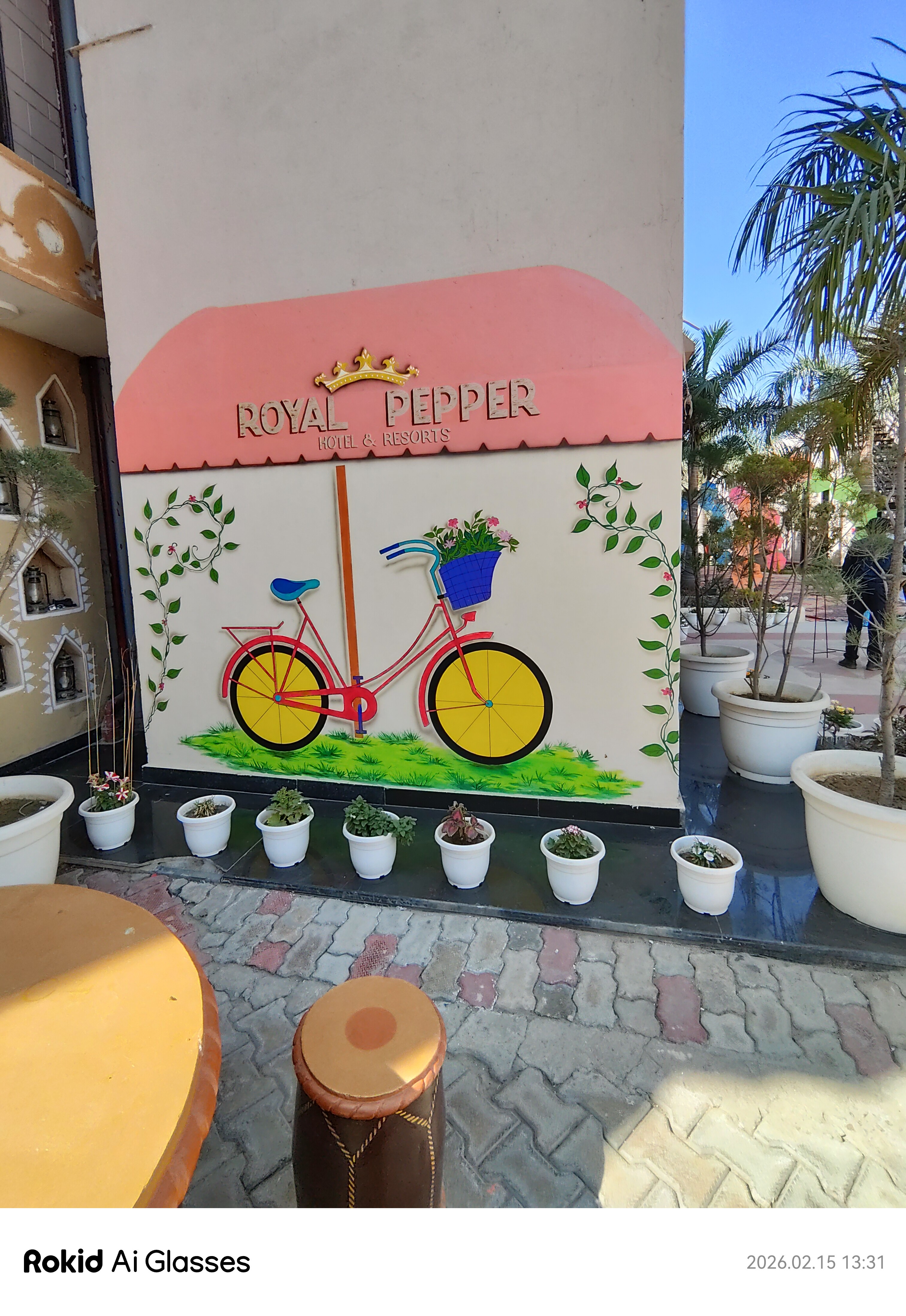
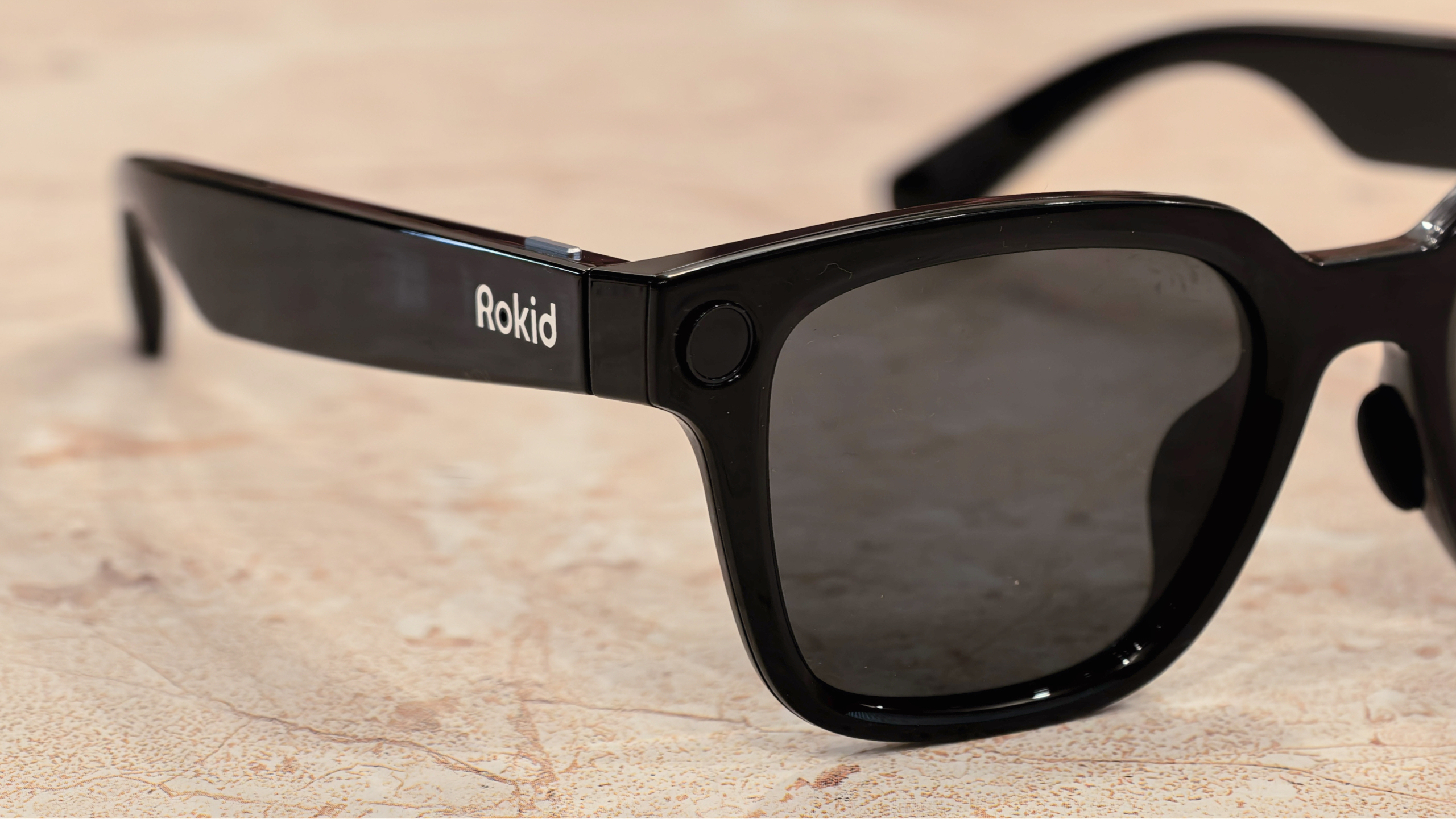
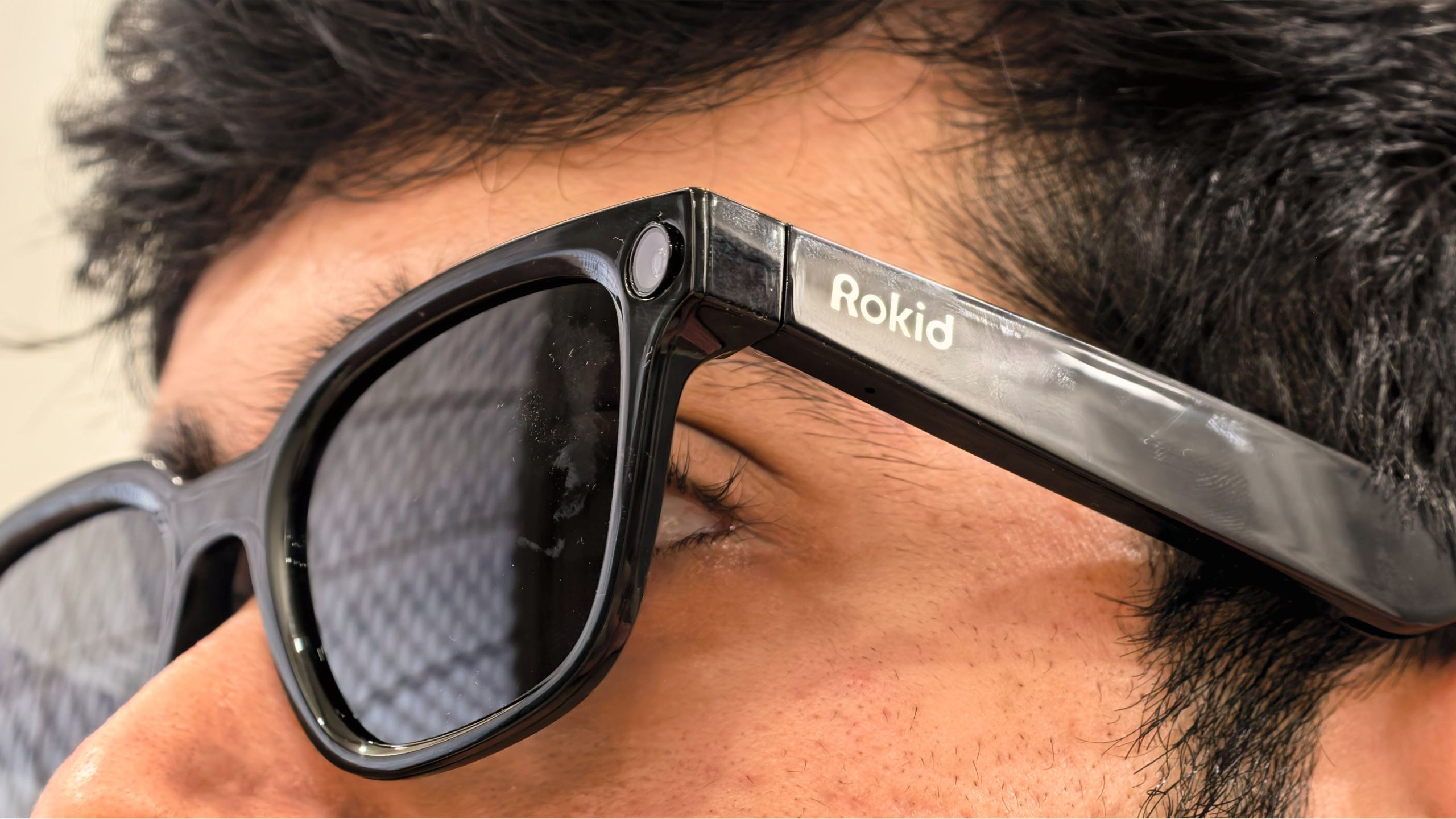
In terms of design, the Rokid AI Glasses Style are quite similar to other display-less smart glasses. You get a camera with a lens on the right side with a button on the upper side of the right stem and touch controls along the right stem. There’s an LED indicator near the left lens as well.
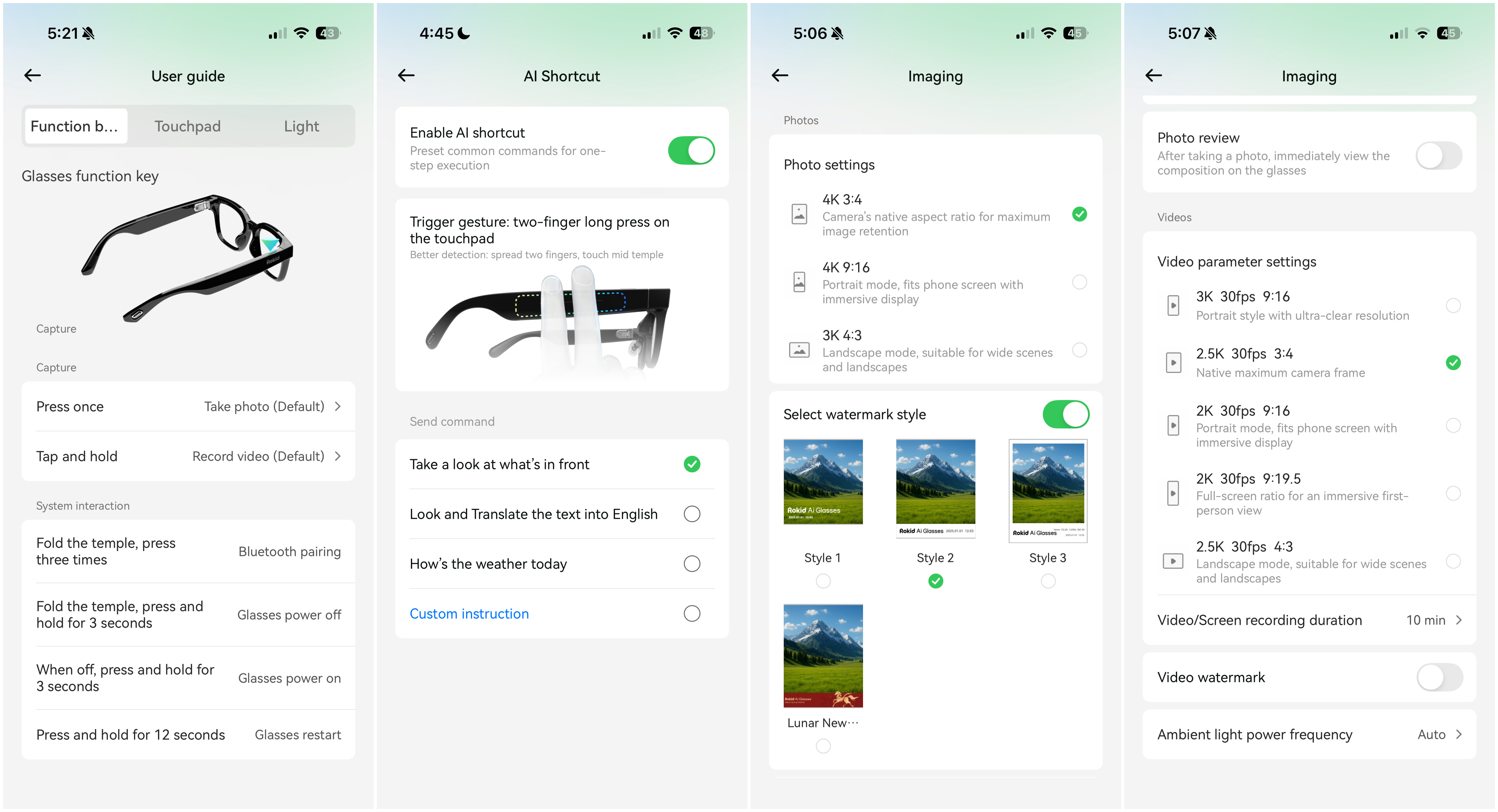
The camera, however, is what surprised me the most. The Rokid AI Glasses Style uses a 12 MP Sony sensor that supports photos in 3:4, 4:3, and 9:16 aspect ratios, along with video recording up to 3K 30 fps in 9:16, 3:4, 9:19.5, and 4:3 formats.
Like other smart glasses, pressing the button on the right stem once captures a photo, while a long press starts video recording. One standout feature is that the Rokid AI Glasses Style allows up to 10 minutes of continuous recording, which is great for creators or anyone who wants longer clips. For reference, the Meta Ray-Ban caps recordings at around 3 minutes.

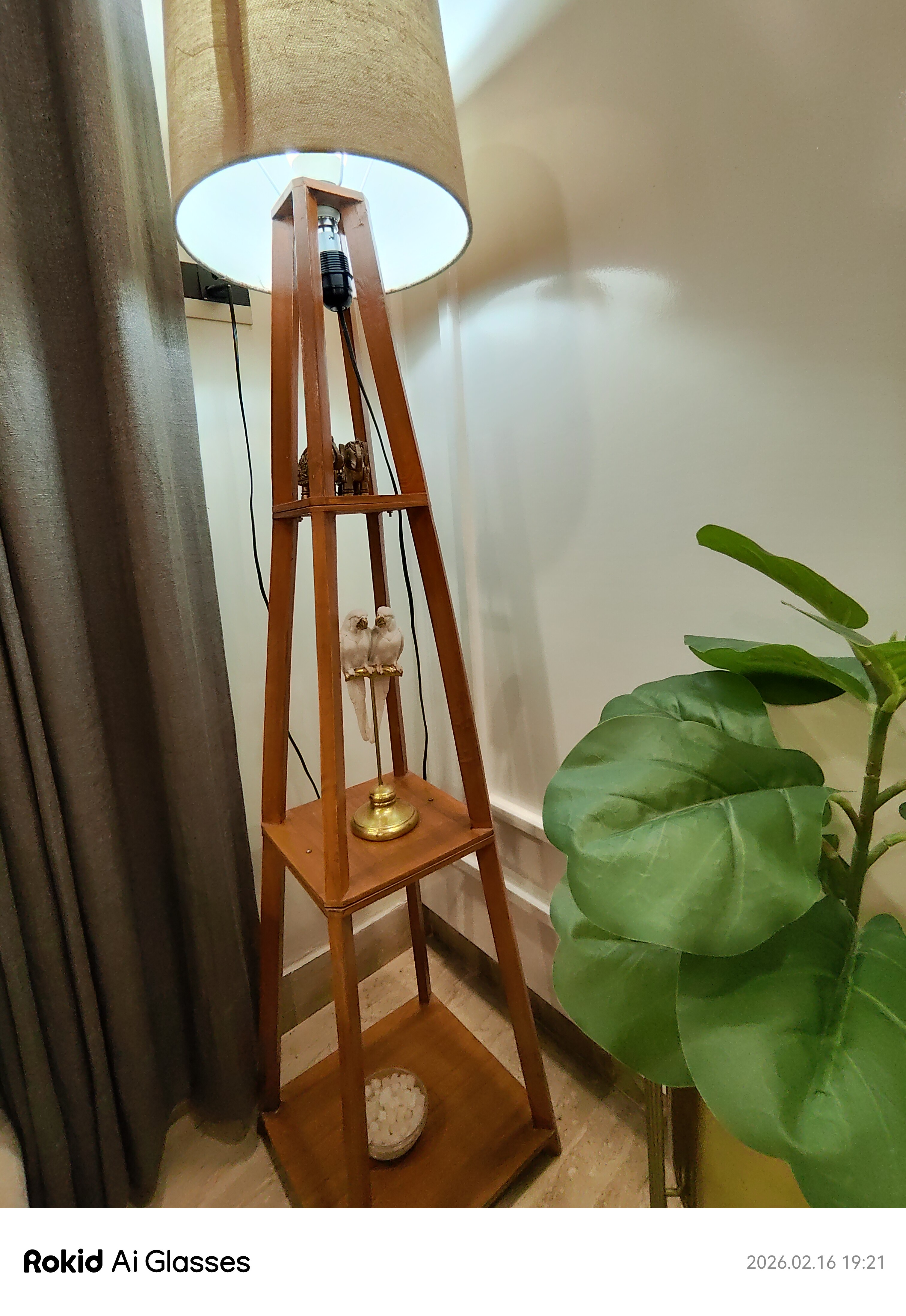
In terms of performance, the glasses capture bright and vibrant photos in daylight, and video stabilization is fairly solid. I even used them while playing badminton, and the footage stayed surprisingly stable for such a fast-moving activity.
That said, like most display-less smart glasses, you cannot preview shots instantly and need to import them into the companion app first.
The built-in AI features are quite useful
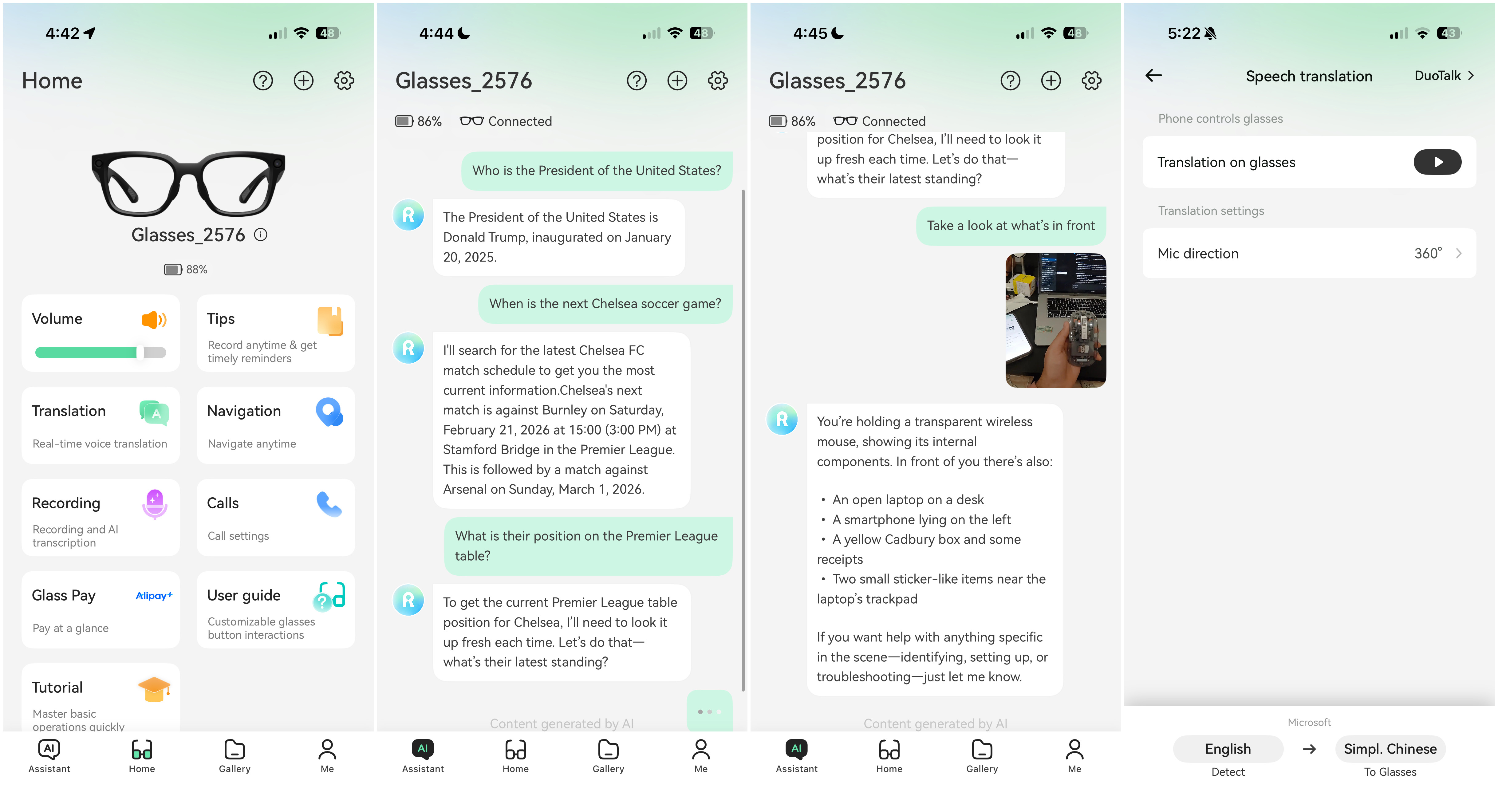

With AI in the name, Rokid had to include several AI features in these smart glasses, and they are genuinely useful. Instead of building its own models, Rokid relies on services like ChatGPT, DeepSeek, and Qwen for AI processing, though I could only use ChatGPT in my region.
It’s multimodal, meaning you can invoke the assistant using the ‘Hi Rokid’ wake word and speak queries hands-free. You can also snap a photo and ask the AI to describe it, summarize it, or even translate it.
Translation is handled via Microsoft AI Translation and supports up to 89 languages, which worked reliably in my testing. You can even enable live translation that continuously listens to and translates conversations in real time, though it drains the battery noticeably faster.
That said, my favorite feature was easily the AI shortcut. You can enable it in the Hi Rokid app and assign a two-finger long press on the right stem to trigger actions.
For example, you can set it to capture a photo and explain what you are seeing, translate text instantly, or run custom prompts like checking the weather. It’s a genuinely neat feature and one I found myself using repeatedly.
Battery life easily beats expectations
Display-less smart glasses usually offer better battery life than models with built-in displays, but we also have examples like the Meta Ray-Ban delivering fairly average battery life.
That said, the Rokid AI Glasses Style absolutely knocks it out of the park when it comes to battery life.
Rokid claims the AI Glasses Style can deliver up to 12 hours of use on a single charge. While I wasn’t able to fully drain them in a full day of continuous use, my experience suggests the glasses come close to the company’s claims.
For reference, though, I was easily able to drain the first-gen Meta Ray-Bans in a similar usage window.
That said, while the battery performance is strong overall, there are a few issues with the charging setup, which brings me to the drawbacks of this device.
Rokid AI Glasses Style: The downs
While the overall experience of the Rokid AI Glasses Style has been quite good, there are a few drawbacks worth noting.
The proprietary charging system is a downside
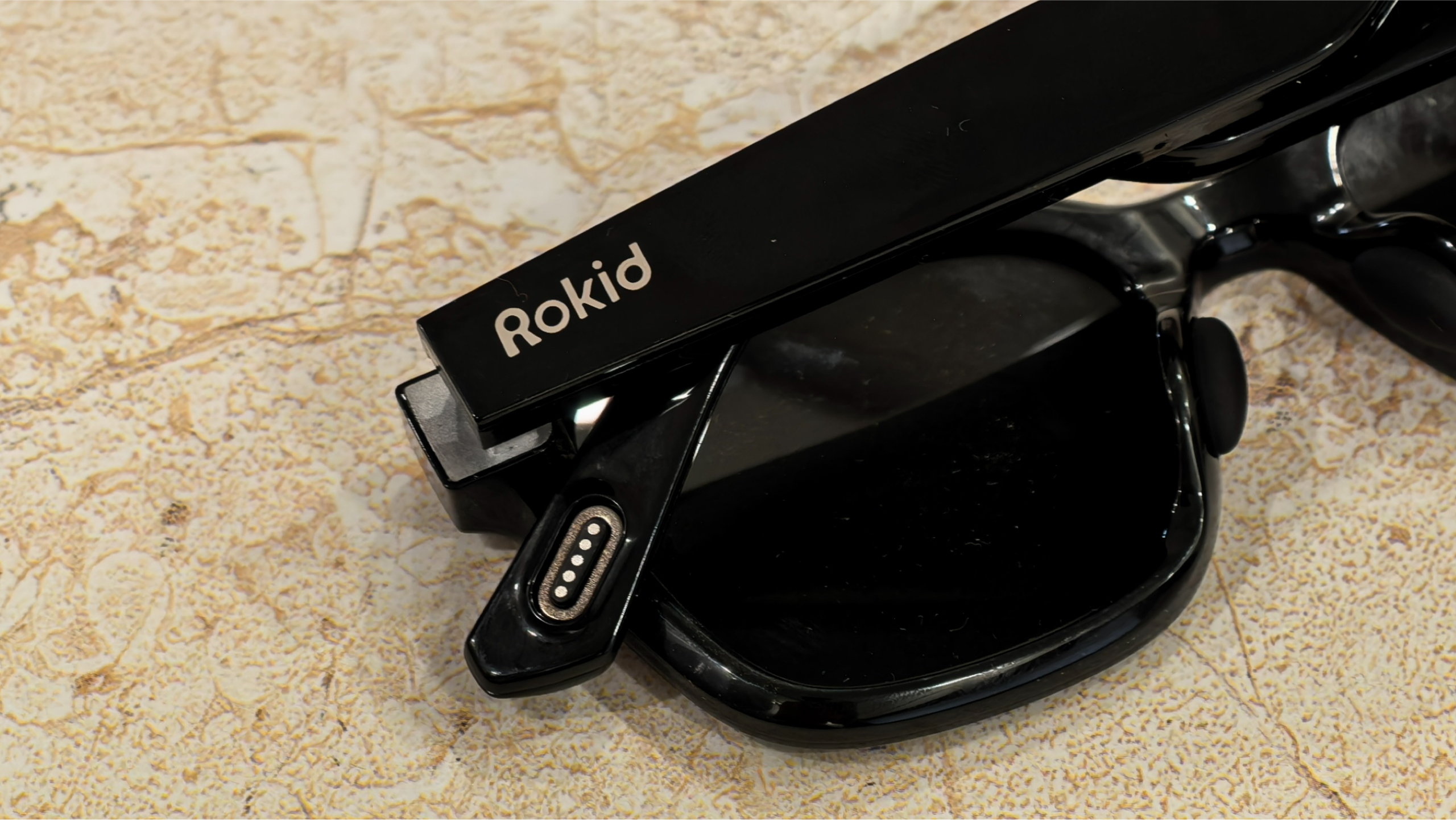

While the battery life of the Rokid AI Glasses Style is among the best I have seen in display-free smart glasses, the charging setup sits at the opposite end. Most competing smart glasses, like the Meta Ray-Ban and even Oakley models made with Meta, ship with a charging case that powers the glasses while they sit inside.
The Rokid AI Glasses Style instead comes with a fairly basic protective case. The standard case included in the box does not have any built-in charging support.
Instead, the glasses rely on magnetic pogo-pin connectors located at the end of the right stem for charging. Rokid includes a charging adapter that connects to a USB-C cable and powers the glasses, but there is no easy way to charge them on the go unless you plug them into a power bank.
Rokid says it’ll sell a dedicated charging case and what it calls a ‘Power Capsule,’ but both will cost extra. That is worth noting since similar charging solutions are included even with the base variants of the Meta Ray-Bans.
The overall build feels slightly flimsy

While the Rokid AI Glasses Style do a good job of not trying to do too much and still look like regular sunglasses, and they are also lighter than many competing smart glasses, the overall build feels a bit flimsy, especially compared to the Meta Ray-Bans.
The Meta glasses feel more rigid and sturdy both in hand and while wearing them, whereas the Rokid pair comes across as slightly cheaper in overall quality. Whether it is the slightly loose hinge or the lack of structural firmness, the difference is quite noticeable (although it isn’t entirely surprising given the lower price).
Other quirks you should know about
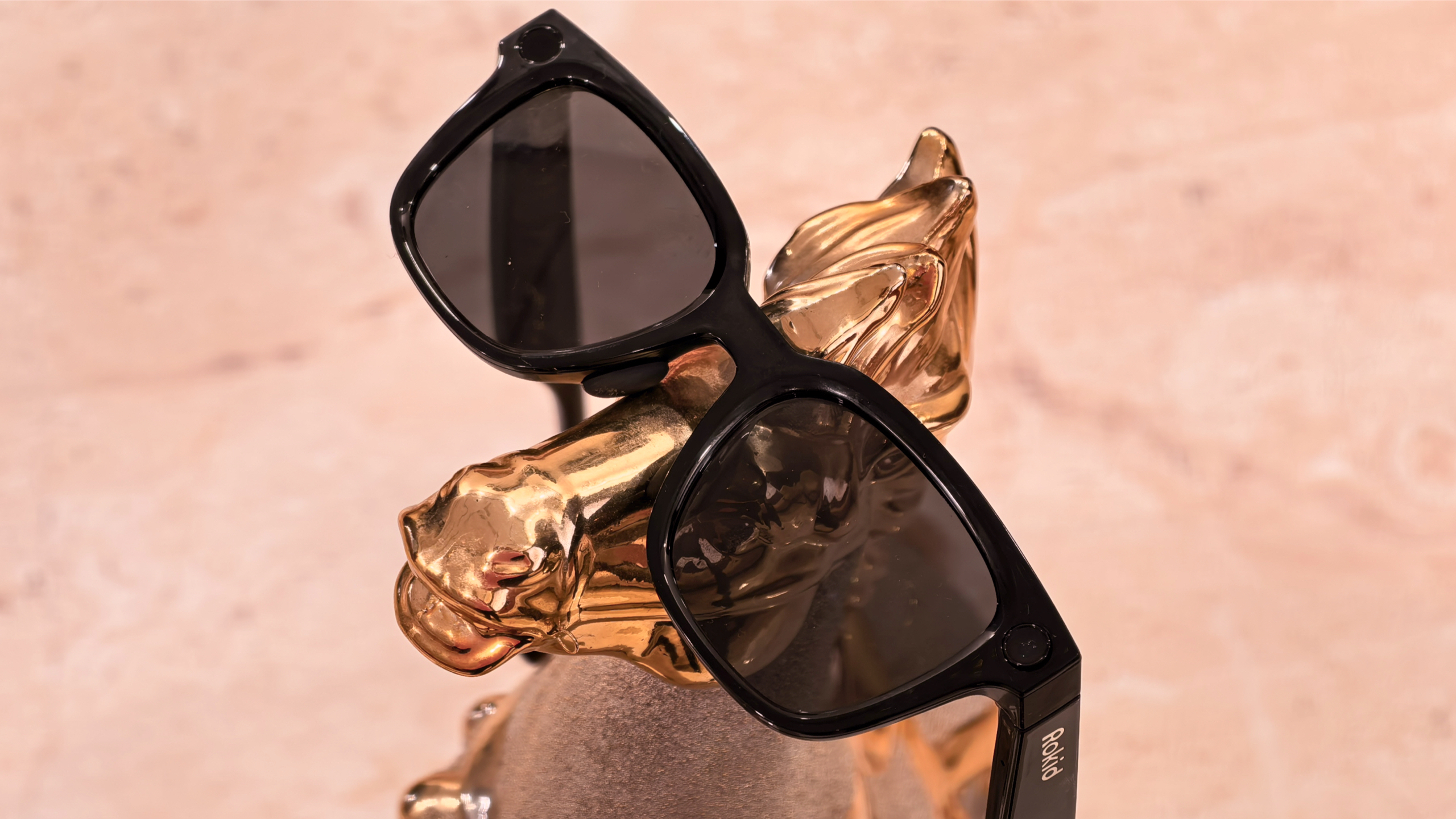
Other than that, there are no major downsides to using the Rokid AI Glasses Style, but there are a few minor quirks worth noting. One of them is that the standard lenses included with the glasses are slightly darker than expected.
If you don’t opt for the photochromic lenses, the default ones can feel a bit too tinted indoors, which can make visibility slightly worse.
Another gripe, especially for someone like me, is the lack of video calling support. The Meta Ray-Bans offer a feature that lets you switch to the glasses camera during a video call and share your POV, but the Rokid AI Glasses Style does not offer anything similar in any video calling app.
Rokid AI Glasses Style: Verdict
It’s clear that Rokid is not challenging Meta’s throne with the Rokid AI Glasses Style. Meta’s offering is still a more mature product that does most things extremely well, but it is also becoming clear that Meta’s dominance in display-less smart glasses is no longer guaranteed.
The Rokid glasses bring some genuinely impressive tech to the table and, in some areas, even outperform the Meta Ray-Bans. There are still a few drawbacks you cannot ignore, but at a price roughly $80 lower than the cheapest Meta Ray-Ban option, these are a surprisingly strong alternative.


Follow Digitpatrox on Google News and add us as a preferred source to get our up-to-date news, analysis, and reviews in your feeds.
More from Digitpatrox
Source link
-
-

-
-
-