Saros review: Specs
Platforms: PS5, PS5 Pro (reviewed)
Price: $69 / £69 / AU$124
Release Date: April 30, 2026
Genre: Action-shooter
Five years ago, I labeled Returnal “the best reason to own a PS5 right now.” While subsequent console exclusives like Marvel’s Spider-Man 2 and Astro Bot have bolstered the PS5 library further, Housemarque’s heart-pounding rogue-lite remains one of the console’s finest games. If it’s spiritual sequel, Saros, had merely offered more of the same, it would have been an instant recommendation, but this follow-up goes further.
It retains all of Returnal’s best bits — the frenetic bullet-hell shooter gameplay, mysterious sci-fi world, intriguing, but cryptic, story and intimidating boss battles — but also makes a real effort to sand down rough edges. It’s not that Saros is any less demanding than Returnal, but this time, Housemarque wants to empower players to overcome its biggest challenges.
Saros offers a permanent upgrade system so even when you fall, you come back stronger. No obstacle feels insurmountable. Plus, it adds a more cinematic quality to its core narrative, while still giving lore-fantatics plenty of morsels to chew on. Oh, and it’s also a stunning PS5 Pro showcase, with the best use of the DualSense controller since… well, since Returnal.
Here’s why Saros is a PS5 exclusive that every console owner needs to play.
Saros: The Basics
- What is it? Saros is a third-person action rogue-lite, where you play a company soldier exploring a constantly-shifting alien world. Each run is different, with remixed levels and randomized weapons, upgrades and collectible items.
- Who is it for? Rogue-lite fans will definitely enjoy Saros, but it’s a must-play for anybody who loves fast-paced, demanding combat or has a passion for dark science fiction settings.
- What’s the price? Saros costs $69 at Amazon. There’s also a Deluxe Edition for $79 on the PS Store with extra cosmetics.
- What other games has the developer made? Saros comes from developer Housemarque, who made its spiritual predecessor Returnal. The Finnish team also created numerous arcade-style twin-stick shooters like Dead Nation, Resogun and Nex Machina.
- What games is this similar to? Naturally, Saros most closely resembles Returnal. But it also takes several elements from popular action rogue-lite games such as Hades 2 and Dead Cells.
Carcosa calling
I definitely got a strong sense of déjà vu in my first few minutes playing Saros. Like Returnal, you’re thrown straight into the action with little context. Within moments, you’re staring down a boss who turns you to dust in a matter of seconds. Don’t worry, you’re supposed to lose.
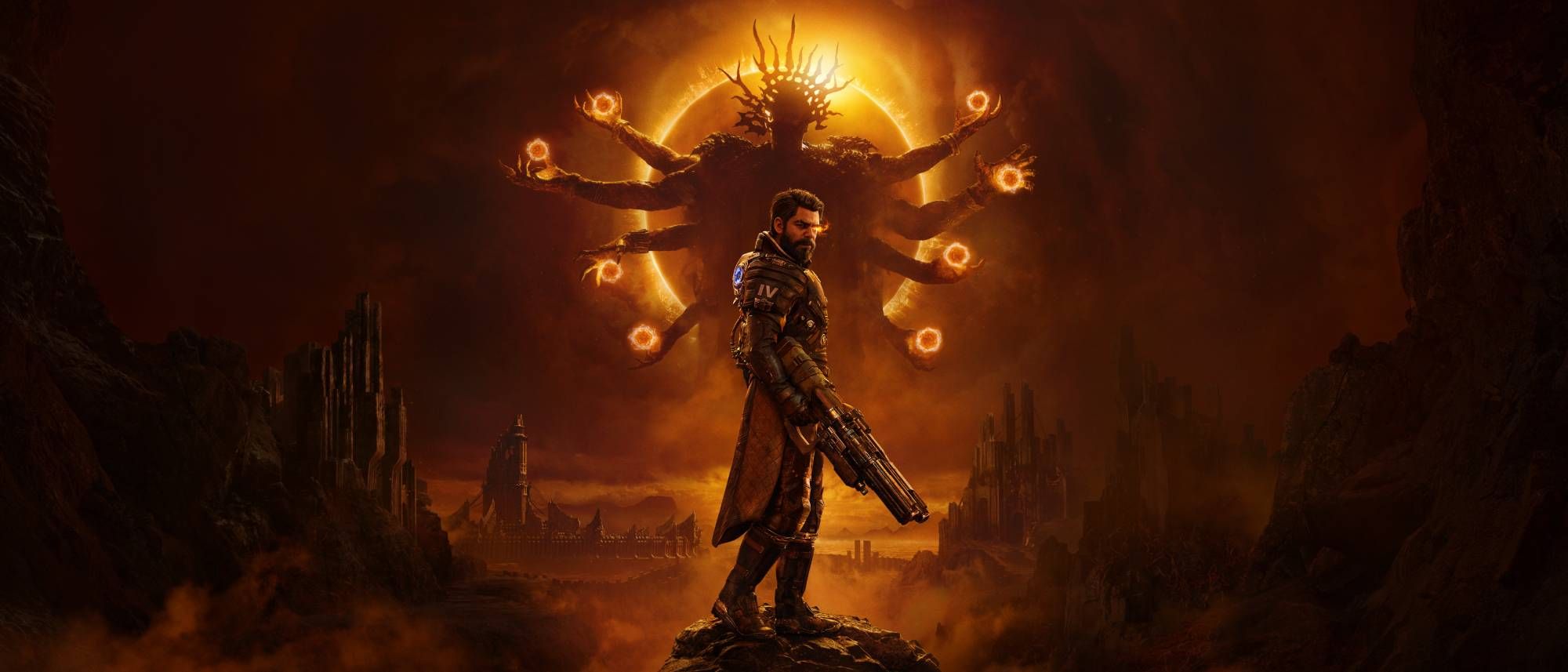
After a quick revive, the stakes are set. You play as Arjun Devraj (voiced/modeled by “The Haunting of Hill House’s” Rahul Kohli), an enforcer for the Solatri corporation, dispatched to the mysterious planet of Carcosa to discover what happened to a group of colonists sent to the alien world, who disappeared shortly after landing and haven’t been heard from since.
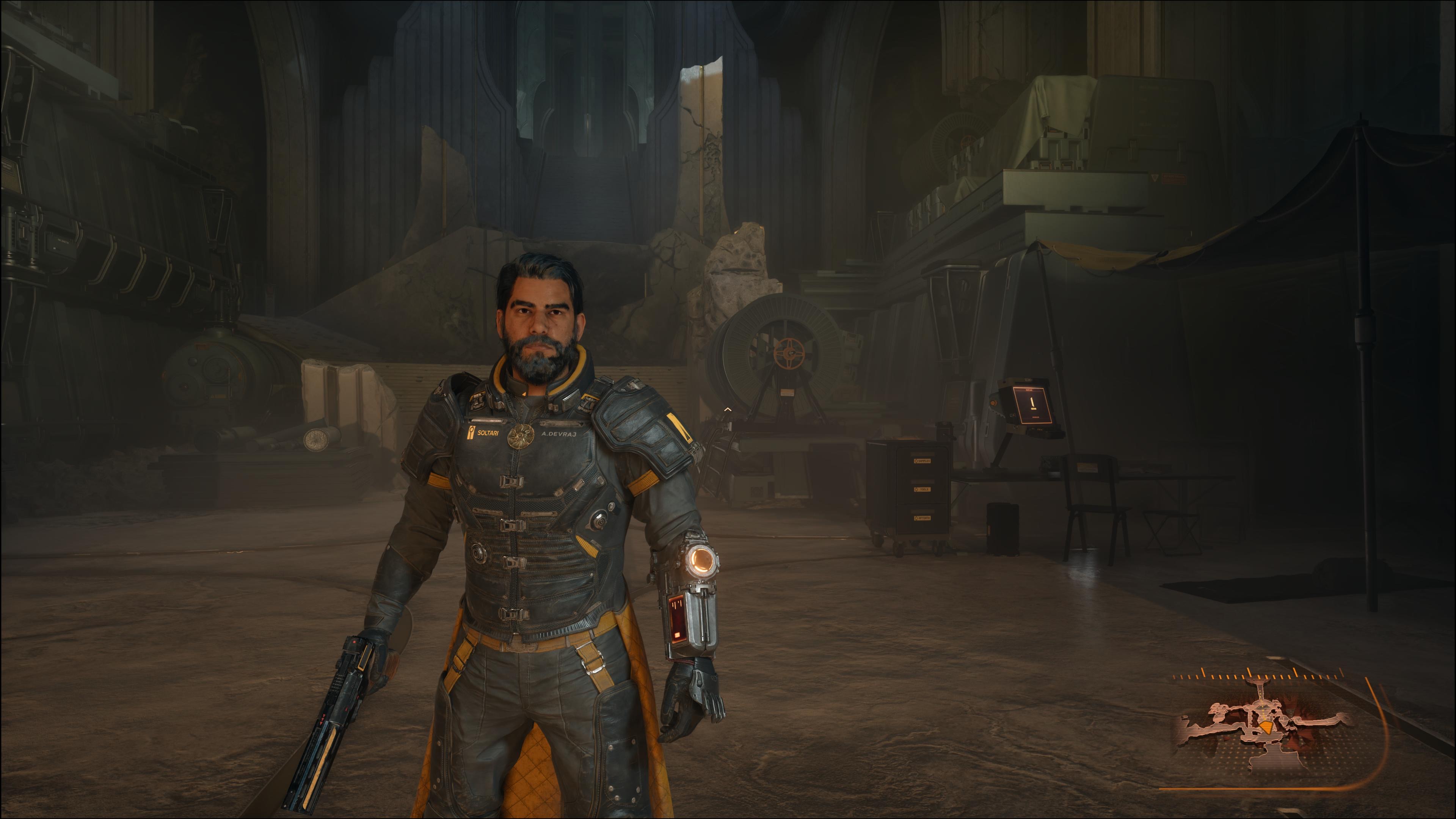

The narrative unfolds primarily through ominous audio logs and text files, but you’re not alone in your quest this time. In between runs, you can catch up with your crew, which fleshes out Saros’ world and gives you insight into the psychological effects of the planet. It’s a smart way of dishing out story beats without taking the focus off Saro’s fast-paced combat.
I wish Saros’ audio logs weren’t randomized across its procedurally generated levels. After “beating” one biome in two runs, I found myself having to continually revisit it in the hopes of finding the remaining logs just so that I didn’t miss a scrap of story, which was unsatisfying.
Fighting for your life
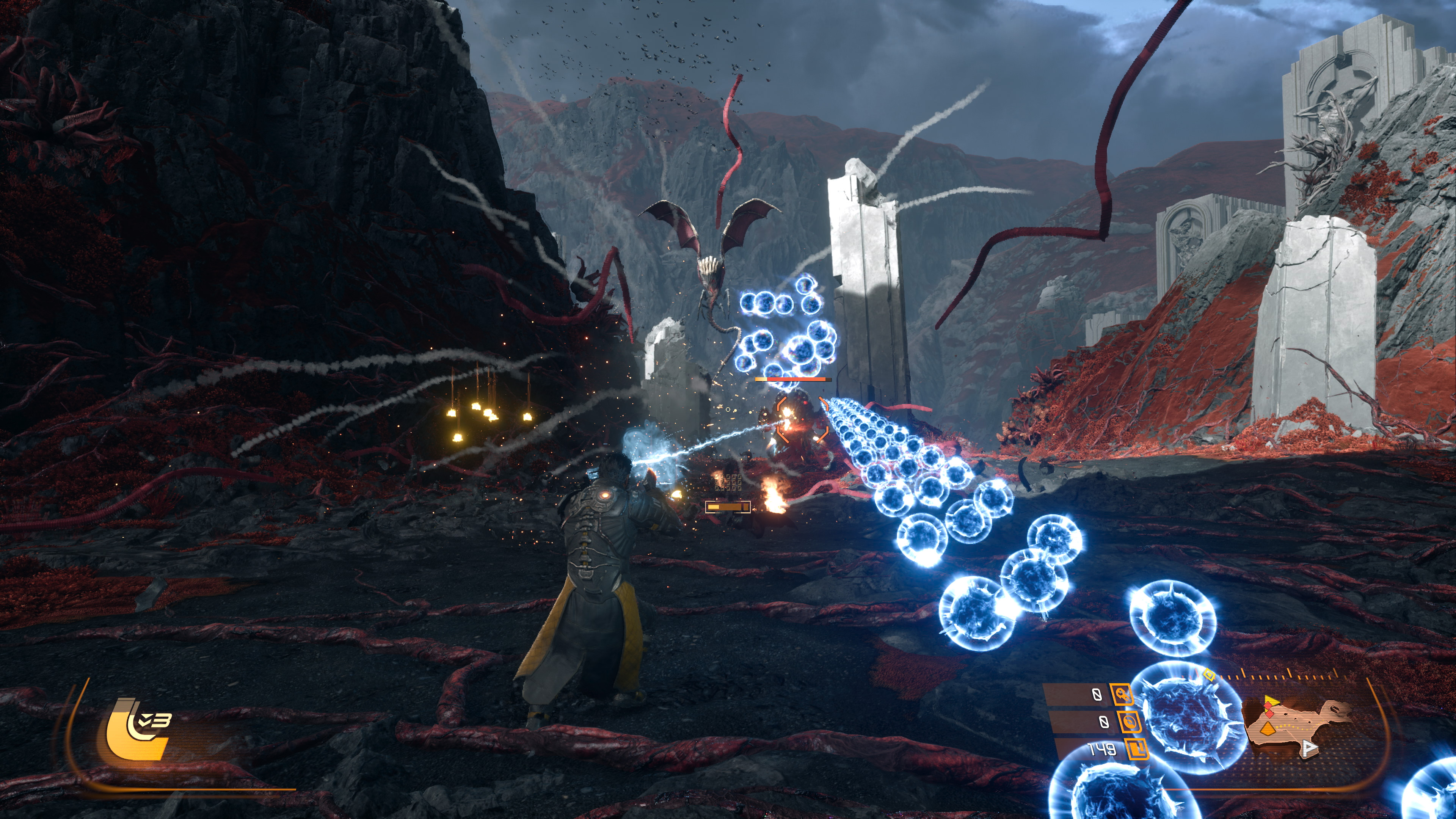
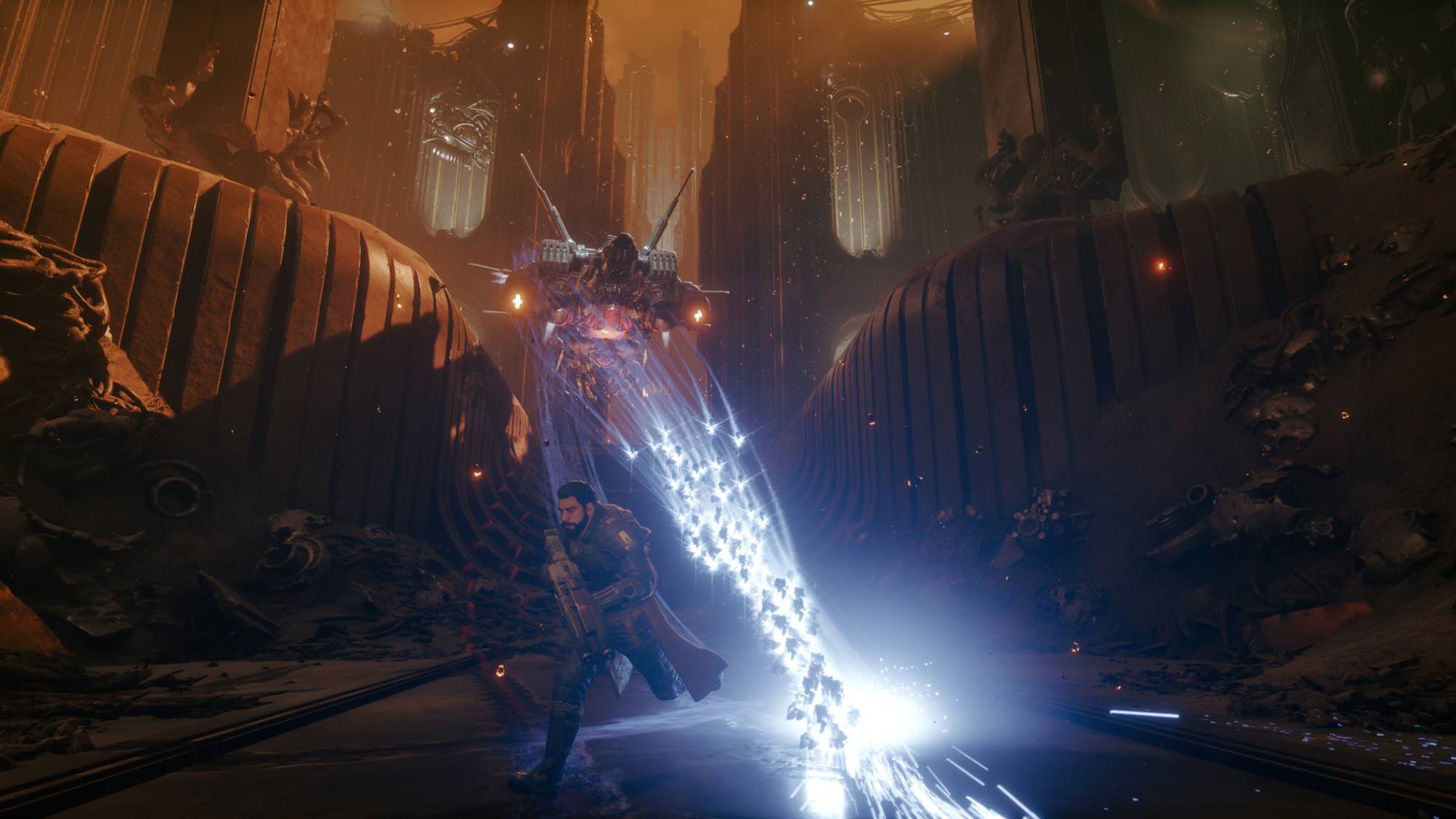
Saros plays like a classic bullet-hell shooter, but with the production values cranked up several notches. To survive against its legions of multi-colored-projectile-spewing enemies, you’ll need to sprint, jump and dash constantly. Stay stationary for long, and you’re toast.
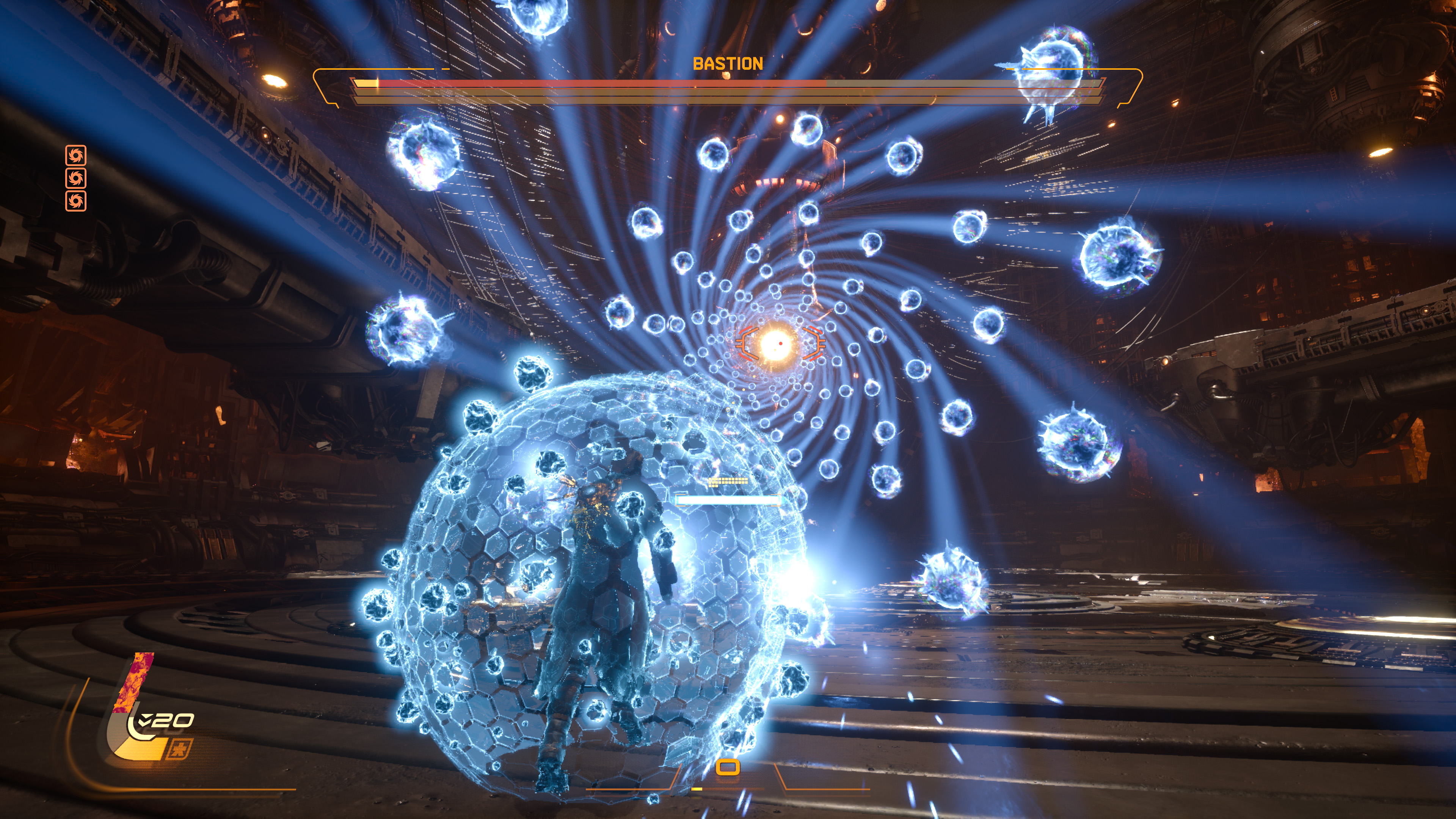
Added to the mix is a new bubble shield ability, which is an extremely powerful addition to your arsenal. It not only blocks incoming attacks, but can absorb projectiles, converting them into fuel for your formidable Power Weapon. Deciding the best time to pop your shield and when to use your dash to phase through projectiles is all part of Saros’ epic combat rhythm.
Rhythm is an apt word, as success in Saros often comes down to achieving a flow state. When you lock in, you’ll start anticipating enemy attacks before they land, and gracefully maneuver around the battlefield. One frustration is that the shield is tied to the same button as your melee attack. This results in a split-second delay when deploying it, which can lead to taking cheap, unavoidable hits as Arjun first throws a punch before activating his shield.
Like its predecessor, Saros is a rogue-lite. You set off from your home base into a series of randomised levels that mix-and-match static combat arenas and platforming sections. You might start to recognise certain sections after a run or two, but even a room you’ve visited numerous times can become a new challenge with the addition of fresh traps or enemies.
On each run, you’ll find different weapons, upgrade items and collectables. Ensuring that each trip into the depths of Carcosa feels unique. You can’t rely on a favorite weapon or an overpowered ability. Instead, you’ll need to make do with the hand you’re dealt. This necessitates strategizing on the fly. In one run, I had to face a tough boss with a shotgun. I was forced to get in my foe’s face, rather than hang back, taking pot shots from the shadows, which is my default method.
Come back stronger
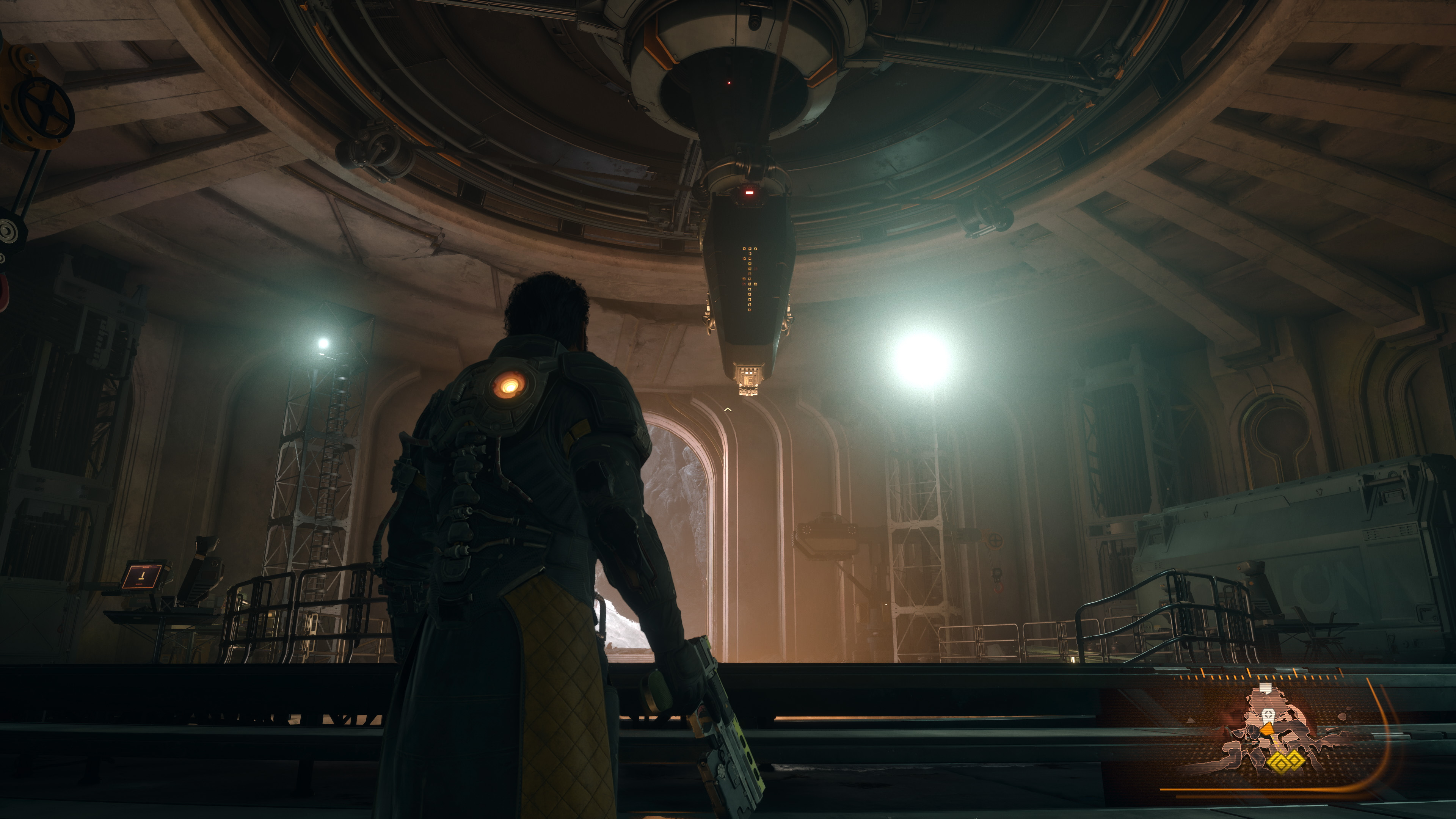
Where Saros differs most from Returnal is that death isn’t failure; it’s an opportunity to get stronger. Heck, death doesn’t even necessarily mean death. Early on, you can unlock an upgrade that gives you one instant revive per run, offering a second chance every time.
But if you do succumb to Carcosa’s many hostile threats, all hope isn’t lost. Back at your Passage base, you can spend currency collected on your last run to unlock permanent upgrades that range from basics like improving your armor to starting runs with key items.

Returnal’s comparative stinginess — players were stripped of basically all items/upgrades upon death, and forced to start a fresh run from near scratch — was a major pain point for some players. So, I suspect Saros taking cues from more accessible rogue-lites like Hades and Dead Cells will be some comfort. In Saros, even in defeat, there’s an element of victory, as the next time you head out in Carcosa, the odds are tipped a little more in your favor.
This isn’t to say Saros is an easy game, quite the opposite. If anything, Housemarque has ramped up the early game difficulty. The developers expect players to die frequently and be given plenty of opportunities to invest in upgrades to augment Arjun.
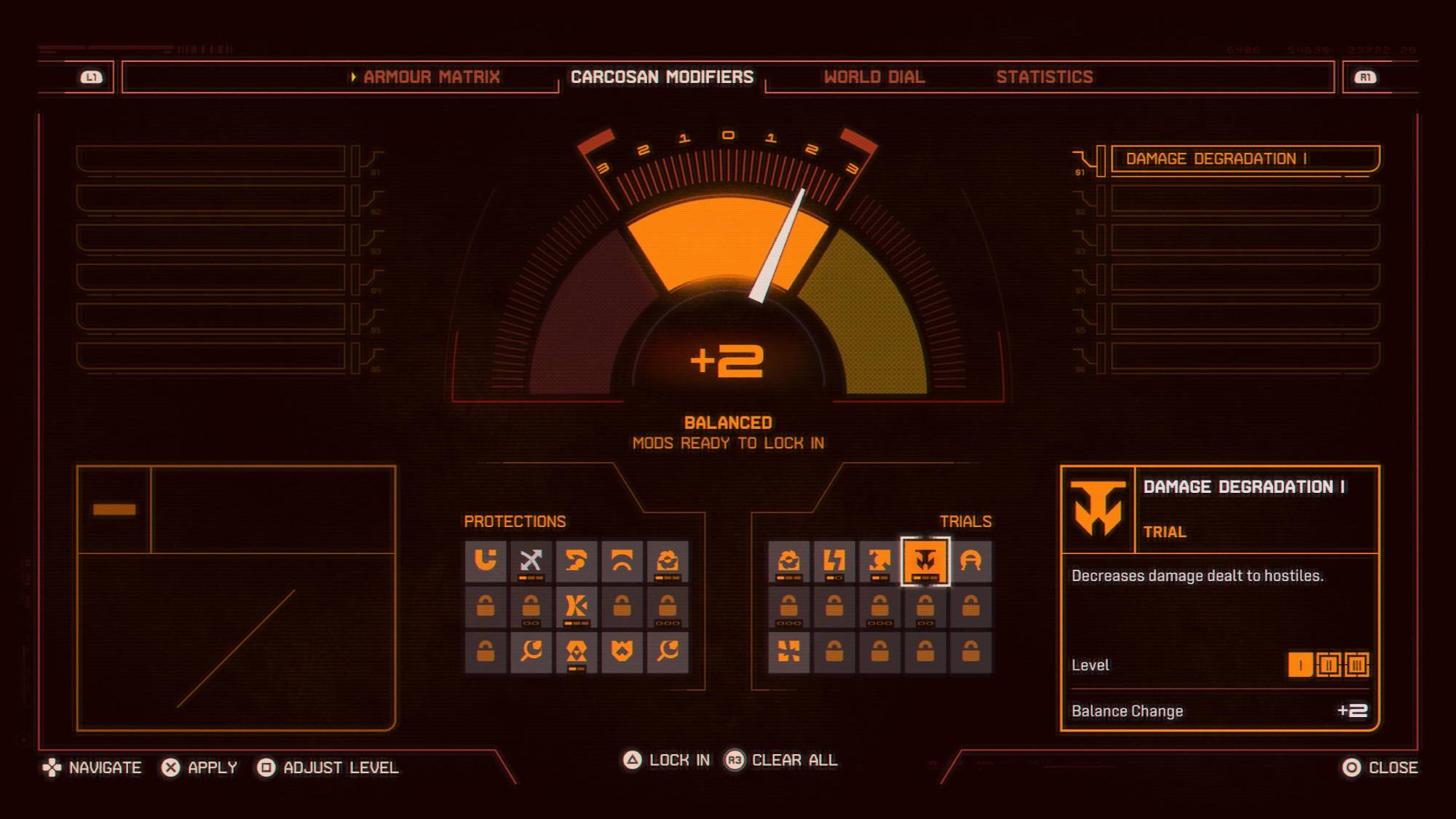
However, players craving Returnal’s more punishing nature aren’t neglected either. At the midpoint, you unlock the ability to make runs even harder by enabling a series of quite brutal modifiers (decreased damage, disabling your one-time revive, etc.). Or you can go the other way and switch on modifiers that make things easier, letting you customize your difficulty.
Another smart tweak is that the average run completion time has been dramatically reduced. In Returnal, a deep run could take north of 90 minutes. In Saros, runs will naturally conclude in around 20-30 minutes (Either through death or teleporting back to your base). This allows Saros to be enjoyed in more bite-sized chunks, and convinced me to keep playing just a little longer for “one more run” several times. Which would then quickly turn into three or four…
Pushing the PS5 Pro
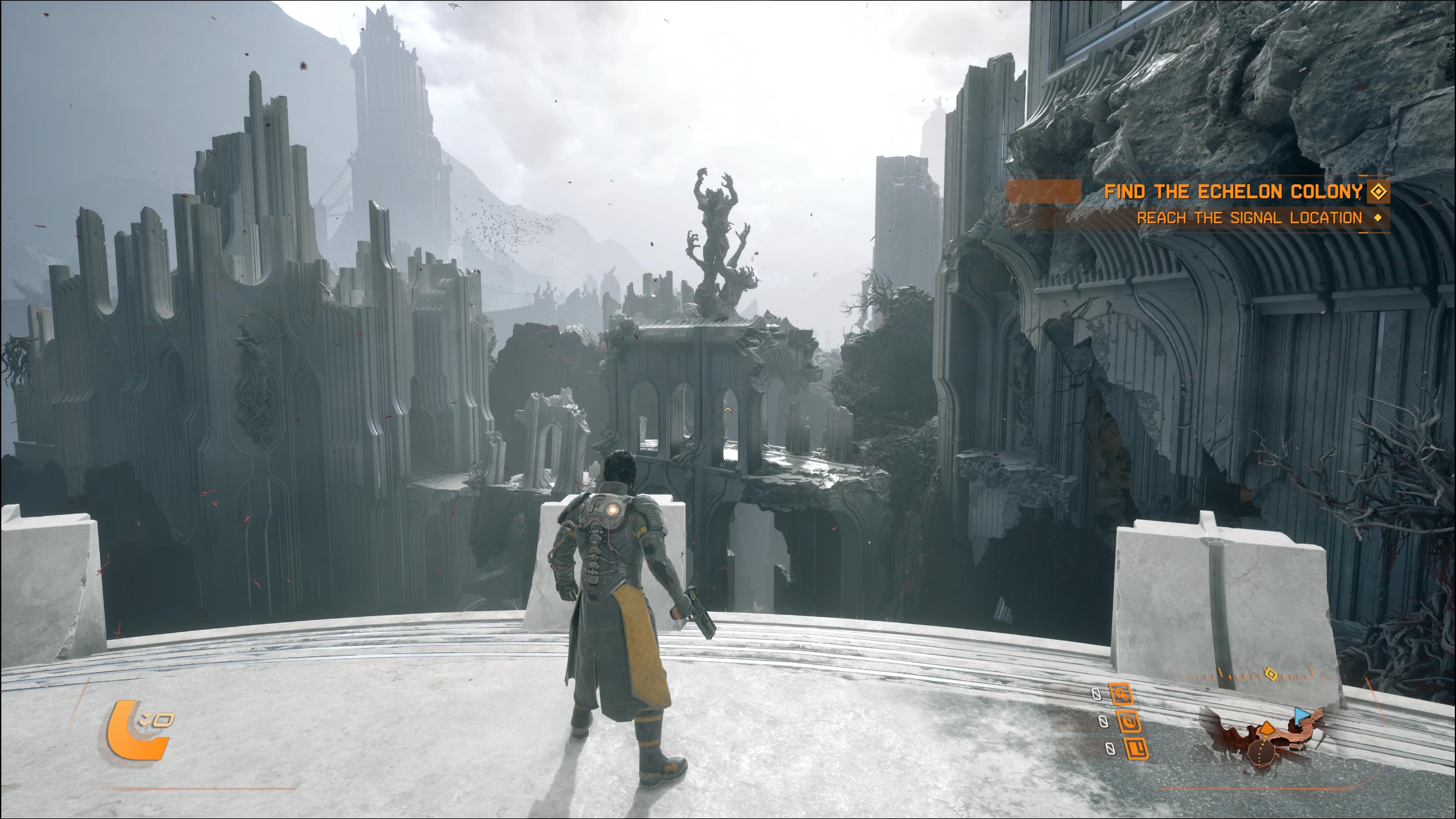
Saros is one gorgeous-looking game. Of course, you don’t often get the chance to stop and drink in the impressive visuals, as there’s so much happening around you, but the mixture of neon projectiles, imposing enemy designs, and dark sci-fi locales is immediately striking.
More impressively, even when the screen explodes into a shower of sparks, multi-colored bullets and luminescent orbs, the 60 fps never drops. Even in the most intense battles, found in optional challenge areas crammed with a silly amount of enemies, I never noticed a hiccup. It’s a good thing, too. Saros is a game where a stable framerate is vital
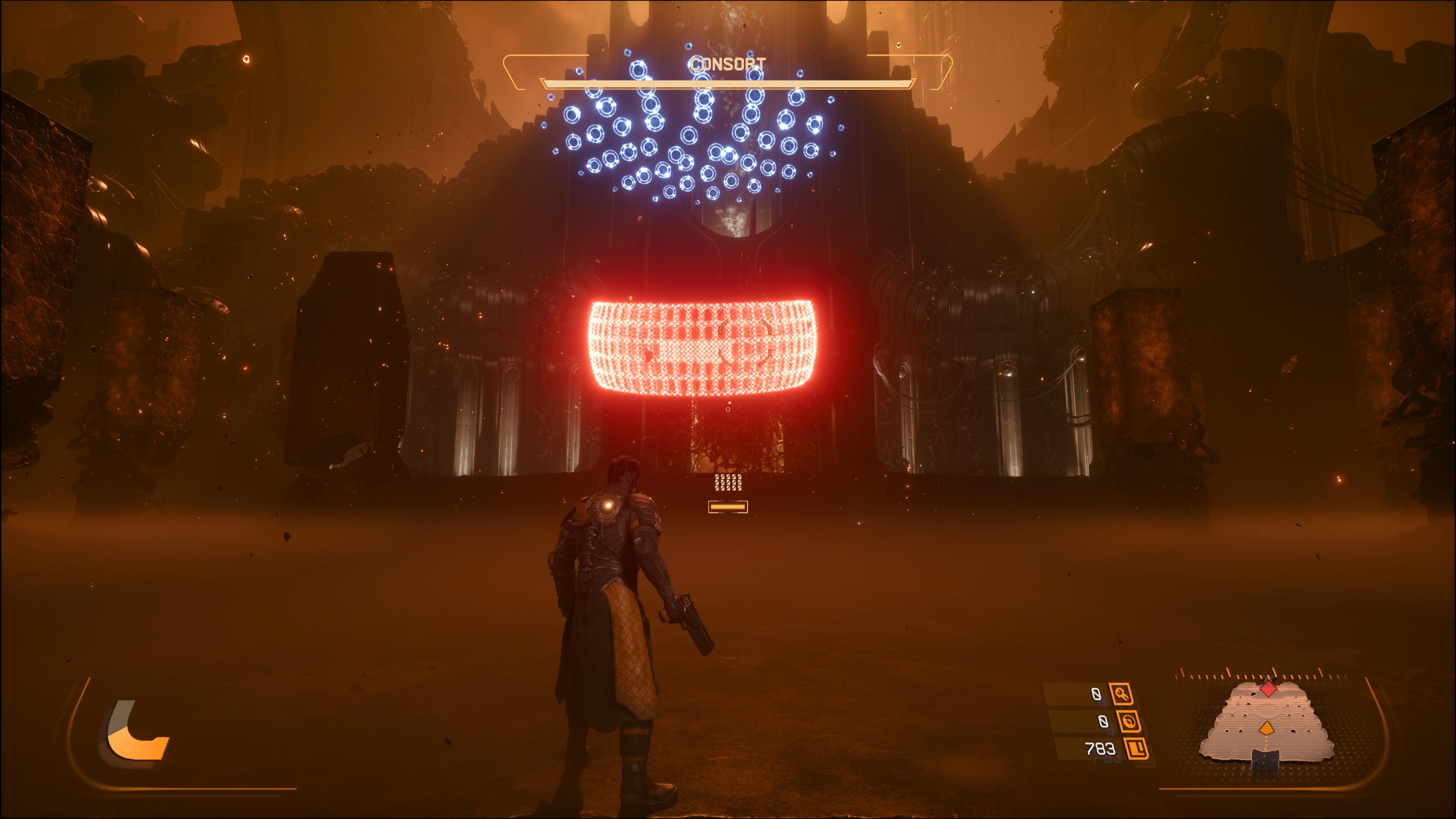
Aside from just looking phenomenal, Saros also feels fantastic thanks to its novel use of the PS5 DualSense controller. The pad’s haptic feedback is used to great effect, but it’s the remarkably clever implementation of the adaptive triggers that once again steals the show.
Every weapon, from pistols to assault rifles, offers an alternative fire mode, and rather than being activated with a button press, you switch fire modes by pressing the left trigger down halfway. Press it down fully, and you’ll activate your Power Weapon. It was a great system in Returnal, and it’s no less exceptional here. You always feel in complete control of your weapons, without even needing to lift your finger off the trigger. I wish more games used it.
Saros review: Verdict
Saros is everything I wanted out of a follow-up to Returnal. It strikes the perfect balance between offering veteran players more of the frenetic bullet-hell gameplay that has become Housemarque’s signature style, while also being more approachable for new players.
The game is at its very best when you’re dashing across an enemy-filled arena, popping your shield at the perfect moment so you can power up your ultimate weapon and fire back an explosive rocket. And even in the (many) times I wasn’t quite quick enough to outrun the hellstorm of projectiles launched in my direction, my first instinct was always to dive back into the fray as quickly as possible, with a few new upgrades unlocked, to turn the tables.
Source link