
Inglewood, California – a few miles east of Los Angeles international airport – is known as the city of champions. The NBA champion Lakers once called Inglewood’s Forum – famously dubbed “the fabulous Forum” by announcer Chick Hearn – home.
By the mid-2000s, with the Lakers gone and another local landmark – nearby Hollywood Park racetrack – closed, the city was close to bankruptcy. Then came a series of deals – often attributed to the leadership of the mayor James Butts – that reinvigorated the city, as a new epicenter of sports and entertainment such as the new spaceship-like SoFi Stadium and the Intuit Dome. When the 2028 Olympics roll around, Inglewood is slated to host many of the events as the world watches.
Some longtime residents say the glitz masks a grimmer reality: a public school system in freefall.
In 2012, Inglewood unified school district (IUSD) became one of about 130 US school districts taken over by a state since the 1980s. Of the 10,000 US districts, many struggle academically, financially or both. Takeover happens to the few. In March, citing low enrollment and financial necessity, IUSD announced the closure of five schools, bringing the total up to eight shuttered schools since the district was taken over.
As challenges mount nationwide to US public school funding and California experiences significant declines in student enrollment overall, activists warn more people should pay closer attention to what’s happened in Inglewood, a school district where more than 80% of the students are considered socioeconomically disadvantaged. Receivership is just one more tool – along with curriculum censorship, funding cuts and threats to equity and inclusion – to weaken ailing public schools.
A blindsiding turn of events
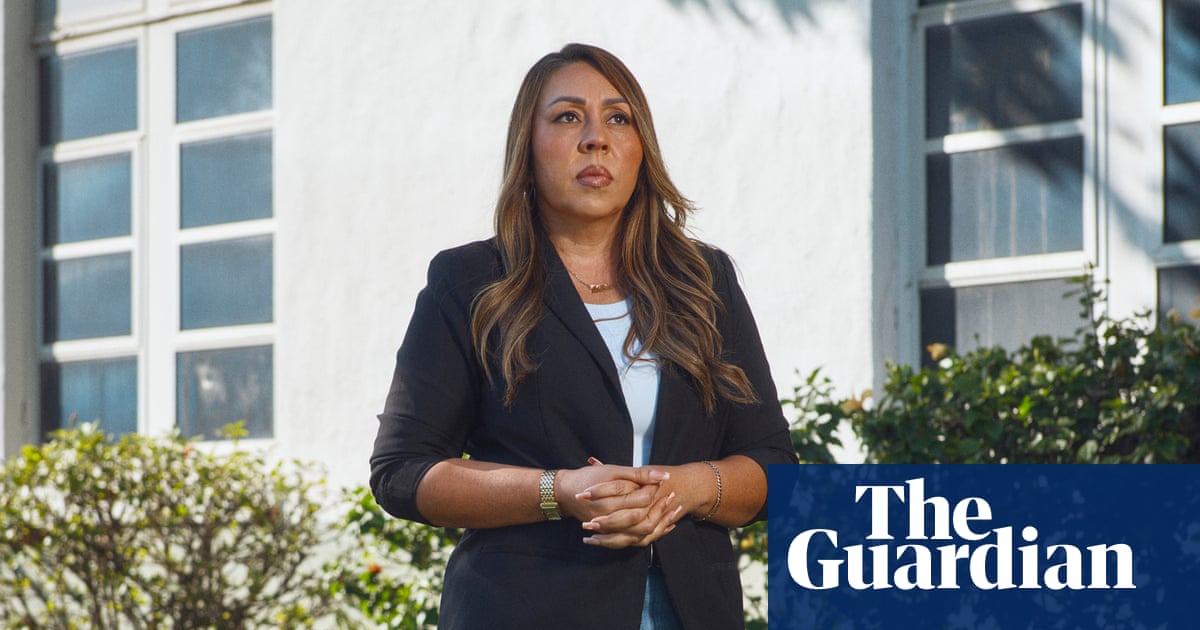
In 2019, lifelong Inglewood resident Victoria Preciado faced the daunting task of selecting a school for her eldest child. The mother of three and AP Spanish and English history teacher tapped into her network for advice. “As a teacher for so long, I had built really beautiful relationships in the community,” says Preciado, “and when I asked around, people kept recommending Worthington.”
Worthington elementary was a public school in Inglewood’s Lockhaven neighborhood, where 80% of the residents primarily speak Spanish. “I understood that by this time, Inglewood had some of the lowest-performing schools in the state,” Preciado says. “But I also knew there were good schools, too.”
Worthington, Preciado says, was a dream. She enrolled her daughter and watched her thrive in the Spanish-English dual-immersion program. “The teachers were excellent. My daughter was receiving a quality education, comparable to the schools on the west side [of Los Angeles] that have these dual-immersion programs,” she says. Meanwhile, Preciado – by then a single mom – found kindred spirits among the other parents: “It was also a tight-knit community. If a mom is late for pickup, there would be another five moms who would hold your child until you got there. It was just that type of neighborhood.”
But the dream only lasted a few years. Just days before winter break in 2022 came a notice of a school board meeting to discuss closures. A couple of schools in the district had already closed, although a coalition of parents at one school had managed to stave off closure for several years. But IUSD said those schools had been closed because of low enrollment. Preciado couldn’t believe Worthington elementary, one of the schools in the district with the highest enrollment and an engaged community, was now on the chopping block. She went to Worthington’s newly appointed principal, Monica Cole-Jackson, whom she says told her she also had been blindsided by the turn of events.
Preciado rallied parents and teachers, most of them also unaware, and quickly united other concerned citizens. Somewhere along the way, the coalition, which has grown, became known as Stop IUSD School Closures. The group started packing every school board meeting, and when they learned of an advisory committee in charge of offering recommendations about school closures, they packed those meetings, too. Kids and adults spoke passionately during public comment sessions about what Worthington meant to them, why they were getting a great education and how desperately they wanted to keep it open. Preciado’s daughter, also named Victoria, recited Tupac Shukar’s poem “The rose that grew from concrete” and pleaded with the committee to remove the concrete – the obstacles – so that the roses – the children – could grow. The advisory committee, made up entirely of Inglewood residents and businesspeople, sided with the advocates. They voted to recommend keeping Worthington open. “We cheered,” says Preciadio. “We’d thought we won.”
But by the next school board meeting, a new county administrator, James Morris, had been installed. He alone would make the ultimate decision. Community members held signs and chanted: “Escúchanos! Estamos en la lucha!” – Listen to us! We are in the fight! “That meeting was packed and demonstrators begged for the school board members to take a stand,” says Preciado. Instead, Morris and the school board members vacated the room. Saying that the demonstrators were too disruptive, they conducted their meeting in a private area and streamed it to the packed room of parents, educators and kids. Through a crackly TV monitor, Preciado heard Morris announce he would ignore the recommendation of the committee and close Worthington. The activists were crushed, but also galvanized, especially as they learned more about takeovers.
“When we look at takeovers, the pattern is pretty clear that this is a policy specifically targeted at communities of color,” says Domingo Morel, a political scientist at New York University and an expert on school takeovers. Morel’s research also suggests that in most locales, the laws enabling takeover have been pushed by Republican-led state governments. In Inglewood’s case, it’s more complicated.
‘Takeovers fail to improve the outcomes they promise’
In January 2004, newly elected Republican governor Arnold Schwarzenegger struck a deal with the California Teachers Association to balance the state’s budget by borrowing $2bn from Proposition 98, the education funding guarantee. Consequently, IUSD, like many schools, had a significant chunk of its funding suspended. Some schools made up for shortfalls by appealing to wealthy donors or parents. IUSD didn’t have those resources to tap. Instead, teachers and programs were cut, extracurriculars axed and maintenance on buildings delayed. Charter schools flourished under Schwarzenegger’s push – in Inglewood, a community of just 9 sq miles, a dozen sprang up almost overnight, according to Inglewood Teachers Association president John Hughes, a resident since 1971 and teacher since 1992.
Meanwhile, Los Angeles Unified and nearby wealthier districts like Redondo Beach, Torrance and Manhattan Beach opened enrollment and happily took students who didn’t have extensive special education needs and whose parents could navigate the process.
By 2012, the perfect storm of funding cuts, charter competition and political turmoil pushed IUSD to the financial brink – setting the stage for drastic intervention. Some blame the teachers’ union; others point to the school board for appealing to the senator Rod Wright. Wright, a Democrat who represented Inglewood, would soon be convicted of mail fraud for lying about his residence. First, however, he wrote SB 533, legislation that provided an emergency loan of up to $55m to keep the district afloat – and mandated takeover.
Democratic then-governor Jerry Brown signed SB 533 into law on 14 September 2012, making IUSD the ninth California school district placed in receivership. Teachers, parents and the community at the time largely supported the takeover, believing the district would repay the loan and exit quickly.
But few understood the ramifications. A district in receivership is subjected to oversight by the Fiscal Crisis and Management Assistance Team (FCMAT). This means that expensive audits and consultants scrutinize the district across five areas: community relations, personnel, student achievement, financial management and facilities. The district must score high enough to be freed from receivership, all while repaying loans with interest. For Inglewood, that means spending about $2.3m every year just on FCMAT reviews and loan payments – costs that weigh heavily on an already strained budget. IUSD, with a total budget is $190.6m, is already deficit spending to the tune of $16m this school year.
As Preciado’s crew learned more, they were horrified. “IUSD has been in receivership since 2012,” Preciado said. “But it was still scoring only 1’s, 2’s and 3’s out of 10 on FCMAT’s measures – including fiscal management, the very reason the district was placed under state control.”
Morel, whose research spans three decades of national data, is blunt: “Takeovers overwhelmingly fail to improve the outcomes they promise.”
Under receivership, the state superintendent of public instruction – and later, the Los Angeles county office of education – appointed administrators who replaced the superintendent and assumed decision-making authority. Inglewood’s elected school board was stripped of power, sidelining local voices.
The official narrative was simple: Inglewood had mismanaged finances and needed rescue. But the reality, critics say, is that SB 533 was a political overreach imposed on a district that wasn’t nearly as dire as portrayed. In the end, IUSD borrowed $29m.
“Just because a district needs a loan from the state does not mean it should be – or always is – put into receivership,” said Rene Espinoza Kissell, an assistant professor of education at UC Santa Cruz who studies school funding. Where wealthier districts may get supervision, lower-income districts with majority students of color are far more likely to be taken over, added Espinoza Kissell.
It’s been death by a thousand cuts: slashed budgets, crumbling facilities, bad press from the takeover and surrounding schools actively recruiting its students. IUSD’s enrollment has plummeted from 18,000 students in the early 2000s to fewer than 7,000 today. Test scores, graduation rates, attendance – nearly every metric – have followed the same spiral.
Competing visions
On his very first day in January 2023, James Morris faced a crisis: a natural gas leak at Morningside high forced an emergency shutdown and sent students back to remote learning for a month. Morris, the latest county-appointed administrator for Inglewood unified, now keeps a piece of that corroded pipe in his office – a daily reminder of how much work there is to do.
A veteran educator and former Fremont unified superintendent, Morris came out of retirement to try to turn Inglewood around – a job he sees as part facilities overhaul, part instructional reset and part political minefield.
He wants to revive what he calls the “Inglewood formula” – an emphasis on strong foundational literacy, particularly early reading instruction rooted in phonics – and get IUSD out of receivership, which he says at this rate will take several more years.
For fall, the Morningside high building – now repaired – was renamed Inglewood high school united. When school commenced in August, students from Inglewood high, located across town, merged with students from the former Morningside high in the renamed building, which is Inglewood’s only remaining comprehensive high school.
Meanwhile, a brand-new $240m high school – funded by bond measures, developer fees and monies Inglewood receives for being in the LAX flight path – is being constructed in the city’s more affluent northern section. After construction completes, all students will move over to the new school.
The new high school will be part of a larger civic investment in the area: a bridge will connect the school to a newly renovated public library, a new YMCA is going up on the site of the current IUSD admin offices and music legends Dr Dre and Jimmy Iovine have partnered with the district to launch a program called the Iovine and Young Center for Integrated Design, Technology and Entrepreneurship.
“There are amazing things we’re doing to make it better for students,” said Morris, who acknowledges the sting of closures but urges the community to focus on what students stand to gain.
But longtime residents like Fredrisha Dixon, an attorney and organizer with the Inglewood Coalition for Educational Equity – the advocacy group that has come out of the Stop IUSD School Closure folks – aren’t buying it. “This is about developing Inglewood to look a certain way – to invite certain people in and push certain people out,” she said. Decisions, she argues, have been made with little community input and no respect for the city’s history or longtime residents. The coalition worked with the American Civil Liberties Union to develop a report about what they contend has been mismanagement of their district. And the Inglewood teachers’ union and the ACLU submitted a formal complaint asking the state attorney general, Rob Bonta, to investigate what they say are Inglewood’s sweeping school closures and its state receivership status.
But state assemblymember Tina McKinnor, a Democrat who represents Inglewood, has called Morris “a godsend” for his steady leadership and recent progress on the FCMAT standards. Indeed, a recent FCMAT progress report shows the district exited review in one category and is scoring in the 5-to-7 range on others. But Dixon, Preciado and other advocates say that what’s being framed as a comeback is really the dismantling of a community institution.
“We’ve watched 13 years of destruction of our school district,” said Dixon. “And there’s still no end in sight.”
The activists point out that schools in the wealthier areas of Inglewood, bordering places like upscale Ladera Heights, remain open while schools in areas with higher numbers of immigrants and more poverty are being shuttered. Advocates charge the district is creating school deserts in the poorest parts of Inglewood.
“You’re going to have to be forced into glory,” Hughes told Morris recently. The longtime educator and Inglewood Teachers Association president has a cordial working relationship with Morris. Hughes says he believes Morris hasn’t been fully transparent with him on a number of issues but that they are “working” on their trust.
Hughes says Morris thinks he doesn’t understand his vision – that is, a mission to “right-size” the district, improve test scores and the bottom line and attract more customers with better facilities – but Hughes disagrees: “It’s Morris who doesn’t understand mine,” he says. Schools aren’t Cheesecake Factories or Starbucks franchises, Hughes says: “They’re not businesses. They’re people’s anchors. They’re the centerpieces of communities.”
And for activists and educators like Hughes, school closures aren’t just numbers on a spreadsheet – they’re deep disruptions to a community’s fabric. Sometimes, they’re outright dangerous.
“LACOE [the Los Angeles county office of education] is running Inglewood school district and they weren’t thinking about the potential problems that could happen when you merge students from the different high schools into one campus,” said Reina Carrillo, a school gang interventionist. Some residents and activists fear more people will leave the district because of the merger.
Research backs them up. Studies show school closures frequently accelerate enrollment decline and deepen districts’ financial woes.
The activists drafted the California Public School Sovereignty act to take back local control of IUSD and asked McKinnor to carry the bill. She declined.
“They’re doing what they’re supposed to do, which is raise questions,” said McKinnor, a self-described progressive. “But they think they need to educate us, and they don’t. There’s nothing they can do right now. We must close the schools.”
Activists also blame Mayor Butts, whom they say traded the community’s stability for outside investment. His administration handed out generous tax abatements to lure the NBA’s Clippers and NFL’s Rams – deals that, critics say, cost Inglewood families dearly.
Butts declined to comment for this story.
Of course, cities and school districts are entirely separate entities. But what happens in the city affects parents and their school-age children. For example, when the Intuit Dome broke ground, families in nearby rent-stabilized apartments were displaced. Redevelopment followed. Today, the smallest apartments start at $3,000 a month. Property values have soared – a win for some longtime homeowners, perhaps, but a crushing blow for families trying to buy or rent in the city.
Even daily life has changed, in no small way affected by development and even school closures. Fewer campuses means more driving to school instead of walking. “Traffic is so bad now, you can barely get across town,” said one resident.
Morris sees it differently. While no sports team can save a district, he says, Inglewood schools have seen some modest benefit from the boom. Developer fees have generated a $6m fund for school facilities, and both the Rams and Clippers have contributed to improvement projects.
But that’s not enough, Morris says: “Nobody’s going to come in and save the school district until we start doing what we need to do to get our own house in order.”
That means “right-sizing” – closing underused campuses to consolidate resources and fund meaningful upgrades. The goal is to exit receivership. But, he says, it’ll take time, and patience.
“We have somewhere around 3,500 to 4,000 students who live in Inglewood but go out of district,” Morris said. “We know our potential population is about 11,000.”
A renaissance is possible, he believes. Maybe not next year. Maybe not in five. But someday, he says, IUSD classrooms will be full again.
Victoria Preciado doesn’t have that kind of time. She pulled her daughter from IUSD and continues to organize with Stop IUSD School Closures, hoping to build a more informed and empowered community.
Recently, McKinnor introduced AB 51, a bill that would eliminate the interest on IUSD’s long-standing loan. So far, it hasn’t made it out of committee. Meanwhile, IUSD made a surprise announcement: Warren Lane elementary, closed in 2022, reopened this fall as Kelso Elementary, a K-8 campus in the Lockhaven neighborhood. But across town, near the Kia Forum, the former Kelso campus closed instead.
Activists see the campus’s reopening as a small concession, though not necessarily a victory.
“They’re only doing it because closing Kelso and selling that land will bring in more money,” Hughes said.
Parents Melissa and Nicholas Deloach recently attended a Stop IUSD School Closures informational session. Their daughter entered the new Kelso campus in the fall. If all goes well, their twins will follow in a few years.
After learning more about the district’s complicated history, Melissa says they were “deeply apprehensive”, but willing to try.
“I have family advising me to stay involved and be very, very vocal as a parent,” she said. “Parents really can make a difference at these schools.”
If anyone is going to champion schoolchildren in the city of champions, Preciado believes, it will indeed be people like the Deloaches.
“There is nobody who is going to come to save us. And I think that’s the reality,” she said. “It’s not a politician, it’s not a community org. It is just going to be the regular folks from Inglewood. And we’re going to have to save ourselves.”
This story was co-published with and supported by the journalism non-profit the Economic Hardship Reporting Project and the University of Southern California Center for Health Journalism
Source link
-

-

-

-

-


