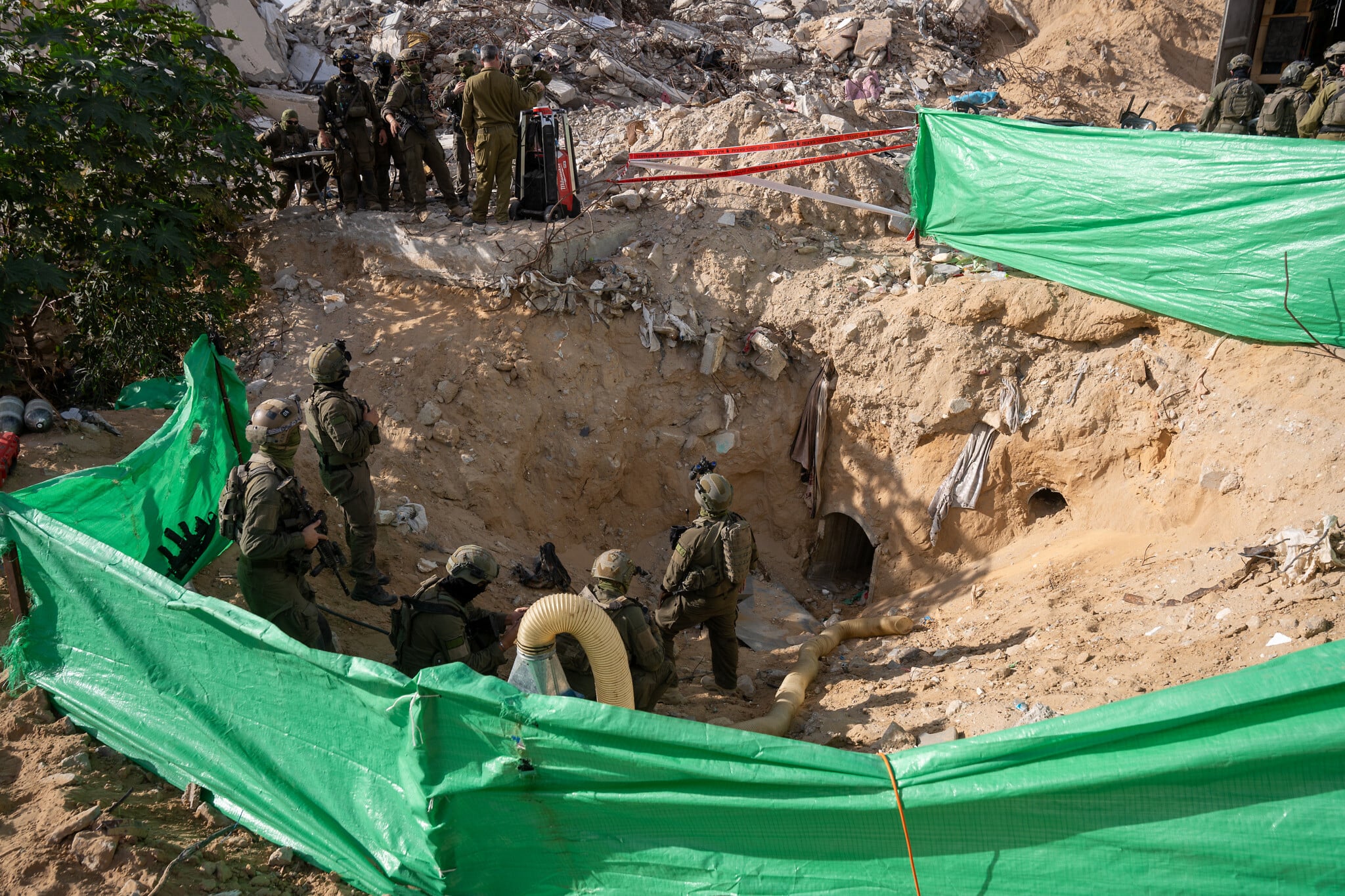
RAFAH, Gaza Strip — With limited intelligence information, the soldiers tasked with scanning Hamas’s “most complex” tunnel network in the Gaza Strip for the remains of Lt. Hadar Goldin, who was killed and abducted by the terror group in 2014, knew that the task was near impossible.
The body of the late Givati Brigade team commander was almost literally under the noses of the Israel Defense Forces. Ultimately, though, Goldin’s remains were retrieved from deep within the tunnel system spanning across Rafah’s Shaboura and Yabna neighborhoods by Hamas members operating with the military’s permission after a ceasefire between Israel and the terror group came into effect.
Commanders involved in the search, who revealed details of the mission for the first time this week, compared the approximately 18-month operation to looking for a needle in a haystack.
The underground labyrinth where his body was held ran over seven kilometers (4.3 miles) long and extended some 25 meters (82 feet) deep, and the hunt took place while fighting was ongoing above and below ground.
The body was later revealed to have been well hidden in a physically difficult-to-reach part of the tunnel, which officers said was the main reason the military failed to locate it. In hindsight, troops had been relatively close to the body during their scans of the tunnel.
The efforts to locate Goldin’s body began with the military’s offensive in Rafah in May 2024, according to military officials.
Nearly 10 years earlier and hours into a US-brokered ceasefire on August 1, 2014, Hamas fighters had attacked soldiers in Rafah as part of Operation Protective Edge, fatally wounding Goldin and dragging his body into a nearby tunnel.
By the time the IDF invaded Gaza following the October 7, 2023, Hamas massacre, it still had almost no information on where the body was being held. There were general indications that the remains were still in Rafah, but nothing concrete.
Before entering Rafah, the last major Gaza city on the IDF’s north-to-south sweep through the Strip, the military received intelligence that the body was being held in a tunnel in the Shaboura and Yabna area, about five kilometers southwest of where Goldin was killed and abducted.

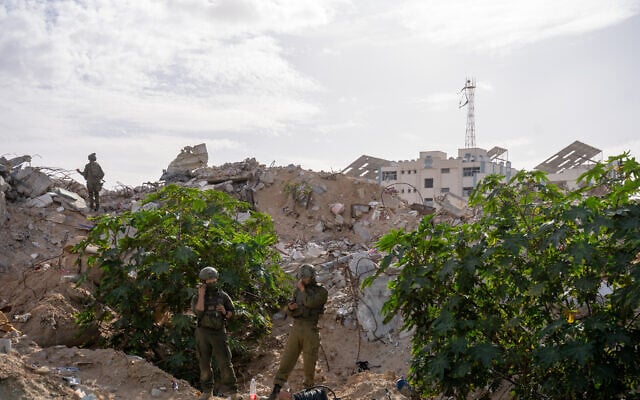
As the offensive began, the first mission for the IDF’s Yahalom combat engineering unit was to locate the tunnel and find the slain and abducted soldier’s body, officers said.
Hamas fighters were still actively using the network when soldiers first began probing the passageways, leading to a number of gun battles both inside the tunnel and above ground. No soldiers were killed in the fighting, the army said.
“We understood the general area and the neighborhood where Hadar was buried. When we arrived here, we worked hard, including during encounters with terrorists above and below ground, to establish operational control and enable the search effort for Hadar’s burial site,” a lieutenant colonel in the elite unit told The Times of Israel at the site of the tunnel, which is located in a part of Gaza still controlled by the IDF.

But taking control of the complex was only half the battle. The senior Yahalom commander described the tunnel network as not only humongous, but massively complex.
“To imagine what this environment looks like, take an area the size of several huge soccer pitches, with branching pathways, doors, many rooms, very little air, very deep, dozens of meters below ground — and they tell you: ‘Listen, roughly, Hadar is here.’ Now go bring him back while dealing with challenges from above and below,” he said. “And this challenge, unfortunately, meant that we were not able to bring Hadar back with our own hands.”
The tunnel in Shaboura and Yabna is just one small part of a massive underground network built by Hamas under the Strip over the past two decades.
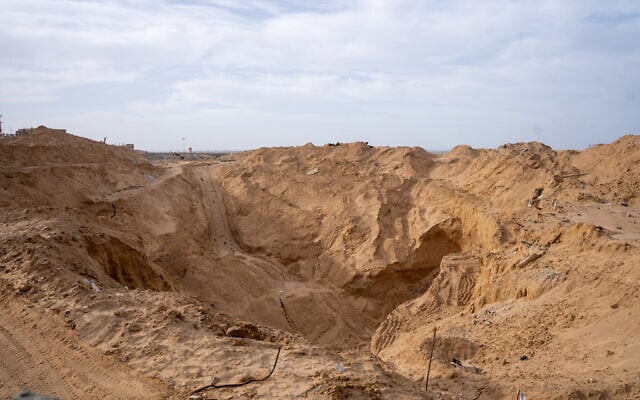
According to Israel, the entire system, much of which is connected, likely snakes some 550-650 kilometers (350-400 miles) around the 365 square-kilometer (141 square-mile) territory, running under homes, hospitals, schools and other civilian sites, with some passageways wide enough for cars to drive through.
Some 40 percent of the web has been destroyed to date, according to the IDF.
The military said it carried out “dozens of covert operations” in an unsuccessful bid to locate Goldin’s remains, including the abduction of a Hamas health ministry official thought to know where he was buried.
The months passed, with numerous IDF units passing through the area as the Yahalom combat engineers dug up parts of the tunnel and scanned the underground passages. Still, the troops were unable to find Goldin’s body.
In July, Israeli forces abducted Dr. Marwan al-Hams, who oversees Gaza’s field hospitals on behalf of the Strip’s Hamas-run health ministry. The military said al-Hams was “involved in declaring the death” of Goldin following the soldier’s abduction, and was “suspected of knowing” where in the tunnel the body had been deposited.
The doctor was brought to the tunnel several times in an attempt for him to point out the location of Goldin’s body, but without success.
Israel has continued to hold al-Hams even after the ceasefire due to his links to Hamas.
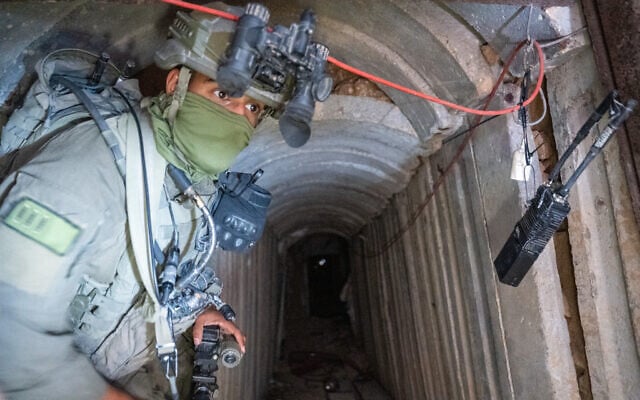
During the searches, the Yahalom soldiers stripped away the concrete panels holding back the loose sandy soil on the sides of the tunnel, risking the collapse of the passages, but also revealing hidden passages.
“This is what the soldiers did here day and night: removing the panels, making sure Hadar was not behind them, and the work here was endless,” said a captain in the engineering unit during a media tour of a section of the tunnel.
“There are many rooms located behind the panels, hidden spaces that Hamas concealed. In some of them, there were command-and-control areas and important Hamas assets. From our perspective, you look at it, and it seems completely normal. But you move things a little, and you see a whole new branch,” the captain said.
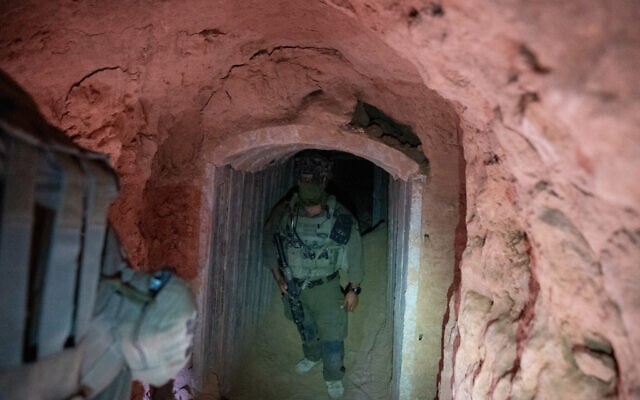
In all, the IDF said that it located around 80 separate rooms in the tunnel, including spaces that Hamas operatives used to shelter for long periods of time, as well as for weapons storage and to plan attacks.
Some rooms served as command posts for senior terror commanders, including the former commander of Hamas’s Rafah Brigade, Muhammad Shabana, who was killed alongside top Hamas leader Mohammed Sinwar in May, the military said.
However, there were no signs that other hostages or remains of abductees were held in the tunnel.
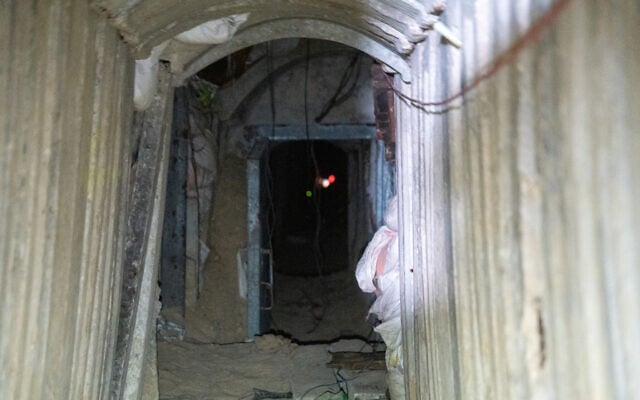
“This is one of the most sprawling tunnels I’ve seen, very complex, and that’s also one of the reasons we understood it would be very challenging for us to work here,” the senior Yahalom officer said.
The military, which accuses Hamas of using Gaza civilians as human shields, said the tunnel ran under civilian sites near the Strip’s Egyptian border, including a building belonging to UNRWA, the UN Palestinian refugee agency, which Israel accuses of collaborating with Hamas.
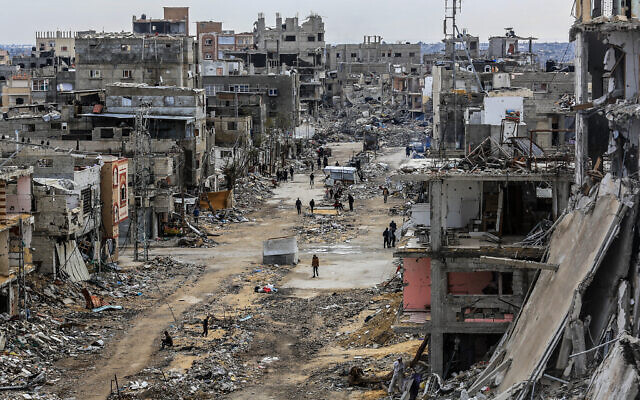
Several dozen meters from the section of the tunnel that journalists were allowed to enter stood a large UNRWA building, the largely untouched structure standing in stark contrast to the bombed-out landscape that remains of what was once the city of Rafah.
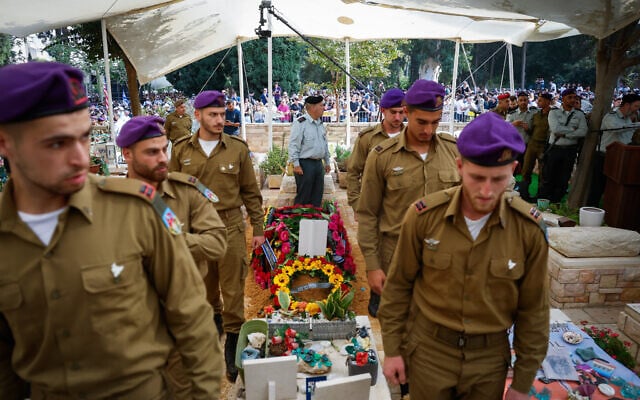
Unable to locate the body, the IDF allowed Hamas members to enter the tunnel and retrieve Goldin’s body on November 8, nearly a month into a ceasefire and hostage release arrangement under which all abductees, living or dead, are to be returned to Israel.
The body of one hostage, Master Sgt. Ran Gvili, remains in Gaza, despite reported efforts by Hamas and the Red Cross to locate him around Gaza City.
In an interview published Friday, Maj. Gen. (res.) Nitzan Alon, who served as the military’s point man on hostage negotiations, said Hamas was facing “an objective difficulty” locating the body, but maintained that pressure could be placed on the group to find the remains.
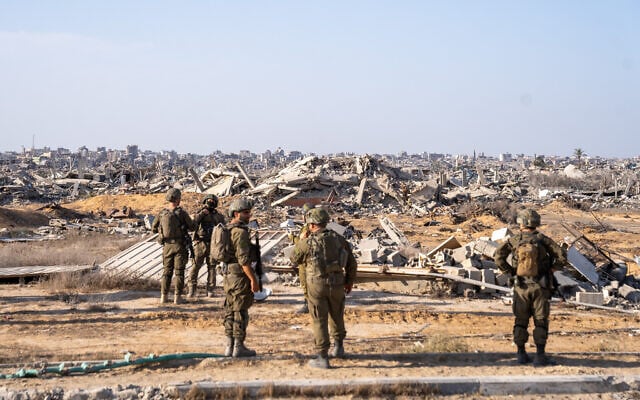
The senior Yahalom commander said the army had also been instrumental in Goldin’s return to Israel, 4,118 days after he was killed and abducted, despite not having directly found his body.
“The IDF’s action, together with the Shin Bet, in my opinion, directly led to Hamas bringing Hadar home for burial in Israel,” he said.
-

-

-

-
-