After reading this article, you should be able to:
- Know the mechanism of action of tirzepatide and semaglutide and the differences in their efficacy and tolerability;
- Understand considerations relating to dose equivalency and washout periods when switching between tirzepatide and semaglutide;
- Appropriately counsel patients who are switching between weight-loss medications.
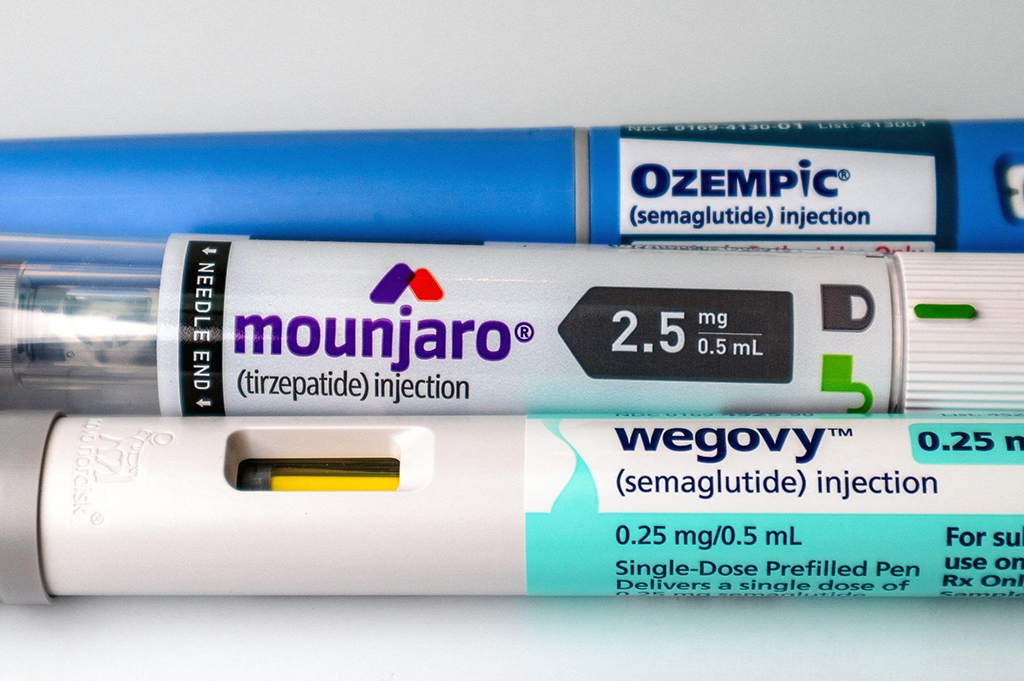
The obesity and type 2 diabetes mellitus epidemics have prompted expanded use of incretin-based therapies. Among these, tirzepatide (Mounjaro; Eli Lilly) — a dual glucose-dependent insulinotropic polypeptide (GIP) and glucagon-like peptide-1 (GLP-1) receptor agonist — has emerged as the latest option for weight loss and glycaemic control. Semaglutide — a GLP-1 receptor agonist — is already well established in UK practice for type 2 diabetes mellitus in the form of Ozempic and Wegovy for obesity, both manufactured by Novo Nordisk. In light of emerging clinical scenarios — such as adverse effects, patient preference, cost pressures or formulary decisions — some healthcare professionals may consider switching a patient from tirzepatide to semaglutide.
The recent price increase of Mounjaro (tirzepatide; Eli Lilly) in August 2025, and the subsequent stockpiling of medicines, demonstrates the importance of public education and good clinical support being available for patients by their providers1. According to Association for the Study of Obesity data, around 90% of weight-loss medication users access Mounjaro privately and, therefore, rely on independent providers for guidance and support when making choices that have been impacted or influenced by the cost increases in recent times2.
Switching between such agents requires careful consideration. There is little high-quality guidance, while interclass differences (i.e. dual vs mono-agonism) complicate assumptions about equivalency. Pharmacists in primary and secondary care play an important role in supporting safe transitions, such as assessing indication, dosing, monitoring and patient education. As of 2024, in the UK, tirzepatide was rolled out more broadly under new obesity guidance, published by the National Institute for Health and Care Excellence (NICE), aligning it alongside established agents such as semaglutide3. However, to date, no UK-specific national guideline exists that directly addresses switching from tirzepatide to semaglutide.
This article summarises available evidence, highlights gaps and proposes practical approaches for safe, effective switching. Where direct data is absent, it draws on analogous guidance from other GLP-1 receptor agonist transitions and fundamental pharmacological principles.
Comparing tirzepatide and semaglutide
Mechanism of action
Semaglutide is a long-acting GLP-1 receptor agonist that stimulates glucose-dependent insulin secretion, suppresses glucagon release, delays gastric emptying and induces satiety. It also has a half-life of around 165–184 hours, allowing for weekly dosing4.
Tirzepatide is a dual agonist at both GIP and GLP-1 receptors. The additional GIP activity enhances insulinotropic effects and may amplify weight loss via both central and peripheral pathways not fully replicated by GLP-1 agonism alone5.
These pharmacologic distinctions account for the observed efficacy differences and potential complexity when switching between the two.
Efficacy
Results of a SURPASS open-label, phase III trial, published in 2021, demonstrated tirzepatide’s superior glycaemic efficacy and weight reduction compared with existing GLP-1 receptor agonists, including semaglutide6.
In addition, the results of a SURMOUNT-5 head-to-head randomised trial in obesity, published in 2025, revealed that mean weight loss at 72 weeks was −20.2 % (95 % CI -21.4 to -19.1) with tirzepatide versus −13.7 % (95 % CI -14.9 to -12.6) with semaglutide (P < 0.001)7. The findings of a large US “real-world” cohort (n= 18,000) study, published in 2024, show that patients on tirzepatide were significantly more likely to achieve ≥5 %, ≥10 % and ≥15 % weight loss compared with semaglutide (HR 1.76, 2.54, 3.24, respectively), with a 12-month mean weight difference of -6.9%8.
These study results suggest that tirzepatide delivers greater average weight loss and glycaemic control but at a higher drug cost and with limited long-term data. In the UK, the average cost of Mounjaro 5mg is around £190. This dosage of Mounjaro provides patients with nearly 15% weight loss compared with higher doses of Wegovy, which on average can be around 16%, as shown in the SURMOUNT-1 and 5 studies. The doses of Wegovy are seen to be cheaper than the doses of Mounjaro but not necessarily delivering the same average weight-loss percentage. Therefore, it is important to balance the cost and the efficacy when making a clinical decision of prescribing one over the other.
Safety and tolerability
Both agents can cause gastrointestinal adverse effects (e.g. nausea, vomiting, diarrhoea, constipation and abdominal pain), which is largely related to slowed gastric motility6,9.
Head-to-head data published in 2024 have not shown significant differences in serious adverse events6. Other shared risks include possible pancreatitis, gallbladder disease and theoretical concerns about medullary thyroid carcinoma, based on preclinical models9.
The broader receptor activity of tirzepatide may contribute to slightly higher rates of early gastrointestinal intolerance, although discontinuation rates remain comparable7.
Both medications require gradual dose titration to mitigate gastrointestinal (GI) symptoms and improve adherence.
Dosing and administration
For weight management, Wegovy is titrated from 0.25mg to 2.4mg once weekly. For type 2 diabetes mellitus, Ozempic is typically titrated at 0.25mg, 0.5mg or 1mg doses4. Administration is a subcutaneous injection, injected once weekly.
Tirzepatide initiation begins at 2.5mg weekly, increasing in 2.5mg increments every four weeks to a maintenance dose of 5–15mg6. Administration is a subcutaneous injection, injected once weekly.
Deviating from standard titration schedules can increase adverse effects and reduce tolerability.
Considerations when switching
Currently, there is no NICE or Medicines and Healthcare products Regulatory Agency guidance that specifies how to switch between tirzepatide and semaglutide. Most available literature addresses initiation or comparative efficacy rather than transition7. Clinicians must, therefore, extrapolate from established principles for GLP-1 switching — namely, avoiding direct dose equivalence and prioritising patient safety as per individual drug summary of product characteristics.
The following principles also apply if switching from semaglutide to tirzepatide.
Dose equivalency and titration
There is no validated dose equivalence between the two agents owing to their differing receptor profiles. The safest approach is to restart semaglutide at its lowest available dose (i.e. 0.25mg weekly), then titrate gradually per standard schedule, regardless of the previous tirzepatide dose.
Example: A patient on tirzepatide 10mg weekly should start semaglutide 0.25mg once weekly for four weeks, then increase to 0.5mg and higher as tolerated.
This “start-low,-go-slow” approach balances efficacy with minimised GI side effects and improves adherence during the transition period.
Washout period or same-day switch?
Given their long half-lives (i.e. five to seven days) and overlapping incretin activity, concurrent administration of tirzepatide and semaglutide could heighten side effects. However, prolonged discontinuation may compromise glycaemic control and cause rebound appetite.
Clinicians should apply clinical judgement to select an individualised approach and may choose between:
- A one-to-two-week washout before semaglutide initiation, which is preferred for patients with significant side effects;
- A same-day switch, which involves starting semaglutide on the next scheduled tirzepatide dose. This approach can be considered for stable, tolerating patients where risk of heightened side effects is judged by the clinician to be low.
In both cases, careful clinical monitoring is essential. Some clinicians may choose a shorter or longer washout period — this should be thoughtfully justified, taking into consideration all factors, such as the patient’s medical history, how they have responded to treatment thus far and even how the patient would feel having a certain length of time for the washout period.
Monitoring during transition
During titration, pharmacists should provide structured follow-up via telephone, face-to-face or digital check-ins, as well as encourage the use of adherence aids (e.g. weekly reminders, pen-use training, disposal advice). The frequency of monitoring will depend on individual patients — some may require weekly or fortnightly follow ups. However, most patients who tolerate the treatment well would suffice with a monthly follow-up.
Important parameters to monitor when switching include:
- Weight and BMI (baseline and every four to eight weeks);
- HbA1c (six monthly) and fasting glucose daily (for diabetic patients);
- GI symptom severity tracking;
- Renal and hepatic function;
- Adherence and injection technique, which is assessed at the beginning of treatment.
Early follow-up within two to four weeks can identify intolerance, suboptimal dosing or risk of relapse.
Licensed versus unlicensed prescribing
Switching for non-formulary or intolerance reasons may constitute off-label use. Prescribers must:
- Document a clear clinical rationale;
- Obtain informed consent;
- Monitor efficacy and safety closely (see above).
Pharmacists should verify dose legitimacy, clarify responsibility for follow-up, as well as ensure patient information leaflets and counselling reflect the correct product. The importance for prescribers to document and justify all prescribing decisions for unlicensed/off label use is paramount for good clinical governance standards.
Patient counselling and support
Expectation management
Patients should understand that switching may result in a temporary plateau or modest weight regain during re-titration. Pharmacists should reinforce that semaglutide remains highly effective but may produce less absolute weight loss than tirzepatide, owing to differing receptor profiles10.
It is important to emphasise lifestyle support (i.e. nutrition, activity, behavioural strategies) as critical to maintaining outcomes11. The NHS website is a great starting point to signpost patients to basic advice on diet and lifestyle support.
Managing side effects
Ongoing counselling and support should be provided to help patients manage side effects. Counselling should cover:
- Eating smaller, low-fat meals and avoiding overeating;
- Maintaining hydration;
- Recognising red-flag symptoms (e.g. persistent vomiting, severe abdominal pain). Patients should be made aware that they should contact their prescriber or GP immediately for advice;
- Reporting potential pancreatitis or gallbladder symptoms promptly. Patients should be made aware that they should contact their prescriber or GP immediately for advice.
Slower dose escalation or short treatment pauses may improve tolerance9,11.
Additional considerations for prescribers and pharmacists
Cost and reimbursement
The superior efficacy of tirzepatide may justify higher cost for some patients; however, NICE has indicated that semaglutide may remain the preferred first-line GLP-1 agent in many formularies, owing to cost-effectiveness thresholds3,12.
Switching should not be driven by price alone — clinical suitability, tolerability and patient preference remain paramount.
Supply and counterfeit risks
Both agents have faced global shortages or stock issues and emerging counterfeit supply chains. The stock challenges have predominantly been seen owing to the price increase in August 2025, with many patients panic buying and stockpiling.
Pharmacists must verify sourcing, batch numbers and authenticity, as well as educate patients to avoid unregulated online vendors13. Patient should also be aware of how to source medication from private provider who are regulated and registered with the General Pharmacuatical Council.
Patients who seek medication privately and are unable to access via the NHS may face a greater risk of potentially using an unsafe service if they do not choose a regulated provider. It is important to also choose a provider that is able to support the patient with access to a pharmacist and advice throughout the treatment.
Documentation and governance
When switching, pharmacists should make sure that the following actions are completed:
- Record the reason for switching (e.g. side effects, preference, formulary);
- Note dose initiation and escalation schedule;
- Confirm patient consent and understanding;
- Communicate with all care settings to ensure continuity.
Where local obesity or diabetes services operate shared-care protocols, confirm inclusion of the new agent and updated monitoring parameters.
Best practice checklist for pharmacists
- Confirm clinical indication and patient goals for switching;
- Verify new semaglutide dose within licensed range or document rationale for off-label use;
- Agree an appropriate washout period;
- Counsel on dose escalation schedule, side effects and red-flag symptoms;
- Provide written instructions summarising the plan;
- Conduct follow-up after two to four weeks to assess tolerance and adherence;
- Monitor weight, glycaemic control and side effects;
- Check pen use, injection sites and storage;
- Ensure authentic, traceable supply;
- Document consent, counselling and outcomes in the patient record.
Conclusion
Switching from tirzepatide to semaglutide can be complex, yet it is an increasingly relevant clinical scenario. Although tirzepatide demonstrates greater efficacy in trials, transitions may be warranted, owing to intolerance, availability or formulary restrictions. In the absence of formal guidance, pharmacists and prescribers must rely on pharmacologic reasoning, cautious titration and vigilant monitoring.
Pharmacists play a pivotal role in ensuring safety, patient education and adherence throughout the process. As NICE and international guidelines evolve, further evidence will inform standardised switching pathways. However, until then, individualised, well-documented clinical judgment remains best practice. Ultimately, prescribing decisions should always be based on what is clinically appropriate for each individual patient.
-
1.
UK’s biggest online pharmacy freezes Mounjaro price amid reports of “stockpiling.” Pharmaceutical Journal. Published online 2025. doi:10.1211/pj.2025.1.369942 -
4.
Ahrén B, Masmiquel L, Kumar H, et al. Efficacy and safety of once-weekly semaglutide versus once-daily sitagliptin as an add-on to metformin, thiazolidinediones, or both, in patients with type 2 diabetes (SUSTAIN 2): a 56-week, double-blind, phase 3a, randomised trial. The Lancet Diabetes & Endocrinology. 2017;5(5):341-354. doi:10.1016/s2213-8587(17)30092-x -
5.
Nauck MA, D‘Alessio DA. Tirzepatide, a dual GIP/GLP-1 receptor co-agonist for the treatment of type 2 diabetes with unmatched effectiveness regrading glycaemic control and body weight reduction. Cardiovasc Diabetol. 2022;21(1). doi:10.1186/s12933-022-01604-7 -
6.
Frías JP, Davies MJ, Rosenstock J, et al. Tirzepatide versus Semaglutide Once Weekly in Patients with Type 2 Diabetes. N Engl J Med. 2021;385(6):503-515. doi:10.1056/nejmoa2107519 -
7.
Aronne LJ, Horn DB, le Roux CW, et al. Tirzepatide as Compared with Semaglutide for the Treatment of Obesity. N Engl J Med. 2025;393(1):26-36. doi:10.1056/nejmoa2416394 -
8.
Rodriguez PJ, Goodwin Cartwright BM, Gratzl S, et al. Semaglutide vs Tirzepatide for Weight Loss in Adults With Overweight or Obesity. JAMA Intern Med. 2024;184(9):1056. doi:10.1001/jamainternmed.2024.2525 -
9.
Meng Z, Yang M, Wen H, Zhou S, Xiong C, Wang Y. A systematic review of the safety of tirzepatide-a new dual GLP1 and GIP agonist – is its safety profile acceptable? Front Endocrinol. 2023;14. doi:10.3389/fendo.2023.1121387 -
10.
Wilding JPH, Batterham RL, Davies M, et al. Weight regain and cardiometabolic effects after withdrawal of semaglutide: The STEP1 trial extension. Diabetes Obesity Metabolism. 2022;24(8):1553-1564. doi:10.1111/dom.14725 -
11.
Wilding JPH, Batterham RL, Kandler K, Davies M, Van Gaal LF, Lingvay I. Once-Weekly Semaglutide in Adults with Overweight or Obesity. N Engl J Med. 2021;384(11):989-1002. doi:10.1056/nejmoa2032183
Source link