
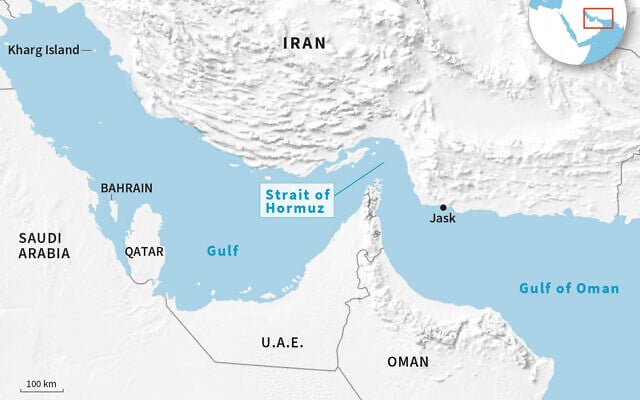
The future of the war in Iran is increasingly focused on less than 9 square miles of coral outcrop in the Persian Gulf.
Kharg Island, which lies about 30 kilometers (19 miles) off the Iranian mainland and 500 kilometers (300 miles) northwest of the Strait of Hormuz, is the export terminal for 90 percent of Iran’s oil shipments.
The island could also be the path US President Donald Trump sees to reopening the strait.
Four weeks into the US-Israeli campaign against the Islamic Republic, the flow of energy through Hormuz has become a major issue. By striking and threatening shipping, Iran is trying to drive up costs for countries across the globe and for US voters to raise pressure on Trump to end the war.
It might be working. On Monday, Trump dropped a bombshell announcement that his administration was engaged in “very good” talks with Iran regarding a “complete and total resolution” of the war.
Since then, he and his administration have given conflicting accounts on how likely a deal is. US special envoy Steve Witkoff said on Thursday there are “strong signs” the US will be able to convince Iran that it has no better option than to accept Washington’s 15-point plan for ending the war.
Trump is expressing more skepticism about those chances three days after he indicated a deal was close. “I don’t know if we’ll be able to do that,” he said in opening remarks at a cabinet meeting.
“I’m the opposite of desperate to make a deal. I don’t care!” he insisted. “We have other targets we want to hit before we leave.”
One of those targets could be Kharg Island.
“On the strategic chessboard of this war, Kharg Island is the next piece,” former defense minister Yoav Gallant wrote in The Free Press. “It may be the move that decides the conflict. If it is going to be made, it must be made now.”
The US enjoys overwhelming military advantages, but there are significant risks to taking the strategic site. American forces would be an enticing target, and there are other ways to pressure the regime by cutting off its oil sales.

Still, if talks don’t pan out, that is where the war could be heading.
“What I expect to see is further escalation, which would probably involve some kind of military operations carried out by the United States, this time using boots on the ground,” said Raz Zimmt, Iran scholar at the Institute for National Security Studies.
Taking the island
Trump has not publicly ruled out the option of taking Kharg, a move he advocated during the Iran-Iraq war in the 1980s.
He told The Guardian in a 1988 interview that should he ever become US president, “I’d be harsh on Iran. They’ve been beating us psychologically, making us look like a bunch of fools. One bullet shot at one of our men or ships and I’d do a number on Kharg Island. I’d go in and take it.”
Taking the island, many believe, would force Iran to accept US terms.
The idea is that Iran’s economy — already in dire straits — would effectively collapse if it couldn’t export oil by cutting its main revenue stream. That would likely leave the regime with little choice other than to back down and open the strait before either society falls apart, or Iran’s people decide they’ve had enough and try to overthrow the regime themselves.
While there is no evidence that Trump has decided to take the island, the military assets that would enable him to do so are on the way.
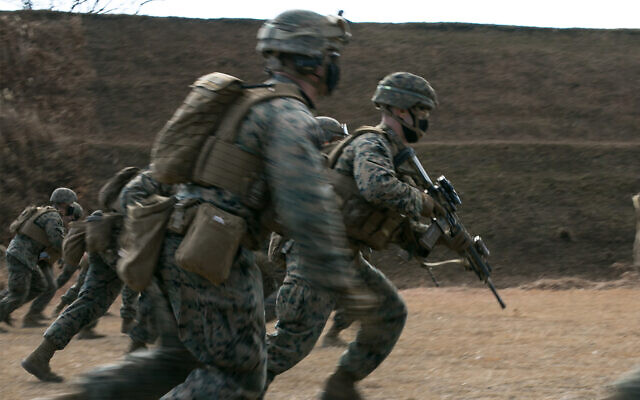
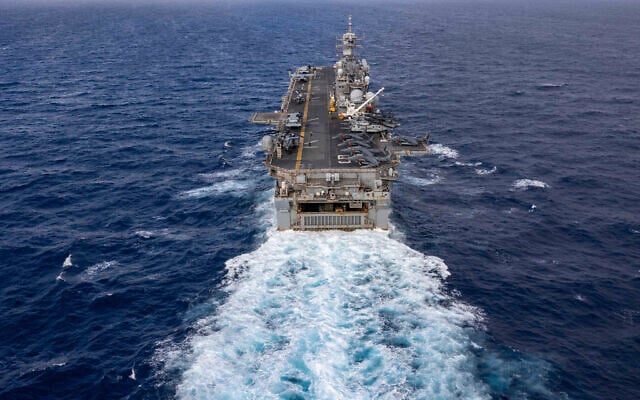
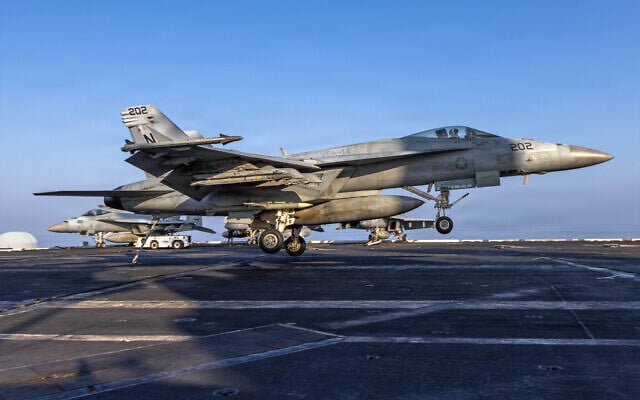
A source familiar with the planning told CNN that a significant number of troops would be needed to take the island. The US has deployed 1,000 paratroopers from the 82nd Airborne Division and 5,000 Marines toward the Gulf, with the Marines traveling on the USS Tripoli, an assault ship that could play a key role in a potential attack on Kharg.
Some believe that taking the island wouldn’t pose much of a problem.
“A combination of Marines, Army airborne troops, and special operations forces could likely seize Kharg Island relatively quickly, though naval assets would encounter Iranian threats in transit to the island,” according to Ryan Probst and Cameron McMillan of the Foundation for Defense of Democracies.
Others are more cautious.
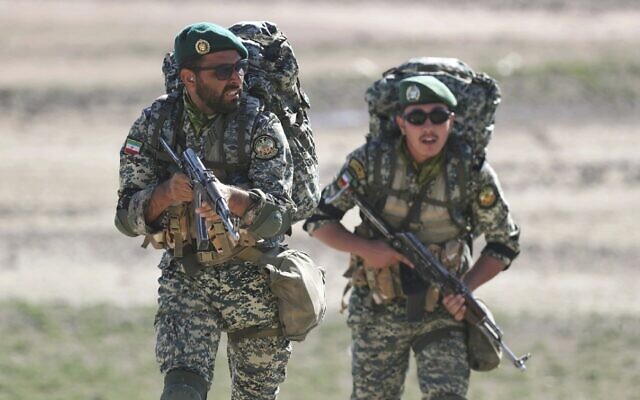
US officials and military experts have warned of significant casualty risks, emphasizing that the island is heavily fortified with layered defenses and that Iran had recently reinforced it with additional shoulder-fired, surface-to-air guided missile systems known as MANPADS, sources told CNN.
Tehran has been laying traps, moving military personnel and boosting air defenses amid fears of an American plan to take control of the island, according to the report.
Gallant, who commanded Israel’s elite Shayetet 13 naval commando unit, called an amphibious assault on a defended shore “one of the most demanding operations in modern warfare.”
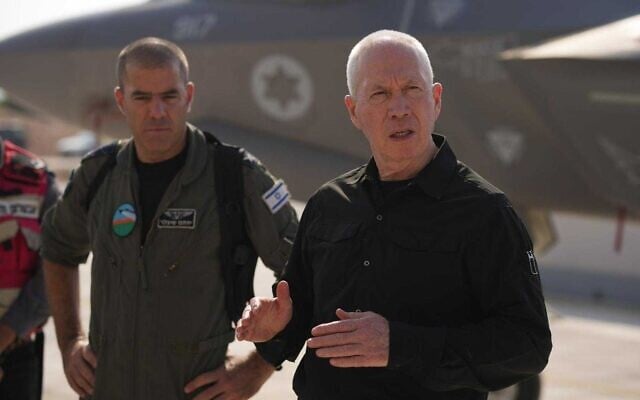
“Militaries study landings like Normandy for a reason,” he wrote. “They require precise coordination across sea, air, and land domains, and they leave the first waves of troops exposed if combat power does not quickly build ashore. Success depends on integrating helicopters and fixed‑wing aircraft, landing craft, ground forces, intelligence, and constant protection against missile and drone attacks.”
Still, the US would enjoy advantages most landing forces don’t have. The US controls the air and would be able to strike any Iranian soldiers on the island foolish enough to try to stop a landing.
It also rules the sea. The Iranian navy is destroyed, and the Islamic Republic would not be able to move reinforcements to the island.
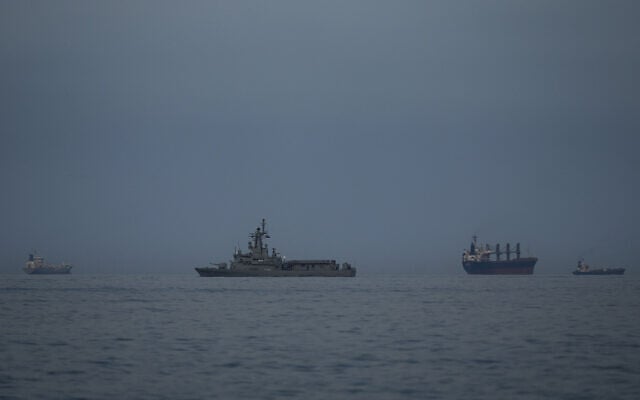
Real dangers to the troops would come after the initial invasion.
Iran would turn the US presence on the key island into a priority target and focus its firepower there. Iran has been hit hard, but still retains the ability to fire drones and missiles, including daily barrages at Israel and the United Arab Emirates.
Unlike Israel, Kharg is in range of Iranian rocket artillery, as well as multiple types of suicide drones.
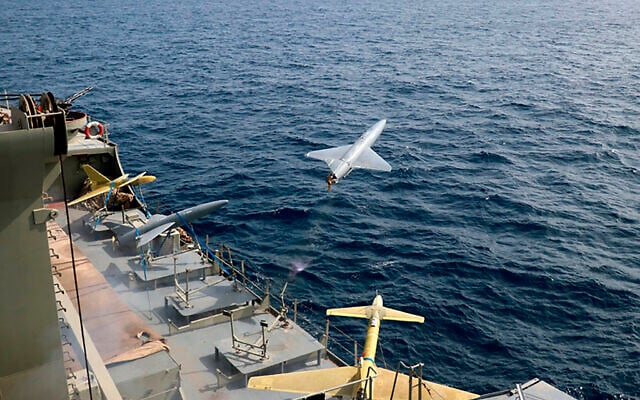
In its four-year-long war with Ukraine, Russia has leaned heavily on suicide drones, a cheap, mass-produced weapon that can find and destroy military and civilian targets. Iran has been a major supplier of Shahed drones, which Russia has used to saturate targets, including fuel depots and power stations.
Moscow uses waves of the relatively inexpensive drones to overwhelm defenses, and Russian troops have also used them with precision in combination with intelligence drones to attack Ukrainian artillery.
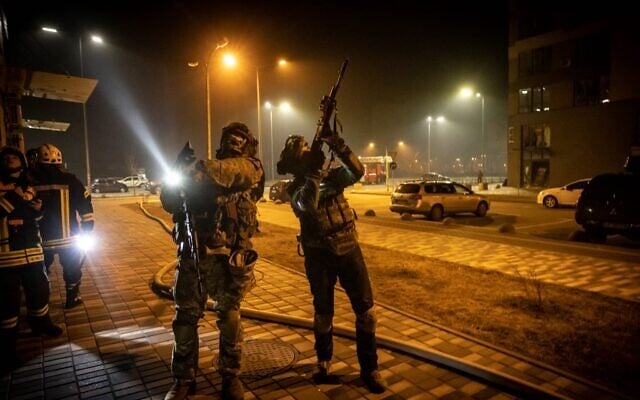
Iran is likely to use similar tactics against US troops.
With Iran under attack, the flow of drones has shifted. Russia began delivering drones to Iran this month and is set to complete the phased shipment of the equipment by the end of the month, the Financial Times reported, citing Western intelligence assessments.
To deal with the drone and artillery threat, the US will have to shift considerable air assets to hunting mobile launchers and storage sites along the coast.
Delayed effects
There are other reasons that a Kharg invasion isn’t the magic bullet some think it is.
Iran is reportedly selling over 1.5 million barrels a day during the war, and enjoying a windfall from the spike in prices and sharp drop in competition. Taking that revenue stream from the regime would hurt it, but not immediately.
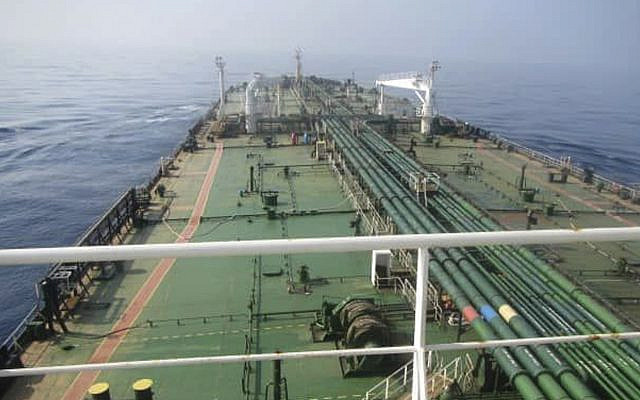
When Trump pulled out of the JCPOA nuclear deal in 2018, Iranian oil exports dropped from 2.5 million barrels per day to less than 500,000.
“They managed to survive so it could take several weeks or even months until Iran will have to face the economic implications of taking control over Kharg Island,” said Zimmt.
Iran could continue for weeks or months attacking shipping in the Strait of Hormuz, and striking energy infrastructure in Gulf states before the economic pain brings it to its knees.
And there are plenty of other, less risky ways to deny Iran the ability to export gas, if that is the leverage Trump wants to use. It wouldn’t be very hard to stop ships carrying Iranian oil in the Persian Gulf or out in the Arabian Sea. The US could also steadily destroy Iranian facilities on the island from the air as long as Tehran refuses to meet US terms, or at least reopen the Strait.
Moreover, reaching a deal with the Islamic Republic might be missing a historic opportunity.
“If you could actually deny them that oil export, it would likely mean we’ve so degraded the regime’s threat capacity that we don’t fear for our own force protection whether on or near Kharg,” said Richard Goldberg, senior adviser at FDD.
“At that point, it would make more sense to use that leverage to bring down the rump regime over the months ahead rather than trade it away but keep a radical regime.”
-

-

-

-

-


