
Great cinema has never died, but there’s something particularly heartening about the fact that it survived 2025. Looking back at this turbulent year, rife with the usual industry concerns over the viability of the theatrical experience, young people’s slipping attention spans, and Hollywood’s overreliance on franchises, unearths a diverse crop of gems. Many of my favorite films were major studio releases—blockbusters, even—that challenged audiences in innovative, surprising ways. While there were indie triumphs and international standouts to consider, too, this year demonstrated that movie stars can still have cultural impact, and that large budgets can be spent on more than just costumed do-gooders.
A few titles just outside my top 10 are worth mentioning: James Gunn’s wheel-reinventing superhero film Superman; Ira Sachs’s wistful and talkative drama, Peter Hujar’s Day; Ari Aster’s frighteningly bold satire Eddington; Kleber Mendonça Filho’s expansive Brazilian memory piece The Secret Agent; and Carson Lund’s lovably shaggy baseball snapshot, Eephus.
10. On Becoming a Guinea Fowl (directed by Rungano Nyoni)
Nyoni’s dark comedy about a family in Zambia features the most arresting opening scene of the year. A woman named Shula (played by Susan Chardy), dressed as Missy Elliott from her music video for “The Rain,” drives past someone who’s collapsed on the road. She discovers that it’s her uncle, a problematic yet nonetheless celebrated figure in her family. What follows is an absurd reckoning that mixes surreal humor and domestic drama as Shula chafes against her relatives’ hysterical funeral planning. On Becoming a Guinea Fowl is Nyoni’s second film (after her intriguing debut, I Am Not a Witch), and it cements her genre-blurring style as one to eagerly follow.

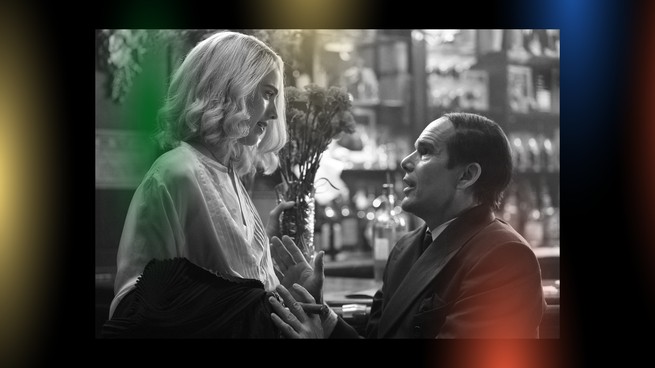
9. Blue Moon (directed by Richard Linklater)
Watching the lyricist Lorenz Hart (Ethan Hawke) settle in at a bar after the opening night of Oklahoma!, one might wonder whether an entire movie can be devoted to what quickly unfolds—a cranky legend’s meltdown over his failing career. The answer is a resounding yes, especially in the hands of Linklater, who loves a challenging chamber piece, and Hawke, his richest artistic collaborator. They plunder incredible comedy and pathos from their subject, a diminutive man of great talent poisoned by jealousy, the strictures of showbiz, and Hart’s personal demons.
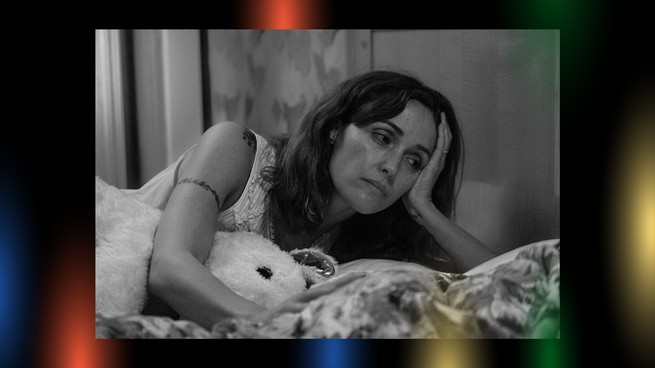
8. If I Had Legs I’d Kick You (directed by Mary Bronstein)
Speaking of extended meltdowns: The actor Rose Byrne has never been better than she is in Bronstein’s incendiary portrait of motherhood, careerism, and the slog of having responsibilities. Jarring, shuddery close-ups illustrate the never-ending emotional spiral of its main character, Linda (Byrne), who struggles to raise a kid who has a chronic health issue while keeping her home and career stable. Despite its heavy premise, the movie also has absurdities, among them Conan O’Brien as a judgmental, prissy therapist. Serious belly laughs and nerve-racking moments arrive in equal measure; tonally, there’s nothing quite like it.
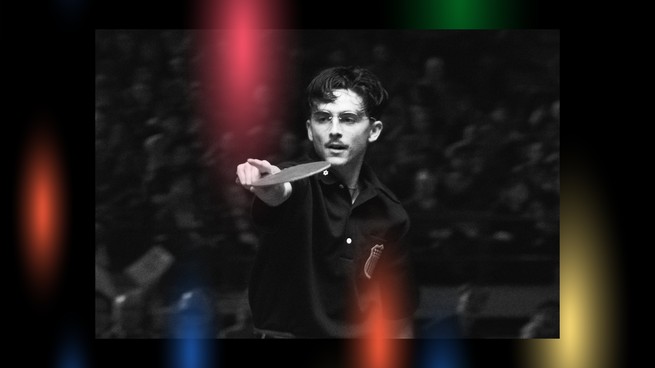
7. Marty Supreme (directed by Josh Safdie)
Josh Safdie’s first solo-directorial effort since splitting with his brother, Benny, is of a piece with the pair’s high-octane work, such as Uncut Gems and Good Time. Marty Supreme, however, operates on a far grander scale than Safdie has pursued before. The filmmaker’s passion for foolhardy underdogs and train-wreck charmers electrifies this tale of a postwar striver (an unbelievable Timothée Chalamet) trying to make his name in table tennis. The 1950s setting lends new maturity to Safie’s breakneck style; Marty’s a hustler from the margins, standing in for any determined artist during an era when America seemed simultaneously alive with economic possibility and closed off to outsider thinking.
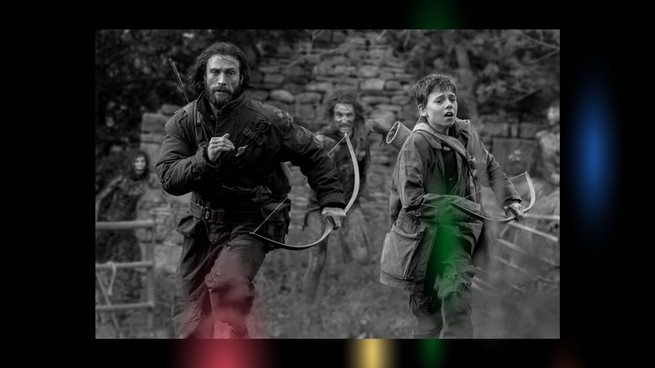
6. 28 Years Later (directed by Danny Boyle)
I worried this legacy sequel to 2002’s totemic zombie movie, 28 Days Later, might exist for one purpose: the filmmaker Danny Boyle seeking safe creative harbor after a couple of flops. Instead, he turned in his most visually adventurous work in years. Boyle expands upon the original film’s world while cleverly weaving in salient themes, namely Britain’s recent tendency toward political isolationism and nostalgia. The exhilarating new angles on zombie-horror tropes that should be dead and buried by now—the societal allegory, the design of the undead themselves—are impressive. And on top of all that, 28 Years Later is just a blast.
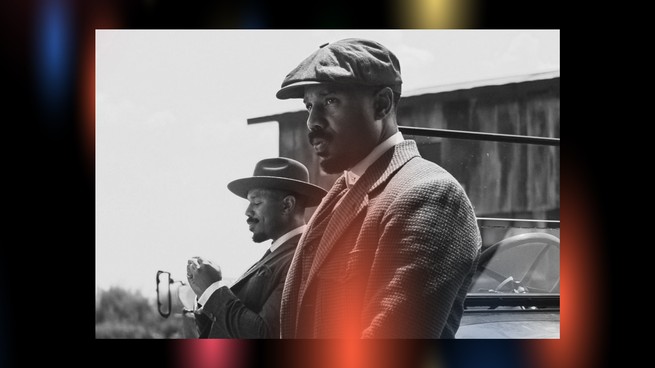
5. Sinners (directed by Ryan Coogler)
Coogler was already one of America’s most exciting filmmakers, yet I was still stunned by the ambition of Sinners, which wraps a daring breadth of subjects into an appealing blockbuster package. The vampire period thriller, set in 1930s Mississippi, is rip-roaring fun. But, like any great genre film, it uses the supernatural to examine deeper concerns: the false promise of assimilation, the elemental magic (and century-long exploitation) of the blues. Powered by dual roles from Michael B. Jordan, Sinners was an out-of-the-box hit—the likes of which moviegoers don’t get very often anymore.

4. Caught by the Tides (directed by Jia Zhangke)
One of the best movies made about the sweep of the 21st century thus far, the Chinese director Jia’s newest effort is a collage of footage he’s gathered over more than two decades, including lost scenes and abandoned ideas. With the actor Zhao Tao, his wife and muse, at the center, the loose narrative follows a woman named Qiao Qiao as she leaves her northern Chinese city to journey from province to province, searching for a former lover. Jia takes viewers through environments that will be familiar to devotees of his past films, which deal with the country’s array of changes in recent years. Even the uninitiated will be beguiled, though, by the director’s meditative style, his skillful portrait of industrial upheaval and decay, and the sense of wistfulness driving Tao’s lovely performance.
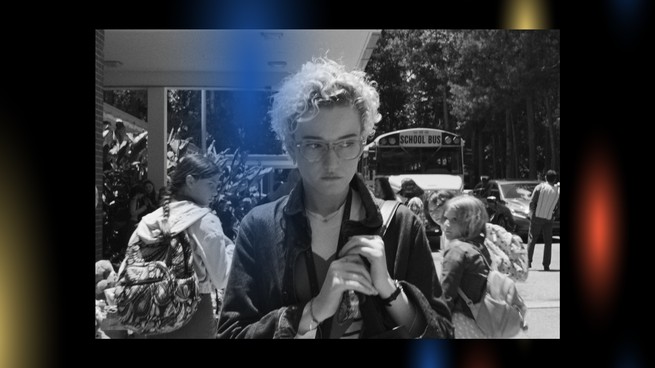
3. Weapons (directed by Zach Cregger)
I was blown away by Cregger’s tiny-scale horror debut, Barbarian, in 2022. His follow-up is bigger, longer, and stuffed with characters; the plot swerves, however, are as well earned as those of its predecessor. Though Weapons focuses on an almost unbelievable event—a community in fantastical disarray after nearly an entire classroom of children vanishes—the tensions feel uncomfortably real. The movie evokes the distinctly American mob mentality that can develop in the face of tragedy. Cregger provides answers to the awful mysteries he sets up and delivers satisfying action sequences. At the same time, he doesn’t let his audience off easy. Viewers end up cheering for the kind of carnage that, in a less confident movie, should be sending them out of the theater screaming.

2. It Was Just an Accident (directed by Jafar Panahi)
One random night in Tehran, a car mechanic, Vahid (Vahid Mobasseri), notices a customer’s shuffling gait. The next day, Vahid ambushes the man and prepares to bury him alive, convinced he is the anonymous, prosthetic-leg-wearing guard who tortured him in a state prison. The subject has personal resonance for Panahi, whose politically charged work has frequently attracted the ire of the Iranian government; following a prison sentence, he has had to make his recent films in secret. It Was Just an Accident tackles the insidious feeling of being resolute in one’s convictions—which Vahid is, for a time. Most of the movie sees him shuttling his captive around town, connecting with other former inmates for help corroborating his theory. The mood toggles between high comedy and dark drama with slippery ease until the story reaches its unforgettable conclusion. I saw this film months ago; I still think about it every single day.

1. One Battle After Another (directed by Paul Thomas Anderson)
Year-end lists should be idiosyncratic, and critical consensus can be dull. Sometimes, though, we get films like One Battle After Another, and everything else simply has to make way. Anderson’s shaggy adaptation of Thomas Pynchon’s novel Vineland rushes right at contemporary America: War brews on the sidelines, political resistance rears its head, and a younger generation of activists contends with the fraught legacy of their elders’ beliefs. One Battle After Another deals with all of those threads while also being a rollicking action movie with a sweet, gooey core. Somehow, none of it ever tips into ultraseriousness or total absurdity; the audience can both laugh at such inventions as a cabal of white supremacists (named the Christmas Adventurers) and shudder at the kind of power these characters represent. Anderson knows better than anyone that a Hollywood movie, at its full power, can deliver those two feelings at once.
Source link
-

-

-
-

-