

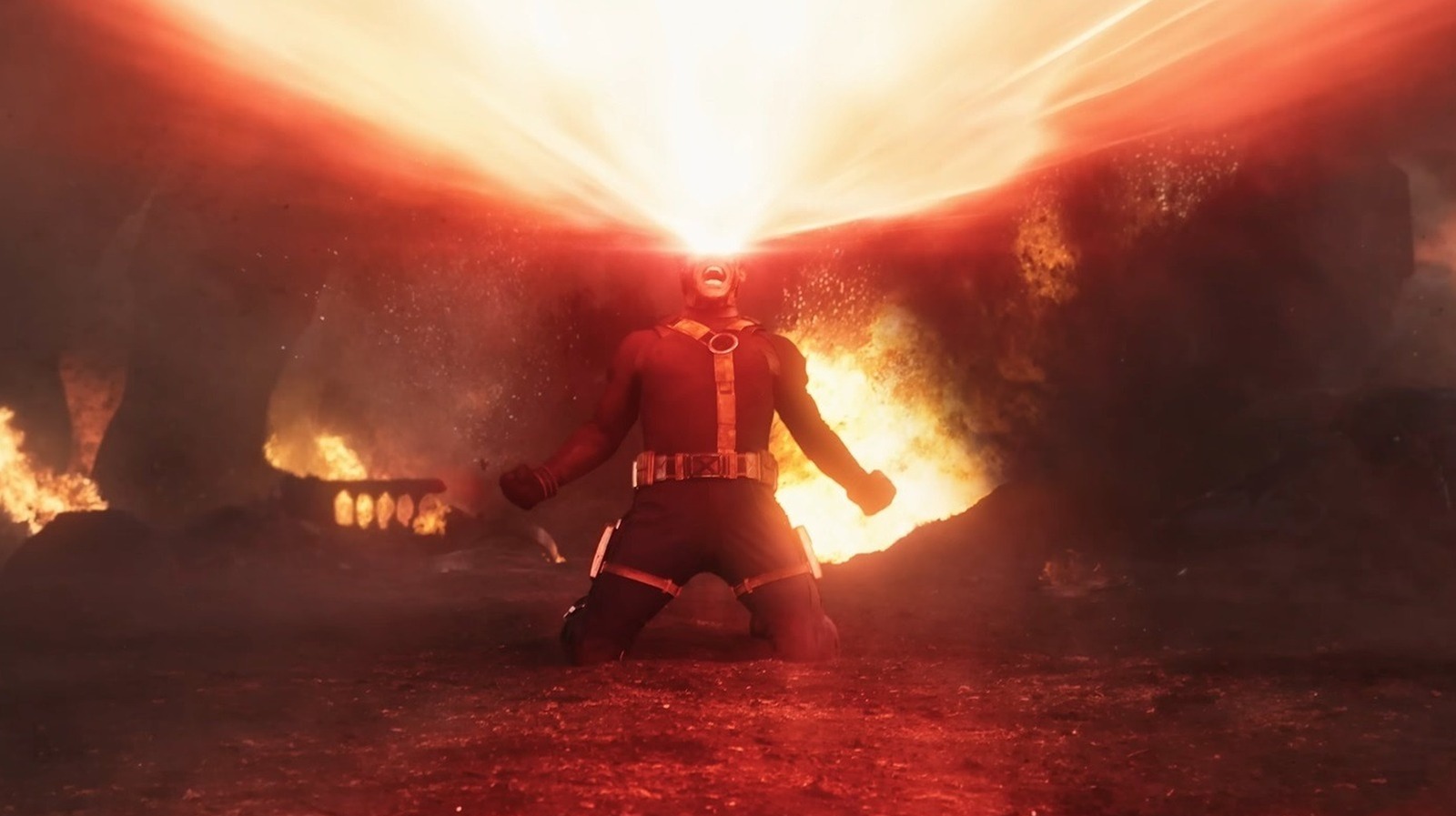
Welcome to “Fanon Fixing Canon,” a weekly column where we investigate infamous plot holes or terrible storyline decisions. Through a combo of detective work and meticulous fan theorizing, we fix these problems so they no longer exist — and canon is immaculate once again.
Ever since “Spider-Man: No Way Home” took all three major live-action “Spider-Man” movie series and mashed them together into a nice, big, multiversal ball of fun, there has been no doubt of the reigning king of convoluted superhero movie timelines. Well, in all honesty, the X-Men franchise probably ruled supreme even before that, since it has never really bothered to fix or explain … well, anything.
Now, with the X-Men set to make their triumphant return in “Avengers: Doomsday,” it’s time to fix this situation. And because the movies refuse to give the X-Men a timeline that makes a semblance of sense, there’s only one thing to do: create one ourselves.
Fortunately, we’ve figured out a solution that explains every major X-Men film and their connections to each other, as much as possible, and — believe it or not — actually makes it all make sense. What’s our secret? Simply enough, the X-franchise is made up of three distinct timelines that cross paths, but ultimately tell three slightly different versions of the mutant team’s saga. Let’s take a closer look at how it all works out!
The original X-Men timeline is the smoothest one, but ends at Days of Future Past
In the days of normal and linear franchises (if there ever was such a magical era), this timeline would be the only X-Men one we ever had — for better and for worse. This is the one that Bryan Singer’s “X-Men” kicked off in 2000, followed by “X2” in 2005 and “X-Men: The Last Stand” in 2006.
After the original trilogy, the X-franchise started and promptly killed the “Origins” series with the abysmal “X-Men Origins: Wolverine” in 2009, before it started exploring team prequels with 2011’s “X-Men: First Class.” Both of those films are part of this original timeline. Following the second Wolverine (Hugh Jackman) solo project “The Wolverine” in 2013, we see the end of this iteration of the X-Universe in 2014’s “X-Men: Days of Future Past.” That film climaxes with the massive timeline reset of all resets: The original timeline X-Men are all killed off, right before their big plan succeeds, and the past is forever altered, wiping out their apocalyptic future.
The ending of “X-Men: Days of Future Past” returns Wolverine to a brand-new timeline, where the classic team — including Cyclops (James Marsden) and Jean Grey (Famke Janssen), who both die in “The Last Stand” — are still around. Those two characters being alive makes it very clear that we’re now in a different timeline, thus marking the end of the original film series.
Viewing order for the original “X-Men” timeline: “X-Men: First Class,” “X-Men Origins: Wolverine,” “X-Men,” “X2,” “X-Men: The Last Stand,” “The Wolverine,” “X-Men: Days of Future Past.”
The Days of Future Past reset timeline is the one that brings the mutants into the MCU
Now, that brings us to what we’ll call the “Reset Timeline.” This timeline is extremely important because these are the versions of the X-Men who we’ll see in “Avengers: Doomsday,” following a brief appearance in “The Marvels.”
A viewing order of the Reset Timeline also starts with “X-Men: First Class,” then runs through “Dark Phoenix.” Notably, the version of Wolverine on this timeline is the one seen during the events of 2016’s “X-Men: Apocalypse” — all the previous Weapon X stuff that occurred in “X-Men: Origins” is wiped out. After “Dark Phoenix,” we can presume that events proceeded in way that loosely mirrors the original trilogy, resulting in a full school and full X-Men lineup by the time we see the older versions of this team in the closing scene of “Days of Future Past.”
What else fits here? Well, orphaned X-Men spin-off “The New Mutants” is a tough cookie since it features some “Logan” footage (more on that later) but in the end, “The New Mutants” falls in the “X-Men” timeline sometime between 2024 and 2027: Since “Logan” states that new mutants haven’t been born since 2004 and the teens of “The New Mutants” would be way younger, we can confidently place the latter movie on the Reset Timeline. The gleefully timeline-hopping “Deadpool” trilogy also goes on the Reset Timeline as its own, confusion-happy thing. We should assume Deadpool’s movies– like Deadpool — are an unreliable narrator, and not dwell too much on the details. Deadpool himself is clearly aware of all the multiple timelines, and playing with that fact.
Viewing order for the Reset Timeline: “X-Men: First Class,” “X-Men: Days of Future Past” until the final scene, “X-Men: Apocalypse,” “X-Men: Dark Phoenix,” the final scene of “X-Men: Days of Future Past,” “The New Mutants,” “Deadpool,” “Deadpool 2,” “Deadpool & Wolverine,” “The Marvels,” upcoming appearances in “Avengers: Doomsday” and beyond.
Logan exists in its own sad but highly cinematic timeline
“Logan” is a great film. It’s also the greatest problem with the X-Men movie timeline, because it very decisively closes the book on the mutant team as we know it… while also contradicting what happens in the Reset Timeline films. Fortunately, even though fans (plus “Deadpool & Wolverine”) might want to tie it into the broader universe, Hugh Jackman went on the record before the movie’s release, and clarified to Digital Spy that “Logan” is its own thing: “Not only is it different in terms of timeline and tone, it’s a slightly different universe. It’s actually a different paradigm and that will become clear [when you see the movie].”
With that said, out of academic interest, we can pretty cleanly slot “X-Men Origins: Wolverine” into the Logan Timeline, as well as “First Class.” With both established, we’d then time-skip a few decades’ worth of adventures until we’re in the original “X-Men” movie trilogy — and those three movies DO seem to happen in the “Logan” timeline since Charles Xavier (Patrick Stewart) at one point mentions the Liberty Island incident of the 2000 movie. After that, we move to “The Wolverine,” before time-jumping again into the events of “Logan.”
Granted, the airport post-credits scene of “The Wolverine” is a very obvious “X-Men: Days of Future Past” tease, so that particular bit might not quite work in this timeline. Still, if we opt to leave the metaphorical theater before that scene, we get a nice, working timeline of events that lead to “Logan.”
Viewing order of the Logan Timeline: “X-Men Origins: Wolverine,” “X-Men: First Class,” “X-Men,” “X2,” “X-Men: The Last Stand,” “The Wolverine” (without the post-credits scene), “Logan.”
There are minor caveats to this X-Men timeline fix, of course
All this multi-timeline strangeness is par for the course for the X-Men, whose comic book timeline is famously convoluted. It also leaves a few caveats to be dealt with — but we can make them work.
First, there’s the matter of seemingly overlapping characters. Two different Calibans appear in “Logan” (played by Stephen Merchant) and “X-Men: Apocalypse” (Tómas Lemarquis), but we can probably argue these are the same guy at different times in his life. Less straightforward are Angel — there’s no way that Ben Foster’s 2000s-era Warren Worthington III in “X-Men: The Last Stand” is the same as Ben Hardy’s unnamed 1980s British cage fighter from “X-Men: Apocalypse.” Then there’s Emma Silverfox (Tahyna Tozzi) from “X-Men Origins: Wolverine,” who can’t be Emma Frost (January Jones) in “First Class.” As far as these characters go, let’s just say they’re different people with coincidentally similar powers. Angel never gets called Warren in “Apocalypse,” anyway.
From there, the MCU has introduced lots of other quirky multiversal timelines and variants, but we don’t need to worry much about these. Charles Xavier in “Doctor Strange in the Multiverse of Madness” represents the end of a very specific timeline that likely won’t be explored further. Likewise, virtually every statement about Wolverine in “Deadpool & Wolverine” can be put down to the multiversal shenanigans that are the crux of this film — after all, the universe-hopping, fourth wall-breaking Deadpool is specifically shown to have access to countless Wolverine variants, including at least one version of the “Logan” timeline. Despite what the movie implies, though, the “Deadpool” movies aren’t on the same timeline as “Logan.”
All in all, the X-Men movies’ timeline is still convoluted, but this three-pronged approach makes a much tidier roadmap.
Source link
