The Oscars are ostensibly the anointing of a year’s great films: Here’s what the high minds of Hollywood made these past 12 months; let’s exalt them now, for our sake and posterity’s. When a big war movie wins Best Picture or a thespian on the up-and-up gets Best Actor, their place is supposedly sealed in history: The Academy has spoken, and the winner’s legacy is secured.
But the Academy is, obviously, not some sacrosanct institution, and Oscar winners are often just decided by campaign glad-handing, well-placed smear campaigns, overdue Oscar syndrome, canny category fraud, or self-congratulatory, behind-the-times politics. When the Academy gives a movie its blessing, it can simply be because of the pressures and climate of the moment, not because it’s something people will want to watch in 10 or 20 years. Oscar history is littered with forgotten and overlooked movies—some really great, others rightly relegated to their place in the occasional TCM midnight marathon. But at one point, they all had their time under the bright lights of the Dolby Theatre (or the Hollywood Roosevelt Hotel, or Grauman’s Chinese Theatre, or the Pantages), and we liked them; we really liked them.
To figure out which has better judgment—time or the Academy—I wanted to revisit some of those long-forgotten Oscar movies and see whether they ever deserved their place in the sun (and whether they might even deserve to have it back). I looked at one long-abandoned movie from each decade of Oscar history, selected based on a few criteria: (1) I hadn’t seen (and maybe hadn’t even heard of) the movie before, (2) it had won at least one of the major Oscars (Best Picture, Best Director, or any of the four acting prizes), (3) it had been nominated in at least one other category and (4) it’s relatively underseen these days, based on Letterboxd and IMDb user ratings
So come along with me on a journey back through Academy Awards history, to resurrect just a few of the movies that the Oscars celebrated and time forgot.
Two Arabian Knights (1927)
Oscar win: Directing, Comedy Picture (Lewis Milestone)
At the first Academy Awards ceremony, in 1929, all the prizes were given out in a fleet 15 minutes by Academy president Douglas Fairbanks; winners knew they were getting an award in advance, and the whole song and dance was more like a dinner banquet for Hollywood bigwigs than the massive junket it’s become. The categories had yet to be set in Oscar-sanctified stone like they are today—there were just 12 competitive categories, half of today’s total, plus a couple of “special awards” given out between The Jazz Singer (as the first feature-length talkie, it probably would have steamrolled right over its silent competition if it had been allowed to compete for Best Picture) and Charlie Chaplin’s The Circus (because Chaplin was crowding out the other nominees in too many categories, and maybe also because Hollywood didn’t like him enough to let him compete for real).
Just five men on the Central Board of Judges ultimately chose the winners, which might explain how Two Arabian Knights triumphed over Harold Lloyd’s Speedy in the Directing, Comedy Picture slot. (Chaplin was originally competing in that category, too, but got pulled because of the special award.) Two Arabian Knights—directed by Lewis Milestone and one of the first movies produced by Howard Hughes—was well-received at the time (Life editor Robert Emmet Sherwood called it “the funniest movie of the year”), but prints of the film were eventually lost, until one was rediscovered in Hughes’s film archive decades later. The neglect of the first and only movie to win an Oscar in a comedy category can probably be blamed on all the time it spent sitting in Hughes’s dusty vaults. Now that it’s available (the restored version is streaming on YouTube), it emerges from the mists as a solid, meandering precursor to Bob Hope and Bing Crosby’s Road to … movies or even The Great Escape or Stalag 17: a kind of proto-buddy-cop movie, with a slob who looks like he’s been on the wrong side of a tire iro and a pretty-boy patrician banding together to escape from a German POW camp, rescue a veiled maiden (supposed to be “Arabian,” but played by Mary Astor), and generally give each other guff as they bumble from the trenches to the palaces of Constantinople.

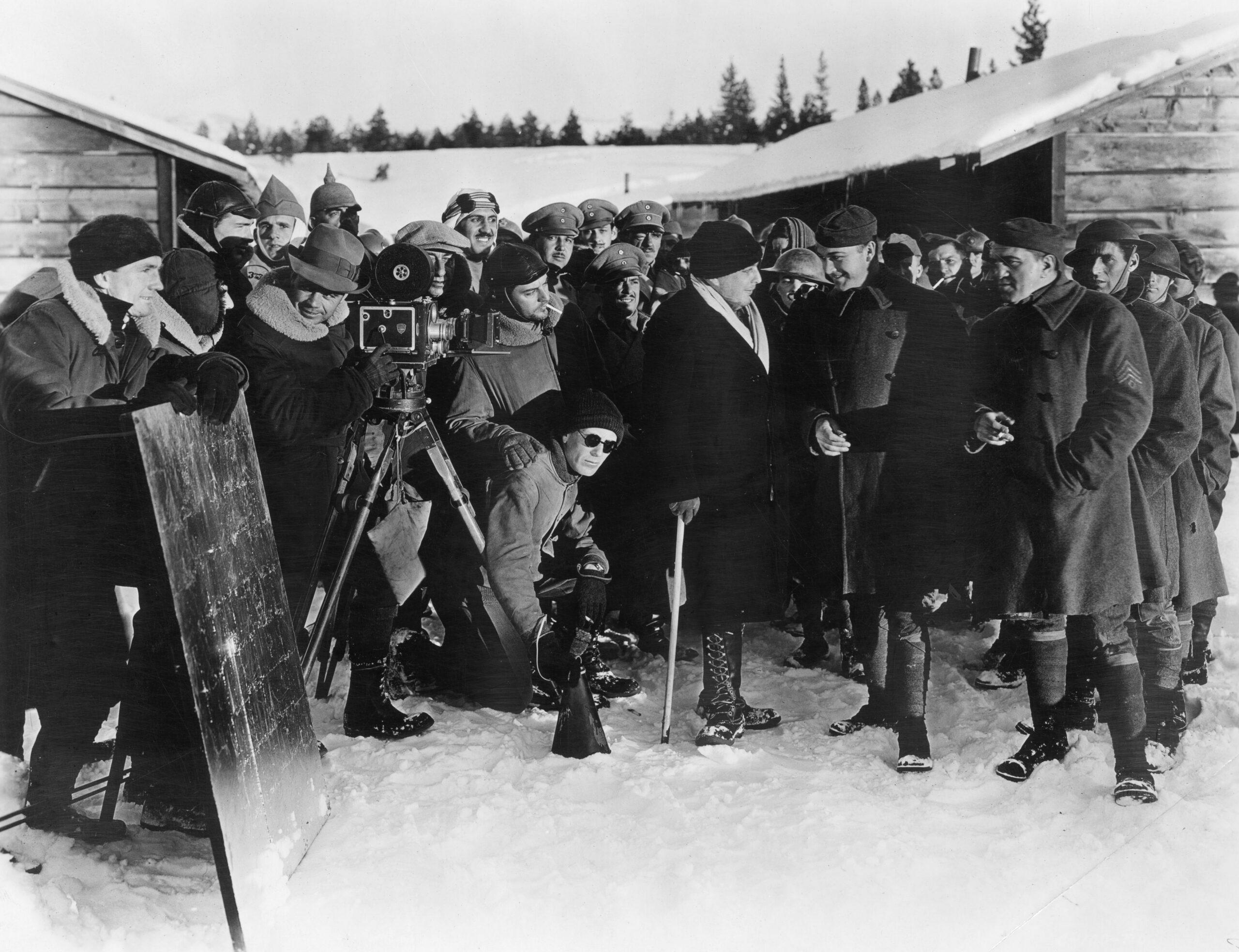
Director Lewis Milestone chatting with William Boyd and Louis Wolheim during shooting on location in California
I can’t say the movie’s as side-splittingly hilarious as Emmet Sherwood seemed to find it—silent comedy can sometimes feel like a historical artifact of what used to be funny—but Milestone’s set pieces are impressive: The soldier duo escapes from a wintry POW camp (shot in real snow in Truckee, California) by wearing white capes as camouflage, which is eventually how they get lumped in with similarly decked-out “Arabians” on a one-way ship to Constantinople. But there’s nothing as visually indelible as Lloyd’s sight gags and stunts in Speedy or Safety Last!, and there’s not a character as memorable as one of Chaplin’s (or fellow silent comedian Buster Keaton’s) sad clowns. Those single images and visages helped those more remembered silent movies survive this long. Two Arabian Knights actually would have benefited from some rat-a-tat dialogue between its odd couple leads; their mugging and pantomiming loses its effectiveness when you watch it now, even if it was the only way to do comedy back then. What’s a buddy-cop movie without the bickering?
Cavalcade (1933)
Oscar wins: Art Direction (William S. Darling), Best Director (Frank Lloyd), Outstanding Production
Oscar nomination: Best Actress (Diana Wynyard)

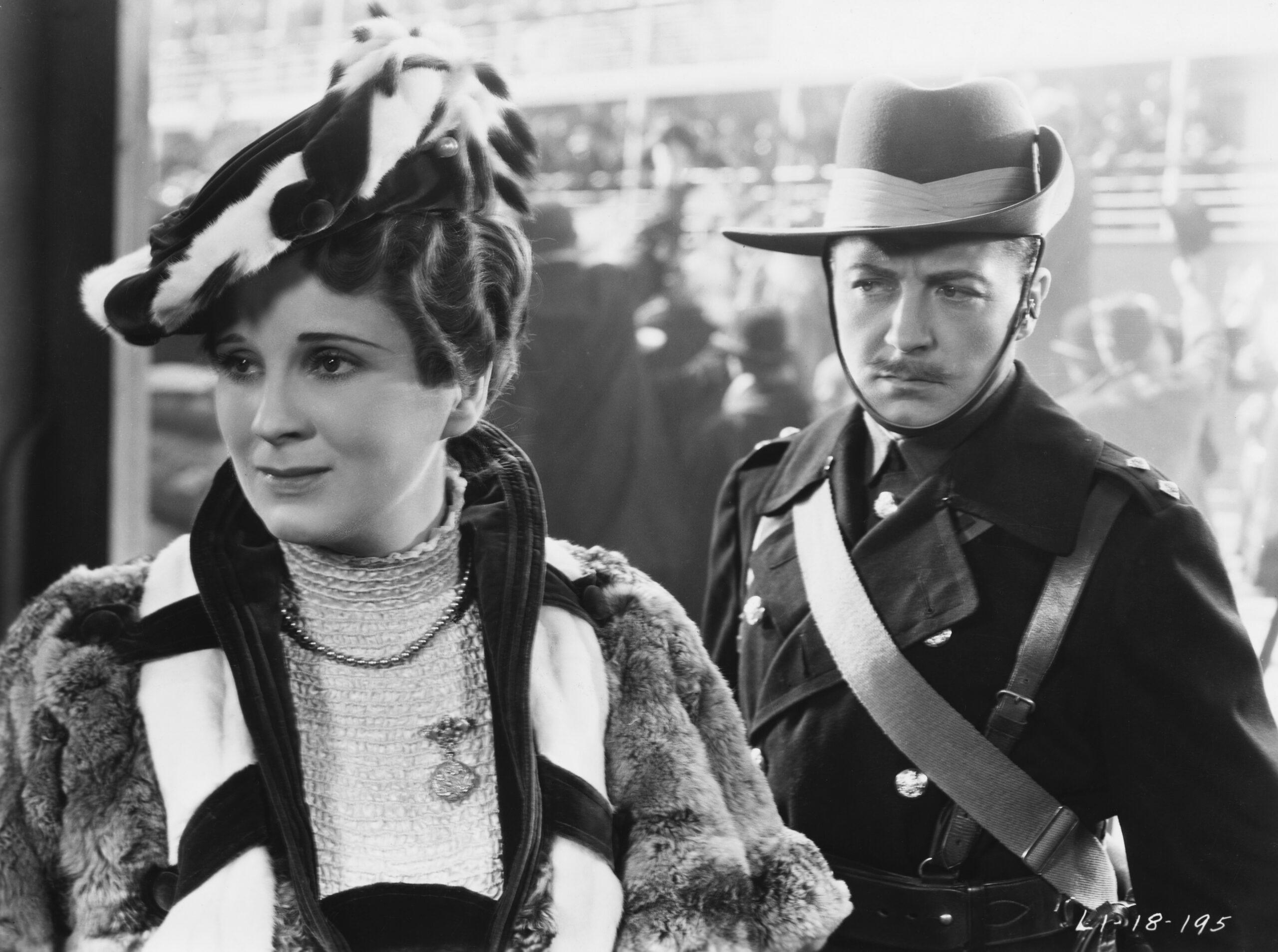
Diana Wynyard with Clive Brook as Jane and Robert Marryot in ‘Cavalcade’
Cavalcade takes a shallow, Oscar-friendly approach to history, moving its upper-crust British family rapidly along through some early 20th-century hits: the Boer War, the Titanic, the Great War, the birth of jazz, etc. If you think that sounds like Downton Abbey, you’re not far off—in Downton Abbey: The Grand Finale, playwright Noel Coward gets inspiration for Cavalcade from the Crawleys The movie Cavalcade preserved the grand staging of Coward’s play (with its double-decker bus, 400 extras, and frequent setting changes), as well as its mannered dialogue and cardboard-cutout characters. Cavalcade’s Marryot family loses both sons—one on the Titanic, one in World War I—but barely seems affected by it, moving along to the next chapter in history with stiff upper lips intact. Turned a few notches to the left, it could be a satire of members of the upper class and their emotional remove; as is, it’s just a sentimental portrait of very boring people.
At the time, though, it was rapturously received, its high polish and grandiose production giving it a weight that its characters and writing were missing. The New York Times wrote that “many an eye will be misty after witnessing this production,” and Coward, the picture of humility, reminisced in his memoir Future Indefinite that Cavalcade was “as acclaimed on all sides as one of the greatest pictures ever made which, at the time, I honestly think it was.” It made $3.5 million at the box office, the second-highest haul for any talkie at the time. And the Academy ate it up, too; Cavalcade beat out more fondly remembered movies like musical smash 42nd Street, Hemingway adaptation A Farewell to Arms, and Frank Capra caper Lady for a Day for Outstanding Production (i.e., Best Picture).
Maybe we’re just too far removed now to really appreciate the horrors of the Boer War, but in the wake of all the history that came after it, Cavalcade fails to make an impact; because it looks back on a largely forgotten past, it can also feel stuck there.
Gentleman’s Agreement (1947)
Oscar wins: Best Supporting Actress (Celeste Holm), Best Director (Elia Kazan), Best Motion Picture
Oscar nominations: Best Actor (Gregory Peck); Best Actress (Dorothy McGuire); Best Supporting Actress (Anne Revere); Film Editing (Harmon Jones); Writing, Screenplay (Moss Hart)

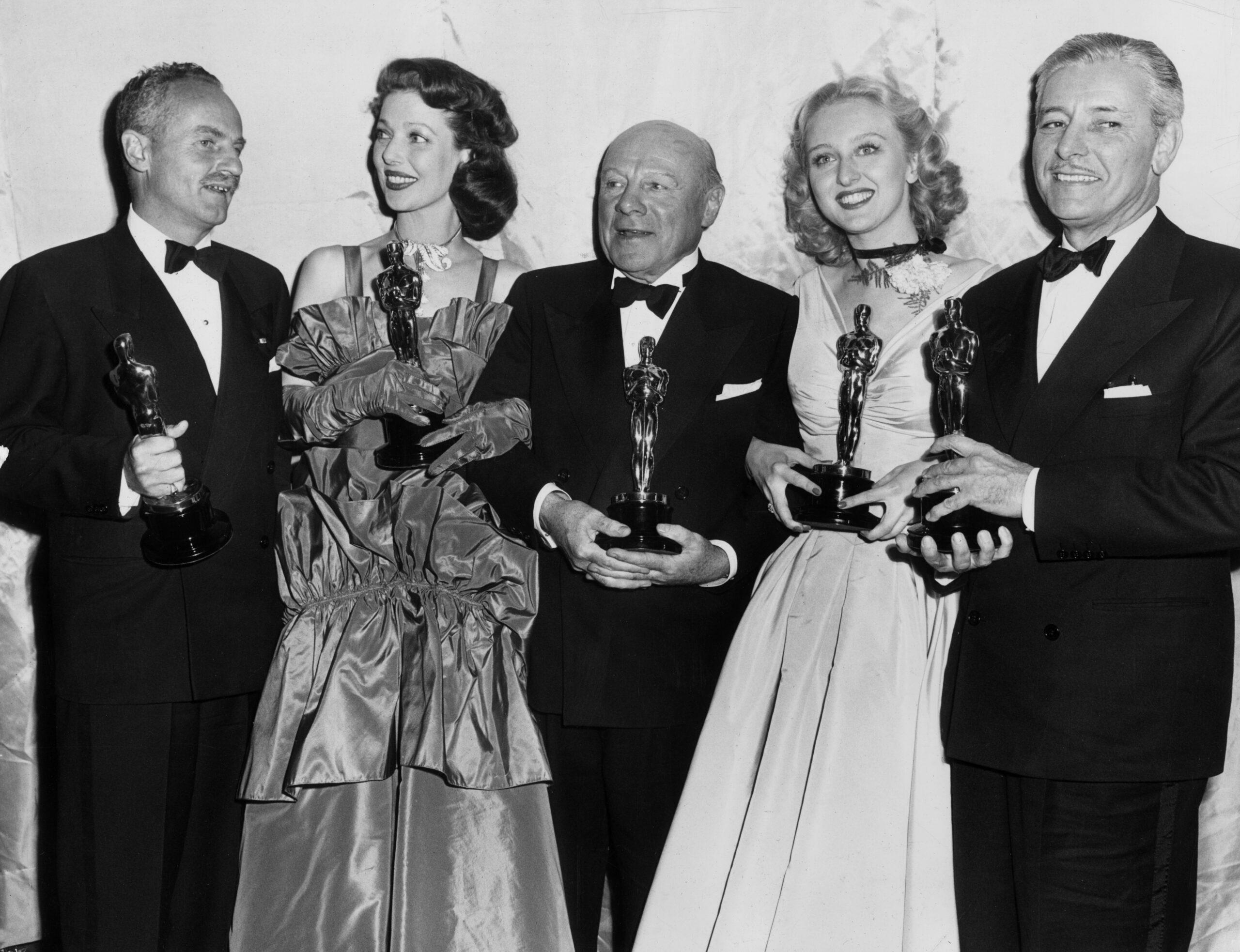
Darryl Zanuck (‘Gentleman’s Agreement’), Loretta Young (Best Actress, ‘Farmer’s Daughter’), Edmund Gwenn (Best Supporting Actor, ‘Miracle on 34th Street’), Celeste Holm (Best Supporting Actress, ‘Gentleman’s Agreement’), and Ronald Colman (Best Actor, ‘A Double Life’)
Gentleman’s Agreement, unlike Two Arabian Knights and Cavalcade, was made by some real Hollywood heavyweights: 1948’s Best Picture winner stars Gregory Peck, was directed by Elia Kazan, and was produced by Darryl Zanuck (who cofounded 20th Century Fox). So why is it so overlooked today, especially compared with its filmmakers’ other Oscar triumphs? One look at the premise pretty much explains it: In the Oscar darling, Peck plays a journalist who pretends to be Jewish for six months to expose his WASPy world’s rampant antisemitism. Antisemitism: still a relevant theme. Pretending to be Jewish to expose it? A yikes these days The movie is one of those moralizing “problem pictures” that the Academy loves so much, and Gentleman’s Agreement’s win is a little like Green Book’s: the Academy’s attempt to signal that its heart and politics are in the right place by honoring a well-intentioned message movie.
Even at the time, critics (often not in line with the Academy) recognized its flaws: As left-wing writer Ring Lardner quipped, “The movie’s moral is that you should never be mean to a Jew, because he might turn out to be a gentile.” But, to give it some credit, it was one of the first major Hollywood movies to acknowledge antisemitism at all, let alone condemn it—the screenplay even unapologetically calls out some famous, real-life bigots But Gentleman’s Agreement has been criticized, rightly, for failing to address or even acknowledge the Holocaust or World War II, which are so obviously the reasons a movie like this would be made in 1947. As Saul Austerlitz wrote in 2014, “Just two years after the end of WWII, talking about anti-Semitism without mentioning the fact that 6 million Jews had just been murdered in Europe was more than an oversight. It was an obfuscation. Hollywood wanted to be serious, but was still terribly afraid of any ugliness more lasting than social shame.”
Sayonara (1957)
Oscar wins: Best Supporting Actor (Red Buttons), Best Supporting Actress (Miyoshi Umeki), Art Direction (Ted Haworth and Robert Priestley), Sound Recording (Warner Bros. Studio Sound Department and George Groves)
Oscar nominations: Best Actor (Marlon Brando); Cinematography (Ellsworth Fredricks); Best Director (Joshua Logan); Film Editing (Arthur P. Schmidt and Philip W. Anderson); Best Motion Picture; Writing, Screenplay—Based on Material From Another Medium (Paul Osborn)

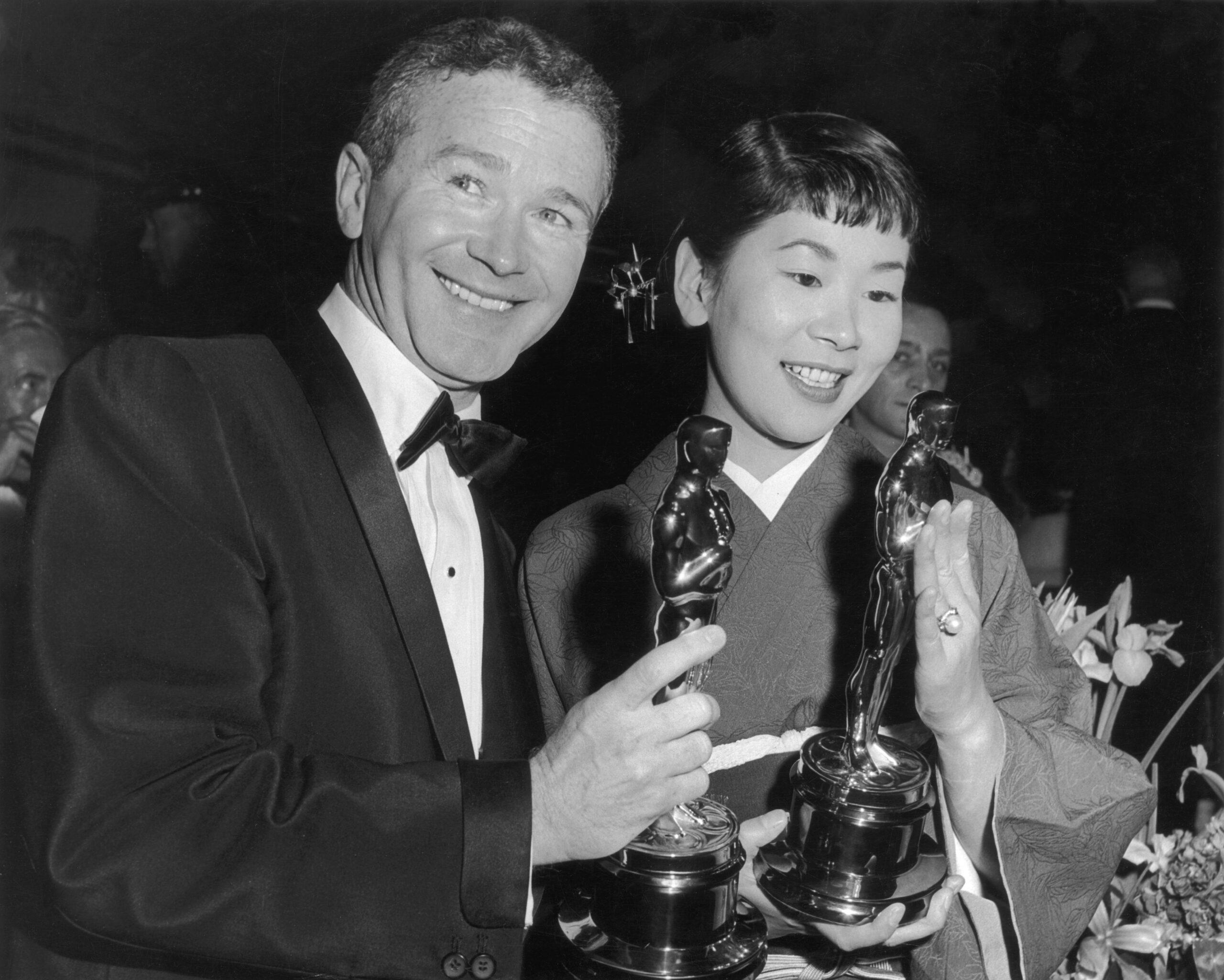
Red Buttons and Miyoshi Umeki hold their Academy Awards for Best Supporting Actor and Actress
Like Gentleman’s Agreement, Sayonara is a forgotten Oscar movie that seems like it should have stayed more relevant. It stars Marlon Brando at his peak, only three years after winning an Oscar for On the Waterfront. It was the most nominated movie at the Academy Awards that year, and it ended up winning four awards but coming up short in some of the bigger categories—including Best Actor and Best Motion Picture—to The Bridge on the River Kwai (which, it’s safe to say, deserved those wins). And, most significantly, Sayonara’s Miyoshi Umeki became the first Asian actor to win an Oscar, for her turn as Katsumi, the Japanese wife of a U.S. Air Force serviceman.
Also like Gentleman’s Agreement, Sayonara confronted a controversial subject head-on, although not always in a way that would be acceptable today. Based on a novel by James Michener, it’s about post–World War II U.S. military men stationed in Japan who fell in love with and married Japanese women. The movie is lush (it’s easy to see how it landed a win in Art Direction), swooningly romantic, and groundbreaking (the Hays Code had prohibited interracial couples from being shown on-screen until 1956), but its long-term reputation may have been undermined by some of the same flaws that did in Gentleman’s Agreement. The most egregious is probably the casting of Ricardo Montalban, a Mexican actor, as a Japanese character. (Director Joshua Logan said that they couldn’t find a Japanese actor who was, uh, “virile” enough for American audiences.) He’d also wanted to cast Audrey Hepburn in the role of Brando’s love interest, Hana-Ogi, but she turned it down, saying she wouldn’t quite be believable as a Japanese character The movie’s also been criticized for portraying Japanese women as submissive and doll-like—not the first or last movie to perpetuate demeaning stereotypes about Asian women.
It is interesting that Sayonara was brought down at the Oscars by The Bridge on the River Kwai—both films contrast Japanese versus American ideas about honor and duty, and both are about military men facing brave new worlds. Bridge is a better movie with more nuanced answers to those questions, but it also might have found more favor because of its manly man themes of war and building good bridges. Sayonara, a melodrama about forbidden love, might have been just a little too pretty and feminine for the Academy’s tastes.
A Thousand Clowns (1965)
Oscar win: Best Supporting Actor (Martin Balsam)
Oscar nominations: Music, Scoring of Music—Adaptation or Treatment (Don Walker); Best Picture; Writing, Screenplay—Based on Material From Another Medium (Herb Gardner)

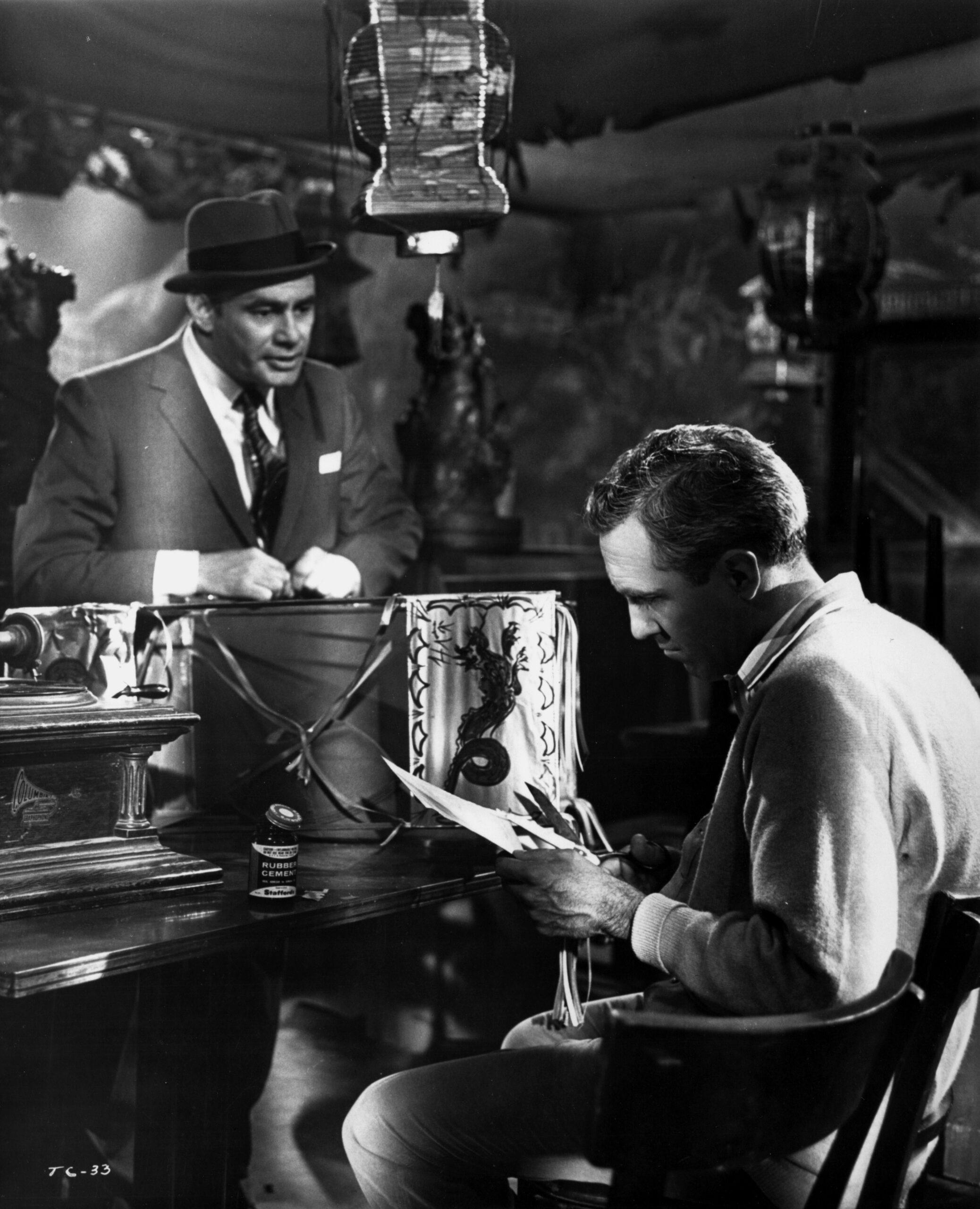
Martin Balsam and Jason Robards in ‘A Thousand Clowns’
It feels right in line with the messaging of A Thousand Clowns that it got elbowed aside at the Oscars by grander competitors like The Sound of Music and Doctor Zhivago. It actually wouldn’t have felt quite right if the movie, which presents a strong case for having no real ambition in life, had prevailed over its epic, Oscar-baity company. A Thousand Clowns gets its low stakes and narrow scope from the play it’s based on, about a comedy writer, Murray (Jason Robards), who gives up his job so he can gallivant around New York all day. It seems apropos that its lone win went to Martin Balsam, who plays Murray’s brother, Arnold, one of the many characters who tries to get the free spirit to settle down, even if that just means writing bad jokes for the Chuckles the Chipmunk kids’ show.
Murray might play as a kind of proto–manic pixie dream girl (a manic pixie dream uncle, I guess), complete with ukelele and a straight-laced love interest whom he quickly unlaces, but his resistance to workaday life wins you over, especially as he whisks his nephew, Nick (Barry Gordon), and his girlfriend, Sandra (Barbara Harris), off to the Statue of Liberty and abandoned Chinese restaurants, skimming past the herds going back and forth between their daily labors. His charms are multiplied by the filmmaking, which splices together the characters’ dialogues about life and liberty as they trot around the town, taking us on a grand tour of the city and treating us to Murray’s batty life philosophies. Even after the movie’s over, you don’t know where Murray and Co. will end up—refreshing given the stone-faced moralizing of a lot of Oscar movies. A Thousand Clowns may not be as widely seen as the other nominees from that year—Sound of Music and Doctor Zhivago, but also Jesus movie The Greatest Story Ever Told and nü-Western Cat Ballou—but it’s worth seeking out as the rare Oscar movie that doesn’t have the weight of the whole world on its shoulders.
Butterflies Are Free (1972)
Oscar win: Best Supporting Actress (Eileen Heckart)
Oscar nominations: Cinematography (Charles B. Lang), Sound (Arthur Piantadosi and Charles Knight)

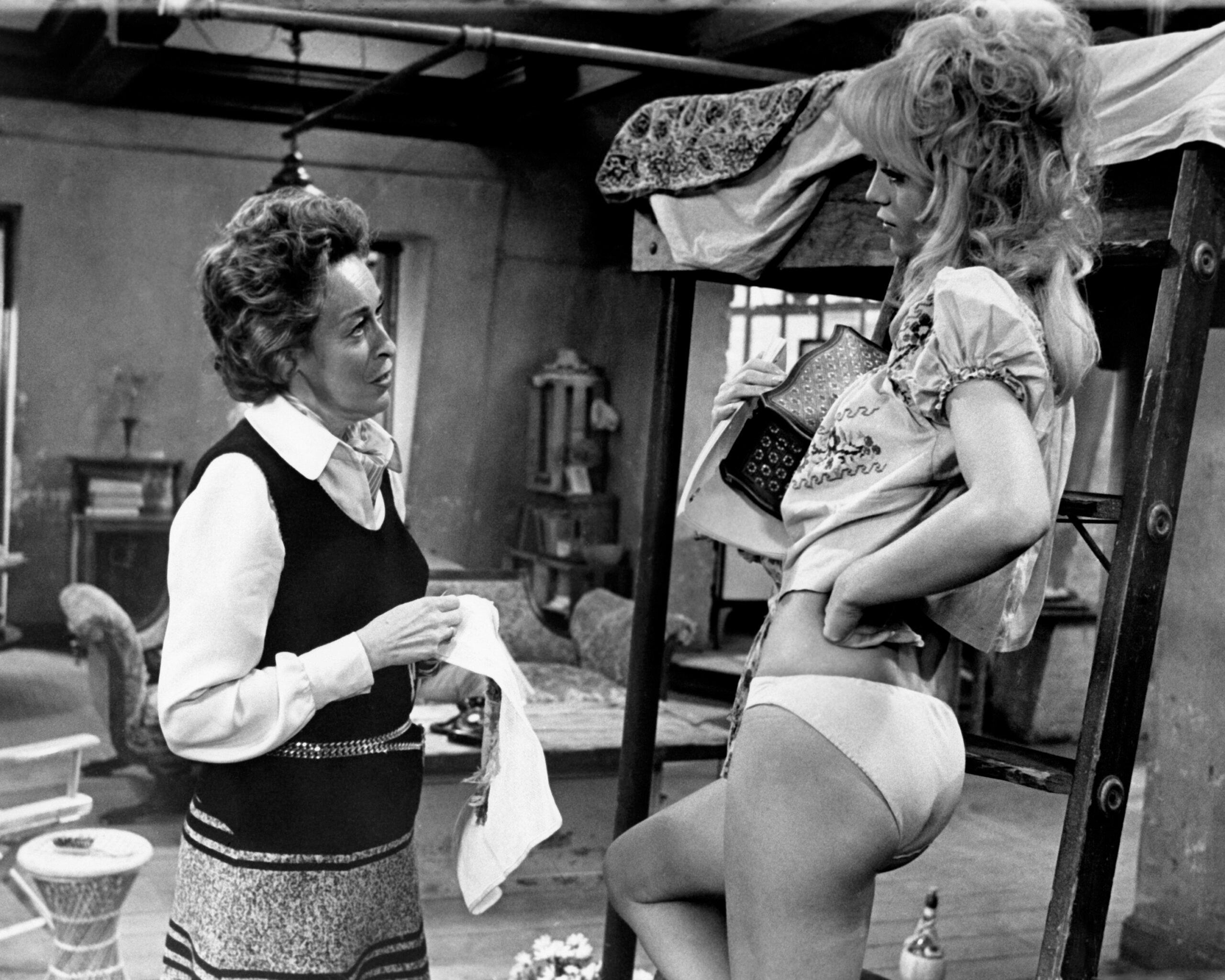
Eileen Heckart and Goldie Hawn in ‘Butterflies Are Free’
If we’ve learned anything from this exercise, it’s that you probably shouldn’t base your Oscar movie on a play (unless it’s, like, Who’s Afraid of Virginia Woolf?) if you want it to stay relevant. Like Cavalcade and A Thousand Clowns, Butterflies Are Free kept the staginess and talkiness of the original production. It also kept one of the original stars, Eileen Heckart, who won the movie’s lone Oscar for her role as the meddling mother of a blind, unnervingly wholesome young man who strikes out on his own in 1970s San Francisco.
If Butterflies Are Free is remembered at all now, it’s probably just as a footnote in the mad rush of the 1973 Academy Awards—where The Godfather and Cabaret duked it out, Marlon Brando refused his Oscar for Best Actor, and Butterflies Are Free somehow got a nod in Best Cinematography while Gordon Willis, Francis Ford Coppola’s director of photography, didn’t. (The Godfather’s Diane Keaton and Talia Shire also didn’t get nominations in Best Supporting Actress, clearing the way for Heckart.)
Butterflies Are Free, like all the Oscar problem movies that came before and after, shares a message about tolerance that’s pretty hard to argue with—this time, spreading the word that blind people deserve love, too. But thanks to Goldie Hawn, who plays the whackadoodle love interest, it moves along lightly, despite its heavy-handed messaging. It might be worth watching today just because it’s a time machine back to 1970s San Francisco, when an unemployed 19-year-old could rent an apartment in the heart of the city and still have plenty of money left over for hat shopping. Hawn is a charmer as she explains false eyelashes to a blind man and misquotes Mark Twain, honing her guileless, daffy persona along the way. Heckart’s performance might have won the Oscar, but Hawn’s is the more memorable one—and probably one of the only reasons to revive Butterflies Are Free
The Trip to Bountiful (1985)
Oscar win: Best Actress (Geraldine Page)
Oscar nomination: Writing, Screenplay Based on Material From Another Medium (Horton Foote)

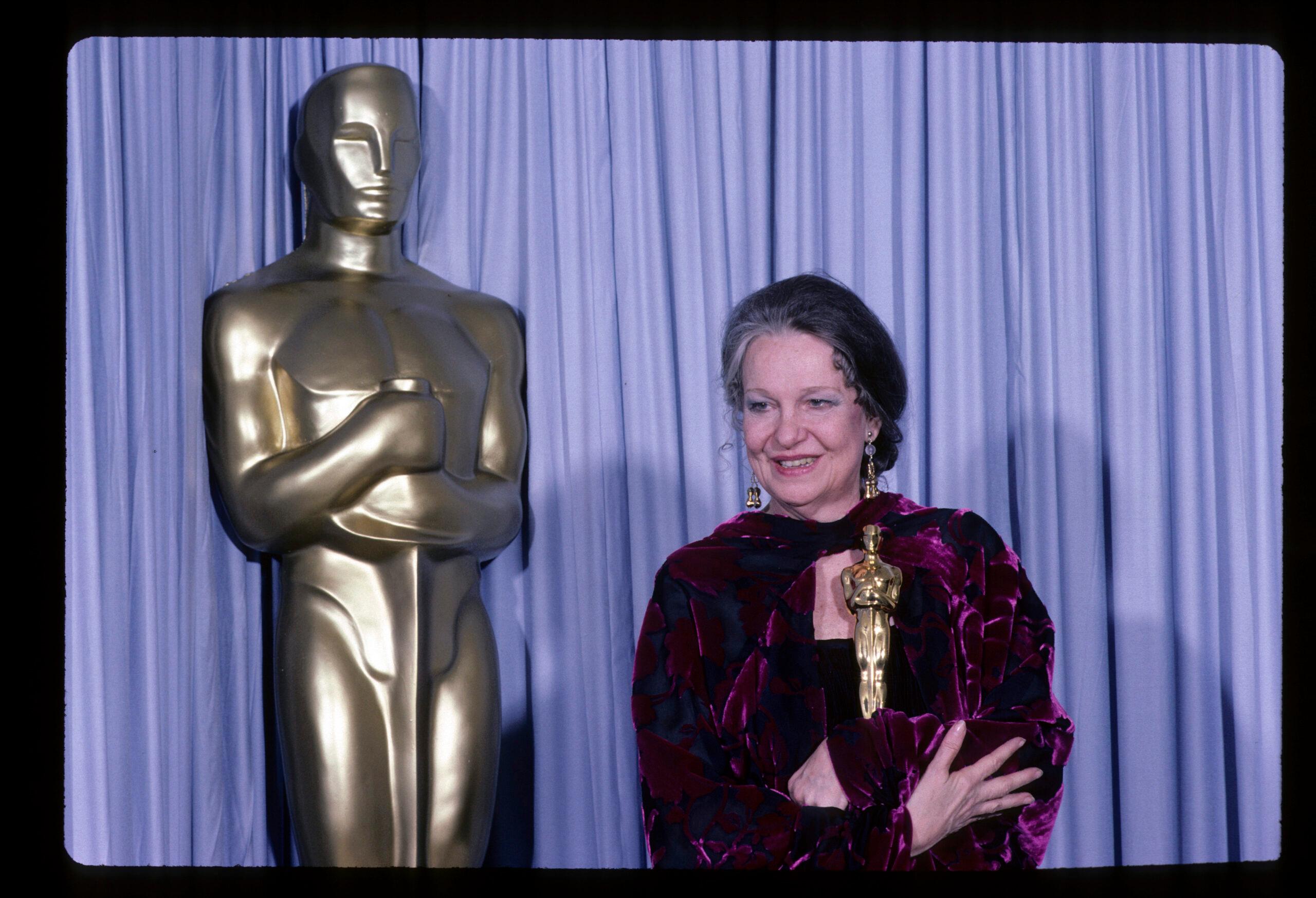
Geraldine Page at the 1986 Academy Awards
Like Butterflies Are Free, The Trip to Bountiful was the little guy watching on the sideline of an Oscar slugfest. At the 1986 ceremony, the two big contenders were The Color Purple and Out of Africa—but this time around, there was a clear, controversial victor. The Color Purple was nominated for 11 Oscars and got bounced in every category; Out of Africa won seven, including Best Picture. But Out of Africa’s Meryl Streep and The Color Purple’s Whoopi Goldberg just couldn’t manage to overtake Geraldine Page in Best Actress. It was a stacked category that year—Streep, Anne Bancroft, and Jessica Lange had already won Oscars by then, and it was Page’s eighth nomination Page was a favorite of other actors and was due for a makeup win after a long career of being overlooked—before he handed Page the award, and with Streep sitting right there, F. Murray Abraham said, “I consider this woman the greatest actress in the English language!”
While The Trip to Bountiful may be somewhat forgotten now, it’s worth revisiting to see one of the last act of a great but mostly undersung actor. In Bountiful (also, wouldn’t you know it, based on a play), Page plays an older woman who just wants to get out of the clutches of her insufferable daughter-in-law to go back to her small hometown. The movie itself can be schmaltzy—the opening credits sequence, heavy on the drippy ’80s vocalizing, is almost unbearable—but her performance certainly isn’t: Page is alternately meek and conniving, infuriating and charming, confiding and guarded in the part.
Page’s win might have been widely expected (although some, including Roger Ebert, predicted that Goldberg would be the winner), but it was still a blow—maybe the toughest—to The Color Purple, which suffered 11 defeats that night. Goldberg was at the very beginning of her career, while Page was at the end; Page was very much a part of the acting establishment, while Goldberg was an upstart who was appearing in her first movie. And Goldberg is Black, and no Black woman had ever won Best Actress. Goldberg did eventually get an Oscar for Ghost (for Best Supporting Actress), but it’s been a long, uneasy road for Black actors at the Oscars But despite losing 11 Oscars, The Color Purple has outlasted most of its competition from 1986. Just more proof, if we didn’t have enough already, that the Academy doesn’t always know what’ll keep.
Reversal of Fortune (1990)
Oscar win: Best Actor (Jeremy Irons)
Oscar nominations: Best Director (Barbet Schroeder); Writing, Screenplay Based on Material From Another Medium (Nicholas Kazan)

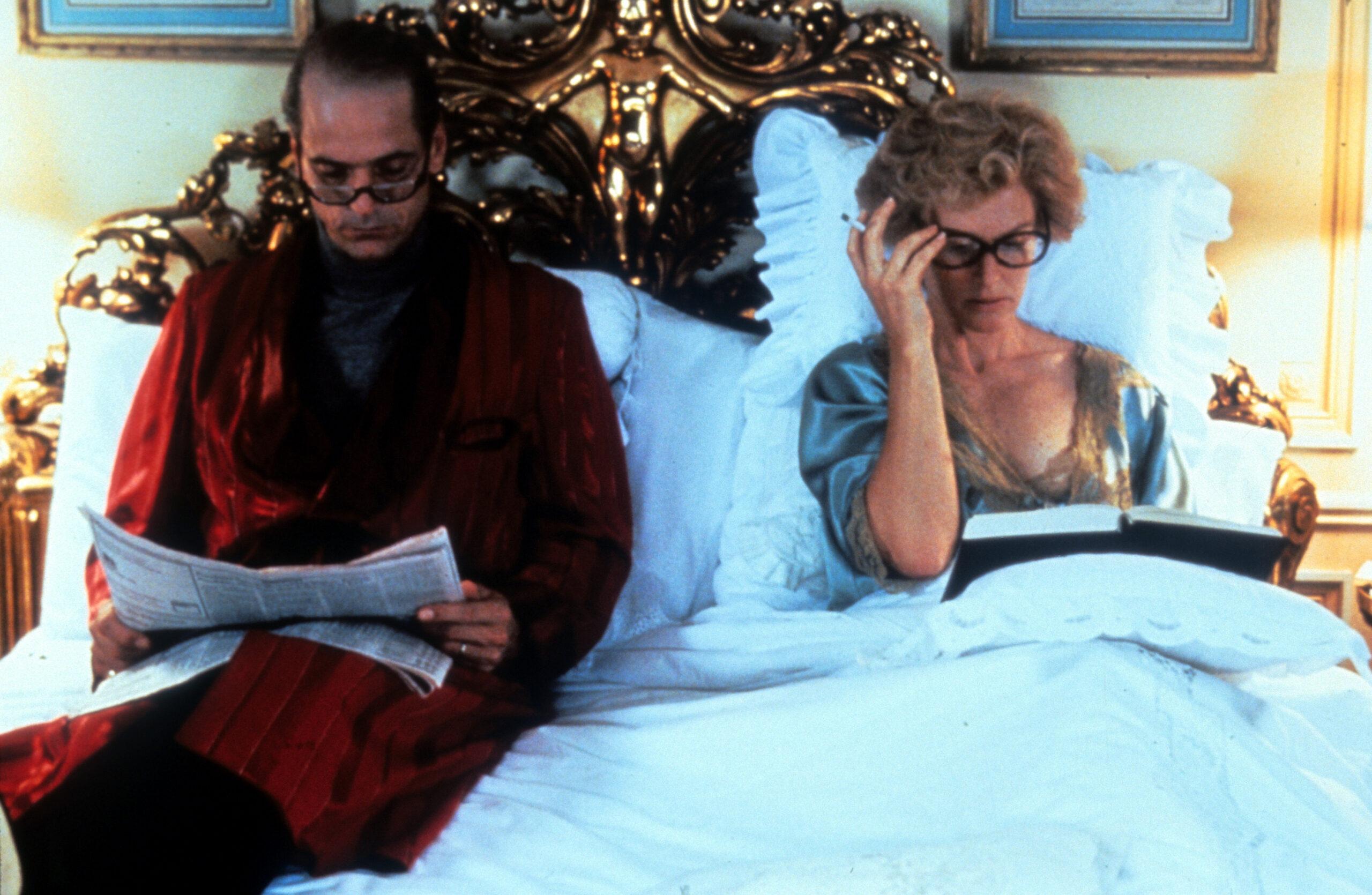
Jeremy Irons and Glenn Close in ‘Reversal of Fortune’
Oscar history sure has a way of rhyming. As in 1986, there were two dominant Oscar movies in 1991—this time, Dances With Wolves and Goodfellas—one of which trounced the other: Kevin Costner’s Dances won seven Oscars, while Martin Scorsese’s Goodfellas got just one, for Joe Pesci in Best Supporting Actor. And then, like Geraldine Page in 1986, Jeremy Irons overcame both movies for his work in Reversal of Fortune—although Goodfellas didn’t even manage to get nominated in Best Actor, a punch in the jaw for Ray Liotta.
In Reversal of Fortune, Irons played a different kind of wise guy: Claus von Bulow, an ice-cold Newport, Rhode Island, patrician accused of putting his wife in a coma via insulin overdose. Irons is stiff and haughty as von Bulow, a real figure who was eventually cleared of any wrongdoing in what was described as “the case of the decade.” The crime-of-the-decade appeal may explain why Reversal of Fortune has largely faded—its lurid details were eventually overshadowed by the O.J. Simpson trial (Simpson happened to share a lawyer, Alan Dershowitz, with von Bulow). But Irons is prickly and strange as the steely-eyed Claus, and the movie’s ambiguity and sly skewering of the upper class make it worthwhile, even far removed from the von Bulow story.
It was something of a makeup award for Irons, who believes that the Oscar was really for his performance in the previous year’s Dead Ringers; the body-horror movie about killer twins was just a little less Oscar friendly than a legal thriller about an (allegedly) killer husband. But even if Reversal of Fortune (unlike Dead Ringers) is somewhat forgotten today, its DNA lives on in Irons’s performance as Scar and in any story that keeps you guessing about whether some unpleasant husband really killed his wife.
Iris (2001)
Oscar win: Best Supporting Actor (Jim Broadbent)
Oscar nominations: Best Actress (Judi Dench), Best Supporting Actress (Kate Winslet)

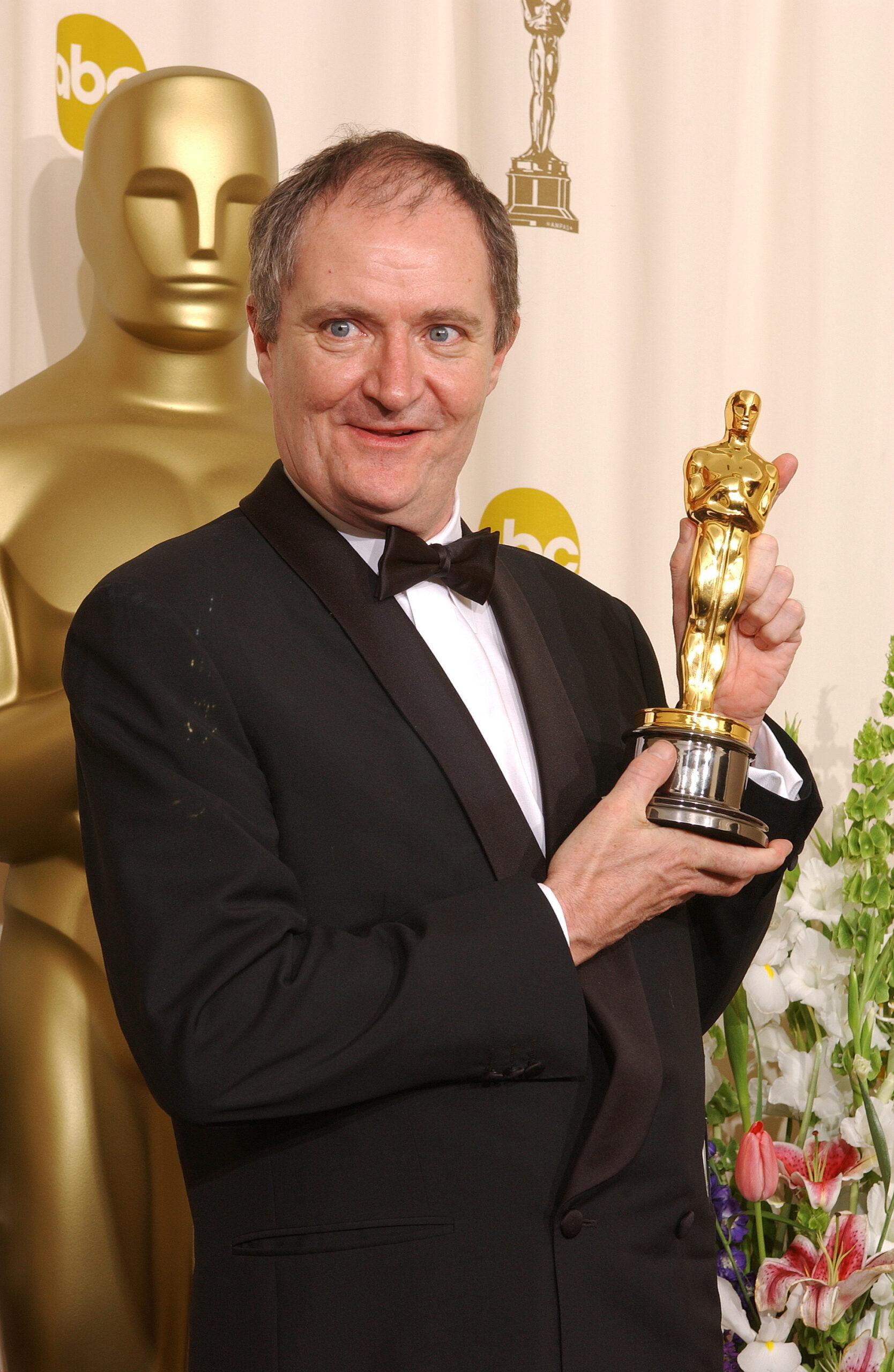
Jim Broadbent at the 74th Annual Academy Awards
Miramax campaigned hard (and filthily) for movies that might not have deserved it, and plenty of those basked in the Oscar limelight but faded pretty quickly thereafter (The Cider House Rules and Chicago come to mind). Miramax’s prize horse in 2002, Todd Field’s In the Bedroom, actually deserves more attention than it’s gotten over the years, but the distributor’s other contender, Iris, was the one that managed to nab an award.
Iris may not have been the main focus of Miramax’s low-down campaigning but it probably did benefit from the studio’s awards season finesse. Jim Broadbent won for Iris even though his role in Moulin Rouge! the same year was more seen and celebrated (he won the BAFTA for Moulin Rouge!, and the Baz Luhrmann musical was a major Oscar contender); the actor himself gave Moulin Rouge! its flowers when he accepted the prize for Iris, a little like Jeremy Irons mentioning Dead Ringers after winning for Reversal of Fortune.
In a way, it’s fitting that Broadbent won the Oscar instead of Iris’s two leading ladies, Judi Dench and Kate Winslet. The movie, which traces writer Iris Murdoch’s decline due to Alzheimer’s, was based on her husband’s memoirs about his more renowned wife. Broadbent plays the husband, John Bayley; Dench the older Murdoch; and Winslet the younger. While the movie is about Murdoch in name and theory, it centers Bayley’s experiences; even if Murdoch is the more interesting one, she’s sidelined by her doting husband.
Iris plays like a made-for-TV Masterpiece special about Murdoch, not a multi-Oscar nominee cloaked in prestige. But the Alzheimer’s theme has become an increasingly common one at the Academy, and almost a surefire ticket to an acting nomination. Away From Her, Still Alice, and The Father have each, like Iris, featured an actor’s gradual erasure of themselves as their character grapples with Alzheimer’s. It’s a new kind of Oscar-friendly problem genre, appealing for both its social relevance and acting challenges. It is a little ironic, then, that Dench was the one who came away empty-handed, Broadbent an almost accidental beneficiary of her actorly efforts. But she had just gotten her due for another Miramax flick, Shakespeare in Love, and maybe her charms were starting to wear thin; as Elvis Mitchell wrote in The New York Times, “Iris seems to be this year’s effort to put Ms. Dench into Academy Award consideration, an event that’s as much a part of December popular culture as Dick Clark’s New Year’s Rockin’ Eve—and as pro forma and unvaried.”
The Danish Girl (2015)
Oscar win: Best Supporting Actress (Alicia Vikander)
Oscar nominations: Best Actor (Eddie Redmayne), Costume Design (Paco Delgado), Production Design (Eve Stewart and Michael Standish)

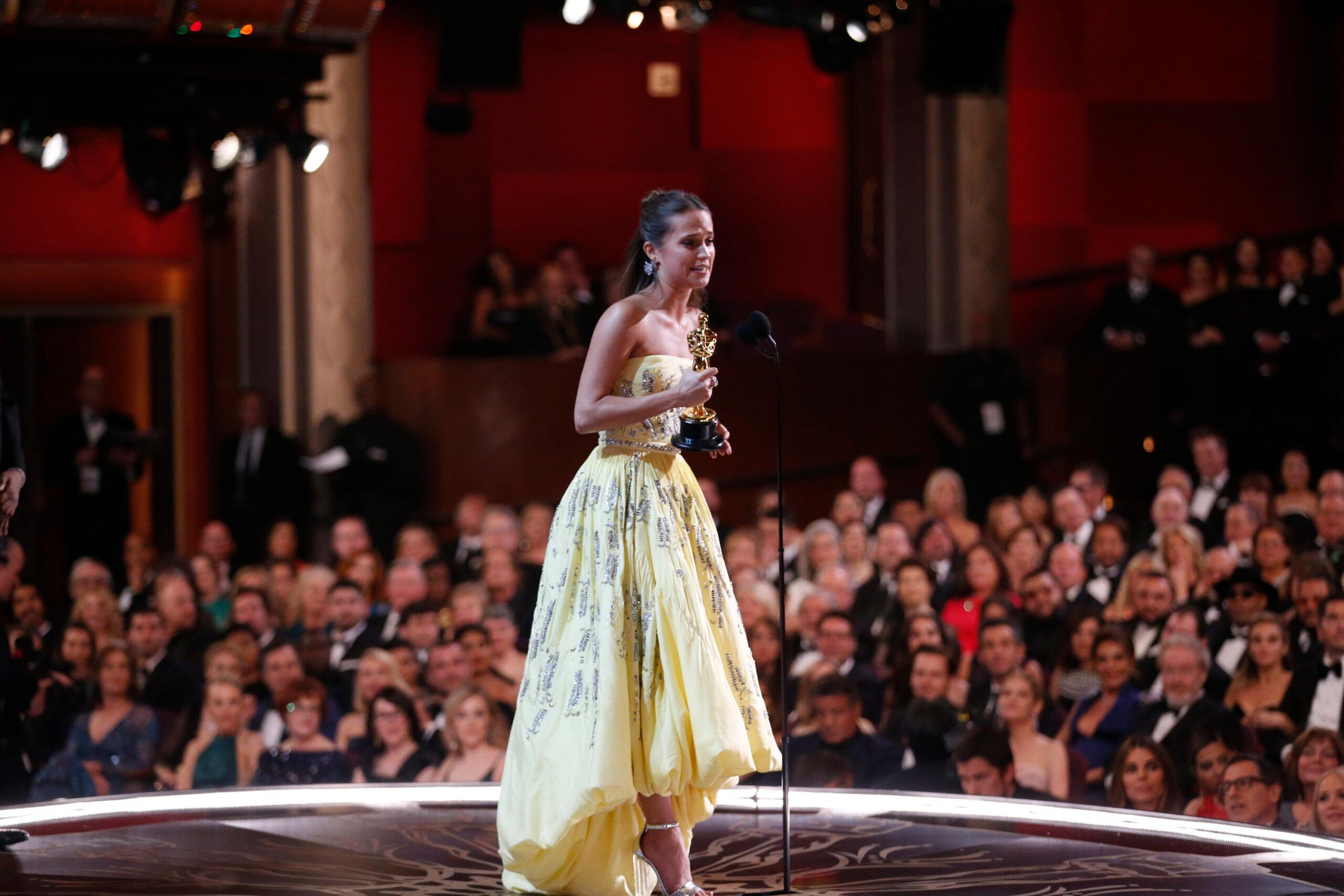
Alicia Vikander at the 88th Academy Awards
The 2016 Oscars are probably best remembered as the #OscarsSoWhite year: For the second year in a row, only white actors got nominations, over deserving competition. Alicia Vikander and Eddie Redmayne were beneficiaries of that whiteout, and movies like The Danish Girl eventually became casualties of the #OscarsSoWhite fallout. 2016 finally ushered in a sea change to the Academy’s voting body; younger, more international members were added, and the effects on the nominated and awarded movies could be seen pretty immediately, when Moonlight (eventually) won Best Picture in 2017. Movies like The Danish Girl—glossy and politically aware but narratively and aesthetically stuck in the mud—still show up at the Oscars now and then, but director Tom Hooper will probably never get to re-create the run of dully conscientious Oscar bait he had with The King’s Speech, Les Misérables, and The Danish Girl.
The Danish Girl was regressive in another way besides its Oscar-friendly style—it featured Redmayne, a cisgender man, playing a transgender character. While he was far from the first to do so—no surprise, there’s a long history of cis characters in trans roles—by 2015, that kind of casting was getting looked at more closely. As Eileen G’Sell wrote in Salon at the time, “Actors should never be expected to play themselves, but in a time where there are more than enough trans actors working, one has to wonder why a cis-male was needed to play this role.” More recently, Redmayne and Vikander have both said that they wouldn’t make the film in the same way, or at all, today.
Redmayne was fresh off an Oscar win for his similarly transformative role in The Theory of Everything, and Vikander was in the midst of her big breakout, appearing in seven films in 2015 alone. Some light category fraud may have been committed to get Vikander her first Oscar: Although she won in Best Supporting, she’s essentially the lead, and the only character who gets called “the Danish girl” in The Danish Girl. Competing in Best Supporting Actress spared her from the Brie Larson–Cate Blanchett–Saoirse Ronan–Jennifer Lawrence–Charlotte Rampling crossfire over in Best Actress, although it certainly raised eyebrows.
Vikander’s award, like Broadbent’s for Iris, may have been a dual one for her (more compelling, less Oscar-friendly) work in Ex Machina. (She’d been nominated for both Ex Machina and The Danish Girl at the Golden Globes and the BAFTAs but just for The Danish Girl at the Oscars.) The movies that are clearly aiming for a good, clean social message and the high shine of Oscar respectability are the ones most often doomed to be forgotten. Ex Machina, the much more puckish and layered story, is the movie from Vikander’s big 2015 that lives on, even if it’s not the one she technically got her Oscar for.
The Eyes of Tammy Faye (2021)
Oscar wins: Best Actress (Jessica Chastain), Makeup and Hairstyling (Linda Dowds, Stephanie Ingram, and Justin Raleigh)

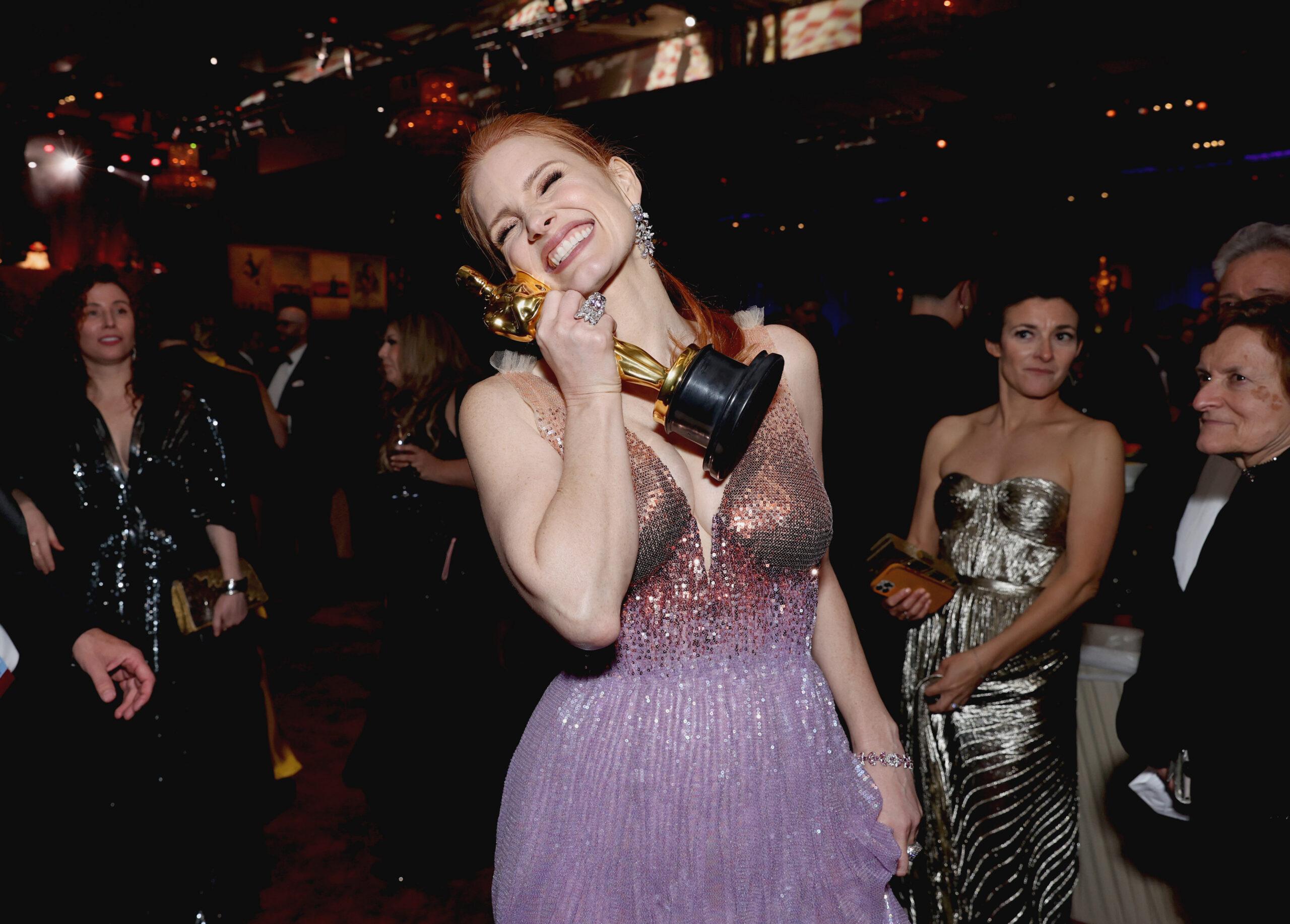
Jessica Chastain at the Governors Ball after the 94th Annual Academy Awards
To be fair to The Eyes of Tammy Faye, most of the movies at the 2022 Oscars got overshadowed by the infamous, ever-echoing slap. I do remember the dress Jessica Chastain wore to accept her award—a very 2022 rendition of the Little Mermaid—but slightly less memorable is the movie she won it for. The Eyes of Tammy Faye, like Judy a few years before, was standard Best Actress bait, encasing its lead in a waxy prosthetic exoskeleton and asking her to emote under layers of oppressive spider-leg mascara. The movie doesn’t do much more with Chastain than move her through the garish and tragic episodes of Tammy Faye’s life, letting the actor jones for the Oscar she should have won for Zero Dark Thirty (or even The Help).
But it was a year kind of like Geraldine Page’s 1986: Several of Chastain’s venerable fellow nominees—Nicole Kidman, Olivia Colman, and Penélope Cruz—already had their Oscars, while Chastain was a perennial contender who kept coming up short. Cruz’s performance, in Parallel Mothers, and Colman’s, in The Lost Daughter, were probably the best in the field, but they were doomed by the three (spottily accurate) impersonations they were going up against: Kidman as Lucille Ball in Being the Ricardos, Kristen Stewart as Princess Diana in Spencer, and, of course, Chastain as Tammy Faye Messner, maybe the biggest personality of them all. Chastain gets to go a lot bigger than those other actors, and it’s hard not to see that—plus her overdue-for-an-Oscar status—as the reason she got the win.
In the Ringer spirit, and to guide you to the best of the bunch, here’s my ranking of these neglected Oscar movies:
- A Thousand Clowns
- Gentleman’s Agreement
- Butterflies Are Free
- Reversal of Fortune
- Sayonara
- The Eyes of Tammy Faye
- The Trip to Bountiful
- The Danish Girl
- Iris
- Two Arabian Knights
- Cavalcade


Helena Hunt
Helena Hunt is a copy editor for The Ringer who loves TV and sometimes writes about it. She lives in San Diego, but no, she doesn’t surf.
Source link
-

-

-

-
-