

The Neanderthal “Love Story” Isn’t What It Seems
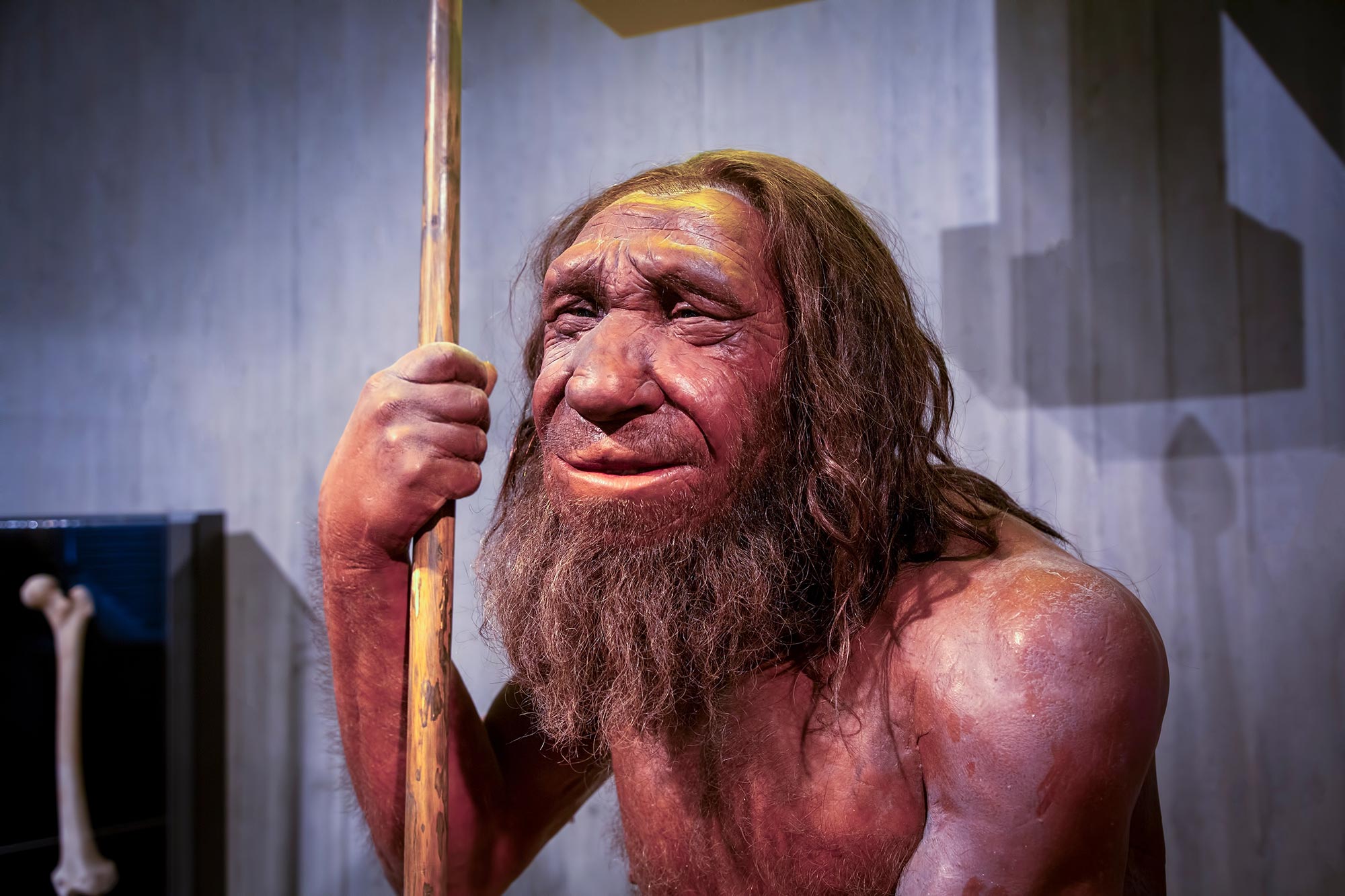
New interpretations suggest that Neanderthal and Sapiens interactions were shaped by biology and social structure, not simple romantic preference.
Media portrayals have turned a nuanced genetic finding into a narrative of prehistoric romance, despite the research offering only cautious, model-based explanations for patterns in Neanderthal DNA. When viewed alongside archaeological and anthropological evidence, these patterns may instead reflect complex social structures, biological constraints, and potentially unequal interactions between Neanderthals and Sapiens.
Media coverage has quickly framed the issue as resolved. El País claims that Neanderthal men “chose” Sapiens women. Science journal refers to a “partner preference.” National Geographic envisions the “Romeos” of prehistory. The Telegraph suggests that Neanderthals “had designs on” Sapiens women.
In a matter of hours, a statistical result was transformed into a story about desire. The supposed “sex lives” of ancient humans became an accessible and clickable narrative. This shift is significant because it converts a technical pattern in genetic inheritance into a story centered on emotions, attraction, and imagined relationships in prehistory.
The result is a familiar scene: a Neanderthal “Romeo” winning over a Sapiens “Juliet.” In this framing, human origins are recast as a kind of romantic drama.
However, the research published in Science does not support this interpretation. Instead, it examines a well-established genetic pattern. In modern humans outside Africa, Neanderthal DNA is unevenly distributed, appearing more often on non sex chromosomes and being much rarer on the X chromosome.
To explain this contrast, the authors compare several hypotheses: natural selection, sex-biased demographic processes, or partner preference. Their conclusion remains cautious: partner preference is one possible parsimonious mechanism, but it excludes neither demographic bias nor more complex scenarios.
The study, therefore, shows neither an observed attraction nor any direct preference. It proposes something much narrower: within the space of models it tests, certain scenarios make an asymmetry of the Neanderthal male/Sapiens female type more plausible. In such a scheme, Neanderthal DNA can be transmitted widely through the ordinary chromosomes, while the Neanderthal X chromosome circulates less easily, since a father passes it on only to his daughters. This is not trivial. But neither is it the direct observation of attraction between populations, and showing that a statistical model can produce a genetic pattern is not the same as proving that this model was historically true.
What the X chromosome does not tell us about social life
As soon as we move from genetic data to their historical and social implications, interpretations become fragile. Chromosomes do not carry a faithful memory of our ancestors’ social lives. The fact that Neanderthal DNA is rare on the X chromosome does not, in itself, allow us to reconstruct Paleolithic social organization or the sexual preferences of these populations.
When two closely related groups interbreed, the sex chromosomes do not behave like the others. They are often more sensitive to incompatibilities and to natural selection. Take the case of a Neanderthal father and a Sapiens mother. Their child does indeed receive Neanderthal DNA in many of its chromosomes. But the father’s X chromosome is not passed on to sons, only to daughters. It therefore circulates less easily from one generation to the next.
In addition, in hybridizations between closely related groups, males are often biologically more fragile, with greater problems of survival or fertility. This is why the sex chromosomes, and the X chromosome in particular, can eliminate DNA from the other group more quickly. A depletion of Neanderthal DNA on the X chromosome may, therefore, reflect a classic biological phenomenon, not the lingering trace of an erotic choice.
The signal observed today may, therefore, have several causes. The authors themselves do not present “partner preference” as direct proof, but as the most parsimonious explanation within their statistical model. They make it clear that it excludes neither sex-biased demographic processes nor more complex scenarios in which natural selection, differential migrations, and sex asymmetries may all have acted together.
Genetics detects transmissions. It does not reconstruct a society. It tells us neither whether these unions involved alliances, captures, asymmetrical exchanges, violence, or choice, nor who decided, nor under what constraints women and men circulated among groups. Between a chromosomal pattern and a scene of life, an entire world is still missing: the world of social constructions, rules on residence, hierarchies, conflicts, and asymmetries between collectives.
For all their power, genes do not speak of past loves. They speak only of what survived.
What El Sidrón changes in the discussion
This is where archaeology and cultural anthropology become decisive again, because genes are not enough to reconstruct the social scene based on encounters between Neanderthals and Sapiens. We must, therefore, leave the Science article behind and rely on other kinds of evidence to get to grips with the structure of Neanderthal groups indirectly. In this respect, the site of El Sidrón, in northern Spain, provides a particularly strong basis which we can lean on.
Researchers identified bones there belonging to at least twelve Neanderthals. The most striking point concerns the adults. Three males shared the same mitochondrial lineage, whereas three females each had a different one. Yet mitochondrial DNA is transmitted only through mothers.
From this, the researchers drew a simple interpretation with far-reaching implications: the males would have remained within their group, while the women would have circulated more between groups. In other words, El Sidrón is compatible with a patrilocal system.
The idea is decisive. Any human population needs exchanges with the outside world in order to reproduce itself over time. In a great many human societies, this circulation passes first through women, who leave their group of origin more often than men do. More generally, female dispersal and the tendency for males to remain in their natal group also constitute a predominant pattern among the great apes.
To see in Neanderthals a signal compatible with greater female mobility therefore points to a deep behavioral tendency, one that runs from primates to human societies. Here, female mobility between groups is thus the most plausible explanation for the pattern observed. This therefore provides us, for once with a concrete foothold on Neanderthal social organization.
And this deep tendency towards female dispersal changes a great deal. From that point on, an entire society becomes thinkable: exchanges of women between groups, asymmetrical integrations, reciprocal or non-reciprocal circulation, alliances, captures, or more brutal forms of intergroup relations. From then on, the question is no longer simply which chromosome survived, but in what kind of society these transmissions took place. This possibility alone is enough to skew the interpretation of the Science paper, because the genetic asymmetry observed may then reflect a social environment, yet to be explored, structured by rules on residence, circulation, and exchange.
‘Neanderthal, Sapiens: I love you… me neither’
Bringing the constraints of cultural anthropology back into biomolecular analysis allows other reversals to emerge. In Belgium, the site of Goyet yielded the remains of four Neanderthal females and two immature individuals. Clear-cut marks are present on five of them. The demographic profile of this assemblage is too singular to be explained by ordinary mortality.
Isotopic signatures suggest a non-local geographic origin. The authors advance the hypothesis of conflict-related cannibalism, a form of predation targeting females from neighboring groups. If this interpretation is correct, it tells us something brutal. Here, relations between Neanderthal groups belonged not to a sentimental world, but to one of capture, killing, and the consumption of the other.
The evidence can indeed be read in this way. But this case also calls for caution. The sample is small. The excavations are old. Spatial data are lacking. The identity of the local predatory group is not directly observed. Here again, the traces do not speak with a common voice.
At that point, another reversal becomes possible. If we step away for a moment from biomolecular reading alone and return to social analysis, a patrilocal society changes the entire meaning of the body and what it represents in a society. Women come from other groups, but in worlds where female mobility is a common pattern, from the great apes to human societies, interpreting this signal immediately becomes more subtle.
Evidence of cannibalism affecting women originating from neighboring regions may, therefore, be read as simple predation upon outsiders. But another interpretation cannot be ruled out: that of an internal, perhaps ritualized, treatment of women who came from elsewhere but by then had been fully integrated into the group. Biology and genetics cannot tell us whether an individual born elsewhere remains a stranger to us or whether they become a full member of our own social environment.
Let us return, then, to the Science study. This is where we must be very precise about what it actually demonstrates. The sign of Sapiens’ ancestry as suggested by the authors, refers to a very ancient episode, around 250,000 years ago. Their claim, therefore, is not based on direct observation of an admixture event that left any traces on present-day humans. It assumes that the same genetic mechanism would still have been at work nearly 200,000 years later, at the time of the final contacts between Sapiens and Neanderthals.
If we take into account the very strong tendency towards female mobility, a paradox appears, one that places the extrapolation proposed by the Science article under deep tension. If Sapiens women had, in fact, regularly entered Neanderthal groups, we would expect to see a recent genetic signal of Sapiens ancestry persisting among the last Neanderthals. But this is not what the available evidence shows. Among the earliest ancient Sapiens in Eurasia, Neanderthal ancestry is constant.
By contrast, the Neanderthal genomes available so far document no recent Sapiens contribution within the last Neanderthal populations. The genetic flow documented at the time they last came into contact, therefore, operates in only one direction, from Neanderthal to Sapiens.
Another anthropological hypothesis then becomes thinkable. In a patrilocal world, the circulation of women does not just organize reproduction; it also sets up alliances between groups. If exchange ceases to be reciprocal, the entire relationship changes. The following offer may seem harsh, but it captures the paradox well:
“I take your sister, but I won’t give you mine.”
This should not be read as a mechanical description of every individual encounter. But the offer enables us to formulate a possible structure: that of an unequal relationship between two human worlds, perhaps even a durable social asymmetry between the Neanderthal and Sapiens groups. It was this link between one-way genetic flow, patrilocality, and the non-reciprocity of exchange that led me, in Néandertal nu in 2022, to formulate the singular paradox: “Neanderthal, Sapiens: I love you… me neither.”
Placed back within this framework, the meaning of the molecular signatures shifts. The asymmetry no longer reads as a “fossil trace” indicating a preference, but as one possible effect of a structurally unequal relationship between human populations. Add to this the fact that sex chromosomes eliminate certain genetic contributions faster, and the picture changes again. What we thought we were reading as a “romance” may in fact be more deeply rooted in asymmetrical social structures.
What genes do not know about humans
Projecting our own narratives of desire, taste, and preference onto the very long history of humanity allows us to remain within our zone of comfort. But the reality of confrontation with alterity is always a harsher affair. Our values possess no spontaneous universality.
They cannot serve as the foundation for imagining worlds vanished from existence. Nor can encounters between Neanderthals and Sapiens be reduced to past loves or wars merely transposed from our modern imagination. Researchers are trying to get closer to social structures, forms of exchange, boundaries between groups, the quality of alliances, ways of building a society.
But to do this, aligning chromosomes or isotopes is not enough. Paleoanthropology must regain its glory as a science that’s not only about bones, but that’s an ethological, cultural, and social study of bygone human societies.
The difficulty, then, is not to choose between supposedly solid disciplines and supposedly fragile ones. It is to learn how to make different fields of knowledge speak to one another, each working in its own way to analyze traces of humanity that are incomplete.
Perhaps that is the real lesson. Chromosomes tell us far more than a mere love story between populations: they lead us to far larger questions. Who enters the group? Under what conditions? According to what rules of circulation? Under what reciprocity, or non-reciprocity? Often, within what violence? And above all, what changes in people’s status?
The body, its skin, its bones, its genes, its isotopes will never tell us anything about the reality of the individual within the wider society. The human being is a creature that cannot be reduced to its matter.
Among humans, who we consider a “stranger” firmly remains in the “eye of the beholder”.
So yes, it is indeed a matter of taste. But not necessarily in the sense understood by major media outlets. What newspapers have turned into an affair of sentimental preference may, in reality, belong to something far deeper and, occasionally, regarding certain forms of cannibalism; far more literal.
Adapted from an article originally published in The Conversation.
Never miss a breakthrough: Join the SciTechDaily newsletter.
Follow us on Google and Google News.
Source link
