
Bringing an indictment against a person or organization should be serious business. At the federal level, it is supposed to involve preparing a detailed prosecution memorandum, setting out the facts and law, addressing weaknesses in the case and defenses, and why the case is or is not righteous. Under long-standing DOJ internal rules in the Justice Manual, prosecutors should never seek a grand jury indictment unless they have evidence that would probably be sufficient to prove the case beyond a reasonable doubt and to sustain that verdict on appeal—a standard meant to avoid subjecting anyone to a fatally weak criminal case (meaning, even if you can meet the low evidentiary threshold of “probable cause” to bring an indictment, you must not do so unless you can meet the far higher “beyond a reasonable doubt” standard of a unanimous conviction). And even after all that, the responsible prosecutor must think about not just can the case be brought, but should it? Is this an appropriate case to use the awesome power of the federal criminal law. I was head of the DOJ Fraud Section, overseeing the Department’s largest group of financial crime and fraud prosecutors from 2015-2019, and these were the standards used day in, day out.
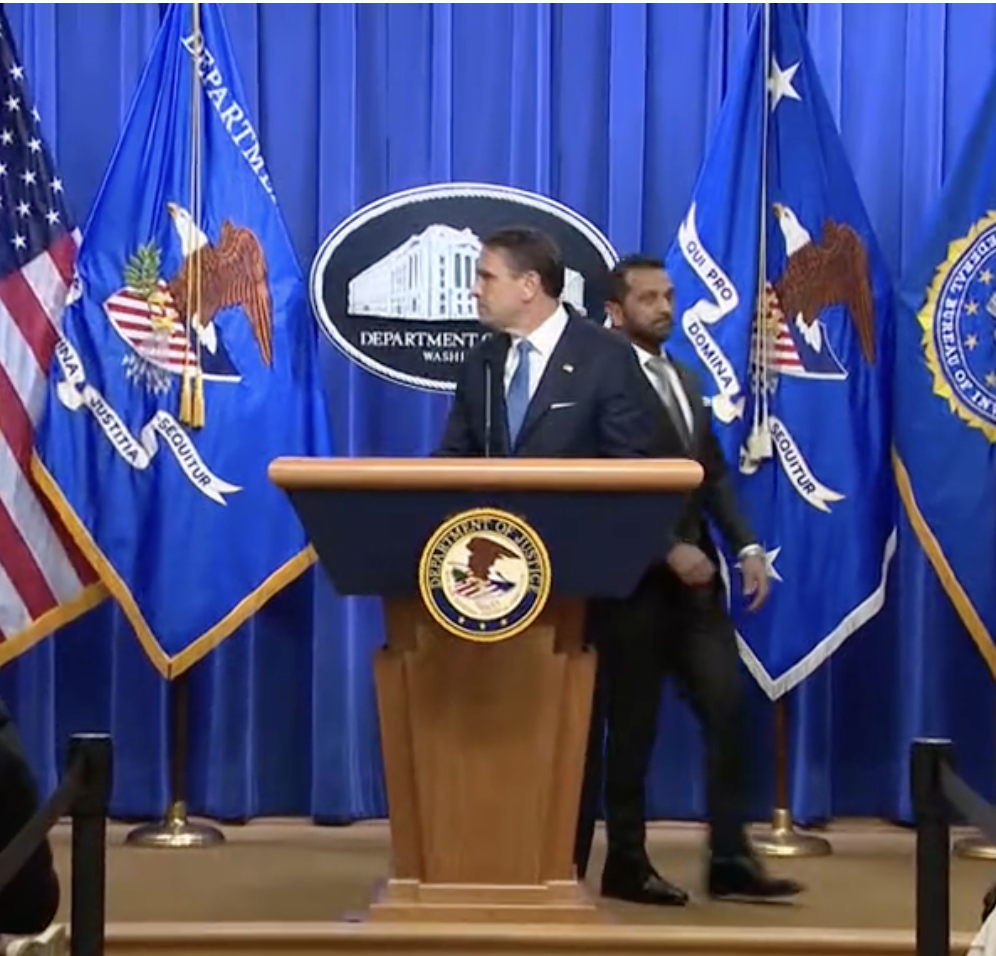
The latest work out of Todd Blanche’s Department of Justice bears none of the indicia that this searching review occurred. The case is United States v. The Southern Poverty Law Center, in which the Center is charged with 11 criminal counts.
Structure of the Indictment
The charges fall into two main buckets.
The first comprises six counts of wire fraud. A simplistic way of describing those charges – one that Blanche and FBI Director Kash Patel resorted to when announcing the charges– is that the organization raised money from donors who were led to believe that the Center was fighting anti-hate groups, but was actually spending money to perpetuate the work of those groups. As Blanche claimed, the Center never told the donors that the money would be going to people who worked at the groups who were supposedly the targets of the Center. And that is charged fraud, he said.
The second group of charges involves allegedly lying to banks by using “fictitious” companies to create bank accounts. Those accounts would then make it appear that the money emanating from the Center was coming from these companies, thus serving to hide the true source of the funds going to allegedly support the hate groups. (The final charge is money laundering conspiracy, which piggybacks on, and requires the validity of, the first bucket of fraud charges.)
The problem for the Department of Justice is all that may sound superficially plausible in a press release against an organization dissimilar to the SPLC, but nothing in the speaking indictment against the Center appears to meet the legal standard required of the two sets of legal charges. Let’s start with the big picture, and then discuss the granular issues the government will have to, and by all outward signs appears unable to, tackle.
The DOJ wire fraud charges
The government’s theory of the case, necessary (though not sufficient) to establish the first bucket of charges, is that the Center was secretly promoting racist organizations. The fraud was taking money from donors who were intentionally led to believe that the Center was fighting such groups.
Here is a hypothetical that can help clarify why this theory of prosecution seems exceedingly far-fetched and belied by facts the government itself knows.
Suppose the U.S. repeatedly paid a member of ISIS to disclose information about upcoming ISIS terrorist plans concerning American people and places. The U.S. obtains such information and uses it to thwart these attacks. Would it be correct to say the U.S. is trying to promote ISIS and its attacks? Of course not.
But that is the precise theory of the DOJ indictment against the Center: That it did not tell its donors that it was promoting hate groups when it paid money to informants to get data about the groups. That is a possible fraud only if the Center actually was seeking to promote – as opposed to dismantle – such groups. That the Center is known to have provided information about such groups to the FBI so that the government could take action against the groups will be powerful, if not dispositive, proof against the government’s theory. Indeed, the indictment itself says the Center’s informant stole boxes of documents form one alleged hate group and then the Center used the documents to publicly hurt that group (Indictment, Paragraph 11b). The Center would need to establish only reasonable doubt that it had not sought to promote such groups, but here there appears to be no doubt whatsoever that it sought to weaken these alleged hate groups.
And what makes this so much worse is that the DOJ (and its FBI component) know all this, as they received from the Center itself the negative information about these groups. The Department were doing so at least until the beginning of the second Trump administration when Patel terminated the Bureau’s receiving such information from the Center. That proof is now going to be a weapon that the Center can wield against the Department’s indictment.
All this makes Blanche’s contention at his press conference that the Center was intending “to stoke” racial hatred by these alleged hate groups so disturbing. (See press conf. at 50”-1:03”) The indictment is devoid of any allegation that that was an actual intended goal of the Center; indeed, the indictment makes allegations that are flatly inconsistent with Blanche’s representation. But Blanche’s assertion is consistent with the far-right talking point that it was the “left” that was behind the events in Charlottesville and J6 – a contention that is devoid of proof, and makes little sense in any event since this Administration does not condemn either event.
But there is more reason that the indictment on its face is particularly weak. In spite of the fact this is what is known as a “speaking indictment” – that is, an indictment that tells the story of the crime, and does not simply recite the language of the particular criminal statute charged — it nowhere says what specifically the donors were told that was fraudulent. The indictment is devoid of any allegation that the Center told the donors that it would not use donor money to engage in the informant plan it devised to learn about these alleged hate groups. That is necessary to be able to prove fraud. The current Center website, for instance, states that the Center is “standing up for the most vulnerable people in society – those who have no other champion. We’re exposing hate and injustice, fighting discrimination.” Even more pointedly, the website states, “Through our Intelligence Project, we monitor and expose hate and antigovernment movements advancing white supremacy” (emphasis added). None of that would be made fraudulent by the Center’s paying informants to gather information about alleged hate groups. (I do not know what language was used at the time of the charged conduct, but it is notable that the government does not rely on any such language in supporting the charges.)
Blanche was asked about this at the press conference announcing the charges and all he could say is that the donors were not told about the informant payments, but I was struck by that answer as that is not fraud unless that material omission intentionally served to make some other representation false or misleading. The legal question is whether the donors were intentionally misled into believing their money would be used for only certain purposes and not others, and nonetheless those people used the money for that impermissible purpose. But none of that is alleged in the indictment.
It is useful to compare the Center indictment to that brought against the “Build the Wall” defendants, where Steven Bannon and others were convicted of defrauding donors. There the federal charges specifically alleged that the donors were told that their funds would not be used for paying salaries and the like; instead, the donations would all go to the Wall. The indictment alleged that the defendants, knowing this, nevertheless used the money for such personal purposes. The indictment included quoted statements to donors, such as the leader “would not take a penny in salary or compensation” but, as the indictment alleged, he and others then took hundreds of thousands of dollars as personal compensation, after raising $25 million based on such alleged falsehoods. They were convicted.
Here, such quotations or even specific allegations are conspicuously absent from the indictment (and from the press conference). Now one would think, if they existed, that the DOJ would have cited written fundraising communications to prospective donors to support the charges (there are typically myriad such communications from organizations). None have been cited. Or the government could have alleged that certain donors told the government about such misrepresentations, but again no such allegations have been made. Given that this DOJ has smeared people in the past to lessen the public’s view of them, it is more than reasonable to conclude that no such information exists.
But there is more. The indictment speaks about millions of dollars being used to pay informants for information, and suggests a scheme awash with donor money for almost a decade, from “2014 to 2023” (Paragraph 10). But when you get to the actual wire fraud charges, the amounts dwindle to a combined total of a paltry $13,905 on a single day in 2023. Yet, a federal criminal case has been brought against a storied civil rights group defending black Americans for that lowly sum on a single day. No explanation has been given by Blanche, Patel, or others for the huge discrepancy between the introductory language (which is not the gravamen of the criminal charges) and what is actually charged. The Build the Wall defendants, by contrast, were alleged to have collectively netted from their fraud well over a million dollars. (And one of them, Bannon, was later pardoned by Trump.)
The bank fraud charges
The indictment contains four bank fraud charges, based on the averment that the Center had various accounts opened in “fictitious” company names to make it appear the funds being paid to informants were coming from these companies and not from the Center.
It is very hard to assess these charges for the simple reason that, in spite of the indictment being a “speaking” indictment, it only offers conclusory allegations. For instance, although the indictment calls the companies “fictitious,” it is unclear why exactly that is so. The indictment says the entities were sole proprietorships with “fictitious” names. There is nothing illegal about the mere creation of companies and partnerships, or even shell companies with fanciful names. But the indictment does then allege that the paperwork for the proprietorships contained “false and misleading” information about the “ownership and control” of the companies, but it oddly does not say what that false and misleading information is. From the indictment, it may well be that the government is thinking that the companies are controlled by the Center, but it is not at all clear that the paperwork provided to the banks made contrary representations. Nor is it clear what the government means by “fictitious” companies—as the indictment then goes on to say that sole proprietorship paperwork exists for the companies. A pass-through partnership may be perfectly legitimate or could be a part of a fraud, but none of that would make the company “fictitious.” (The fact that seven companies were all opened on the same date in 2013 with the same bank may be yet another indication that SPLC was not trying to pull the wool over the bank’s eyes.)
My suspicion is that the lack of specificity, when married with the fact that neither Blanche nor Patel has deep experience in financial investigations, will make this is another fraught area, although to be fair one really cannot tell at this juncture. At the very least, the Center should be able to get what is called a Bill of Particulars, requiring the government to set out what it contends is the fraud here.
Finally, the indictment relies on the Center’s statement to one of the banks in 2021 that various “fictitious” companies were operated under the Center’s authority as proof that the companies were engaged in defrauding the bank. But the four bank fraud charges (counts 7-10) allege only that employees of these companies represented that they were the “sole owner” of the company. There may be a crime here if the government can show that the people who made the representation that the employee was the “sole owner” knew that the Center was the true owner, but the indictment on its face does not breach that divide.
What makes this all highly problematic is an apparent gaffe in the charging language. Section 1014 only makes “false” statements criminal, not “misleading” statements. The Supreme Court said as much just over a year ago. And yet the indictment, while it initially tracks the correct narrow language from section 1014, repeatedly then alleges that the people opening the accounts made “false and misleading” representations, but the latter is insufficient to prove guilt. The government may have proof of false statements, but if it was counting on using misleading statements to meet its burden to establish the charges beyond a reasonable doubt, it is in for a surprise.
What’s Next
The indictment pointedly notes the role of senior people at the Center who made the 2021 representations to the bank about these companies, and so it is a good bet that those individuals are the intense focus of this Department seeking to flip them, something that this case appears to sorely need. Indeed, there is little sign that there is any insider witness cooperating with the government, as well as any donor who says they were misled by anything that was represented orally or in writing by the Center.
On its own terms, the indictment is frail and deficient. Time will tell if this is not worth the paper it is written on, and is serving a very different extra-legal purpose. The Department in the face of widespread legal and factual criticism responded thus: “These issues will all be litigated in court and the government remains confident in its case. It’s a shame that these former prosecutors aren’t aghast at these allegations of severe fraud, manufactured racism, and abuse of donor dollars.” The first sentence is fair enough, but the second assumes the problems away, underscoring my concern that defective legal and factual charges have been brought by a government institution that is no longer seeking, as its name would dictate, justice.
FEATURED IMAGE: FBI Director Kash Patel speaks with US Acting Attorney General Todd Blanche next to him during a press conference at the Department of Justice in Washington, DC on April 21, 2026. The US Department of Justice announced the indictment on April 21 of a prominent US civil rights organization over its use of donor money to pay confidential informants in extremist groups. Acting Attorney General Todd Blanche said the Alabama-based Southern Poverty Law Center (SPLC) faces charges of wire fraud, bank fraud and conspiracy to commit money laundering. (Photo by Mandel NGAN / AFP via Getty Images)
Source link
-
-

-
-

-


