

Timing your workout with your body can help you get better sleep, says new study
With most people juggling hectic schedules, you’re probably lucky to squeeze in a workout before work, between meetings, or between the office and home.
Your natural body clock (circadian rhythm) governs many functions in your body from energy levels to appetite and how easily you fall asleep (or don’t). So working with it is key to maintaining good health and sleeping well.
As board-certified sleep medicine physician Dr. Joshua Roland explains, “Exercising out of sync with your internal clock can push your body in the wrong direction physiologically.” Let’s dig into why this is and what the new study found…
Key takeaways from the study:
- Timing exercise to match your body clock chronotype may lower cardiovascular disease and improve sleep quality.
- Participants who match their exercise timing with their chronotype improved their sleep quality score by 3.4 points on the Pittsburgh Sleep Quality Index.
- This synchronization leads to better sleep-wake patterns and more efficient hormonal secretion.
- Sleep improvements were more prominent among morning larks than night owls.
- The best sleep trackers monitor your biometrics to help you determine which of the four main chronotypes you best fit.
“I’ve had clients tell me for years that they exercise religiously but still can’t sleep. The first thing I ask now is when they’re training, not what they’re doing,” says Michael Betts, Founder and Director of TRAINFITNESS.
“A night owl dragging themselves to a 6am spin class isn’t just tired – they’re fighting their own biology.”
The group matched to their chronotype improved their sleep quality score by 3.4 points on the Pittsburgh Sleep Quality Index
For the study, over 12 weeks, 134 previously-sedentary participants “with at least one cardiovascular risk factor” completed the same moderate-intensity aerobic program, which included five sessions a week.
However, roughly half of them exercised in the mornings and the other exercised in the evenings.
The participants were split into two groups and their exercise slot was either matched or deliberately mismatched with their natural chronotype.
Out of the 70 participants who exercised early doors, 34 of them were natural morning larks; and out of the 64 who exercised in the evening, 30 of them were natural night owls.
60 exercise sessions later, the results were striking from both a sleep and general health perspective. The group matched to their chronotype improved their sleep quality score by 3.4 points on the Pittsburgh Sleep Quality Index, while the mismatched group improved by just 1.2.
When you exercise is just as important as how you exercise
As the study points out, sleep and exercising in line with your body’s natural timing preference helps regulate your circadian rhythm and hormone cycles, resulting in optimal physical performance and cardiovascular responsiveness to exercise.
“A ‘one-size-fits-all‘ approach to exercise timing may fail to account for biological variability,” the study authors note.
“This study adds to a growing body of evidence suggesting that the timing of exercise when aligned with an individual’s internal biological clock can significantly enhance health outcomes,” they later write.
Sleep aside, participants who matched their workout to their body clock observed “improvements in blood pressure, autonomic function, aerobic capacity [and] metabolic markers.”
Overall, the researchers found that the improvements were more pronounced with morning larks that the night owls.
Why exercising according to your chronotype helps you sleep better
The general consensus among sleep doctors for many years has been avoid vigorous activity in the evening for better sleep.
But this new paper puts something of a spanner in the works, by suggesting that night owl types may indeed sleep better after exercising later.
Experts have long promoted high intensity morning exercise and gentler evening activities for favourable sleep outcomes. Why? It mainly comes down to body temperature and nervous system regulation.
“Late-night high-intensity workouts raise core temperature, heart rate, and alertness at a time when your body is trying to wind down, which can increase stimulation and delay melatonin release and make it harder to fall asleep,” explains Dr. Roland, who is Medical Director of Dreem Health.
“Generally morning exercise is better from a sleep standpoint, however, forcing an early-morning workout when your body isn’t ready can feel like stress rather than a beneficial stimulus, which may potentially also disrupt sleep quality over time,” he adds.
How to find your chronotype
As humans, we’re wired to feel sleepy and feel alert at different times every 24 hours; and our sleep timing preferences differ slightly from individual to individual — known as your chronotype.
From sleeping when your body naturally wants to to optimising your schedule in line with your energy peaks and throughs, there are several health benefits to understanding, and working with, your chronotype.
“Truly understanding your biological chronotype means you can work with your body rather than against it”
You may have just landed on the conclusion that you’re ‘not a morning person’ after many snoozed alarms, or if you’ve always dreaded plans in the a.m. hours.
But truly understanding your biological chronotype means you can work with your body rather than against it.
You probably have a rough idea of your chronotype, but how can you be sure?
In the clinical trial, participants were categorised as morning-type or evening-type using the Morningness-Eveningness Questionnaire, which is readily available online. For certainty, their results were then validated by 48-hour core body temperate monitoring.
You can use this method, along with keeping check of when you feel most energised or sleeping during the day.
“You can get a good read on your chronotype by looking at your natural patterns when you’re not constrained by alarms or schedules,” advises Dr. Roland.
He says you should ask yourself: When do you wake up and feel alert on your own? When do you feel most productive or physically capable during the day?
Oura’s Body Clock feature
Now wearable devices like the Oura Ring can also help you learn more about your internal body clock.
After wearing my ring for over a year, I now understand how I can work with my body’s natural timing preference to keep a consistent sleep schedule and get the quality sleep I need to feel alert and energised through the day.
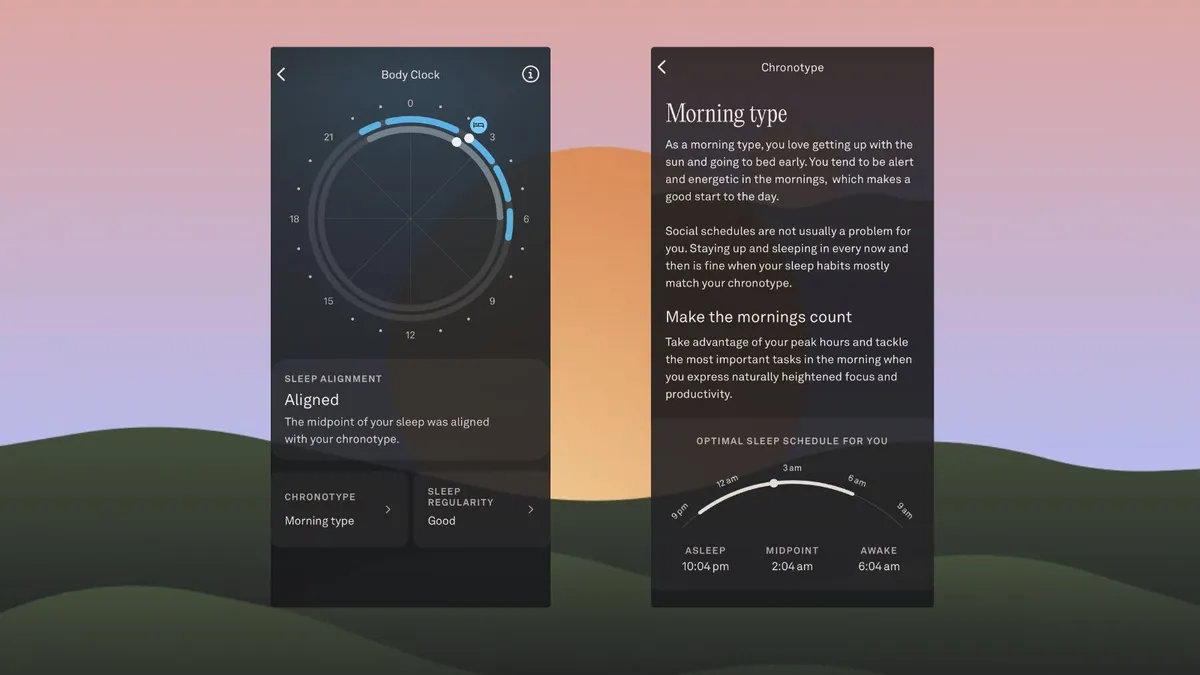
Oura’s complex sensors and algorithms have identified 10p.m. to 6a.m. as my optimal sleep window, according to my biological signals. Thanks to the Body Clock I can measure how far my sleep pattern actually deviates, or lines up with, this ideal.
As an early bird, I can vouch that I fall asleep faster and sleep more solidly through the night on days were I get in a morning run, which validates the findings of the new study.
Exercises proven to help sleep
The study shows exercising any time of day can improve your sleep quality to some degree. But it indicates that you should exercise in line with your chronotype for the best results. So, what workouts does the sleep science recommend?
A morning run
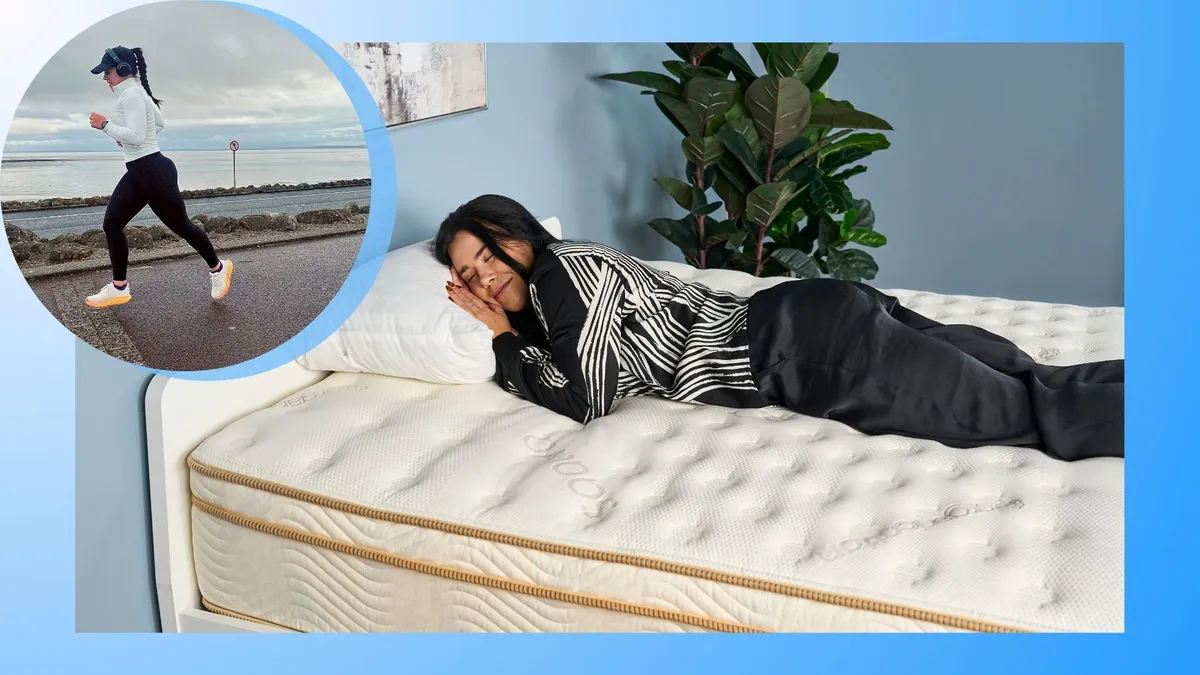
A personal favourite as someone who weirdly enjoys high intensity exercise that leaves me breathless and sweaty, I credit my morning runs for helping me sleep at night — and there’s science to prove it.
The surge in feel-good hormones after a run (yes, runner’s high is real) helps reduce stress through the day, so you’re more relaxed and ready to sleep come evening.
Plus by getting outside early doors, you also get the sleep benefits associated with morning sunlight.
There is indeed a two-way relationship between sleep and running, with sleep benefiting your running performance and running helping you get more deep, restorative sleep.
A post-dinner stroll
It’s true, you can actually step your way to better sleep. A study published in the Sleep Health journal associated walking with better sleep quality, while other research found a 20 minute walk could reduce the risk of sleep apnea by 10%.
Fitting your walk in after dinner before bedtime is a great way to help your body to digest your food and stabilise blood sugar levels before hitting the hay (in the low impact exercise bracket it’s a safe evening activity, especially for morning types).
Bedtime stretching
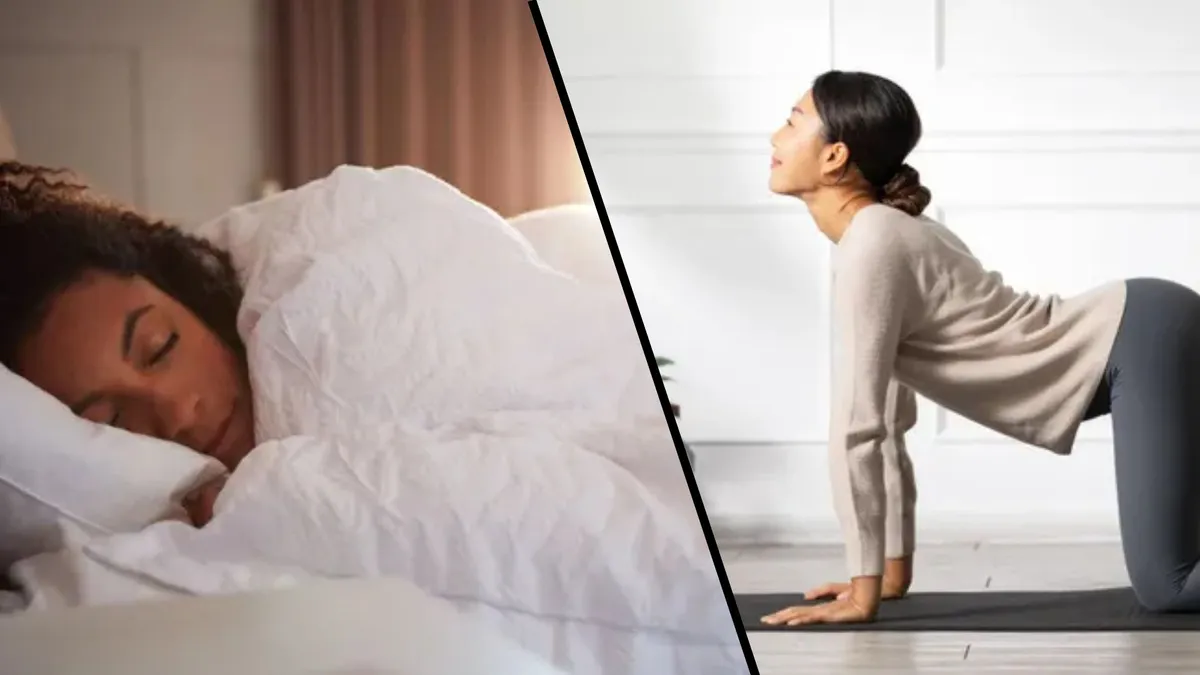
Helping relax your mind and body for sleep, a 7-step bedtime routine of mainly yoga-based stretches can do wonders for your sleep, making it easier to fall asleep fast, sleep solidly through the night, and get the restorative number of hours rest your body needs.
A 2018 study looking at the impact of stretching on chronic insomnia found a positive association between stretching and objective and subjective sleep quality.
A swim

I recently write about how swimming three times a week is helping my 75-year-old grandfather sleep at night. Even as a twenty-something who regularly swims, I always feel ready for bed after hitting the pool.
Why is this?
“Swimming is a full body aerobic activity, and aerobic activity improves sleep by building healthy sleep pressure, meaning the body feels a stronger need for restorative sleep at night,” explains Dr. Rab Nawaz, M.D., a board-certified neurologist with over 10 years of clinical experience.
