
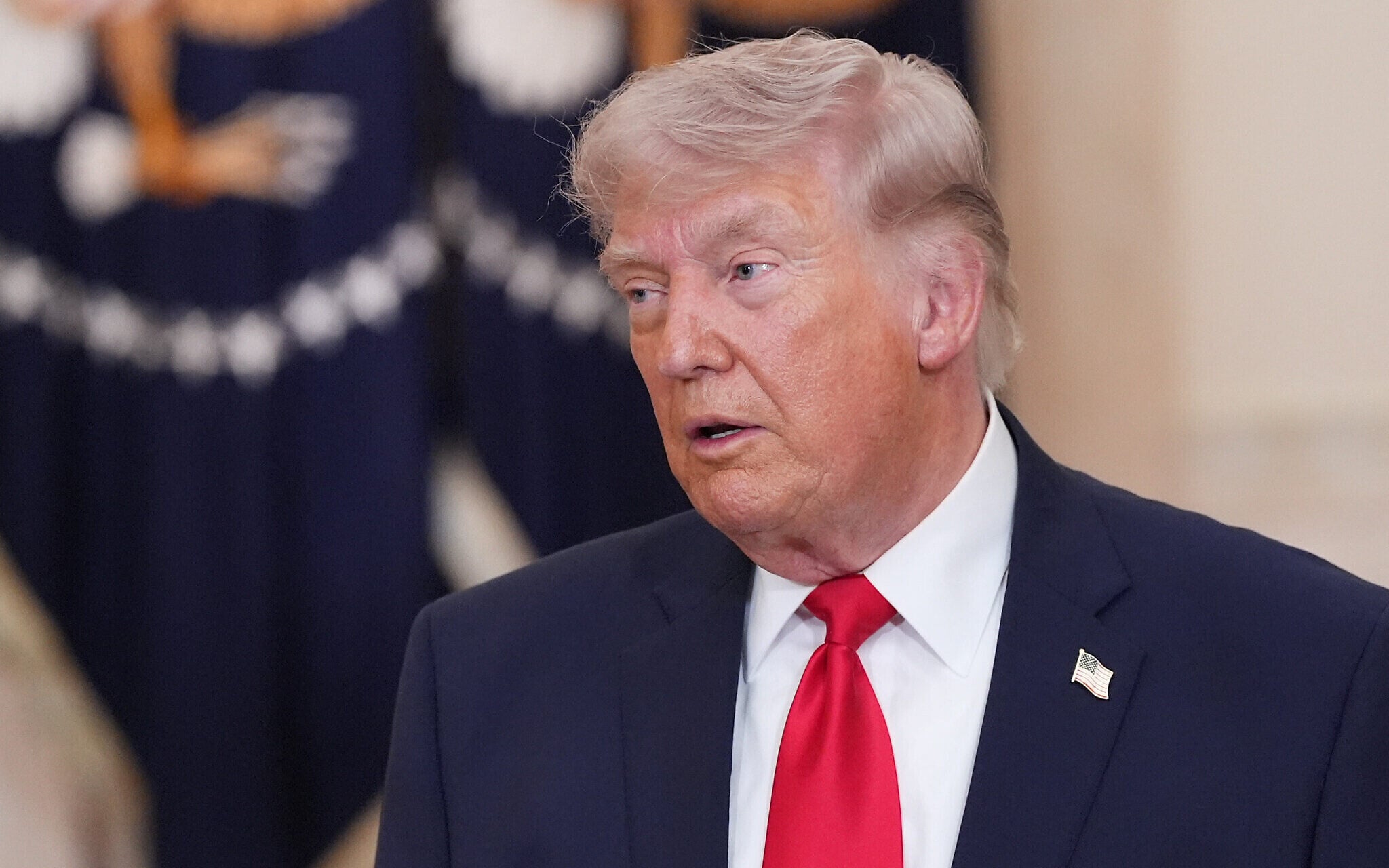
US President Donald Trump on Friday claimed that the United States can “easily” open the Strait of Hormuz with “a little more time,” and suggested that Iran’s power plants were next on his target list, as the US military shifted to striking civilian infrastructure.
Tehran has effectively shut down the key Hormuz waterway, which normally carries about a fifth of the world’s oil shipments, after the US and Israel launched a bombing campaign on Iran on February 28 in a bid to destabilize its regime and destroy its nuclear and ballistic missile programs.
“With a little more time, we can easily OPEN THE HORMUZ STRAIT, TAKE THE OIL, & MAKE A FORTUNE. IT WOULD BE A ‘GUSHER’ FOR THE WORLD???” Trump said in a post on his Truth Social platform.
The message did not explain exactly what oil Trump was referring to.
The US president has repeatedly shifted his stance regarding the Strait of Hormuz, having previously threatened to bomb Iran’s energy sites if Tehran didn’t allow the safe passage of all ships through the strait. On Tuesday, though, he indicated several times that the US was prepared to end the war without the issue being resolved and that other countries would have to step up and address the issue because it impacts them more than the US.
Then, after claiming Wednesday that Iran had requested a ceasefire, he said he would only consider a truce if they stopped blocking the waterway.
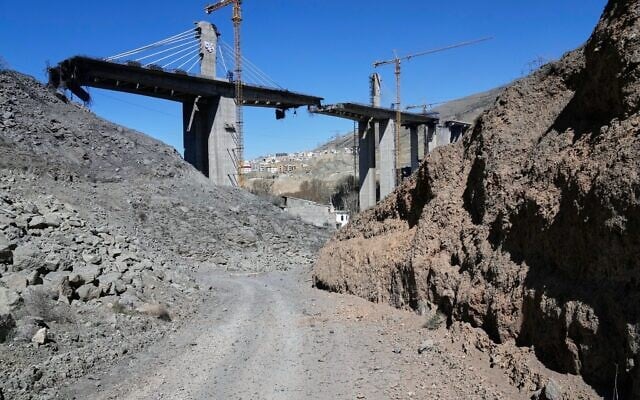
In a separate Truth Social message Friday, Trump suggested that after the US bombed a major bridge in Iran, the Islamic Republic’s power plants would be next to be targeted. US defense officials claimed to Axios that the strike on the key B1 highway bridge was to prevent the Iranian military from moving weaponry.
“Our Military, the greatest and most powerful (by far!) anywhere in the World, hasn’t even started destroying what’s left in Iran,” he said. “Bridges next, then Electric Power Plants!”
In a prime-time address Wednesday night, Trump said that the US would “bring [Iran] back to the Stone Ages, where they belong.” In the first major strikes after the speech, the US bombed the key B1 highway bridge linking Iran’s capital Tehran to the western city of Karaj, killing eight and wounding 95, according to state media.

The US had hitherto largely avoided targeting Iranian civilian infrastructure and even warned Israel against hitting Iranian energy sites, as Washington has sought to avoid turning Iran into a failed state.
But Trump appears determined to further ramp up the pressure against the Islamic Republic, even as the latter doesn’t appear poised to accept Washington’s ceasefire demands.
“New Regime leadership knows what has to be done, and has to be done, FAST!” he declared in his Friday post.
Trump has recently repeated his assertion that Iran has a “new regime,” which is “less radicalized” than its predecessor, despite the fact that Iran’s levers of power have remained firmly in the hands of the Islamic Revolutionary Guard Corps and senior government figures who were in place before the US and Israel took out much of the country’s top officials in the opening strikes of the war.
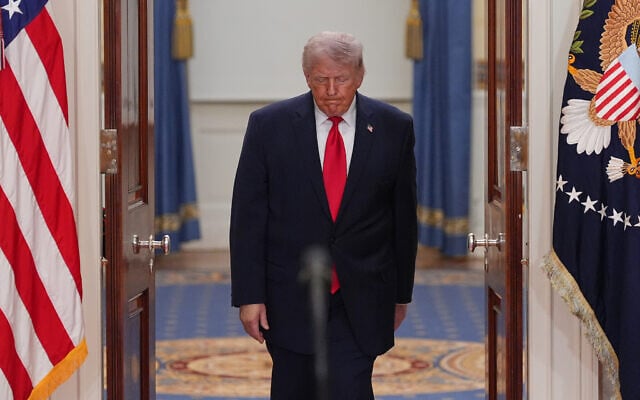
Trump said this week that the US has been in contact with Iran’s “new regime president,” who requested a ceasefire, though Iran denied making such a request, and it was not immediately clear who he was referring to as the new president of the country.
Trump recently confirmed that the US was engaging with Iran’s parliament speaker Mohammad Bagher Ghalibaf, though he has not been appointed president and is not seen as less hardline than previous Iranian leaders. Iran’s actual president, Masoud Pezeshkian, has been in the role since 2024 and has had seemingly little control of Iran’s military or diplomatic policy during the current war.
Report: US quietly expelled Iran’s deputy UN envoy in December
Meanwhile, according to a Friday report in Axios, in December, the US State Department quietly expelled Iran’s deputy ambassador to the United Nations, Saadat Aghajani, citing national security concerns, according to a US official and a source familiar with the matter.
The move, not publicly disclosed at the time, was part of a broader pattern that saw at least three Iranian diplomats expelled from New York over a six-month period, the report said.
In early December, the State Department issued a formal request to Iran’s UN mission for Aghajani’s immediate departure under “section 13 procedures,” an internal mechanism designed to carry out low-profile expulsions without formally declaring a diplomat persona non grata.
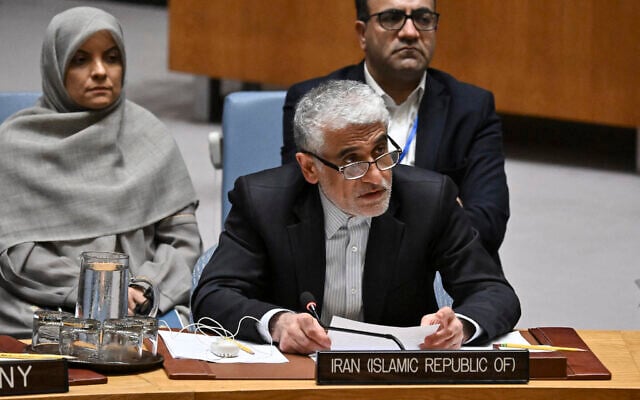
Such procedures are typically used in cases involving suspected espionage or activities deemed contrary to US interests, though no specific allegations against Aghajani have been made public.
In February, US officials also asked Aghajani’s children to leave the country after remaining in New York following his departure, the report said.
Two additional, more junior Iranian diplomats were expelled in the preceding months.
“We can confirm that the United States delivered a Note Verbale on December 4 regarding the status of certain Iranian personnel at the UN. For privacy and security reasons, we do not comment on the specifics of diplomatic personnel actions,” a State Department official said.
The official said that the request came well before the protest movement and subsequent crackdown that erupted in Iran in late December, and was unrelated to those events.
Iran’s UN mission declined to comment on the Axios report.
Reuters contributed to this report.
You appreciate our wartime journalism


We’re really pleased that you’ve read X Times of Israel articles in the past month.
You clearly find our careful reporting of the Iran war valuable, at a time when facts are often distorted and news coverage often lacks context.
Your support is essential to continue our work. We want to continue delivering the professional journalism you value, even as the demands on our newsroom have grown dramatically during this ongoing conflict.
So today, please consider joining our reader support group, The Times of Israel Community. For as little as $6 a month you’ll become our partners while enjoying The Times of Israel AD-FREE, as well as accessing exclusive content available only to Times of Israel Community members.
Thank you,
David Horovitz, Founding Editor of The Times of Israel
Join Our Community
Join Our Community
Already a member? Sign in to stop seeing this
-

-
-

-

-


