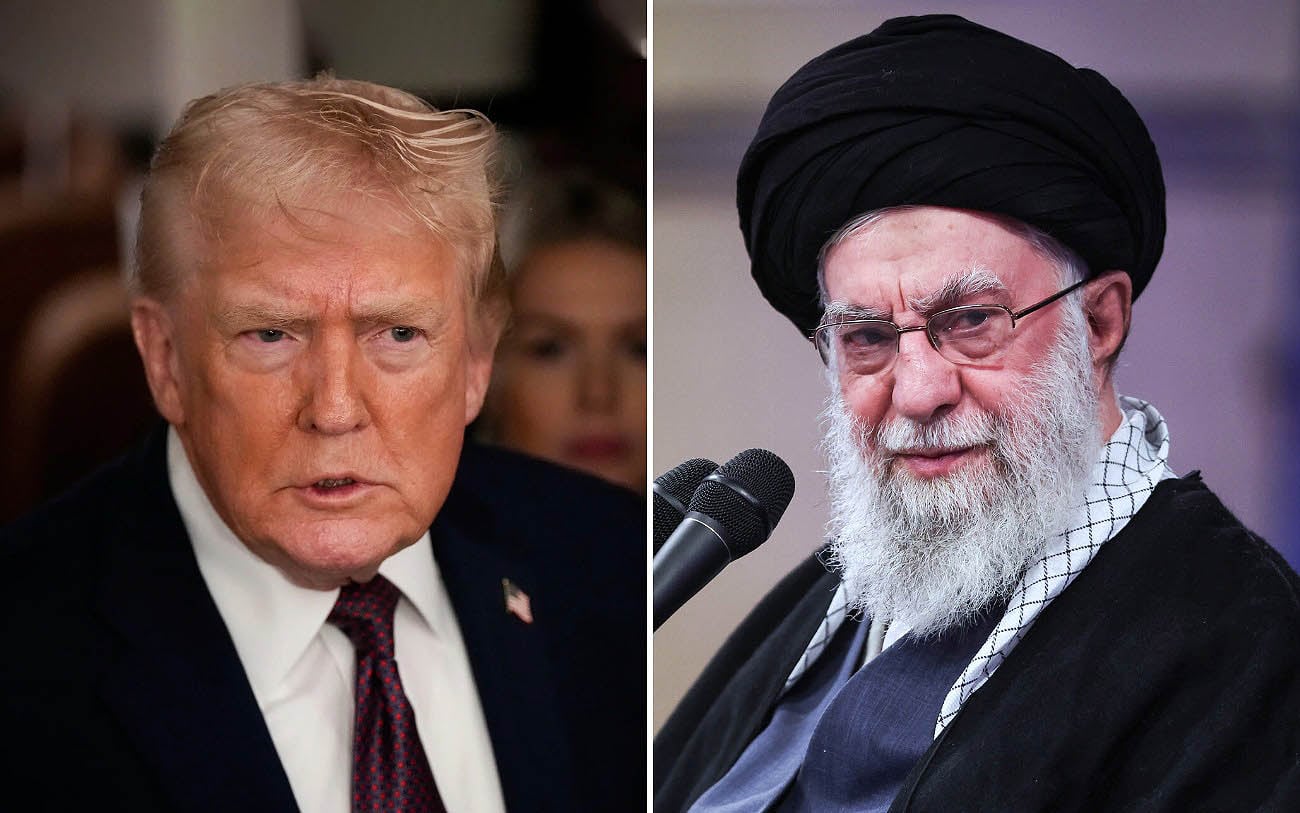
The US and Iran have reportedly informed each other that they are ready to conduct negotiations on an agreement to end tensions between them, as Prime Minister Benjamin Netanyahu held top-level meetings on the situation.
A senior American official told the Axios news site on Sunday that US President Donald Trump’s administration has made it clear it is open to holding such talks as soon as this week.
According to the report, Turkey, Egypt and Qatar are working to organize a meeting this week between White House special envoy Steve Witkoff and Iranian officials in Ankara, Turkey’s capital.
US officials told the news site that Trump’s comments calling for a deal are genuine and not a trick ahead of a military operation. The US has built up its forces in the Middle East recently, which Trump characterized as a “massive armada.”
Amid last year’s 12-day war between Israel and Iran — which began with a surprise Israeli strike — an Israeli official revealed that the messaging issued by the US ahead of the attack, seemingly downplaying the probability of a strike, had been part of a deliberate deception campaign.
Speaking to reporters on Sunday, Trump touted the possibility of negotiations. He was responding to a warning earlier in the day from Iran’s supreme leader, Ali Khamenei, that an attack from Washington could spark a regional war.
“Why wouldn’t he say that? Of course he is going to say that. We have the biggest, most powerful ships in the world over there, very close — a couple of days [away]…. Hopefully we’ll make a deal. If we don’t make a deal, we’ll find out whether or not he was right,” Trump told reporters.
Speaking on CNN on Sunday, Iranian Foreign Minister Abbas Araghchi said he believes his country can reach an agreement with the United States on his country’s nuclear program.
Tehran’s top diplomat said he is “confident that we can achieve a deal” on the program, which the US and Israel say aims to build nuclear weapons. Iran has consistently denied seeking to acquire nuclear weapons. However, it enriched uranium to levels that have no peaceful application, obstructed international inspectors from checking its nuclear facilities, and expanded its ballistic missile capabilities.
“Unfortunately, we have lost our trust [in] the US as a negotiating partner,” Araghchi told the US network, while still touting “fruitful” talks being mediated by mutual partners.
Araghchi stressed that talks must be focused on Iran’s nuclear program and not on curbing its ballistic missile program or support for proxy terror groups.
“Let’s not talk about impossible things,” he said, in response to a question on those matters by CNN. “And not lose the opportunity to achieve a fair and equitable deal to ensure no nuclear weapons. That as I said, is achievable even in a short period of time.”
Israel targeted Iran’s ballistic missile program during last year’s war, and has debilitated several of the terror groups funded by Tehran that seek Israel’s destruction. Trump has also warned Iran not to expand its ballistic missile stockpile.


Meanwhile, Netanyahu reportedly met Sunday evening with IDF Chief Lt. Gen. Eyal Zamir after Zamir returned from high-level meetings in Washington with US officials to discuss Iran.
Defense Minister Israel Katz and Mossad chief David Barnea were also reportedly part of the meeting. Katz and Zamir also met earlier Sunday to discuss the latter’s time in Washington. According to Hebrew media reports, the sense in the discussions was that the US is closer to attacking Iran than it was a week ago, although it is unclear what the scope of such an attack would be.
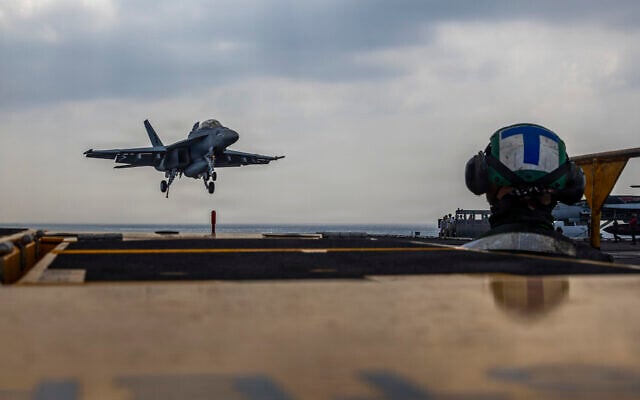
After sending a collection of military assets to the Middle East in recent weeks, the US Navy said Sunday that the American missile destroyer that had anchored at Israel’s Red Sea port city of Eilat on Friday has now departed.
USS Delbert D. Black departed Eilat following a “scheduled port visit,” said a statement from the US Naval Forces Central Command (NAVCENT) — the naval component of the US Central Command (CENTCOM).
“This port visit demonstrates US and Israel’s strong maritime partnership and shared commitment to advancing security and prosperity in the Mediterranean Sea, Gulf of Aqaba, and the Red Sea,” NAVCENT said.
According to the Israeli military, the destroyer’s arrival was pre-planned and part of the ongoing cooperation between the IDF and the US military.
Despite the apparent momentum toward negotiations, anxiety about a possible return to war persists.
Former IDF military intelligence chief Amos Yadlin said on Channel 12 on Sunday that while “Western logic” would suggest Iran will not try to preempt a possible American attack, and initiate war with the US and Israel, “jihadi logic, extremist religious logic” could be different. He said that the IDF should be thoroughly prepared “as though there is going to be a surprise.”
He said he hopes the IDF has an operational model in place, predicated on the idea “that the Iranians may do something that does not seem logical.”
Yadlin also noted that in recent regional conflicts, those who struck first have enjoyed a strong strategic advantage. He highlighted that the Iranian regime is seeking revenge against Israel for last June’s war.
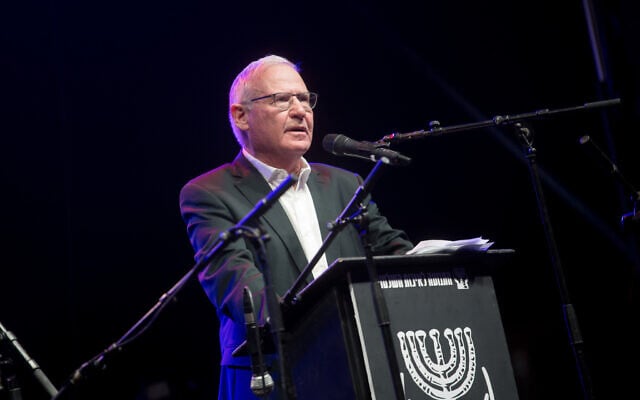
Yadlin, who now heads the non-profit MIND Israel, a national security consultancy, said the IDF is working very closely with the US military in sharing the lessons it learned in past rounds of conflict with Iran, especially last year’s war.
The IDF took out more than 200 Iranian missile launchers, a success of profound interest to the Americans, he said.
He said Israel and the US will need to determine effective deconfliction mechanisms in the event of war. And he stressed the importance of mutual trust and confidence between Zamir and US Gen. Dan Caine, chairman of the US Joint Chiefs of Staff.
Jacob Magid and Emanuel Fabian contributed to this report.
You appreciate our journalism


We’re really pleased that you’ve read X Times of Israel articles in the past month.
You clearly find our careful reporting valuable, in a time when facts are often distorted and news coverage often lacks context.
Your support is essential to continue our work. We want to continue delivering the professional journalism you value, even as the demands on our newsroom have grown dramatically since October 7.
So today, please consider joining our reader support group, The Times of Israel Community. For as little as $6 a month you’ll become our partners while enjoying The Times of Israel AD-FREE, as well as accessing exclusive content available only to Times of Israel Community members.
Thank you,
David Horovitz, Founding Editor of The Times of Israel
Join Our Community
Join Our Community
Already a member? Sign in to stop seeing this