The pace of U.S. military aircraft movements to the Middle East is picking up. The flights, which potentially include F-35A stealth fighters, come amid a growing buildup of U.S. forces in the region. Washington and Tehran continue to trade threats ahead of a potential attack on or from Iran. Meanwhile, in anticipation of conflict, Iran claims it has distributed additional air and sea drones to its troops for potential attacks on U.S. and Israeli assets if needed.
You can catch up with our most recent coverage of tensions in the Middle East in our story here.
During President Donald Trump’s cabinet meeting on Thursday, War Secretary Pete Hegseth said the Pentagon is ready to fulfill any orders given as the American leader is increasing the pressure on Iran to end its nuclear weapons program.
“They should not pursue nuclear capabilities. We will be prepared to deliver whatever this president expects of the War Department,” Hegseth said.
Trump is now considering options that “include U.S. military airstrikes aimed at Iran’s leaders and the security officials believed to be responsible for the killings, as well as strikes on Iranian nuclear sites and government institutions,” CNN reported, citing sources. “Trump has not made a final decision on how to proceed, sources said, but he believes his military options have been expanded from earlier this month now that a US carrier strike group is in the region.”
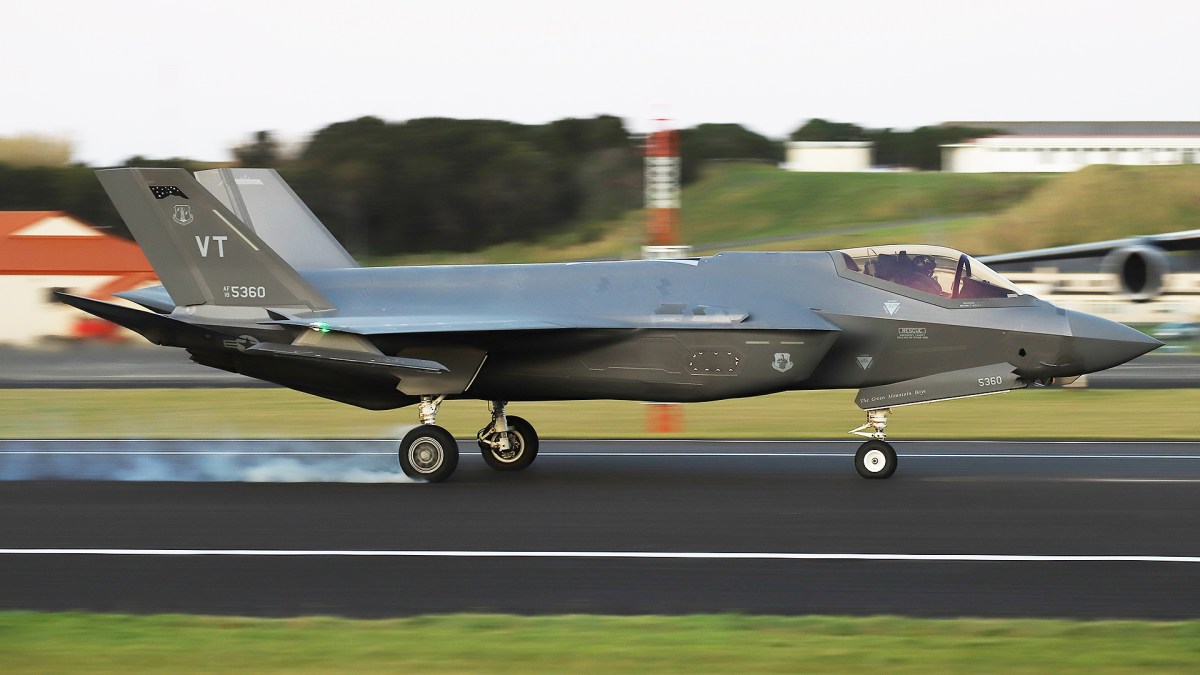
As the rhetoric continues to heat up, there are strong indications that the first flight of U.S. Air Force F-35A stealth fighters may be headed to the Middle East. The jets, from the Vermont Air National Guard, were in Puerto Rico for the pressure campaign that led to the operation that resulted in the capture of Venezuelan dictator Nicolas Maduro. Video from Andre Inacio, who also took the top image in this post, shows some of those jets landing in Lajes, Portugal.
The F-35As would be the latest tactical aircraft sent to the region. As we previously reported, squadrons of F-35Cs, F/A-18E/F Super Hornets and E/A-18G Growlers embarked on the aircraft carrier USS Abraham Lincoln. The aircraft carrier and three escorts are now in the U.S. Central Command Area of Responsibility (AOR). In addition, a dozen F-15E Strike Eagles were sent to Muwaffaq Salti Air Base in Jordan.
The F-35As would give the U.S. additional capability to strike targets deep inside Iran. They played a key suppression of enemy air defense (SEAD) role during last June’s Operation Midnight Hammer mission, paving the way for B-2A Spirit bombers that dropped 14 30,000-pound GBU-57/B Massive Ordnance Penetrator (MOP) bunker buster bombs on Iran’s Fordow and Natanz nuclear facilities. The F-35As, from the 388th Fighter Wing, were the first aircraft in and the last ones out.
We still don’t know for sure where the F-35As that originally deployed to the Caribbean will end up. The Vermont Air National Guard declined to comment on the deployment, citing operational security concerns and U.S. Central Command does not discuss any movements. That being said, the movement would fit the same pattern we have seen of the influx of capabilities into the Middle East.

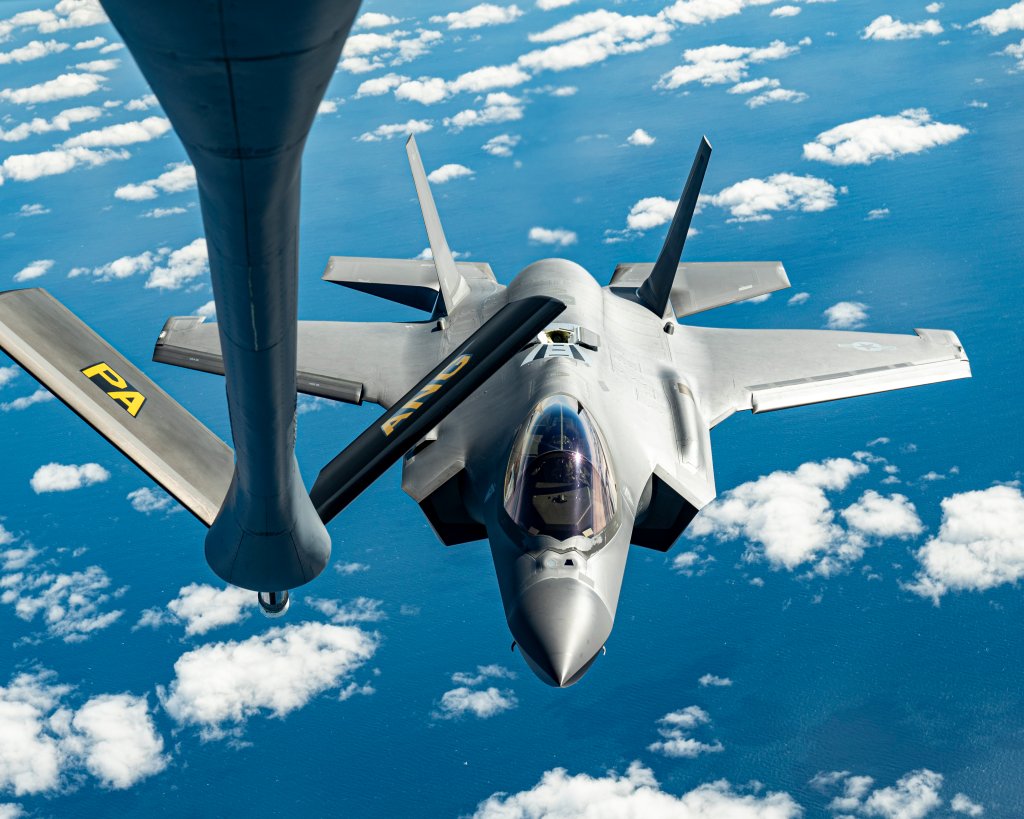
Case in point, F/A-18G Growler electronic warfare (EW) jets have also crossed the Atlantic. Flight-tracking data shows that they have left Oceana Naval Air Station in Virginia, headed toward Moron Air Base in Spain. From there, they could potentially fly to the Middle East. Yesterday, we reported that, just like the F-35As, these aircraft departed from their assignment to the Caribbean.
As we pointed out, “Growlers in the Middle East would be critical force multipliers. Such a deployment could be indicative of what one would see in the lead-up to a kinetic operation centered heavily on strikes on targets in inland areas, such as ones the U.S. and possibly Israel might carry out in Iran in the future. Growlers can provide electronic warfare support for standoff munitions and/or aircraft penetrating into enemy air defenses, among other battlefield effects.”
Even before these recent moves, there was a small number of tactical jets in the region, including F-15Es, A-10 Thunderbolt IIs and F-16 Fighting Falcons.
In addition to these aircraft, an HC-130J Combat King II combat search and rescue (CSAR) plane, callsign King40, landed at Muwaffaq Salti Air Base in Jordan today, according to flight tracking data. That was a possibility we suggested yesterday.
Another Combat King may be on the way, according to flight tracking data showing it left Rota, Spain. It is possibly headed to Muwaffaq Salti as well. Again, we have no independent confirmation of this. However, sending them to the Middle East at this time makes sense should Trump order a strike on Iran. Combat Kings would be needed for the rapid rescue of any aircrews lost during military operations, specifically over contested territory. They can also support special operations aircraft with aerial refueling for non-personnel recovery missions.
Also drawing a lot of interest from flight trackers online, a WC-135R Constant Phoenix “nuke sniffing” jet, callsign COBRA31, has arrived at RAF Mildenhall from Offutt Air Force Base in Nebraska, according to flight-tracking data and the ADS-B exchange. The jets collect air samples to screen for the presence of notable nuclear materials. Beyond taking baseline readings around the globe, the Constant Phoenix jets can be deployed to monitor nuclear weapons tests and look for and track nuclear leaks and other nuclear incidents.
Constant Phoenix jets are no strangers to Europe, as we have noted in the past, so this could very well be a routine flight. While Mildenhall is a frequent jumping-off point for flights to the CENTCOM region, we don’t know for sure where this one is headed. At the same time, moving a jet like this to the Middle East, or at least closer to that region, could make sense if strikes on nuclear sites are being planned. We just don’t know at this time.
Meanwhile, C-17 Globemaster III and C-5M Galaxy cargo jets continue flying toward the region, delivering materiel. As we predicted, the U.S. is sending additional Patriot and Terminal High Altitude Area Defense (THAAD) systems to the Middle East for increased protection from any Iranian attack, The Wall Street Journal reported.
These aircraft movements appear to be the latest sign of a large surge of U.S. forces to the Middle East. As we reported yesterday, an RC-135V Rivet Joint electronic surveillance plane arrived at Al Udeid Air Base in Qatar, according to online flight trackers. In addition, an E-11A Battlefield Airborne Communications Node (BACN) jet was heading to Souda Air Base in Crete, a common route for deployments to the Middle East.
It should be noted, however, that CENTCOM is conducting a multi-day readiness exercise, so some of these aircraft movements could be related to that.
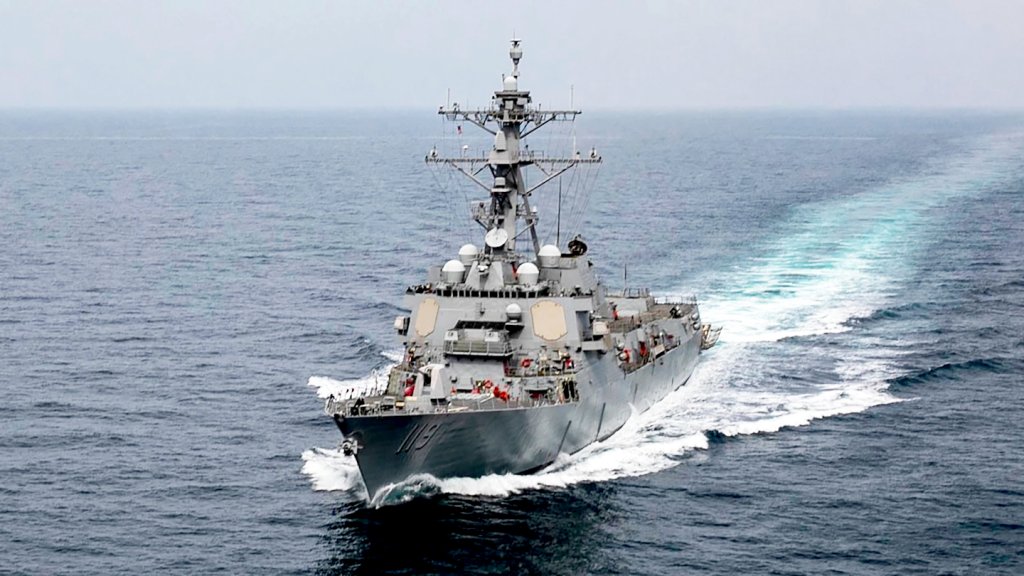
Beyond aircraft, the U.S. is moving warships to the region. Yesterday, we were the first to report that the Arleigh Burke class guided missile destroyer USS Delbert D. Black arrived in the Red Sea, joining the Lincoln and its three escort Arleigh Burkes, two independently deployed Arleigh Burkes, and three Littoral Combat Ships in the CENTCOM region. You can read more about these moves and what they could mean for a possible attack on or from Iran in our story here.

The buildup of forces comes amid back-and-forth threats between U.S. President Donald Trump and Iranian officials.
As we reported yesterday, Trump warned Iran to halt its nuclear arms ambitions or face an attack.
“Hopefully Iran will quickly “Come to the Table” and negotiate a fair and equitable deal – NO NUCLEAR WEAPONS – one that is good for all parties,” Trump proclaimed on his Truth Social platform. “Time is running out, it is truly of the essence! As I told Iran once before, MAKE A DEAL! They didn’t, and there was “Operation Midnight Hammer,” a major destruction of Iran. The next attack will be far worse! Don’t make that happen again…”
Trump was referring to the attack last June on Iranian nuclear facilities.
Today, Iranian military officials claimed they are beefing up their drone force to counter any attack.
“By the order of the Commander-in-Chief of the Islamic Republic of Iran Army, 1,000 strategic drones were added today to the combat organization of the four branches of the army,” according to the official Iranian IRNA News Agency. “These drones, designed according to new threats and the experiences of the 12-day war, were built by army specialists in cooperation with the Ministry of Defense and are designed in strike, offensive, reconnaissance, and electronic warfare classes to destroy specific fixed and moving targets at sea, air, and land.”
Major General Hatami added that, “In line with upcoming threats, maintaining and enhancing strategic advantages for rapid combat and a crushing response to any aggression and attacker is always on the army’s agenda,” IRNA added, without offering any details.
“Due to considerations for protecting military secrets, no images of the attached drones have been released,” the news outlet explained.
While Iran’s claims must be viewed with a high degree of skepticism, it has launched a lot of drones in previous conflicts. Distributing air and sea drones to its forces that are ready for launch makes a lot of sense, especially given the proximity of U.S. bases in the region and the growing presence of Navy ships. Moving these assets out of storage also would help ensure their survival during the opening stages of a conflict. It’s worth noting that while Israel primarily targeted Iran’s longer-range missile and drone capacity, including its launchers and storage areas, the country’s short-range systems were largely left untouched. These ballistic and cruise missiles, as well as drones, exist in far greater numbers and would be used to strike U.S. and allied assets in the region.
On a more defensive note, Tehran is preparing civil defense measures ahead of potential U.S. or Israeli attacks.
“Tehran Mayor Alireza Zakani announced on Thursday the launch of a project to build shelters in underground parking facilities in the city, saying they would serve as emergency refuges in times of crisis,” the Israel Hayom news outlet reported. “He added that the capital’s metro stations could also be used as shelters if necessary, and said the program would eventually be expanded to all neighborhoods of Tehran in the coming years.”
Zakani also “detailed plans that include constructing shelters, installing warning systems and protecting civilians in the event of a possible war,” the publication further noted. “He said the initiative was conceived after what he described as the ’12-day war,’ and was designed to allow underground parking lots to function normally during the year while being converted into shelters in times of danger.”
Amid all the military maneuvers and harsh rhetoric, there are still ongoing negotiations to avoid conflict.
“Egyptian Foreign Minister Badr Abdelatty held separate calls Wednesday with his Iranian counterpart and Trump special envoy Steve Witkoff but made no progress,” The Wall Street Journal reported. “Iran strongly objected to the U.S. terms and warned targets across the region would be fair game in the event of a U.S. strike, people familiar with the conversations said.”
In addition, efforts by Qatar, Oman and Saudi Arabia in recent days were similarly fruitless, the Journal added.
“The Trump administration is hosting senior defense and intelligence officials from Israel and Saudi Arabia for talks on Iran this week as President Trump considers military strikes,” Axios reported, citing two U.S. officials and two other sources with knowledge. “The Saudis have been passing messages in recent days between the U.S. and Iran in an effort to de-escalate the situation.”
This follows decisions by Saudi Arabia and the United Arab Emirates not to allow the U.S. to use their bases or airspace for any attack on Iran. You can read more about the implications of that in our story here.
This latest round of tension between Washington and Iran was sparked by the killing of thousands of anti-regime protesters by the government of Ayatollah Ali Khamenei. The unrest began in Iran on Dec. 28 over rising prices and a devalued currency that saw the rial crater now to basically nothing, as well as a devastating drought. The ongoing harsh treatment from the regime fanned the flames.
Contact the author: howard@thewarzone.com.