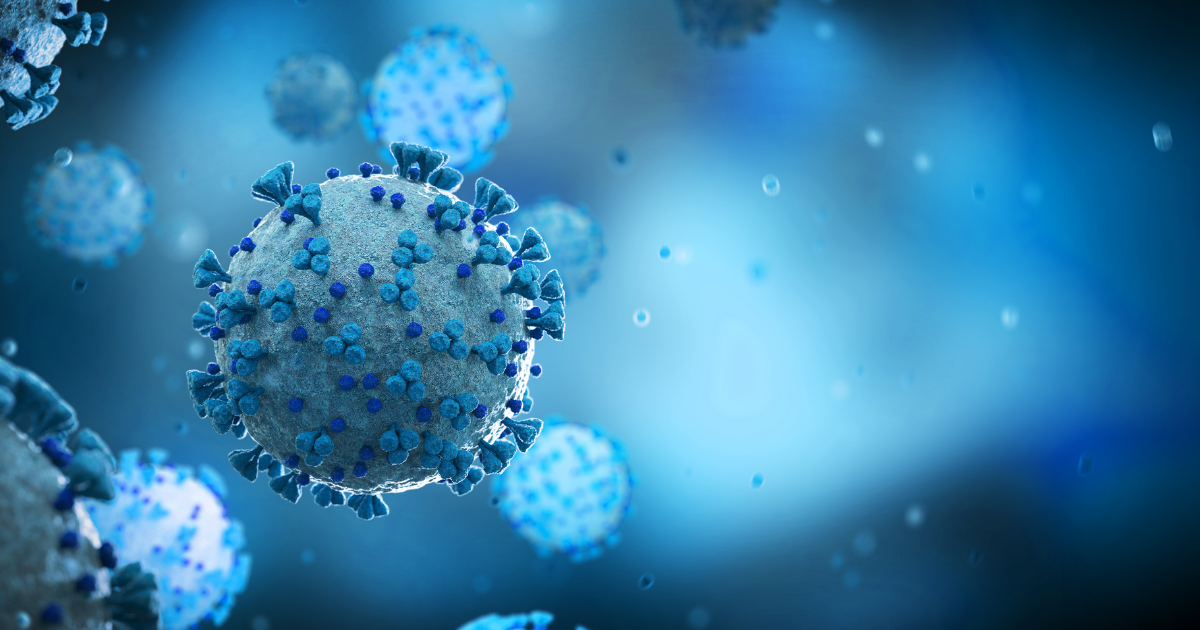
For the 2025-2026 season, the COVID-19 vaccine strategy has centered on the use of the Comirnaty vaccine, which targets the LP.8.1 lineage. First detected in Europe in 2024, LP.8.1 is one of the most recent Omicron-derived sublineages, evolving from the JN.1 branch, which has continued to maintain a sustained global expansion. Thus, the vaccine formulation against this lineage continues to be authorized by the U.S. Food and Drug Administration as the preferred option to reduce the risk of severe COVID-19 infections. (1)
However, LP.8.1 does not circulate in isolation. Global genomic surveillance and phylogenetic analyses from Nextstrain, an open-source project that tracks and analyzes pathogen genome data, demonstrate the ongoing co-circulation of multiple Omicron descendant sublineages with partial immune escape.
JN.1 and its extensive family of descendants remain among the most widely distributed globally, while related sublineages such as KP.2 and KP.3, also derived from JN.1, are associated with increased transmissibility. The existence of these lineages demonstrates that the continued evolution of SARS-CoV-2 requires the implementation of vaccines that are aligned with the most recent circulating lineages. (2)
Also, regional variability in lineage predominance highlights the importance of sustained genomic surveillance and, critically, of advancing vaccine sovereignty. This is particularly relevant for Latin America, where timely access to updated vaccines is essential to respond to new epidemic waves and mitigate the burden of post-COVID conditions.
Uneven vaccine access in Latin America
The LP.8.1-adapted vaccine has been authorized in the United States, Canada, the United Kingdom, Australia, Singapore and all 27 European Union member states. However, in Latin America, access to the most up-to-date formulations remains uneven. Mexico and Brazil currently have LP.8.1-based Comirnaty available. In contrast, several South American countries — including Chile, Argentina, Colombia, Peru, Ecuador and Brazil — continue to implement annual or semiannual strategies relying primarily on JN.1-based vaccines.
Other countries, such as Panama, have reported the availability of monovalent KP.2 vaccines, further illustrating persistent inequities in access to updated formulations across the region. (3)
During the acute phase of the pandemic, the COVAX initiative emerged as a global mechanism to promote equity and equality in access to COVID-19 vaccines. Co-led by Gavi, the Vaccine Alliance; the Coalition for Epidemic Preparedness Innovations; and the World Health Organization, COVAX aimed to accelerate vaccine development and ensure fair distribution, particularly for low- and middle-income countries. Its goal was to supply vaccines to at least 20% of participating populations worldwide.
By the time its operations concluded in December 2023, COVAX had delivered nearly 2 billion doses to 146 countries, which helped avert an estimated 2.7 million deaths in lower-income settings, and allowed for two-dose schedule coverage of 57% in low-income countries, closely matching the global average of 67%. (4,5)
Beyond COVAX, some countries pursued national vaccine platforms that provided greater autonomy.
In Latin America, Argentina and Cuba stand out as examples of vaccine sovereignty through local development and production. Cuba developed three vaccines (Abdalá, Soberana 02 and Soberana Plus), while Argentina advanced ARVAC (“ARVAC Cecilia Grierson”), a recombinant protein subunit vaccine named after the first Argentine woman to receive a medical degree from Buenos Aires University. ARVAC was developed entirely in Argentina by a consortium led by UNSAM and CONICET, with Juliana Cassataro, PhD, playing a central role. (6,7)
National and regional lessons
Important lessons also emerge from countries such as Colombia and Panama. In Colombia, the VaxThera vaccine plant near Medellín represents a strategic milestone for autonomous regional vaccine production. Designed as an integrated bioprocessing complex with a projected capacity of up to 100 million doses annually, it supports multiple platforms, including viral vectors, mRNA and recombinant proteins.
Panama, meanwhile, has developed a complementary knowledge-based model through Ciudad del Saber, a nonprofit innovation cluster hosting universities, biotechnology companies, NGOs and government entities. This environment supports research, clinical trials, startup incubation and technology transfer. The inauguration of the Regional Center for Innovation in Vaccines and Biopharmaceuticals (CRIP AIP) further strengthens Panama’s role as a regional hub. (8-13)
Strategic alliances reinforce this trajectory. CRIP AIP has signed a memorandum of understanding with Brazil’s Fundação Oswaldo Cruz, combining the manufacturing expertise of Bio-Manguinhos, recognized for WHO-prequalified vaccines, with Panama’s emerging infrastructure. This cooperation consolidates Panama as a new biotechnological node for Central America and the Caribbean.
Maintaining vaccine and health sovereignty
The broader lesson is clear: Latin America does not lack scientific capacity; it lacks stable industrial infrastructure and innovation ecosystems capable of sustaining it. Countries such as Brazil, through Instituto Butantan and Fiocruz, and Cuba and Argentina, through national platforms, illustrate what is possible. Others, including Mexico and Chile, have strong implementation and coverage capacities but remain dependent on imported vaccines. (14-16)
Vaccine and health sovereignty are therefore not luxuries but resilience strategies. Local production protects against external discontinuities driven by regulatory shifts, market dynamics or geopolitical constraints. It also enables adaptation to regional epidemiology and priorities. As Medellín and Panama demonstrate, sovereignty depends less on scientific talent, already abundant in the region, than on robust institutions, sustained investment and long-term strategic vision.
Achieving regional autonomy has gained a new significance in view of the progressive retreat of the United States from several multilateral and nongovernmental organizations. This shift in policy is justified by a desire to preserve American interests, defunding institutions that are not aligned with the current administration. It is not in the scope of this piece to justify or criticize these changes, but they could become an opportunity for Latin American countries to assume a role as leaders in the region, providing the necessary funding to support and expand these initiatives, some of which directly affect vaccine accessibility and production.
If Latin America is to be prepared for future pandemics and persistent emerging threats, these models should be treated not as exceptions but as foundations for an integrated regional policy.
References
- Food and Drug Administration. COVID-19 Vaccines (2025-2026 Formula) for Use in the United States Beginning in Fall 2025. Updated: May 22, 2025.
- Nextstrain. Nextstrain SARS-CoV-2: Emerging variants under monitoring. 2025.
- Centers for Disease Control and Prevention. Underlying Conditions and the Higher Risk for Severe COVID-19. Updated: February 6, 2025.
- Vaccines and Related Biological Products Advisory Committee. Meeting Presentation- 2025-2026 COVID-19 Vaccine Formula: Pfizer/BioNTech Supportive Data. Presented: May 22, 2025.
- World Health Organization. COVID-19 vaccinations shift to regular immunization as COVAX draws to a close. Dec. 19, 2023.
- Vacuna Abdala: eficaz contra la COVID-19 sintomática y las formas moderadas o graves de la enfermedad. Medscape. May 19, 2023.
- Perez Marc G, Coria LM, Ceballos A, et al. Immunogenicity and safety of monovalent and bivalent SARS-CoV-2 variant adapted RBD-based protein booster vaccines in adults previously immunized with different vaccine platforms: A phase II/III, randomized clinical trial. Vaccine. 2025;54:127045.
- Muñoz-Durango N, Hernández-Ortiz JP, Osorio JE. Vacunas, equidad y soberanía: ciencia desde Colombia para el mundo. Biomédica. 2025;45:169-72.
- Ciudad del Saber/SENACYT Panamá. El Crivb AIP y Fiocruz de Brasil firman memorando de entendimiento para impulsar la innovación en vacunas y biofármacos en la region. Sept. 17, 2025.
- VaxThera. Construction work has begun to build the VaxThera plant, which will produce vaccines and biologicals for Colombia and the region. Rionegro, Feb. 2, 2022.
- VaxThera. Inauguración de planta de envasado y terminado de vacunas en Colombia. May 15, 2024.
- Ciudad del Saber/SENACYT Panamá. El Crivb AIP y Fiocruz de Brasil firman memorando de entendimiento para impulsar la innovación en vacunas y biofármacos en la region. Sept. 17, 2025.
- Panamá inaugura centro regional para producir vacunas y biofármacos en Centroamérica y el Caribe. Consultorsalud. Sept. 15, 2025.
- López-Macías C, Torres M, Armenta-Copca B et al. Phase 2/3 study evaluating safety, immunogenicity, and noninferiority of single booster dose of AVX/COVID-12 vaccine. Sci Adv. 2025;11(26):eadq2887.
- Sun W, Liu Y, Amanat F, et al. A Newcastle disease virus expressing a stabilized spike protein of SARS-CoV-2 induces protective immune responses. Nat Commun. 2021;12(1):6197.
- Bernardeau-Serra L, Nguyen-Huynh A, Sponagel L, et al. The COVID-19 Vaccination Strategy in Brazil-A Case Study. Epidemiologia (Basel). 2021;2(3):338-359.
Source link