
A rare childhood disease with no approved treatment may have an unexpected new therapeutic candidate.
Sildenafil, the active ingredient also sold under the brand name Viagra, may help reduce symptoms in people with Leigh syndrome. Researchers report this finding in the journal Cell. The study was led by scientists at Charité – Universitätsmedizin Berlin in collaboration with teams from Heinrich Heine University Düsseldorf (HHU), University Hospital Düsseldorf (UKD), and the Fraunhofer Institute for Translational Medicine and Pharmacology ITMP in Hamburg.
Leigh syndrome is a rare metabolic disorder that begins in childhood and causes severe neurological and muscular problems. The disease has long been considered untreatable. In a pilot study involving six patients, sildenafil appeared to slow or improve aspects of the condition.
The disorder is congenital and affects both the brain and muscles because cells cannot properly produce energy. Symptoms often appear in infancy or early childhood and gradually worsen. Patients may develop epileptic seizures, muscle weakness, and paralysis. Cognitive development can also be affected. People with Leigh syndrome usually have a much shorter life expectancy, and there are currently no approved medications to treat the disease.
A genuine surprise: Potency drug proves effective
Researchers recently identified an unexpected drug candidate that produced promising results in an early study: sildenafil, a medication classified as a PDE-5 inhibitor. The drug is widely known as a treatment for erectile dysfunction in adults. Because it relaxes blood vessels, it is also used to treat pulmonary hypertension in infants.
In the study, six people with Leigh syndrome between the ages of 9 months and 38 years received continuous sildenafil treatment. Within a few months, the patients showed noticeable improvements in muscle strength. Some also experienced a reduction or disappearance of neurological symptoms.
Patients also recovered faster from metabolic crises. These episodes occur when energy metabolism becomes overwhelmed, which can rapidly worsen the disease.
“For example, in the case of a child undergoing sildenafil treatment, the walking distance increased tenfold, from 500 to 5,000 meters (about 0.31 to 3.1 miles),” as Prof. Markus Schuelke explains. “In another child, the therapy completely suppressed metabolic crises that occurred almost monthly, while another patient no longer suffered from epileptic seizures.”
Schuelke is a physician and scientist at Charité’s Department of Pediatric Neurology and one of the study’s lead authors.
“Such effects significantly improve the quality of life of Leigh syndrome patients. While we will have to confirm these initial observations in a more comprehensive study, we are very pleased to have found a promising drug candidate for the treatment of this serious hereditary disease.”
Why the search for therapies for rare diseases is difficult
Advances like this are not easy to achieve because Leigh syndrome is extremely rare. The condition affects about one in 36,000 children.
“The low case numbers make it difficult to research the disease and present some obstacles in our urgent search for effective therapies,” explains Markus Schuelke.
With so few patients, large clinical trials are difficult to conduct. Researchers must often collaborate across multiple medical centers around the world. Another limitation is that scientists cannot simply remove brain or nerve tissue from patients to investigate the disease.
To search for potential treatments, the research team used an innovative laboratory strategy.
First, they collected skin cells from patients and reprogrammed them into induced pluripotent stem cells in the lab. These cells can develop into many different cell types. The scientists then used them to produce nerve cells that showed the same metabolic defects found in Leigh syndrome.
Next, the team screened more than 5,500 compounds. These included drugs already approved for other diseases as well as substances with extensive safety and efficacy data. Each compound was tested to see whether it could improve the function of the lab grown nerve cells.
Positive effect on cells, in animal models, and in patients
“This is the largest drug screening for the treatment of Leigh syndrome to date,” emphasizes Dr. Ole Pless, lead author of the study from ITMP. “It showed that sildenafil, among other drugs, improved the electrical functionality of the nerve cells.”
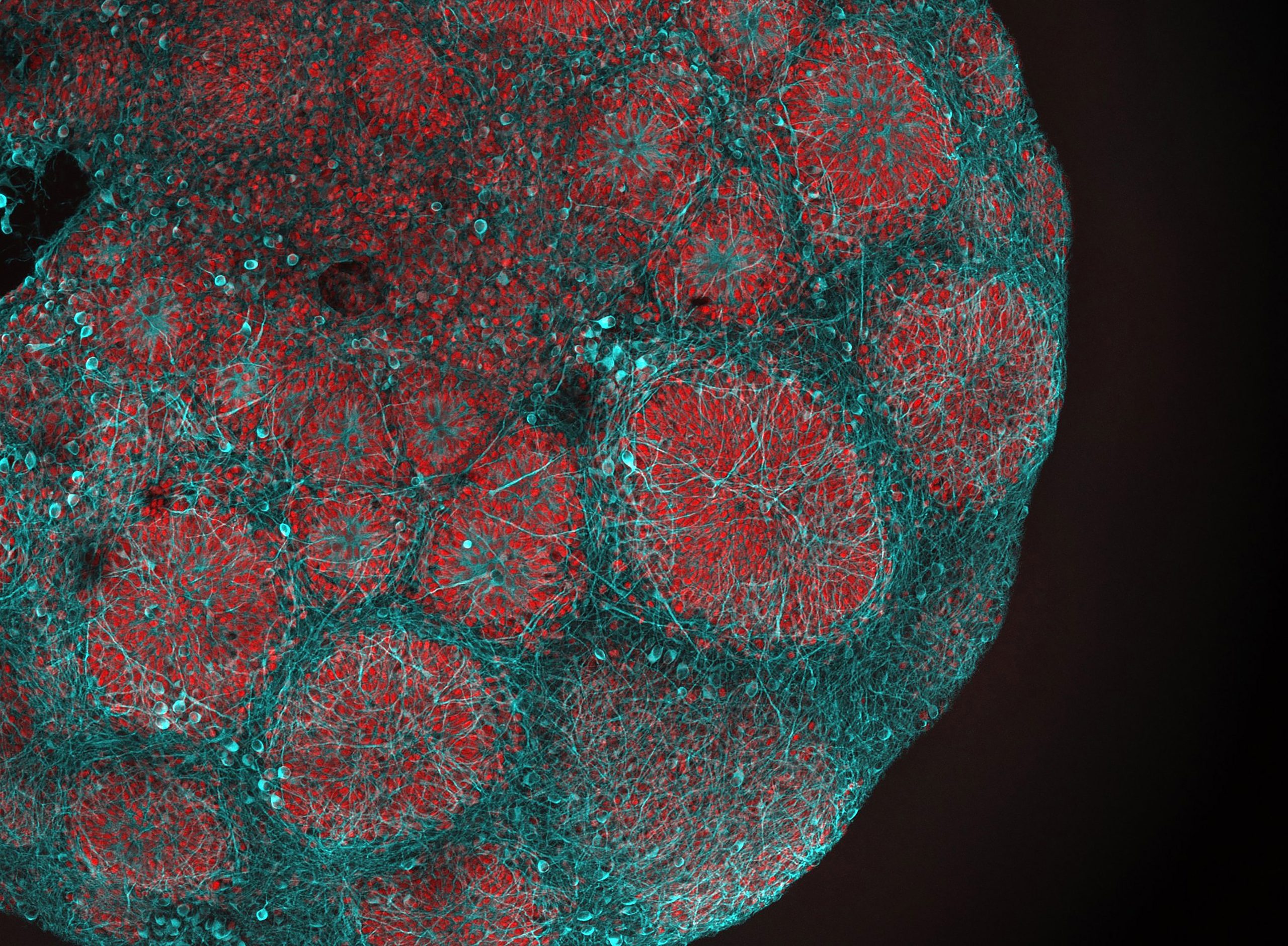
Further experiments confirmed these results. In three dimensional miniature brain models called organoids, sildenafil stimulated the growth of nerve cells. The drug also improved energy metabolism and extended life span in animal models.
“Based on these results, we decided to administer the drug as part of an individual therapeutic trial in six patients with Leigh syndrome,” as Prof. Alessandro Prigione, lead author from the Department of General Pediatrics, Neonatology, and Pediatric Cardiology at the UKD stated.
“Another decisive factor was the fact that detailed safety data was available for the long term use of sildenafil in children, as the active ingredient is already approved for other pediatric disorders.”
The first patient was treated at Charité. After encouraging results, additional patients received the therapy in Düsseldorf, Munich, and Bologna. Overall, the treatment was well tolerated.
Comprehensive clinical study planned
Following publication of the results, the European Medicines Agency (EMA) granted sildenafil orphan drug status (ODD), which is used for medications developed to treat rare diseases.
This designation allows a simplified approval pathway to help accelerate new treatments. To confirm the findings and potentially support approval of sildenafil for Leigh syndrome, researchers are planning a Europe wide placebo controlled clinical trial. The study will be conducted as part of the SIMPATHIC EU project.
Reference: “Pluripotent stem-cell-based screening uncovers sildenafil as a mitochondrial disease therapy” by Annika Zink, Dao-Fu Dai, Annika Wittich, Marie-Thérèse Henke, Giulia Pedrotti, Sonja Heiduschka, Guillem Santamaria, Tancredi Massimo Pentimalli, Christian Brueser, Sofia Notopoulou, Abdul Rahim Umar, Aleksandra Zhaivoron, Laura Petersilie, Caleb Jerred, Jesper Bergmans, Louis Anton Neu, Fabian Schumacher, Jan Keller-Findeisen, Agnieszka Rybak-Wolf, Daniel Stach, Jeanette Reinshagen, Undine Haferkamp, Kim Krieg, Andrea Zaliani, Liliya Euro, Alessia Di Donfrancesco, Chiara Santanatoglia, Enrica Cappellozza, Marta Suarez Cubero, Mario Pavez-Giani, Oleh Bakumenko, David Meierhofer, Alan Foley, Susanne Morales-Gonzalez, Isabella Tolle, Diran Herebian, Daniele Bonesso, Giulia Cecchetto, Sakurako Nagumo Wong, Monica Moresco, Alessandra Maresca, Ilaria Decimo, Francesco De Sanctis, Annalisa Adamo, Merel J.W. Adjobo-Hermans, Roberto Duchi, Maria Barandalla, Marco Scaglia, Andrea Perota, Cesare Galli, Burkhard Kleuser, Lukas Cyganek, Chris Mühlhausen, Lars Schlotawa, Valeria Tiranti, Ertan Mayatepek, Ildiko Szabo, Chiara La Morgia, Thomas Klopstock, Valerio Carelli, Felix Distelmaier, Andrea Rossi, Nikolaus Rajewsky, Ghanim Ullah, Stefan Jakobs, Christine R. Rose, Spyros Petrakis, Frank Edenhofer, Werner J.H. Koopman, Pawel Lisowski, Anu Suomalainen, Dario Brunetti, Antonio del Sol, Emanuela Bottani, Ole Pless, Markus Schuelke and Alessandro Prigione, 11 March 2026, Cell.
DOI: 10.1016/j.cell.2026.02.008
Never miss a breakthrough: Join the SciTechDaily newsletter.
Follow us on Google and Google News.
Source link
-

-

-

-

-


