

In the early 2000s, I visited the USS Connecticut in dry dock while she was getting repairs, completely out of the water, and the image is locked in my head forever: it was amazing. As of this writing in April 2026, the United States Navy has exactly one Seawolf-class attack submarine ready to go to war. And that submarine — USS Jimmy Carter — was not built to fight the way the other two were. As one former engineer for Electric Boat out in Groton told me years ago: “We made a mistake we can’t ever fix. We should have built more Seawolf-class submarines. We are paying the price and there is no going back.”
More on that in a second. Let’s circle back to the problem at hand.
USS Connecticut, the second hull of the class, has been sitting in dry dock at the Puget Sound Naval Shipyard for more than four years, slowly being put back together after slamming into an uncharted seamount in the South China Sea in October 2021. Navy officials say she will return to the fleet in late 2026. The lead ship of the class, USS Seawolf, seems to have just entered her own Extended Docking Selected Restricted Availability — a major maintenance period that will keep her sidelined until June 2029.
That leaves Jimmy Carter — a heavily modified spy boat with a 100-foot hull extension built for clandestine operations and special-mission work — as the only Seawolf available to the fleet right now. She is one of the most capable submarines on Earth. She is also the wrong tool for hunting other submarines in the western Pacific, which is exactly the mission the Seawolf-class was created to dominate.
This is what a strategic miscalculation looks like, three decades after it was made.
Seawolf-Class: The Cold War Submarine America Built to Hunt the Soviets Is Now Its Best Answer to China
The Seawolf was not designed to do many things. And there were supposed to be many of them.

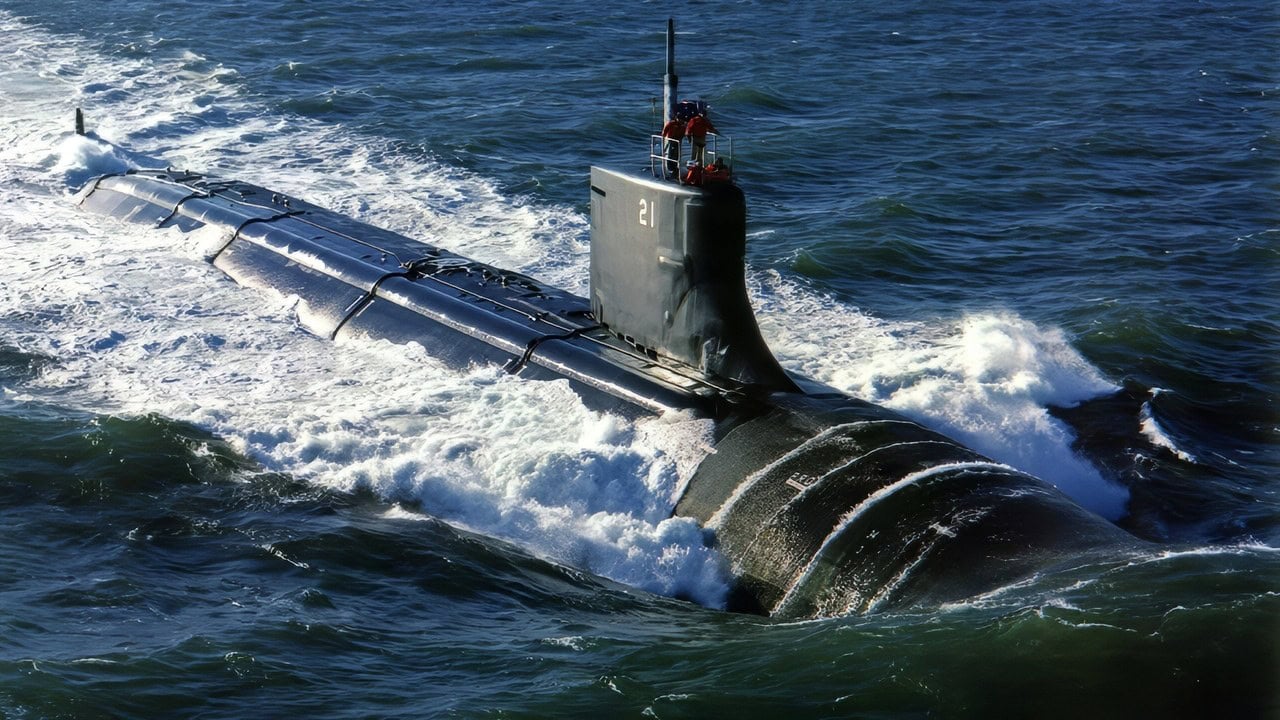
The nation’s newest and most advanced attack submarine Seawolf (SSN 21) puts to sea in the Narragansett Bay operating area for her first at-sea trial operations on July 3, 1996. Sea trials include various tests of the Seawolf propulsion systems and the first underway submergence of the submarine. The Seawolf represents the Navy’s most advanced quieting technology, weaponry, tactical capability and communications. Seawolf is scheduled to be delivered to the Navy and commissioned this fall. U.S. Navy photo courtesy of General Dynamics.
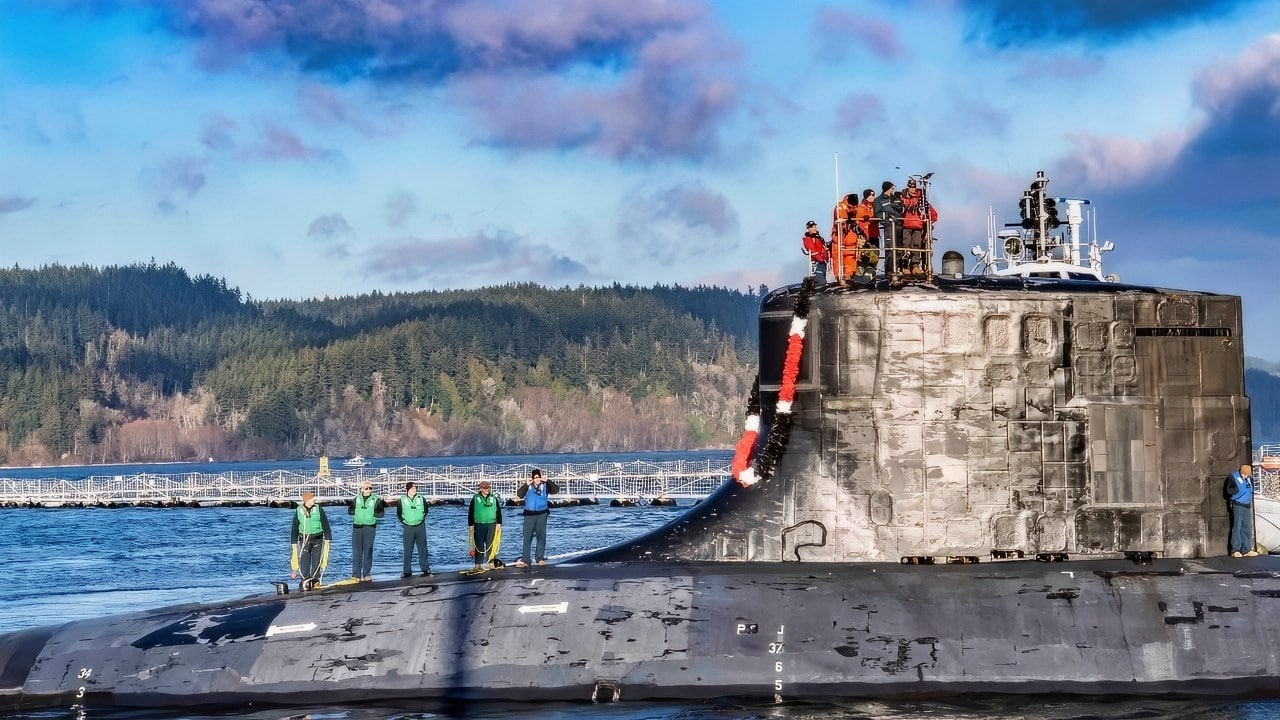
The Seawolf-class fast-attack submarine USS Seawolf (SSN 21) returns home to Naval Base Kitsap-Bangor, Washington, Dec. 14, 2022, following a seven-month deployment. Seawolf is the first of the Navy’s three Seawolf-class submarines, designed to be faster and quieter than its Los Angeles-class counterpart. (U.S. Navy photo by Mass Communication Specialist 2nd Class Gwendelyn L. Ohrazda)
She was designed to do one thing better than any submarine ever built: kill other submarines in deep water, very quietly, very fast, and survive whatever the other guy threw back at her. Everything about the boat — the steel of the hull, the size of the torpedo tubes, the architecture of the reactor plant — was driven by that single requirement.
And the requirement existed because, in the mid-1980s, the United States Navy faced a real emergency under the ice cap, and somewhere in the North Atlantic, the long American advantage in undersea warfare looked poised to disappear.
Why The Seawolf Was Built: The Soviets Got Quiet, And The West Panicked
For most of the Cold War, the U.S. submarine force lived inside a comfortable axiom: American boats heard Soviet boats first, and that asymmetry decided everything. A submarine that gets the first detection wins the engagement. Period.
Two things happened in the 1980s that broke the axiom.

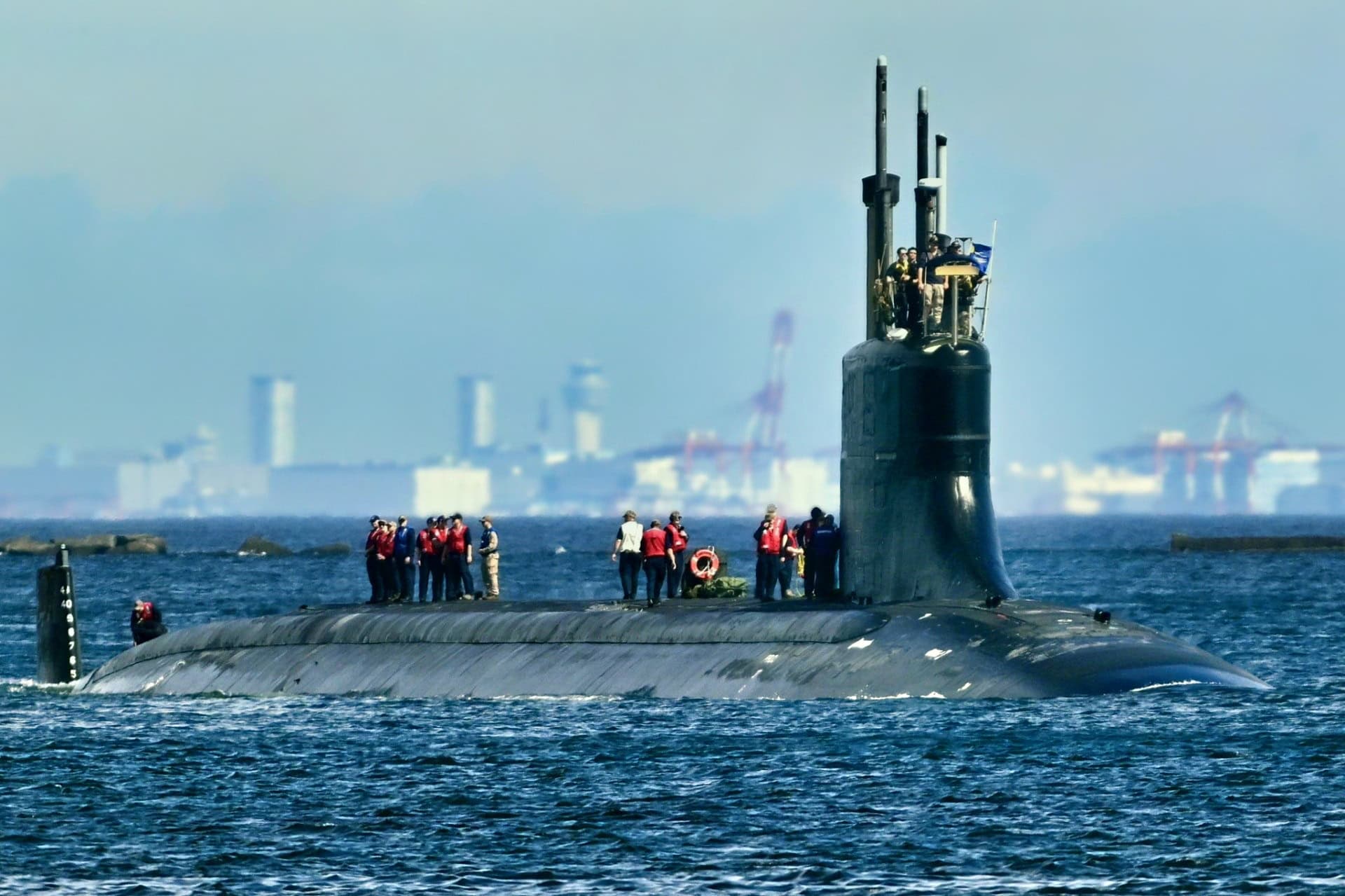
Seawolf-Class Submarine. Image Credit: Creative Commons.

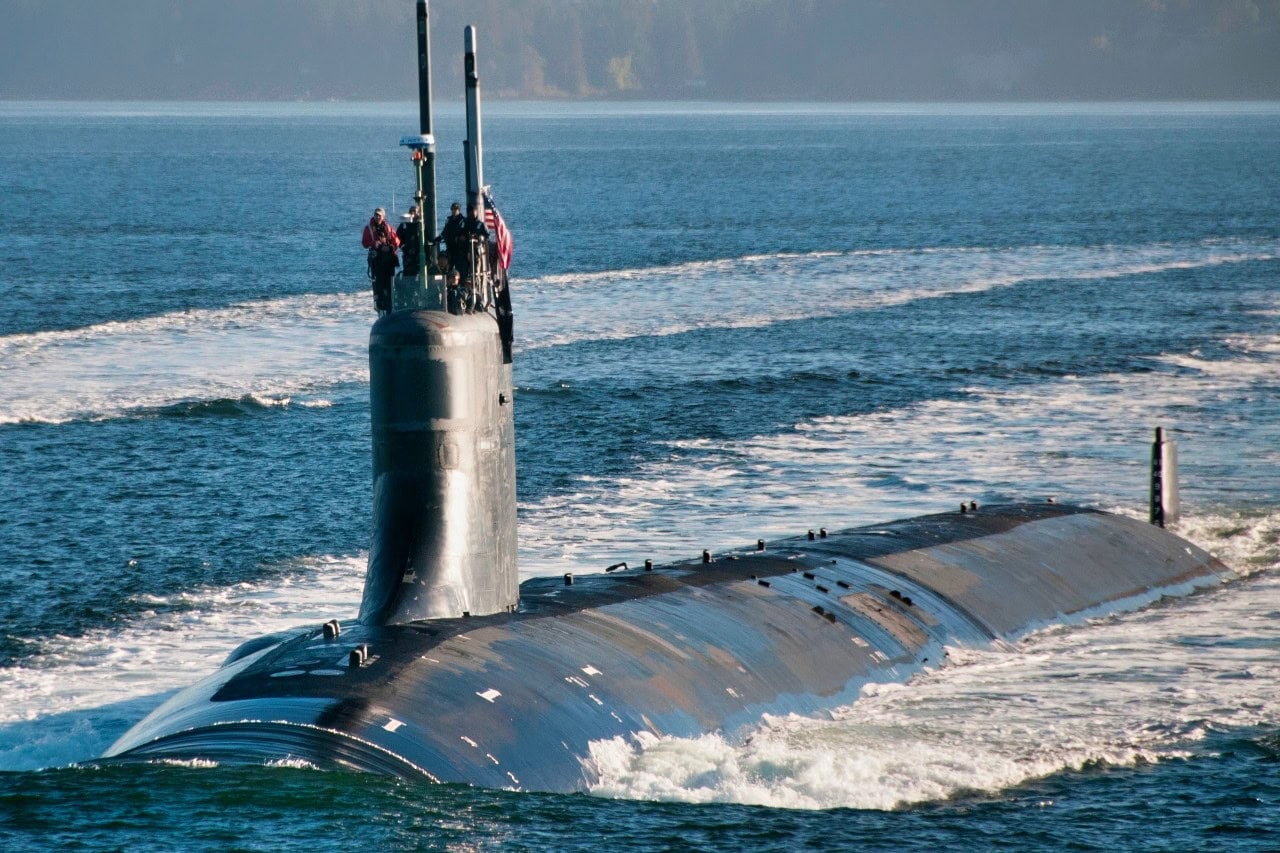
PUGET SOUND, Wash. (Sept. 11, 2017) The Seawolf-class fast-attack submarine USS Jimmy Carter (SSN 23) transits the Hood Canal as the boat returns home to Naval Base Kitsap-Bangor. Jimmy Carter is the last and most advanced of the Seawolf-class attack submarines, which are all homeported at Naval Base Kitsap. (U.S. Navy photo by Lt. Cmdr. Michael Smith/Released)
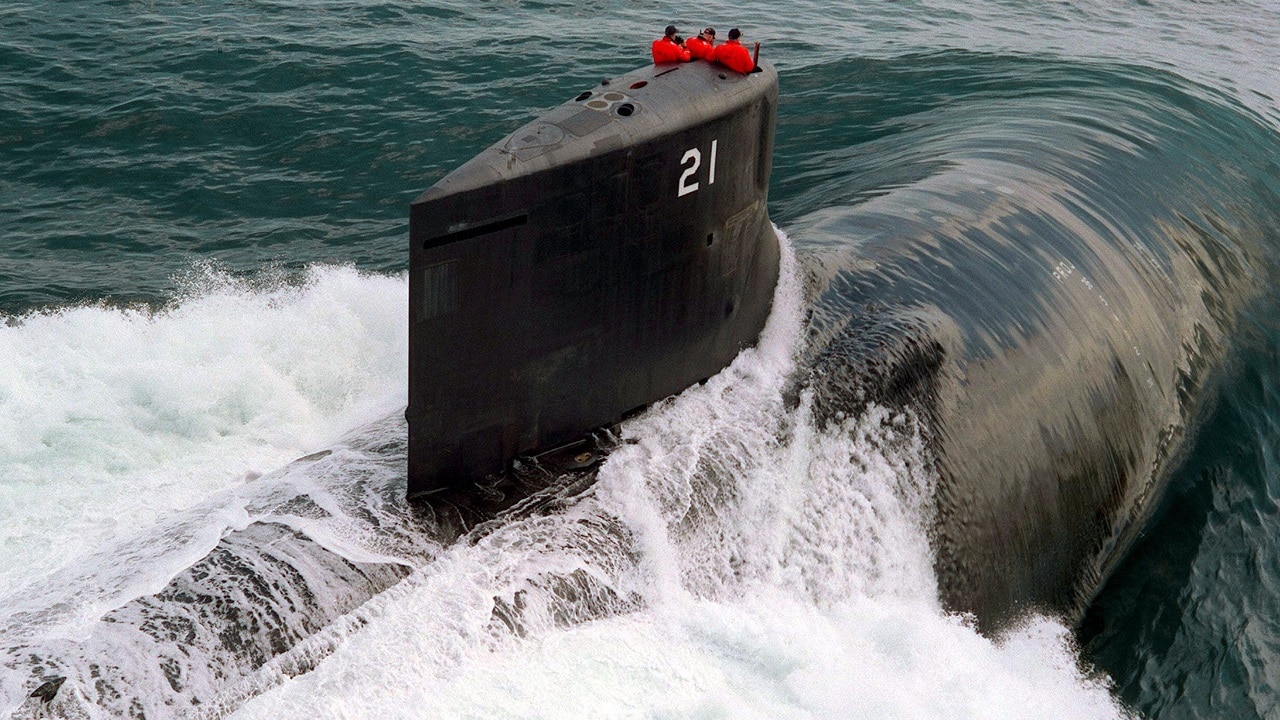
The U.S. Navy’s newest attack submarine, USS Seawolf (SSN 21), conducts Bravo sea trials off the coast of Connecticut in preparation for its scheduled commissioning in July 1997.
The first was the Walker spy ring — a Navy communications specialist who, with several family members, sold the Soviets the keys to American naval cryptography and, by extension, the technical principles behind how the United States kept its submarines so much quieter than theirs. The second was a 1981 transaction in which the Japanese firm Toshiba and Norway’s Kongsberg corporation sold the Soviet Union nine-axis milling equipment that enabled Moscow’s shipyards to machine, for the first time, vastly quieter submarine propellers. Together, those two intelligence and industrial breaches handed the Soviets the missing pieces of acoustic stealth.
The result arrived in the Akula-class, the first Soviet attack submarine quiet enough to operate undetected against American forces. Defense analyst Norman Polmar later said the launch of the first Akula in 1985 “shook everyone up” in Western intelligence — Western analysts had projected that the Soviets were a decade away from producing such a boat. Akulas began conducting unprecedented patrols deep into the Atlantic, operating undetected for extended periods near critical American ballistic missile submarine bases. The U.S. Navy’s frontline Los Angeles-class boats, which had carried the load since 1976, were suddenly facing a peer adversary in the deep ocean.
Parity in the silent service is not parity in the abstract. Parity means the other side gets a vote.
The Navy’s answer was a clean-sheet program designated SSN-21 — the first submarine of the 21st century, conceived in the 1980s for a fight that planners believed would arrive in the 1990s.
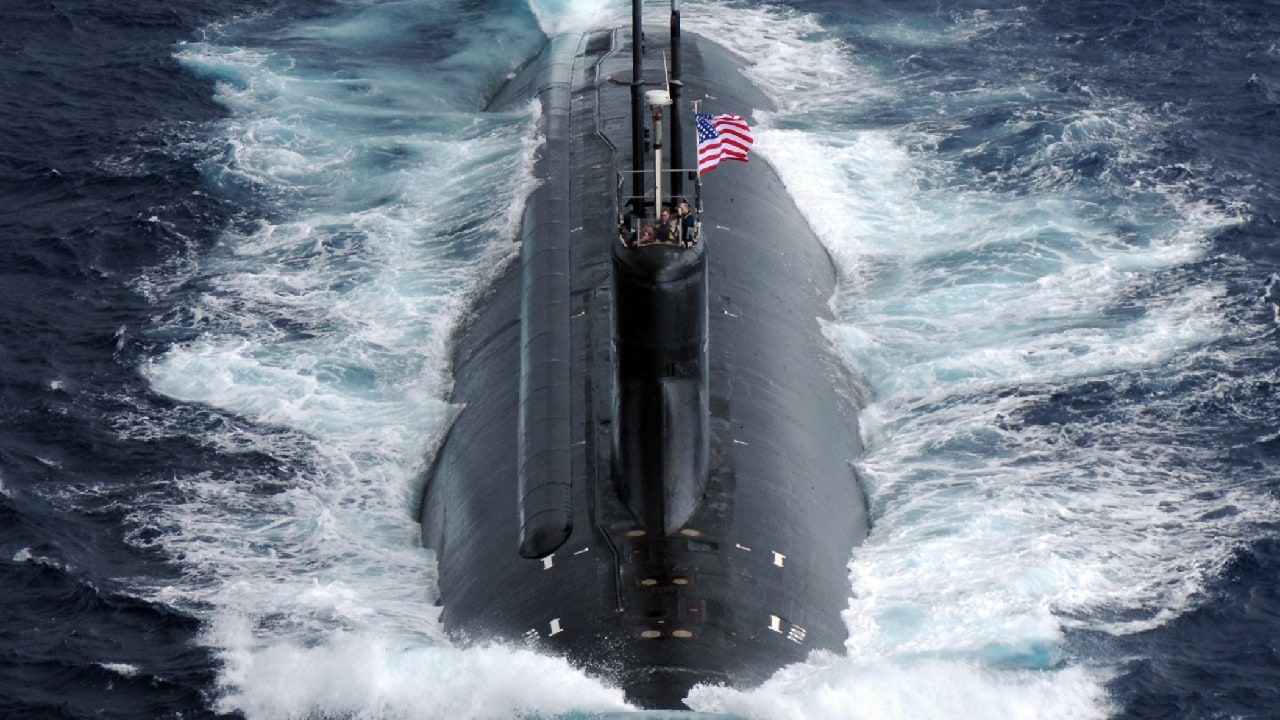
The Seawolf-class fast-attack submarine USS Connecticut transits the Pacific Ocean during Annual Exercise. ANNUALEX is a yearly bilateral exercise with the U.S. Navy and the Japan Maritime Self-Defense Force.
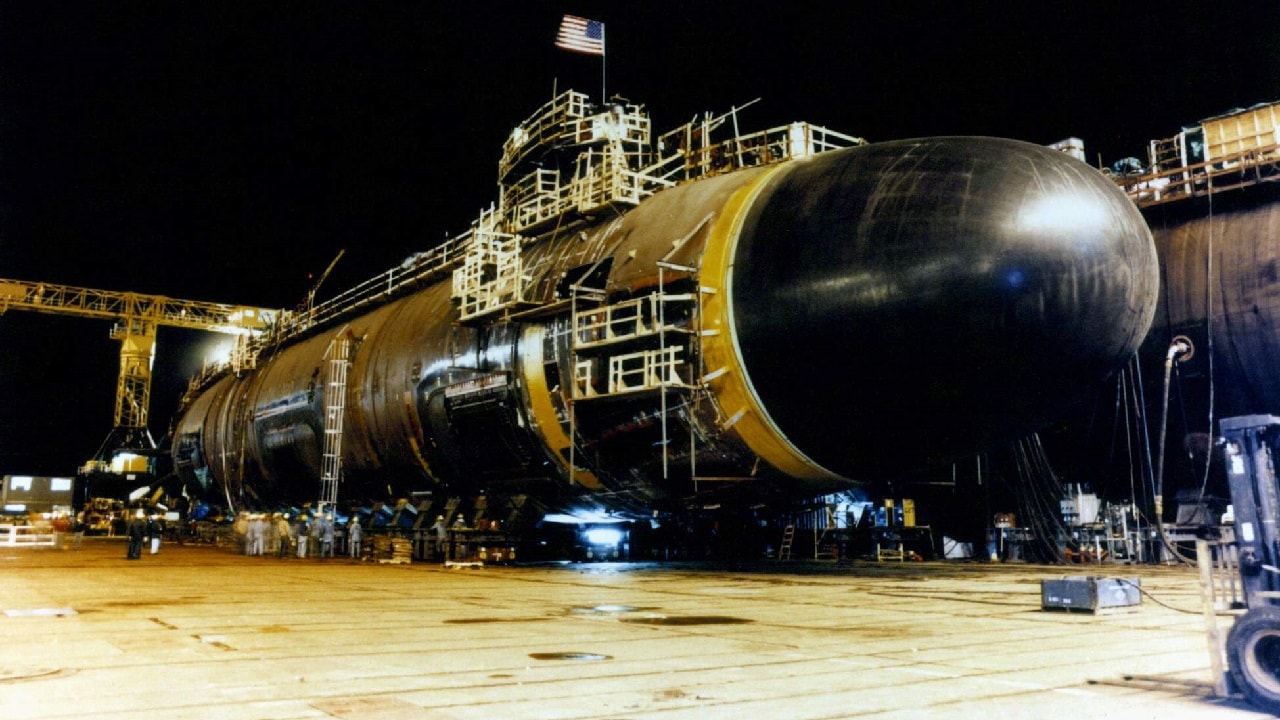
The first of a revolutionary new class of fast attack submarine, the Seawolf (SSN-21). Shown during construction at the Electric Boat Division of General Dynamics Corporation in Groton, Conn. She was christened by Margaret Dalton, wife of Secretary of the Navy John H. Dalton, on June 24, 1995.
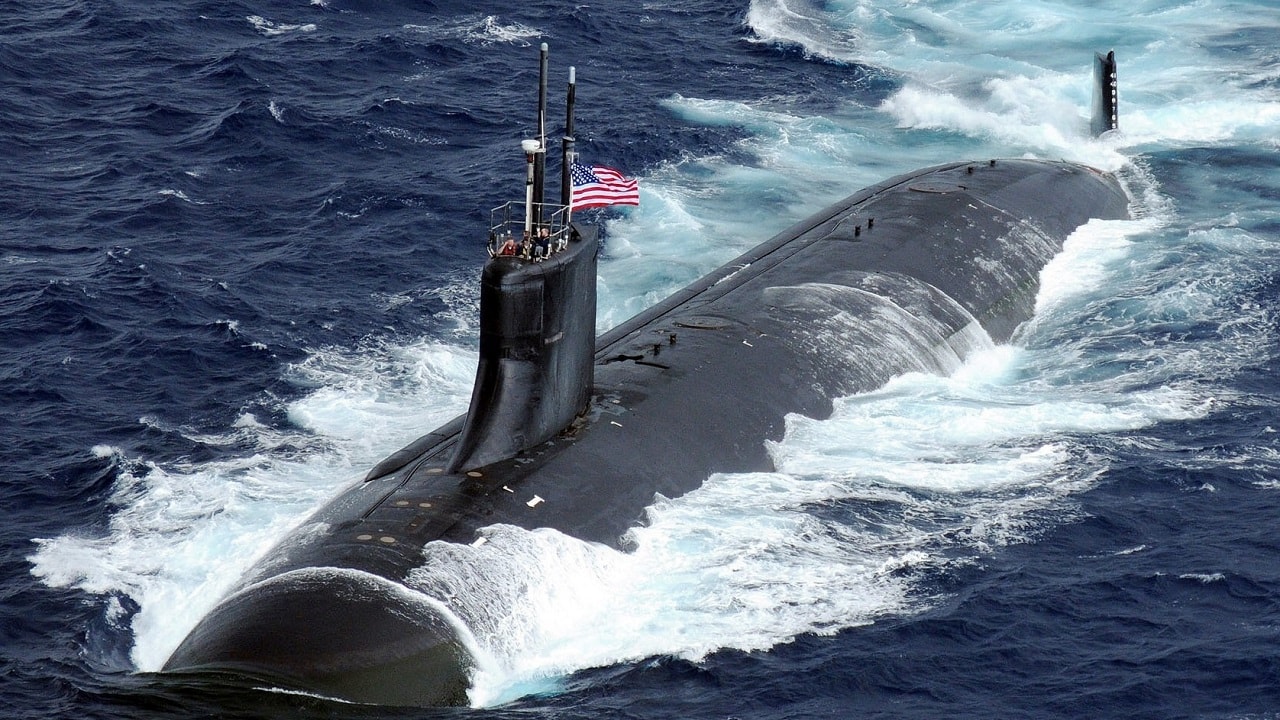
Seawolf-Class Submarine USS Seawolf. Image Credit: Creative Commons.
The boat had to be quieter than anything the Soviets could build. She had to be faster. She had to dive deeper. She had to carry more weapons than any attack submarine before her. And she had to do all of that in waters the Soviets considered home — under the polar ice, in the bastions where their ballistic missile submarines hid, hunting boats whose crews would be operating with every advantage of geography and familiarity.
What Made The Seawolf-Class An Apex Predator
The Navy did not get the boat it asked for cheaply. It got the boat it asked for completely. Several design choices set the Seawolf-class apart from every other submarine in the American fleet, and in many cases from every other submarine on earth:
HY-100 steel for the pressure hull. Where the Los Angeles-class used HY-80 alloy, the Seawolf was built from a high-yield steel roughly 20 percent stronger, with a hull two inches thick. That margin allowed the class to operate at depths around 2,000 feet, with crush depth estimates ranging from 2,400 to 3,000 feet. That margin is not academic. As USS Connecticut would prove in 2021, a Seawolf can hit a mountain at speed and live to tell the story.
The S6W reactor. General Electric’s pressurized-water reactor — rated at roughly 220 megawatts — gave the class enough power to push a 9,100-ton submerged displacement past 35 knots while still running quiet. That combination — high speed without acoustic penalty — was the engineering grail of late-Cold War submarine design.
Eight 26.5-inch torpedo tubes. Where the Los Angeles-class carried four standard 21-inch tubes, the Seawolf was built with eight oversize tubes capable of firing the full inventory of American undersea weapons — Mk 48 heavyweight torpedoes, Harpoon anti-ship missiles, Tomahawk land-attack cruise missiles — at twice the salvo rate of any previous attack boat. The internal magazine could hold up to 50 weapons. No U.S. attack submarine before or since has carried more.
Acoustic isolation taken to an extreme. Every major piece of machinery on the boat — the reactor plant, the pumps, the turbines, the auxiliary systems — sat on sound-isolating rafts engineered to absorb mechanical noise before it ever reached the hull. The Navy reportedly assessed that a Seawolf at 25 knots was quieter than a Los Angeles-class boat tied to a pier. That is not an incremental improvement. That is a generational leap.
Pump-jet propulsion. The class replaced the conventional propeller of earlier American attack boats with a shrouded pump-jet propulsor, further reducing cavitation noise at high speed and making the Seawolf even harder to detect in transit.
An advanced combat system. The class fielded the AN/BSY-2 combat system with a larger spherical sonar array, a wide aperture flank array, and a new towed-array sonar — an integrated suite designed to find quiet adversaries first in some of the most acoustically challenging waters on the planet.
The result was a submarine that, to date, at least according to many naval experts I have talked to over the years, has no peer in any navy. The Russian Yasen-class is impressive. The Chinese Type 093 and the newer Type 095 are improving. Neither is a Seawolf.
The Peace Dividend That Killed The Fleet
The original Navy plan called for 29 Seawolf-class submarines. The class would have replaced the Los Angeles-class fleet hull-for-hull and carried American undersea dominance well into the 21st century.
The Navy got three. Wow. Just wow. And not in a good way.
In January 1991 the program was first cut to twelve boats. A year later, with the Soviet Union dissolved and Congress hungry for a peace dividend, the George H.W. Bush administration tried to terminate the Seawolf program entirely after the lead ship. After a political fight, a compromise emerged: two boats already under contract — USS Seawolf and USS Connecticut — would be completed to the original design, and a third, USS Jimmy Carter, would be built with a 100-foot Multi-Mission Platform hull extension that turned her into a one-of-a-kind asset for special operations support, undersea cable work, and intelligence collection.
Three boats, and we have been paying for that call ever since. The total program ran roughly $7.3 billion, with the lead ship costing close to $3 billion in 1990s dollars and Jimmy Carter’s modifications adding another $887 million. At the time, those numbers looked indefensible. The Cold War was over. The threat was gone. Why pour money into the world’s most expensive attack submarines when there was no longer anyone left to hunt?
The answer to that question is being delivered, in real time, in 2026.
Why The Virginia-Class Cannot Fully Replace The Seawolf
The Virginia-class is an excellent submarine, I would know, I stood on the bridge of the USS North Carolina when she was being built at Electric Boat back in 2004, and she was amazing. American shipyards are also struggling to deliver Virginias on schedule, and the boats themselves were never designed to do what the Seawolf does.
The Virginia was conceived in the 1990s as a deliberate compromise — a more affordable, more producible attack submarine optimized for the post-Cold War mission set: littoral operations, intelligence collection, special operations support, land-attack strike. She carries twelve vertical launch tubes for Tomahawks and four standard 21-inch torpedo tubes.
And she keeps getting, that’s for sure. The newer Block V variants add the Virginia Payload Module, significantly increasing Tomahawk capacity. She is faster than a Los Angeles-class boat, quieter than one, and far cheaper than a Seawolf.
She is also slower than a Seawolf. Less heavily armed in a torpedo fight. Built around a pressure hull that does not dive as deeply. And she is a different boat philosophically — a workhorse engineered to do many things adequately rather than one thing without equal.
In a contested undersea fight against a peer adversary’s most advanced submarines, that distinction matters. Hunting a quiet Russian Yasen or a next-generation Chinese boat under the polar ice, or in the deep waters off Hainan, or in the basin of the western Pacific, where any Taiwan contingency would be decided — that is precisely what the Seawolf was built for. It is not what the Virginia was optimized to do.
The Navy’s planned next-generation attack submarine, the SSN(X), is supposed to recapture some of that high-end capability. Its production has now slipped to the early 2040s. That is roughly two decades from now, in a strategic environment that is unlikely to wait.
The China Problem: The Seawolf Was Born To Solve, Accidently
China’s submarine force is not yet as quiet as the American fleet. It is, however, growing faster than the American fleet and closing the acoustic gap with each new class.
Beijing is building Type 093B nuclear-powered attack submarines and the larger Type 095 design at a pace American shipyards cannot match for the Virginia-class. The People’s Liberation Army Navy already operates more submarines, by raw count, than the United States deploys to the Pacific — and quantity has its own quality when contested choke points have to be held under continuous threat.
A Taiwan contingency would turn this submarine arithmetic into a tactical problem. The U.S. Navy’s first task in any serious Pacific war would be to win the undersea fight — to break the anti-access/area-denial bubble China has built around the first island chain by hunting and sinking the submarines defending it. That is exactly what the Seawolf was designed to do, against a quieter adversary, in waters the other side knows better than we do.
But the math is brutal, and it keeps getting worse. With USS Connecticut still in repair, USS Seawolf newly entered into a multi-year maintenance availability, and USS Jimmy Carter optimized for missions that have nothing to do with sinking Chinese submarines, the Pacific Fleet has to ask the same question every day: how do you fight a war you trained the Seawolf-class to win in some respects, with the Seawolf-class largely unavailable?
Three Boats, And The Lesson The Pentagon Keeps Almost Learning
The decision to truncate the Seawolf-class was rational at the time. At least that’s what many keep telling us. Most strategic decisions that turn out to be disasters were rational at the time. The peace dividend was real, the Soviet Union was dead, and a fleet of $3 billion submarines optimized for a fight that no longer existed looked like a self-evident waste.
But history had other ideas.
The Seawolf-class is older than the Virginia-class. By every metric of when the boats were laid down, when they commissioned, when they first sailed, the Seawolf is the older fleet. She is also, on every measure that matters in a fight against a peer competitor, the more capable fleet. Older does not mean obsolete. Newer does not mean superior. The Navy traded a deep magazine of high-end hunter-killers for a wider but shallower fleet of more affordable jacks-of-all-trades, and now finds itself short of the one tool the strategic environment is demanding most.
The Pentagon’s own roadmap acknowledges the gap. The SSN(X) program is, in essence, an attempt to build a 21st-century Seawolf — quiet, deep, heavily armed, and survivable against a peer. That program is now scheduled to begin production in the 2040s, but keep slipping. The Chinese submarine force will not be waiting.
In the meantime, three submarines that should have been twenty-nine carry the entire weight of America’s high-end undersea hunting capability. Two of them are in the yards. One of them is doing a different job.
That is the cost of strategic shortsightedness, paid in the currency the Pentagon understands least: time it cannot get back.
About the Author: Harry J. Kazianis
Harry J. Kazianis (@Grecianformula) was the former Senior Director of National Security Affairs at the Center for the National Interest (CFTNI), a foreign policy think tank founded by Richard Nixon based in Washington, DC. Harry has over a decade of experience in think tanks and national security publishing. His ideas have been published in the NY Times, The Washington Post, The Wall Street Journal, CNN, and many other outlets worldwide. He has held positions at CSIS, the Heritage Foundation, the University of Nottingham, and several other institutions related to national security research and studies. He is the former Executive Editor of the National Interest and the Diplomat. He holds a Master’s degree focusing on international affairs from Harvard University. Kazianis is Editor-In-Chief of 19FortyFive.
Source link
-

-

-

-

-


