

We need to stop calling Ukrainians resilient
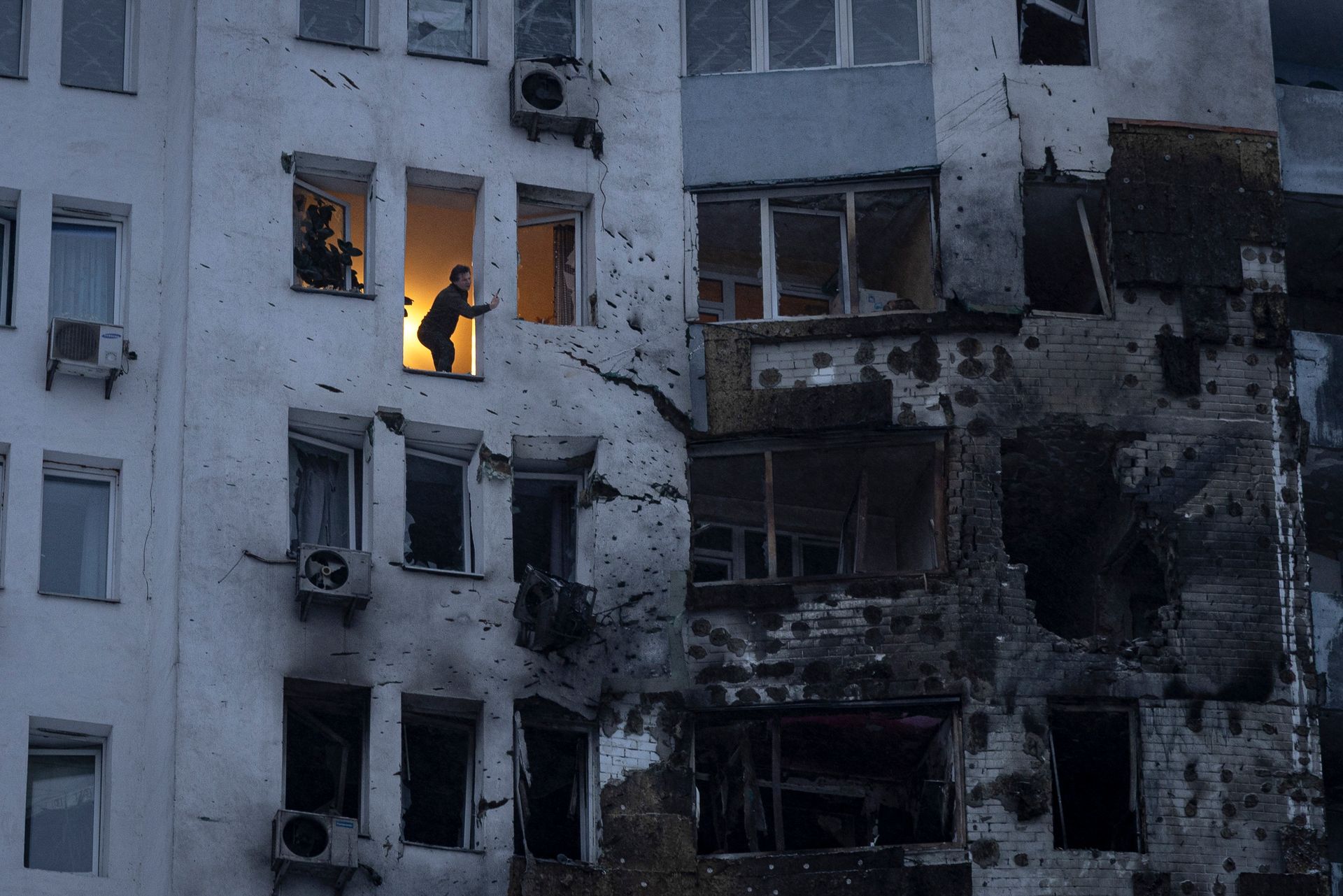
A man looks at the aftermath of a Russian attack on a residential apartment building from his window in Kyiv, Ukraine, on Jan. 9, 2026. (Danylo Dubchak / Frontliner / Getty Images)
Elsa Court
Audience development manager at the Kyiv Independent
Take a moment to imagine this: In the depths of the coldest winter in years, a neighboring country decides to destroy your country’s infrastructure. Why? Your neighbor wants your land, but it’s struggling to win on the battlefield.
Your neighbor has spent years trying to grind you down to surrender. Every now and then, it strikes an apartment block, a railway line, or a children’s hospital. Now, it focuses on destroying what modern life depends on — and suddenly, electricity, internet, heating, light, and hot water become luxuries for you and millions of others living in your city.
At night, you listen to explosions as your neighbor sends waves of weapons to destroy what little is left of the decimated power network.
Ambulances race to save anyone in the wrong place at the wrong time. In the morning, you get ready for the day in the cold, without being able to shower or flush your toilet, and hope that there’s enough electricity in the grid to power public transport to get to work. Older people and those with disabilities can’t leave their apartments without functioning elevators.
Stretched to the limit, repair workers start dying on the job as they work around the clock to restore heat and electricity in freezing conditions.
Now, imagine this: When people abroad start to notice what your neighbour is doing to you, they praise you for coping so well under these conditions.
“You people are so resilient,” they say, after seeing footage of your city plunged into darkness. They praise the fact that you still go to work, still spend time with your friends and family, that life, in some form, continues.

After Russia took out most of Kyiv’s critical power infrastructure in January and temperatures dipped toward -20 degrees Celsius (-4 degrees Fahrenheit), most shops remained open. Even without power, cafe and restaurant owners fire up diesel generators to keep espresso machines and kitchens running. Doctors keep operating, sometimes in semi-darkness, and city workers keep collecting the trash.
Yet it feels like looking at this situation and praising how “resilient” Ukrainians are is like viewing a humanitarian crisis through rose-tinted glasses.
As we approach the fifth year of Russia’s all-out war — which has claimed hundreds of thousands of lives, displaced millions, and left psychological and physical scars on countless more — it’s hard not to feel tired when those outside of Ukraine choose to highlight resilience.
It’s worth saying that the study of resilience is important to understanding how communities, economies, and individuals cope with stress. Ukrainian society is indeed, on the whole, incredibly resilient, and many Ukrainians would describe themselves as resilient. And at the start of Russia’s full-scale invasion, I was one of many people who would often praise Ukrainians for this trait.
The resilience narrative was also echoed by Ukraine’s government — after all, to be resilient means to be able to withstand and recover quickly from misfortune. Resilient nations are successful nations, and successful nations win. If Ukrainians are resilient, then Russia losing its war of aggression is the only possible outcome.
Now, however, I’m questioning whether it’s really appropriate for us to keep saying this. And as a foreigner living in Kyiv, I feel I need to say something uncomfortable. We need to stop repeating the narrative that Ukraine is resilient.


Ukrainians shouldn’t have to be resilient. If Ukraine’s partners were to give the kind of support Kyiv continually begged for, civilians would not have to be suffering.
Praising their resilience is like standing on the shore, watching a person struggle not to drown in a riptide. Instead of sending a lifeboat to save them, you praise them for being such a strong swimmer. If you decide a nation is resilient, you shrink your obligation to take any action to help them.
Resilient people always figure it out on their own, right?
The continued repetition of a resilience narrative is also damaging because it slowly softens outsiders’ comprehension of what war is over time. Foreign audiences don’t want to think about the ever-deteriorating conditions civilians are forced to live in — they want to read about how bars stay open during a blackout, or focus on the ways in which Russia could be losing.
It’s uncomfortable to think about how the trauma of Russia’s war in Ukraine is affecting real people, every day, and how it will seep down through generations. It’s far more digestible to view the war through the lens of resilience because it transforms a nation’s suffering into a positive, hopeful, character-forming experience.
We love a story where a hero finds strength amid immense adversity, because in our culture, we’re taught that the character who chooses to be resilient always wins, no matter the odds.
Resilience is, at its core, a positive character trait when you have a choice in how to act. When we talk about Ukraine’s resilience, we omit what Ukrainians know very well — that Russia isn’t going to stop its war until Ukrainian independence is crushed. Ukrainians have no choice but to continue and resist Russia’s demands.
“Resilience” has become a sort of inside joke among my friends in Kyiv. Forced to traverse a stream of sewage after your building’s pipes explode from the cold? “We’re so resilient,” we joke.
One colleague has set up a tent on her bed to stay warm at night after her heating stopped working. Another told me she had bought a battery-powered clock for her apartment, so she could at least know the time when all of her devices ran out of power. Good for their resilience?
I have friends in Kyiv who wake up in cold, dark apartments, see videos of their hometowns being pummeled by Russian bombs overnight, and then get up and go to work — because there is simply no alternative. They simply have no other choice.
Editor’s note: The opinions expressed in the op-ed section are those of the authors and do not purport to reflect the views of the Kyiv Independent.
read also
As Kyiv’s social services strain to meet needs this winter, volunteers step in
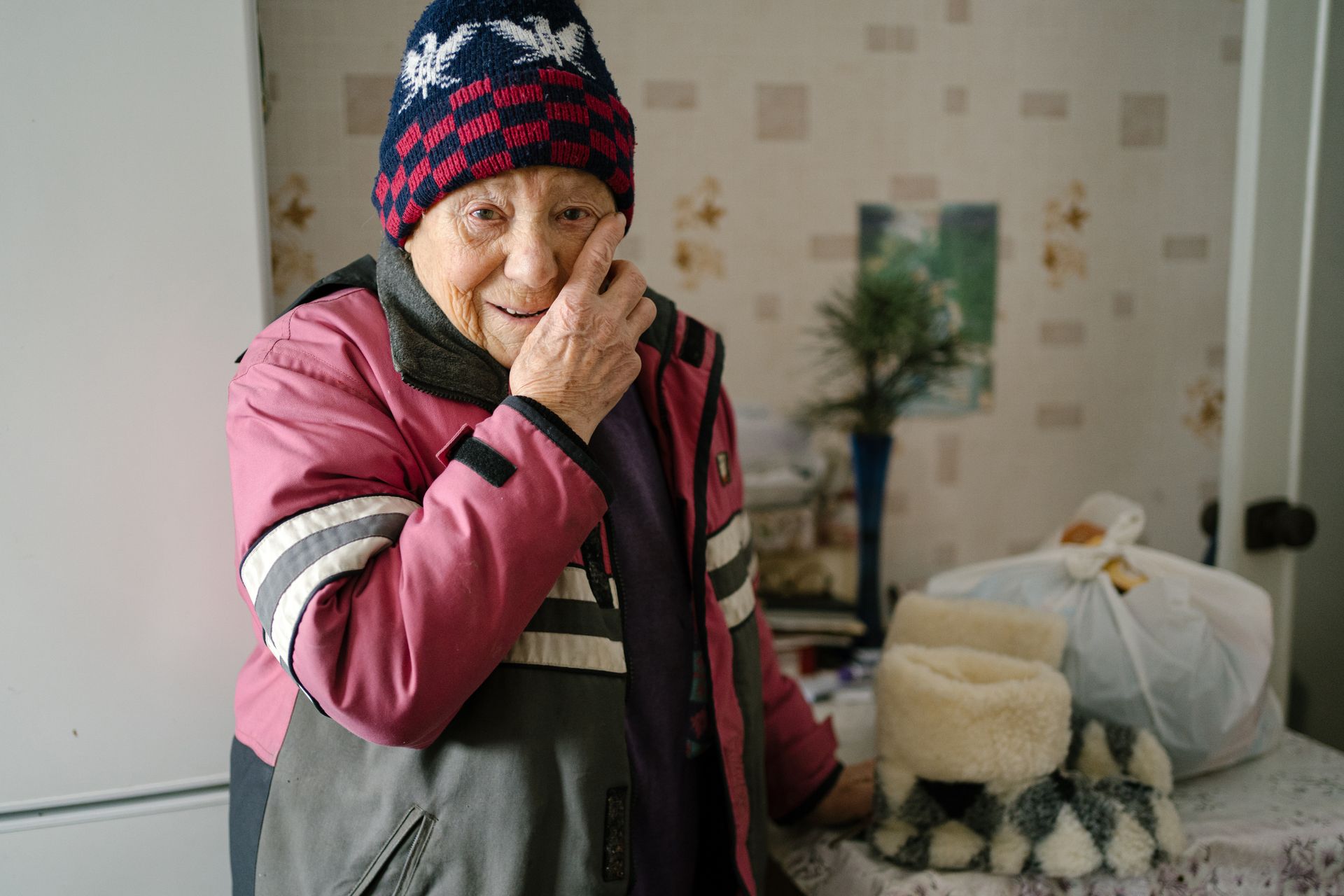
Valentyna Popova, an 85-year-old retired mathematician, lives in an apartment block on Kyiv’s east bank that is only minutes away from a city-installed “Invincibility Point,” an emergency winter heating hub offering warmth, a place to charge devices, and sometimes tea or hot meals. She, however, is unable to reach the hub. While her flat is on the ground floor, mobility issues keep her inside, forcing her to rely entirely on volunteers stepping in to support residents that fell through the crac
The hidden health impact of Russia’s attacks on Ukraine’s energy grid
As Russian strikes continue to cut off heating and electricity across Ukraine, a Kyiv doctor says she is seeing health effects accumulate in her clinic. Since late December, Russia has carried out multiple waves of strikes targeting Ukraine’s power generation and heating infrastructure. In Kyiv, those attacks have repeatedly disrupted heating across large parts of the city. On Jan. 9, a major attack left roughly 6,000 residential buildings without heat. Further strikes on Jan. 20 and Jan. 24 a
As Russians and Belarusians compete at Olympics, Ukraine pushed to the margins
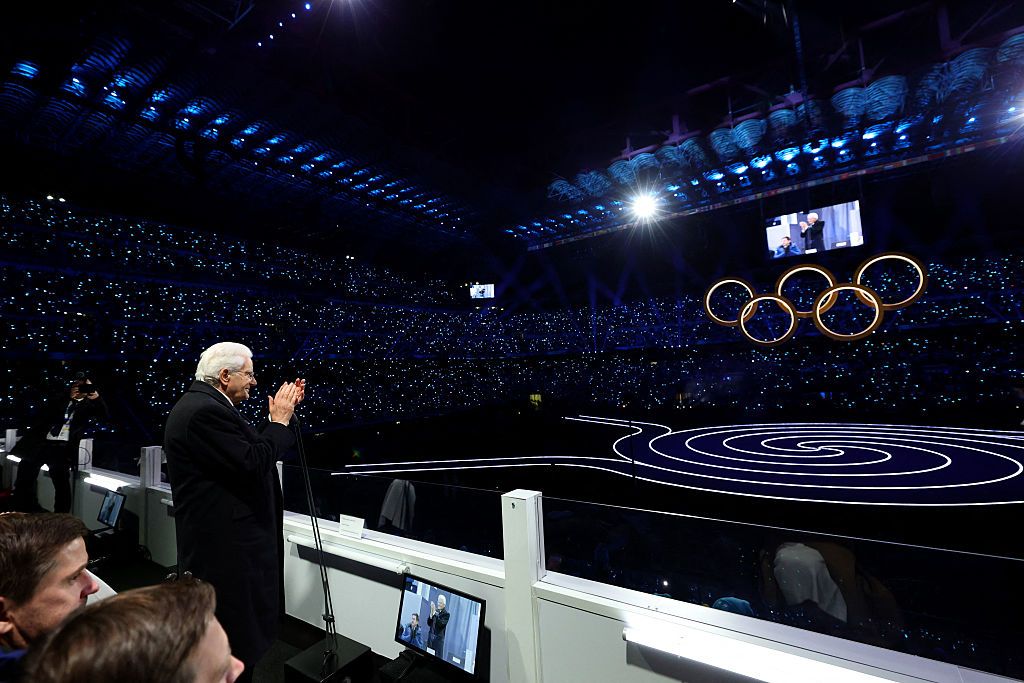
One of the most talked-about moments at the Olympics came from Ukrainian skeleton racer Vladyslav Heraskevych. After his race in Beijing in 2022, just days before Russia launched its full-scale invasion, he held up a sign reading “No war in Ukraine.” But his appeal went largely unheard. Four years later, Heraskevych is preparing to represent Ukraine at the Olympic Games again — at a time when the war continues to escalate, while restrictions on athletes from Russia and Belarus are gradually be
Source link
