
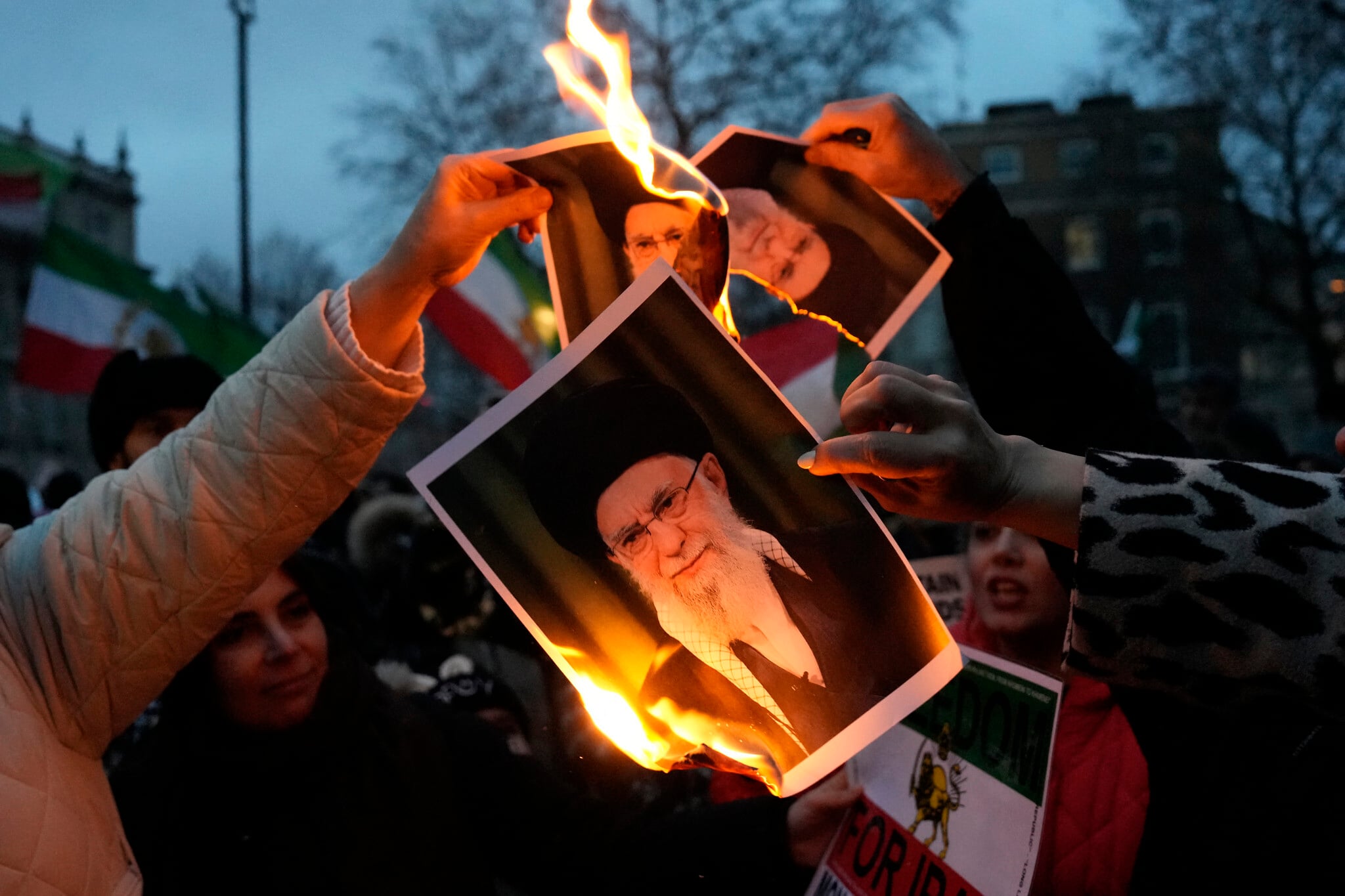
Reuters —Despite Iran’s nationwide protests and years of external pressure, there are as yet no clear signs of fracture in the Islamic Republic’s security elite that could bring an end to one of the world’s most resilient governments.
Adding to the stress on Iran’s clerical rulers, US President Donald Trump has repeatedly threatened military action over Tehran’s severe crackdown on the protests, which follow an air war between Israel and Iran last June in which the IDF, joined by US bombers, struck Iran’s nuclear facilities and key officials.
Responding to Reuters, a White House official said “all options” were at Trump’s disposal to address the situation in Iran.
But unless the street unrest and foreign pressure can prompt defections at the top, the establishment, though weakened, will likely hold, two diplomats, two government sources in the Middle East and two analysts told Reuters.
Around 2,000 people have been killed in the protests, an Iranian official told Reuters, blaming people he called terrorists for the deaths of civilians and security personnel. Human rights groups had previously tallied around 600 deaths. Some estimates of the death toll have been far higher.
Iran’s layered security architecture, anchored by the Revolutionary Guards and Basij paramilitary force, which together number close to one million people, makes external coercion without internal rupture exceedingly difficult, said Vali Nasr, an Iranian-American academic and expert on regional conflicts and US foreign policy.
“For this sort of thing to succeed, you have to have crowds in the streets for a much longer period of time. And you have to have a breakup of the state. Some segments of the state, and particularly the security forces, have to defect,” he said.
Iran’s foreign ministry declined to comment.
The country’s supreme leader, Ayatollah Ali Khamenei, 86, has survived several past waves of unrest. This is the fifth major uprising since 2009, evidence of resilience and cohesion even as the government confronts a deep, unresolved internal crisis, said Paul Salem of the Middle East Institute.
For that to change, protesters would have to generate enough momentum to overcome the state’s entrenched advantages: powerful institutions, a sizeable constituency loyal to the clerical rule, and the geographic and demographic scale of a country of 90 million people, said Alan Eyre, a former US diplomat and Iran expert.
Survival, however, does not equal stability, the analysts said. The Islamic Republic is facing one of its gravest challenges since the 1979 Islamic Revolution. Sanctions have strangled the economy with no clear path to recovery. Strategically, it is under pressure from Israel and the United States, its nuclear program degraded, its regional “Axis of Resistance” proxies weakened by crippling losses to terror groups and other allies in Lebanon, Syria and Gaza.
For this sort of thing to succeed, you have to have crowds in the streets for a much longer period of time. And you have to have a breakup of the state. Some segments of the state, and particularly the security forces, have to defect.
Nasr said that while he didn’t think the Islamic Republic had reached the “moment of fall,” it was “now in a situation of great difficulty going forward.”
The protests began on December 28 in response to soaring prices, before turning squarely against clerical rule. Politically, the violent crackdown has further eroded what remained of the Islamic Republic’s legitimacy.
What sets this moment apart, and raises the stakes, analysts say, is Trump’s explicit warnings that the killing of demonstrators could trigger an American intervention.
On Tuesday, Trump urged protesters to take over institutions and said “help is on its way,” while saying he was cancelling meetings with Iranian officials. Earlier, he threatened tariffs on countries that trade with Iran. China is Tehran’s top trade partner.

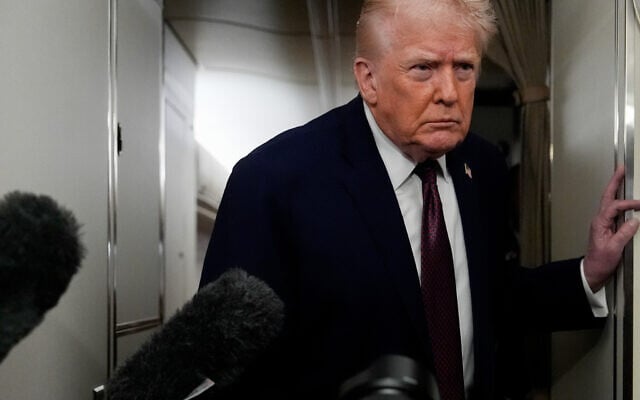
In a phone call on Saturday, Prime Minister Benjamin Netanyahu and US Secretary of State Marco Rubio discussed the possibility of US intervention in Iran, according to an Israeli source present for the conversation.
Trump’s interest in the protests, the analysts said, is likely tactical rather than ideological, Salem said. The aim could be pliability — weakening the state enough to extract concessions such as curbs on Tehran’s nuclear program, he said.
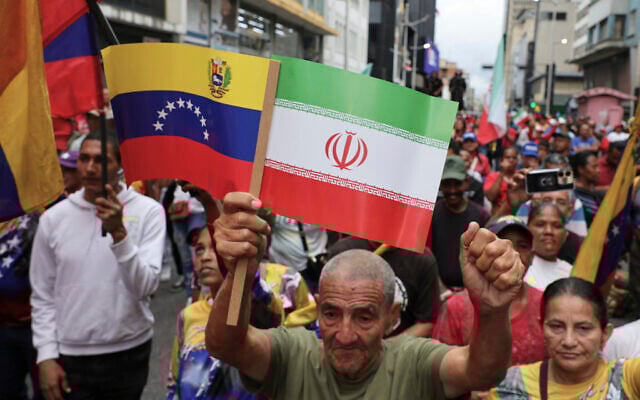
The White House did not respond to a request for comment about Trump’s goals in Iran. The White House official said Trump had demonstrated with military operations in Iran and Venezuela last year and this month “that he means what he says.”
The idea of a “Venezuela model” has growing appeal in some circles in Washington and Jerusalem, a diplomat and three of the analysts said. It envisions the removal of Iran’s top authority while signaling to the remaining state apparatus: stay in place, provided they cooperate, they said.
Applied to Iran, however, it collides with formidable obstacles — a security state entrenched for decades, deep institutional cohesion and a much larger and ethnically complex country.
Two regional officials and two of the analysts told Reuters that foreign military action could fracture Iran along ethnic and sectarian lines, particularly in Kurdish and Sunni Baloch regions with histories of resistance.
For now, constraints remain. US military assets are stretched elsewhere, though the diplomats said that deployments could shift quickly.
David Makovsky at The Washington Institute for Near East Policy, a think tank, said that if Trump acts, he expects a swift, high-impact action rather than a prolonged campaign – consistent with the president’s preference in recent conflicts for a single decisive action rather than deploying ground troops.
“He looks for this one gesture that might be a game changer, but what is it?” said Makovsky.
Options range from maritime pressure on Iranian oil shipments to targeted military or cyber strikes, all carrying serious risks.
Some measures, all the sources said, could stop short of force, such as restoring internet access via Starlink to help protesters communicate. Some telecommunications access came back on Tuesday.
The White House and State Department did not respond to Reuters’ questions about what action, if any, Trump might take.
“Trump sometimes uses threats to delay decisions, sometimes to deter adversaries, and sometimes to signal he is actually preparing to intervene,” said Makovsky. “We just don’t know yet which applies here.”
Times of Israel staff contributed to this report.
-

-
-

-

-


