With an unprecedented 16 Oscar nominations for Louisiana-shot “Sinners” this year, the film has put Louisiana front and center with not just viewers, but with the all-important Hollywood studio executives who decide where films are shot.
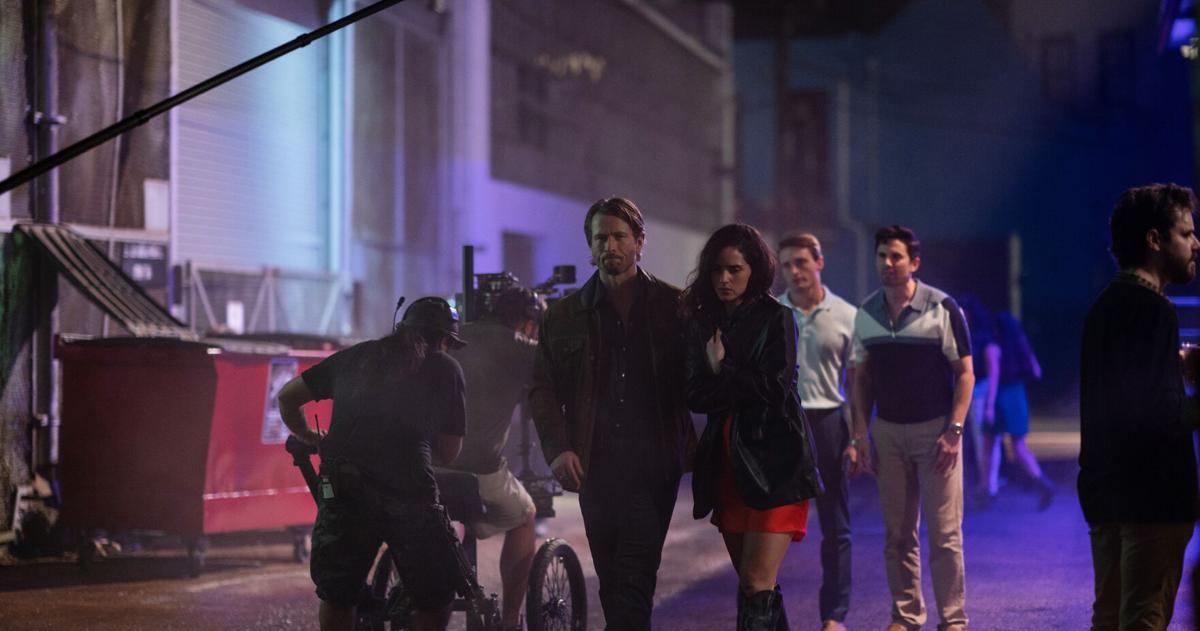
However, other hit films like “Hit Man” and “People We Meet on Vacation” also shot in the state can only do so much to lure productions here. It takes a coordinated marketing effort to promote the state as a film hub. Film Louisiana has been actively promoting the state, with a recent full-court press.
“We were out in L.A. in October,” said Jason Waggenspack, president of Film Louisiana and CEO of The Ranch Film Studios. “We had really great conversations with all the studios, and I’d say 50% of the studios actually told us they were looking at Louisiana pretty hard because we have such a great tax credit, and obviously, we have such great crews. And now we’re starting to see more things come back domestically and here in Louisiana.”
This month alone, Louisiana has six film productions on the ground, either in prep or already shooting. That includes:
- “A Christmas Kind of Love,” with Second Line Stages in the Lower Garden District
- “Goodbye Girl,” at University of New Orleans’ Nims Center Studio
- “The Statement,” at The Ranch in Chalmette
- “Ally Clark,” starring Viola Davis at Celtic Studios in Baton Rouge
- “Out of Darkness,” at Nims
- “The Candy House,” a Georgia production coming to New Orleans for a four-day shoot.
This influx of films in January means more production now than all of last year, in terms of major Hollywood studio films.
“It was very bleak last year, probably the roughest time for our membership in recent history,” said Simonette Berry, business agent for the film workers’ union IATSE Local 478 and an executive board member of Film Louisiana. “Let’s remember that at the height of things in 2021 and 2022, we could have 28 productions on the ground at one time. I’ve been part of this industry since 2012, and my husband since 2008, but he’s no longer working in film right now. He is working in an outside industry where he’s using the film skills that he has as a plasterer and a sculptor constructing sets. Like many people in our union, he’s had to find outside work.”
It’s hardly a singular incident for industry folks behind and in front of the camera.
For well-known actor Lance Nichols, who hasn’t worked in film or television in Louisiana for over a year, diversity has been what’s saved him. He’s known for his stage productions as well as commercial work and is willing to travel for work.
He starred in the one-man play “How I Learned What I Learned” about the life of August Wilson, to rave reviews at Le Petit Theatre in the French Quarter, and is currently shooting a series, “Sugar Creek Amish Mysteries” in Ohio. But this actor, who has more than 230 screen productions under his belt, says he’s well aware others haven’t been as fortunate.
“On one of my business trips, I was walking through MSY airport to my gate, and as I passed the Mac store, I heard someone from inside say, “Lance,” so I went into the store and saw someone who worked with me on many, many sets as head of the makeup departments. She asked where I was going and I told her I was heading out of town for work. She told me she hadn’t worked in the film industry in two years, which was why she was selling makeup. It broke my heart.”
During the writers and actors strikes of 2023, many studio heads found themselves shipping productions out of the U.S. to Canada and Europe, where labor costs were lower and there were no health care costs and pension plans to deal with. This not only affected Louisiana, but the rest of the country as well.
“Some directors like Richard Linklater (“Hit Man”) had relationships and were willing to keep their projects here domestically, while producers who had ties to New Orleans were bringing projects like “People We Meet on Vacation” here, but those projects were dwindling by the end of 2023,” said Carroll Morton, director of Film New Orleans, out of the mayor’s office. “You’ll have creators like Taylor Sheridan (‘Yellowstone,’ ‘Landman’) who prefers to shoot in Texas where he lives, but is bringing his latest show ‘Frisco Kings’ (formerly ‘NOLA Kings’) to shoot 3-4 weeks in New Orleans. But to be successful and become a film hub once again, you must have an economic development plan, because the name of the game here is money, and return on investment.”
To that end, the state has tweaked its tax credits and is now in line with other states that have already revised theirs. Considering that Louisiana has such diverse locations, Film Louisiana put together a Locations LookBook for studio heads, detailing how the state can shift from a French Quarter scene to rural train tracks, forests and gorges, prisons and giant stadiums to massive lakes, beautiful skylines and typical small-town America.
But the ultimate incentive may be the bottom line, and to that end, Katie Pryor, executive director of the Baton Rouge Film Commission and founder of FILMUSA, has been thinking outside of the box and working on getting a federal tax credit in addition to the state’s.
“We’re in a membership association of film commissioners across the US., with over 115 members,” Pryor explained. “The long and short of it is there is no one striking difference between the U.S. versus other production-heavy countries which offer their own country incentives, except that we are lacking two things — a federal film office and a federal film incentive. It’s imperative for us to be globally competitive.”
So, is the current surge in production a trend or a blip? Consider Curtis Jackson’s (rapper 50 Cent) recent investment in Shreveport and his contract promising upcoming films. And, casting directors say they’re hearing about productions now coming in March, April and even the summer.
For casting director Liz Coulon, who is working on two of the six films in production, it’s been a sudden whirlwind.
“I know that this is confusing for casts and crews to know how to get involved again in these productions, so I would give you some tips,” said Coulon. “For actors, make sure you have current headshots and resumés on mycastingfile.com, and if you want to reach out to casting directly, and you don’t already have agency representation (those people should reach out to their agents), you can email your material to submit@couloncasting.com. No phone calls, please.”
Since Katie Pryor believes that fortune favors the prepared, she is starting a high school in Baton Rouge that will prepare today’s creative kids to work in the film industry, with a facility that will be on a par with similar institutions in L.A., New York and Atlanta.
“It’s called the Louisiana Academy of Production, and I’m the founding board president,” said Pryor. “It’s production-based and all about behind-the-scenes filmmaking. You can learn the business side, concentrate on production or cinematography, or even learn hair and makeup. Our first ninth grade class at the charter school will begin in the fall.”
Louisiana has the infrastructure, talent and know-how, according to Pryor. She sees no reason why this state can’t lead the industry in production once again.
Contact Leslie Cardé at lesliecardejournalist@gmail.com.
Source link
-
-

-

-

-