
Every genre includes some level of artistic wiggle room, but the horror realm has proven itself an especially potent playground for creative innovation. Every time a scenario (demonic possession), gimmick (jump scares), or sub-genre (horror-comedy) seems played out beyond saving, filmmakers with fresh perspectives raise the bar again.
It goes without saying that such modern triumphs wouldn’t thrive without their expectation-breaking predecessors. Spooky tales don’t need to be from the 21st century to burrow into our psyches. They just require skill, empathy, a little daring, and dissecting fundamental lived experiences with microscopic precision. Like wine that’s ripened with time, these 10 classic horror masterpieces haven’t aged a day.
10
‘The Curse of Frankenstein’ (1957)
Hammer Films’ breakout hit ensured their legacy as a titan of the macabre. The Curse of Frankenstein establishes the studio’s template and why its particular pleasures endure: saturated color palettes to relish, set design as elaborate as the gushing blood, and a beguiling, detail-oriented pacing that reflects Baron Victor Frankenstein’s (Peter Cushing) obsessive perfectionism and amoral ambition. There isn’t an ounce of satirical camp; director Terence Fisher plays The Curse of Frankenstein as severe as a nocked arrow.
Even though screenwriter Jimmy Sangster reinvents the plot mechanics of Mary Shelley‘s genre-defining novel, her ethical interrogations remain intact. Even turning her controversial protagonist into an irredeemable villain is a fair interpretation. Cushing inhabits blood-curdling cruelty with a virtuoso touch, ranging from scientific dispassion to a scornful, aristocratic narcissist who disposes of women like lab rats. Conversely, the Creature (Christopher Lee) receives little material besides silently meandering. However, his tragedy as another tormented victim shines through Lee’s heartbreaking eyes and puppet-like physicality.
9
‘Cat People’ (1942)


Despite her best intentions, fashion designer Irena Dubrovna (Simone Simon) falls head over heels for American architect Oliver Reed (Kent Smith). She resists consummating their marriage in order to protect her new husband; according to Serbian folklore, indulging her desires will unlock a curse that transforms Irena into a deadly panther. Incredulous and impatient, Oliver develops an attraction to his intrepid assistant, Alice Moore (Jane Randolph) — and Irena, in her betrayed jealousy, unsheathes her claws.
Pioneering horror director Jacques Tourneur delivers a lean, mean psychosexual thriller cloaked in metaphors. Cat People seethes with internal contradictions, social othering, implied queerness, and how men fear, despise, and seek to control female sexuality. Ancient mythology casts poor Irena — already traumatized into self-loathing — as both the deadly femme fatale and the imploring virginal heroine. No one answers her distress with compassionate patience, either. Oliver denies her spousal support, while lustful psychiatrist Louis Judd (Tom Conway) schemes to claim Irena. Cat People‘s dusky black-and-white tones and avant-garde editing produces hair-raising suspense and what might be the world’s first jump scare.
8
‘The Cabinet of Dr. Caligari’ (1920)


Director Robert Wiene‘s team fashioned the definitive German Expressionist film and a groundbreaking piece of entertainment history. Hypnotist Dr. Caligari (Werner Krauss) keeps the sleepwalker Cesare (Conrad Veidt) trapped within his iron-clad command. The doctor passes himself off as a traveling carnival’s ringmaster, displaying Cesare’s somnambulant form as an unnatural wonder of the world. Once night falls, Cesare becomes Caligari’s personal assassin and terrorizes the quiet town of Holstenwall.
The Cabinet of Dr. Caligari deserves its substantial aesthetic reputation. The asymmetrical compositions, courtesy of cinematographer Willy Hameister, and the phantasmagorical production design — nothing exists in this physics-defying world except harsh lines and jagged edges — represent claustrophobic confinement. Wiene and Hameister also milk the stationary camera’s potential, letting character blocking and long shots breed urgent anxiety. Released two years after World War I, The Cabinet of Dr. Caligari‘s living nightmare doubles as an allegory about serving the whims of a power-abusing tyrant.
7
‘Night of the Living Dead’ (1968)

The father of zombie horror as we know it, George Romero‘s indie project Night of the Living Dead defined the sub-genre’s conventions. As an undead plague decimates the world with ghastly speed, a group of survivors huddles inside a Pittsburgh farmhouse. Romero opens with the blonde, imperiled Barbra (Judith O’Dea), yet it’s Ben (Duane Jones), a Black man characterized with extensive depth, who’s Night of the Living Dead‘s unequivocal hero and moral compass. To no one’s surprise, the other humans’ animosity, selfishness, cowardice, and masculine posturing clash against Ben’s voice of reason.
Limitations often foster resourceful flair, and Romero’s low-budget, pseudo-documentary method lends his first Dead entry its lasting edge. The flesh-consumers’ slow creep hasn’t lost its ominous sting; their unceasing pursuit is a nerve-shredding countdown to carnage. Romero’s sickening ending, widely interpreted as a scathing condemnation of racism and authoritarian violence, popularizes yet another motif — prejudiced humans with free will are more depraved than soulless husks. Night of the Living Dead is ahead of its time and still timeless.
6
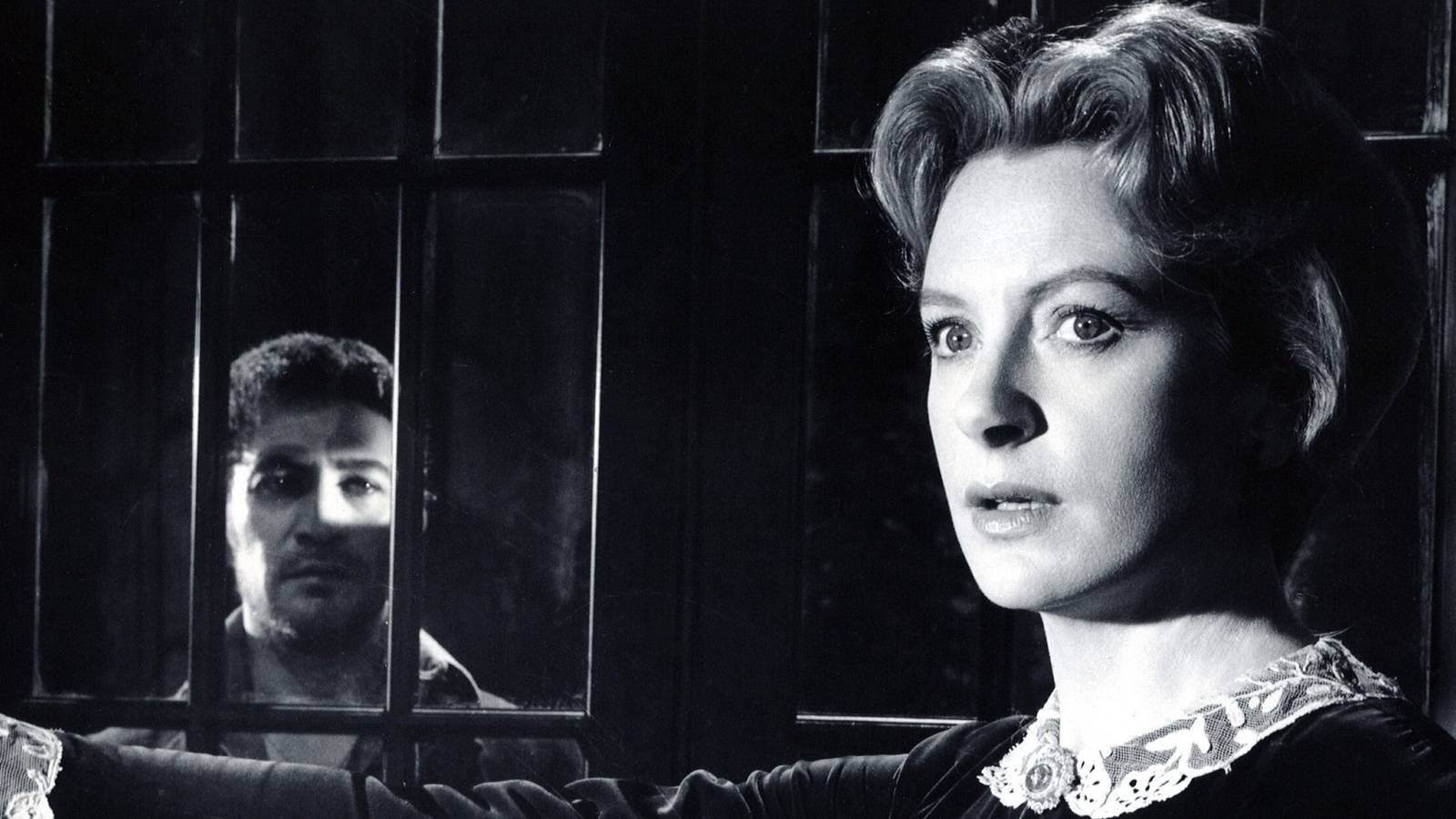
‘The Haunting’ (1963)

The Haunting adapts Shirley Jackson‘s The Haunting of Hill House into a perennial ghost-house epic. Paranormal researcher John Markway (Richard Johnson) leads an investigation into a Massachusetts property marked by multiple violent tragedies. He invites three strangers along for the ride, including Eleanor Lance (Julie Harris), an anxious and isolated woman with a rebellious streak. Her counterbalance, the self-assured clairvoyant Theodora (Claire Bloom) — as overt and multifaceted a lesbian character as possible for 1963 — notices the mansion’s disquieting ambiance. Nevertheless, Hill House’s mystique both enthralls and repulses Eleanor’s private demons.
All The Haunting needs to send chills zipping down one’s spine is sinister Gothic architecture, canted angles, creaking floors, and indelible dialogue. Implications, the unseen, and the actors selling supreme terror and mental deterioration drive the ferocious atmosphere. Director Robert Wise neither confirms nor denies the house’s malicious sentience; Eleanor could be hallucinating the supernatural happenings. Either way, The Haunting drips with a pervasive sense of being hunted — and Christie’s tremulous agitation turns Eleanor into a living haunting.
5
‘Eyes Without a Face’ (1960)

Legend has it that Georges Franju described Eyes Without a Face as “an anguish” fable. Indeed, the French director’s magnum opus follows a daughter’s conflicted grief and a single-minded father who abandons all moral principles. Plastic surgeon Dr. Génessier (Pierre Brasseur) kidnaps women and flays off their facial skin. Ever since a car accident left his daughter Christiane’s (Édith Scob) visage irreparably wounded, he’s channeled his guilty conscience and self-righteous conviction into one goal: grafting living tissue onto his child’s skull.
Eyes Without a Face glides with the cerebral elegance of an art house experiment. The precise, painterly images alternate between surreal, ethereal, and grotesque. Although no blood-fest, its clinical depiction of the heterograft surgery remains staggeringly brazen. And if Eyes Without a Face blisters unforgettable revulsion onto viewers’ retinas, then Christiane internalizes the cyclical violence inflicted upon others and herself. She’s alive yet locked inside her controlling father’s secluded estate, longing for freedom, wandering the halls like a ghost, and splintering into wrenching despair. A blank white mask has never been so devastating.
4
‘Halloween’ (1978)
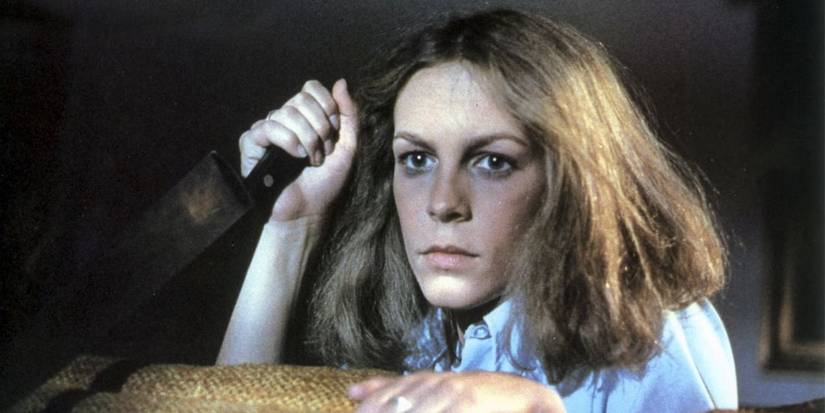
Halloween‘s resounding impact can’t be overstated. The greatest ’70s slasher launched a 13-movie franchise, Jamie Lee Curtis‘ Scream Queen career, and an oft-imitated style. What modern audiences find predictable was trailblazing in 1978, and not crafted to satisfy a trope checklist. Every ingredient of director, composer, and co-writer John Carpenter’s independent hit operates at peak efficiency. The brilliantly straightforward premise is clear, the execution sublimely calculated. Halloween doesn’t need fancy frills — it’s an exercise in tone and momentum, articulating suspense through naturalized minimalism and electrifying restraint.
To that end, Michael Myers (Nick Castle) represents a bone-deep terror that latches on and festers. His evil lacks discernible logic. Worse still, Carpenter denies Haddonfield’s picture-perfect Midwestern neighborhood any safety from an unstoppable predator who’s always watching, always circling closer. He’s a perfect vessel for all that goes bump in the night, offscreen misogynistic violence, and the decade’s sociopolitical unrest. Meanwhile, Laurie Strode’s (Curtis) effortless relatability as a shy, bookish, self-sufficient fighter, her panicked face streaked with tears, strikes close to home. And we’d be remiss to not mention the score; Carpenter’s repeating synths are as ceaselessly sharp as his killer’s blade.
3
‘The Innocents’ (1961)
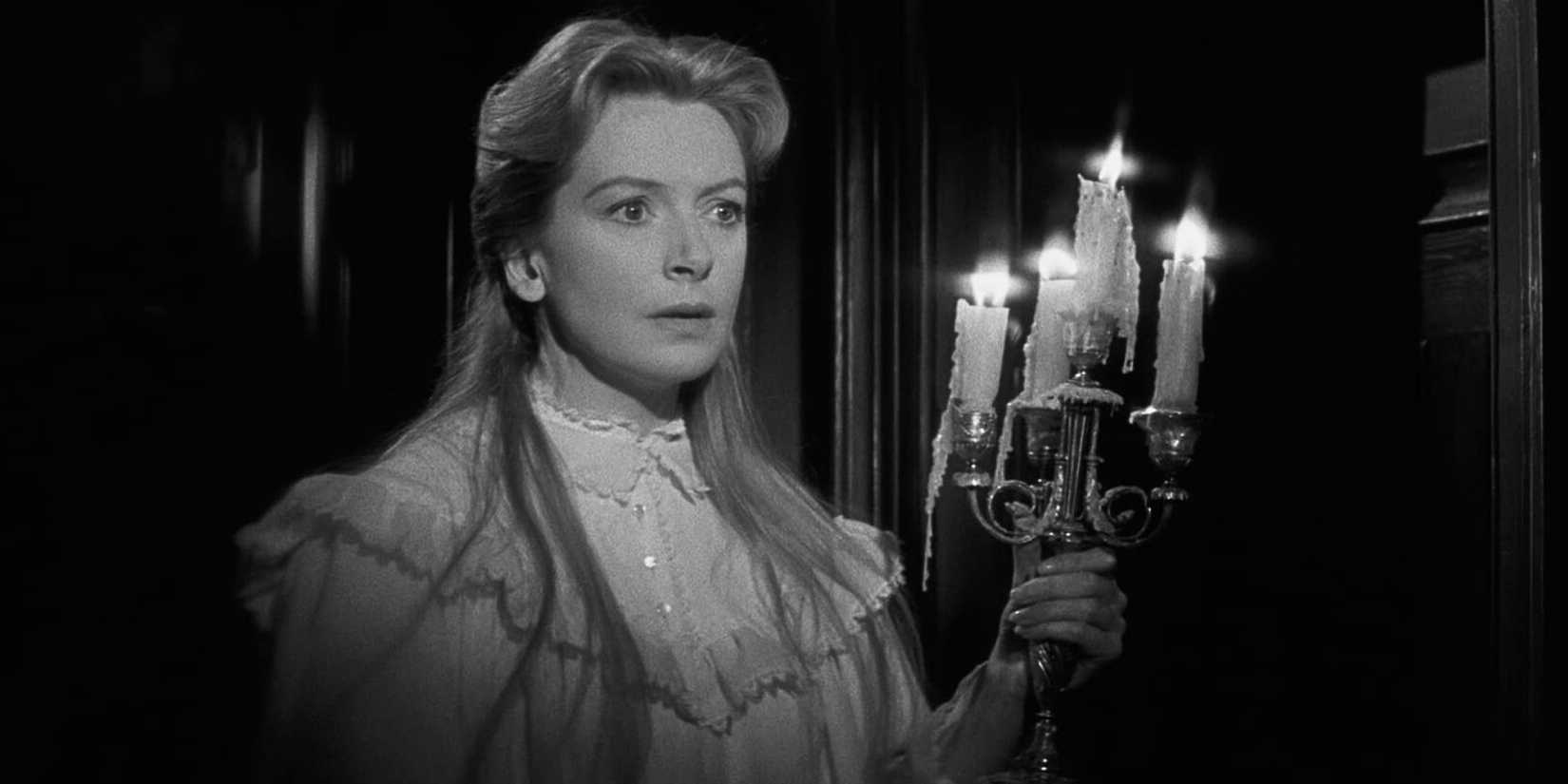
The Innocents, directed by Jack Clayton and co-written by William Archibald and Truman Capote, flawlessly transfers Henry James‘ chilling novella The Turn of the Screw to the silver screen. A neglectful uncle (Michael Redgrave) hires governess Miss Giddens (Deborah Kerr) to supervise his orphaned pre-teen charges, Miles (Martin Stephens) and Flora (Pamela Franklin). Upon moving to their sprawling manor, the youths’ volatile behavior convinces Giddens that the ghosts of the children’s last guardian, Mary Jessel (Clytie Jessop), and her illicit lover Peter Quint (Peter Wyngarde), have possessed the children for nefarious ends.
Cinematographer Freddie Francis‘ monochromatic textures are a work of visual majesty. The contrast between sunlit panoramas and candlelit hallways adjusts to parallel Giddens’ wavering fragility; the heightened depth of field emphasizes her paranoia, while the widescreen ratio invites viewers to scan for threats. Add on editor Jim Clark‘s feverish cross dissolves, and you have a malevolent tapestry led by an unreliable narrator. Casting the luminously middle-aged Kerr enriches her character’s sympathetic naivety and the conflict’s ambiguity. If trauma and abandonment have robbed the children of their innocence, not supernatural interference, then Giddens’ sexual repression, intense loneliness, and moral piety manifest as hallucinations. After obeying destructive patriarchal mores for four decades, her efforts unrewarded and her life unfulfilled, the heroine’s mind erodes.
2
‘Don’t Look Now’ (1973)

When it comes to the prolific “grief is the real horror” metaphor, nothing yet surpasses Nicolas Roeg‘s towering feat. Based on Daphne du Maurier‘s poignant short story, John (Donald Sutherland) and Laura Baxter (Julie Christie) try to repair their shattered world after their young daughter Christine (Sharon Williams) drowns in a lake. Relocating to Venice for John’s next architectural contract counts as running away from trauma, but healing seems within tentative reach — until a self-proclaimed psychic (Hilary Mason) claims John’s survival depends upon him heeding Christine’s warning from beyond the grave.
Don’t Look Now‘s resonate hook explores the specifics of how losing a child fractures a devoted marriage. Both spouses are lost souls hollowed out by their inescapable agony. Layering on a supernatural component opens a thematically intricate Pandora’s box: rationality versus spirituality, psychic portents, self-fulfilling prophecies, and an apocalyptic foreboding that lingers long after the credits roll. Roeg executes his vision with technical acuity and experimental curiosity. Between cinematographer Anthony Richmond‘s motifs, editor Graeme Clifford‘s non-linear cuts, and Sutherland and Christie’s absolute commitment, Roeg’s otherworldly masterpiece feels both inseparable from its decade and viscerally contemporary.
1
‘Psycho’ (1960)

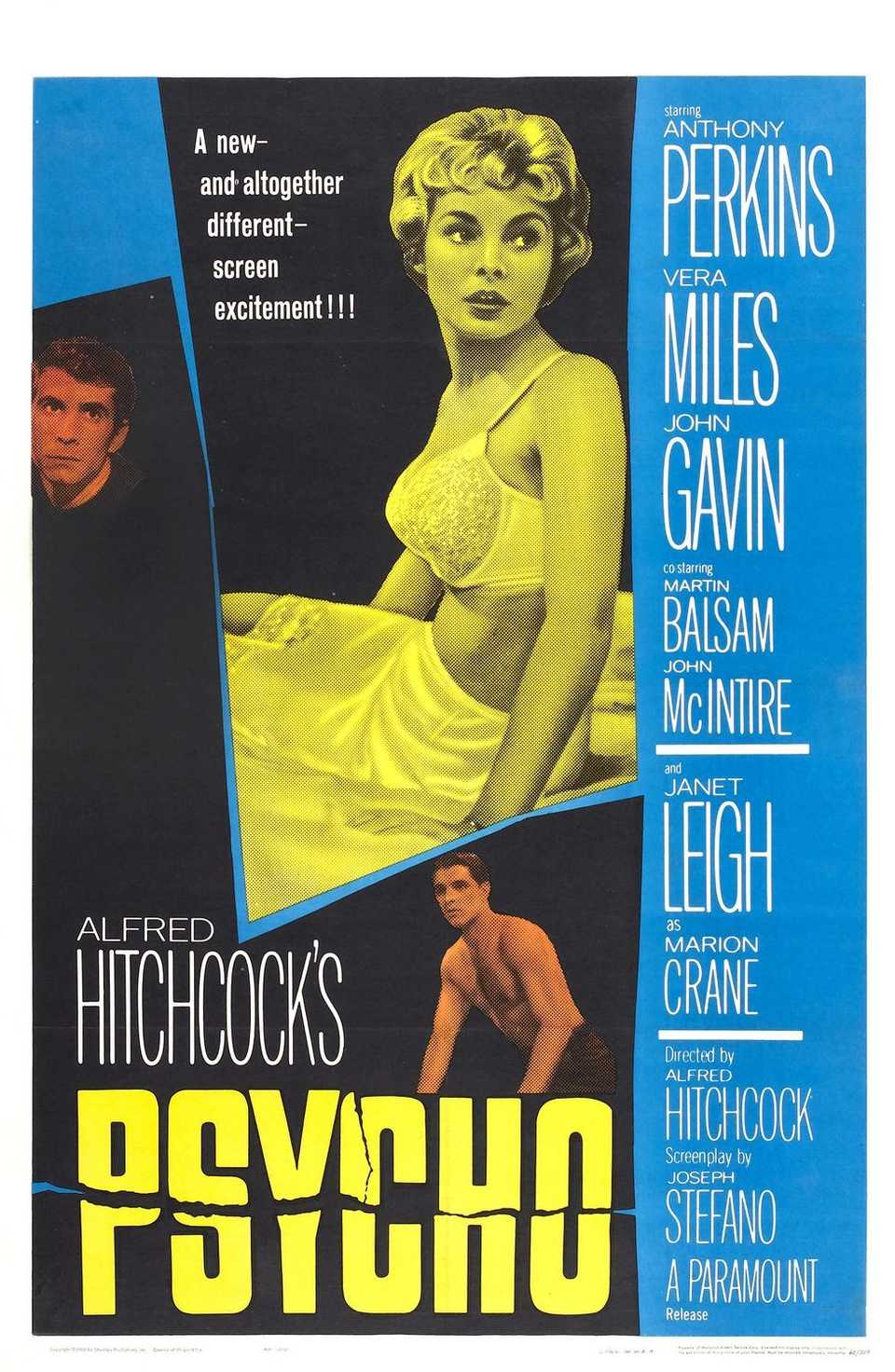
Let’s be indisputably clear: nothing justifies a shock ending that demonizes transphobia and mental illness. Even if Alfred Hitchcock didn’t approach Psycho with intentional bigotry, impact outweighs intent. His irresponsibility is impossible to excuse. Yet without ever minimizing the harm Psycho‘s legacy has caused, everything before the film’s last ten minutes soars with impeccably calibrated finesse. By daring to murder his protagonist at the 47-minute mark, Hitchcock slices-and-dices through every established rule. The gore-less shower scene leaves a mental stain thanks to frenzied montage cuts, Bernard Herrmann‘s piercing score, and the fact Hitchcock had ensured viewers empathize with the defenseless Marion Crane’s (Janet Leigh) headspace.
After that unprecedented violation, all bets are off. Hitchcock’s concise approach cages viewers in the palm of his hand, manipulating the movie’s fraught uncertainty until we’re dangling high above a crevice without a parachute. That said, Psycho could hit every tense note and still fall apart without its leading duo. Leigh turns Marion’s tragedy into a striking character study about a desperate woman caught in her “private trap,” and no performer has matched the riveting nuance Anthony Perkins weaves into his fusion of disarming boyish sensitivity and seething misogynistic hatred. Glaring flaws aside, Psycho is a horror all-timer and an irrevocable cinematic landmark.

Psycho
- Release Date
-
September 8, 1960
- Runtime
-
109 minutes
Source link
-

-

-

-
-
.jpg?prefix=media%2Farticle-covers)


