
As children, we were all told the same story: protagonists are the “good guys” and antagonists are the “bad guys.” But what happens when that line becomes indistinct, or nonexistent altogether? What happens when a film forces its audience to relate to duplicitous, murderous characters rather than scot-free rule followers?
Ahead are the most compelling antiheroes in contemporary film memory. These protagonists are liars, manipulators, and killers, yet the films in which they star demonstrate how compelling a villain can truly be. From tortured souls to soulless psychos, read on for characters who lend dimension to the moral gray area.
11
‘Gone Girl’ (2014)
Based on New York Times bestselling author Gillian Flynn’s most popular novel, Gone Girl is a psychological thriller that leads one to believe that its initial protagonist, Nick Dunne (played by Ben Affleck) murdered his wife in order to be with his mistress. For more than half of this dark David Fincher adaptation, Dunne seems undeniably guilty. In addition to having a clear motive, detectives find blood in his home and diary entries in which his wife, Amy (played by Rosamund Pike), says that she fears her husband will kill her.
But the second half of the movie turns this narrative on its head. It’s revealed that Amy is alive, and that she intentionally framed her husband for murder in a twisted quest for retribution. In her efforts to sell her story—and reappear with her reputation unscathed—she slits the throat of her ex-boyfriend (Neil Patrick Harris) so that when she resurfaces, she looks the part of a harrowed kidnapping victim.
10
‘Saltburn’ (2023)


Emerald Fennell’s celebrated black comedy Saltburn seems like a hedonistic dream on the surface. Starring Jacob Elordi, Barry Keoghan, Rosamund Pike, and Carey Mulligan, it’s filled with opulent imagery and a viral, thumping soundtrack. However, its gilded visuals contrast with the story’s dark, murderous core.
In Saltburn, Keoghan plays a scholarship student named Oliver Quick who latches onto wealthy classmate Felix Catton (Jacob Elordi). While the latter has misgivings about Quick’s awkward, discomfiting personality, he nevertheless allows Quick to meet his family, who rapidly disintegrate and die in Quick’s presence. Eventually, it’s revealed the Quick manipulated and murdered the entire clan in order to collect their fortune. Just before the credits roll, he famously dances naked throughout the estate to Sophie Ellis-Bextor’s sleeper hit “Murder on the Dancefloor.”
9
‘Psycho’ (1960)
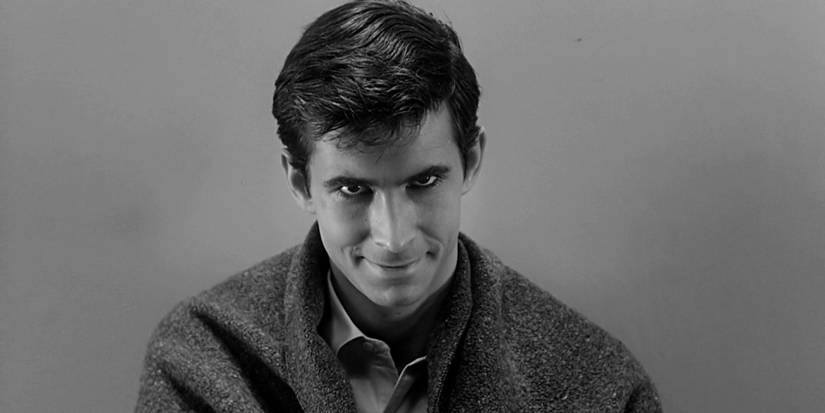
Several characters in Alfred Hitchcock’s Psycho can be considered main players. There’s Marion Crane (played by Janet Leigh), with whom the audience identifies early in the film—though she’s murdered relatively early on. There’s also Lila Crane (Vera Miles), who seeks answers about her sister, Marion, and finds her own life in danger.
No character is more memorable, however, than the unnerving, homicidal Norman Bates (Anthony Perkins). Bates not only kills Marion, but it’s also revealed that he’s murdered his controlling mother and her lover. Plagued by guilt, he periodically slips into his mother’s persona and, while dressed in her clothes, murders any women to whom he’s attracted because he perceives them as a threat to his imagined relationship with the now-rotting matriarch.
8
‘Scarface’ (1983)

Brian De Palma’s Scarface is one of the most notorious and gratuitous crime dramas of the twentieth century. Starring Al Pacino as Tony Montana (AKA the titular “Scarface”), the film delves into violence, drug use, and madness in 1980s Miami. It also establishes Montana’s brutality early on, setting the stage for a firefight whose drama remains unparalleled in American cinema.
The audience meets Montana while he’s in dire straits, a Cuban refugee competing for American citizenship amid the dehumanizing “wet foot, dry foot” policy. Almost immediately, he finds himself wrapped up in the drug trade—a violent enterprise that finds him watching his closest friend get murdered with a chainsaw. In the wake of such trauma, Montana hardens, rapidly turning into an abusive, cocaine-fueled murderer.
7
‘American Psycho’ (2000)

American Psycho is, perhaps, the most notorious film about a killer. Starring Christian Bale as Patrick Bateman, this Mary Harron feature indicts modern consumerism with its unique blend of horror, violence, and satire. It’s become a modern classic, praised for its visuals and unforgettable performances, though its source material—a novel by Bret Easton Ellis—had long been considered unfilmable.
American Psycho is not for the faint of heart. Unapologetically gory, it nods to real life phenomena with its depiction of a man who maintains a polished, charming persona each day while harboring a secret life as a serial killer at night. In its study of violence in the postmodern world, it’s a more effective cautionary tale than any serial killer documentary to date.
6
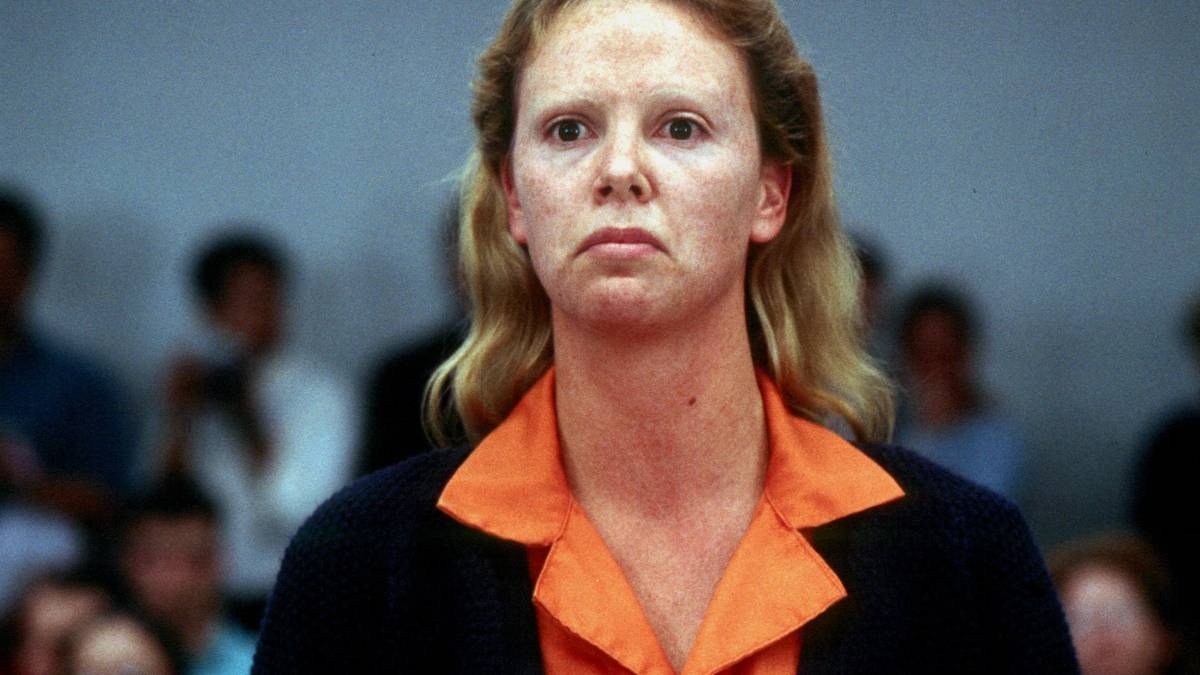
‘Monster’ (2003)


Charlize Theron made headlines in Patty Jenkins’ 2003 film Monster, which details the fraught, crime-filled life of serial killer Aileen Wuornos. Much like Wuornos’ life itself, Monster incited virulent public conversation. Many viewers were incensed that Wuornos had been labeled as a serial killer and put to death for simply killing men who raped and/or abused her during her time as a sex worker. Others, however, decried Wuornos for the act of killing itself.
Monster is a must-see, regardless of one’s stance. It features Theron at her finest and most unrecognizable, seeing her transform her gait, speech, and even body type for the role. It also delves into a complex situation that poses questions both existential and sociopolitical.
5
‘The Killing of a Sacred Deer’ (2017)

The Killing of a Sacred Deer is an interesting study in the murderers-as-main-characters theme. Of course, lead antihero Martin Lang (played by Barry Keoghan) is ultimately a killer in this Yorgos Lanthimos film. He forces the protagonist, surgeon Steven Murphy (Colin Farrell), to kill a member of his own family in a tense standoff that crescendos with Murphy finally shooting his young son dead.
Through his actions, Lang renders Murphy a murderer while simultaneously retaining his own culpability for the killing. After all, Murphy would never have killed his own son if Lang hadn’t forced his hand. However, Murphy is already established as a murderer before he shoots his son: Lang justifies his cruelty with the fact that his own father died on Murphy’s operating table. Thus, he blames the death of his father on Murphy, leading to the extreme “eye for an eye” tactics that drive this unique psychological thriller.
4
‘Killers of the Flower Moon’ (2023)

Martin Scorcese’s historical epic Killers of the Flower Moon is powerful not only for its subject matter and performances, but also because it’s based on a true story. Adapted from the book of the same name by journalist David Grann, the story follows Ernest Burkhart (played by Leonardo DiCaprio) as he moves to Oklahoma, marries a local Osage woman named Mollie Kyle (Lily Gladstone) and, with a number of fellow white co-conspirators, methodically kills off at least 60 Osage people In order to collect their headrights, or oil royalties.
The era, now known as the “Reign of Terror” of the 1920s, is a stain on American history. Still, Scorsese manages to make the murderous Burkhart a central protagonist without turning the audience off altogether. While the film doesn’t shy away from the brutality, greed, and racism of the Reign of Terror, it still manages to convey the complicated relationship between Mollie and Ernest with empathy and depth.
3
‘There Will Be Blood’ (2007)

Paul Thomas Anderson’s There Will Be Blood is loosely based on muckraker Upton Sinclair’s cautionary novel, Oil!, and it certainly paints a dark picture of turn-of-the-century oil barons. This ruling class is represented in There Will Be Blood by the film’s main character, Daniel Plainview (played by Daniel Day Lewis), who’s one of the most charming antiheroes to ever grace the silver screen. Plainview is introduced as a plucky prospector who strikes oil in California, leading him down a path of greed and violence that leads him to kill two people.
Plainview’s Machiavellian tendencies are obvious throughout the film, with the protagonist lying, cheating, and threatening his way to the top of the socioeconomic ladder. As his wealth expands, Plainview first kills a man who pretends to be his half-brother. Then, at the end of the film—after he’s alienated his beloved son, H.W.—a drunk and downtrodden Plainview kills a preacher (played by Paul Dano) with whom he has long had a contentious relationship. The long, brutal scene sees Plainview chasing the preacher around a bowling alley before finally beating him to death with a bowling pin—a macabre end to a macabre story.
2
‘Kill Bill Vol. 1’ (2003) and ‘Kill Bill Vol. 2’ (2004)
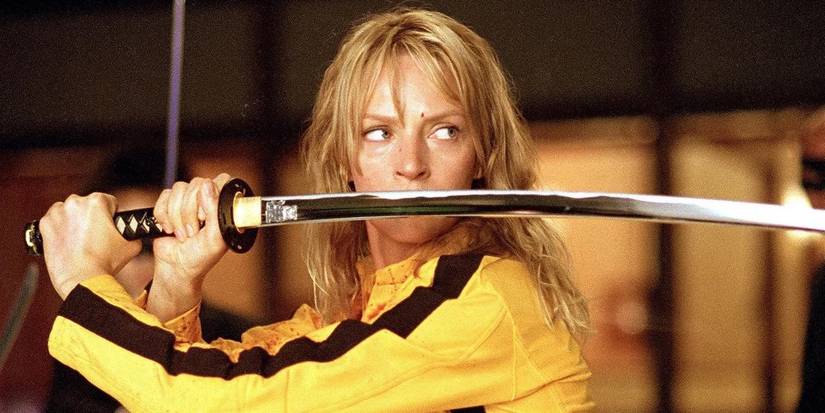
Quentin Tarantino’s Kill Bill movies have yielded one of the most beloved and immediately recognizable protagonists in movie history: Beatrix “the Bride” Kiddo, played by Uma Thurman. The two films follow the Bride, a trained assassin, as she takes revenge upon her fellow hit squad members, including their old boss, Bill. Years before, the squad tried to murder the Bride and her unborn child, sending her into the coma she wakes from at the beginning of the first film.
Not only does the Bride murder a number of characters onscreen but, as aforementioned, she has a long, lethal history as a career assassin. Both films are structured around the Bride’s systematic murder of each of her rivals. The result is a winding, wildly entertaining story that guides the audience through diverse backstories spanning a myriad of vivid locales, culminating in the murder of Bill himself.
Source link
-
-

-

-

-


