
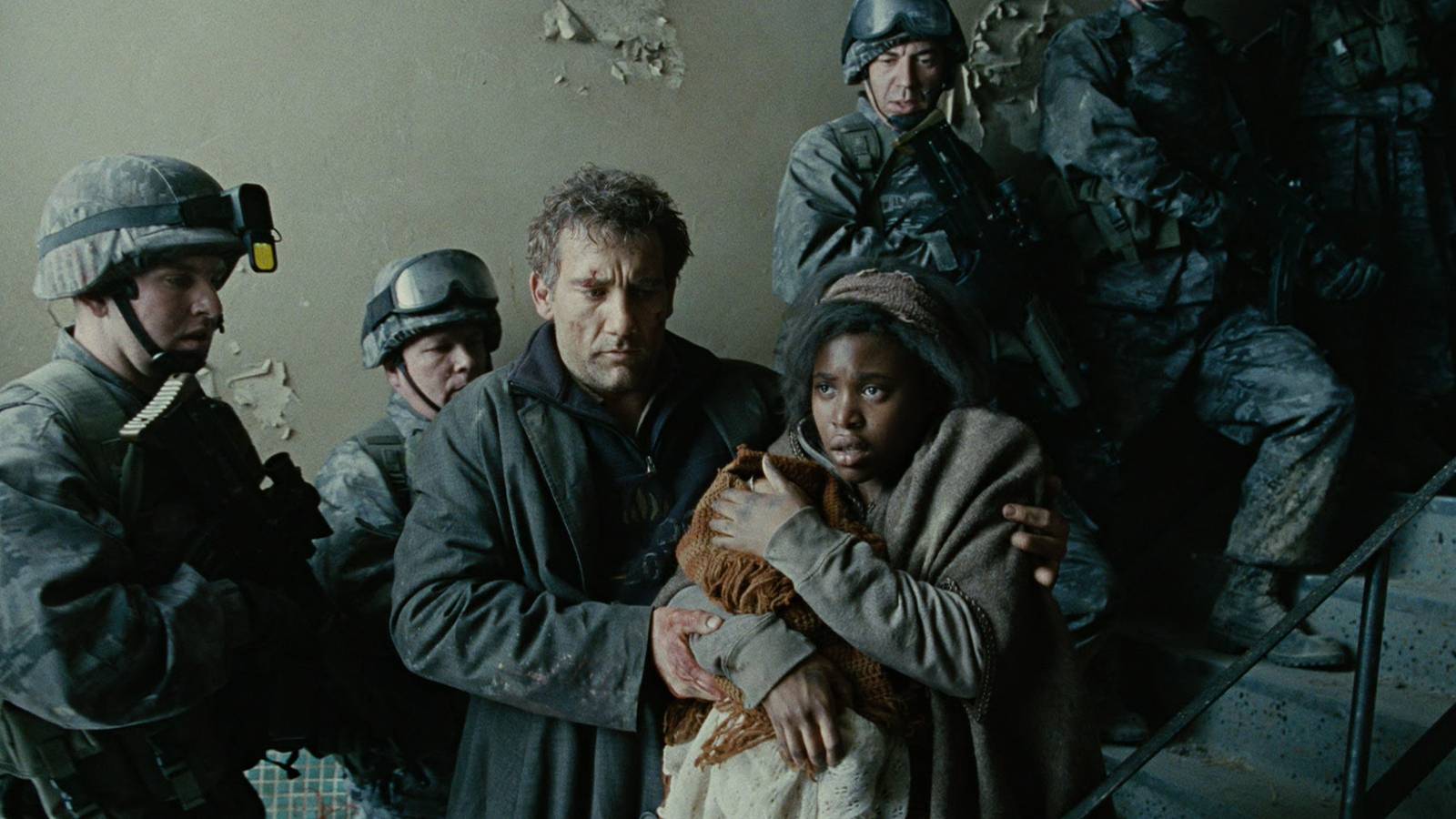
Some of the most memorable science-fiction movies have avoided all-out space exploration, extraterrestrial enemies, and overly-advanced technologies in favor of more grounded, raw, and gritty stories. When you hear sci-fi, you might think of major franchises such as Star Wars, Avatar, Planet of the Apes, Star Trek, Dune, and more, and while these projects tell their fair share of dark stories, many other gripping movies have pushed this to the extreme.
Sci-fi has a tendency to cross over into other genres, which has opened the door for some grounded post-apocalyptic, retro-futuristic, supernatural, terrifying, and action thriller movies to be developed. These movies have delivered some of the sci-fi genre’s darkest but most captivating narratives, and some of the grittiest and most hardened characters whom we can’t help but root for. These are some of the scariest, most unnerving, and most heavy-hitting sci-fi movies in recent memory.
Blade Runner Showed Us a Dark Cyberpunk Future
Released in 1982, Ridley Scott’s Blade Runner premiered as the definitive cyberpunk thriller. Adapted from Philip K. Dick’s 1968 novel, Do Androids Dream of Electric Sheep?, Blade Runner pioneered the neo-noir aesthetic, following former cop Rick Deckard (Harrison Ford) through a dystopian Los Angeles to hunt down a fugitive group of advanced synthetic humans, known as replicants. Scott’s rain-drenched and neon-lit visuals highlighted the decay of a future world not only in Blade Runner but also as a benchmark for the entire genre.
Although it initially underperformed at the box office, Blade Runner’s slow pacing, lack of action sequences, sprawling set pieces, and thematic complexity have earned it critical acclaim in the decades since its release, and it has influenced many subsequent sci-fi movies. The movie poses profound questions about consciousness, memory, and humanity that keep audiences mesmerized, while Deckard’s own revelation is heightened by the oppressive atmosphere and desolate futuristic environment.
Children of Men Is a Masterpiece of Dystopian Cinema


When considering dystopian sci-fi movies, it would be remiss not to include 2006’s Children of Men, which is often considered to have implemented an “anti-Blade Runner” aesthetic. Directed by Alfonso Cuarón, Children of Men delivers a grounded and hyper-realistic depiction of a collapsing society in a world where no children have been born in two decades. Following Theo (Clive Owen), who is tasked with protecting pregnant Kee (Claire-Hope Ashitey), Children of Men explores themes of maternity, infertility, authoritarianism, surveillance, and immigration.
What makes Children of Men so powerful is that it’s unbearably realistic. This is a world we can actually imagine coming to fruition, should something as fictitious as total human infertility take place. Children of Men implements raw, handheld cinematography and unbroken long takes to completely immerse the audience in the action, making us feel as though we are on the journey with Theo and Kee. It’s visceral and bleak, but ultimately striking and totally captivating, standing out as one of sci-fi’s best.
Dredd Delivers a High-Intensity Procedural


Ignoring the campy, sci-fi action story of 1995’s Judge Dredd, Pete Travis’ 2012 reimagining of the 2000 AD comic strip, adapted and written by Alex Garland, brought Dredd to the masses. Dredd delivered an unrelentingly violent and uncompromising story set in a 200-storey apartment block in the dystopic metropolis, Mega-City One, set in a post-apocalyptic wasteland. Judge Dredd (Karl Urban) and Judge Anderson (Olivia Thirlby) enter the block to deal with its resident drug lord, Ma-Ma (Lena Headey).
Shocking and incredibly focused, Dredd delivers a lean narrative reinforced by visceral, R-rated violence and stylized filming techniques. Travis presents a no-nonsense, high-intensity action thriller in a world where members of law enforcement act as judge, jury, and executioner. Urban is perfect as the masked antihero, brilliantly embodying the brutal efficiency of the law. This is dark, raw, and brutal, which is a perfect reflection of the source material and Travis’ hyper-detailed style.
The Thing Is the Ultimate Exercise in Paranoia

Relying heavily on the building of tension and a focus on paranoia, 1982’s The Thing managed to highlight the humanity of a sci-fi story while also introducing a terrifying extraterrestrial monster. Following a team of researchers in Antarctica who are hunted by a shape-shifting alien that can perfectly imitate any living thing, and based on John W. Campbell Jr.’s 1938 novella, Who Goes There?, The Thing focuses on the team as they realize that they can no longer trust each other.
The Thing revolutionized the body horror and monster movie genres of the 1980s, using innovative practical effects and exploring a bleak, ambiguous narrative to make the titular creature even more terrifying. This sense of dread doesn’t let up from start to finish, so director John Carpenter delivers one of the most memorable and shocking sci-fi movies of its generation. Claustrophobic, suspenseful, and intense, The Thing includes heavily nihilistic themes, offering no hope, which is a huge contrast to similar movies of the era.
Alien Perfectly Combined Sci-Fi & Horror

Considered one of the greatest and most influential movies of all time, Ridley Scott’s original Alien, released in 1979, remains one of the most effective sci-fi horrors ever. Using a “used-future” aesthetic — dirty and industrial, despite being set in the distant future — Alien puts its gritty textures front-and-center from the very beginning moments when the crew of the Nostromo awaken. The crew’s quiet investigation of the ship on LV-426 and the unleashing of the iconic Xenomorph contribute to the movie’s slow-burn horror.
Alien treats space travel like a dangerous, blue-collar job, grounding its horror in industrial grit while relying heavily on the claustrophobia of the Nostromo’s corridors and the relentless, hunting capabilities of the titular alien. Sigourney Weaver got her breakout role in Alien, marking one of the first major female protagonists in a major movie, which not only revolutionized the sci-fi and horror genres but cinema as a whole. Alien is groundbreaking and subversive, and an inspiration for many sci-fi horror movies that followed.
District 9 Has a Gritty, Documentary-Style Aesthetic

Directed and written by Neill Blomkamp, who is known for his gritty, dystopian thrillers, District 9 is one of the most distinct and raw sci-fi movies in recent memory. The documentary-style movie takes place almost three decades after a spaceship appears above Johannesburg and the alien creatures inside, known as “Prawns,” are granted asylum in a slum named District 9. Multinational United bureaucrat Wikus van de Merwe (Sharlto Copley) is tasked with leading the Prawns’ relocation, but finds himself mutating into one.
The documentary-style approach to District 9 immerses the audience in the impoverished and segregated South African slum. The found footage aesthetic helps to deliver an uncompromising, inescapably brutal, and terrifyingly real story that we could actually imagine happening in the real world. Even though it focuses on extraterrestrial creatures and high-tech weaponry, everything is carefully considered, realistic, and believable, turning a sci-fi premise into a visceral exploration of systemic inequality that is utterly gripping.
The Matrix Revolutionized the Sci-Fi Action Genre

Developed by the Wachowskis, The Matrix hit theaters in 1999 and helped to revolutionize the sci-fi action genre more than any other movie. The Matrix stars Keanu Reeves as Neo, a computer programmer who is awakened from the simulated world of the Matrix to fight in a rebellion against artificially intelligent machines that have subjugated humanity in the far future. While the world of the Matrix is sleek and polished, the “real-world” of the movie is gritty, dirty, and hauntingly dark.
What makes The Matrix even better is the Wachowskis’ reliance on high-intensity and perfectly-choreographed action sequences, both in and out of the Matrix. The brilliant contrast heightens the dangerous reality of the human resistance against the machines, which puts relevant, contemporary themes front and center, even almost three decades later. The movie’s unique cyberpunk aesthetic gives it a futuristic yet broken feeling that makes it one of sci-fi’s strongest stories.
Upgrade Is One of the Most Thrilling AI Movies

A hidden, little-known gem in the sci-fi genre, Upgrade, written and directed by Leigh Whannell, is a cyberpunk sci-fi thriller that delivers a dark story focusing on themes of bodily autonomy, technological dread, and artificial consciousness. The movie follows Grey Trace (Logan Marshall-Green), a technophobic mechanic who is implanted with a chip that allows him to control his body after an attack leaves him paralyzed. This chip, however, turns him into an unstoppable killing machine.
Upgrade is a slick and unrelentingly violent thriller that manages to keep the tension high from start to finish. By exploring the unsettling relationship between humanity and technology, Upgrade is one of the most relevant sci-fi movies of the modern age, yet it relies on extreme violence, high-octane action sequences, and an oppressive and grounded environment to deliver its gritty sci-fi narrative. It’s thrilling and relentless, and continuously avoids lightheartedness in favor of unbroken adrenaline.
Snowpiercer Puts Class Warfare Front & Center

Set entirely on a train carrying the last remnants of humanity after the world was ravaged by a frozen apocalypse, Snowpiercer is one of the most brutal, inventive, original, and intimate studies of class warfare in the sci-fi genre. Directed by Bong Joon Ho, Snowpiercer has a unique visual style that elevates the claustrophobia of every moment. The movie follows lower-class tail-section passenger Curtis Everett (Chris Evans), who leads a rebellion against society’s leaders at the front of the train.
The movie starts in the gritty back of the train, where Everett and many other low-class passengers exist. However, even as the rebels move along the train, heading into increasingly slick, clean, and polished carriages, they are empowered by the grit, dirt, and desperation of where they came from. We feel every moment of their struggle as we’re tightly packed into the train alongside them, and the graphic action, grim themes, darkly satirical tone, and incredible performances make Snowpiercer a captivating watch.
12 Monkeys Is One of the Most Iconic Time Travel Mysteries

Focusing intensely on themes surrounding mental health and the limits of the human mind, 12 Monkeys is one of the most gritty and complex time travel stories in the sci-fi genre. Time travel is a popular vehicle to drive a narrative in the sci-fi genre, but 12 Monkeys handles it in such an unsettling, bleak, and visceral way that it constantly feels like a fever dream. If immersion is what you’re looking for, look no further than 1995’s 12 Monkeys.
Based on Chris Marker’s 1962 short film, La Jetée, Terry Gilliam used his signature visual style to make 12 Monkeys’ post-apocalyptic future and the paranoid present feel uncomfortable and inescapable. 12 Monkeys follows convict James Cole (Bruce Willis), who is sent back in time to gather information about the man-made virus that would almost eradicate humanity in his future. Visceral, inevitable, and haunting, 12 Monkeys is considered one of the best sci-fi movies of all time, and is certainly one of the grittiest.
Source link
-

-

-

-

-


