
This introduction was going to ramble on about the 1990s actually being a relatively comfortable time for most people, highlighting how maybe films from the decade got kind of heavy and intense because people could handle it more back then, and didn’t need escapism as much… but that’s over-simplifying things. Different people experienced different things. This writer barely even experienced much of the 1990s, at least what can be remembered.
There was also quite a bit of escapism in the movies during the 1990s, though perhaps not as much as there was in the 1990s. Still, you’ve got Jurassic Park, Terminator 2: Judgment Day, and Toy Story, on the more approachable and/or blockbuster front, and then on the other side of things, you’ve got these movies, which are all some level of downbeat, intense, and emotionally taxing.
10
‘The Sweet Hereafter’ (1997)
In The Sweet Hereafter, there is a monumental tragedy that happens early on, and most of the film involves people trying to process the grief that comes about as a result. More specifically, there’s a bus crash that claims the lives of 14 children, and since it’s a bus in a small town, just about everyone is impacted, and an ensuing class-action lawsuit also proves impactful for everyone in the town.
It’s heavy because of the premise, and then for some other things that happen throughout, with everything adding up to make The Sweet Hereafter constantly somber and possibly even a bit much to handle, if you’re not sufficiently ready for something all about an almost impossibly daunting form of grief. It is also a good movie, for what it’s worth, but a lot. It’s just a lot.
9
‘Three Colours: Blue’ (1993)

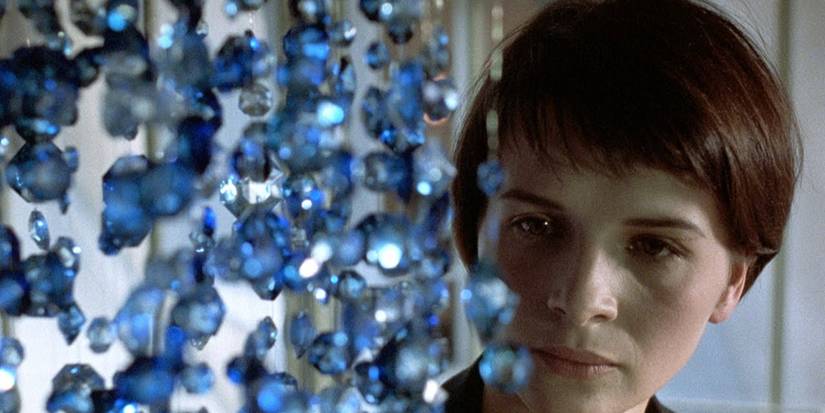
On the topic of movies about grief, here’s Three Colours: Blue, which is a little more abstract, psychological, and focused on just one main individual, compared to the approach taken in The Sweet Hereafter. There’s another vehicular accident that sets the whole difficult narrative in motion, with a woman surviving a car crash, but that same crash claiming the lives of her husband and daughter.
Three Colours: Blue is upfront and brutally honest about the whole grieving process, and while it’s not cathartic in the traditional sense, it is the kind of thing that can potentially help one feel not so alone.
There’s lots of blue seen throughout the movie visually, and it’s also easy to call the movie blue emotionally, since the central character has to reckon with so much while questioning what the purpose of her life could be going forward, if there is even any purpose remaining. Three Colours: Blue is upfront and brutally honest about the whole grieving process, and while it’s not cathartic in the traditional sense, it is the kind of thing that can potentially help one feel not so alone. It’s a well-handled and executed exploration of an unfathomably bleak situation.
8
‘Kids’ (1995)

If it counts as a coming-of-age movie, then Kids is one of the most difficult, without a doubt. It takes place over roughly a day, and doesn’t really have much of a narrative, instead being a day-in-the-life kind of thing for a group of teenagers living in New York City, more or less getting up to no good. And then some go further than merely getting up to no good, at which point, Kids also starts to feel like something of a gritty crime film.
It’s like the antithesis of something like Dazed and Confused, which is another day-in-the-life movie about young people, but with a large amount of comedy and some emotional stuff that, at worst, is kind of bittersweet. Kids, meanwhile, is all bitter. It aims to depict things that most movies about young people (even the darker ones not aimed at younger audiences) tend to stay away from, and it is a gutsy film; that much can be said.
7
‘Bad Lieutenant’ (1992)


Most Abel Ferrara movies are, at the very least, pretty intense and confronting, with Bad Lieutenant being particularly so. It’s one of the more harrowing crime movies of its era, or maybe even any era, as it’s about a police detective investigating an already shocking crime, but then his whole way of being is also abrasive and alarming. He is, undoubtedly, not a good lieutenant.
It ended up getting an NC-17 rating, too, mostly because of its violence and some other alarming adult content. Bad Lieutenant is about as gritty and grimy as movies get, and so it’s really not for everyone, but it might be for you if your stomach’s strong enough and you think you’ve seen it all, as far as crime films are concerned.
6
‘Se7en’ (1995)

Se7en might be an easier watch, as far as content is concerned, than Bad Lieutenant, but it could well be more of an intense film, hitting you with misery in a rather precise way, instead of being as continually numbing as Bad Lieutenant. There are also detectives here, and they’re not necessarily bad guys, but they get wrapped up in a bad case, and bad things do happen around them.
That case involves a serial killer who seems to be basing all his crimes on the seven deadly sins, and he also seems to be unnervingly ahead of the people who are trying to catch him. Where Se7en eventually goes is memorable and striking enough that it’s the sort of thing you’re likely to have spoiled before you watch it, if you haven’t caught it by 2026, but even if you know where the movie’s going, there is still quite a punch packed.
5
‘Twin Peaks: Fire Walk with Me’ (1992)
While David Lynch was no stranger to getting dark and even a bit nightmare-inducing in some of his movies, Twin Peaks: Fire Walk with Me goes in this direction particularly far. It’s largely a prequel to Twin Peaks, which began with the death of Laura Palmer having just occurred, so Fire Walk with Me details her inevitable demise, and the final week of her life.
It’s not surprising what happens by the end, with this being a prequel and everything, but what is surprising is how it happens, with the whole affair also making Twin Peaks feel bleaker, should you return to it after Fire Walk with Me is over. It’s one of the heaviest and most despairing horror movies ever made, and you really do viscerally feel every difficult emotion Lynch wants you to feel throughout.
4
‘Benny’s Video’ (1992)

Benny’s Video is a movie about a teenage boy who is unhealthily obsessed with violent movies, and so he sets out to film his own things, and then his life of violent media influences that whole endeavor, and things get inevitably messy. You know something bad is going to go down, because there’s dread everywhere and all over this film, but just what that bad thing is, or how it’ll go down… bam, unease and uncertainty on top of dread and justified anxiety.
It’s an all-around cocktail of bad feelings and bad vibes, yet Michael Haneke has arguably made even heavier films… they just came out in decades other than the 1990s (see The Seventh Continent, from 1989, and The White Ribbon, from 2009). Okay, maybe there should be an honorable mention for Funny Games, which would make for an appropriate – but grueling – double feature with Benny’s Video, since both deal with the topic of violent movies in interesting ways.
3
‘Happiness’ (1998)

One of the funniest things about Happiness is the title, given how unhappy it all is, but then also, quite a bit of Happiness is just generally funny, so long as you’re okay with the darkest of dark comedy. In Happiness, nothing is off limits as far as transgressive acts and taboo subjects go, and even if you probably hear discussion of – and thereby think about – alarming acts more than you see them, it’s the thought that counts.
What terrible, terrible thoughts. You will think them all. You will not forget some of them, even if you want to. But the discomfort and bleakness of Happiness do also feel purposeful, and it’s hard to deny the boldness of making a movie like this. Enjoying or even appreciating it is another matter, but they did indeed swing big here, and there’s stuff here 99.9% of other movies would never even want to touch.
2
‘The War Zone’ (1999)

Tim Roth has only directed one movie to date, and it just so happens to be up there among the heaviest of all time. It’s called The War Zone, and it’s about an already struggling family falling apart further when a teenager in said family finds out a certain truth about, um, two other members of his family. There’s tension and unease building throughout, and then once things boil over, it gets further devastating.
Like Happiness, The War Zone unpacks stuff that’s usually considered off-limits in cinema, and maybe even in art more broadly, but here, the approach is entirely lacking in dark comedy, which makes it an arguably harder watch. It’s an important film, but also one that’s incredibly hard to recommend actually watching. Maybe read about it, if you feel up to doing even that, and admire what it does from afar; from a safe distance. Actually getting tangled up in The War Zone is something else entirely.
1
‘Satantango’ (1994)

A uniquely miserable movie that makes you feel awful for more than seven hours, Satantango is beyond gruelling. It’s quite punishing, really, and not a lot technically even happens throughout those 432 minutes of Satantango. The film is about a desolate village filled with people who are just trying to survive their difficult lives, drinking and possibly getting conned by a villager who’s just returned under suspicious circumstances.
That sounds all quite dramatic, but Satantango isn’t much of a drama. It’s more just an experience in absolute sadness, but the empty kind that’s heavy and despairing rather than sad in a cathartic way. Still, many will tell you it’s also a masterpiece and, for better or worse, Satantango does indeed achieve what it sets out to do (maybe even too effectively).


Sátántangó
- Release Date
-
October 9, 1994
- Runtime
-
439 Minutes
- Director
-
Béla Tarr
- Writers
-
Béla Tarr, László Krasznahorkai, Péter Dobai, Mihály Víg, Barna Mihók
-

-
-
Miklós Székely B.
Futaki
-

Source link
-

-
-

-
-