
Every decade has its share of legendary movies that continue to influence filmmakers and the viewing public long after they leave theaters. The ’90s certainly fits this description, with a ton of fantastic films, including “Pulp Fiction,” “Good Will Hunting,” “Forrest Gump,” “Men in Black,” and many more. These are the movies that win awards, devastate the competition, and are remembered for their impact on popular culture, but they’re hardly the only good movies of the decade.
When one film does gangbusters, it tends to cast a shadow on whatever else is showing in theaters during its run. The ’90s featured some absolute hidden gems that are completely underrated, and they often underperformed at the box office as a result. This kind of thing happens all the time when a blockbuster kills it on the silver screen. Try to think back on whatever else was playing when “Goodfellas,” “Jurassic Park,” or “The Sixth Sense” were in theaters.
There’s a good chance your mind will find nothing but vague references to those three movies. The ’90s featured tons of excellent, yet underrated films that aren’t as well-known in the decades since. Some went on to do well in the rental marketplace, while others eventually found their way into cult classic territory. Each of these ten films was released in the ’90s, and they’re all exceptional, but largely unknown today. These underrated movies are well worth every cinephile’s time, and they’re arranged in chronological order of release.
Pump Up the Volume

Christian Slater’s breakout role in 1989’s “Heathers” set him up for plenty of exposure in the ’90s, and he appeared in several high-profile movies throughout the decade. He also showed up in several films that underperformed and went on to become cult classics, “Pump Up the Volume” being chief among them. The movie features one of Slater’s best on-screen performances as Mark Hunter, a high school student who illegally broadcasts an FM pirate radio station from his basement.
At school, Mark is a loner, but every evening on the radio, he’s “Hard Harry,” calling truth to power throughout his school by calling out the administration and playing songs that MTV wouldn’t touch in the early-’90s. He’s essentially the Holden Caulfield of his generation, vocally begrudging society through his alternate identity as he plays out his teenage angst for the world to hear … well, the Phoenix, Arizona, area, as his broadcasts lack significant range.
The film tapped into the common issues of Generation X, but failed to generate much revenue at the box office. Critics generally appreciated the film, though some weren’t as enamored with its conclusion. “Pump Up the Volume” won a handful of minor awards and later found an audience on video. These days, it’s a Gen-X cult classic appreciated by members of the generation who either loved it when it came out or missed it entirely, only to discover it later in life.
Darkman
Thanks to “Deadpool,” it’s now increasingly common for an R-rated superhero movie to hit theaters, but in the ’90s, it wasn’t. “Darkman” isn’t only an R-rated movie, it’s also directed by future “Spider-Man” director Sam Raimi, and stars Liam Neeson in what can only be described as a superhero horror movie. These days, those two names are more than enough to drive droves of viewers to the local theater, but in 1990, “Darkman” had to stand on its own merit, and was a financial success.
The film centers around Dr. Peyton Westlake (Neeson), a scientist working on synthetic skin to help burn victims. When he’s brutalized and his lab is destroyed in an explosion, he becomes patient #1 as he finally perfects his formula. Unfortunately, it only lasts a short time in the light, hence the title, as he must operate primarily in the dark. Otherwise, his horrifically burned face and disfigurements are disturbing to see.
His accident severed his nerve endings, so he feels no pain and is exponentially stronger, which aids in his quest for vengeance against those who destroyed his life. “Darkman” was Neeson’s first starring action role, and it went over well, spawning two direct-to-video sequels (without the first’s dynamic duo). It had its time in the sun, pun intended, but has since been forgotten by the masses. This could be partly due to superhero fatigue, leaving this underrated ’90s superhero movie in the dark.
Barton Fink
The Coen Brothers are one of the most prolific and entertaining writing-directing duos of the past half-century, and they’ve got the filmography to prove it. While they had several hits in the ’80s and early-’90s, they didn’t gain much widespread attention until 1996’s “Fargo” and “The Big Lebowski” in 1998. In the years prior, they made some fascinating films, with 1991’s “Barton Fink” being one of the strangest and most well-written. John Turturro plays the eponymous lead, a Broadway playwright who moves to Hollywood to write film scripts.
Upon his arrival in Los Angeles, he settles into a strange, cheap hotel, where he meets his neighbor, Charlie (John Goodman), adding to the mystery. Various events lean towards the unusual, but not supernatural. As he delves deeper into his new life, Fink learns that his neighbor is a serial killer, contrasting his otherwise amiable nature. The film’s events are best described as enigmatic and subtly surreal, making you think about every frame’s intended meaning.
“Barton Fink” was a box office bomb and a critical darling. It was nominated for three Academy Awards, and while it didn’t win, it took home three major awards at Cannes. Calling “Barton Fink” a cult classic today is obvious, but upon release, it failed to draw in a significant audience. This gave it plenty of room to grow in the rental market, though it’s largely forgotten among the Coens’ early classics, despite its brilliant script and universally amazing performances.
L.A. Story
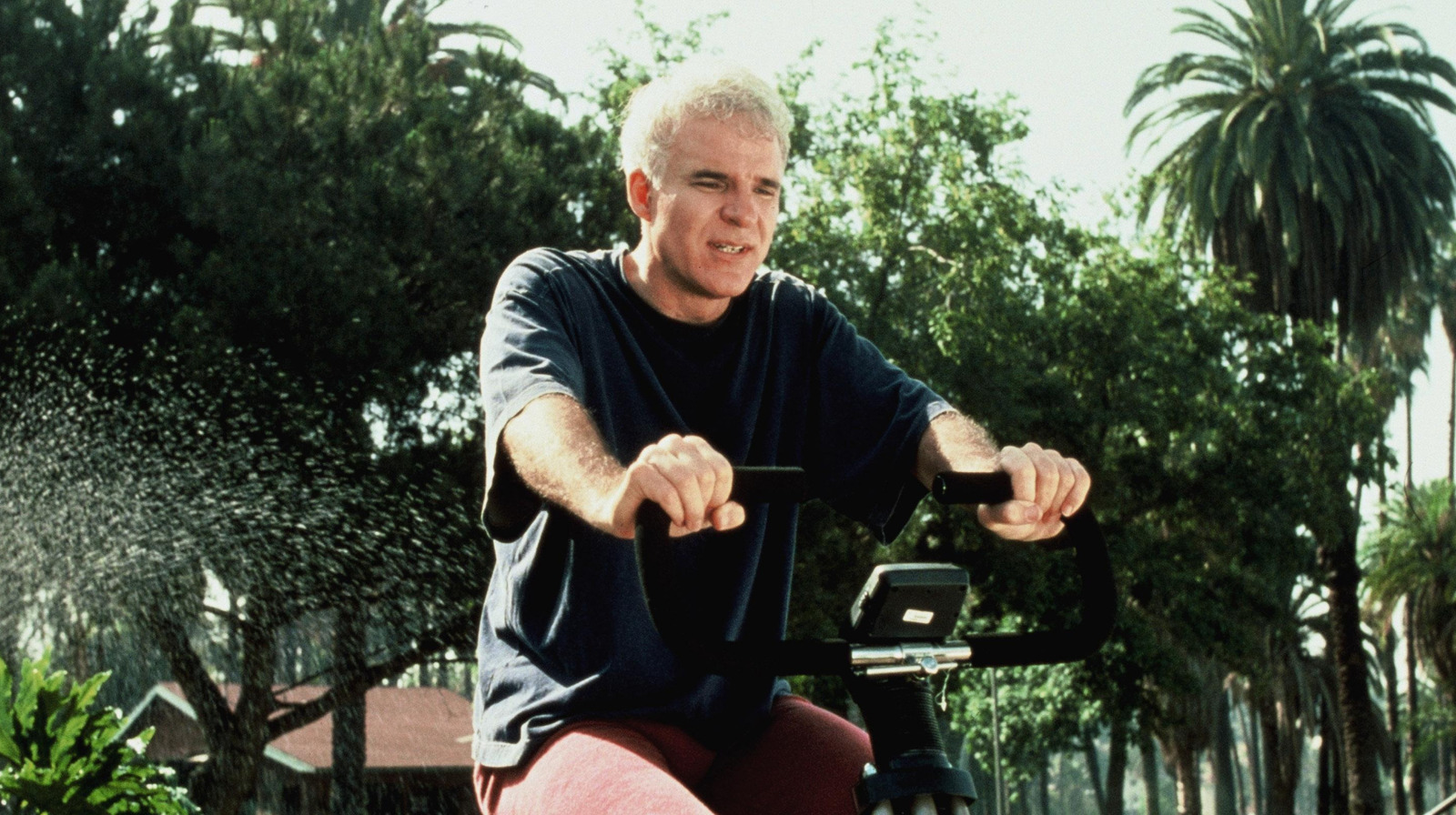
Steve Martin’s decades-long career has been filled with memorable movies, and everyone has their favorites. While he’s most known for his comedic acting, Martin is also an accomplished writer, having penned books, plays, novellas, and over a dozen screenplays. Martin wrote and starred in “L.A. Story,” a satire that explores love in Los Angeles, where he plays TV weatherman Harris K. Telemacher.
The film’s plot revolves around his search for love as he seeks more meaning in his life, and it includes plenty of jokes about the superficiality of L.A. and its culture. One particularly funny scene involves a shootout on the freeway, which involves several rules of etiquette, juxtaposing needless violence with humor in ways only Martin can manage. As he continues to look for love, he begins to take guidance from a traffic condition sign alongside the highway, as its messages speak directly to him, relating to his life experiences.
It’s surreal and ridiculous, and despite a burgeoning relationship with the inappropriate and oddly-named SanDeE* (Sarah Jessica Parker), he ultimately finds love with a more appropriate woman after taking the sign’s advice. “L.A. Story” received critical acclaim, and earned a decent amount of money at the box office. Despite this, it’s one of those films you almost never hear about today, as it’s been largely forgotten. Even when it was in theaters, not many people saw it, making “L.A. Story” a truly underrated ’90s classic.
Dark City
There were tons of excellent sci-fi movies released throughout the ’90s, and while most people happily went to see Keanu Reeves battling robots in “The Matrix,” far fewer even knew “Dark City” was a thing. This is somewhat ironic, as “The Matrix” reused some of “Dark City’s” sets and was directly influenced by “Dark City.” Still, it’s easy to see why the former outshone the latter, given its star power and killer marketing campaign.
Regardless, “Dark City” is easily one of the most underrated sci-fi films of the decade, and truly original. The plot concerns John Murdoch (Rufus Sewell), a man who wakes up without his memory in a hotel bathtub. He finds a murdered woman in the room with all signs pointing to his culpability, so Murdoch flees to try to recover his memory. He’s later confronted by The Strangers, enigmatic men who can alter reality with a thought, which they call tuning.
After Murdoch gains the same ability, the plot thickens, the eponymous city changes, and a vast conspiracy unfolds in ways few could have predicted. “Dark City” is one of those movies that leaves viewers paranoid for days after watching it because it really keeps you thinking. Almost nobody saw it in theaters, and it was a box office bomb. It picked up new life on video and became a cult classic, but most modern viewers don’t know it exists. That’s despite its critical acclaim and influence on the genre.
That Thing You Do!
Tom Hanks’ acting career netted him two Academy Awards in the ’90s, so it’s fair to say he had a good decade. On top of his acting, Hanks had his feature film writing and directing debut via 1996’s “That Thing You Do!,” which features a brilliant cast. Hanks is joined by Tom Everett Scott, Liv Tyler, Johnathon Schaech, Ethan Embry, and Steve Zahn in primary roles. “That Thing You Do!” is both the name of the film and its hit song, which was nominated for an Academy Award.
The film primarily focuses on Guy Patterson (Scott), a drummer who joins a local band and botches the timing in their slow-tempo love ballad. This makes the song far catchier, gaining widespread fame for the burgeoning group, which takes on the name “The Oneders,” pronounced as “The Wonders,” playing on the word like The Beatles. Their success builds over time, but their manager, played by Hanks, insists they keep performing their hit while making them cover other artists and avoiding more original songs.
As the movie progresses, the band’s infighting and various issues ensure they become one-hit wonders, concluding with title cards explaining how everyone’s lives played out. “That Thing You Do!” was a hit with critics, and its song was written and performed to feel like a ’60s bop. Unfortunately, despite all it had going for it, the film flopped commercially. It’s since become a cult classic.
Gattaca
Sometimes, a movie comes along that people are excited to see, but thanks to being marketed as something completely different, it bombs. This is the case for “Gattaca,” a thoughtful, slow-paced film about the dangers of eugenics in a near-future where humanity isn’t born so much as grown in a lab. This eliminates congenital birth defects, creating a master race of people, leaving behind those born naturally, who are pejoratively referred to as “in-valids.”
Vincent Freeman (Ethan Hawke) is the central protagonist, an in-valid who wants nothing more than to become an astronaut. His genetics preclude his ability to land a job, so he takes on the life of Jerome Morrow (Jude Law), a paraplegic former professional skier who allows Vincent to assume his identity, supplying his DNA to fool his employers. Unfortunately, a murder and a wayward cell of Vincent’s creates a significant problem at work, as his plan begins to unravel when his dreams are on the cusp of being fulfilled.
This kind of sci-fi is absolutely brilliant, though subtle, and rarely gets the attention it deserves. Sony marketed it as an action-packed sci-fi movie when it decidedly wasn’t. This didn’t help its box office chances, and “Gattaca” made less than half its production budget. These days, it’s a cult classic, and remains a critically acclaimed, award-winning movie, but “Gattaca” has long been relegated to the movie graveyard, as it’s barely known these days despite its extraordinary approach to socially approved eugenics.
Jackie Brown
Anyone familiar with his work might be surprised to see a Quentin Tarantino film among the ’90s best underrated movies, but it’s here for a reason. Tarantino’s exceptional filmography consists of some of the best of the past few decades, and he hit his stride in the ’90s. The director’s third film, “Jackie Brown,” which followed “Pulp Fiction” and preceded “Kill Bill,” is undeniably brilliant, yet it’s one of his most underrated movies. The cast includes Samuel L. Jackson, Michael Keaton, and Bridget Fonda in one of her last celebrated film roles.
“Jackie Brown” stars legendary actor Pam Grier as the titular lead in Tarantino’s homage to ’70s blaxploitation movies, many of which featured Grier. On its surface, “Jackie Brown” is a heist movie. Dig a little deeper, and it’s blaxploitation revived in the ’90s, featuring the primary theme of Black representation found in the movie’s inspirations, “Foxy Brown” and “Coffy.” Unlike most of the ’90’s most underrated films, “Jackie Brown” was a box office hit, making more than six times its budget.
It was also a critical hit, earning an Academy Award nomination for best supporting actor for Robert Forster in his first major role in years. The reason that “Jackie Brown” is underrated is likely because of Tarantino, as his other films drew significantly larger crowds and far more awards. This has left “Jackie Brown” something of an outlier in Tarantino’s filmography, as it’s often described online as an underrated masterpiece.
Ghost Dog: The Way Of The Samurai
Cultural appropriation isn’t tolerated much these days, but in the ’90s, “Ghost Dog: The Way Of The Samurai” explored the concept without being offensive or standing out for its lack of respect. The film is centered around Ghost Dog (Forest Whitaker), a hit man for the mafia who follows the code of the samurai as outlined in the “Hagakure.” He’s tasked with taking out a rival and does so, but is then targeted by his employers, as the target was a made man.
This flips the story, making Ghost Dog the target, but knowing what’s coming for him, he unleashes deadly violence against his enemies, slaughtering them before they have a chance to do the same to him. Despite his ability to do otherwise, Ghost Dog spares his master out of respect, and knowing he will come and kill him, he embraces his code of honor and faces the man despite the danger, proving that he’s truly a samurai warrior.
The film features numerous references to Japanese culture, specifically the book “Rashōmon,” a story about choosing the righteous path over the easy one, even when it means certain death. “Ghost Dog” was a critical hit and a box office success, going largely unnoticed when it hit theaters in 1999. It’s now a cult classic, and one of the few movies to get cross-culturalism right, as it’s awash with respect to Japanese culture while maintaining its western setting.
Go
Director Doug Liman made a name for himself in the ’90s with “Getting In” and “Swingers,” leading to his third movie, “Go,” in 1999. The movie employs a cleverly reverent Tarantino-esque filming style, focusing on three intertwining narratives surrounding three sets of characters played by some of the ’90s best breakout stars. These include Katie Holmes, Jay Mohr, Sarah Polley, Breckin Meyer, and Timothy Olyphant.
One of the movie’s primary protagonists is Ronna (Polley), a grocery store clerk on the verge of being kicked out of her place for lack of rent money. Through chance meetings, Ronna winds up getting involved in a drug plot to score and then sell at a higher price to cover her rent. Unfortunately for Ronna, it turns out the ongoing drug plot is the target of a sting operation, placing her and others in danger of being arrested, as all three intersecting plotlines come together.
“Go” received widespread critical acclaim and is a truly brilliant movie that’s both well-directed and well-written. This was noted by critics, but when it hit theaters, the one thing that audiences didn’t do was go out to see it. The film failed to recover its production budget and marketing costs, making it a bomb. Despite this, “Go” is an amazingly well-told story that deserves far more attention than it received in the ’90s. The movie was underrated, underappreciated, and has since been largely forgotten by the world’s cinephiles.
Source link
-
-

-

-

-


