

Vail Health/Courtesy photo
Vail Health is looking back as it embraces a new multi-year strategic plan to innovate its way out of the challenges facing rural medicine in Colorado.
Vail Health is a comprehensive health care system that offers primary care, emergency care, cancer care, physical therapy, behavioral health services and more in Eagle and Summit counties.
“This isn’t just any small, independent community health care system. This is one that punches well above it weight class,” said President and CEO Will Cook.
During Monday afternoon’s State of Vail Health, Cook spoke through where the health system went in 2025 and where it plans to go in 2026 and beyond.
The health system is constantly looking at, “How can we move from not just saving lives, like we do in places like the Shaw Cancer Center, but changing lives?” Cook said


Support Local Journalism
2025 was a year for innovation
In 2025, Vail Health invested in its employees, behavioral health, adding service for community members and running cutting edge studies.
Since 2019, the health system has committed more than $200 million to behavioral health services. In May, Vail Health opened the Precourt Healing Center, the only behavioral health inpatient treatment center between Denver and Salt Lake City, Utah.
As a whole, Vail Health Behavioral Health providers, including therapists, psychiatrists and more, see an average of 4,000 to 5,000 visits per month, with intensive outpatient services available in-person and via telehealth.
Incidences of suicide decreased by over 60% from 2024 to 2025 in Eagle County, Cook said, in part due to the behavioral health work of Vail Health and its partners.
“This is why we do what we do,” Cook said. “This took the entire community — elected officials, government officials, law enforcement, ECPS, schools, benefactors, our board, you name it.”
The Vail Health Foundation is bringing its “It Takes a Valley” campaign to raise $100 million for behavioral health services to a close, with $126 million raised. Almost half of the funds went to Vail Health’s nonprofit partners, including SpeakUp ReachOut, to strengthen the “collective impact” of organizations working together, Cook said.
Beating the goal by 26% “truly only happens when you have a vision of doing something that compels people to give, and when you have a community such as ours that is as generous as they are,” Cook said.
The health system more than doubled its employee housing inventory and tripled its housing subsidy for employees, along with providing $11.75 million in people though annual merit awards, market adjustments and bonuses.
In 2025, the Vail Health Behavioral Health Innovation Center launched the OPTIMIZE study, which examines how to enhance the positive effects of psilocybin, the hallucinogenic compound in magic mushrooms, in treating patients with depression.
The Shaw Cancer Center and Steadman Phillippon Research Institute also collaborated on a study clinic to apply fibrosis orthopedic surgery research to treating similar scars experienced by cancer patients.
Vail Health added allergy and immunology, concierge medicine, expanded breast surgery and urology services in 2025.
Vail Health also conducted its Community Health Needs Assessment in 2025, conducting interviews and stakeholder meetings with 160 community members to examine where the system is working well and where it needs to improve.
The system’s leadership is working to complete a multi-year strategic plan that will guide Vail Health’s trajectory through the next several years using community feedback and an understanding of industrywide conditions.


What is new for Vail Health in 2026
Heading into 2026, Vail Health is focusing on how it can find innovative ways to change the health care experience.
“We all know American health care is broken. I don’t mean that disrespectfully to anybody who is involved in it, myself included,” Cook said. “But it’s broken because it’s hyper focused on when you get sick or when you get a cancer diagnosis or when you get chronic diseases or when you get into an accident and you crash your skis on the mountain.”
One of Vail Health’s goals is to change the treatment model from “sick care” to “health care,” Cook said.
While the system will still provide steadfast treatment for those that come in with ailments, “We want you to also come to us to think about ways that you can get healthy,” Cook said.
The financial model for hospitals, particularly rural hospitals in Colorado, “is not financially sustainable,” Cook said.
“When you see things like the premium tax credits were reduced or went away, and how insurance premiums were going up between 15 and 30%, I want to make sure you understand, our reimbursements, what we get paid, did not go up by 15 to 30%. In fact, our average reimbursement went up by less than 1%,” Cook said. “Our expenses are going up at a pace of 4 to 5%.”
Nearly 85% of rural hospitals have negative operating margins, in part due to a smaller population across to spread the cost of universal needs.
“That math is upside down, and if we don’t begin to think about how we make things sustainable at a macro level and a micro level, make them more affordable, it will fail,” Cook said.
Vail Health leadership engaged in a retreat during summer 2025 and came up with three strategic concepts.
“We have a clear plan for the future driven in part by looking at our past,” Cook said.
First, Vail Health aims to be a community-focused organization. Second, to be an innovation hub. Third, to be a destination for health.

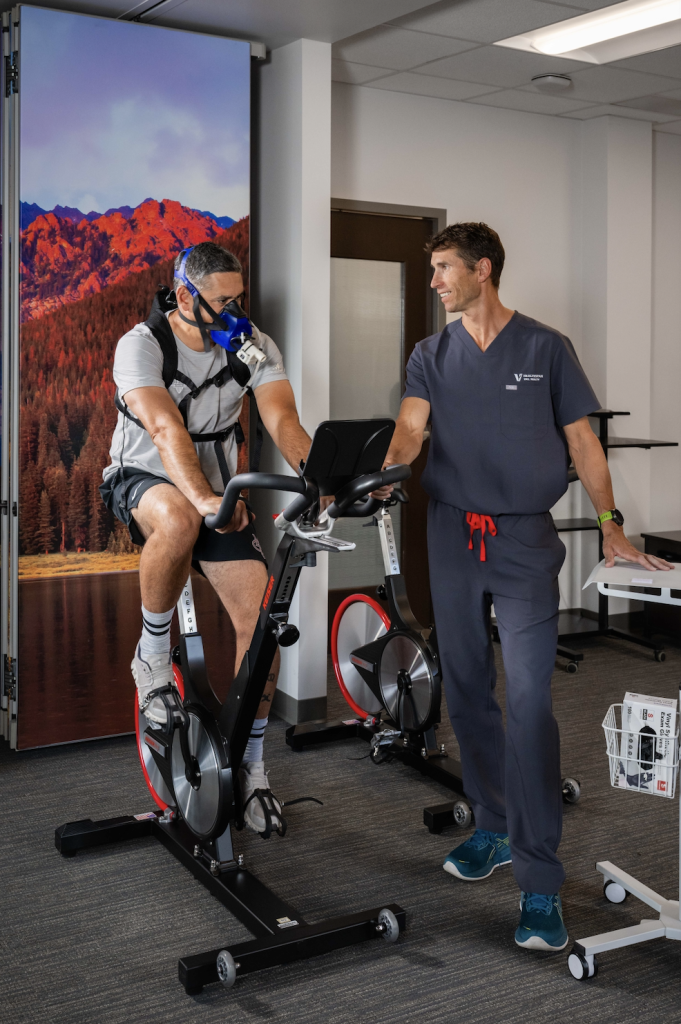
Vail Health plans to be on the cutting edge of new models of care, not just new ways to treat disease but also new ways to structure the patient experience so that people come to Vail Health to get and stay healthy.
“I think with these three concepts, we will do amazing things irrespective of how difficult it is out there,” Cook said.
Vail Health plans to increase its preventative and proactive care programs and continue to incorporate social determinants of health into structuring its treatment plans.
In 2026, Vail Health has renewed its partnership with the Steadman Philippon Research Institute, is bringing ophthalmology back in March, will offer more family medicine providers and is looking at ways to grow women’s and men’s health, including hormone replacement therapies.
In early 2026, Vail Health launched its new Healthspan program, a wholistic approach to preventative wellness that builds customized health and fitness plans for its participants. “This isn’t just about longevity and the quantity of years in your life, but it’s also about the quality of years in that life,” Cook said.
In fall 2026, Vail Health will go live with a standardized, system-wide electronic record system — Epic — launched in partnership with UC Health.
“We’re very, very excited because it’s going to enable us to have one system,” Cook said. “Now your provider, irrespective of where they are providing care to you, will be able to see what’s been happening in all the other places in our system you’ve visited.”
Cook asked community members to, “Stay involved. Volunteer. Give us input,” as the health system continues to innovate in 2026 and beyond.
“This is your health system. You should be proud of it. You should be a part of it,” Cook said.
news/in-state-of-vail-health-health-care-system-ceo-says-prioritizing-changing-lives-not-just-saving-lives/”>Source link
-

-

-

-

-


