

Being scared in real life isn’t much fun, for obvious reasons, and neither are most nightmares, unless they’re not too bad. Because the ones that aren’t too bad provide relief when you wake up, though the ones that are bad linger in your mind, even after you’ve told yourself it was just a (bad) dream. Horror and being scared by a movie, on the other hand? That can be fun, or at least an interesting experience.
These movies might cause nightmares, or they might just approximately deliver the kinds of emotions you’d feel during a nightmare, which isn’t as bad a thing to experience. Some of the movies below belong to the horror genre, but not all. Some are more stressful and dread-inducing for other reasons, in the interest of recognizing that some nightmares aren’t necessarily about otherworldly or supernatural occurrences.
10
‘After Hours’ (1985)
Hey, Martin Scorsese can do comedies! Actually, of course he can do comedies. Everyone knows that, since The Wolf of Wall Street is one of his more popular films. So maybe it’s better to say that The Wolf of Wall Street wasn’t his first comedic rodeo, so to speak, and that Scorsese really had been a funny guy back in the 1980s, as seen with The King of Comedy and After Hours.
Both are kind of psychological drama/thriller movies on top of being comedies, with After Hours probably being the easier one to pick for present purposes. Much of it’s darkly funny and entertaining, yet it’s also an immensely stressful movie about a guy having a bad night that gets increasingly worse, to the point where it’s like the universe hates him, or he’s stuck in some sort of endless purgatory/bad dream. It’s fun to watch from the outside, maybe, but it does feel a bit like watching someone live through a very bad nightmare for approximately 90 minutes.
9
‘Black Swan’ (2010)
One of the more striking and unnerving movies about trying to attain perfection in recent memory (perhaps second only to Whiplash), Black Swan is a psychological horror movie about a ballerina’s life spiraling out of control. She gets the lead role in a production that she’s always wanted, but there are so many pressures that come with doing that performance, and the film shows them all one after another, with increasing intensity.
It’s one of those nightmarish movies that doesn’t feel super nightmarish right from the start, but the nightmare-esque things pop up after a little time, and then everything gets worse as it goes along. It’s a well-controlled escalation for sure, and Black Swan is very easy to respect and admire, all the while also proving quite challenging to watch… but that’s something that can be said about most of Darren Aronofsky’s great movies.
8
‘Angst’ (1983)

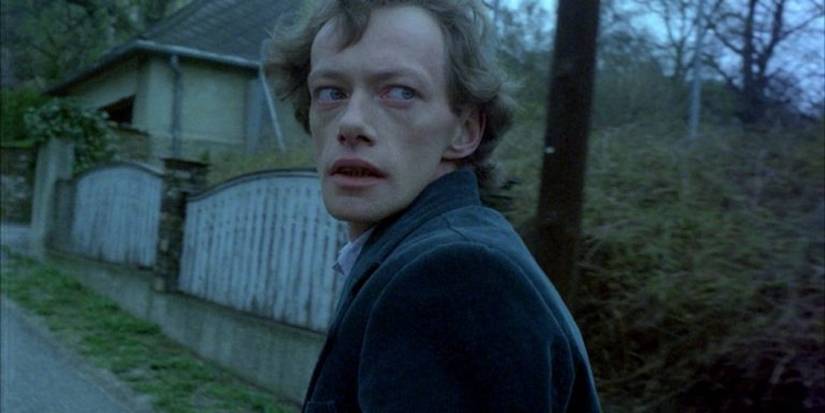
Angst is an all-around bad time of a movie, and maybe one of the most unpleasant about a serial killer ever made. So it’s got some tough competition, because it would be weird if a movie about a serial killer wasn’t something of a bad time, but Angst really does take things to a whole other level, all the while having an incredibly simple premise, regarding who the killer targets and what he ultimately does.
It’s the execution that makes Angst one of the grisliest and most grueling horror films ever made, with it being that disquietingly realistic sort of horror that’s arguably far more affecting than anything involving supernatural/fantastical threats. For what it’s worth, there’s also an intense amount of violence here, but it’s probably the psychological side of what Angst is going for that lingers/haunts the most, once it’s all over.
7
‘Holy Motors’ (2012)


Of all the movies here, Holy Motors might well be the strangest and hardest to explain, which is indeed saying quite a lot. This is a full-on arthouse film, capital A, capital H (even if arthouse is only one word, I do not care), capital F. AHF. Holy Motors is an AHF. It does not play by anyone’s rules, not even its own, since it’s very episodic and continually shakes things up every scene or two, by design.
Holy Motors is pretty focused on being unsettling, and it succeeds in that regard, all the while also succeeding in feeling oddly hypnotic and compelling.
It’s “about” a guy who goes around doing various odd jobs, taking on a series of different appearances for a bunch of them, and then there’s kind of some elaboration on what he’s doing by the end, but it’s not 100% clear, because that would be less unsettling. And Holy Motors is pretty focused on being unsettling, and it succeeds in that regard, all the while also succeeding in feeling oddly hypnotic and compelling. It’s a weird one worth sticking with, in other words, and the dreamlike logic found throughout truly is something else.
6
‘The Shining’ (1980)

Somewhat loosely (and perhaps infamously) based on a Stephen King novel, The Shining (1980) is one of the best horror movies of all time, even if you want to make the argument that it’s not a great adaptation. Stanley Kubrick sort of did his own thing with the core story here, though to his credit – and to King’s credit, maybe – both the book and movie are very engrossing and frightening for similar reasons.
It’s just the approach and reworking of certain narrative elements that differentiates the two. Anyway, either way, you’ve got yourself a nightmarish novel and a nightmarish movie, so pick your poison. Or down both these vials of poison one after the other, why not? They’re interesting to compare and contrast, after all.
5
‘The Cook, the Thief, His Wife & Her Lover’ (1989)

The Cook, the Thief, His Wife & Her Lover gets off to quite an alarming start, and then everything after that point proves pretty intense, as well. Much of it takes place at a restaurant, with the long-suffering wife of a gangster starting up an affair with another diner to get back at her husband, and then when he finds out, there’s further messiness, chaos, and violence.
It’s not too complex narratively, but then everything else about The Cook, the Thief, His Wife & Her Lover, on a technical front and in terms of how it looks/feels, is maximalist and very bold. Dreamlike or nightmarish might not be the ideal words used to describe it, but there is something uniquely off about the film as a whole; maybe otherworldly? It’s hard to put into words, but you definitely feel it, and maybe that’s the most important thing.
4
‘All That Jazz’ (1979)

Of all the movies here, All That Jazz has the least by way of horror elements or overall violence, yet it’s still a remarkably intense – and eventually, surreal – musical. It’s about someone who is basically Bob Fosse in all but name, with Fosse doing a bit of an autobiographical thing here, in movie form, and making it work, with All That Jazz covering all the work, stress, women, and health issues present in his life.
It’s a movie about trying to escape death, too, and finding that at a point, doing so basically becomes impossible. And, at that point, All That Jazz gets weird, but also amazing. There’s a sense of panic and dread throughout the earlier scenes, with everything being slowly dialed up, and then there’s an emotional and quite bizarre release closer to the end. As far as psychologically impactful/devastating musicals go, All That Jazz might well be untouchable.
3
‘Apocalypse Now’ (1979)
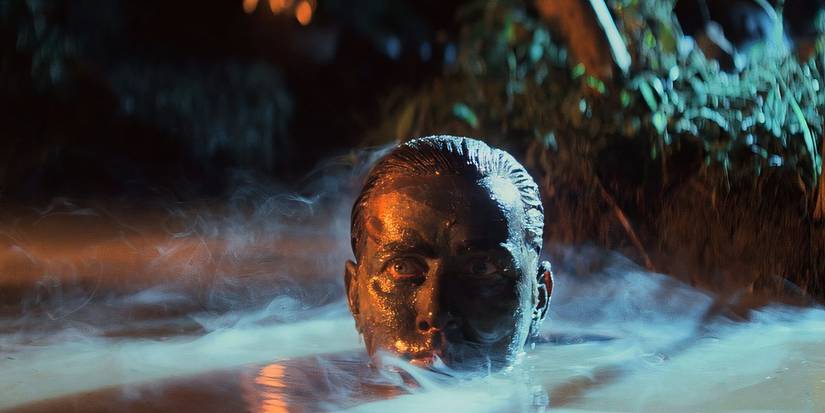
One of the longest and most ambitious Vietnam War movies, Apocalypse Now is uniquely unsettling, both as an exploration of that particular war, and of warfare more generally. There is a plot here about having to assassinate a colonel who’s gone rogue, and is hiding somewhere in the jungle, but Apocalypse Now does feel more concerned with the psychological side of things, and looking at the inherent madness of war.
On both fronts, it’s engaging and impressive, being perhaps the last true masterpiece Francis Ford Coppola ever directed (not to say that some post-1979 movies of his haven’t been good). Much of what works and unnerves here feels like it’ll probably be timeless, on account of the nearly 50 years since 1979 doing little to wear down Apocalypse Now’s power, so you can probably return to this again and again to feel the nightmarish quality of it all, perhaps even forever. Yay?
2
‘Brazil’ (1985)
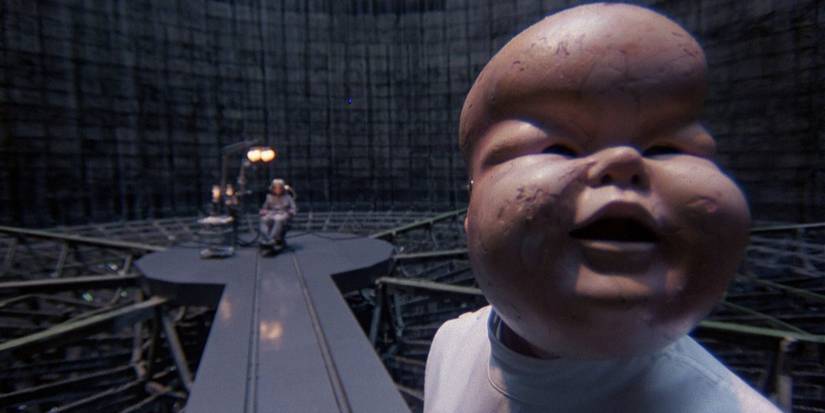
Brazil came out the same year as After Hours, and is also about a hapless protagonist having a terrible time, and then both movies also have quite a bit by way of dark comedy. Brazil, though, differentiates itself from that other panic attack of a movie by being a dystopian one, with the science fiction world here seeming not that far off from reality, unfortunately, in certain ways.
There’s a madness that’s already torn the world depicted in Brazil apart, and it only seems to be getting gradually worse overall. As for the main character? Everything gets rapidly worse for him, and that’s where the nightmare feeling of Brazil comes in. It’s so relentless, and kind of exhausting, while also being remarkable for those reasons. You gotta take the good with the bad/mortifying.
1
‘Mulholland Drive’ (2001)
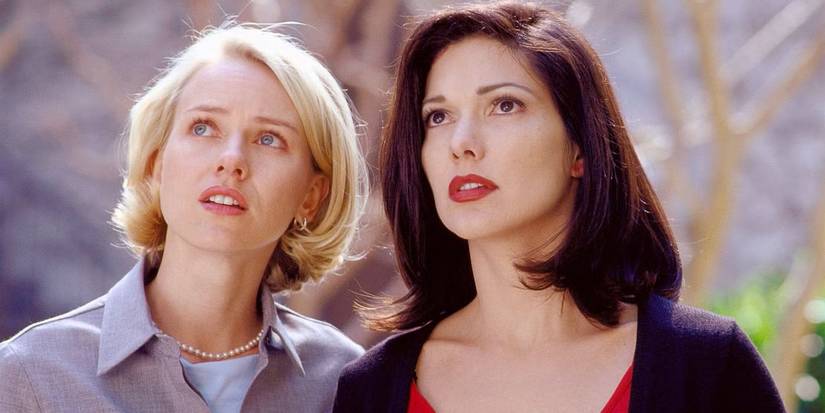
There’s a dreaminess to Mulholland Drive early on for sure, with some occasional parts that feel more reminiscent of a nightmare, but the nightmarish stuff intensifies in a very purposeful way as the film progresses. To elaborate more would run the risk of ruining things, because yes, Mulholland Drive is strange and hard to wrap your head around after just one viewing, but it can be spoiled. And some people were born after the movie came out and still have the right to go into it not knowing everything.
What can be elaborated on is the way that it feels, as perhaps the most surreal, dreamlike, and nightmarish of all the David Lynch films. You get a bit of everything here, tonally, and so it’s a real showcase for what a powerhouse of a filmmaker Lynch was. Nothing feels so subconscious in nature – and so intensely, for so long – quite the same way Mulholland Drive does, so it’s easy to pick it for the #1 spot here, in all honesty.
Source link
-

-

-

-

-


